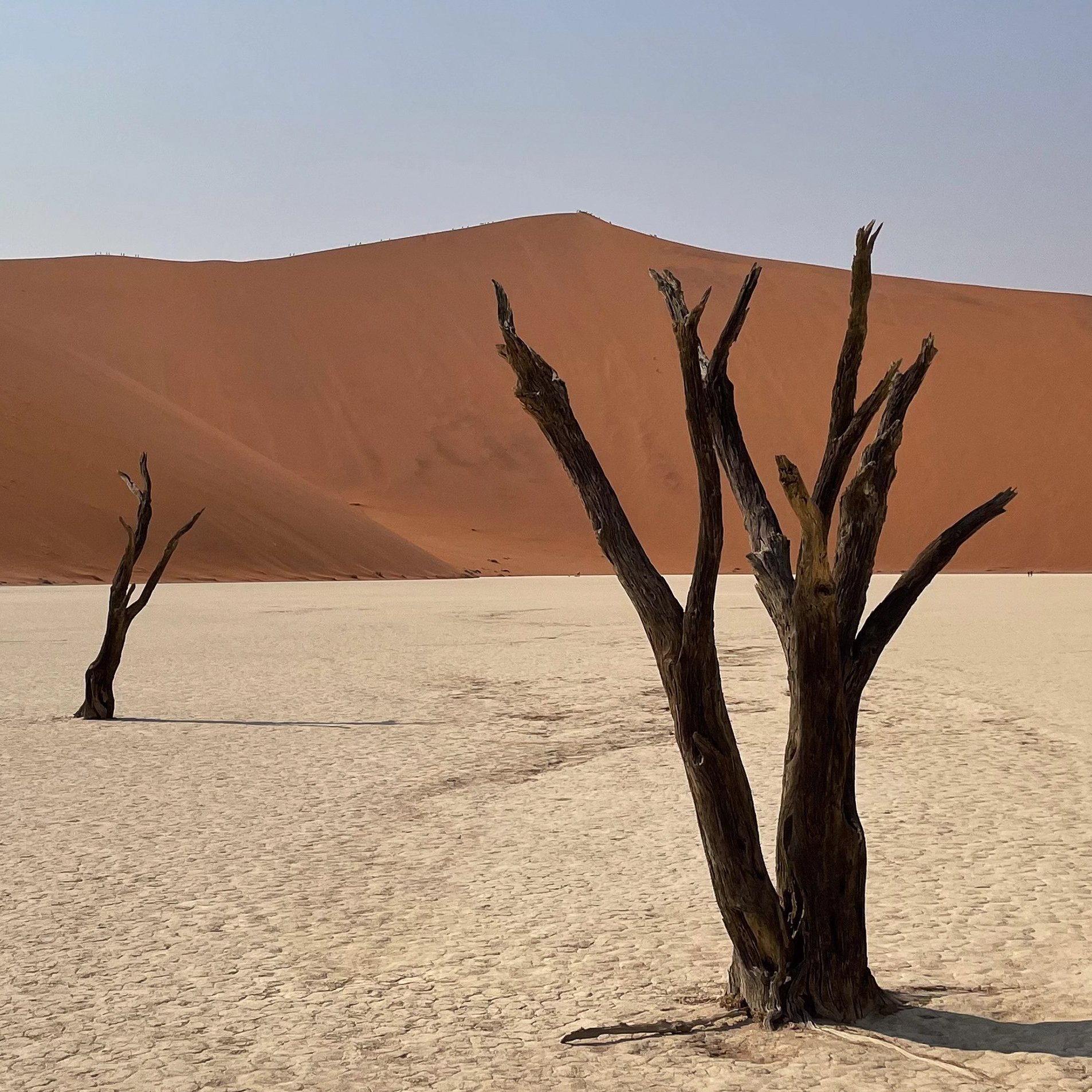
A special place on the banks of the Lower Zambezi river.

If you had asked us before our Southern African trip, where were we most excited to visit, there’s a good chance Mana Pools would have been near the top of the list. One of Zimbabwe’s most famous national parks, it features near the top of almost every best ‘African safari destinations‘ list. Anyone keen to make a TV programme showcasing the natural world automatically makes a beeline for Mana Pools, as evidenced by recent blockbusters such as the Dynasties, or The Grand Tour.
Mana Pools is the only National Park in Africa where you can walk without a guide. Sensible or not, this is THE place to connect with nature.1 As walking safaris are very much our thing, we were very keen.

Nyamepi
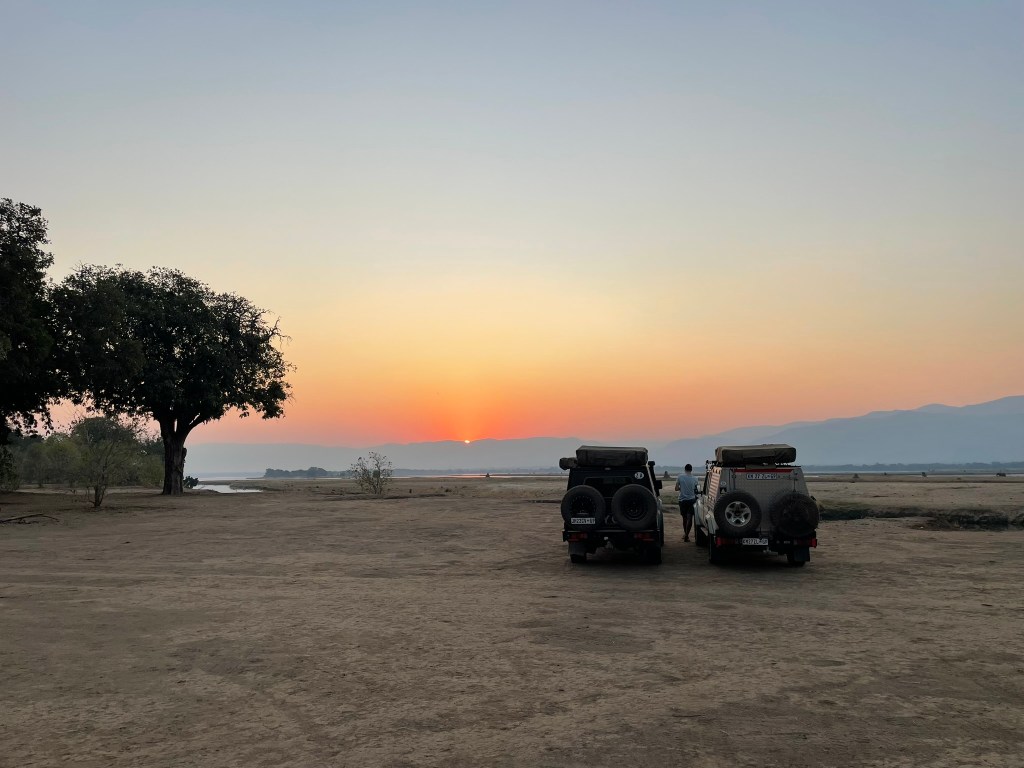
Nyamepi is the location of the park headquarters and public campsite. We had booked and paid in advance, so upon arrival we quickly checked in and found our campsite on the riverbank shortly before sunset.
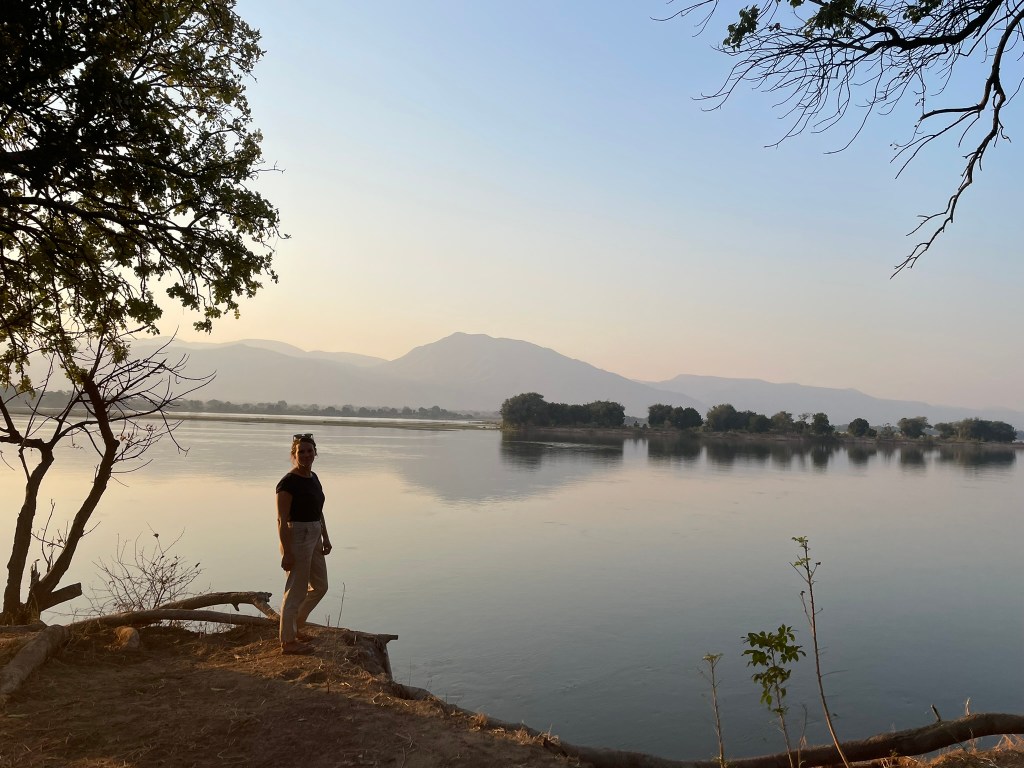
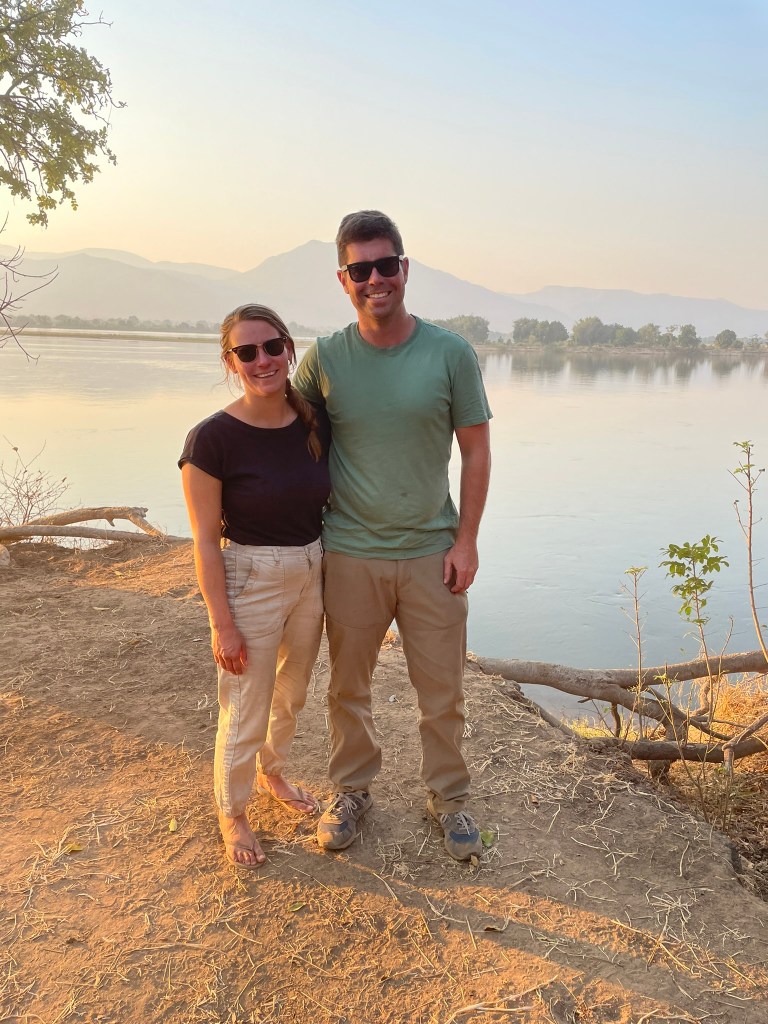
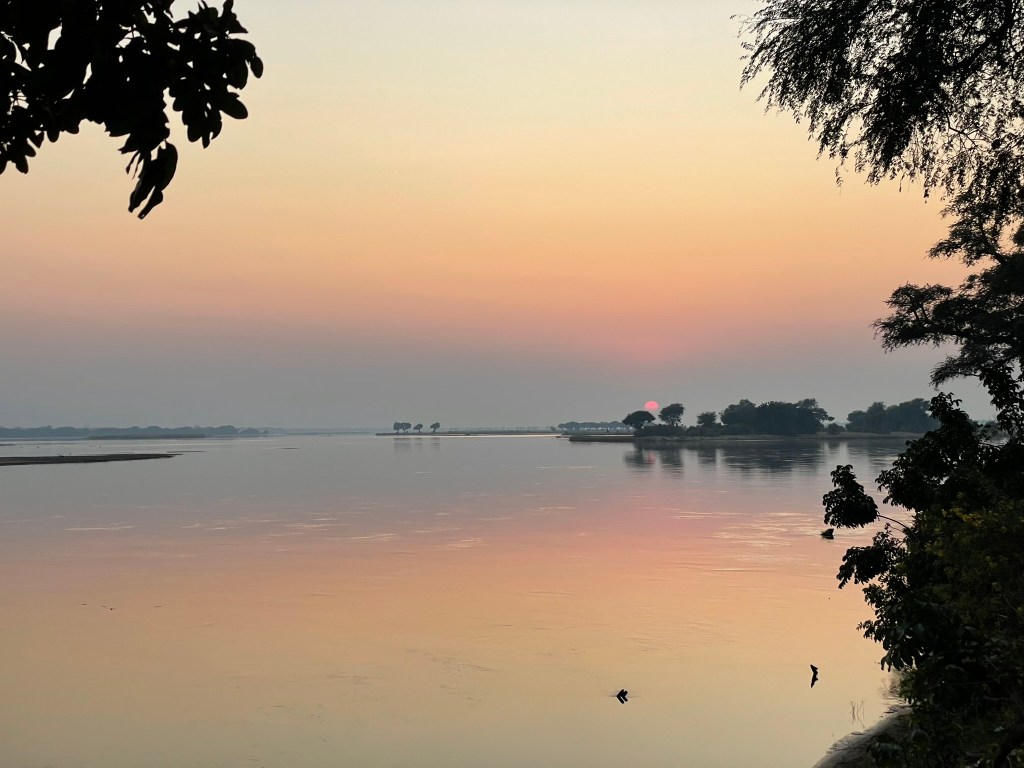
There’s no doubting the location of Nyamepi is spectacular. The camping pitches are overlooking the mighty Zambezi river, and the sun sets spectacularly behind the escarpment on the Zambia side of the river.
The campsite itself is large, with 30 or more sites, and compared to other African campsites the distance between pitches is relatively small. for a kilometer or more along the riverfront there are tents and caravans coming and going. It felt busy.
A firm favourite of retired Afrikaners2 towing their bush lapas3 and looking for a sense of adventure, there were a number of laagers4 ruining the atmosphere in the campsite.
We sort of wished we were still on the opposite bank.
Zimbabwe is easy for South Africans to visit whereas, to them, Zambia is some kind of impenetrable fortress, a mysterious dark void which swallows up all but the most intrepid explorer. Long may it remain the case.


Things go bump in the night
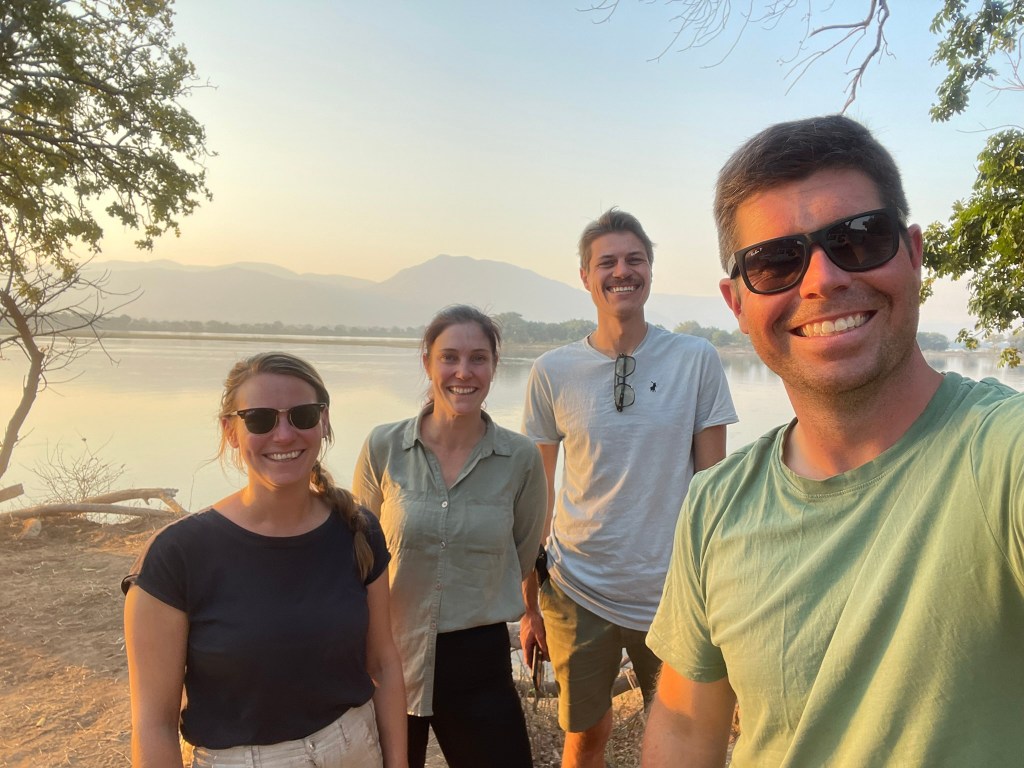
We once again enjoyed the company of Maricus and Gella at our campsite. Another legendary braai was accompanied with beer and good conversation. It was a few hours after dark when we were greeted by some of Nyamepi’s more famous residents.
Firstly an elephant came a little bit too close for comfort. Only a couple of metres away from the far side of our guests’ Land Cruiser. He appeared to be enjoying easily accessible leaves and branches of the trees in the riverbank, and we were mostly content to leave him alone. Gella however was sent into a spin by the fact that there were watermelons and grapefruits in her car and she was convinced the elephant was on the warpath to get to them.
There are certainly many warnings about taking fruits into Mana Pools, and it is in fact forbidden. The elephants are notorious for conducting raids on open vehicles, for an orange is the most addictive substance to them, and they will stop at nothing to get to one.
After ten minutes of rustling in the trees the elephant moved on. He hadn’t caught wind of the fruit in Gella’s fridge. After that more evening guests began to arrive.
Hyenas at Nyamepi are notorious. This article from 2013 advises “Keep your torch at hand to ensure the hyenas don’t sneak up and steal your food”. The advice is even more relevant today, given the chance the hyenas will come and take your steak right off the braai, don’t let them get too close.
Whilst the hyenas are huge, bigger than the biggest of dogs, and look rather intimidating, the reality is that they are big scaredy cats. They will sneak up behind you, slowly and carefully, trying not to make a sound. You can sense their presence though, the careless rustling of leaves will eventually give them away. A quick flash of the torch is all that’s needed to send them skulking away into the distance. They cannot bear to see you looking at them, and they quickly scurry away from the light. Even from a hundred or more metres away they will duck out of view once they see that you’ve spotted their glowing little yellow eyes.
For the remainder of the evening we enjoyed playing the game of seeing how close they could sneak up before we scared them off.
Retiring for the night we made doubly sure to pack everything up inside the car. As soon as we were in the tent the hyenas were prowling round our campsite looking for things to scavenge. For the first time my night time camera trap took some decent footage.
At 3am we were awoken with a bang. Maricus and Gella’s table had been overturned and their potjie pot (poy-kee pot) had made an almighty crash. We looked around too see what had made the racket but couldn’t see any life. Was there something bigger, perhaps an elephant or a hippo traipsing around camp? Maybe it was the lions we could hear earlier in the evening, far to the east, coming through.
In the morning we checked the camera to see a hyena running away with their collapsible washing up bowl which must have had some remnants of food inside.

Searching for Dogs
When on a self-drive safari, you must talk to others, it’s the only way you can find out where the action is. Given that Wild Dogs are the most exciting of carnivores to find, and that the packs in Mana Pools had been made famous by Dynasties, we focused our efforts on finding them.
Our intelligence, from a local guide we met near Chitake springs, was that the two packs of dogs had denned successfully. One near the airstrip, and one near Kanga. Kanga was off limits, so we were limited to searching nearer the airstrip. Denning season was almost over, so the dogs would likely stay near the den, and the pups were starting to emerge. The last piece of information we needed was that the dogs had been seen near long pool the previous afternoon. Away from the river the game density is slightly less, but the wide open areas behind longpool and chine pool looked to us like perfect Wild Dog hunting territory, so we focused our attention there.
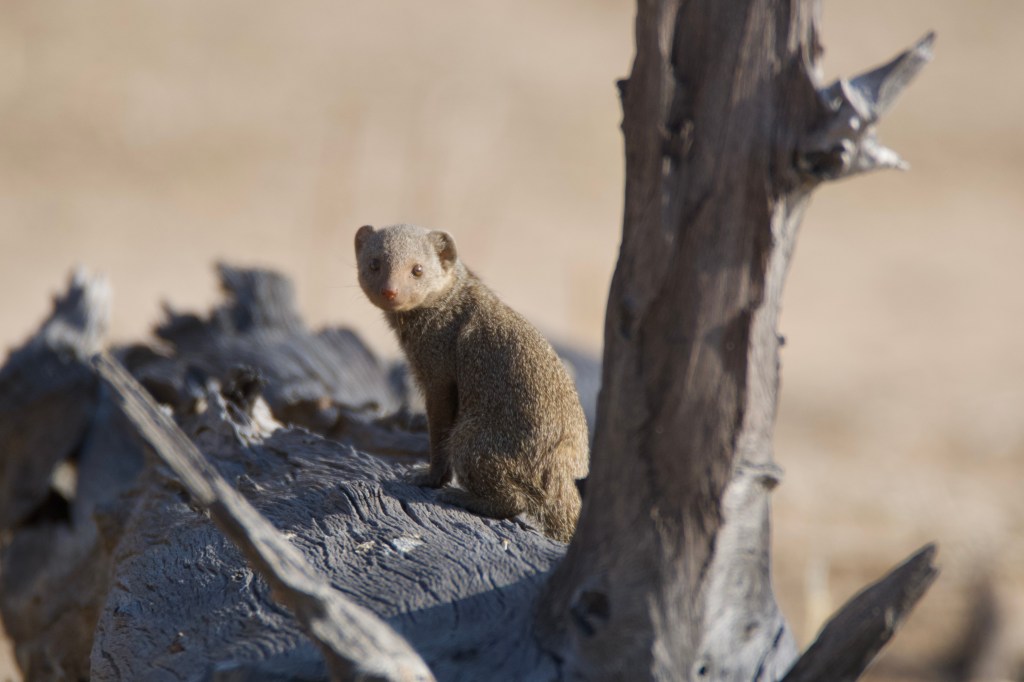
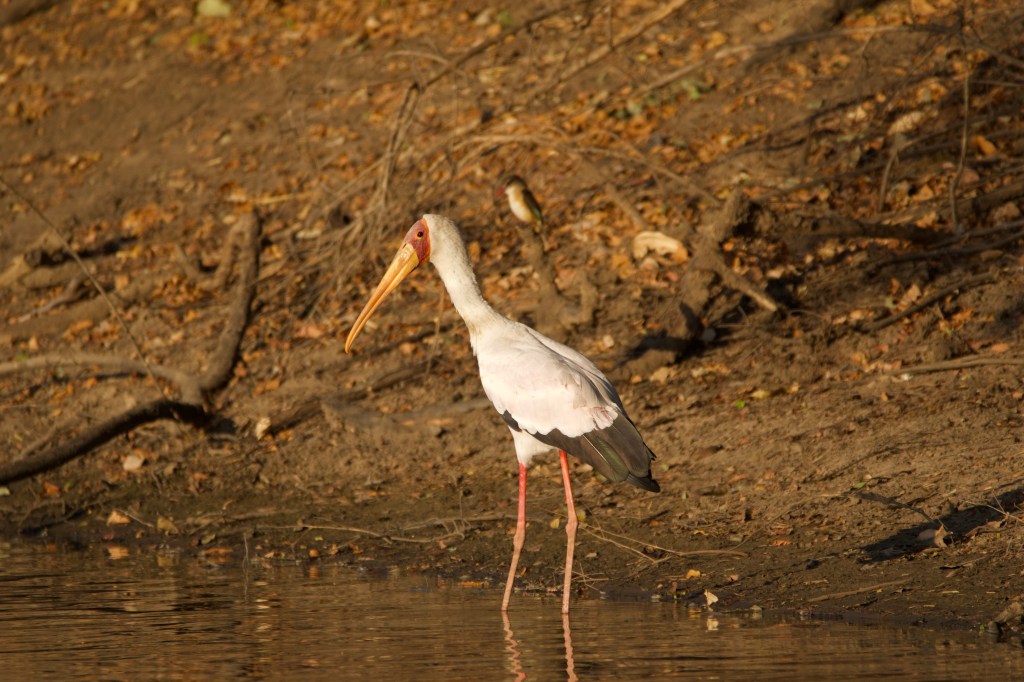
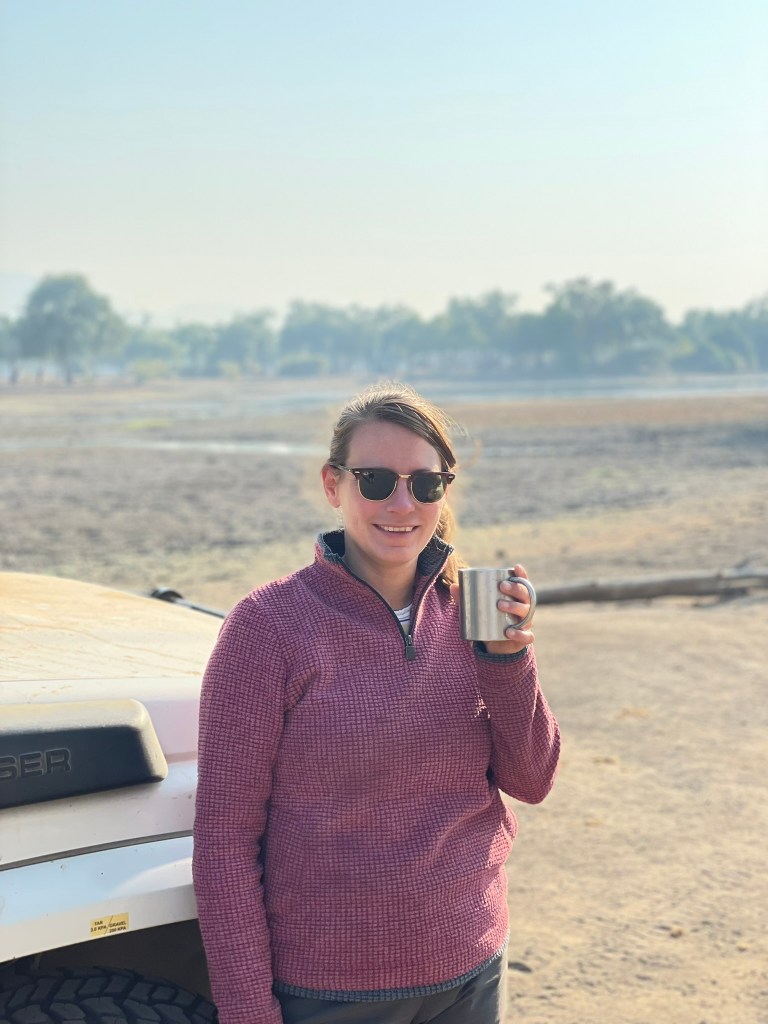
Patrolling the road before sunrise we ended up drawing a blank. A couple of dwarf mongooses providing the only entertainment. At lungfish pool we watched the Saddlebills stalk for lungfish, and at longpool the herons riding on hippos was a treat. Still we found no carnivores so headed for coffee and breakfast on the banks of the Zambezi at Old Ndungu.
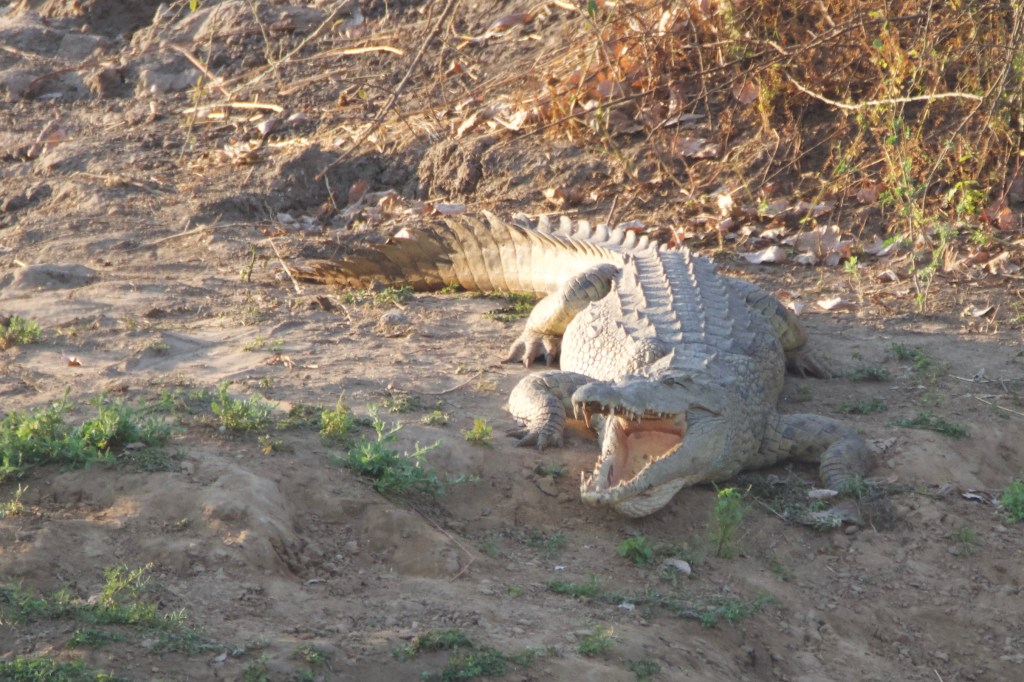
Canoeing down the Zambezi is another thing that one can do. We perched ourselves in our camp chairs on the beach and watched a small flotilla drift past. It is worth noting that the Zambezi here is teeming with both crocodiles AND hippos, both of which can be a serious hazard to humans. It was with a sense of ‘rather them than us’ that we raised our coffee mugs to the passing voyagers.




John Gale
We deliberately missed a part of the story. So we have to wind back the clock and re-live the day we entered Zimbabwe. If you recall, we entered the country at the hellish Chirundu border, and then had a race against the clock to enter Mana Pools national park. Our research had suggested we needed to reach the gate before 3pm or risk being denied entry (to anyone reading this for tips: this is NOT true, but we weren’t to know at the time).
Upon arrival at the park gate we sweet talked the ranger, who kindly told us we’d be fine to enter, but needed a gate permit from the Marongora parks office 10 minutes further up the main road. We scarpered up the escarpment to pick up a permit, a free piece of paper given that we had already booked and paid the fees for our time in the park. Returning to the park gate at around 3:30pm we were stuck behind a small convoy of rental vehicles. The travellers were busy deflating their tyres, we heard a British accent, so we got talking to them.
Most of the group had arrived in Lusaka to pick up their rental vehicles. However the team leader, a man called John, had driven all the way up from Kwa-Zulu Natal. This was the second time we had heard of an expedition leader named John from Durban who would drive thousands of kilometres to meet his clients.
Now I’m not sure how many Johns there are in Durban, but we had to ask the question, was he the legendary organiser of our Czech friends’ trip to the Kalahari?
Despite the improbable odds, turned out that this was indeed the man. John Gale. We told him what an excellent job we thought he had done for the Czech boys, and that Sarah had plagiarised pretty much all of his extensive instruction manual. The manual had contained instructions about how to conduct a self-drive safari, right down to the detail of what to have for breakfast. It had also contained phone numbers for all the key campsites in Botswana which we shamelessly stole.
Before heading our separate ways, us to Chitake and the convoy to the Zambezi riverfront, we resolved to meet up for a beer back at Nyamepi in the following days.


Dinner at Nyamepi
John had managed to secure a perfect riverside spot for the group right at the far eastern end of camp. We popped in to visit in the middle of the afternoon, after doing some laundry and chores around our own camp.
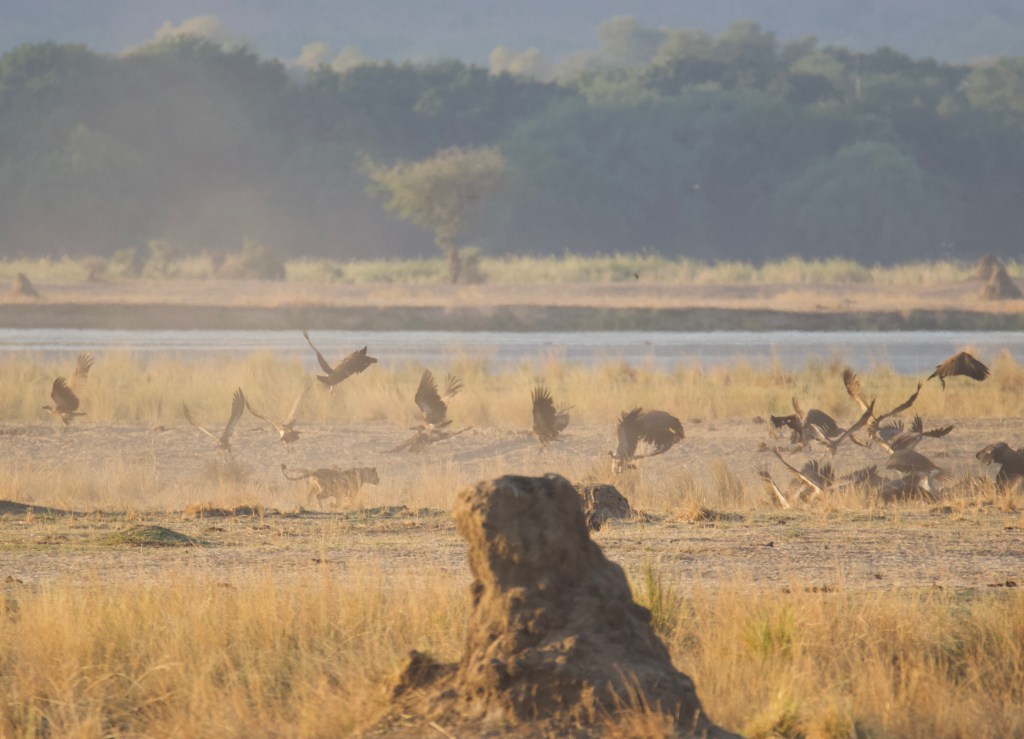
The group had some intel on wildlife. A pride of lions had taken a buffalo in the morning all the way over in the east near to Croton camp. We joined them in the afternoon to watch from the riverbank as the lions periodically chased away huge numbers of vultures from their kill. It was late in the afternoon but the air temperature was still fairly hot. The lions had full bellies and weren’t keen on too much movement. Vulture chasing duty was a chore left to the lowest ranked. We were perched on a bank overlooking the flood plain, roughly 200 or 300 metres away from where the lions were. Feeling perfectly safe we cracked open some cold drinks and chatted to the party, keeping one eye out for any stray wildlife.


Back at camp John and his wife Judith, and their guests invited us to stay for dinner. Around the campfire we shared stories of our trips, and ended up staying far too late. It must have been gone 11pm by the time we antisocially drove back through the campsite with dipped headlights. Weaving between the hyenas as we made our way back to set up our tent.
I would like to think we have a decent amount of self-drive safari experience by now, and that if anybody reading this would like any advice they would come to us. The reality is that John is a much better bet, he has a lifetime of experience and now runs a small business organising exactly the kind of trips we love. Dan and Milan had a great example of the trip of a lifetime, and were already organising to come back by the time we met John in Mana Pools.
So it would be wrong of me to not link to John’s company – they are certainly recommended.


Did you guys actually see anything in Mana?
The eight lions on the buffalo kill were far too far away to count. Realistically if you can see lions, and still feel safe getting out of your car, then you’ve not got the greatest sighting.
Wild Dogs were the draw in Mana Pools, and despite searching on three consecutive mornings at sunrise, we drew a blank.
Hyenas patrolling the campground hardly qualifies as a unique experience, they are of course more of a nuisance. As are the troops of baboons which replace them in the daytime.


Boswell
Our most thrilling wildlife encounter came when we were connecting to WIFI right outside the parks office at Nyamepi. It was of course crucial to find out the England football score in the Euros semi-final, and so Mike insisted we parked ourselves on the bench underneath the large shady tree for 15 minutes to refresh the bbc sport app.
Behind us, silently, Mana Pools’ most famous resident crept up for some midday snacks.
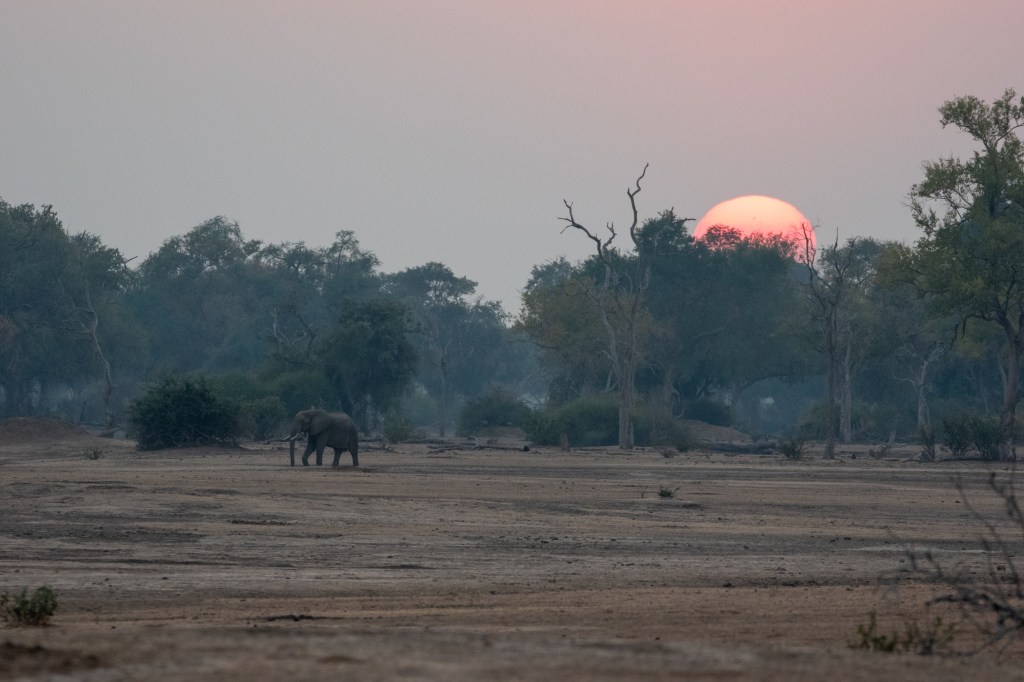
Boswell is his name, and he’s a superstar.
We didn’t even notice him come up right behind us, only when the shop attendant tapped on the glass window to alert us did we spin round to see the big male elephant only a couple of metres away.
Boswell is famous for his party trick of getting up on his hind legs to reach the fresh green leaves of the tall trees around Nyamepi. As you can imagine all the tree have been trimmed to the exact perfect height for the tallest elephant to reach on his hind legs. As there are no giraffe around, it is the elephants who reach highest.
He performed for us, reaching to feed on three legs, but he never quite got all the way up onto two legs, always using a front leg for balance. It’s still early-ish in the dry season, so the foliage isn’t too far out of reach just yet.
Other elephants are known for this trick, both in Mana Pools and the Lower Zambezi, but Boswell is the most famous.


On our final day we met again with Iddo. We were happy to discover he had survived his remaining nights at Chitake, and had decamped to relatively safer Nyamepi.
A pearl spotted owlet was the last animal we found of any note.
We had failed to be completely won over by Mana Pools. Perhaps it’s down to our luck with the wildlife. For sure the riverside location of Nyamepi is stunning, and Chitake Springs remains an unbeatable destination, but we felt maybe the feel of the place just wasn’t quite as special as the Lower Zambezi National Park just across the river in Zambia. Still, I’m sure it won’t stop us going back.


- There are a number of rules surrounding when and where you can walk, and a guide remains thoroughly recommended. ↩︎
- Afrikaans South Africans often complete with a unique view of the world and a certain amount of attitude. ↩︎
- Brown caravans made to look rugged ↩︎
- A ring of caravans, often noisy and beer fuelled. Will commandeer ablution blocks and act hostile to outsiders. ↩︎
 Small Holiday Big Dream
Leave a reply to John Gale Cancel reply