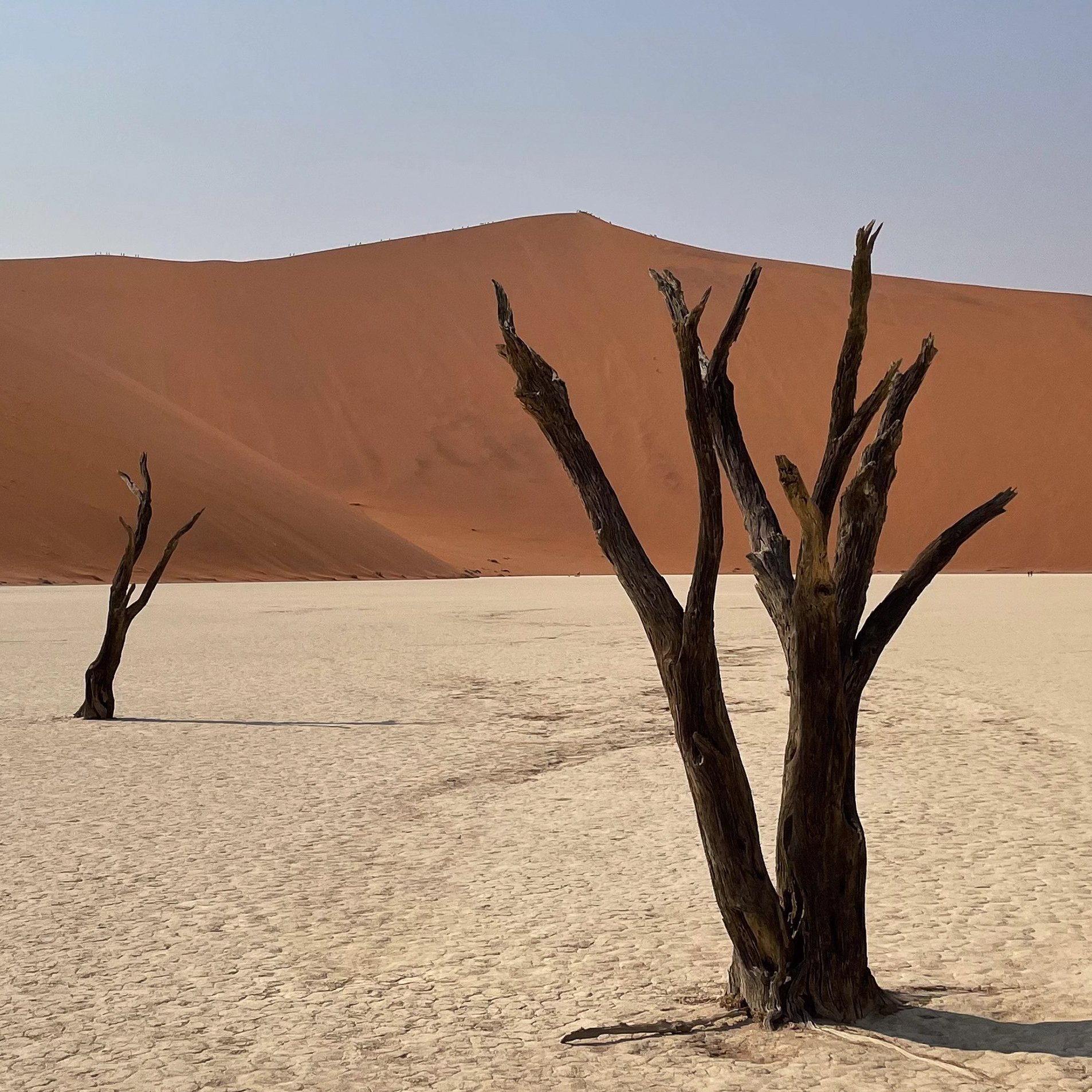
We left home just after 2pm on Tuesday, for our 5pm flight from Heathrow. 28 hours later we were on the doorstep of our first stop in South America. The Black Sheep hostel in El Poblado, Medellin.
Transiting Madrid was a breeze, and it gave us our first opportunity to try, and fail, at speaking Spanish. Ordering a single beer should be first thing you learn in a new language, we had great difficulty due to the variety of glass types on offer. The next few months may be tricky.
We had a nice new A350 to fly to Bogota with, and we were treated to watching Barbie, and the Equalizer 3. Bogotá was a surprisingly nice airport, and yet again we struggled to order breakfast. However, in doing so, Sarah discovered a new kind of hot drink, Agua de Panela. As far as I can tell it’s molten cane sugar and needs to be finished before it cools and re-solidifies. Needless to say Sarah was delighted.
By 11am we reached our Medellín hostel. After a lunch of huge soups (one chicken, one beans) accompanied by many other plates, we headed into the centre of Medellin for the free walking tour, which was excellent.
The tour hammers home the fact that they really really don’t want to talk about the infamous criminal from their city. At the same time most of the content of the tour centres around hardships caused by said criminal. The tour ends with a wander around the sculptures of Fernando Botero, including one of a bird which was damaged by a bomb in 1995.
Getting around town was easy on the newish and extremely clean metro, touted as the pride of the city.
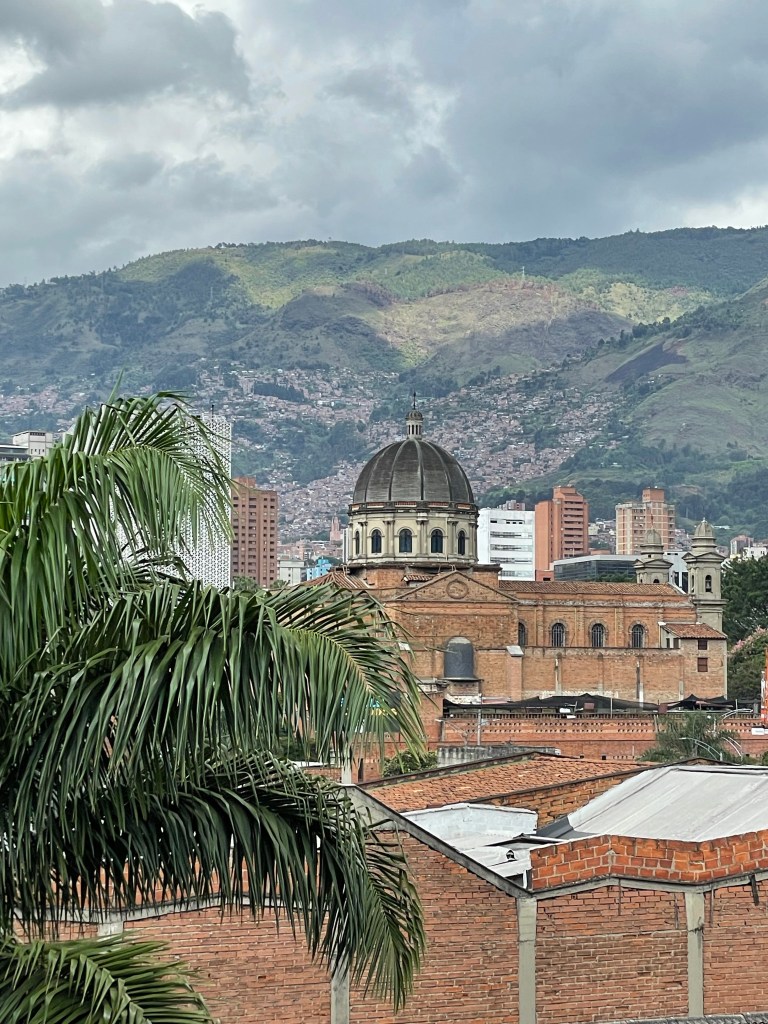


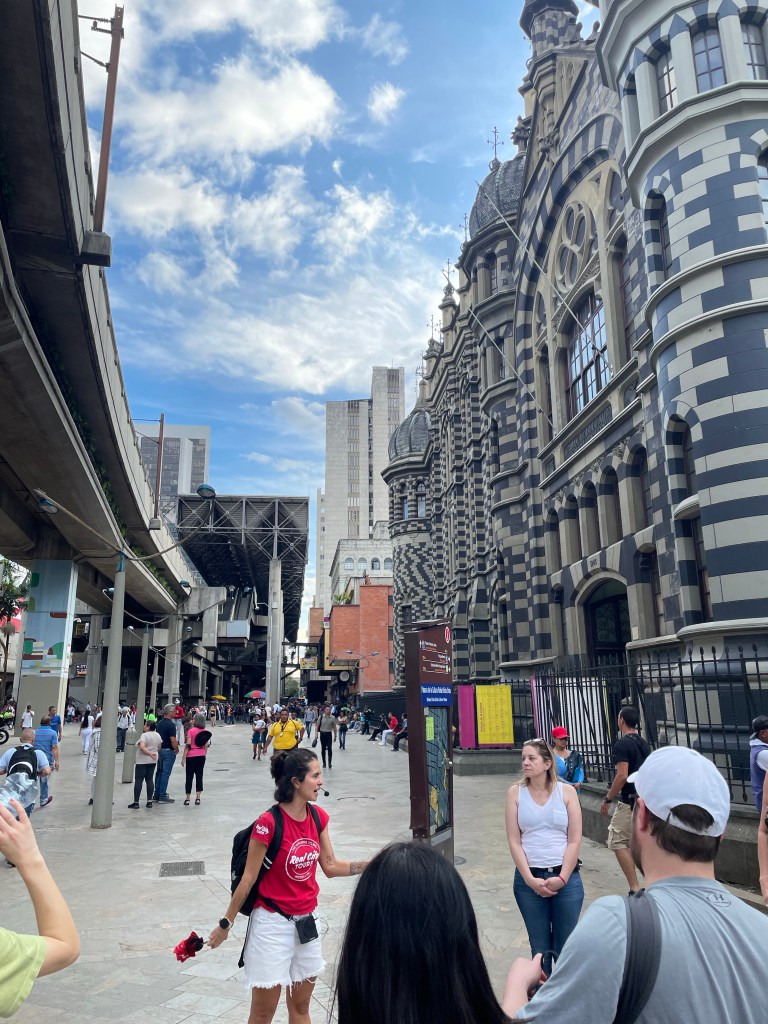

El Poblado is the suburb where we are staying, and it is definitely the place for tourists. We will explore more in the coming days.
Guatapé day trip
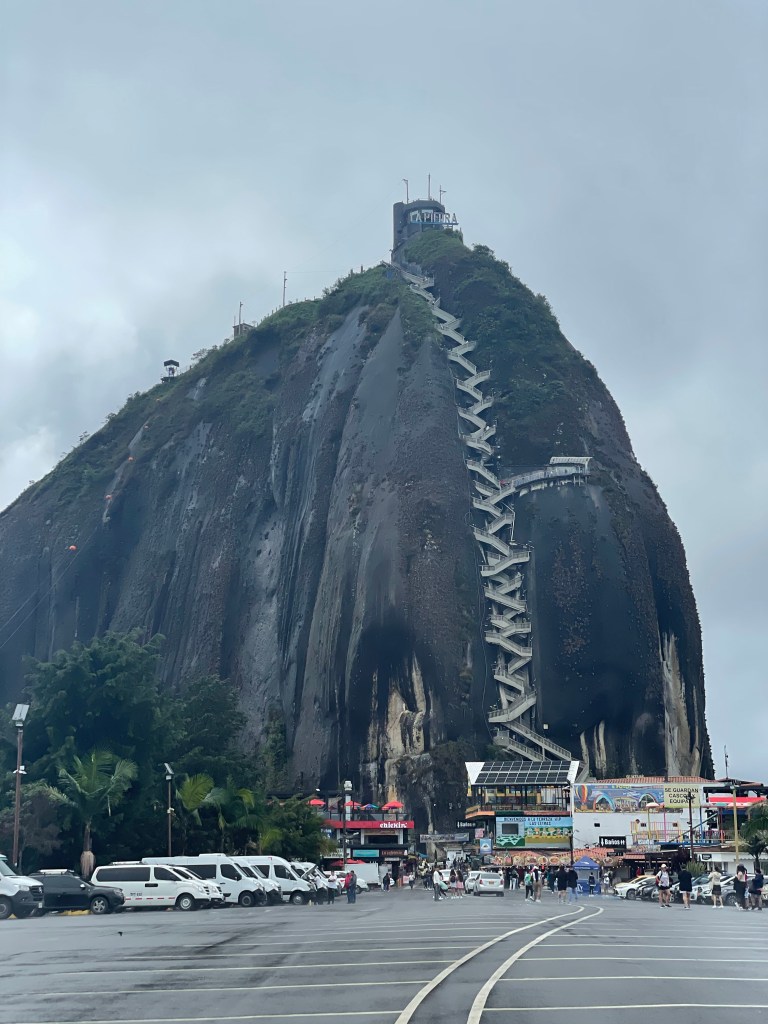
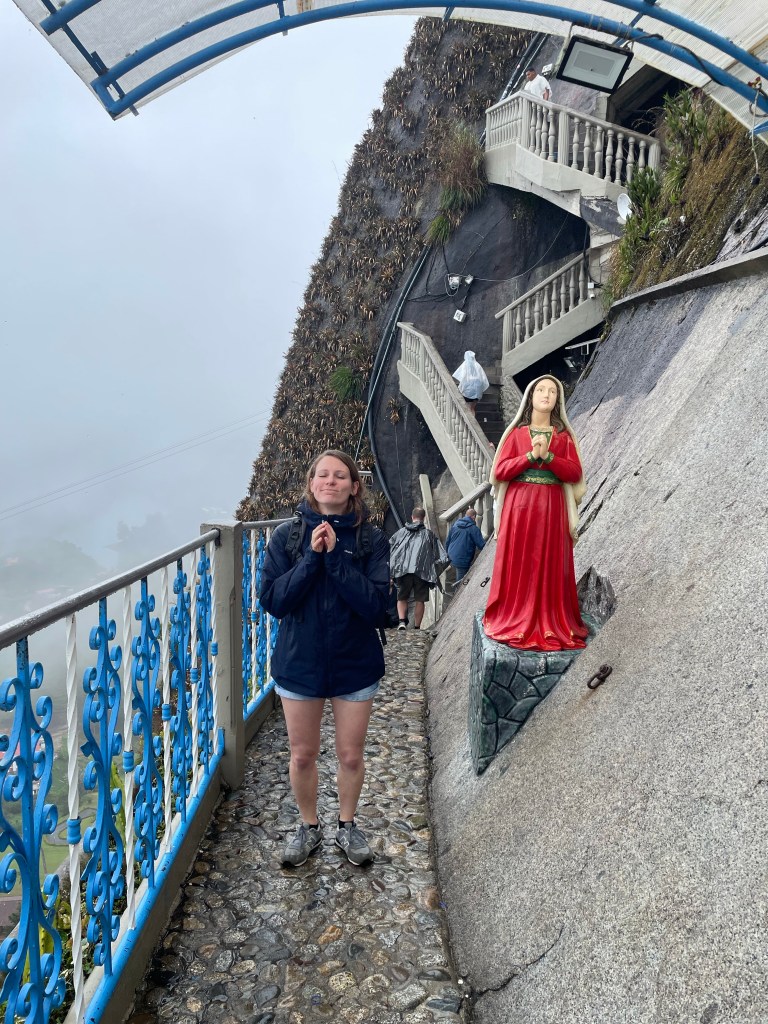
A cheap and cheerful touristy tour to Guatape, a couple of hours from Medellin. The key attraction is El Penon, a big rock with stairs up it. Our guide claimed it was the fourth largest monolith in the world, after Uluru in Oz, Sugar Loaf in Rio, and a third which I couldn’t hear. That said, a quick google seems to negate the above ranking of this rock.
This is THE day trip to do from Medellin, and thousands of visitors schlep their daily on coaches and minivans. We got to El Penon early and it was raining heavily. The top of the rock was surrounded by clouds when we arrived. Undeterred we paid our 25,000 peso entry fee and climbed the 650 odd steps to the top for a wonderful view of said clouds.



A five minute drive away, Guatape town itself is a colourful place, almost designed as a touristy Instagram trap. The houses are adorned with paintings of sheep and horses. We asked why, considering we hadn’t seen one sheep on the journey here – all religious symbolism, apparently. It felt super safe to walk around owing to the thousands of other tourists. Not necessarily a local delicacy, but the warm cinnamon rolls covered in arequipe and almonds were a hit.


After lunch, the final leg of the tour was a quick boat trip where we looked at a range of mansions on the lake (some belonging to Colombian footballers, bigger ones belonging to their ex wife, and a couple of derelict ones belonging to the infamous criminal), and a brief glimpse of El Penon before being serenaded by a man creating songs in Spanish about the passengers on board.
Urban coffee tour to Comuna 8 La Sierra
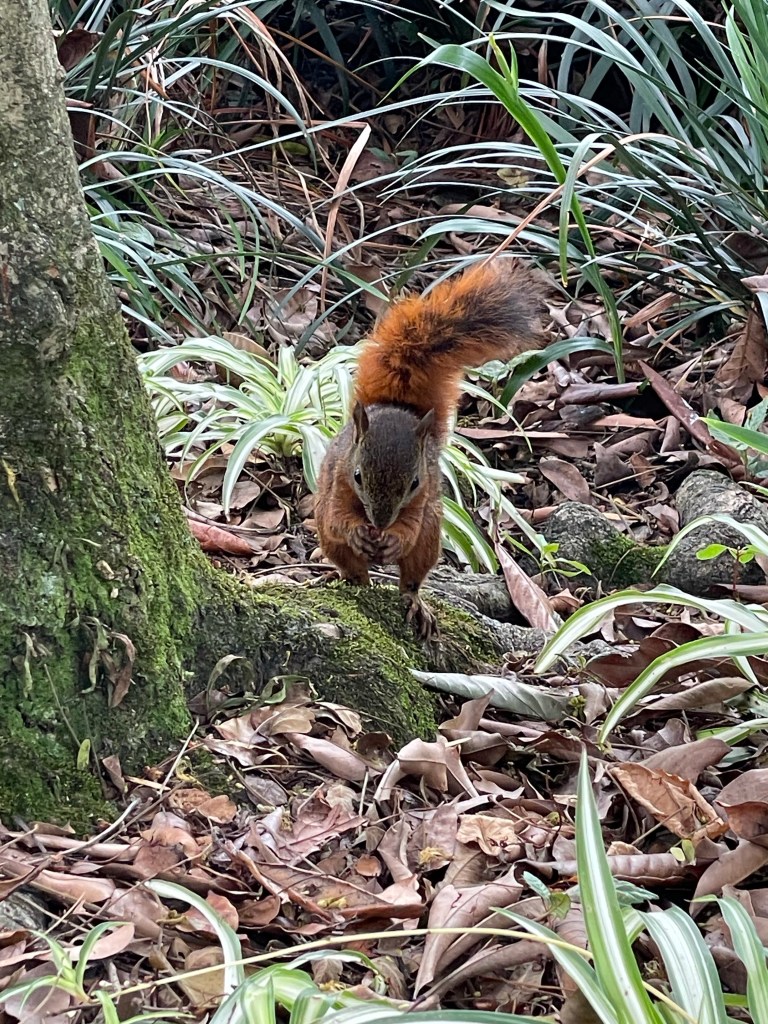
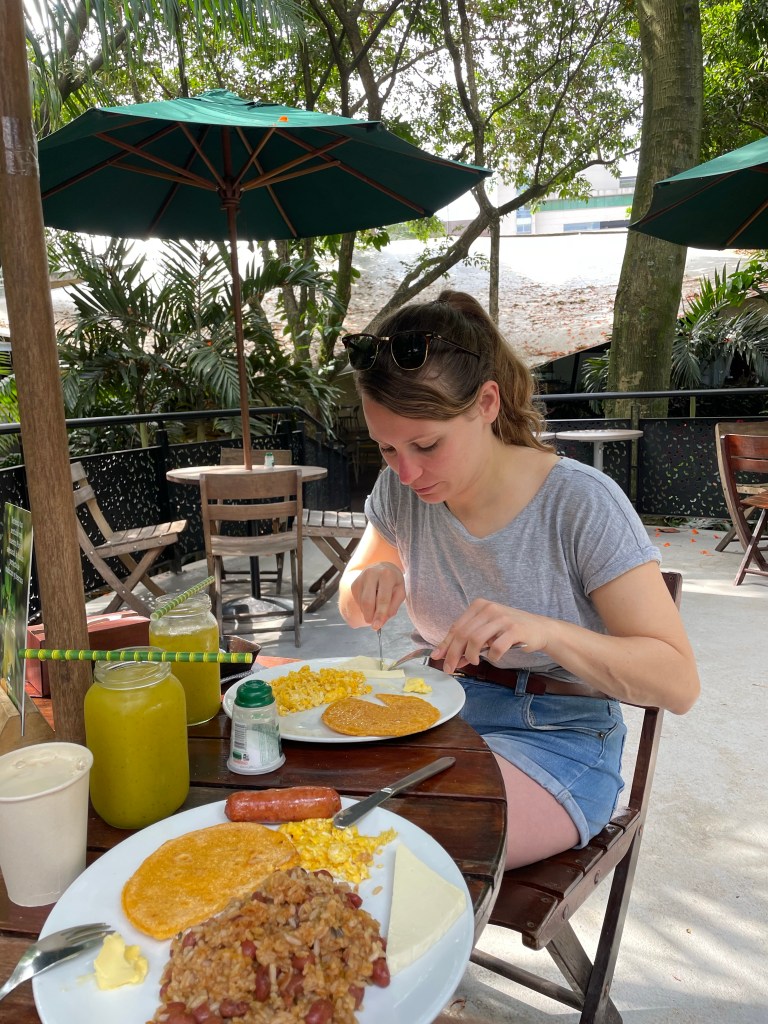
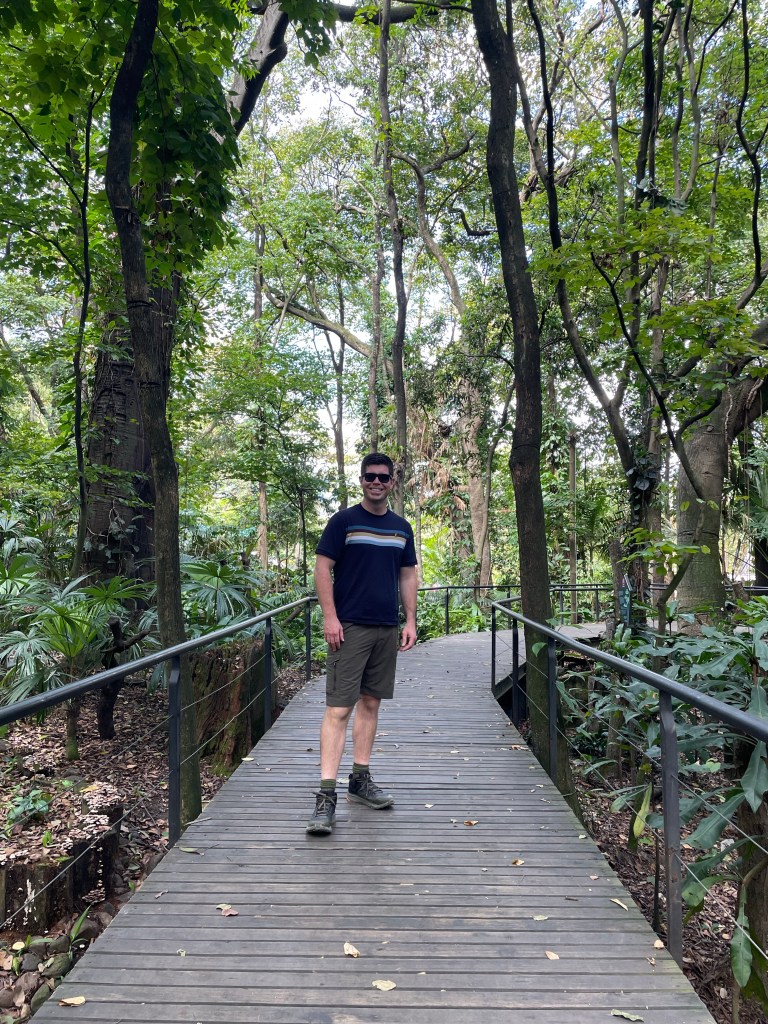
We started the day with breakfast at the botanical gardens. This was a hearty portion of arepas, eggs, rice, beans and chorizo. The botanical gardens were nice, but unremarkable. Red tailed squirrels fighting was a highlight, as were the bright red birds (maybe a vermillion flycatcher?) Sarah desperately wanted to find an iguana, but we left with no success.

A small yellow city taxi, driven like a go-kart, sped us to our next destination; Museo Casa Memoria. The museum is dedicated to the victims of the many years of armed conflict in and around Medellín. The building itself is impressive, however the museum lacked explanation about the causes and we left without furthering our understanding much. We think we are probably not arty enough for this type of museum.
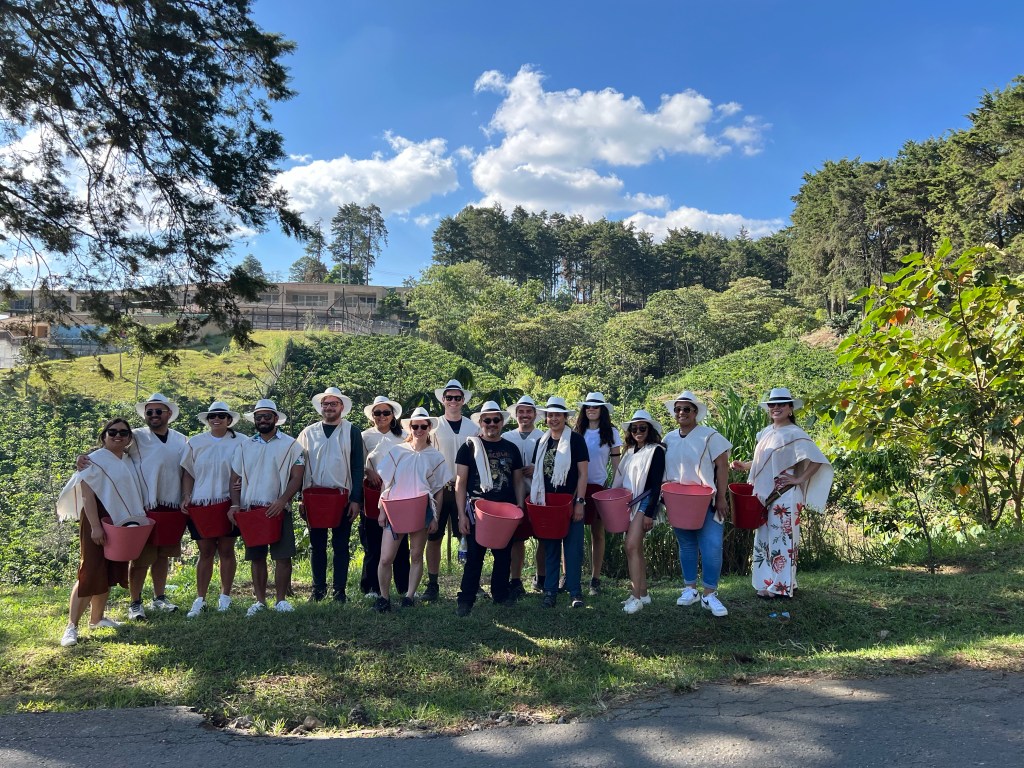
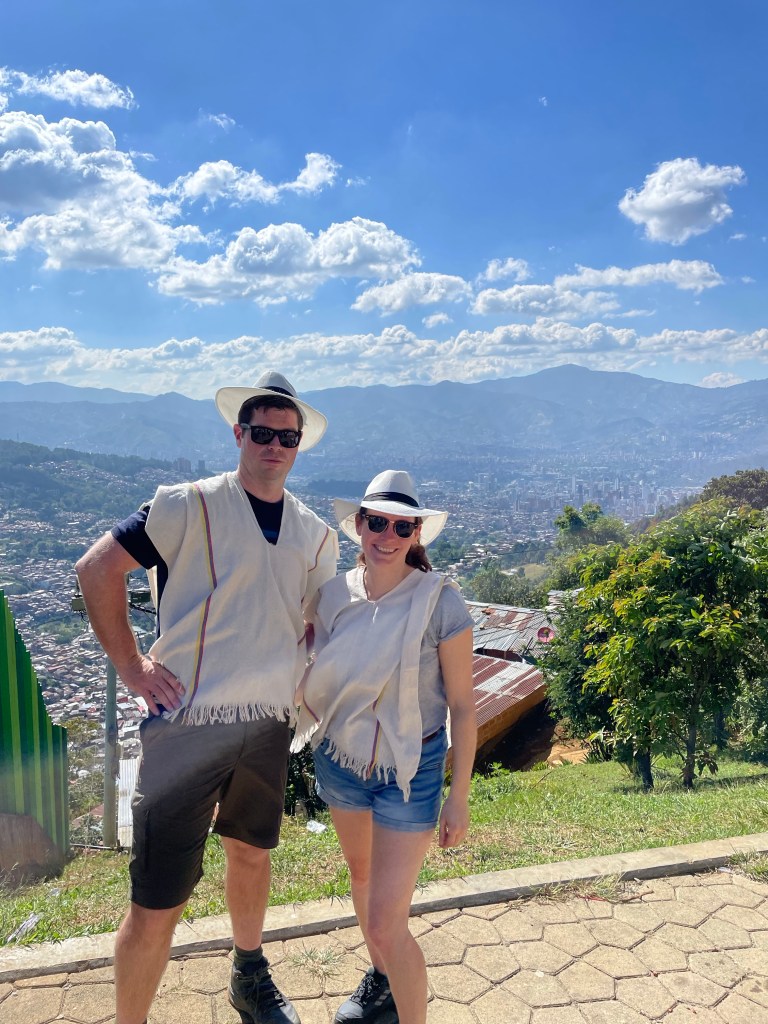
The afternoon was spent on an urban coffee tour (https://urbancoffeetour.com/) in comuna 8. To get there we took a trolley bus from San Antonio, and a cable car up into the comuna, perched high on the eastern side of the valley of Medellin. The views across the city were incredible.
After climbing another 400 or so steps we arrived at Rosa’s Casa, and were treated to an afternoon learning about the history of the communa and their coffee production. We also spent time in a local field picking the beans, before the all important preparation and tasting.
Coffee beans and “wine” were for sale at the end of the tour. As much as we’d have loved to take some, it would be impractical to take them around South America for 90 more days. The urban coffee tour is certainly a highlight of our time in Medellín.




In the evening we went to dinner at Mondongos in Poblado with our new American friend Scott from the coffee tour. Still too wary of walking around after dark, we left our phones at home. So no photos.
Comuna 13
In the morning we took another ‘free’ walking tour, this time of Comuna 13. For those not familiar with the concept, at the end of the tour the guide is paid in tips, which invariably means they make more than they would if it were a paid tour. Overall they must make some seriously good money.
Our guide was Esteban, who had a curiously British accent for someone who’s never left Colombia. A legacy for a travelling Mancunian English teacher in Medellin.
Comuna 13 is now a major attraction for tourists visiting Medellin. The city itself is in a steep sided valley. As the city expanded the wealthy, and middle classes, built their homes across the valley floor and had access to services and sanitation.
Internal displacement occurred on a massive scale during the conflict in the 80s and 90s. Guerrilla groups (such as FARC) and paramilitaries were forcing rural citizens out of their homes, and they had nowhere to go but the city. Medellin grew over 20x in a short period of time, and many of the migrants were poor or very poor. They built informal settlements on the fringes of town, high up on the valley sides and without access to services such as schools.
As recently as 2010 these places were extremely dangerous places to be. Murders were abundant for all manner of causes, political, drugs, gang warfare, and the notorious false positives (where rewards were given for slain gang members, and therefore bodies were presented as gangsters without evidence)
New infrastructure such as cable cars, the metro, and in Comuna 13 the outdoor escalators, have given an economic boost to these areas on the fringes of town. Importantly bring tourists quickly, and en masse. The story is that graffiti and street dancing has given youngsters a different focus for their energies, perhaps it has, but many seem laser focused on lightening the wallets of visitors. A safe and lucrative alternative to the gangs.
The story is that gangs are still pervasive, and the drug trade is doing better than ever. The danger is still there for a local. For visitors however, the area is pleasant and safe to walk around, perhaps in recognition that tourism is now an even bigger cash cow. The six escalators built in 2011 whilst seemingly pointless, have worked to create a more cohesive, equal and flourishing neighbourhood on this steep mountain side.
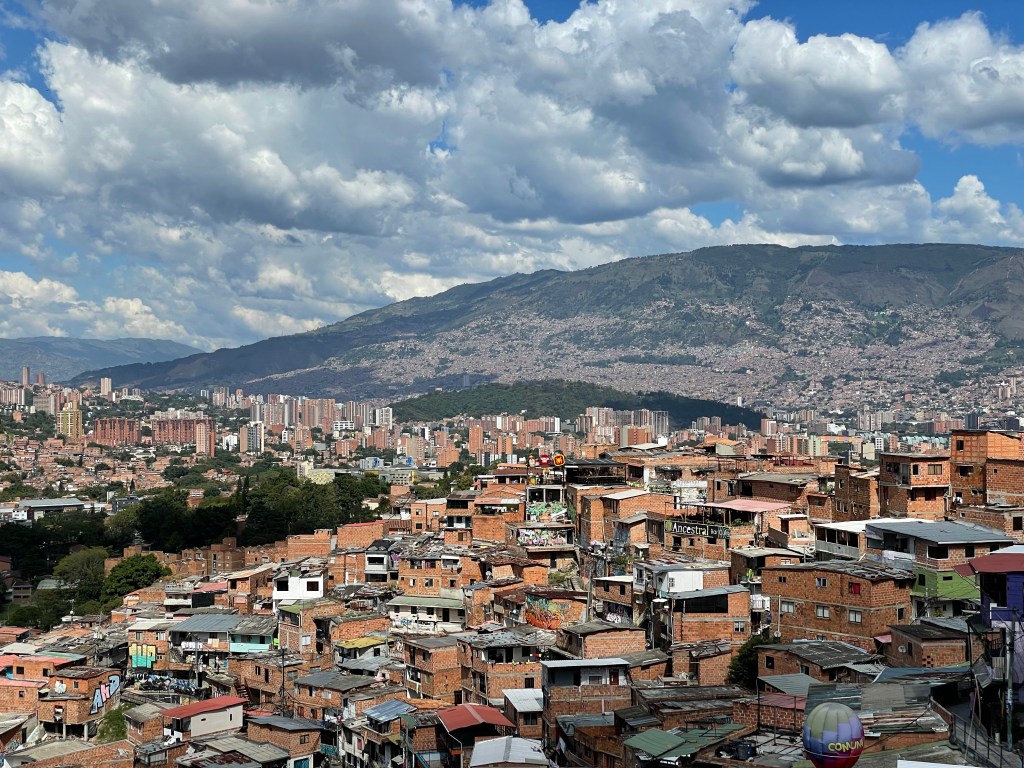
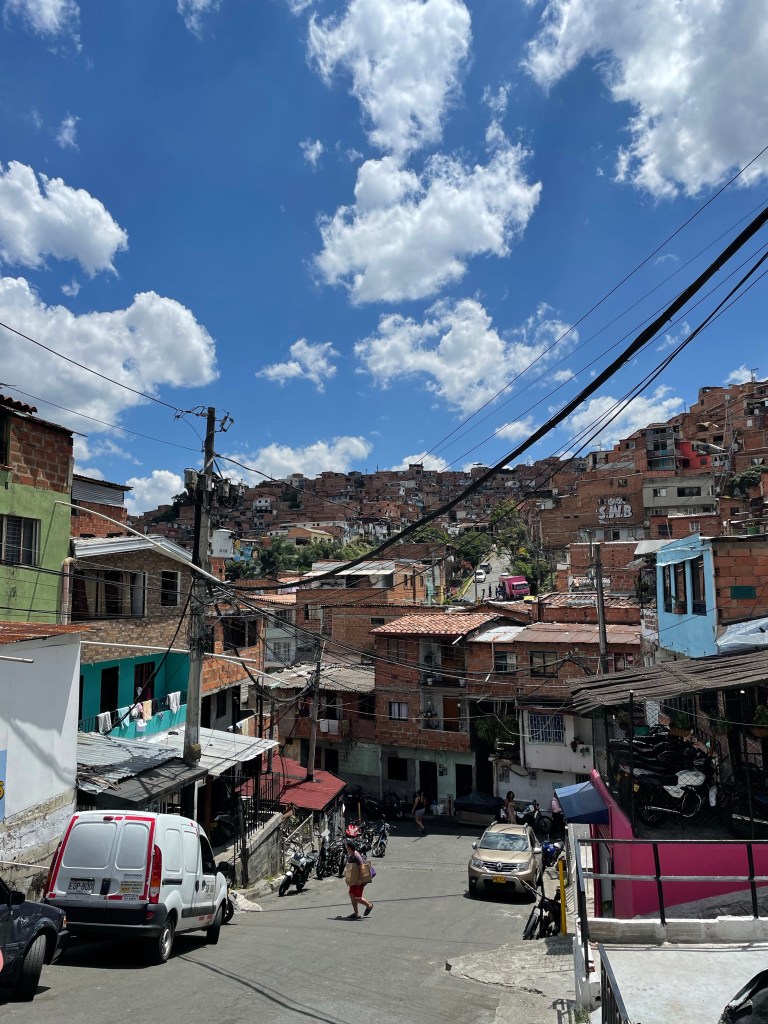

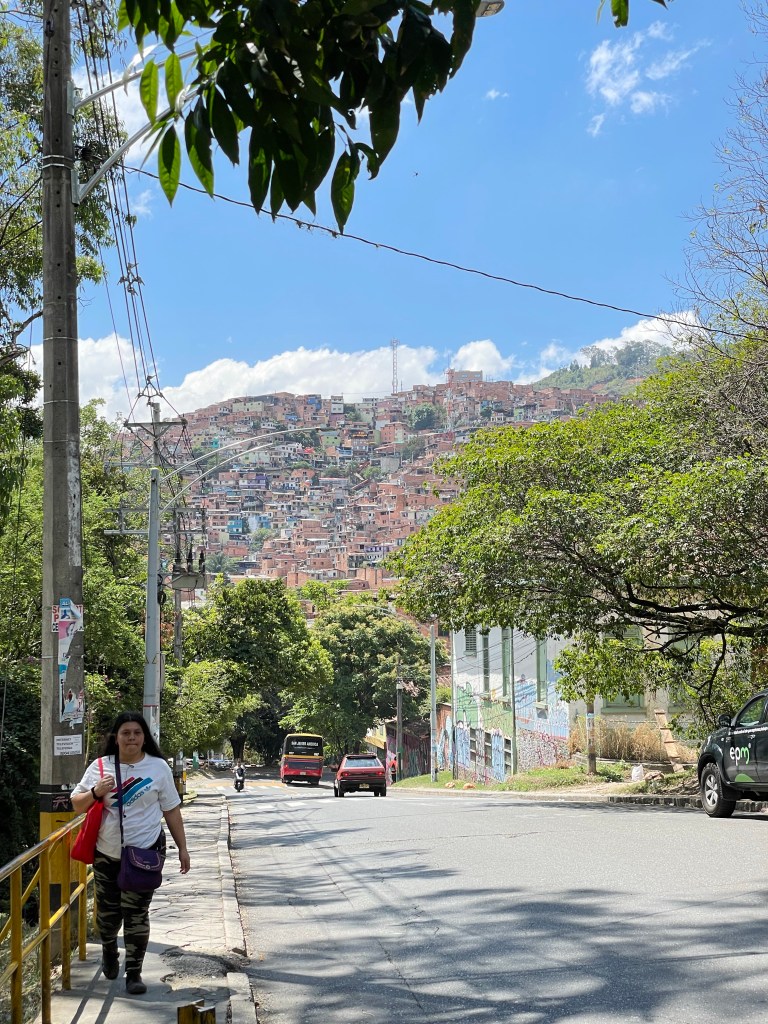
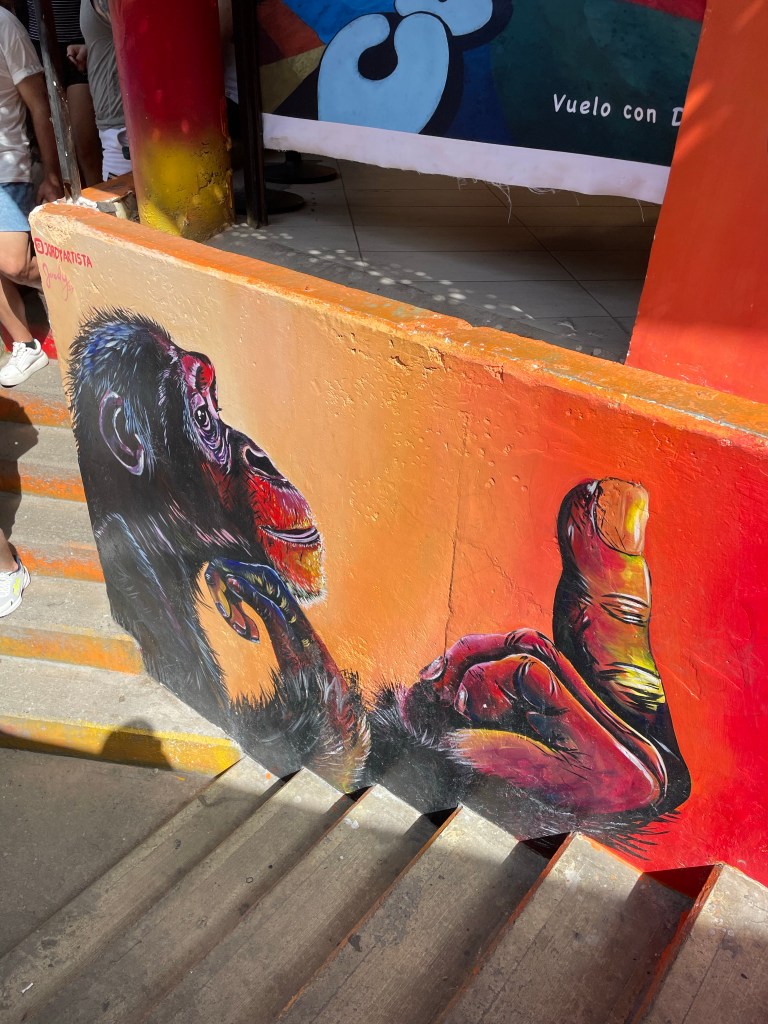

Graffiti is pretty, and occasionally has meaning, and like most things in Colombia has its roots in tax avoidance. Comuna 13 is worth a visit, less so for the graffiti, and more to see one of the informal neighbourhoods. It seems to have attracted all the attention in Medellin, and maybe there are other similar neighbourhoods to visit that are less of a tourist trap – such as Communa 8.
Deportivo Independiente Medellin
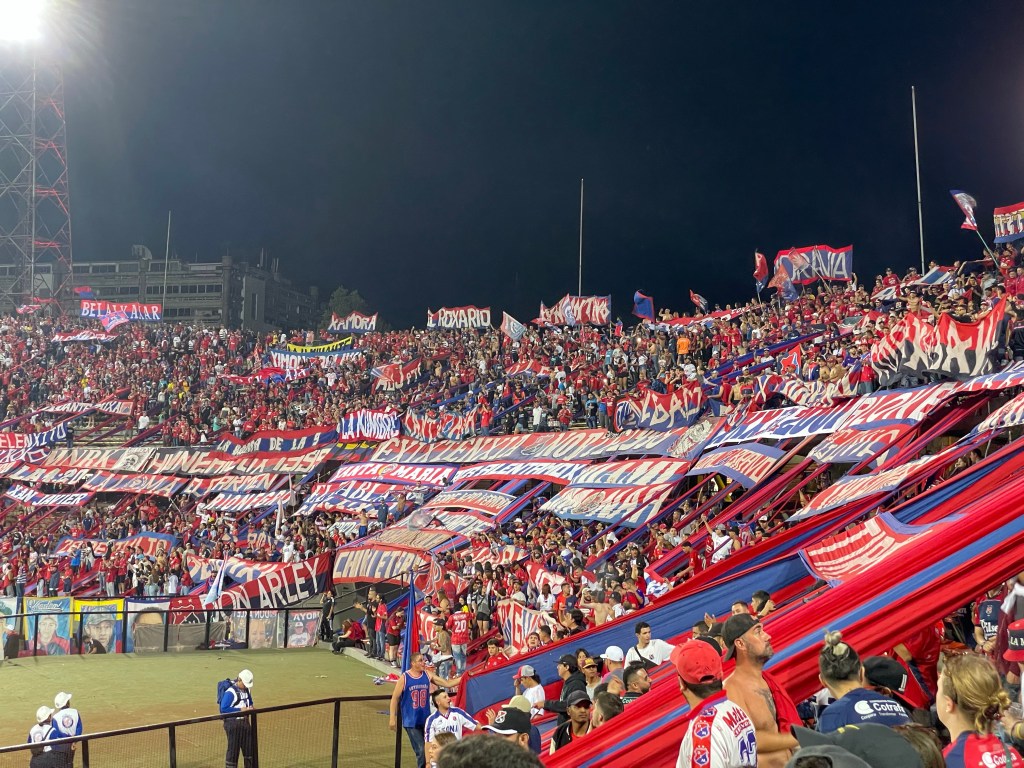
In the evening we went to the Deportivo Independiente Medellin match vs. Santa Fe Bogota. Sarah’s second ever full football match. Football Tours Medellin organise a few buses from the hostels of Poblado. We were taken to a corner shop around the corner from the stadium for street beers, and then a bar for free shots. These were required as the football itself was dire, and the beer inside the stadium was worse.
The fans were a credit, singing and waving banners for the full 90 minutes, not even breaking from their tune when Santa Fe equalised with 10 minutes to go. A 1-1 draw flattered a game devoid of quality and only a couple of sights of goal. Neither team strung more than 4 passes together, and the only name of note was 38 year-old former Wigan and Fulham striker Hugo Rodallega. Still – we had a great evening out. It was people watching at its finest.



Next stop Cartagena
Only a few short days and we’re finished with Medellin. We were pleasantly surprised at how great the city was to visit and could have spent many more days here.
Today we fly to Cartagena on the Caribbean coast, before starting our long journey south to the opposite end of the continent.
- The infamous Binga-Karoi road
- Mana Pools: A bucket list location?
- Camping Among Lions: Chitake Springs Experience
- Chirundu: The worst border in the world
- The Wild Dogs of Jeki: Sunrise in Lower Zambezi
 Small Holiday Big Dream
Leave a reply to nicolas4576abc256 Cancel reply