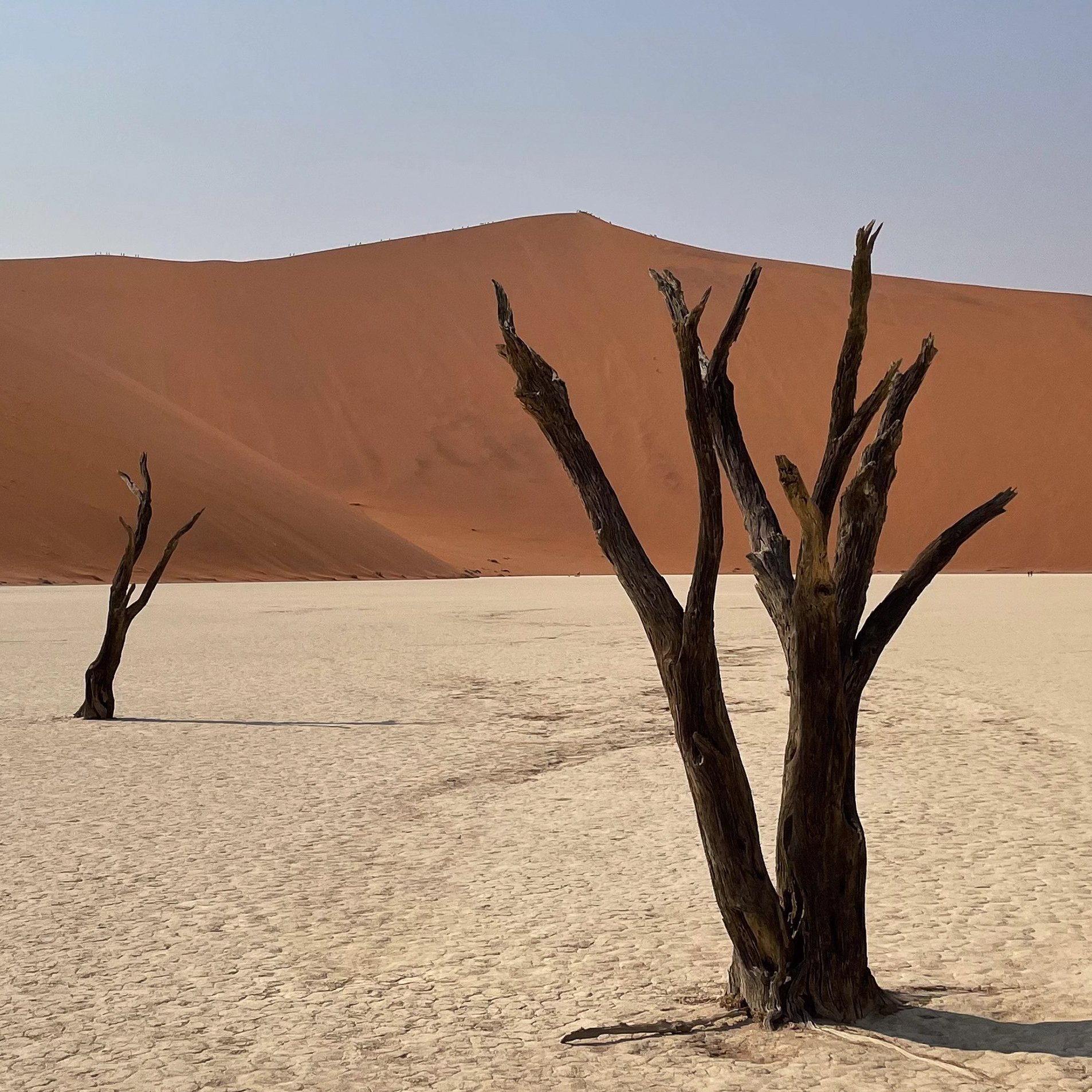
One of the iconic locations of Namibia, and probably one of ones which attracted us to the country in the first place
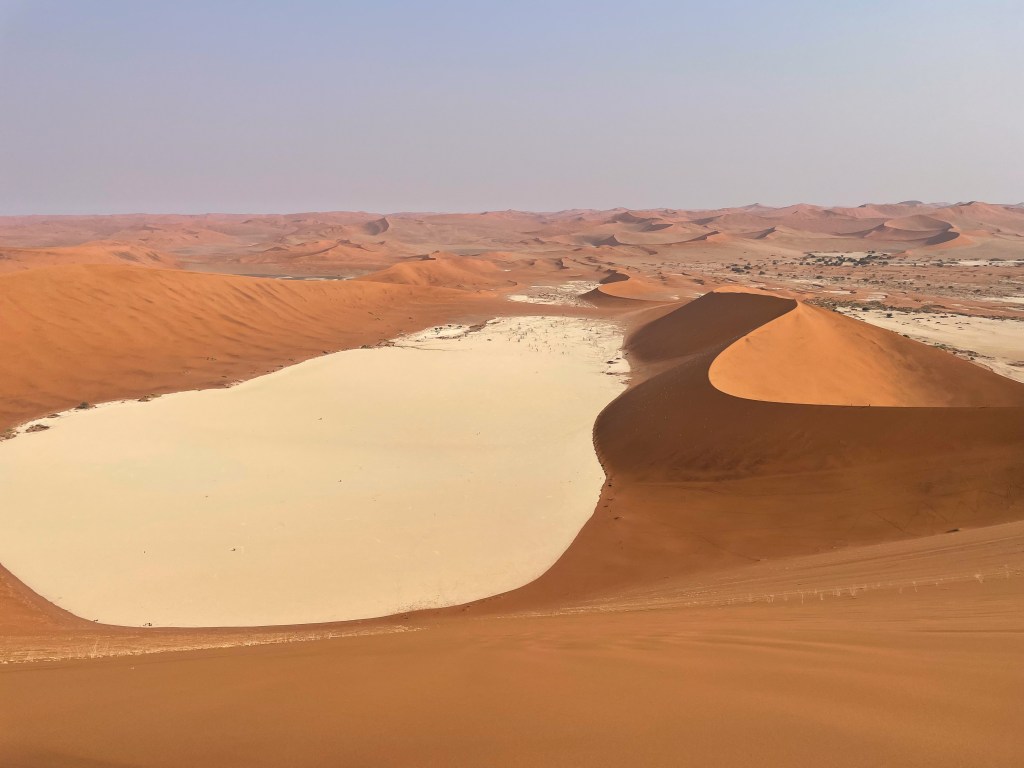
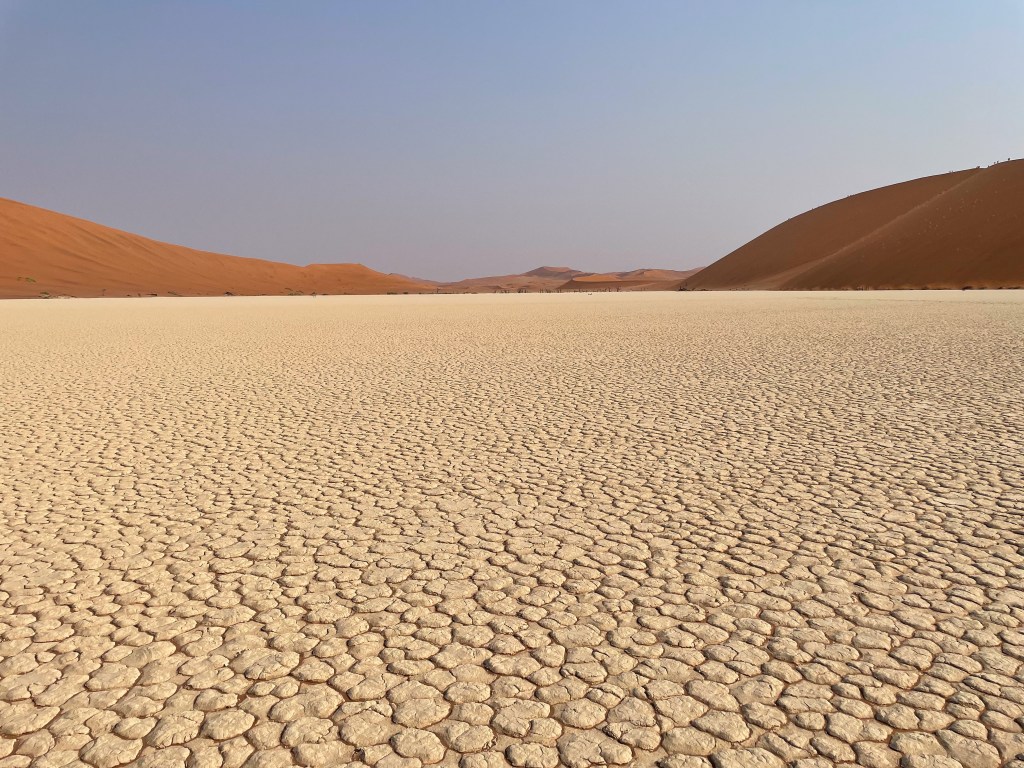
The images of deep red-orange dunes and the bright white clay pan is what we had in our mind, and in order to get there for the best light, and while it’s least crowded, we decided to head off pre-sunrise
There are two gates to the national park, the inner gate opens one hour before the outer gate, and some accommodation is located between the gates. This means that if you stay at either the NWR campsite, or the other lodge within the outer gate perimeter, you get to be among the first to access the dunes in the morning.
We had stayed at the NWR campsite, which you should book and pay for online in advance. The facilities were good, with a well stocked shop, bar, restaurant, pool, and multiple ablution blocks.
The road down to Sossusvlei takes around one hour, and is probably the smoothest ride in all of Namibia thanks to being recently tarmacked.
On the way we passed Dune 45, a popular spot for sunrise. We eschewed the chance to stop, opting to get to Deadvlei as early as we could, the sun rose behind us as we were driving and the colours of the desert were intense, but we don’t regret not stopping.
At the end of the road you have a choice whether to park up and take a shuttle to the dunes, or drive yourself along the sand tracks. You certainly need a 4×4 for this, the sand is deep, and we passed two stuck cars along the way. Don’t worry, dear reader, your gallant authors stopped to offer assistance with a spade and towrope, but were roundly ignored by the stuck French drivers.
If you plan on deflating your tyres (and maybe you should), then you should do it in the car park at the end of the tarmac road.
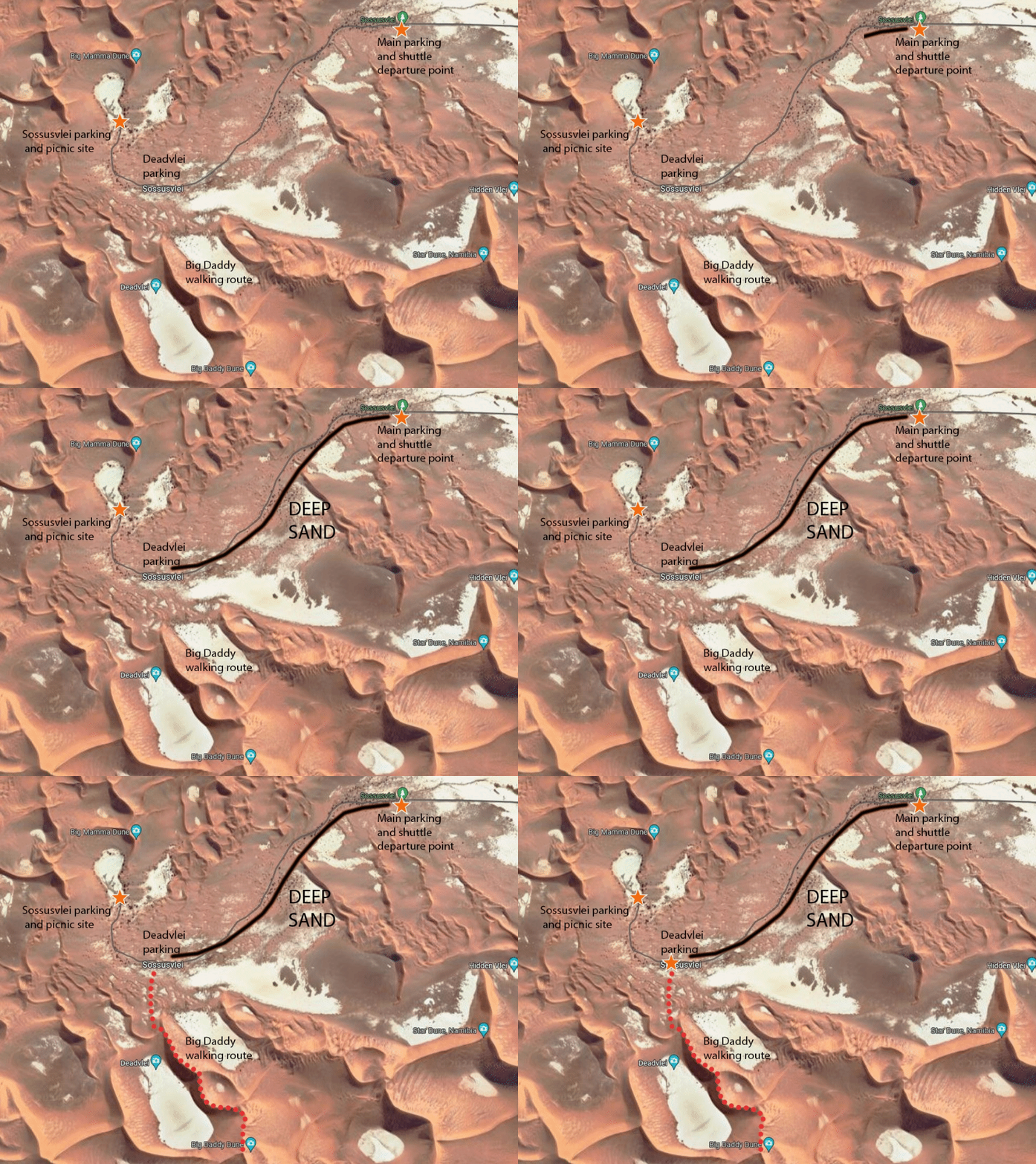
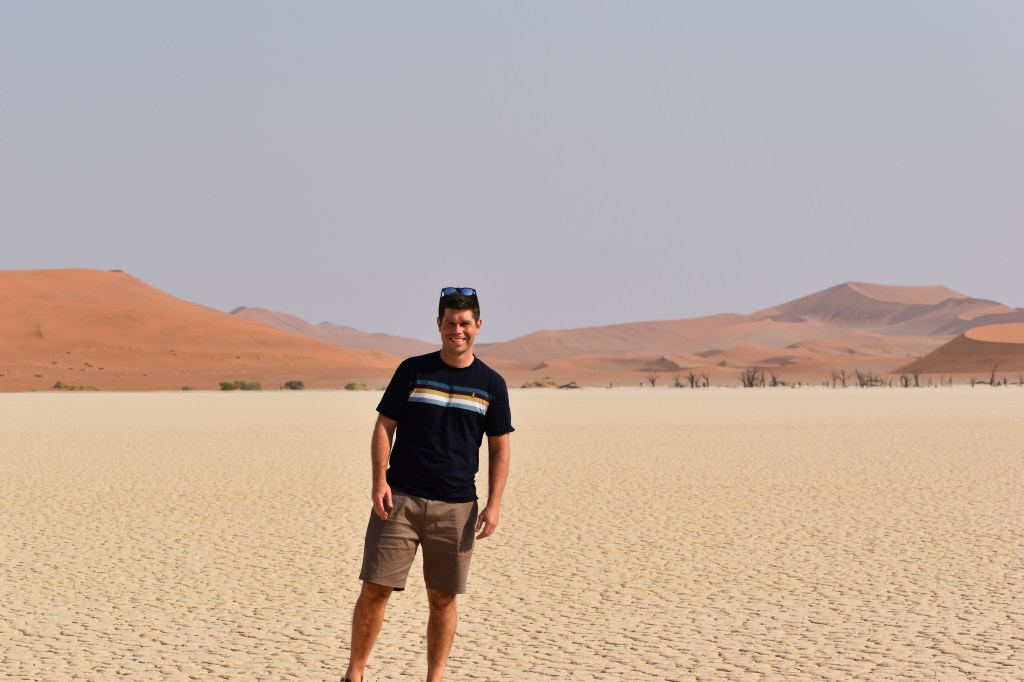
The parking for Deadvlei is impossible to miss, you won’t be the first there, and there are signs guiding the way. The pan itself is a short 15 minute walk from the parking area. We opted to turn left at the crest of the basin, and begin the hike up the big daddy dune.
The early morning air in mid-September was nice and cool. It was certainly quite cold overnight in our tent, possibly touching single figures overnight. However with every passing hour you could feel the intensity of the sun rise and the heat begin to build.
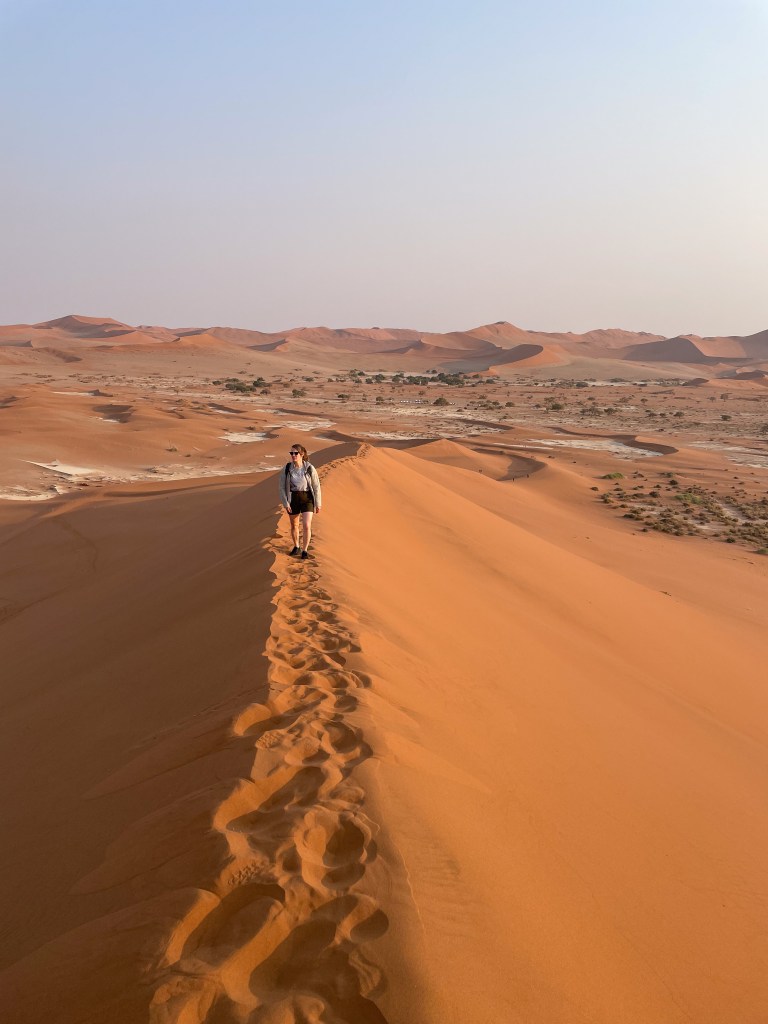
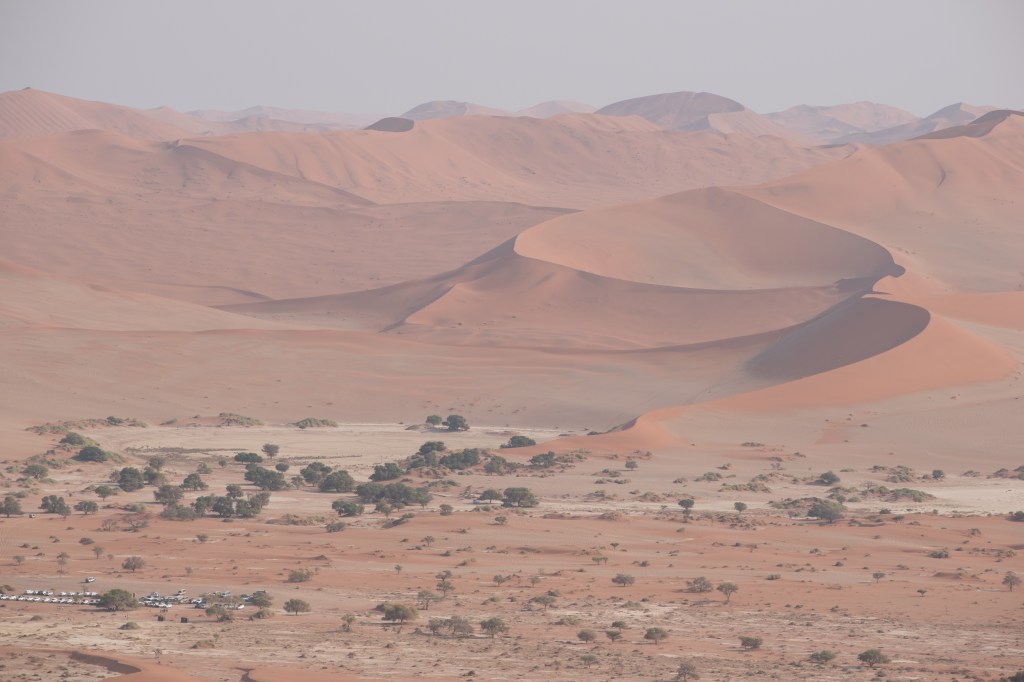
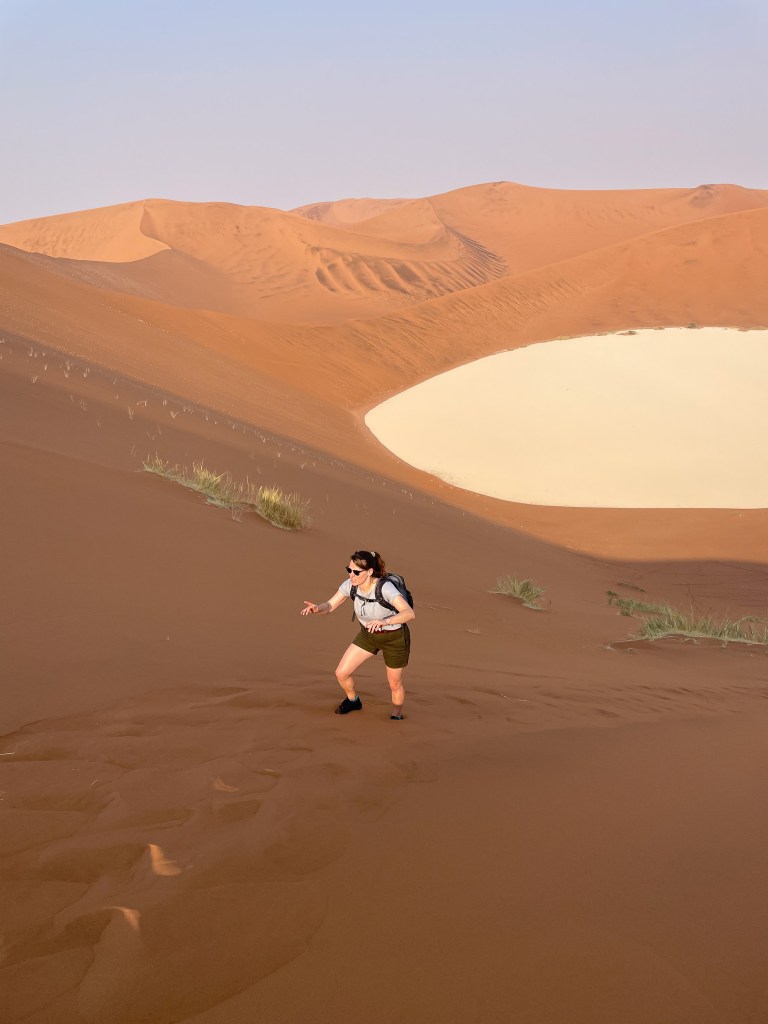
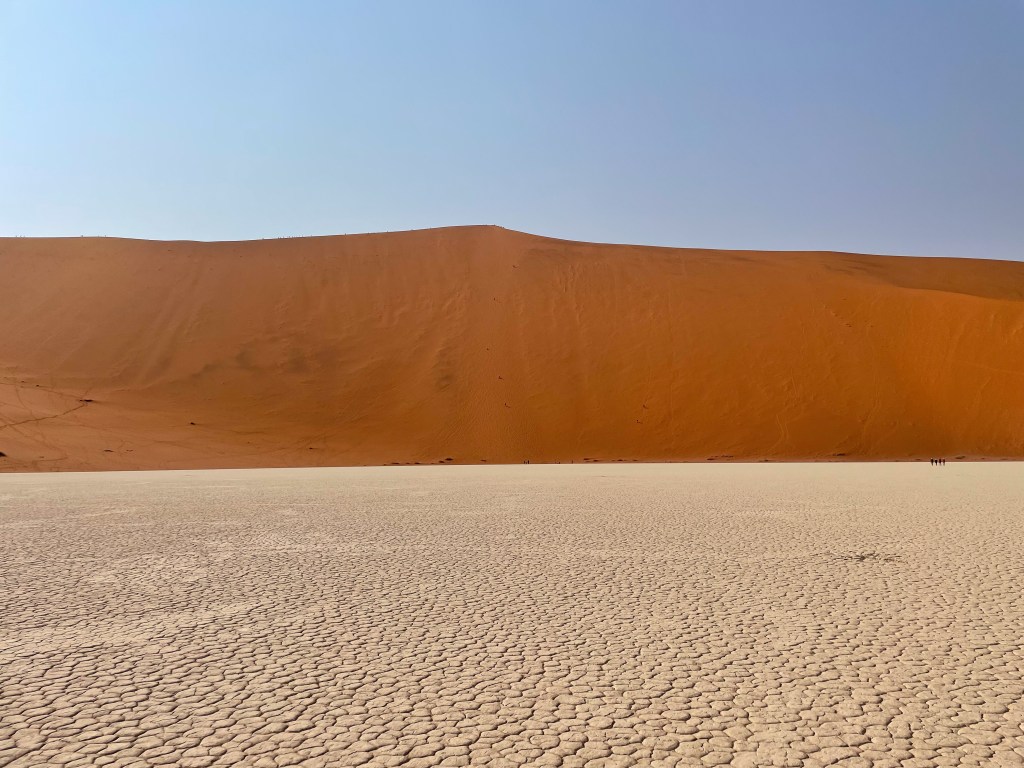
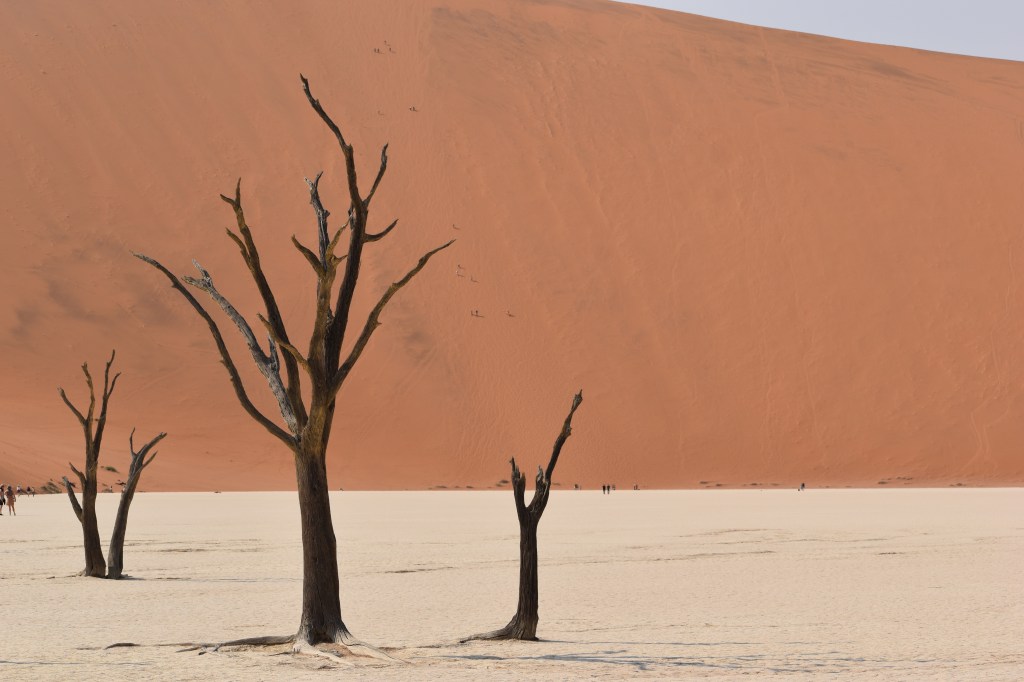
Big Daddy looks a lot bigger in person than you expect it (him?) to be. Don’t be intimidated, the climb is tough and very slow going, but contradicting everything I’ve just said it’s over quicker than it looks like it’s going to be.
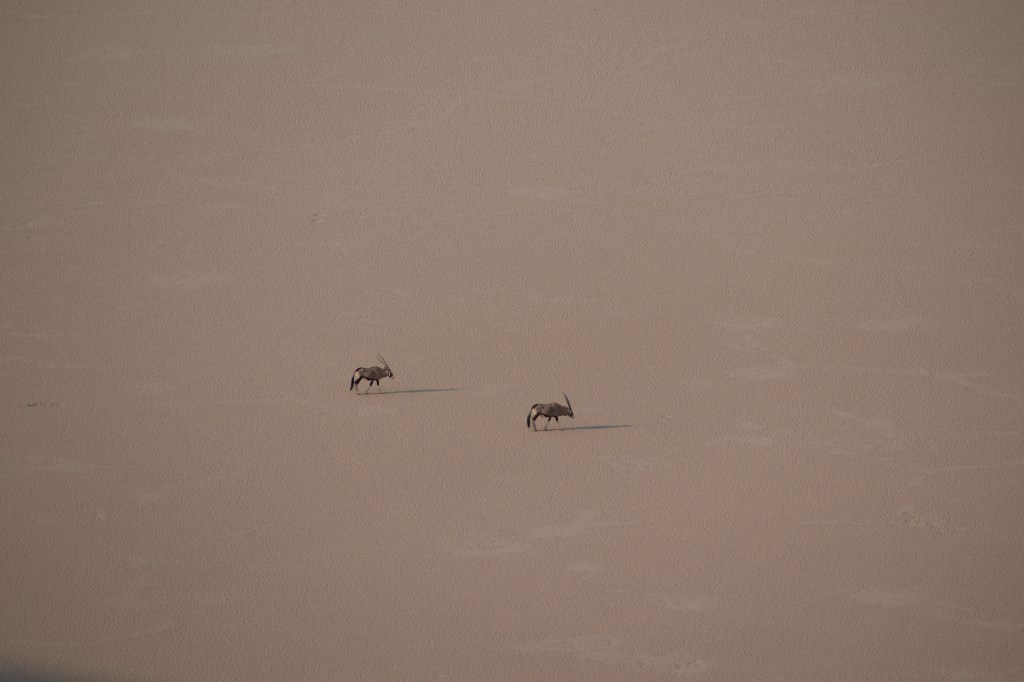
It was 7:45 when we left the car park, and we reached the summit in 90 minutes. As we were climbing to the top we watched on as a pair of Oryx made their way across the pan below us.
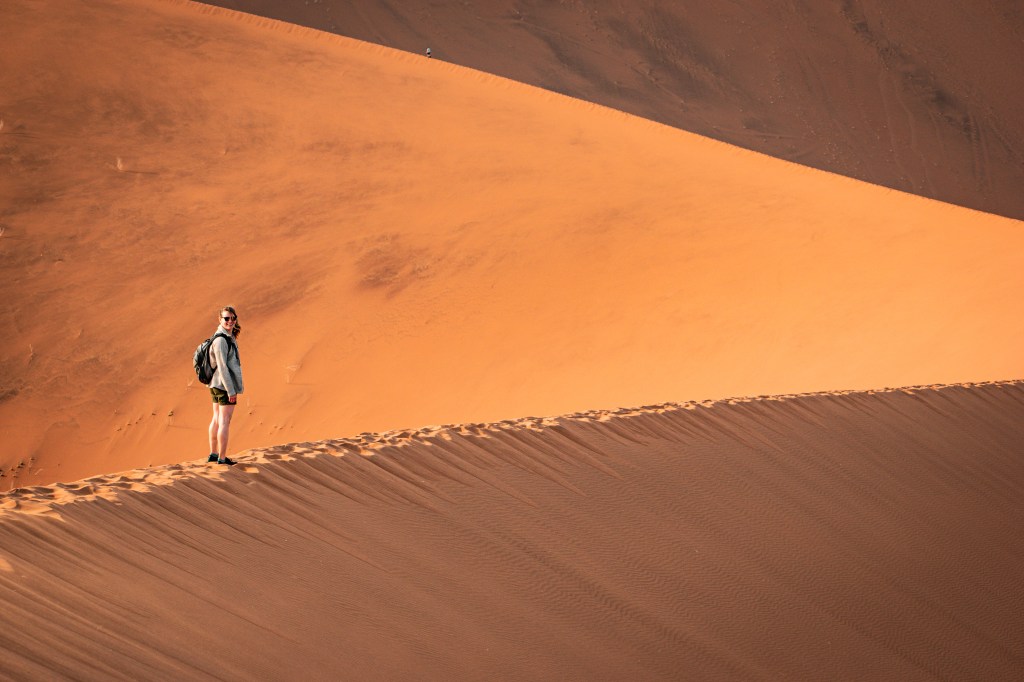
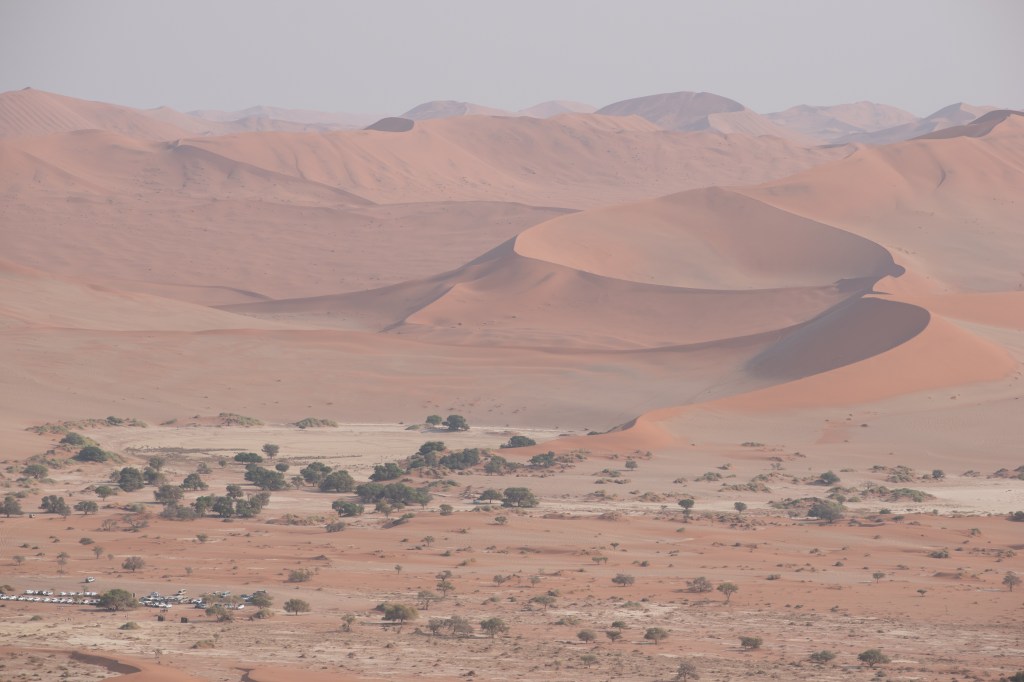
We returned to the pan by going straight down the face of the dune. It looks precarious, but is remarkably quite safe and great fun! We were actually the first people to head down on the morning we were there, and it felt like we were breaking all the rules, but many people came down after us.
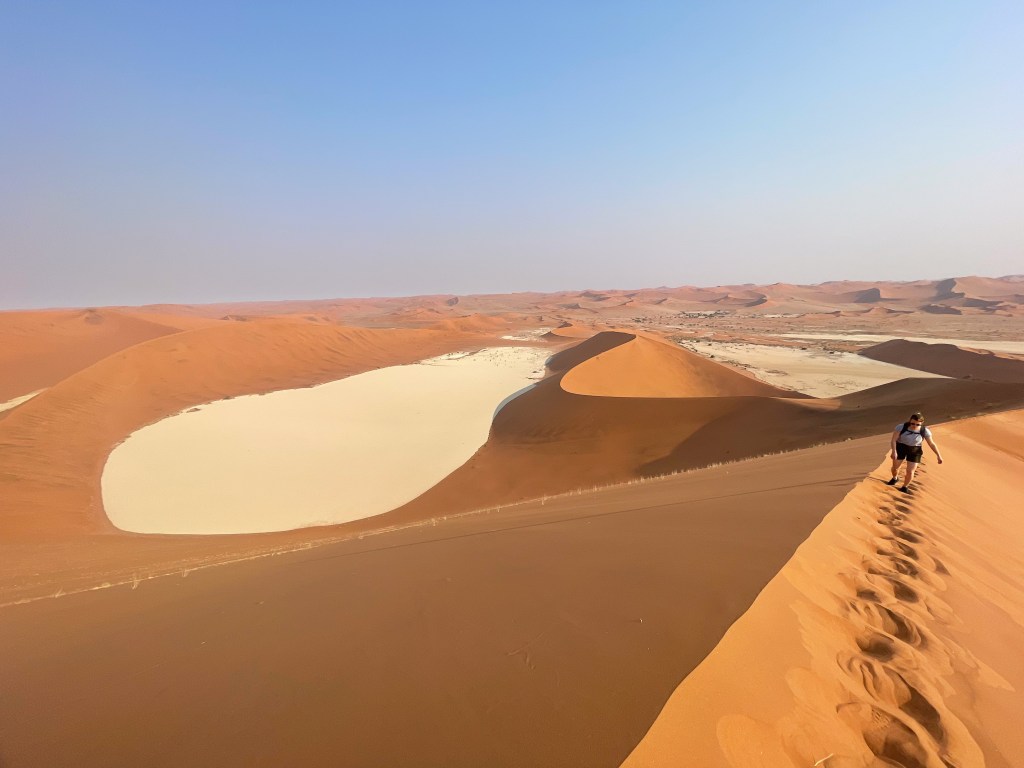
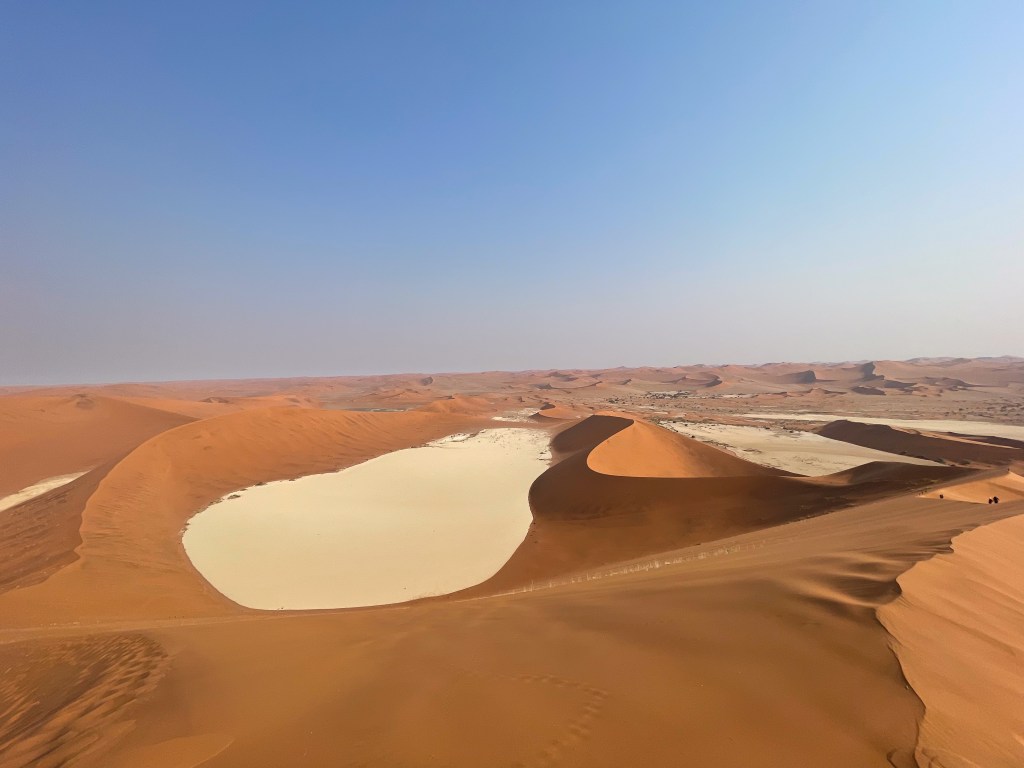
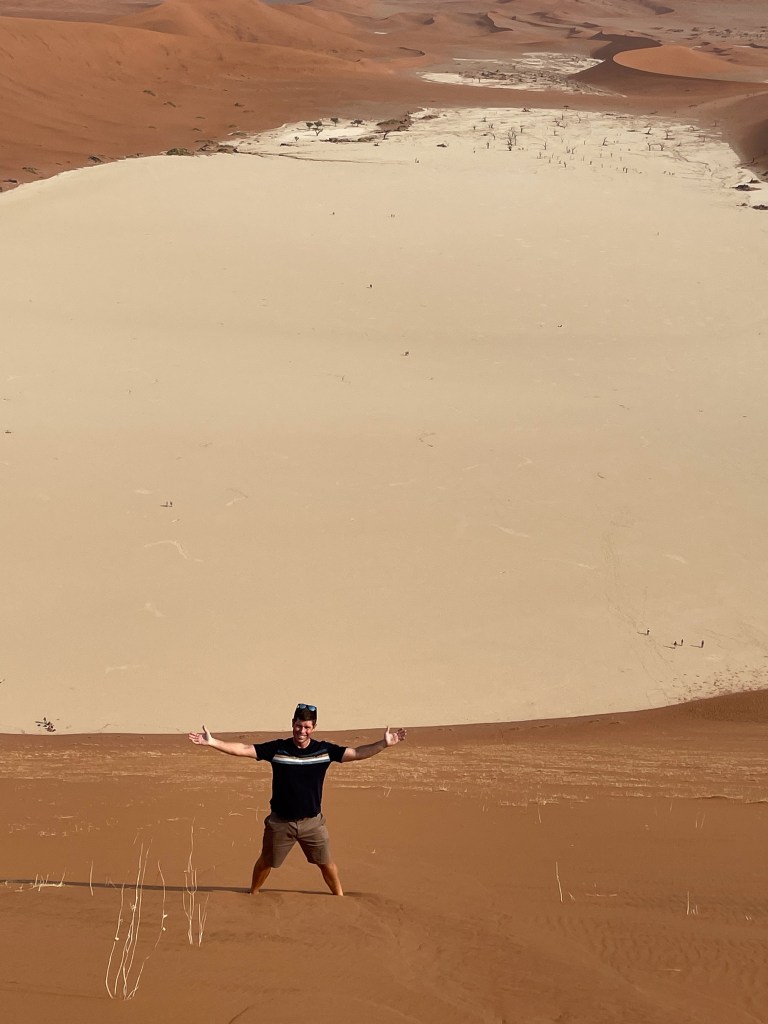
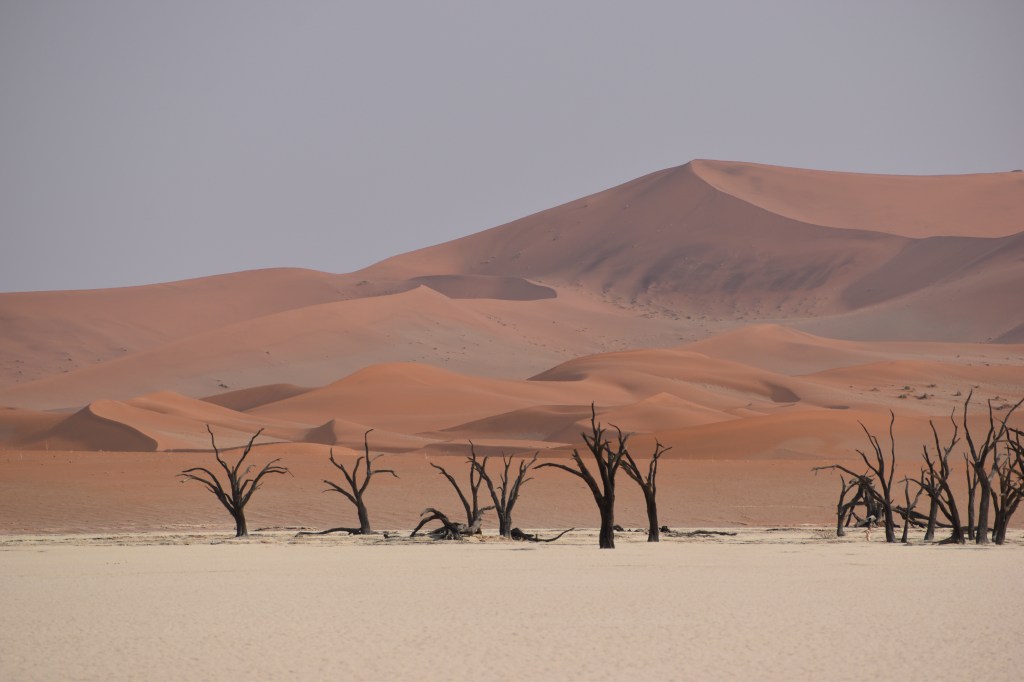
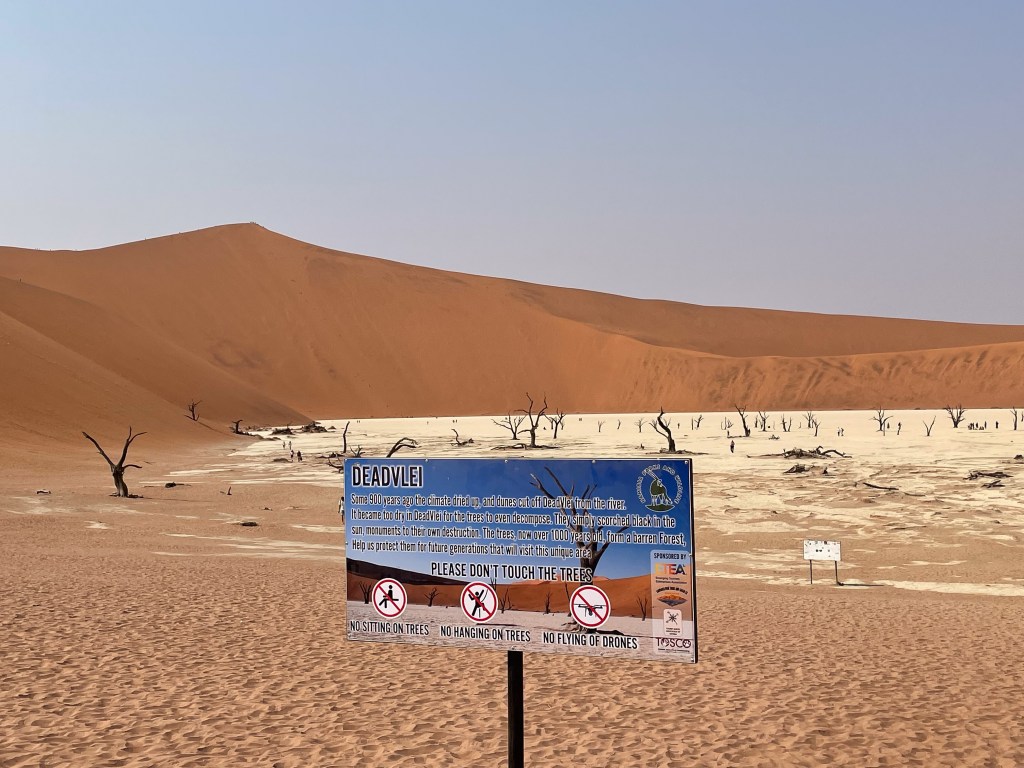
The pan itself resembles the skin of an elephant, the water evaporating off the surface leaves little channels surrounding bright white plates of clay. Towards the northern end it’s got very busy, as all the busloads of tourists start to arrive. Some are making their way up big daddy, but it looks like most are content taking thousands of photos by the dead trees.
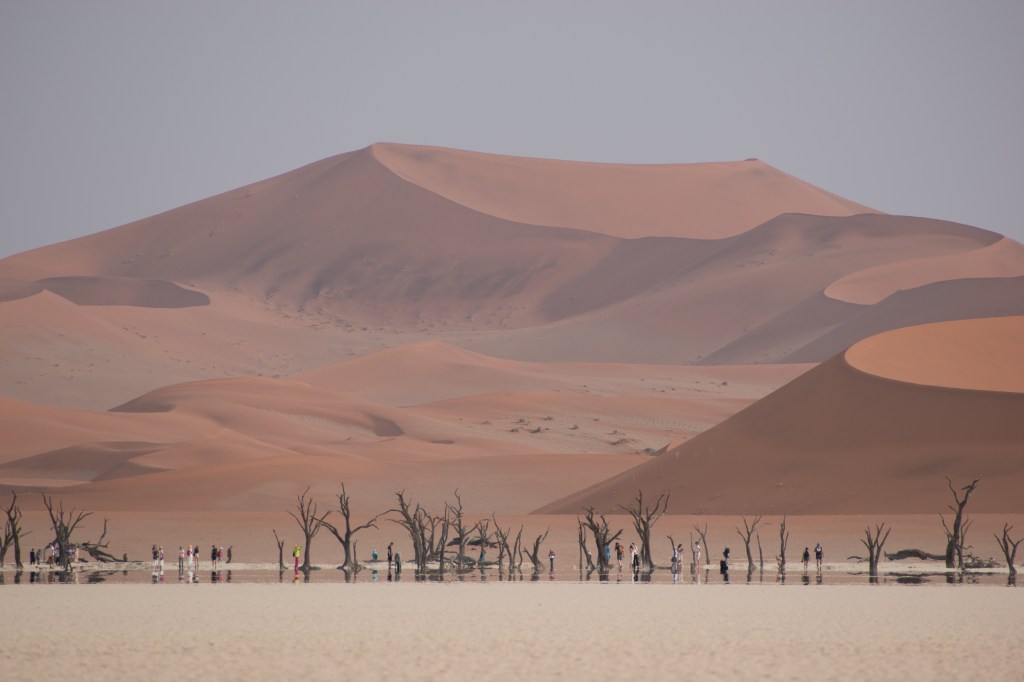
Drones are a bugbear, despite multiple warnings that they’re banned in the area, some asbo creature has decided the world is about him and is zooming one around overhead.
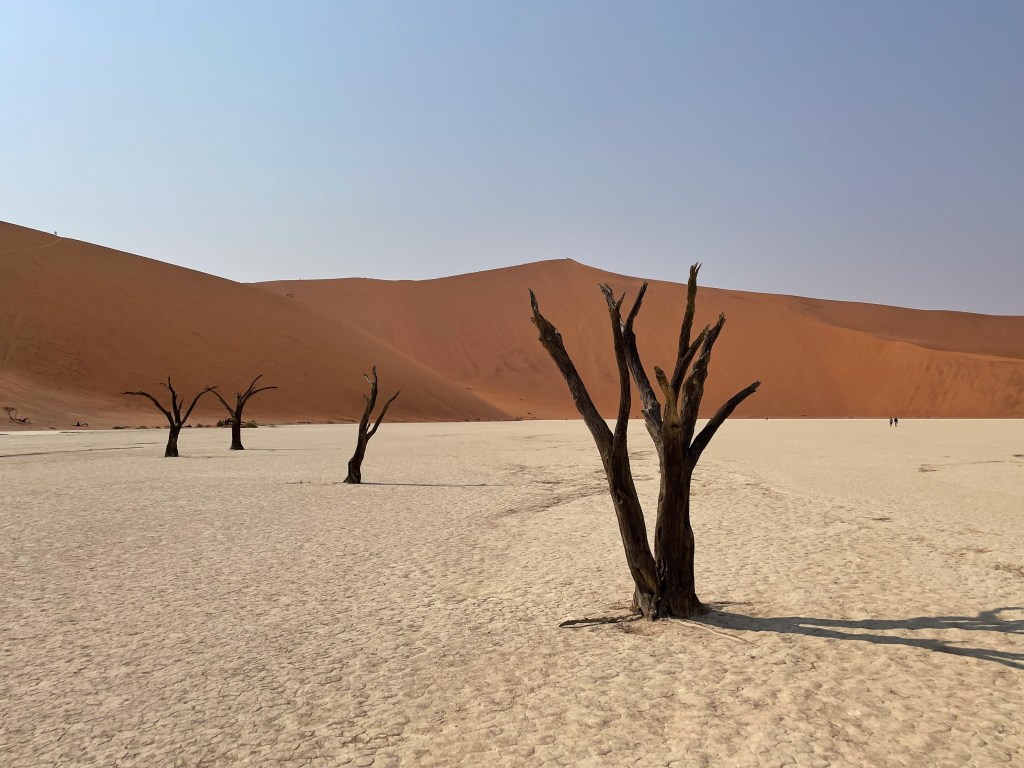
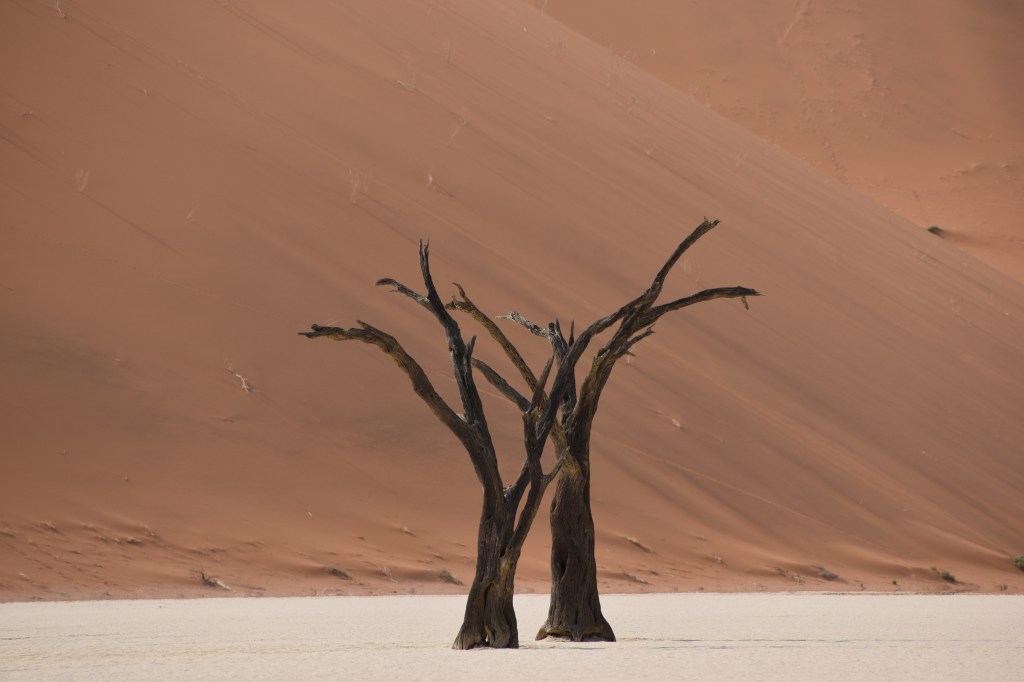
We head across the pan to the trees. They are quite the sight and you can see why they are such a draw for all the visitors to the country. The trees are reportedly up to 1,000 years old, but it’s unclear how this is known, or why they are still standing if they’ve been dead for so long.
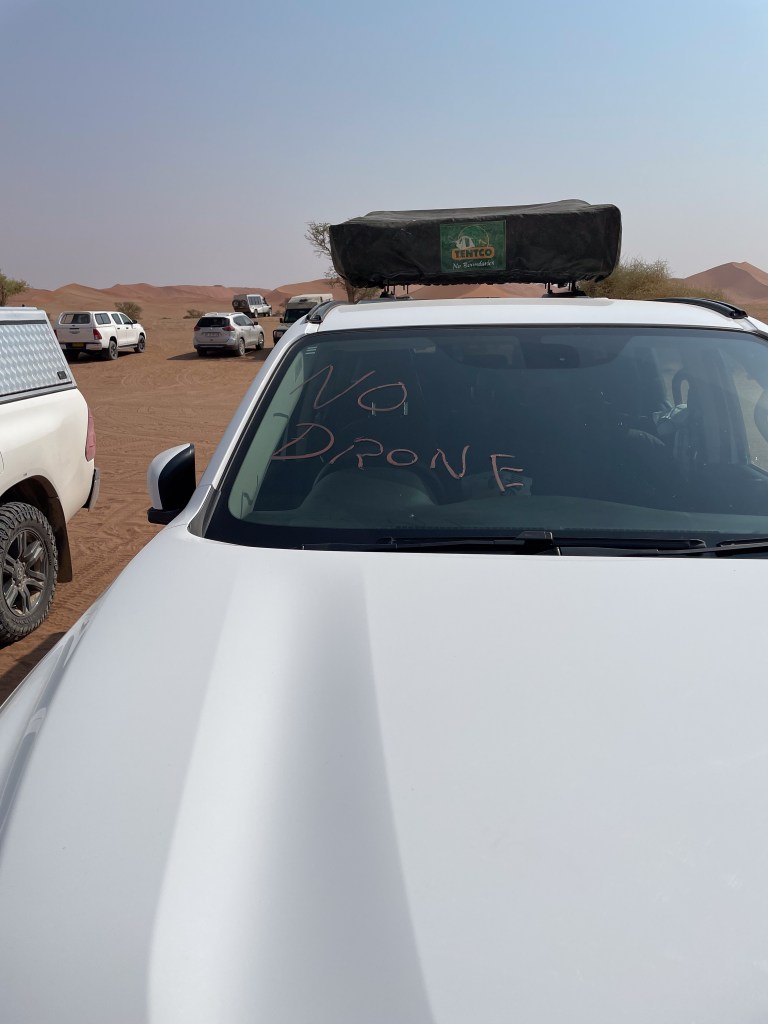
After our customary photographs we headed back to the car park. The 4×4 next to our had NO DRONE scrawled in lipstick all over the windscreen. We had a good laugh at that.
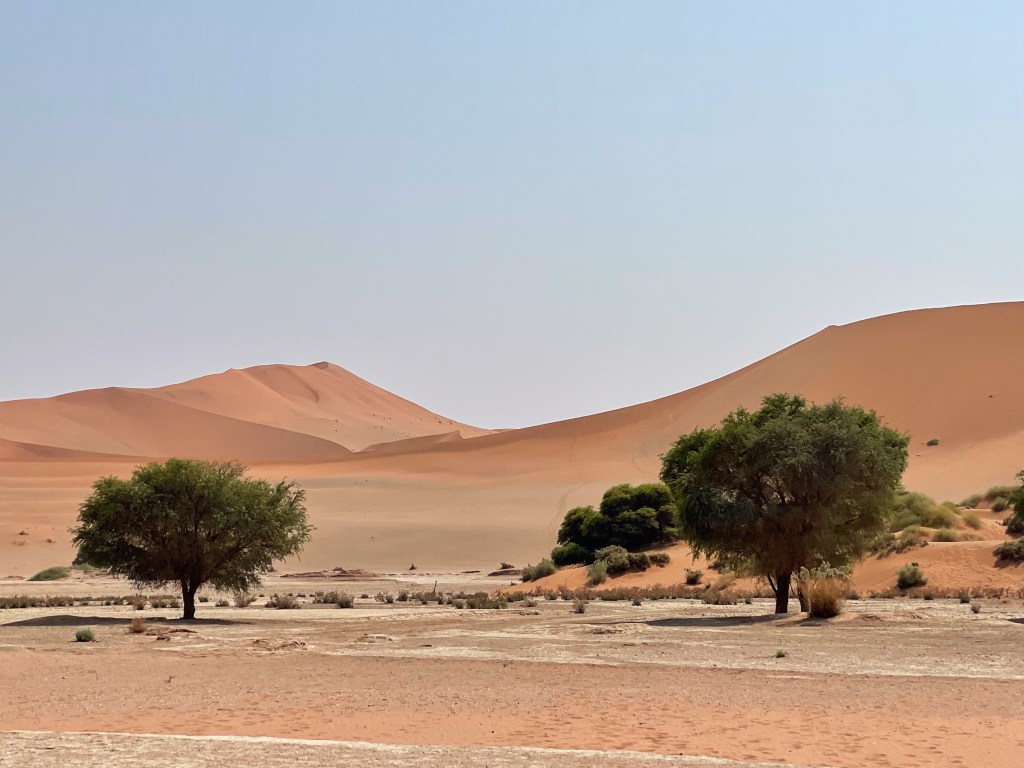
We continued onwards to Sossusvlei itself, another clay pan surrounded by orange dunes, however this one has a bit more greenery around the outside. There are a couple of picnic benches under big camelthorn trees, and it was a great spot to stop for an early lunch.
An inquisitive jackal came to see if he could join us, after we refused he went on to hassle what looked like a more sophisticated white tablecloth affair under another tree.
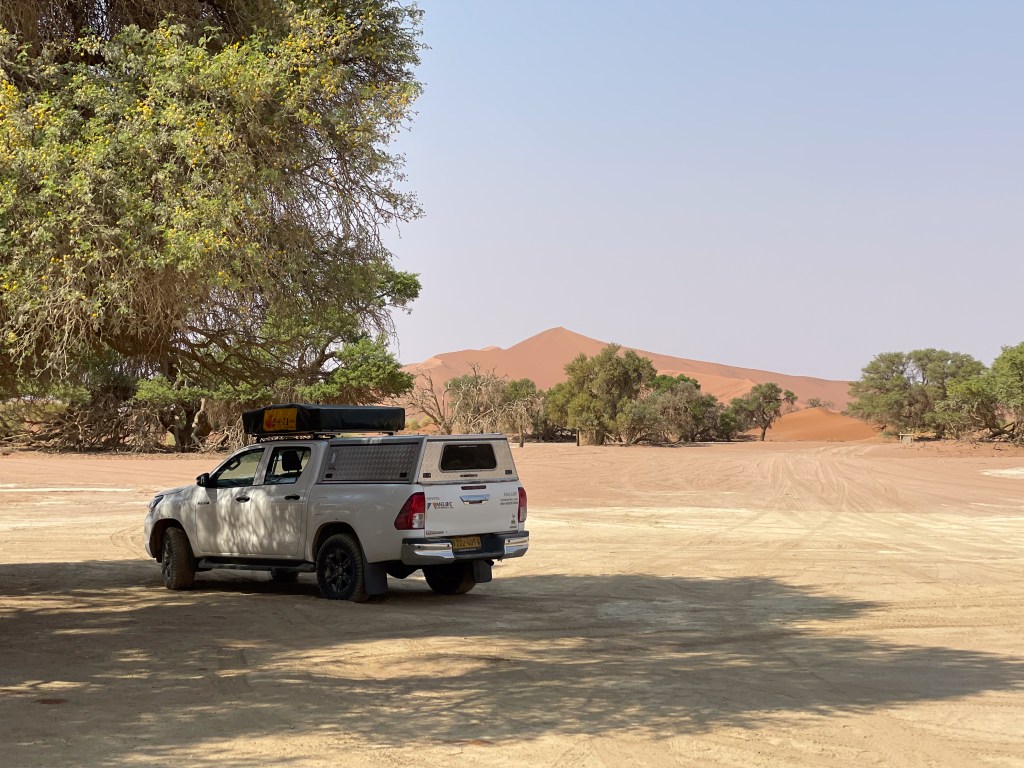
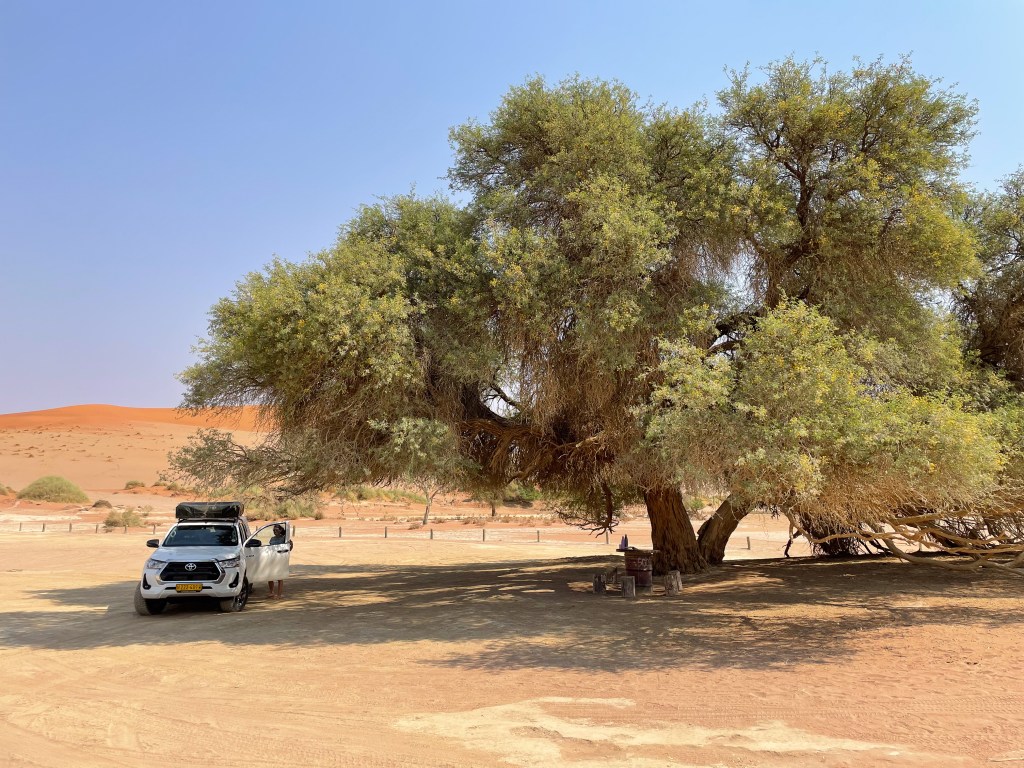
I recommend Sossusvlei – it was much more peaceful than Deadvlei, and just as picturesque, albeit without the gnarly dead trees.
From here it was a 6 hour drive to our next stop – and it was midday, already an hour behind our plan – time to step on it!
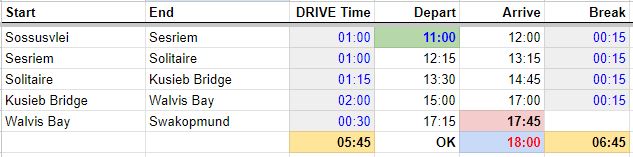
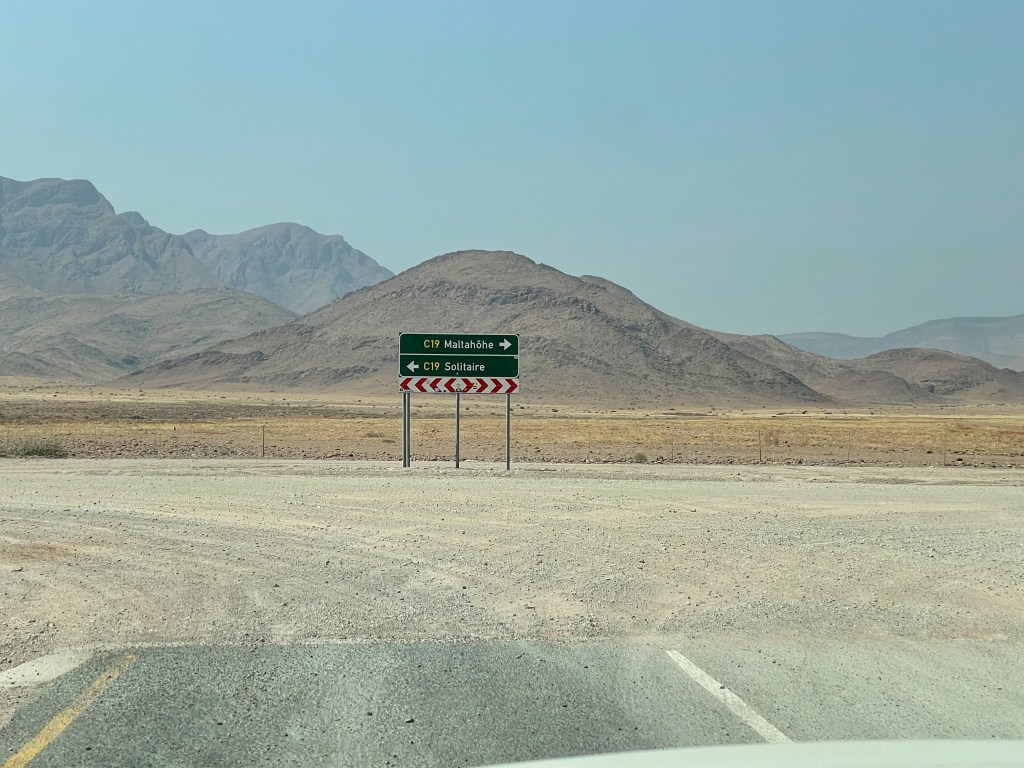
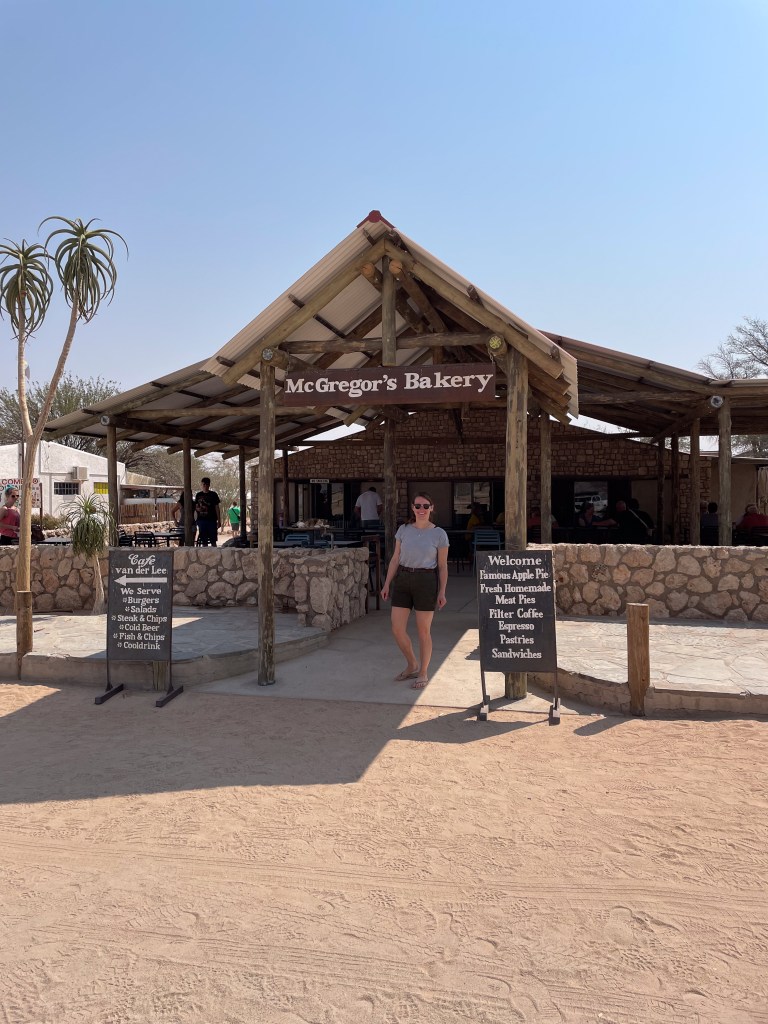
Inside the national park, on the beautiful tarmac road, we were limited to 60 km/h. Once we had made it back past Sesriem the tarmac ended. Still – we made it to Solitaire and the famous bakery with just enough time for a slice of apple pie.
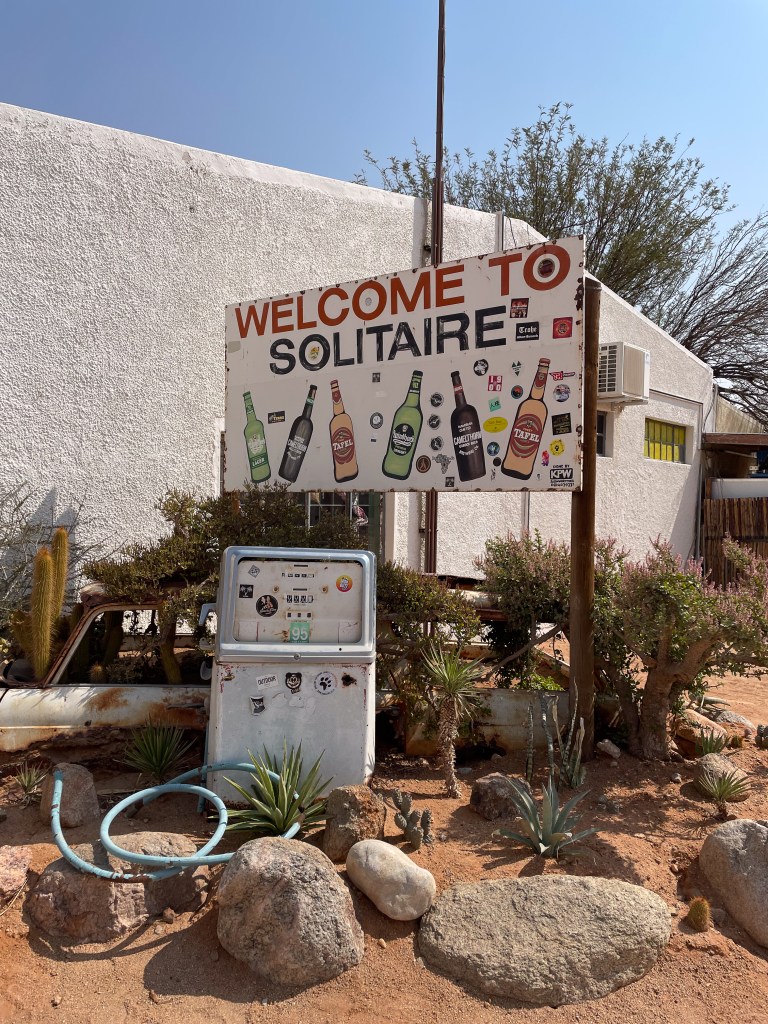
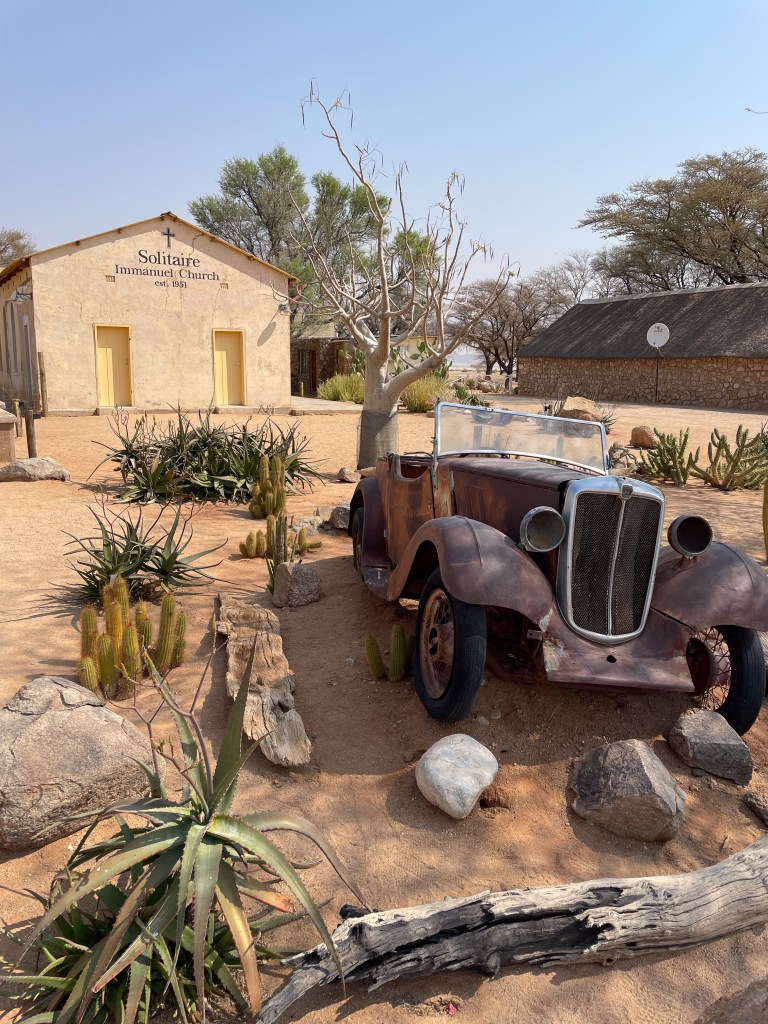
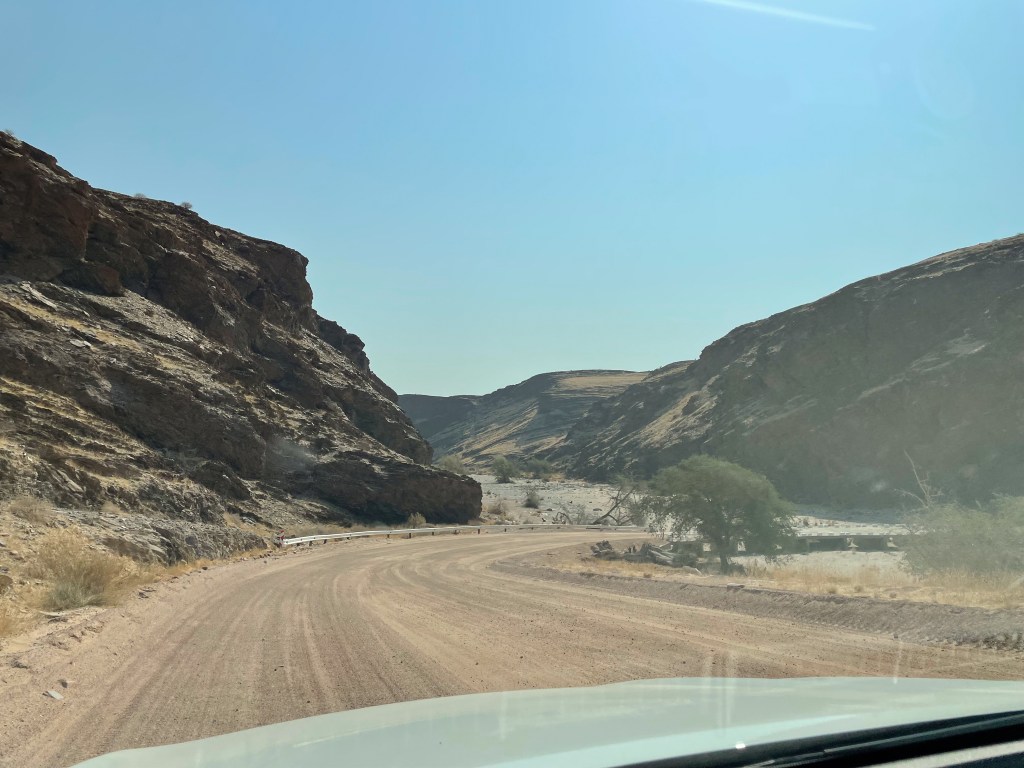
The rest of the journey down to Walvis Bay was scenic, and without much traffic at all, at one point we counted over an hour between cars coming in the opposite direction. The few points of interest aren’t really worth much of a stop. There’s the Tropic of Capricorn sign, 45 minutes north of Solitaire, and a picturesque area around Kusieb canyon.
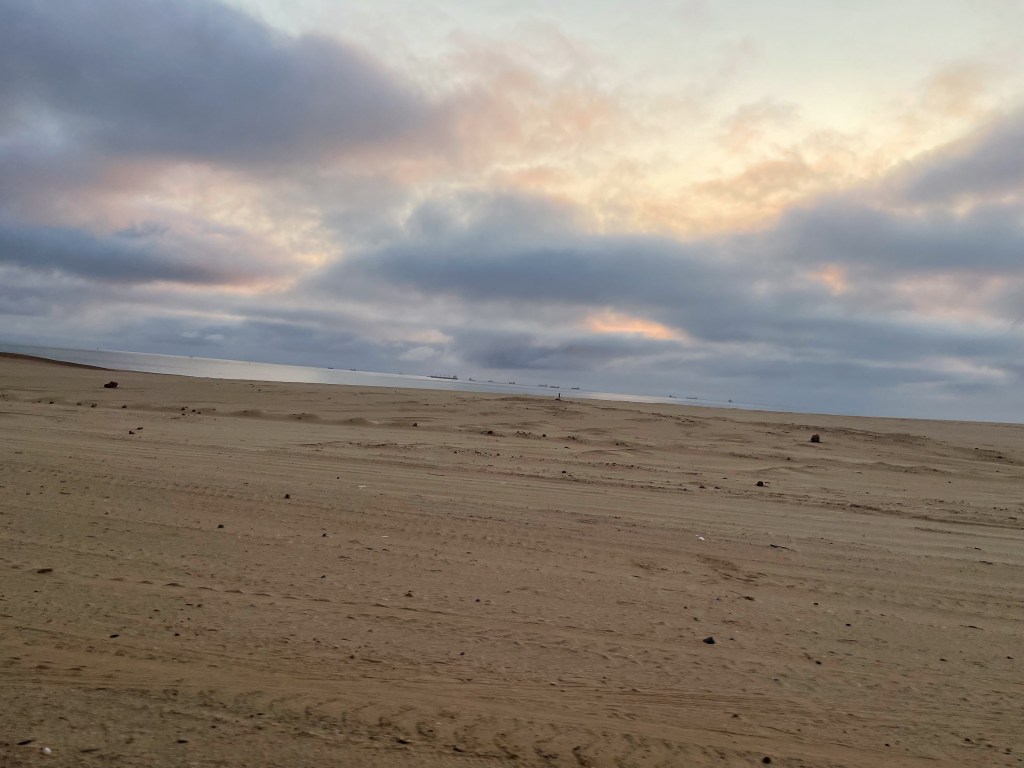
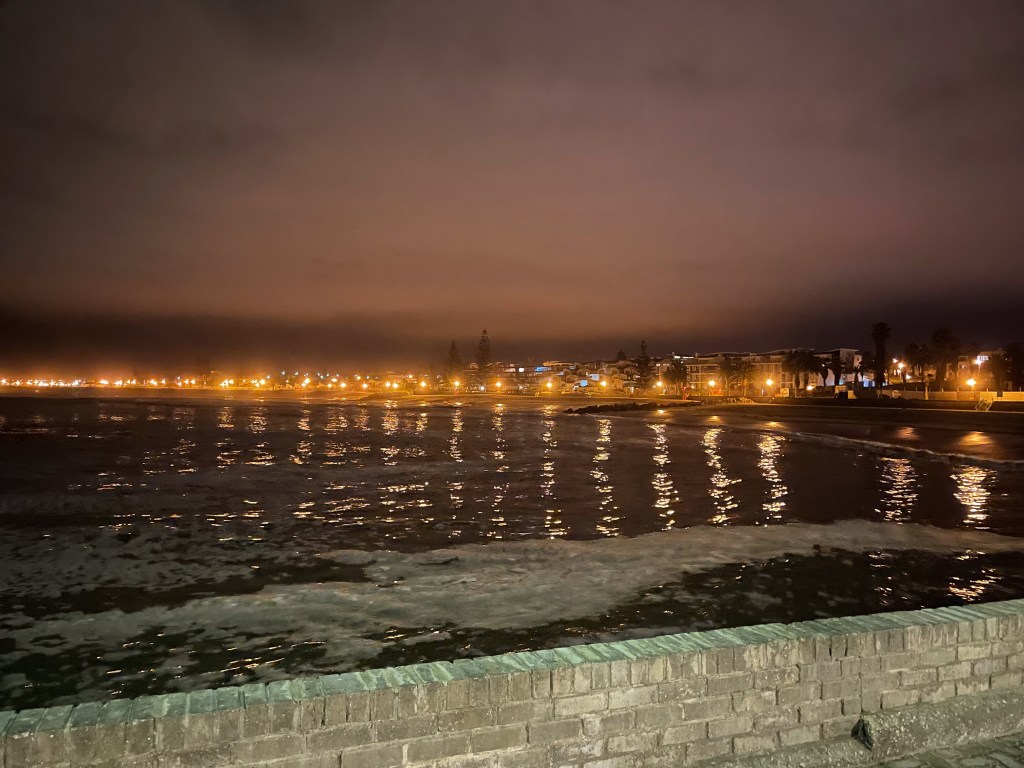
We made it to Swakopmund 15 minutes after sunset and on the brink of darkness, our accommodation had been trying to call us but we had no local SIM.
Swakopmund has it’s own little craft brewery in the Strand hotel on the front. The place is called Brewer & Butcher. We went there for dinner and the food was acceptable, and the beer good, it’s maybe a bit of a tourist trap but we were in no position to complain after a long day.



Leave a comment