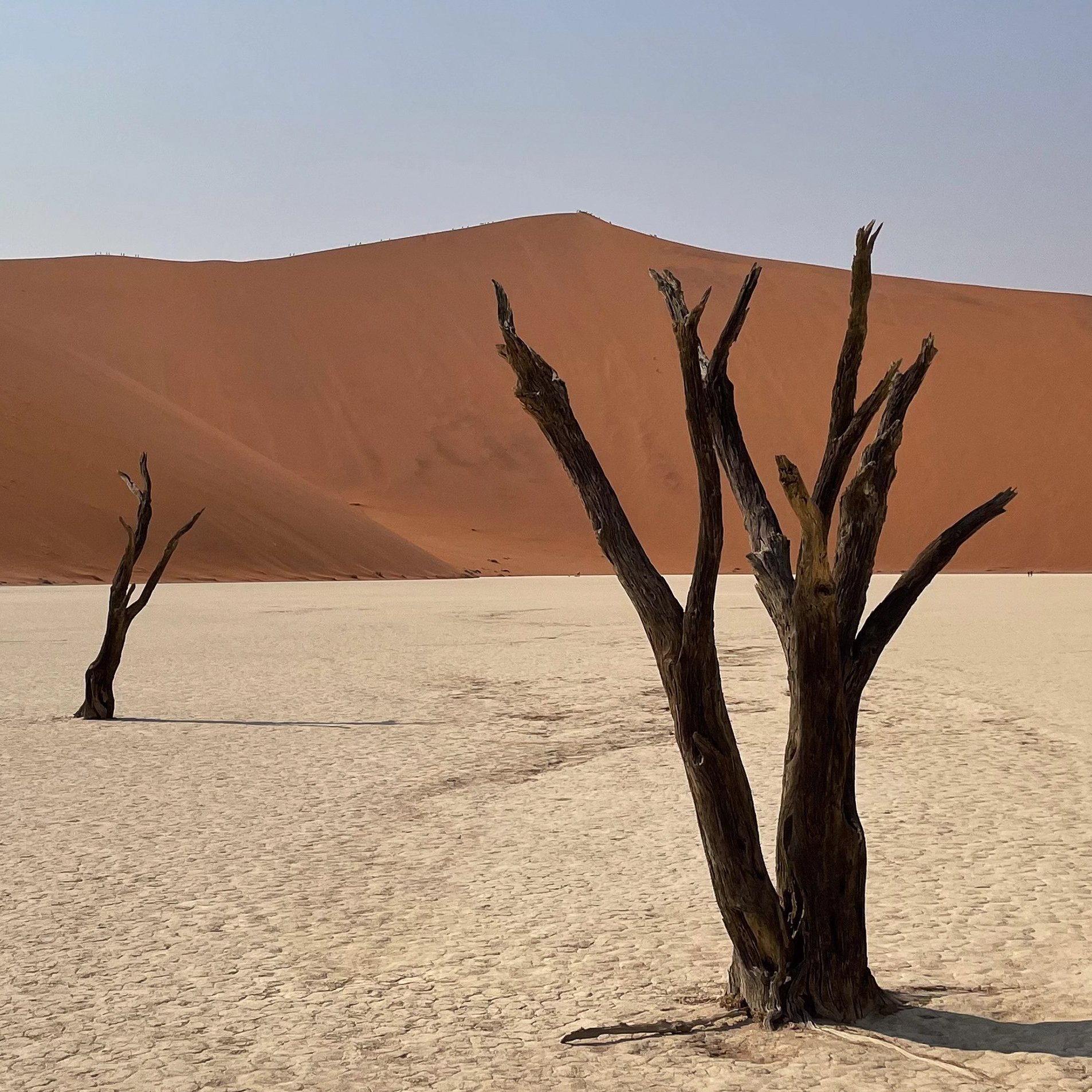
Preparing a route
After getting a taste for self-driving in Southern Africa during our holiday in 2023, we knew it was time to try something a little more adventurous.
Top of our bucket list is to visit some of the most extraordinary National Parks on the planet, each in their own way providing incredible access to wildlife and nature. Some of these places are on the well-trodden tourist route: Moremi and Chobe again, South Luangwa, Hwange and Mana Pools. Others are a bit more off-piste: Liuwa Plain, North Luangwa, and Kafue. Unfortunately access to these extraordinary places usually come with a price-tag to match, so in mitigation we are going to drive there.
The next most important aspect of the journey is understanding the distances and drive times – for much more detail on the planning see this page
Sourcing a vehicle
Bushlore is the established and recommended destination for long-term 4×4 rentals, we are looking forward to using them. This time we’ve opted for a Land-Cruiser which has even better off-roading capabilities than the Hilux. It’s also a bit more capable for water crossings, which may come in handy in Moremi in July, not that we want to cross anything deeper than a small puddle.
https://bushlore.com/toyota-land-cruiser-79-4×4-camper-cruc2/
Making the time
We are both taking 6 month unpaid sabbaticals from our jobs
Places to visit
Mabua
Breaking ourselves in gently, we first head to perhaps the most remote place we are planning to visit.
Mabuasehube is in the Eastern portion of the Botswana part of the KTP (Kgalagadi Transfrontier Park)
Famous for it’s huge desert adapted Kalahari Lions and stunning isolation, we might have jumped in at the deep end. No doubt many of the many, many, many reports and videos of lions in camp are sensationalised for clicks and eyeballs. That said we’ll proceed with utmost caution, especially when the sun goes down.
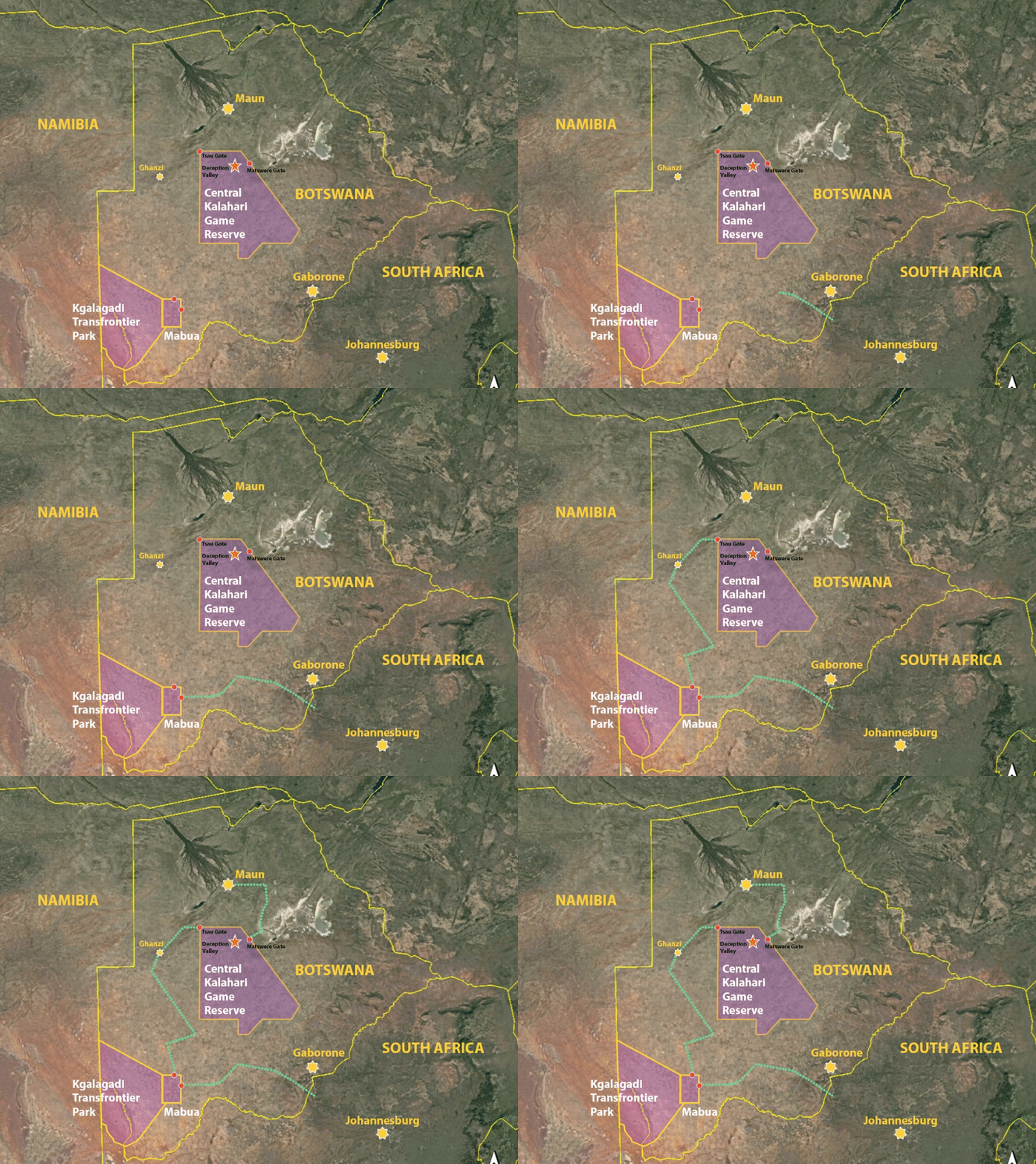
CKGR – Central Kalahari Game Reserve
Our next port of call will be some rest and recuperation in Ghanzi. Then we’ll be straight back to camp in the wilds of the Kalahari.
The CKGR is roughly the size of Switzerland, and yet the number of camping places you can count on one hand (exaggeration: you’d need both hands). Furthermore each at camping place it is only permitted for one group to camp. In our case this is just the two of us. The nearest people could be literally tens of kilometers away, along very bumpy sand tracks. With the large Kalahari lions for company it could be interesting.
This website is very very good, and explains the CKGR is great detail. This TV program is less informative, but probably has a wider appeal.
The weather is are going to be cold and dry. Overnight, sub-zero temperatures are possible in May and June. Not what immediately springs to mind for an African holiday.
Cry of the Kalahari is a famous book written by some famous American authors who have written other, more famous, books. They did spend a long time in the CKGR and their experiences are notable, even if they are controversial family following the time honoured tradition of Americans cowering from international justice.
Western Panhandle
The Okavango Delta is a special place, and if you imagine it as a hand reaching southwards towards Maun, then the Western Panhandle is its ulna.
Famous for its fishing and birding the area is a haven for wildlife. Fishing is not at all a draw for us, but the chance to catch a glimpse of the rare Pel’s Fishing Owl, which calls this area home, is more than a good enough reason for us to stop by. We plan to stay at either Swamp Stop in Sepopa or Drotsky’s at Shakawe
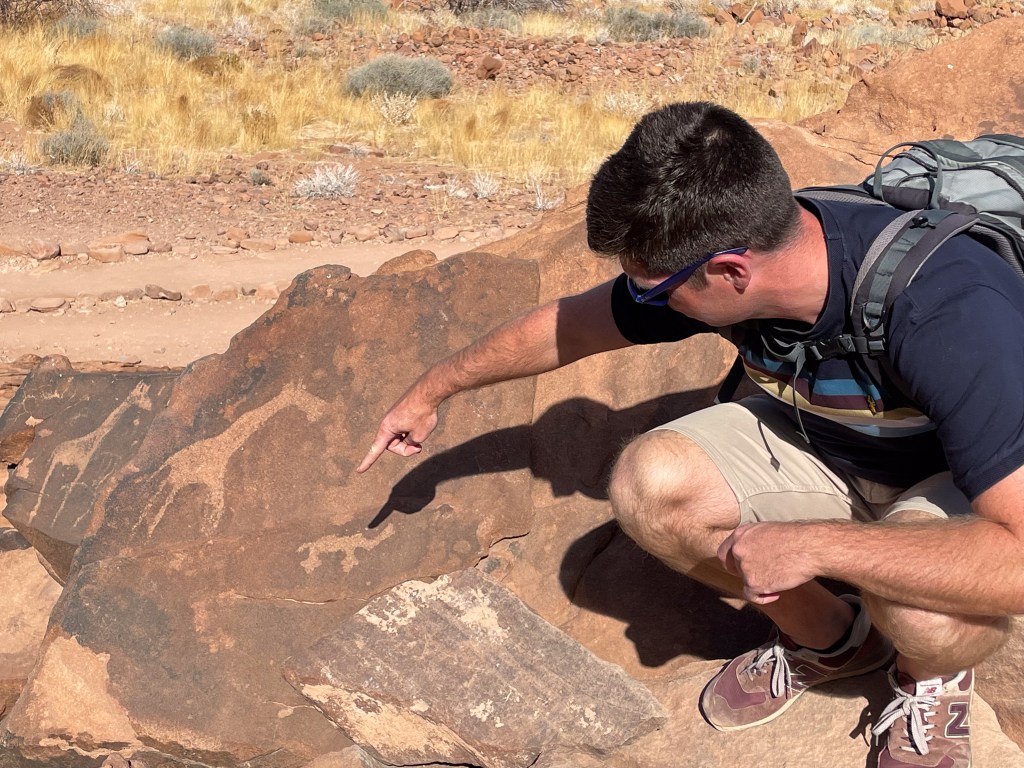
The Tsodilo hills roughly an hour west into the Kalahari from the A35 road will offer some balance to our trip by adding a smattering of culture and history. The hills have provided shelter to the San people for 100,000 years or more and are decorated with stone age paintings of wildlife. Along with Twyfelfontein in Namibia they comprise one of the most important UNESCO listed sites in Southern Africa.
Caprivi Strip
A finger of north-eastern Namibia poking out towards the Zambezi river. We travelled through this region far too quickly in 2020. This time we will be sure to spend a few days in each of the core areas of the region’s national parks.
On our list is the Mahango core area and the Kwando core area in the Bwabwata National Park, as well as Mudumu and Nkasa Rupara National Parks on the Kwando (Chobe) River.
Katima Mulilo is our last port of call before crossing into Zambia and following the Zambezi northwards.

Sioma Ngonye Falls
A major waterfall on the Zambezi river, but much less well-known than Victoria Falls. Public camping here will make it an easy stop off.
From here we travel north. Re-stocking at Mongu before crossing the immense Barotse floodplain of the Zambezi river, and making our way towards Liuwa Plain.

Liuwa Plain
A remote and featureless plain in western Zambia, this should be a real taste of the wilderness. Very few people visit, and even fewer self-drive.
The park is probably best known for being home to the late Lady Liuwa. One of the world’s most famous lions, she lived alone for a decade or more. A symbol of hope in the fight against the trophy hunters. The lion population is now increasing again in Liuwa.
The plain is home to one of the great migrations. Although that’s in November. We are there in June.
After Liuwa we head back to Mongu and then east on the M9 road towards Lusaka. Hopefully making it as far as Hook Bridge and Kafue National park in a day.
Kafue
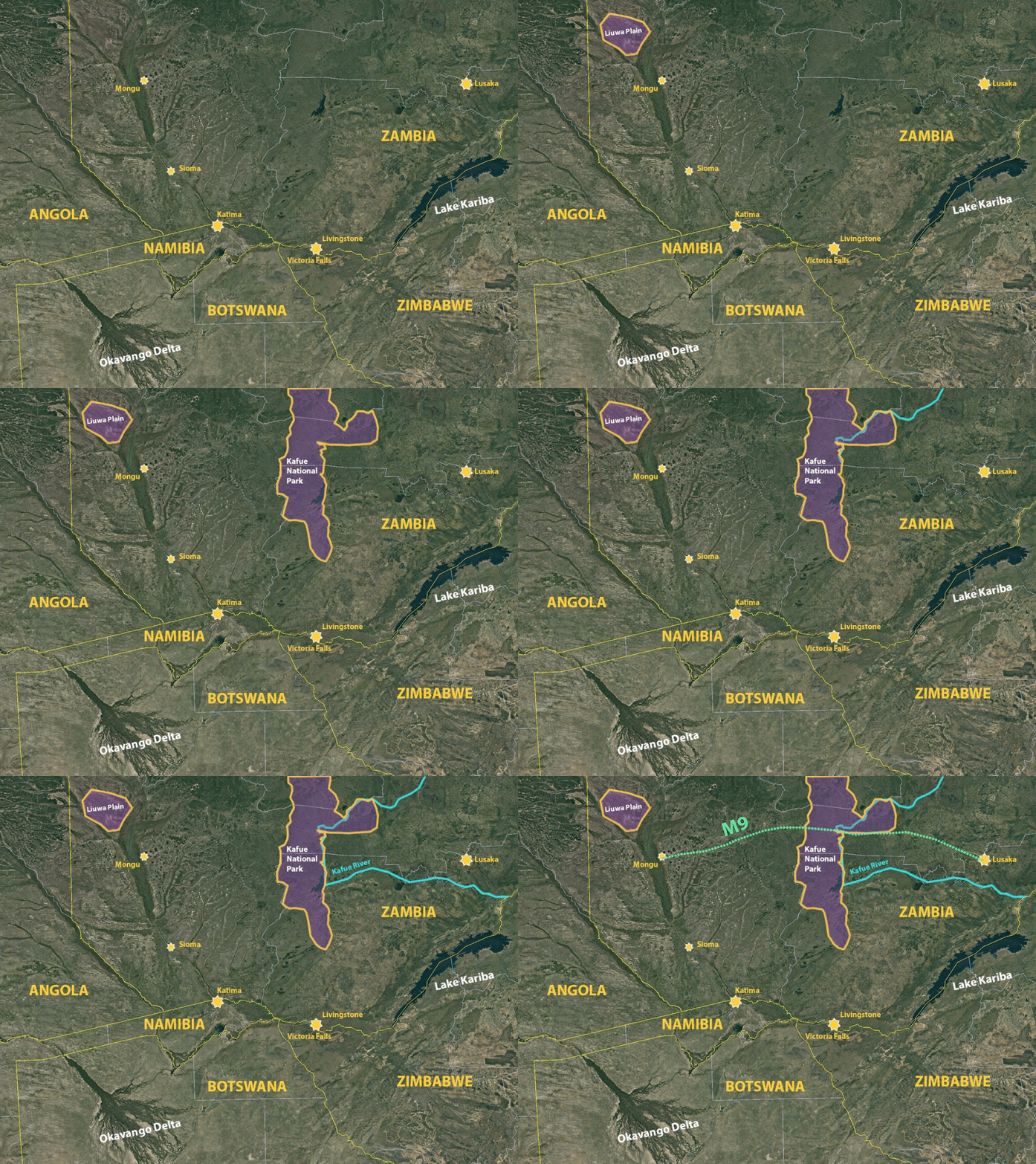
Everything is the size of Wales. Especially Kafue, one of Africa’s largest and certainly Zambia’s largest National Park.
The mighty Kafue river is a draw, with some of Africa’s most picturesque campsites on it’s shores and an abundance of wildlife. Slightly more off the beaten-track than South Luangwa, and early in the season, we should have the place to ourselves.
Tsetse flies are a potential hazard. There are some terrifying images on some blogs. I’m holding out some hope that the cold June nights with temperatures plunging down into single figures, insect activity should be minimal. That said, we must remember to not wear blue.
Bangweulu Wetlands
If we can survive in infamous Great North Road, we will have arrived in Northern Zambia.
Shoebills are the main attraction. A true icon of Africa, it’s only really Bangweulu and Uganda where it’s possible to catch a glimpse of these prehistoric looking birds. Africa Parks runs a great scheme to protect their habitat, we are hoping to be able to see them.
After Bangweulu we will visit Mutinondo Wilderness for some hiking and adventure, and then rest-up at Kapishya hot springs, and hopefully visit Africa House at Shiwa Ngandu if they ever reply to our messages.
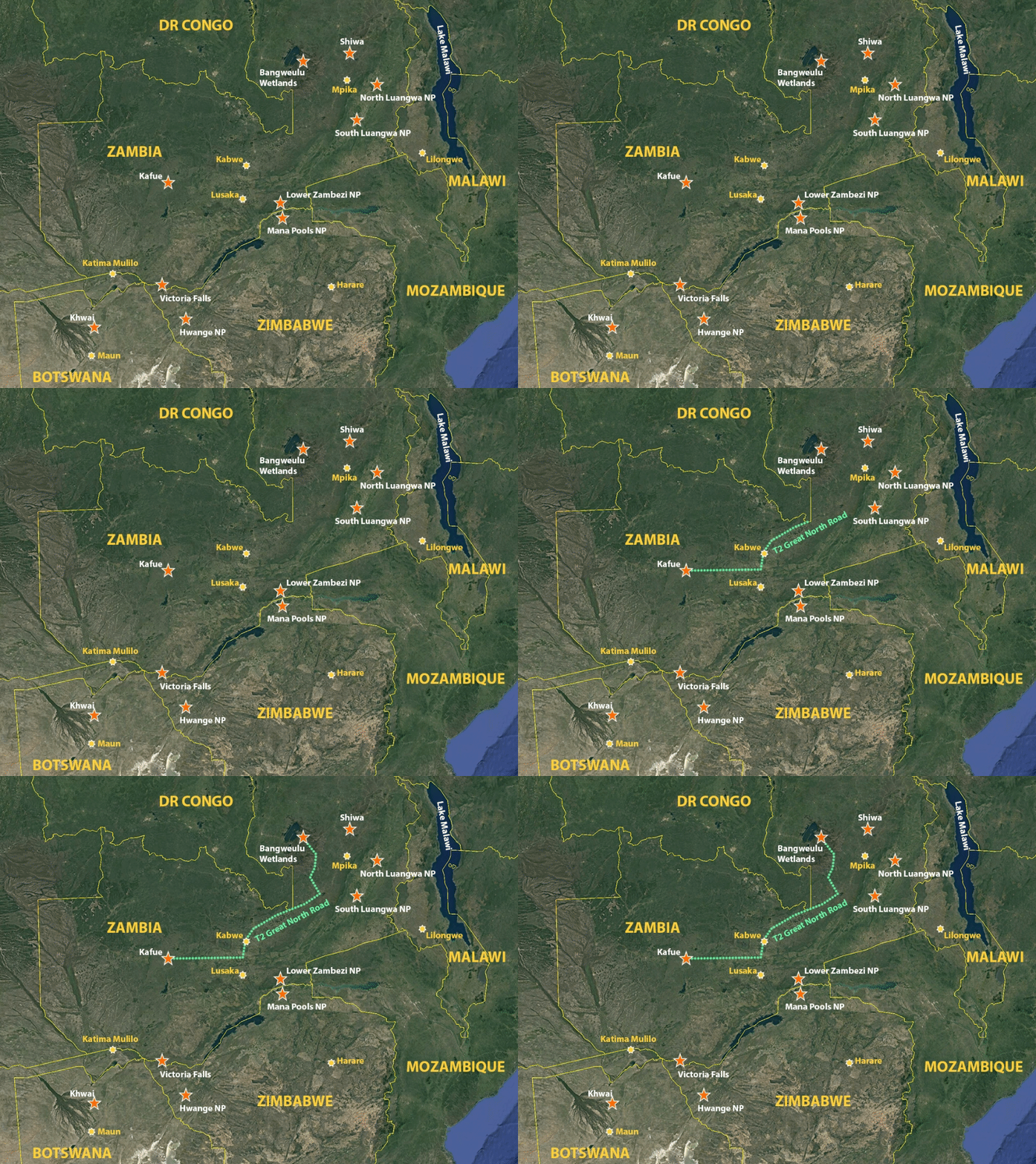
North Luangwa
Time to go off-piste again. There isn’t much in the North Luangwa, and it’s seldom visited. It could be like a more exclusive SLNP, or a 4×4 adventure with river crossings and terrible roads, we will find out.

South Luangwa
One of the world’s most famous safari destinations. Great concentrations of wildlife adorn the banks of the majestic Luangwa river. I’ve never believed in superstition, so fingers crossed for leopards and wild dogs.
Malawi
A whistle stop tour to Barefoot, Nkhata Bay and Nkhotakota
Lower Zambezi
One of the most exclusive Safari destinations. A night in the National Park can cost thousands of dollars per person per night, and with good reason. That’s why we’ll be camping outside the park at Mvuu lodge and self-driving the park.
Mana Pools
A real bucket-list dream destination. Boswell is still going strong, star of manay an instagram photo.
However the real draw for us is the incredible walking safari access afforded to visitors.
We have a night booked at the famous Chitake springs where buffalo come to drink at the only water for miles around. The herd funnels down into the ravine and the huge pride of lions gamely hunt them.
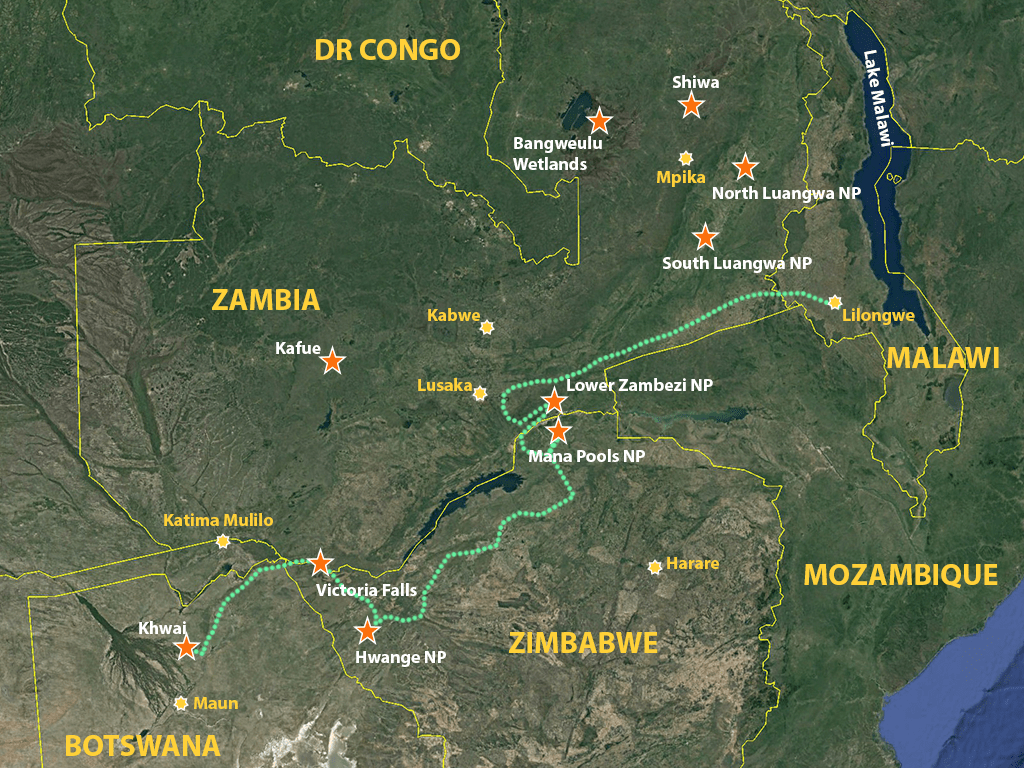
Hwange
After a cross-country journey across norther Zimbabwe, taking in lake Kariba and potentially Chizarira gorge, we will finally arrive at Hwange
As Zimbabwe’s premier wildlife destination we have high hopes.
Victoria Falls
A chance to rest up back at civilisation and if we’re not feeling too hard-up by now we have the opportunity to lighten our wallets and spend $50 each on a visit to the falls.
Seeing the falls at a different time of year will be interesting. In July there will be a lot more water than there was in September, the noise is supposed to be deafening.

Chobe
From Chobe riverside, the trip across Savuti is great fun, so much so we’re going to do it again.
The Chobe riverfront is home to one of the greatest concentrations of large mammals anywhere on the planet. There are literally thousands of elephants in a single vista.
Savuti tickles the taste for adventure, this time we’re likely to tackle the notorious sandridge road as it’s possible the marsh road is still a bit wet. It’ll be vital to seek local advice.
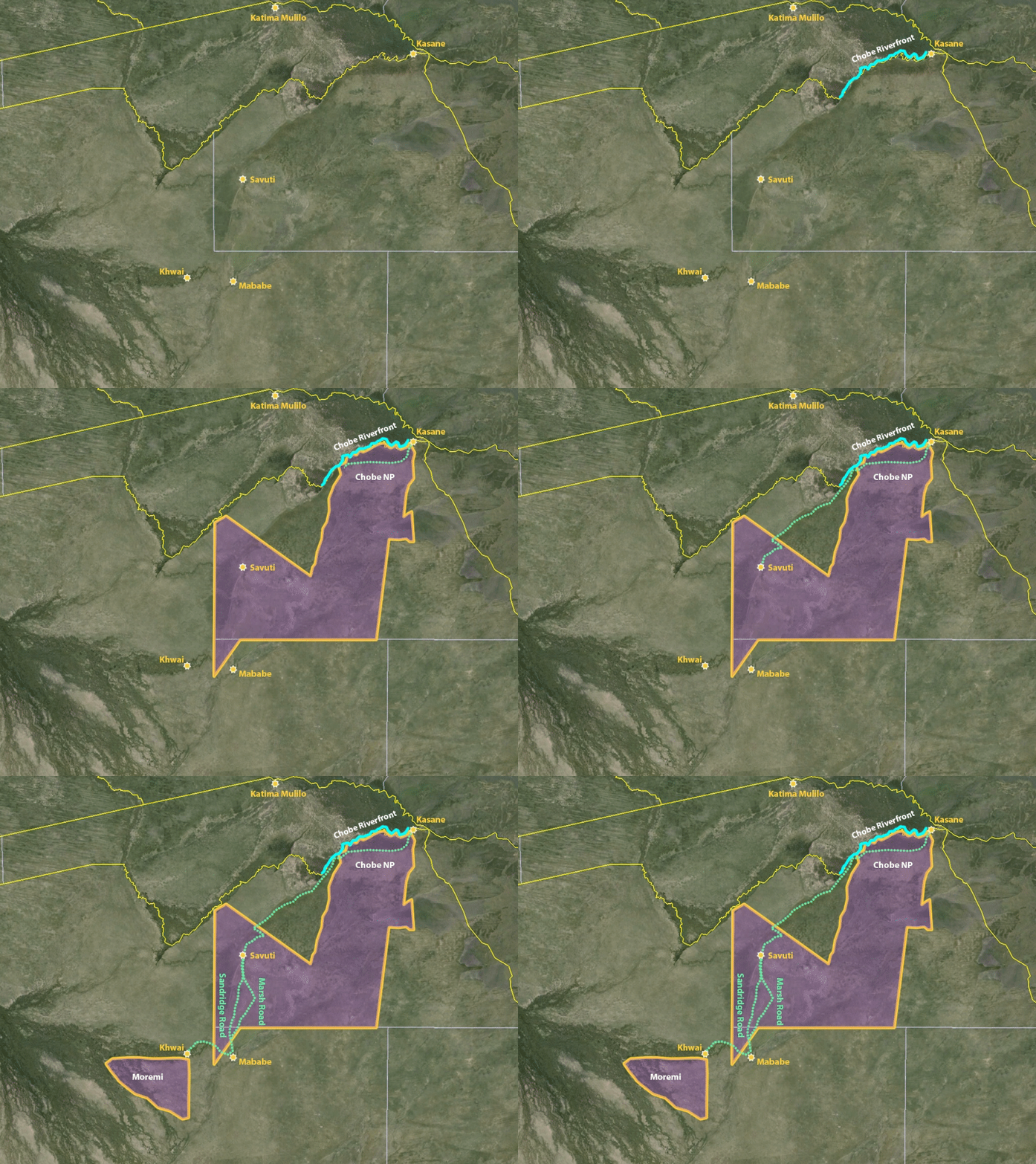
Moremi
Another bucket list item is to drive all the way to third bridge. With a few nights camping booked at Xakanaxa we finally have the chance

 Small Holiday Big Dream