Probably the most important item on the self-drive holiday checklist – which car to hire.
We are sharing our experiences to make sure you don’t fall victim to any obvious traps. Overall our holiday was free of any issues or problems, and with good planning an prepartation yours can run just as smoothly.
We hired a 4×4 with camping equipment from Melbic for our 18 day holiday around Namibia and Botswana. Overall we were very happy with their service and would thoroughly recommend Melbic to anybody considering a self-drive holiday to Namibia.

Selecting a provider
We began organising our holiday to Namibia roughly 6 weeks before arrival – this is too last-minute if you want everything just perfect – however with a few small compromises you can still plan the ultimate trip
Your first port of call should be the Car Rental Association of Namibia – https://caran.com.na/
The Car Rental Association of Namibia (CARAN), is a non-profit association of twenty-four members. The association’s objective is to protect clients and from their site: “the car-rental industry against rental operators who offer sub-standard service and quality. Member companies must subscribe to minimum standards before they are accepted as members of the association.”
We contacted most providers featured on the site, and some providers who were not members. We were visiting in high-season, September, and roughly a quarter of providers were fully booked. We secured quotes from 11 providers – the cheapest came in at £80 per day, and the most expensive £140 per day. Although there is a big difference on car specification and exclusions that these quotes aren’t directly comparable.
Ultimately we opted for Melbic, their quote was not the cheapest, but we were most confident about the company when reading the reviews. It was a fantastic decision.
Our total price came in at £97 per day, including camping equipment and insurance.
If you are interested to know more details about our selection, please get in contact and I can share all the details.
Choosing a vehicle
There are many options, but they break down into these rough categories
- 2WD – standard car
- 4WD small – a Suzuki Jimny or similar
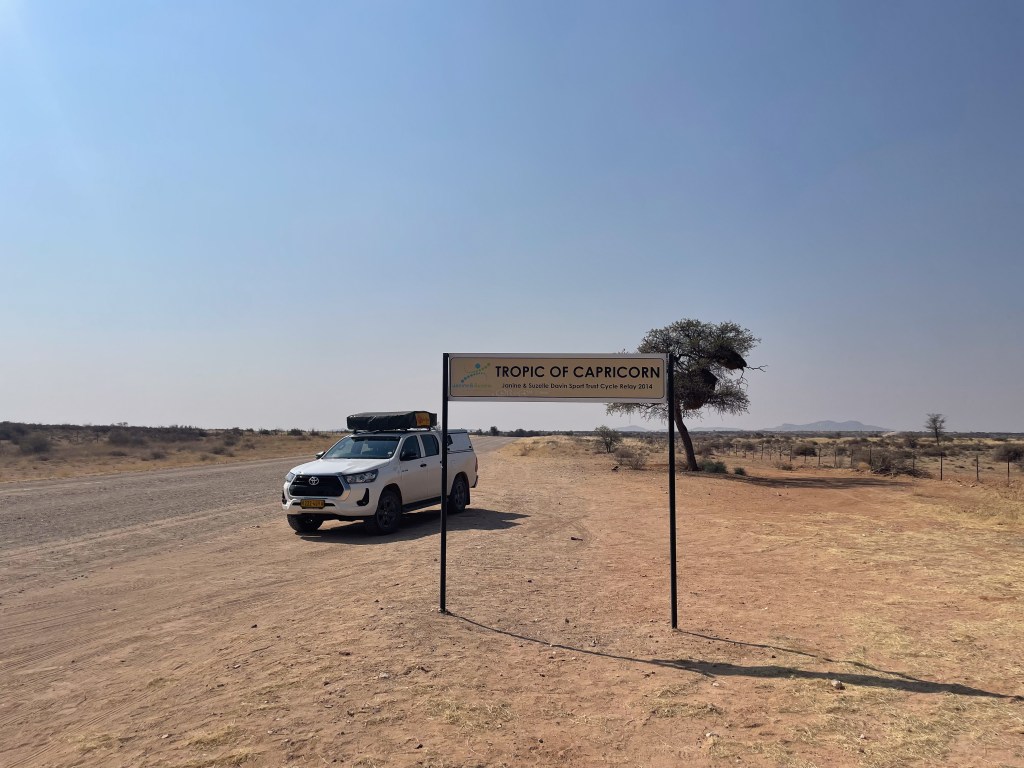
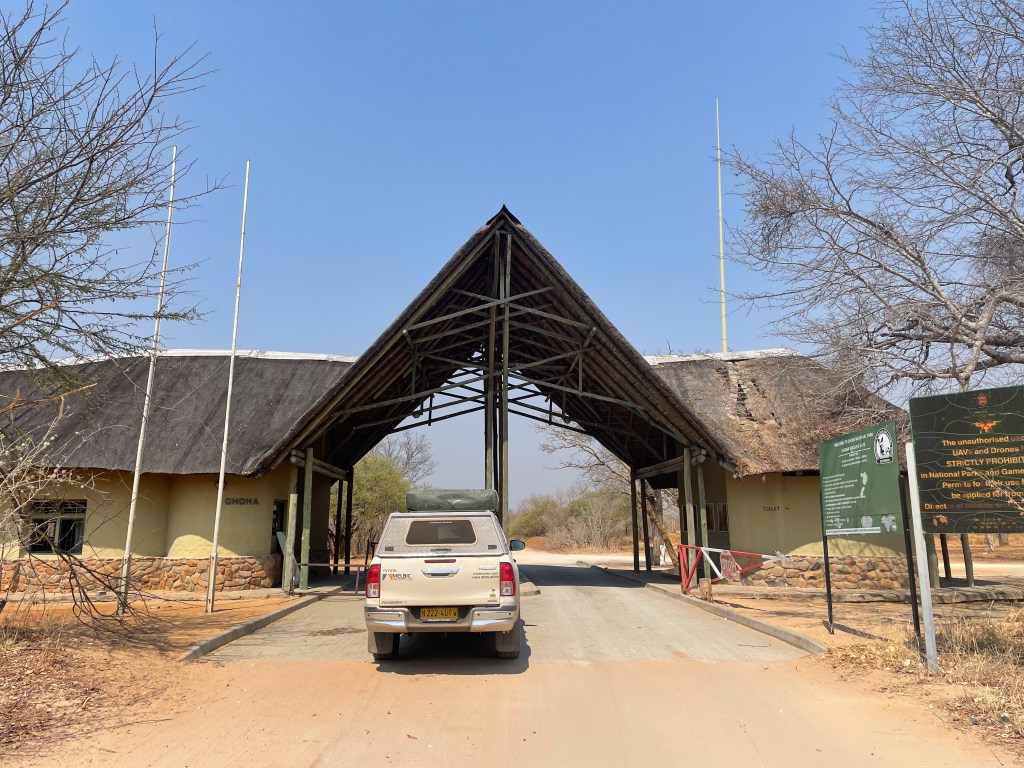
- 4WD pickup – a Toyota Hilux or similar
- 4WD specialist – a modified Toyota Land Cruiser
Your choice of car will depend on your route. However most routes will visit either Sossusvlei or Etosha. Visting eitehr will involve 100s of Km of gravel road driving. Of our 4,500km route, approximately 2,000km of it was on gravel or sand.
For the gravel roads between Windhoek – Sossusvlei, Sossusvlei – Walvis Bay, Hentiesbay – Damaraland, and inside Etosha National Park, 4WD is not 100% essential.
HOWEVER the gravel roads are not smooth, and are heavily corrugated in many places, the extra clearance and ride comfort provided by a larger 4WD vehicle will certainly pay off.
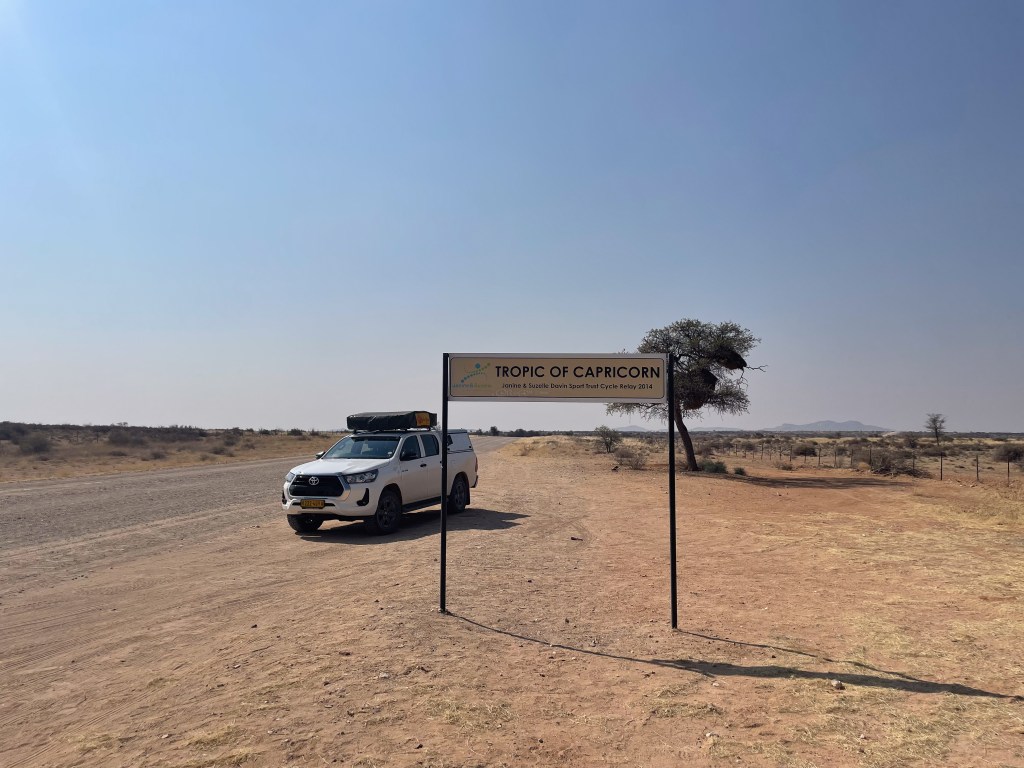
Our Toyota Hilux surfed the gravel roads with ease, and made travelling 4,500km seem comfortable and easy. I am not sure how the little Jimnys cope, but there were times when we were glad to have the bigger vehicle.
A specialist vehicle is only really needed when tackling serious off-road terrain, such as Van Zyl’s pass. You will not be insured to take your standard vehicle to these places, nor would you want to. (and if you’re considering serious off-roading, then this blog isn’t the right advice for you either)
Camping or non-camping?
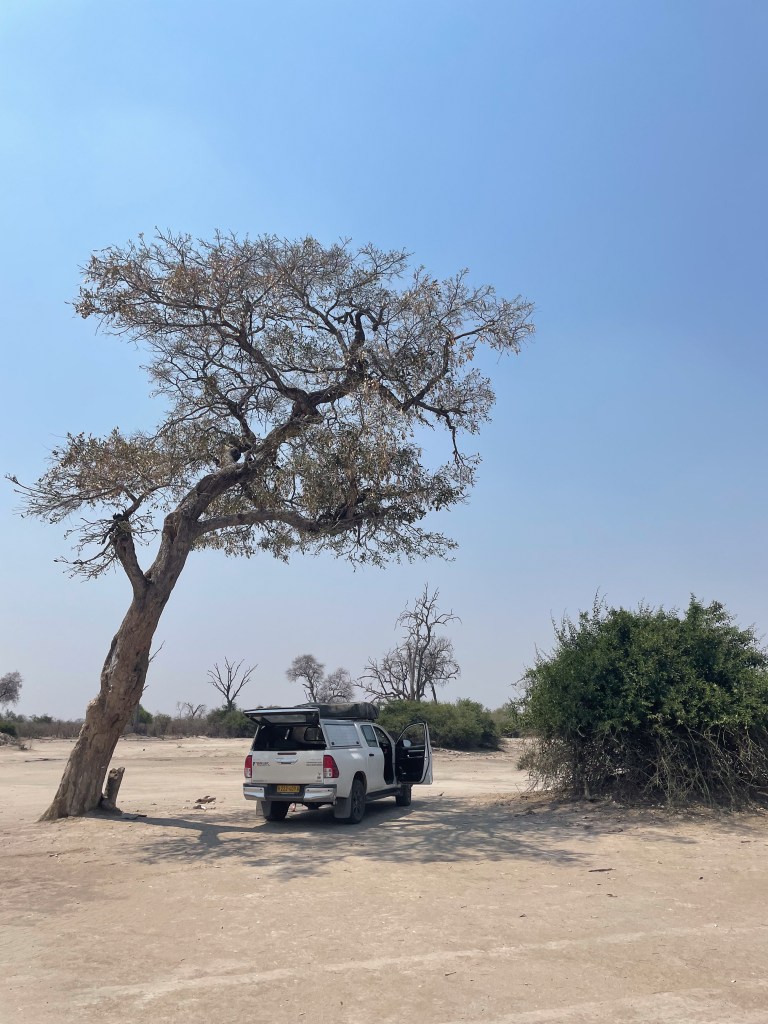
Part of the joy of a self-drive trip is the freedom and sense of adventure you get. We wholeheartedly recommend camping, the vehicle hire companies are completely set up to provide you everything you need, as are accommodation providers up and down the country.
We decided to split our accommodation roughly 50.50 between camping and guesthouse/lodge accommodation. In hindsight we would weight more heavily towards camping as we loved it so much.
See more in the accommodation section.

Pre-Arrival
The Melbic team were very responsive to any questions we had prior to arriving in Windhoek. Given we had booked fairly last-minute, and that it was our first time travelling to Namibia, we had a ton of questions.
Deody and Levine were extremely responsive, and also patient, when answering our questions. It gave me a lot of comfort that everything would run-smoothly on arrival. We were able to ask as many questions as we liked before paying the deposit to secure the vehicle, and felt under no pressure to proceed. At the time of selecting a rental company some of the other providers I was seeking quotations from felt a bit more pushy to secure the deal, whereas Melbic made us feel comfortable and secure, as well as being transparent with all the potential costs, which ultimately led us to select them as our rental provider.
Once our booking was confirmed we were sent a link to a web-form on the Melbic website which allowed us to populate

Arrival and Check-in
We arranged transfers from the airport through Melbic – who helpfully provided free transfers on the day of rental. As we arrived on the evening of the previous day, they took us to our accommodation in Windhoek, and then picked us up at 9am the next morning to collect our vehicle. Dickie was our driver on the morning of collection and he was super friendly and answered a load of our questions about driving in Namibia even before we got to the Melbic office!
On arrival at the Melbic office our vehicle was waiting for us and ready to go. Check-in itself was a super smooth process, and the staff made sure we knew all about our vehicle and the equipment we were provided with.
We were shown how to operate the tent, how to use all the camping equipment and where it was stowed, how to use the jack to change a tyre, and how to use the air compressor to change the pressures on our tyres for different road surfaces we would encounter.
After we had gone through our familiarization with the vehicle we proceeded to sign all the paperwork and make the final payments – it was all very easy to understand and everything was transparent.
Overall the process took around 1 hour – this was really valuable can certainly not worth rushing. I would recommend to anyone to budget plenty of time into their schedule for this vital introduction.
Tip: Make sure you save the location of the head office in your maps app, so when you return there it’s easy to navigate to.
Vehicle
Our car itself was a brand new Toyota Hilux Double-cab, 2.4 GD-6. When we left the Melbic office the car had 46km on the odometer – fresh out of the wrapper!
Automatic transmission is something we’re not used to driving in the UK – but it made the car a dream to drive on the long journeys. Cruise control was a big help as you could set the speed to 80, 100, 110 km/h according to the road surface and driving conditions and cruise along safely without having to always glance at your speedo.
The car was also equipped with a double fuel tank. There is an 80L main fuel tank and a 60L secondary tank. The second tank fills last and empties first, however there is no indicator inside the car for how full this tank is, and the range given on the dashboard is just the main tank. Our economy whilst driving was somewhere around 10-11 L/100km which means with a full primary and secondary tank the vehicle would have a range of well over 1,000km. There are many places in Namibia where it is >100km between fuel stops, so it is important to have half an eye on your fuel situation at all times.
The Melbic policy is to make sure the 80L main tank is full on check-in, and you must return it with a full main tank. In order to do this accurately – and not leave the car too full or too empty requires a bit of forward planning, as you are unable to know how much you have in your second tank unless you’ve been counting. Luckily we managed to use up all our spare Namibian currency on our last fill-up in Windhoek.
Inside there was a console with apple car play – which massively helped with our navigation, and also our playlists and podcasts which were so easily connected to the entertainment system.
There as a single USB A port for connecting a device, and in addition there was a standard 12V car plug (in the UK known as now defunct the cigarette lighter). We brought along our own 12V to USB adaptor for charging additional equipment like camera batteries and power banks – this was super easy to do on long journeys and there was ample storage room.
Being a brand new car the air-conditioning was quick and powerful – very useful for returning the car quickly to a habitable temperature if you’d left it parked out in the hot Namibian sun!
Tip: even if travelling as a couple, a double-cab is worth it. In the pickup section of the car things get very very dusty. Keep your personal luggage on the back seats of the cab to stop them getting dusty. You will learn this very quickly anyway!
Equipment
In the back of the pickup there is a closed cabin. It looks like you’ll have way too much space for two people, but there is a lot of equipment to pack in there!
The two spare tyres took up most room. We never needed either of them, but it was fantastic to have the peace of mind with them available if we were to get a flat.
Perhaps the best bit of equipment was the fridge. We were told that it would have a 12hr life on the battery before cutting out, but thankfully we never experienced it cutting out. And on the one occasion we went more than 36 hours without turning on our vehicle we turned the fridge off to preserve the battery. It was well insulated so remained cool inside despite not drawing power.
Tip: the fridge opens from the top, and the internal basket can’t be removed. It is very difficult to clean up spillages which happen (take lots of absorbent kitchen roll). The gravel roads are bumpy and breakages will happen, I lost a few cans of beer due to the cans breaking in the fridge, so pack things tightly every time before setting off!
Other than that, the melbic team have really thought about every piece of camping equipment you might need. The table is large and stows nicely away in the roof of the rear compartment, the camping chairs are comfortable, there is plenty of cooking equipment and cutlery. A gas can and hob adapter is provided for boiling water – but you might, like us, prefer doing most of your cooking on an open fire which all the campsites are well set up to accommodate. A braai grill and stand is provided. We did buy a braai brush to help us clean it – which would be a good addition to the standard equipment list.
All of our camping equipment appeared to be brand new and the quality was excellent.
Equipment/supplies we purchased that was not provided, but turned out to be useful:
Braai brush, skewers for kebabs/marshmallows, mosquito coils, sponges/dishcloths, kitchen towel, many small sandwich bags (useful for containing produce that might spill easily)
Hidden costs
Nothing was hidden, and Melbic were very transparent about everything extra that we would have to pay. Many times when renting a vehicle I have had bad experiences when signing the paperwork, agents pushing unnecessary extras and insurance to bump up their margin. Melbic was as friendly, clear and transparent as I have ever experienced. At no point were we pressured to upsell on anything, provided we had read and understand things.
The two major items for us were the insurance, and the cleaning fee. You can rent extras like a GPS or SatPhone through Melbic, we deemed them unnecessary – although we were well prepared for our journey and had other means of navigation and communication.
Insurance is clearly laid out in the rental agreement which we were sent well in advance of departing the UK. We chose Option 3 as it provided a good level of cover for tyres, windscreen and undercarriage. Your mileage may vary.
We travelled around Namibia and Botswana – 4,506km in 18 days. We had no tyre issues (we deflated and re-inflated them using the compressor three times to enable us to drive on sand roads). We had one very tiny chip on the windscreen which was caused by a loose bit of road surface as we were 10 minutes away from our final destination and 4,500km into our journey. We pointed it out to our return agent and the chip was of no big concern, it will be filled easily before the next customer uses the vehicle.
Cleaning fee is determined on the return of the vehicle depending on the condition at return. The price ranges between N$400 and N$750 (roughly £20-40) definitely worth budgeting it in. We kept the vehicle in good condition, but did no special cleaning and were charged N$450.
The cleaning fee is not standard in Europe, so caused us some concern as we were returning to Windhoek. Should we get a car wash? how much will they charge? Is our car too dusty/dirty? Ultimately we didn’t have time to wash the car and returned it as it was. The return agent was super friendly and had no problems with the condition of the car. (it was very very dusty after 18 days on the road!). The cleaning fee we were charged was standard. Our previous worries had been misplaced.
Return
Returning the car was stress free and easy, the return agent quickly did all the necessary checks and we were ready to leave within 20 minutes. We budgeted an hour to be safe, as we had a transfer to the airport for our international flight. An hour turned out to be more than enough, and we spent much of the time re-packing out own personal items.
Overall
Very happy with the quality of the vehicle, I’m so happy with a Hilux that if I didn’t live in the city in London I would consider buying one myself.
The camping equipment was really good quality, and the inventory list was so well thought through that at no point were we short of anything we needed.
Collection and return of the vehicle were as smooth as I could have hoped for. It does take some time, but it is very much needed.
Price – compared to the other providers I received quotes from Melbic came out as about average, and once I had researched the company, prior reviews, and the rental agreements, I was confident that I was dealing with a professional and well-run organization.
 Small Holiday Big Dream