It’s been quite a while since we’ve been on-grid. Here’s the next instalment from Northern Zambia.
The North Luangwa national park is nowhere near as famous as its illustrious southern neighbour. Nor is it much visited, giving this leg of the trip a slight flavour of adventure.

North Luangwa National Park
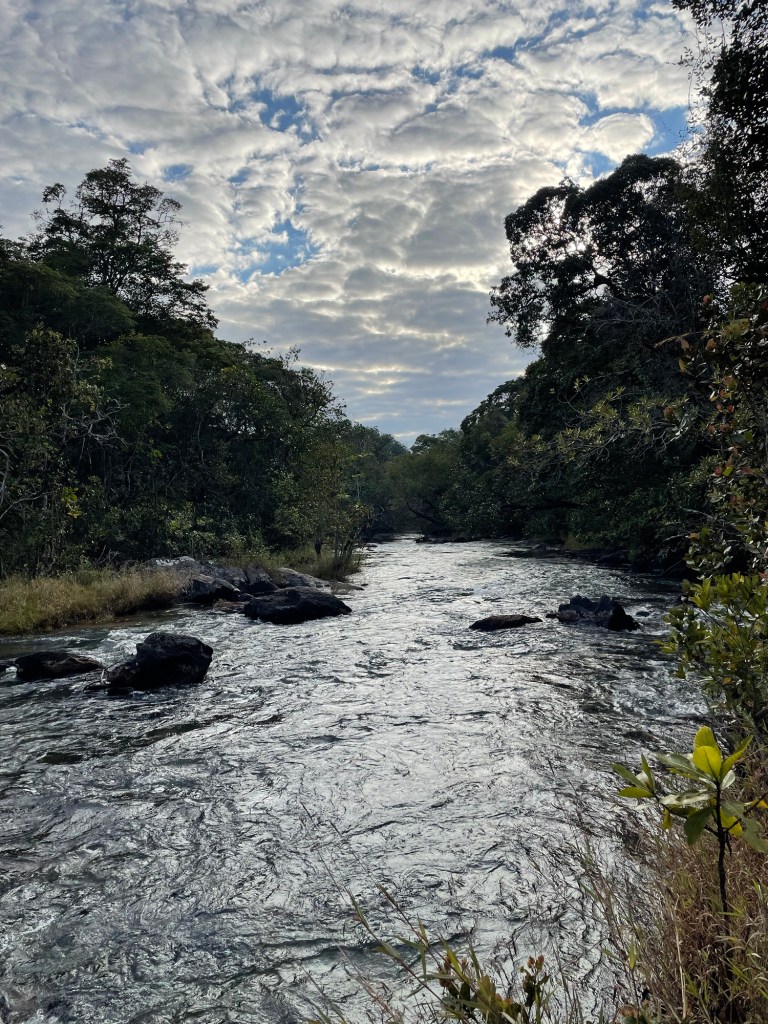
Samala camp is on the banks of the Mwaleshi river, which is a gushing mountain stream amongst endless green montane forest. It feels like the foothills of the Pyrenees rather than Zambia. It’s cold here, and the rooftop tent was covered in morning dew, a problem which has plagued our last few nights. Nobody enjoys packing up a soggy tent. Our morning was relaxed and we watched a giant kingfisher fishing in the river whilst we enjoyed multiple cups of coffee.
The lady at the north Luangwa park gate was perhaps the slowest yet, and it took us over half an hour to pay the 3,000 kwacha entry fee. Even when transiting the park we had to pay what amounted to about £100, which felt rather steep.
The road steeply descends the muchinga escarpment, wildlife around here is sparse, but we did spot a small breeding herd of elephants. They were so relaxed as we passed them, a welcome change of pace from the Kafue elephants.
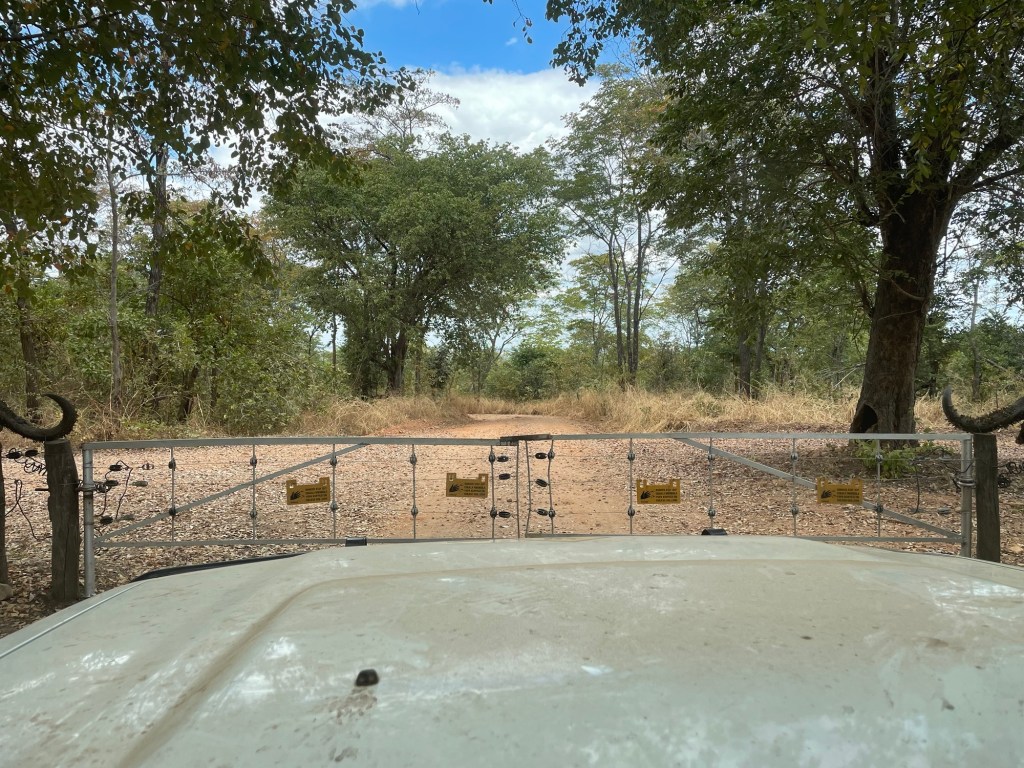
North Luangwa is the only place to see Black Rhino in Zambia (with the exception of Mosi oa Tunya National Park which is a little game park). There is an enormous area where the rhino are kept, in the nothing area between the escarpment and the Luangwa river. It’s surrounded by a 50cm high electric fence, which is apparently enough to keep the rhino in as they can’t lift their legs high enough to pass. The area inside the rhino reserve was desolate, the only sign of life were the numerous tsetse flies, although there were mercifully fewer than in Kafue. It took us about four hours to reach the Luangwa river from Samala, although we were in no hurry.
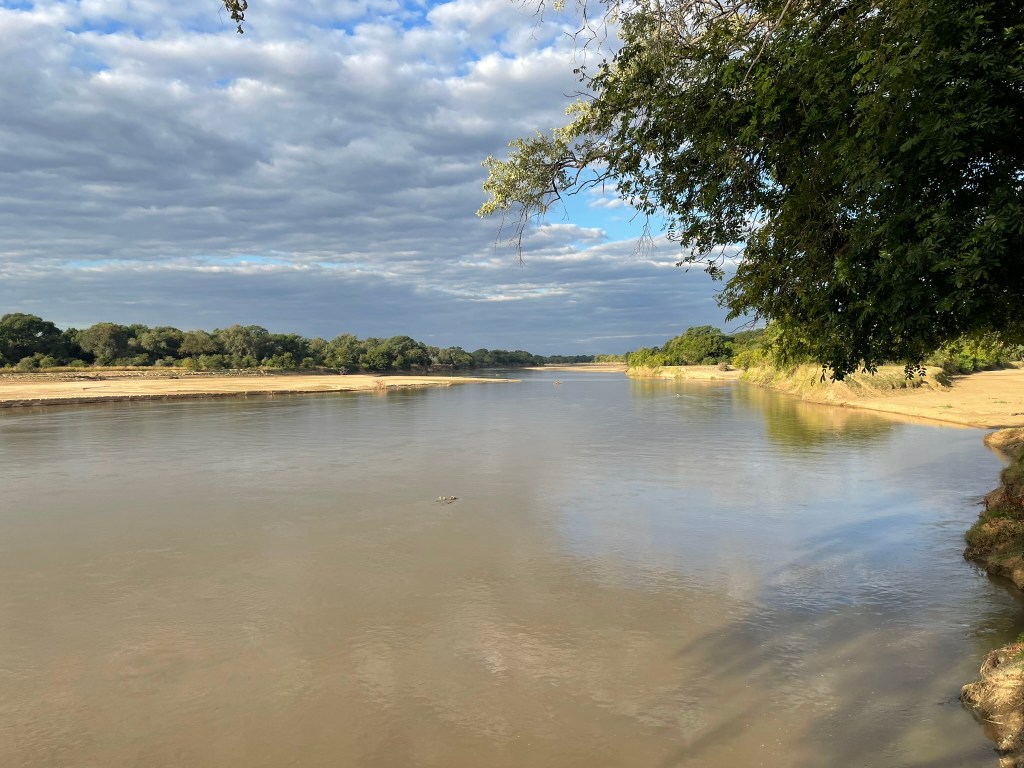
To make the most of our expensive park fees we went for a short drive northwards up the river. The Luangwa is a spectacular watercourse teeming with life, along the banks are magnificent trees taller and greener than anything we’d yet seen in Zambia. In the water are numerous hippos and crocs, and some massive crocodiles were basking in the afternoon sun on the opposite bank from us. We stopped for a break, to have a snack and to stretch our legs, at a convenient view point on a beautiful ox bow lake. We nearly turned round at this point to head to our camp, but decided to push on for 15 minutes further north in search of any more wildlife.
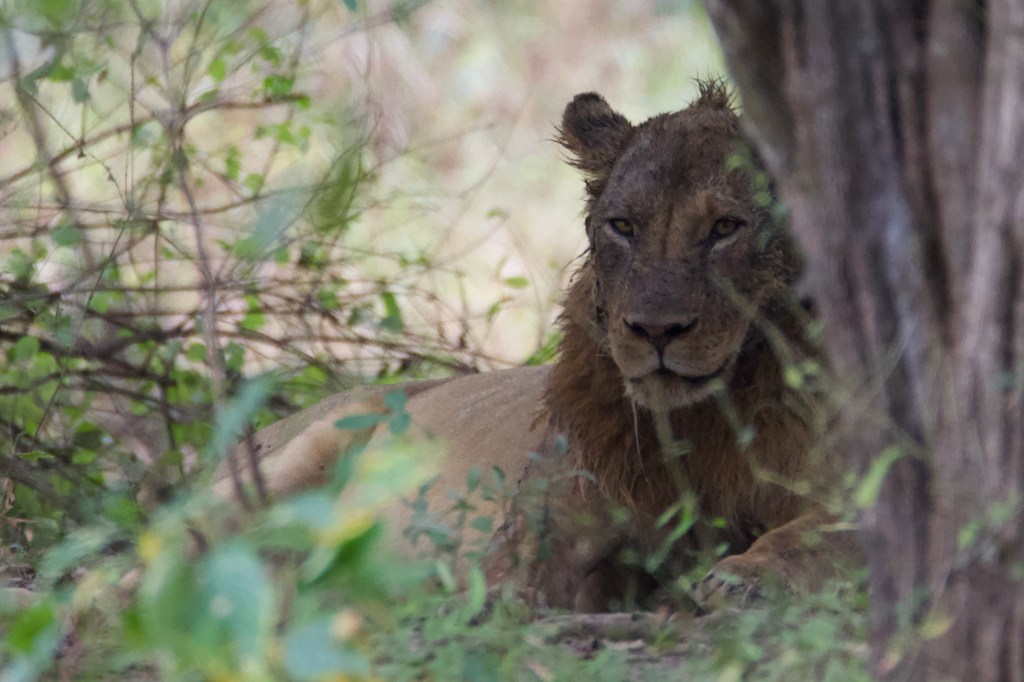
Barely 200m north of where we stopped there was an enormous lion. It was a young male with the very wispy early beginnings of a mane. The air was full of the stench of something long dead, and the face of the lion was grey, hair matted and sticky, belying the fact he’d been gorging on the unappetising carcass. We couldn’t see where the carcass was, but no doubt it was nearby. The lion’s belly was huge and round, and he flopped to the ground to sleep off his meal. We decided he’d be here on our return, so we pressed on further north.
30 metres later there were two more young male lions, relaxing on the right hand side of the road high on the bank above the river. With their manky grey faces they also looked terrible. Clearly this was a young coalition sleeping off a big and fairly rotten meal.
After finding nothing of note further north still, we returned to the find the three lions almost where we left them. Sarah opted to pull into a small area off the road between trees in order to get a better view, and as we approached the long grass at the end of the space up leapt a spotted hyena. Clearly startled that we were about to actually run him over he slinked into a dry streambed and lay pancake flat to avoid detection. Neither of us had seen him hiding in the grass before we were literally a couple of metres away from him.
Ituba camp is the other side of the Luangwa river, and by now it was time for us to head to the pontoon crossing. We quickly stopped to watch a herd of remarkably calm and almost tame kudu. We had read that all the wildlife in north Luangwa was much more skittish and wary of vehicles, but did not find this to be the case.
Near the pontoon we spotted a troop of baboons with some incredibly small children. One of which was albino. We are unsure as to how rare an occurrence this is, but the poor monkey stuck out vividly against the dull green and brown background. It could be of interest to conservationists, we do not know, but will endeavour to find out. We watched them playing for a while, attempting to climb trees and falling off hilariously.
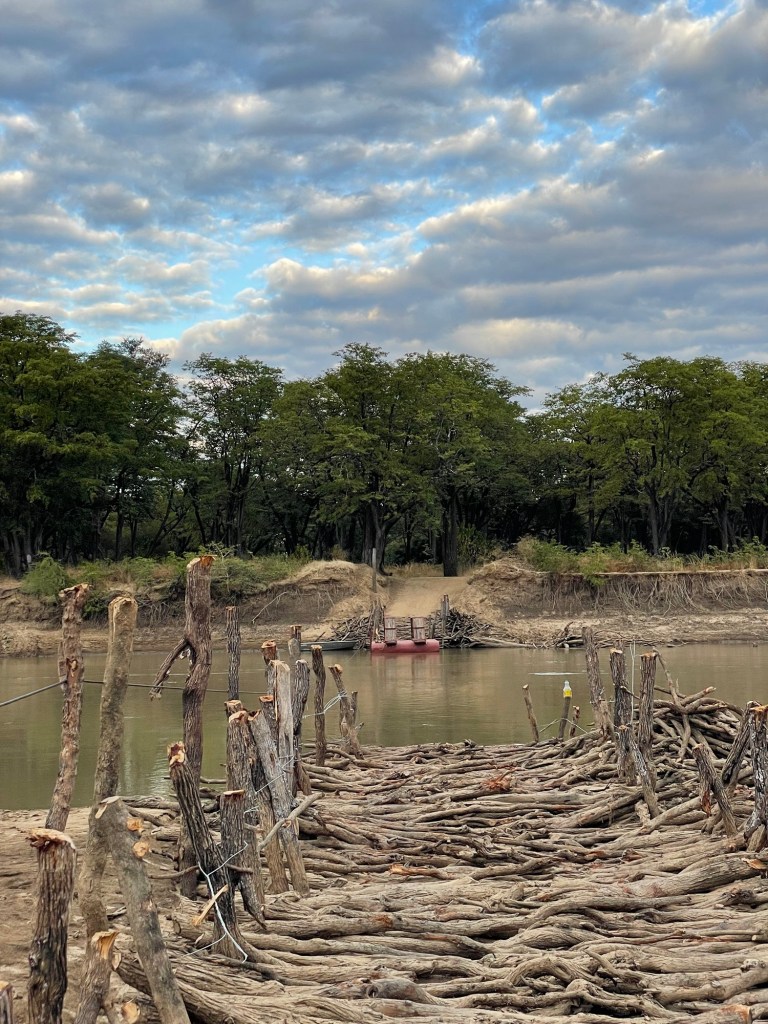
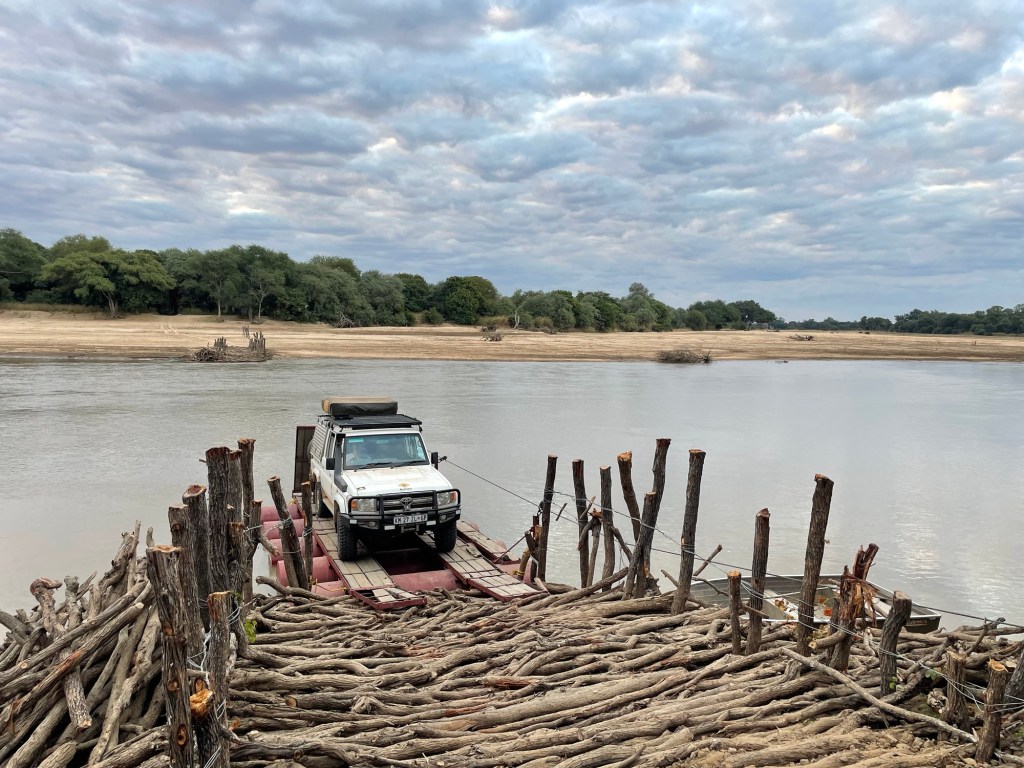
The pontoon crossing was an event. The pontoon itself was little more than a few oil drums strapped together and a couple of planks tied across as tyre tracks. In fairness the contraption was a little more professionally built than I’ve described, but it still needed pulling across the river manually. Two men used wooden handles to grip and pull on a steel cable that was strung across the river. Our fully laden Land Cruiser plus four passengers was quite the load, and the pontoon grounded itself on the shallow side of the river. Our two haulers pulled with all their might to free us, and with a bit of shaking and balancing we made it across.
Ituba camp was beautiful. We reached the riverside just before dark, and admired the last few minutes of light watching the wildlife and soaking in the Luangwa atmosphere.
Wildlife:
Giant Kingfisher
Elephant
Lions
Hyena
Kudu
Baboons including Albino baby
Distance: 82km
Cumulative Distance: 6,073km









Kamukonzo
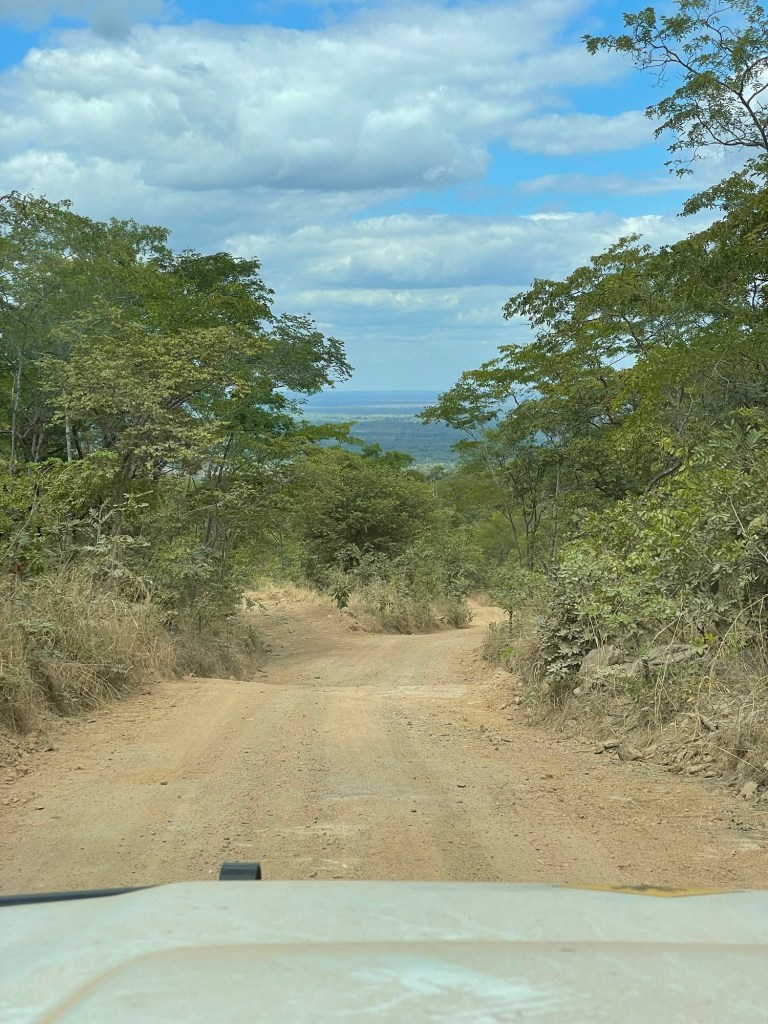
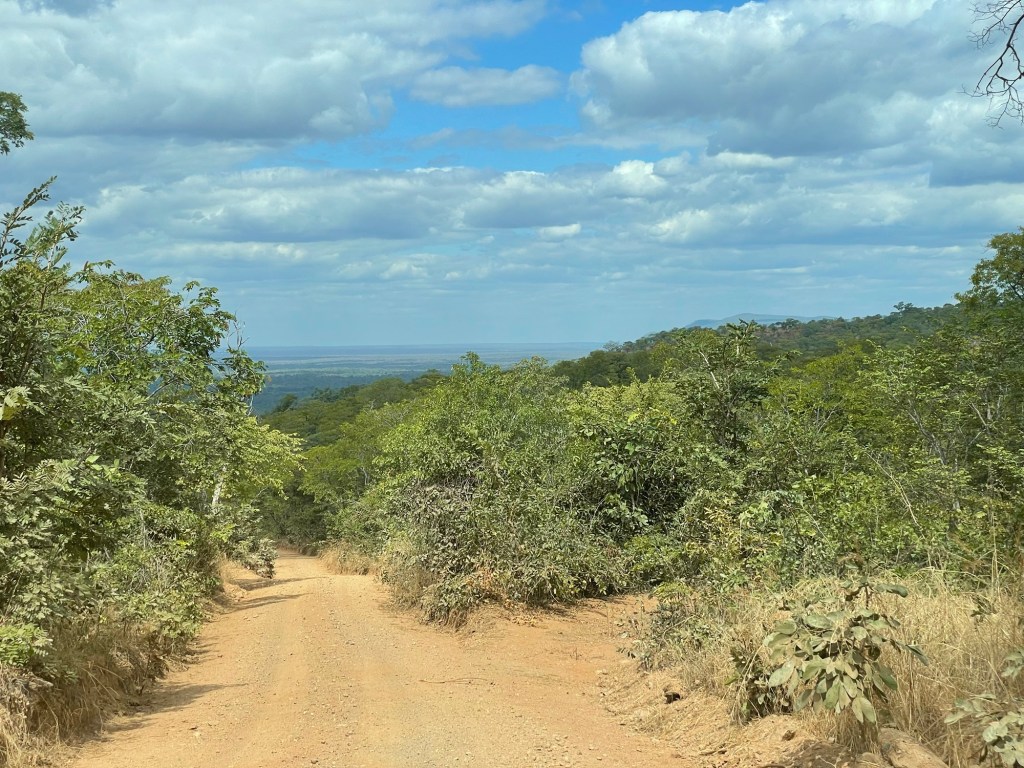
Today we began the journey south down the Luangwa valley, eventually to end up at Mfuwe and the South Luangwa national park. First we had to negotiate the dirt roads and small villages of the upper Luangwa valley. As we passed through each village along the way the children would rush out and wave at us. The youngest children would be delighted with a wave, and sprint back to safety. Some of the older kids would chase the car and attempt to hang on to the spare wheels on the back. Many would try to extract some goodies from the mzungus with a call of “sweetie?” We remain disappointed with anyone who does travel these routes handing out sweets to children. All calls were returned with a cheery “mugunna bwanji?” (good morning how are you?) Only one child made an angry gesture when denied, mimicking throwing something at us, the vast majority returned our cheerful waves with a big smile.
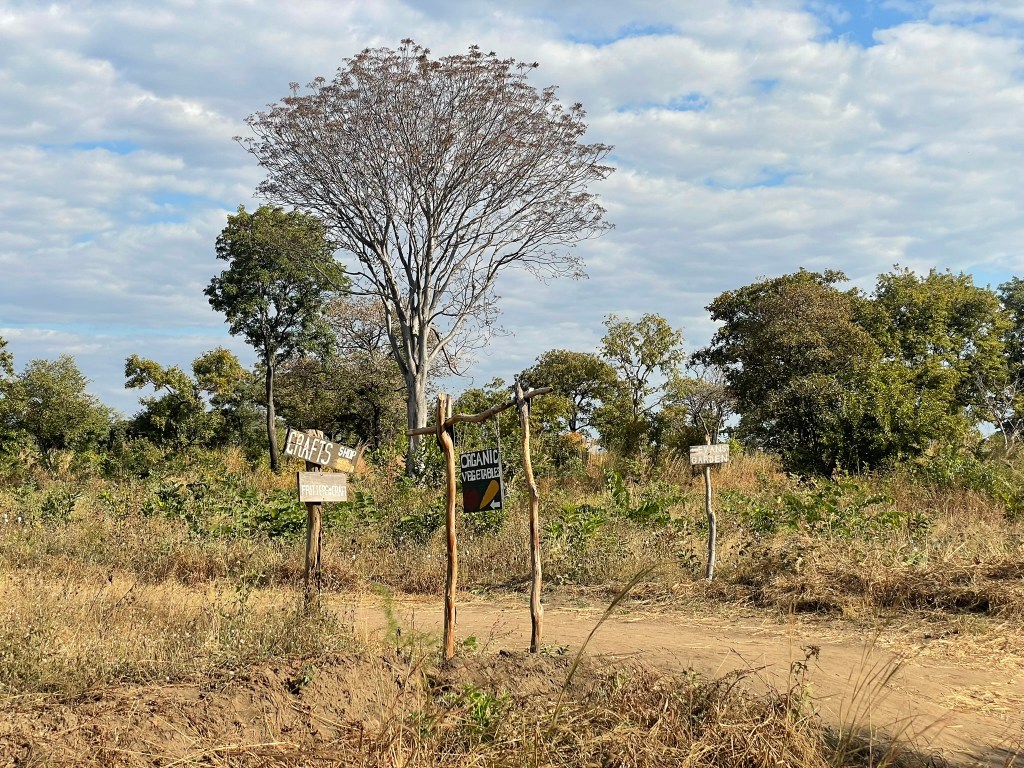
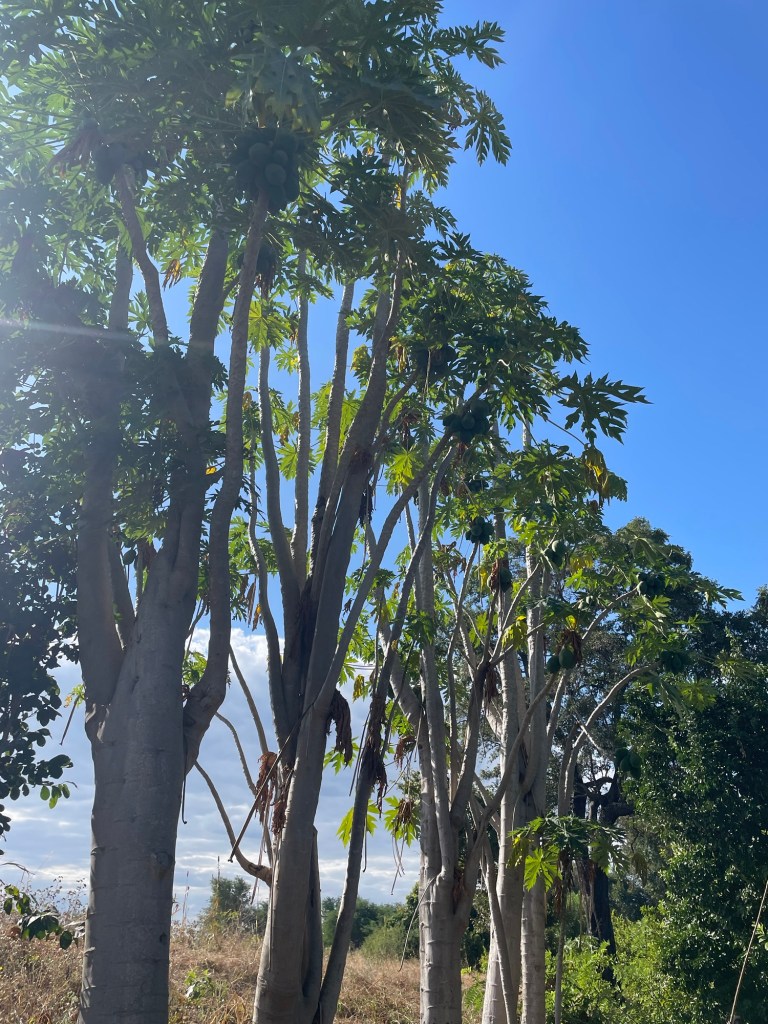
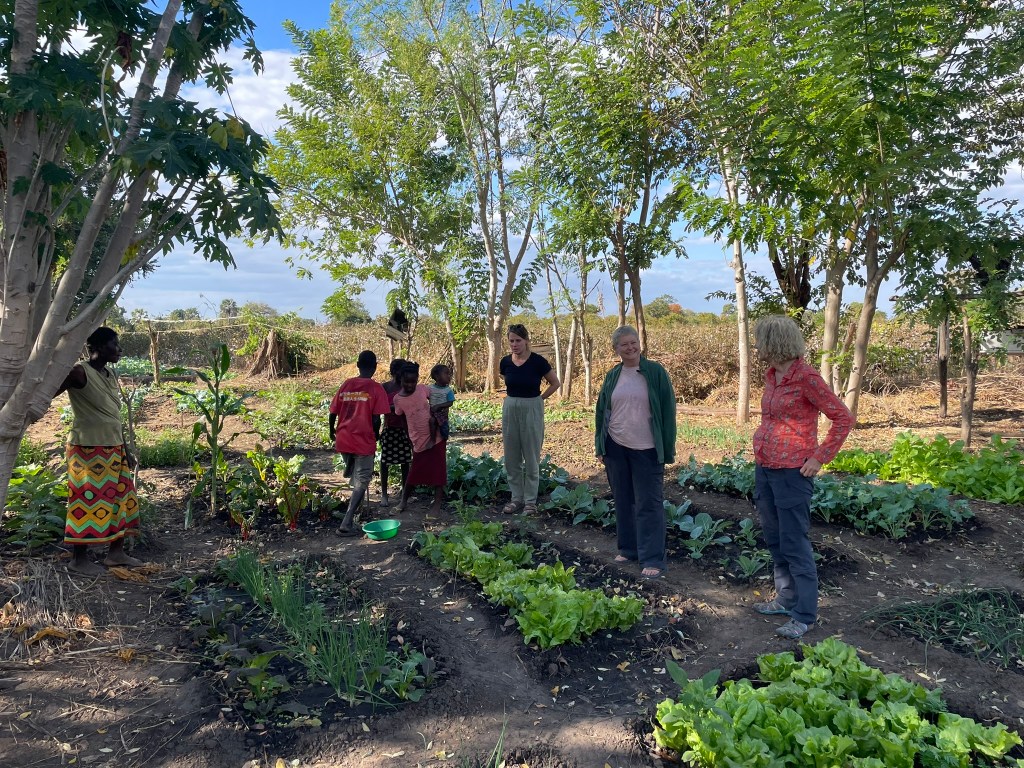
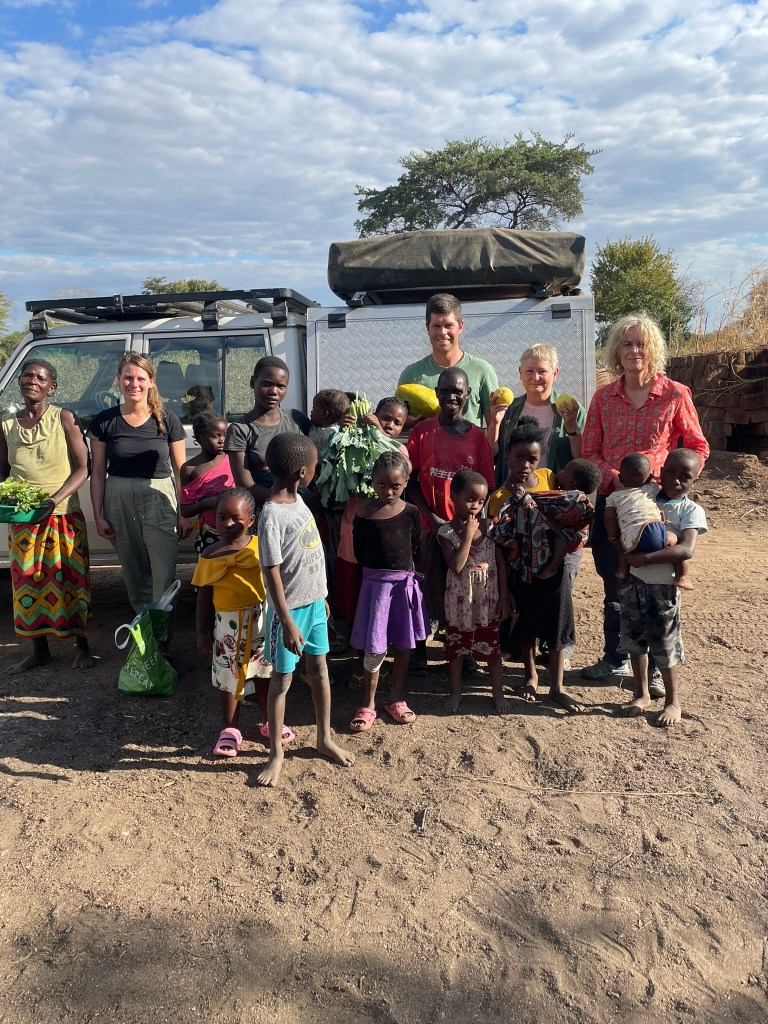
It took us 4.5 hours to reach the village of Chitungulu on the northern edge of the Luambe national park. It had been many days since we had visited a shop for supplies, so we were delighted to discover Evan’s Garden. A smallholding selling homegrown fruit and vegetables, run by the charismatic Evan and his large family. Chitungulu seems to be an average village for the area, small huts are sparsely spotted around the landscape, and the centre seems to be around a primary school and a mobile phone mast. Zamtel the network of choice around here so our MTN sims were useless. There are very few shops in the villages, at least ones that are advertised, so we made the most of our visit to Evans garden, stocking up on grapefruits, basil, papaya, lettuce, and rape. There’s a great variety of vegetables being grown, however being the middle of winter not much was ready to go. Among the produce I saw: Okra
Aubergine, Chinese lettuce (pak Choi), Onion, Radish, Rape, Lettuce, Basil, Coriander, Tomatoes, Guava, Papaya, Grapefruit, Orange, Bananas, Chillies, Maize, Sunflowers, Cassava
Evan needed an electric fence to protect his garden from elephants. He claims to be up all night defending his garden from the ellies, who could trash all his work in under ten minutes. He doesn’t have an electric fence, this much is clear, so we could at least believe in his struggles. It must be exhausting.
We bought $11 worth of produce. He directed any further donations to go through the Chitungulu foundation (chitungulu.nl). This organisation appears to be doing good work in the area fostering enterprise and helping the community. There doesn’t appear to be a religious motive, so we approve. Money from tourism and donations does appear to be helping the community, when we mentioned to Evan we would be staying at the community campsite that evening he seemed genuinely thankful.
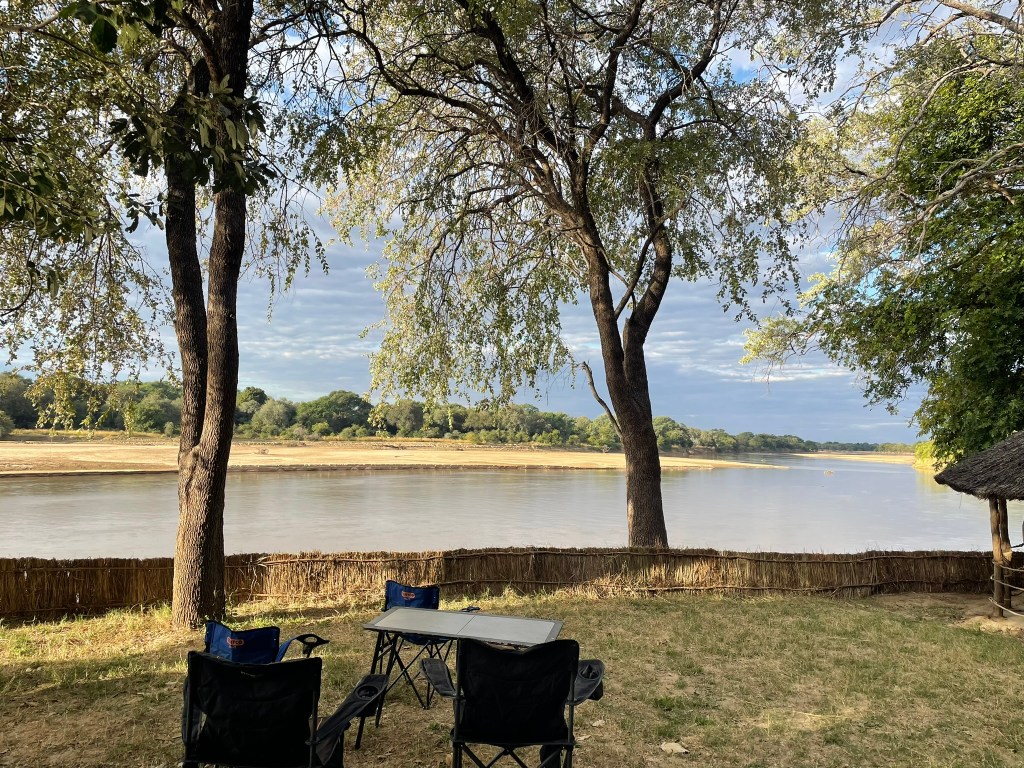
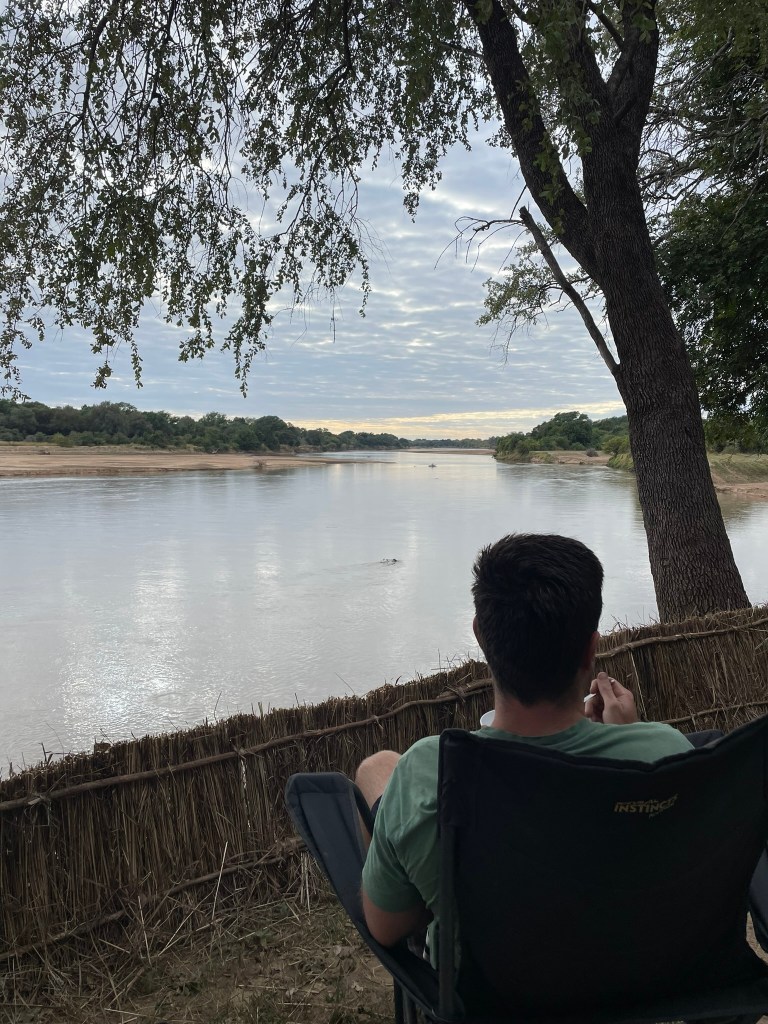
Kamukonzo campsite is a community run campsite on the banks of the Luangwa river in the small tract of land which isn’t national park. The enigmatic Whitsun is the host, and he was very welcoming, there was even a solar powered fridge filled with cold drinks (beer). We had the whole site to ourselves, and there is nothing better than watching the sun set over the incredible river with a cold beer. Hippos and crocodiles were of course ever present, but besides that there wasn’t much game, so we slept soundly.
Wildlife:
N/A
Distance: 111km
Cumulative Distance: 6,184km






The Road to Mfuwe
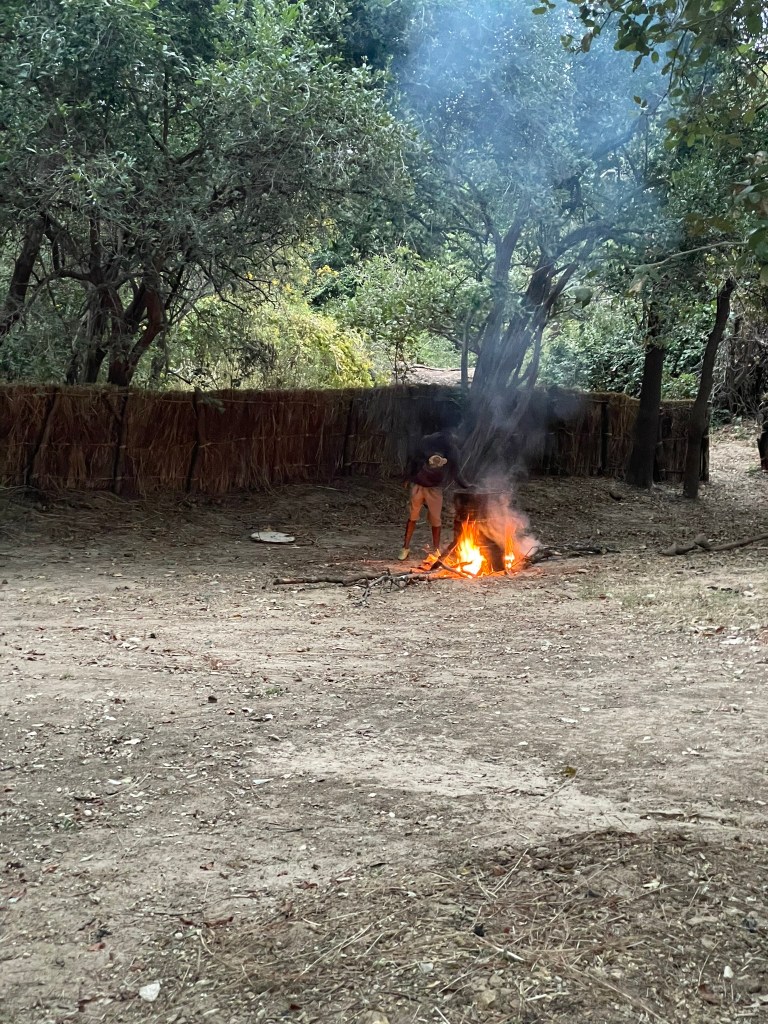
Showers at Kamukonzo are done by heating a big oil drum of water over a fire. Buckets are filled with this hot water and carried up a ladder and emptied into another oil drum, this one stashed high in a tree. It’s simple, and a lot of hard work for the camp staff, but it worked a treat. We had great long hot showers.
Heading south towards Mfuwe we first had to pass through Luambe national park. A very small national park on the east bank of the Luangwa river, most notable was its very well graded new road. We had a quick trip off the main road to the riverbank, but saw nothing but hippos and crocs. Near the main road were a couple of giraffe, our first sightings in Zambia, and first since the central kalahari. The giraffe here are a different sub-species. More elegant, with smaller patches and wider lighter borders to each brown patch, they seemed a bit smaller and prettier than their more southerly cousins.
Sarah, Clare, and Jacqui all wanted to buy some chetenges (Chuh-ten-jee). The emblematic bright patterned cotton dresses worn daily by the women of rural Zambia. It would of course be the genuine article if we bought such a piece of fabric from one of the rural villages rather than at a tourist shop in the big town of Mfuwe. Half way between Yakhobe and Chombelao we came across a man on a bicycle with a stack of Chetenges on the back. It was not unusual to come across people on bikes, even in the most surprising of places, this was deep in woodland on a dirt track many miles from town, and yet there were plenty of cyclists. This man was however the first we had seen with chetenges. He introduced himself as Robinson, a travelling salesman with surprisingly good English, heading to the villages to sell his stock. He was carrying only the cheapest synthetic fabrics to meet the demand of the rural villages, but had a supply of more expensive waxed cotton chetenges back near his base in Mfuwe. Robinson promised to get somebody to get some to us so we could buy. Sceptical, he took our phone number and off we went.
Some time later we reached the northern entrance gate to the Nsefu sector of the South Luangwa national park. After signing the transit register, the park ranger said to us: “are you the people looking to buy chetenges?” Apparently Robinson had phoned ahead to make sure we were intercepted. The whole valley was on the lookout for a white Land Cruiser with four mzungus in. A man would be waiting for us at the junction as we arrived into Mfuwe in about two hours time.
Transiting Nsefu you must stick to the main route away from the riverside. Most of the traffic here is villagers on push bikes. The cycle track is certainly as well worn as the main track. The transit route keeps us away from the wildlife, but at least we didn’t have to pay a park entry fee either. Tsetse flies were a bit of a menace here, the most we’d seen since Kafue. Halfway through the park we came across a burning section of grassland. The fire sent all the reptiles and rodents to scurrying across the roads, and insects all flew up and out. This had attracted an array of birds who were feasting on the insect buffet. Chief among them was a large flock of southern carmine bee eaters. We had not expected to see the carmines on this trip, they should have migrated well north for the winter months. Only a few juveniles and unfit birds stay resident all year. Here they were having a great time. We stopped for a long time watching the swooping and chatting, reversing back a few metres everytime the fire got a little too close for comfort.
Arriving at the southern gate of Nsefu we were again asked whether were indeed the mzungus after chetenges, and confirmed via a phone call with the park ranger’s phone that we would indeed be intercepted en route to Mfuwe. Robinson’s business associate was waiting for us as expected at a crossroads before we reached town, by this time there was no way we could back out of a purchase, and for 90 kwacha (£3) each the price was still right. We ended up buying a good portion of his stock stashed on the back of his bicycle. A good salesman never lets a potential deal get away.
Wildlife camp occupies an idyllic spot on a huge bend in the Luangwa river just outside Mfuwe. In such a wild space with many thousands of kilometres of untouched prime safari area surrounding the camp, it is a bit of a surprise that the eleven campsites are squeezed quite so tightly together. This camp is indeed the best budget option in Mfuwe, and for $11 per person per night camping is amongst the cheapest we’ve encountered. The chalets are good value too, and we deposited Jacqui and Clare for a bit more of a comfortable stay. We remained in our rooftop tent. Wildlife camp is wildly popular, overlanding groups from the big operators would make camp here and visit south Luangwa, so the place felt constantly busy. No small wonder though, the South Luangwa promises so much for our coming days.
Wildlife:
Giraffe, Hippo, Crocs
Distance: 121km
Cumulative Distance: 6,305km


 Small Holiday Big Dream
Leave a comment