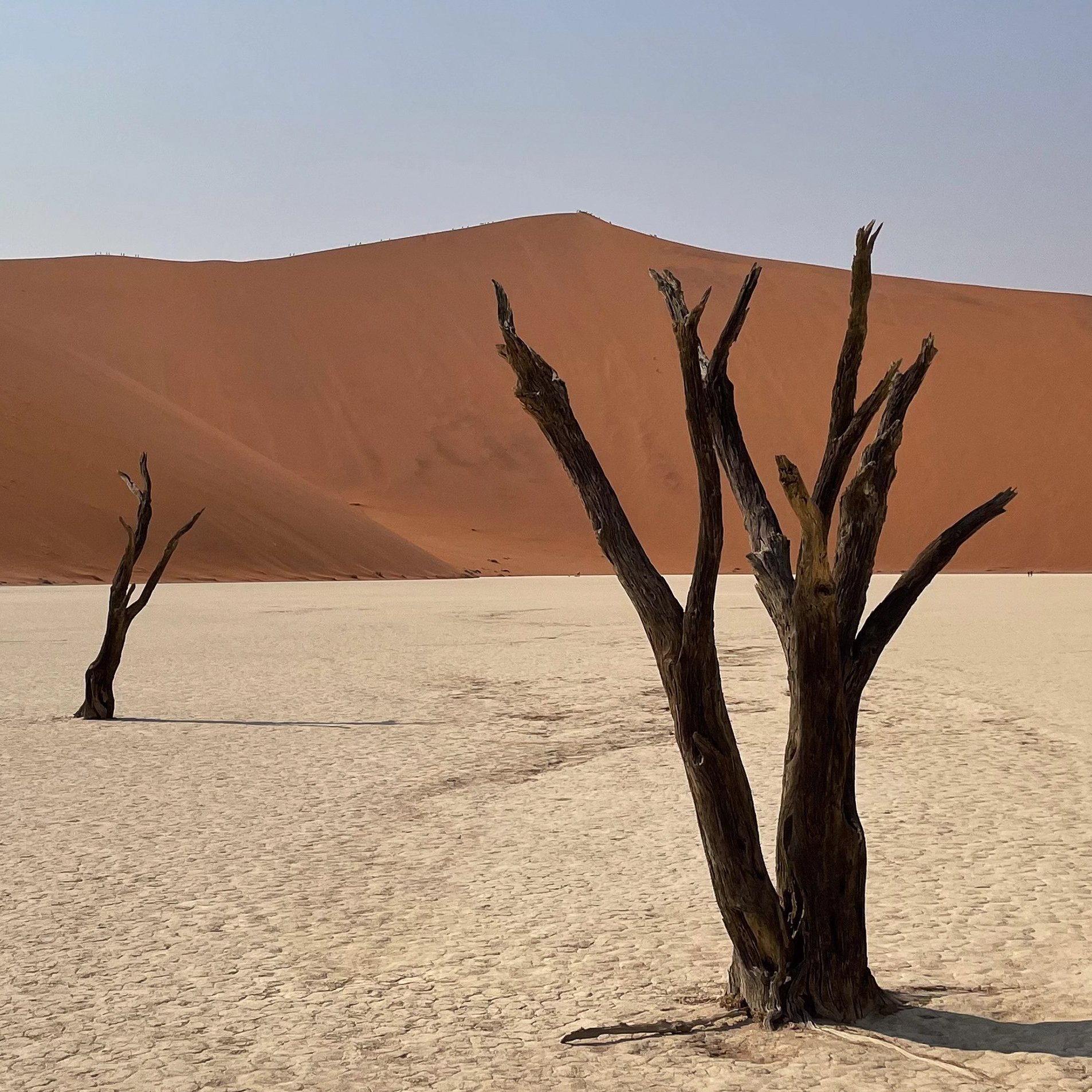
I’ll say it up front, Bangweulu swamps are a highlight. For anyone visiting Zambia in the near future, I would seriously consider adding it to your itinerary.
Nsobe Camp
Nsobe camp in the Bangweulu wetlands is a four hour drive from the T2. It’s a dirt road, and the going is fairly slow, but anything is better than the T2.
The drive winds through the uninhabited Lavushi Manda national park. Which lulls you into a false sense of remoteness. After a couple of hours you arrive at the gate to the Bangweulu game reserve, it’s in a small village, and many children and adults came up to see us as we paid our entry fees. They were all happy and didn’t ask for anything but a football or tennis ball to play football with.
After the gate we expected it to get more remote again as we continued for another two hours to Nsobe camp. The opposite was true. For the entire 60km stretch was lined with houses and people. Here children under ten seemed to outnumber adults three to one. As we drove past each group of children they would run down to the side of the road, and then stand to attention waiting for us to pass, waving frantically at us and howling: “howa howa howa howa how are youuuuuuuuuuuuuu?!”. The younger children would repeat as quickly as they could: “hello hello hello hello”. We gave each group a wave and a big smile, and they would sprint back to their houses, set back 20 metres or more from the road, to report what they had just witnessed. Adults’ reactions were a mixed bag, some of the most cheerful thumbs ups we’ve ever seen, sometimes a stare and a furrowed brow, either in confusion or anger, we can’t tell. Only a handful of times did people gesture for food or money, it’s a sad reality that white people are seen like this.
The land alongside the roads was well cultivated, small lots of ground nuts, banana, pawpaw, and mango trees were a nice sight. As we neared Nsobe more fish were available for sale, small 20cm long shiny fresh catfish, and piles of unappealing dried fish. The people here looked well fed, brightly clothed, and mostly happy. Whilst they only have a subsistence lifestyle it seems to be working ok for them at the moment. Although as all the children grow up and the population balloons there may well be more issues.
Later on at camp, our attendant told us stories of enormous families, and a man called Big Basket, with 50 (fifty) children. Big families are seen as wealth and security here, contraception never used, and children are put to work young: fishing, reed cutting and weaving, goat herding. Schools are in place, but, just as in the UK, in such rural areas the quality of teaching remains low, with stories of drunk and absent teachers abound. The people remain out of sight of central government.
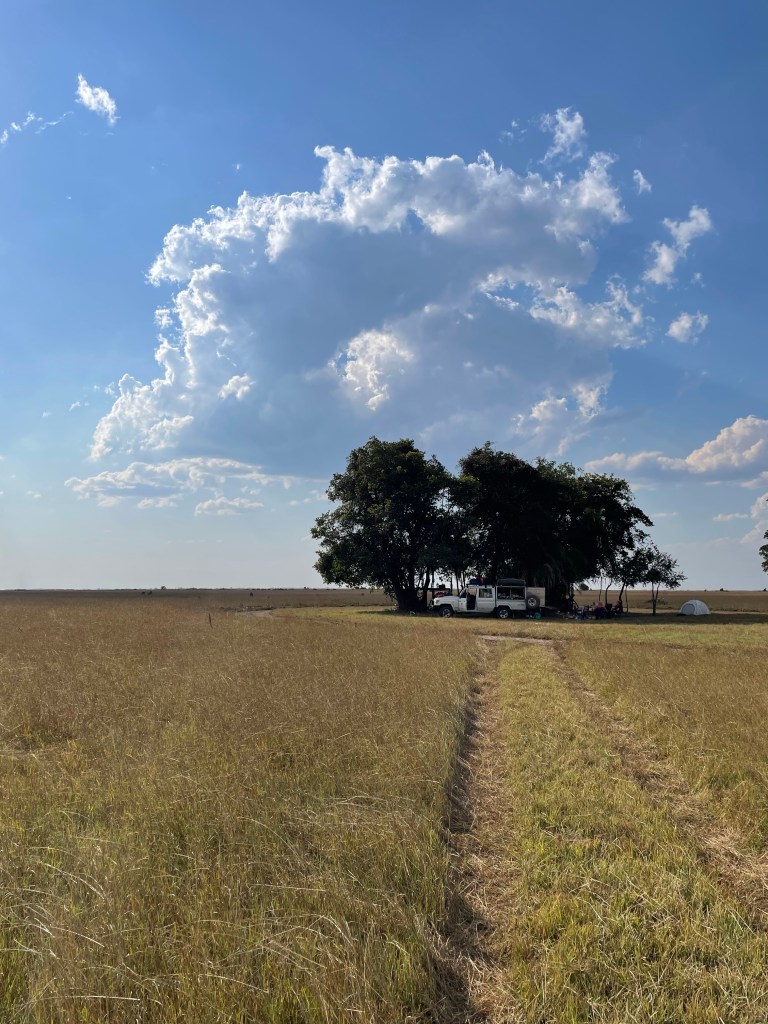
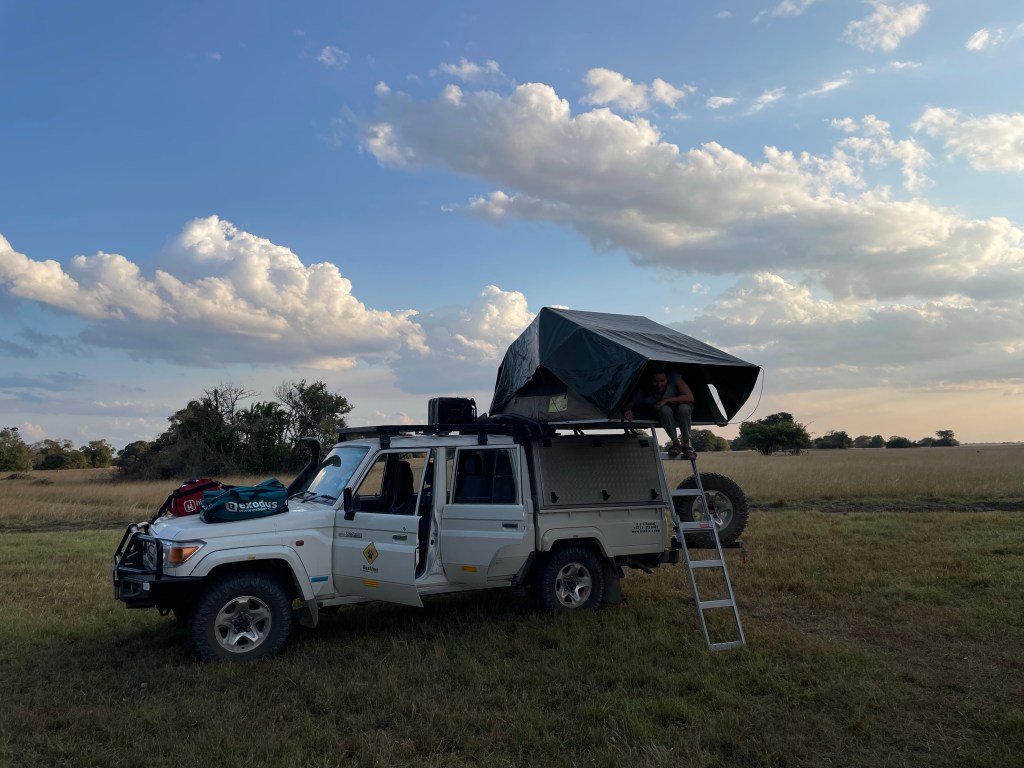
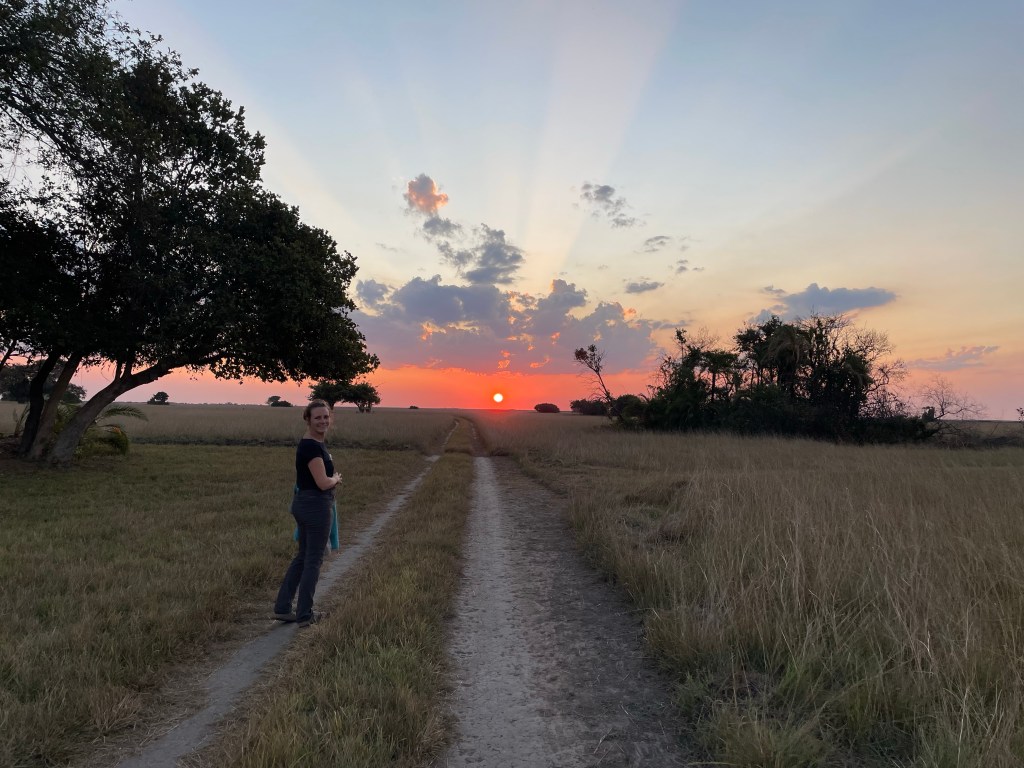
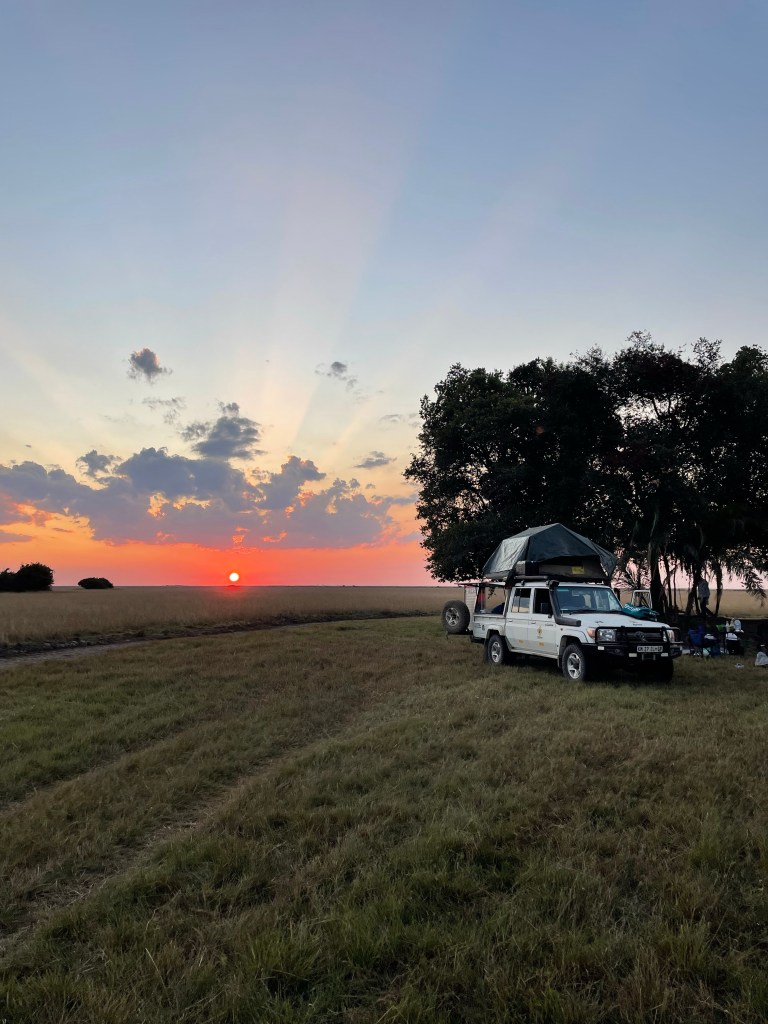
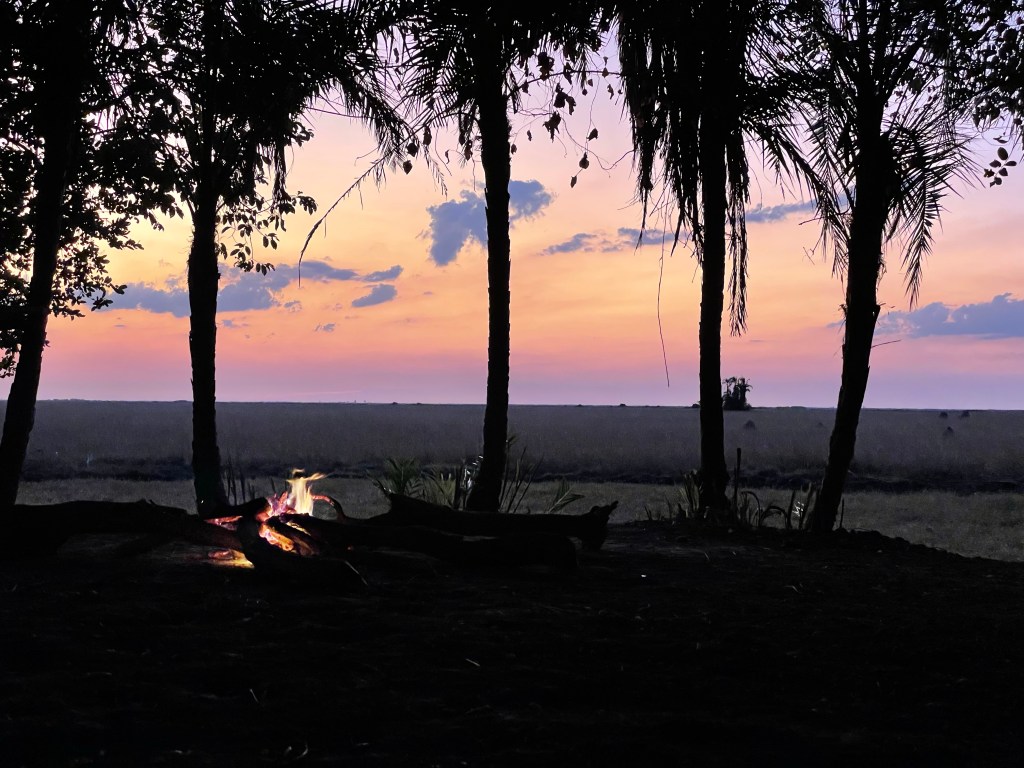
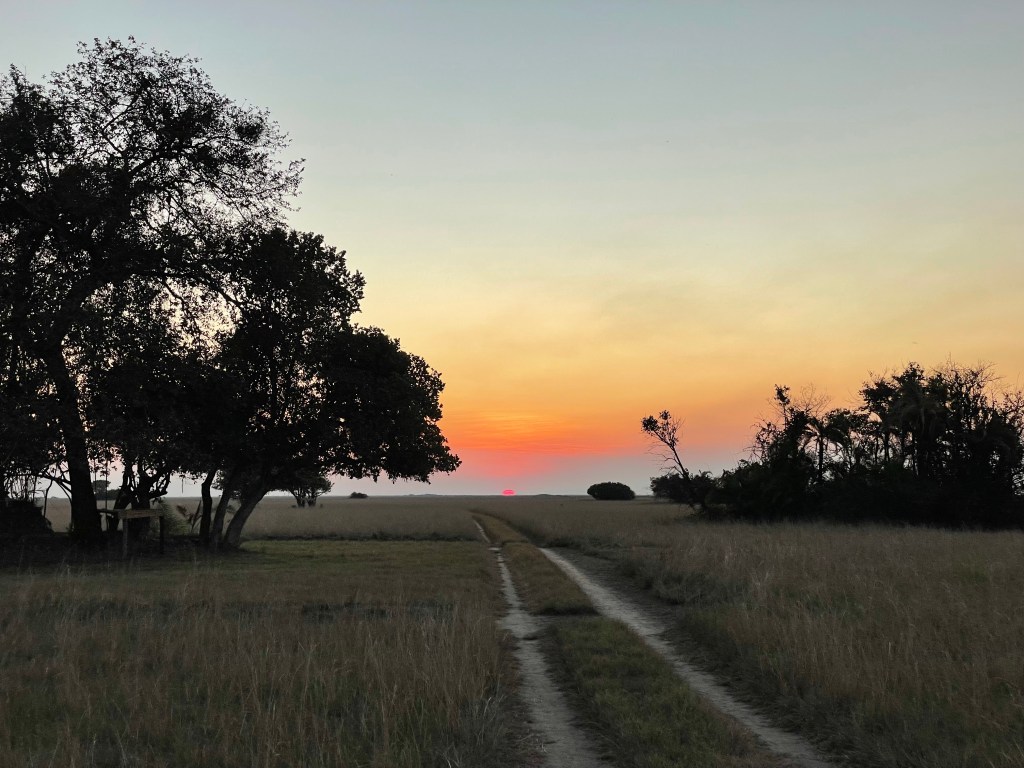
Nsobe camp is in a stunning location. Located on the edge of a vast grassland, the campsites are shaded by individual trees and have incredible vantage points out to the horizon. The sunsets here are simply unbelievable.
Maintained by the gregarious manager John, and assisted by his able guide Mr Webby, the “mister” forming an integral part of his name. The duo and their team were the among the most hospitable and genuine camp staff we had met so far. They are making ambitious improvements to the facilities, and offer to do everything for you, from laundry to dishwashing to building a fire. A proud Zambian team with the ambition to improve things, and working hard to achieve their goals, was so pleasing to see.
We were offered a guided drive in the evening with Mr Webby, or a walk to find exciting birds, but we demurred until our boat tour tomorrow. We asked after the cheetahs which had been introduced to Bangweulu just two years earlier. The perfect environment for them, wid ripen plains, slow lumbering prey (black lechwe) in abundance, and a lack of carnivore completion (no lions). They should be thriving. Indeed there were a couple of cubs after the first year. However the hyenas had got to them, the cubs and some adult cheetah were killed by the hyenas. Two drowned trying to cross the river, and two more were driven far away from the area. There are no cheetah left to see in bangweulu. Here, just like Liuwa, the hyenas are the top dogs. They hunt in clans, and the absence of other carnivores means there’s less to scavenge, so they must hunt to survive. A resting cheetah makes an easy meal. This disappointing news was a sad note to end the day.
Wildlife:
N/A
Distance: 139km
Cumulative Distance: 5,503km
The Shoebill Show
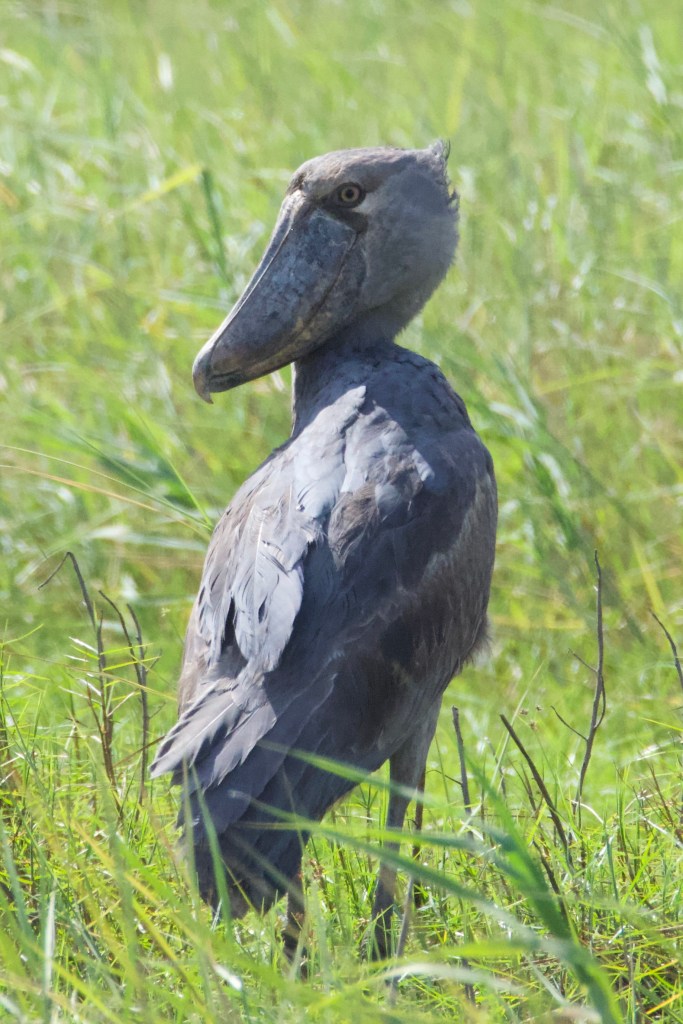
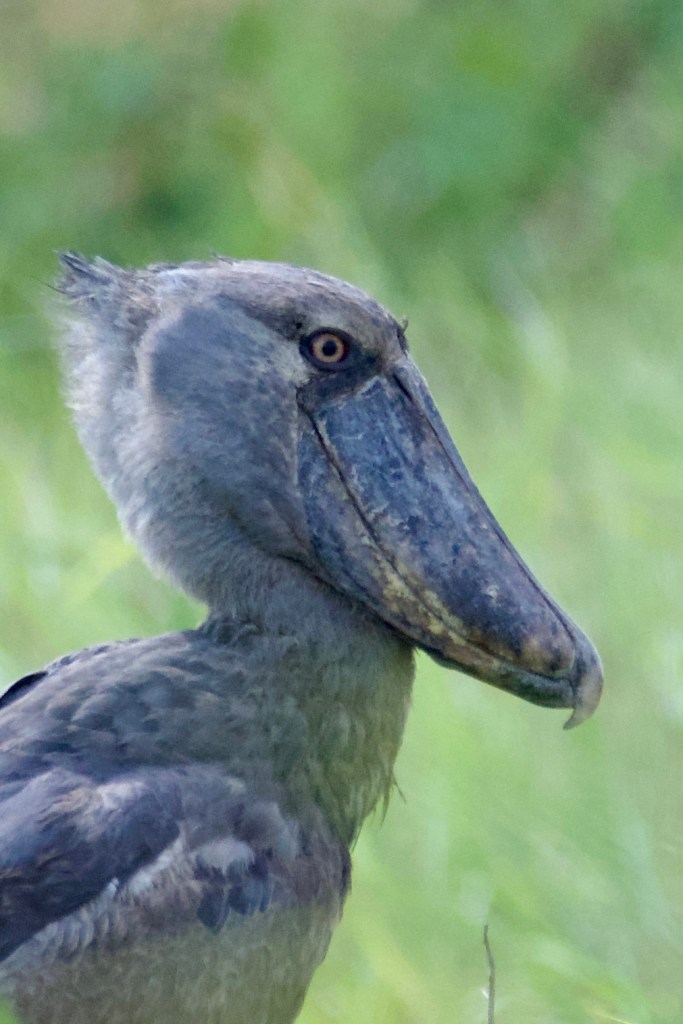
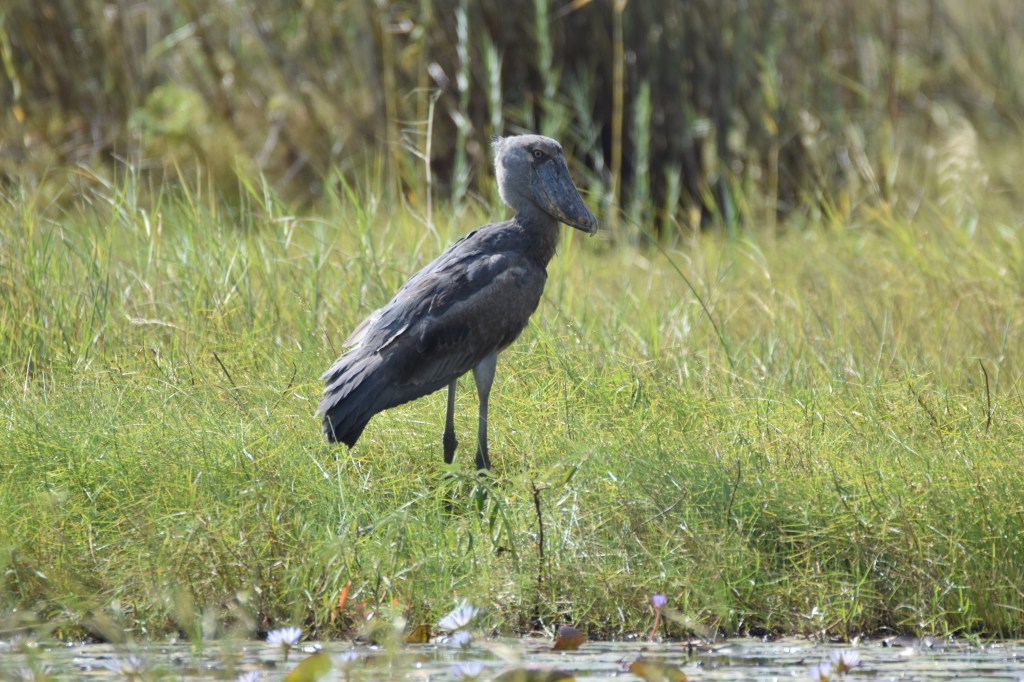
The real selling point of Bangweulu is the opportunity to spot a Shoebill. It’s a prehistoric looking bird found in wetlands around central and east Africa. The Bangweulu swamps are the only place in Southern Africa the Shoebill can be found. So of course we hired the guide and a boat from our camp to help us find it.
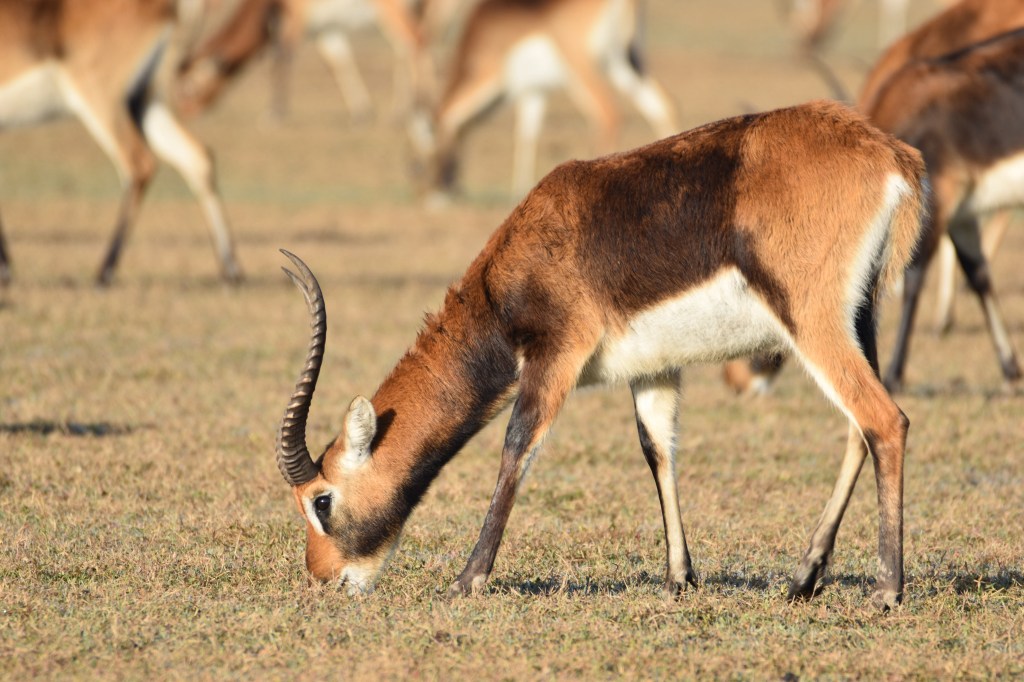
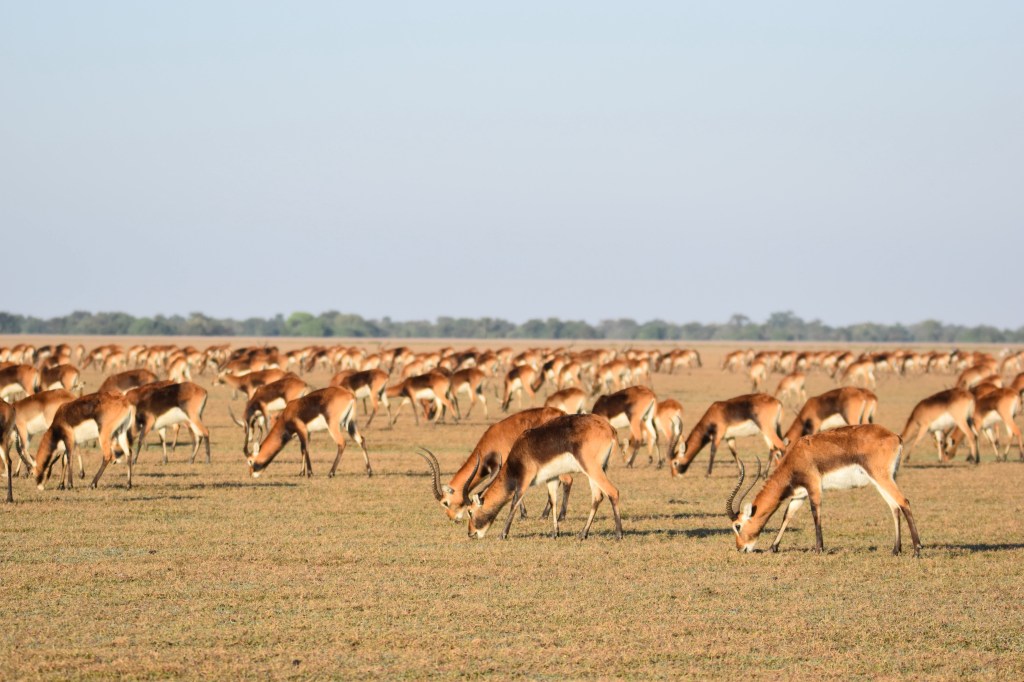
We woke before dawn to the sound of a hyena whooping in the distance. Well one of us slept right through the noise, but Sarah heard the hyena clearly. At 7am camp manager John and our guide Mr Webby arrived at our campsite. Five of us bundled into our Land Cruiser and we headed down to the “harbour”. The road to the harbour was a dead straight track over the flat open grassland. Near camp the grass was long and dry, but as we neared the swamp the grass was finely clipped right down like a cricket pitch. This was due to the enormous herds of black lechwe. I have never seen so many antelope in one place, the size of the herd was absurd. Black lechwe in huge numbers, in every direction. These antelopes are a unique species, endemic to Bangweulu, found nowhere else. They are similar to Red Lechwe in way they have high hind legs and swept back horns which curve upwards, but they have a blackish tinge to their red fur. It makes them look more majestic than their clumsy cousins.
We popped into the park office at Chikuni to make payment for the camping and boat trip, camp head Mr Morgan beamed as he counted the 5,000 kwacha from us. We signed in the registration book, the park doesn’t get much traffic, we were the twelfth group of visitors this year.
The boat was a canoe, fit for all of us (unlike in the Amazon). We were punted along by two locals, eager to help us find the shoebills. We set off upstream into the swamp. The Lavushi Manda river flows into the marshland area, joining the Luapula river downstream of Nsobe camp. The Luapula is one of the four great rivers of Zambia, forming a large part of the countries northern border with the Congo. The water here ends up in the Atlantic Ocean via the river Congo.
The first point of note on our boat trip was the fact that the area is very well populated. Small houses peppered the sides of the rivers, and even small villages were present deep into the game reserve. The people here depend on the water for their livelihoods as fishermen. Many of them are nomadic, moving further into the swamp as the water level recedes. The average age here seems to be around eight, everywhere there was a hut, there were four or five young children rushing out to greet us. “How are yooooooooou” the older ones would howl, whereas the younger ones would wave and shout “helloooo”. Once a satisfactory wave back was received the kids would sprint off back towards their houses, eager to tell anyone and everyone that the masungus had waved. The adults were much less enthusiastic about our presence, we wondered how much they really tolerated the boat tours occurring in their back yard.
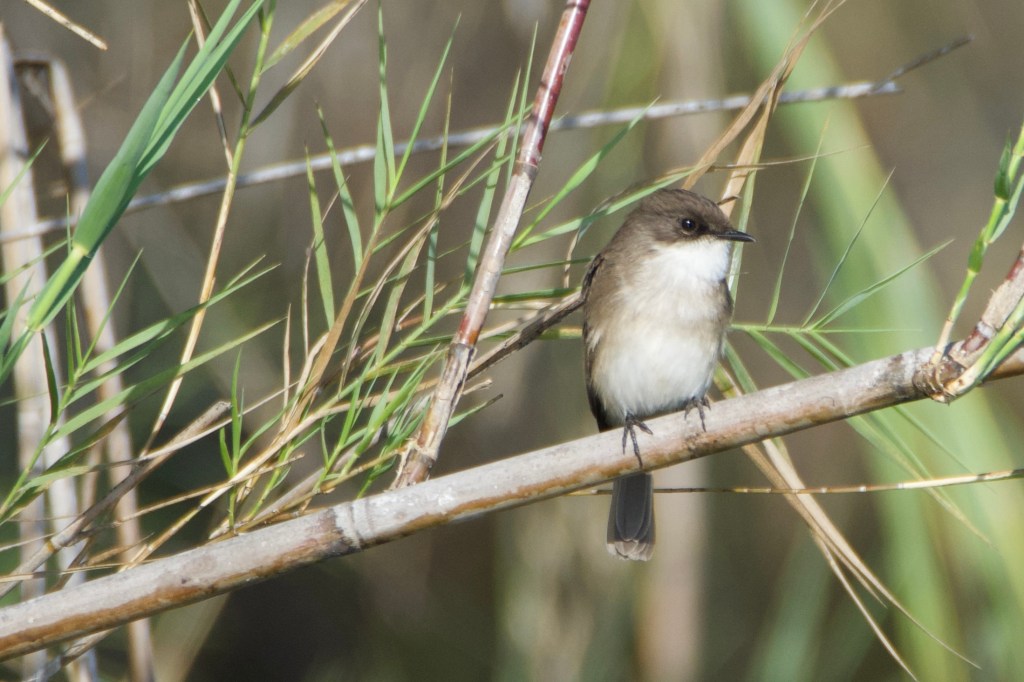
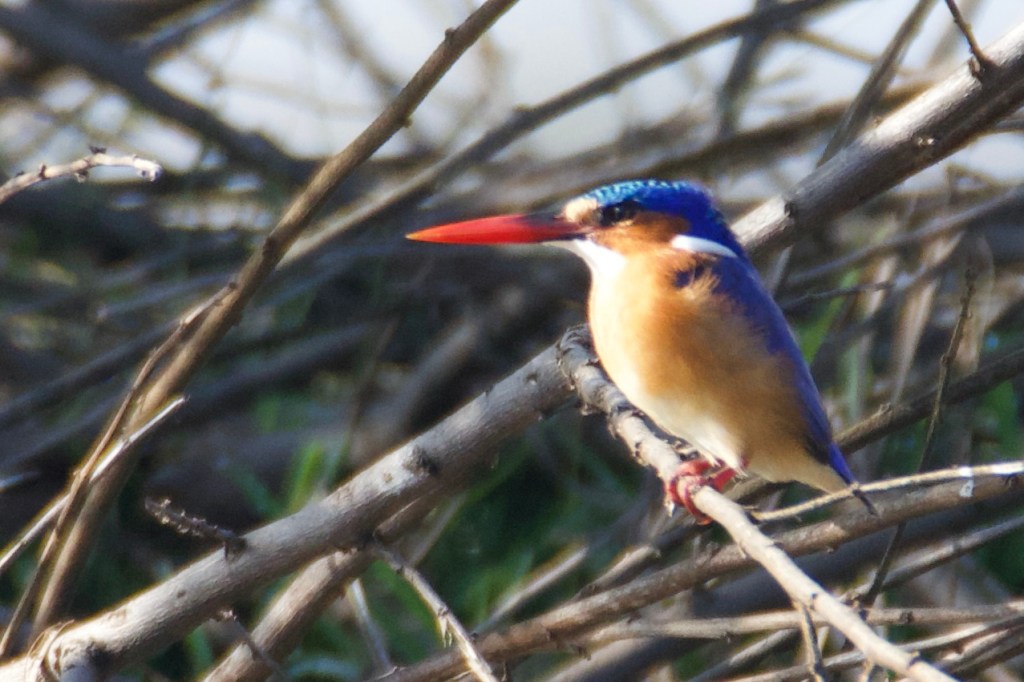
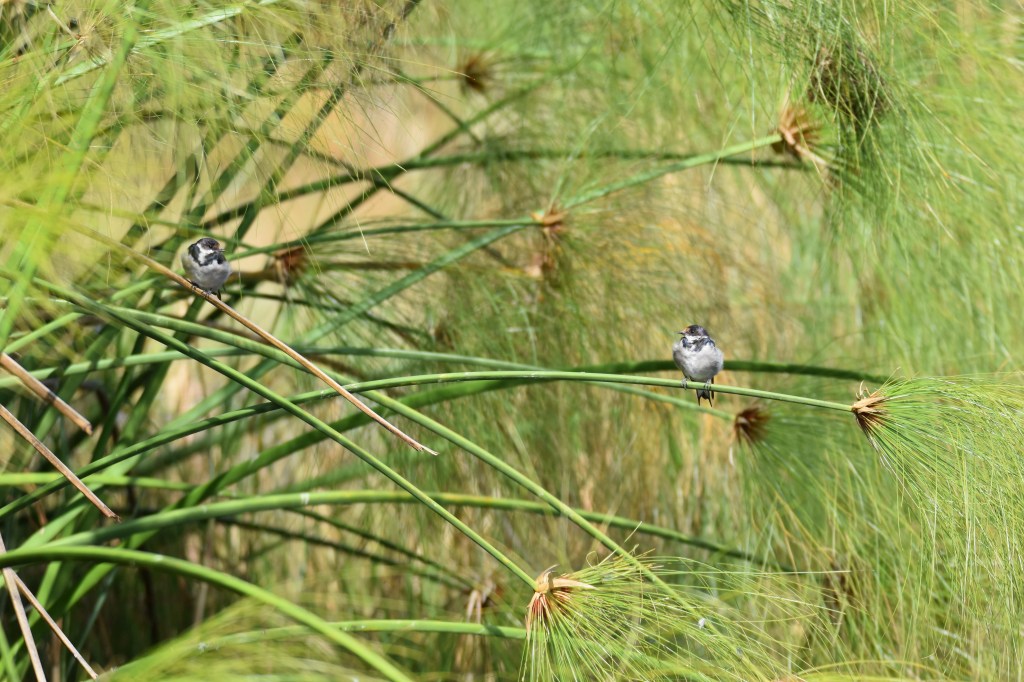
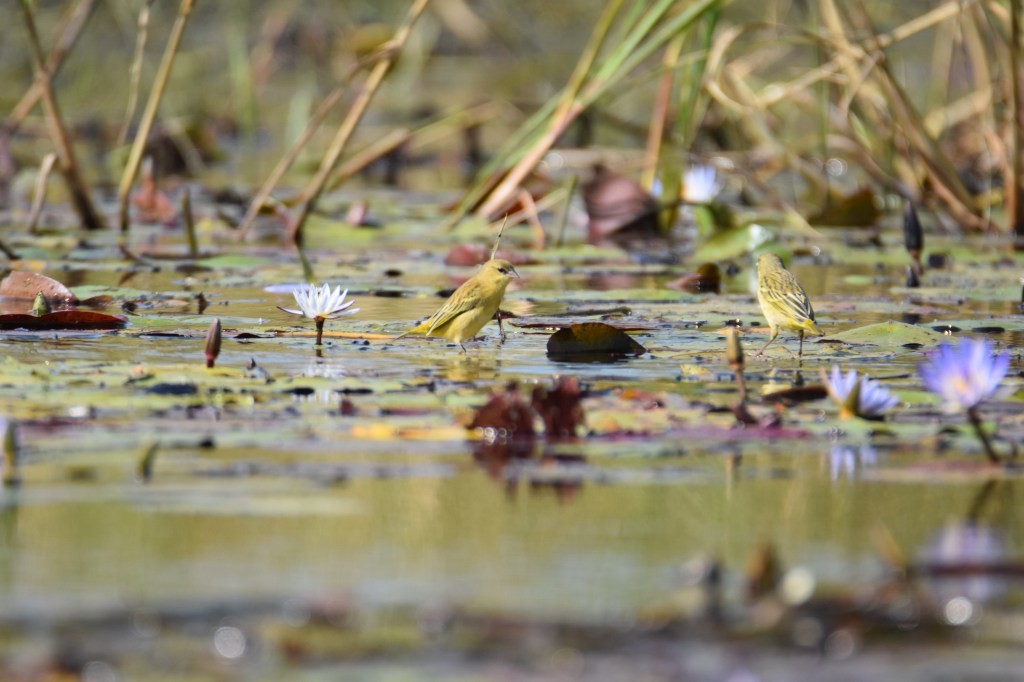
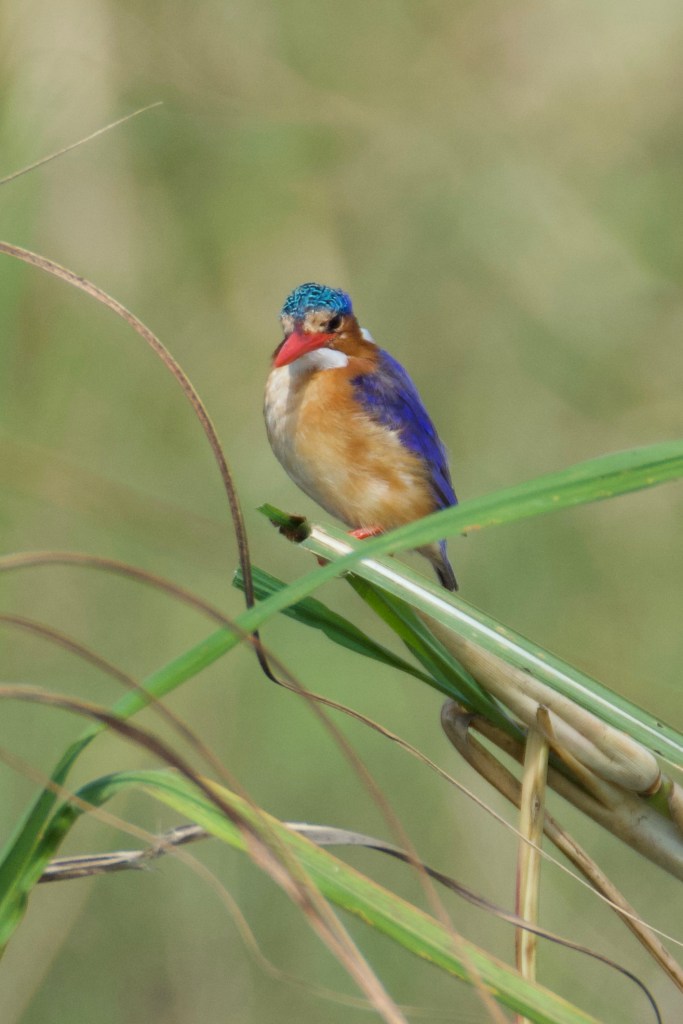
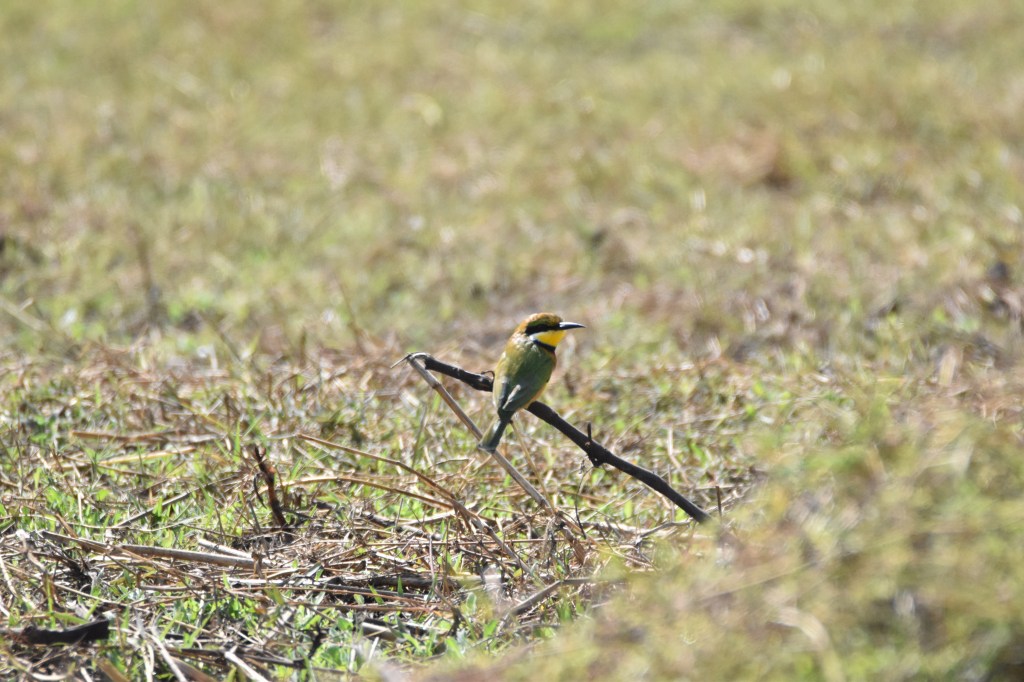
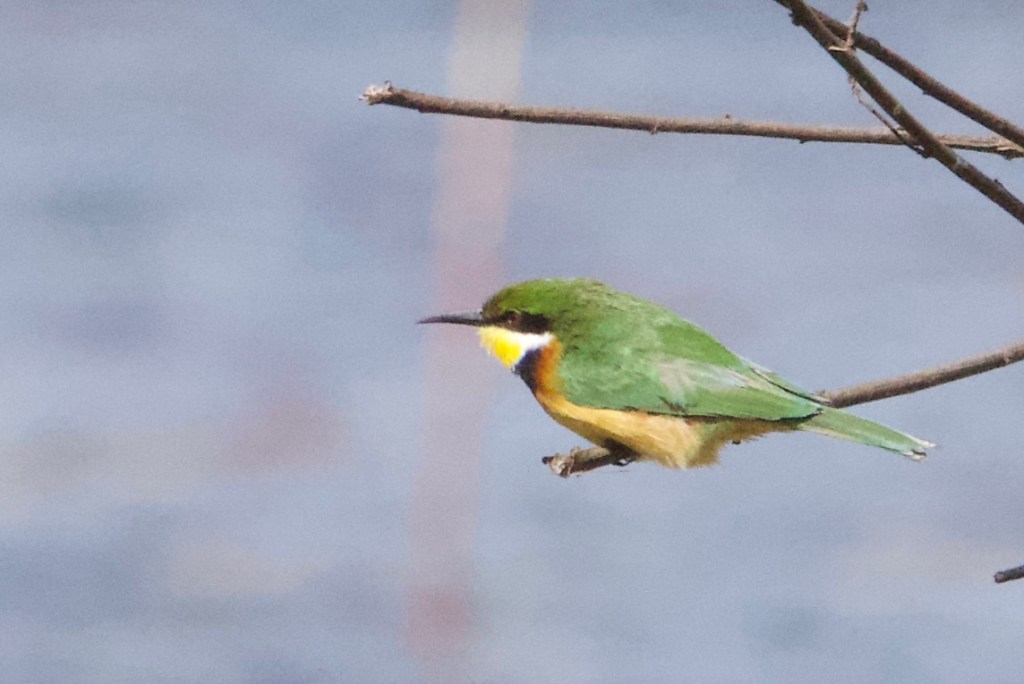
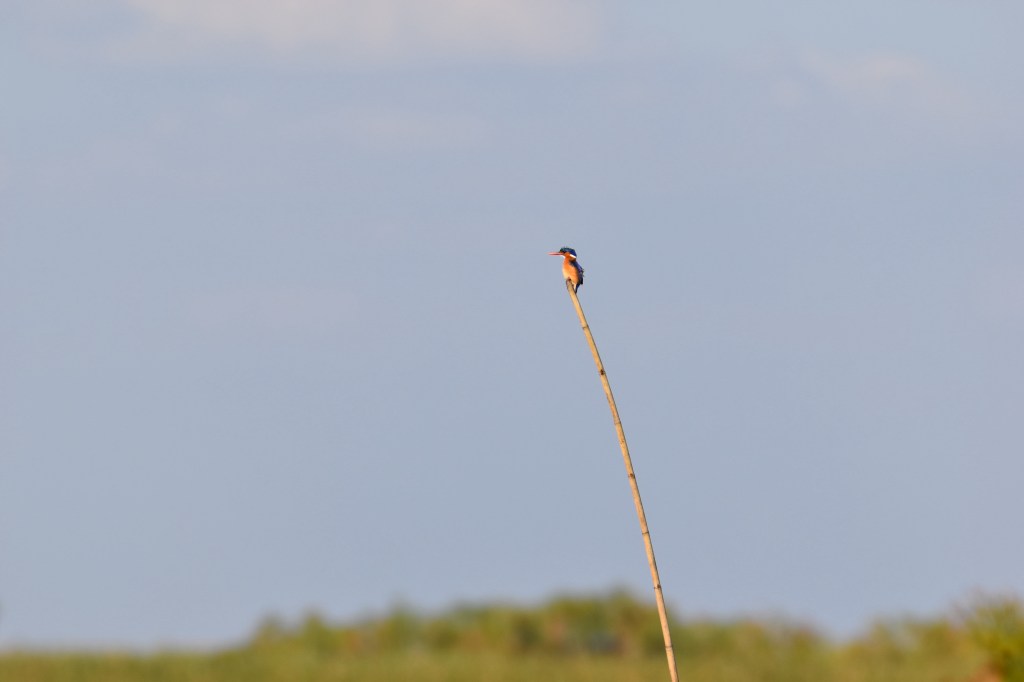
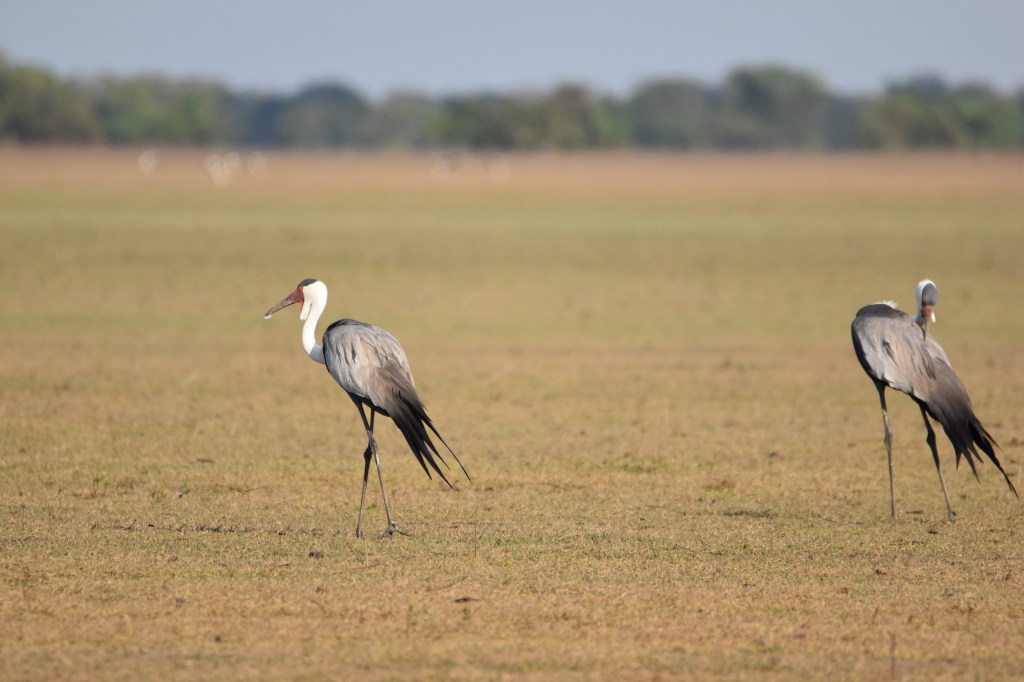
The birdlife in Bangweulu is second to none, it’s much like the Okavango delta, but m even more variety. Collared pratincoles displayed in a tight group just as we boarded our boat. Wattled cranes waddled in pairs in the gaps between lechwe herds. Swamp flycatchers were a pretty little bird, along with the Katanga masked weavers and white necked swallows they weee commonly found. The territorial and feisty malachite kingfisher was a common sight, chirping loudly and zooming around rapidly. blue-breasted bee eaters were a treat, as bee eaters always are, these were a dazzling yellow and green with small indigo bib below their chin.
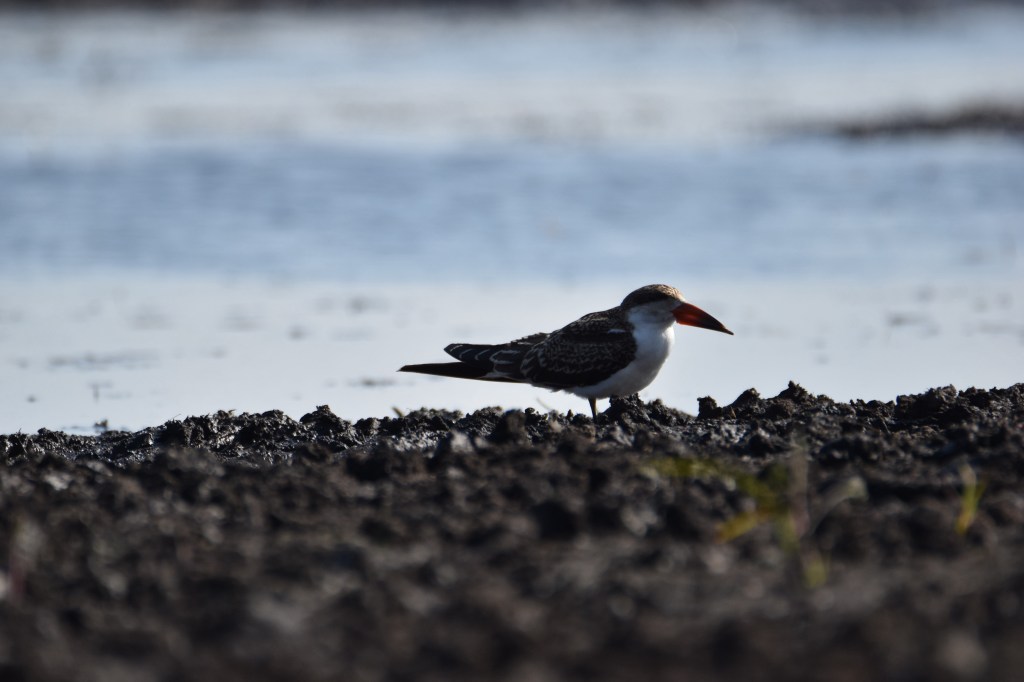
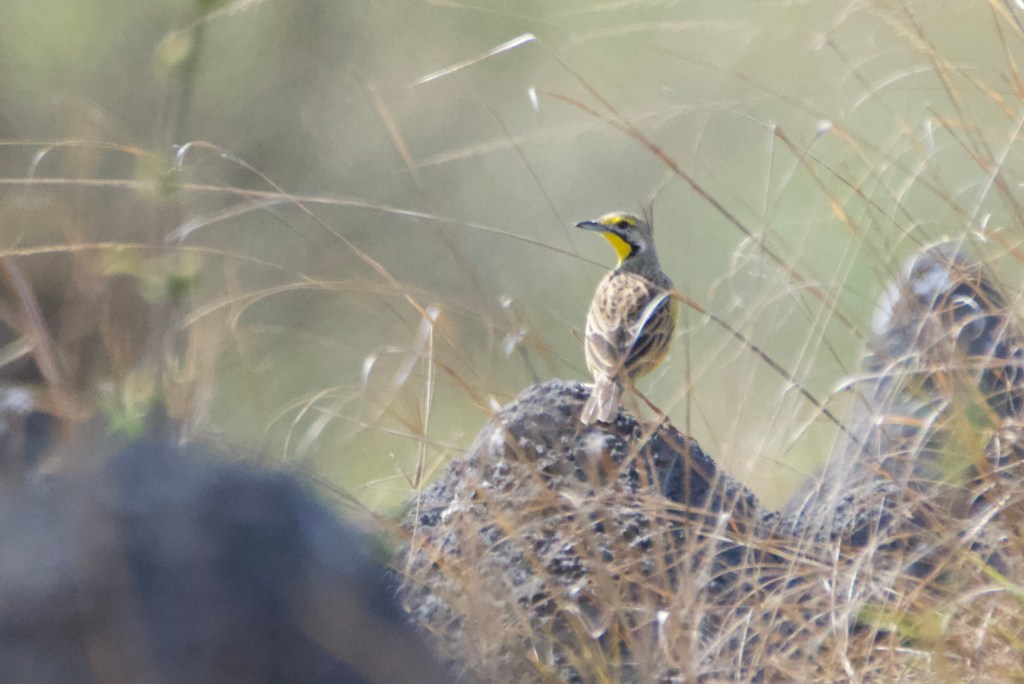
Highlights of the small birds must include the lost African skimmer we found, the fan tailed weeder bird, and very pretty Fullerborn long claw.
Mr Webby found a snake for us. A Bangweulu water snake. Harmless. None of us were particularly interested to get a closer look, but one of the punters picked it up anyway and duly dangled it in front of us. We wish he hadn’t, but the snake appeared unharmed as he was dropped back into his nest of grass.
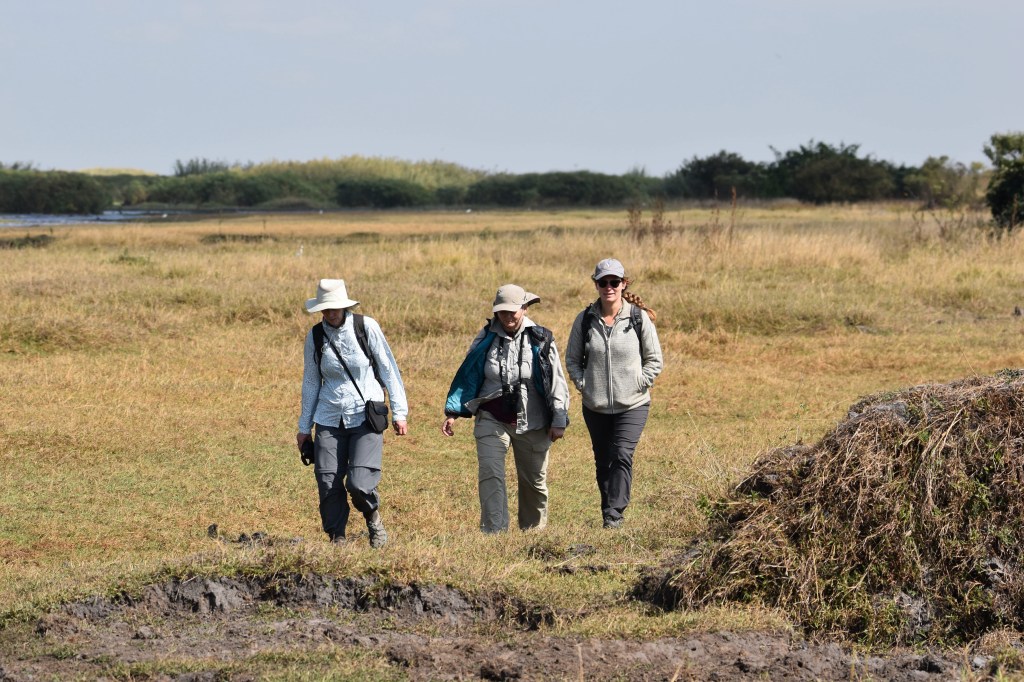
After a couple of hours on the boat we were ushered out onto dry land to attempt to find the shoebill on foot. Skeptical of the success rate we obliged anyway. By now the sun was high and the wind strong, our chances to spot the bird were fading. Sometimes on a safari it feels as though the guides try so hard to find the prized animal that the little things are missed, but we felt that having a focal point for our trip into the swamps at least gave us chance to appreciate what we saw along the journey. The Bangweulu swamps truly are a special place for their abundance of birdlife alone. Our sojourn onto land ended without prize, the bright and busy bee eaters our consolation. We reached a small fishing hut with a family sat outside. Stern words were exchanged between the family and our guides. White visitors aren’t always welcomed, and the family seemed reluctant to help us find the shoebill. The financial benefits of conservation and tourism don’t appear to reach these people, and they perhaps justifiably feel taken advantage of. African parks had a job on their hands to maintain the peace in the area. Already there are reports of shoebills being sold by the locals to the Chinese market, and financially you can see why. Yet another challenge for the rare creatures of Southern Africa. We continued onwards, enthusiasm beginning to wane.
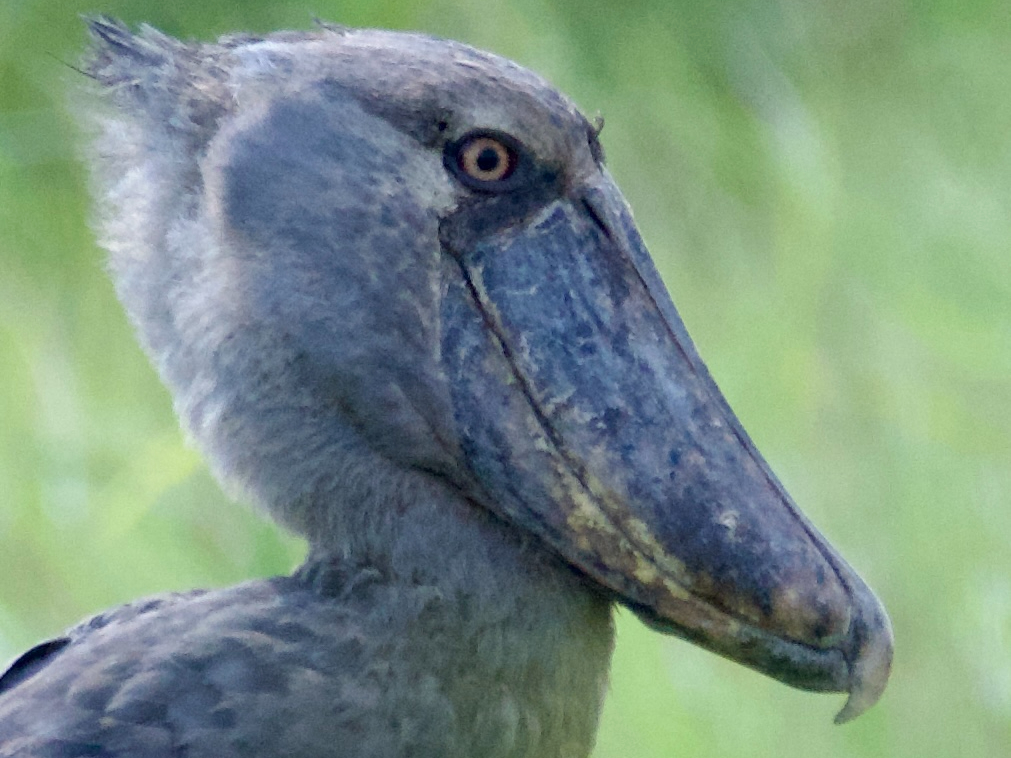
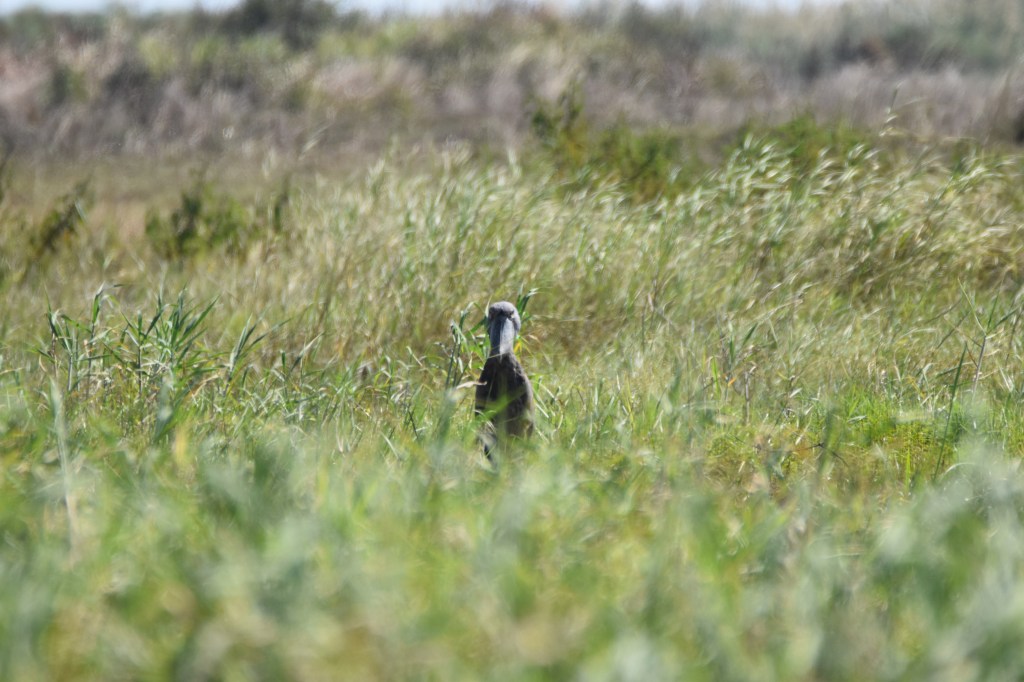
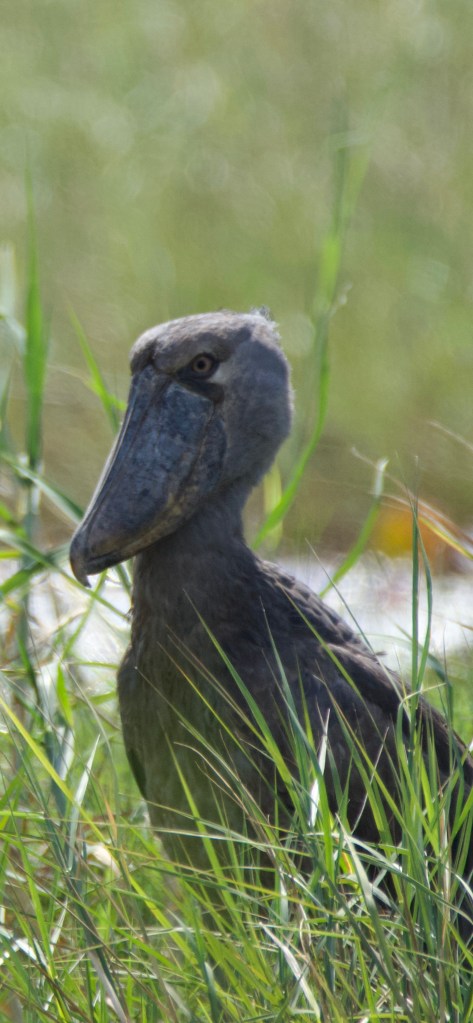
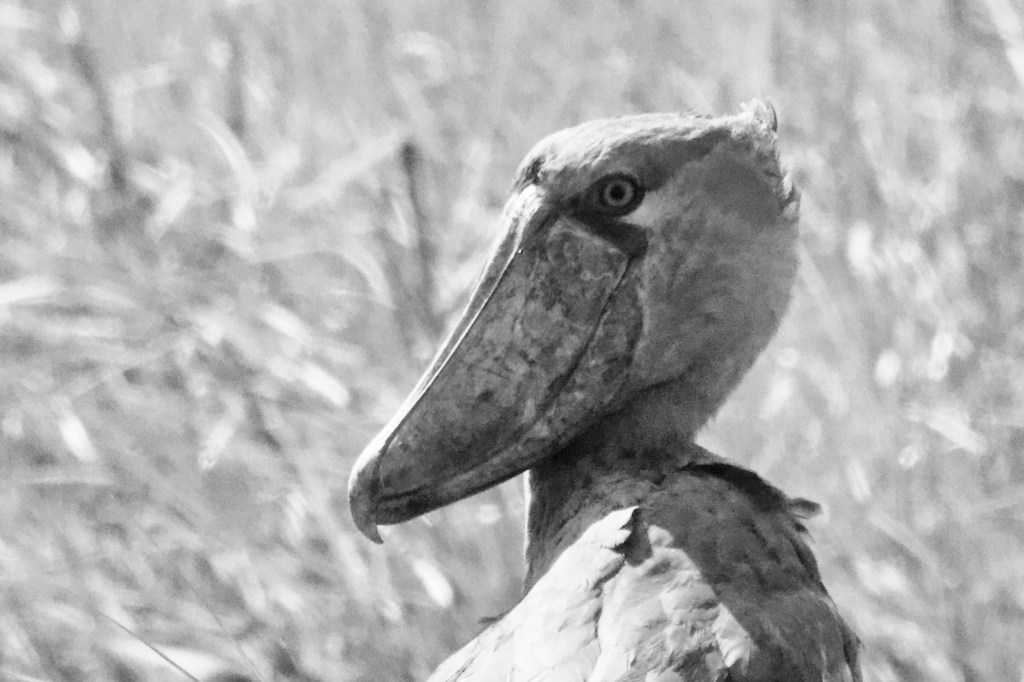
After many hours travelling upstream, and without a shoebill sighting, we decided to call it a day and head back. Suddenly the punters crashed us into the bank, near where we had seen the fishermen’s hut an hour or so earlier. The boatman on the bow had spotted the bird. One by one we crept up out of the boat, and peered over the reeds. The shoebill was a still grey pillar, not unlike a Roman statue. An enormous wide beak with an aggressively hooked tip weighed down its head. A small tuft at the back of its head giving it the look of someone just out of bed. We poled a little closer to get a better look. We were within 30m and the shoebill mostly ignored us. We let it be, and returned back to the harbour.
From the harbour we drove back to Nsobe camp, our punters took a ride on the roof to shorten their journey back to the village. They had a whale of a time taking videos as we wound through herds of black lechwe in the afternoon sun.
We felt safe in camp at night, given there were no lion or elephant around. Sarah and Jacqui spotted a hyena close by the ablution block a couple of hours after sunset. A fact they tried hard to hide from Clare, who was most anxious about the wild animals. We tried in vain to spot the creature again but she remained hidden from view. Our camera trap was a big hope, but still we have filmed no nocturnal animals around our camp. Mike is still yet to see a spotted hyena on this trip.
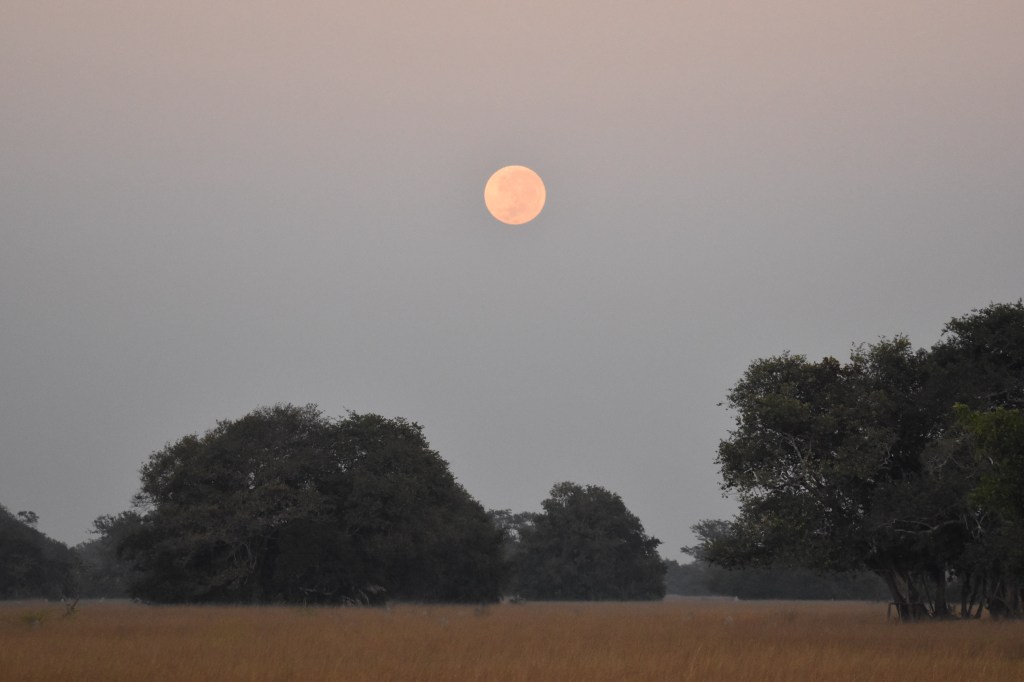
The full moon was so bright that night that, and the open grassland was so reflective, that we could walk around camp without lights. Without any lion or elephant to fear it was nice to feel so confident in the bush.
Bangweulu had more than lived up to our expectations. Manager John is doing a fantastic job to improve Nsobe camp. Despite the lack of big game and carnivores, and the large human population, for the birding alone and the stunning herds of black lechwe, Bangweulu is a must visit.
Wildlife:
Hyena whooping at night
Thousands of Black Lechwe
Collared pratincoles
Wattled cranes
Whiskered Tern
Swamp flycatcher
Malachite kingfisher
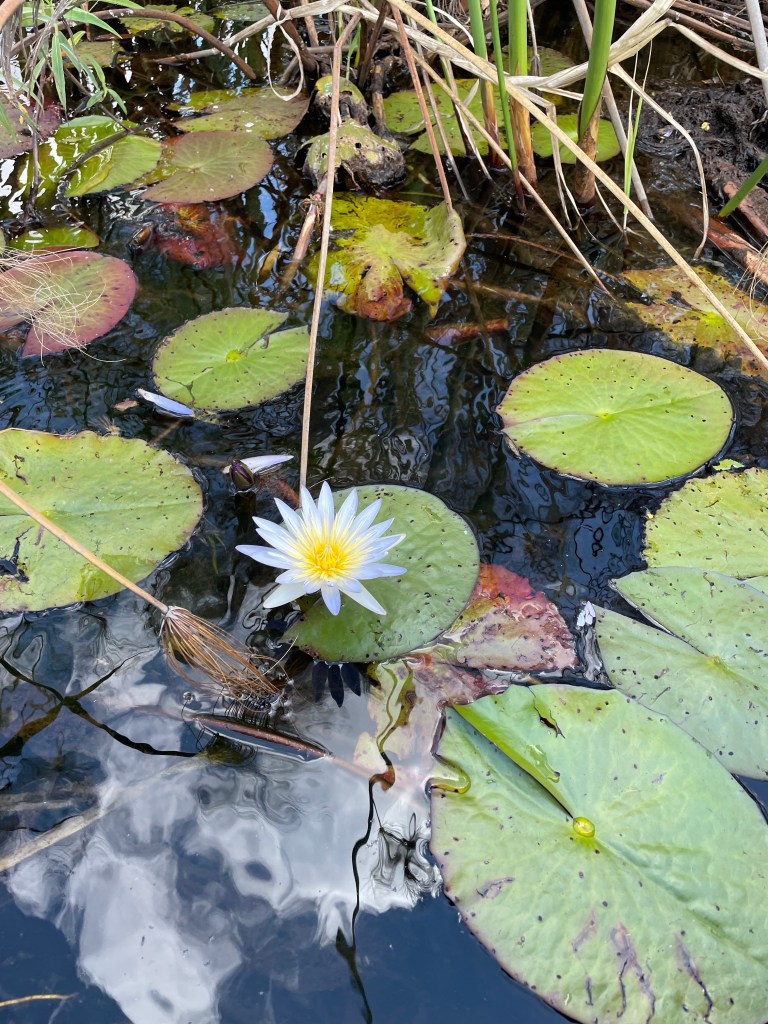
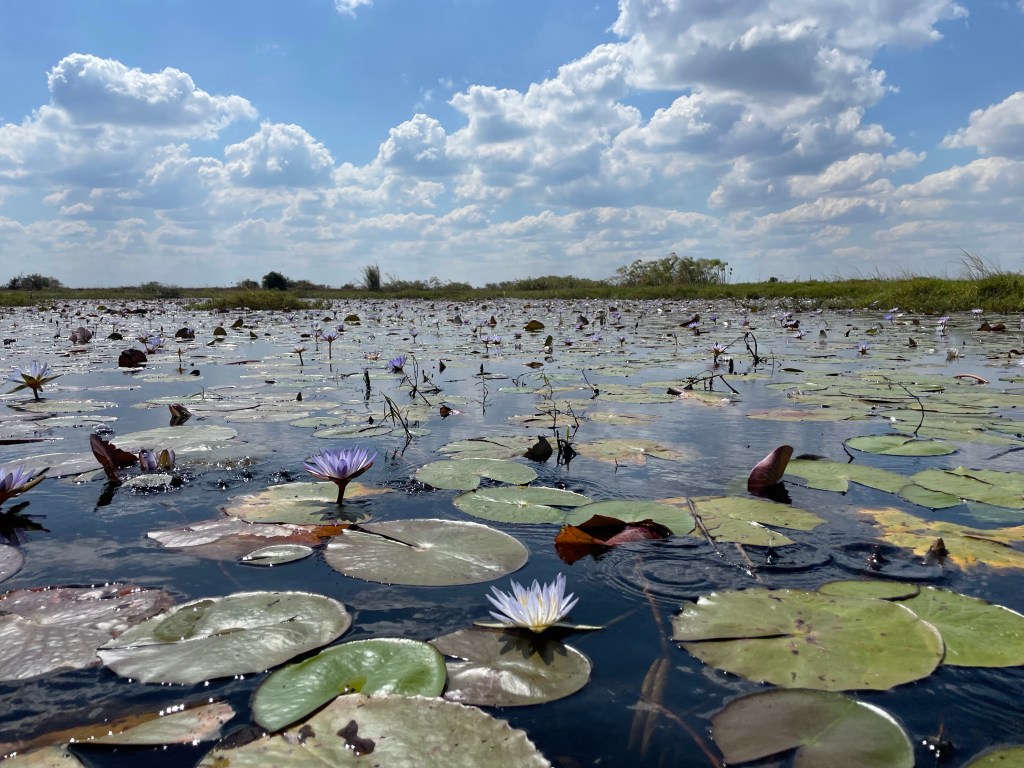
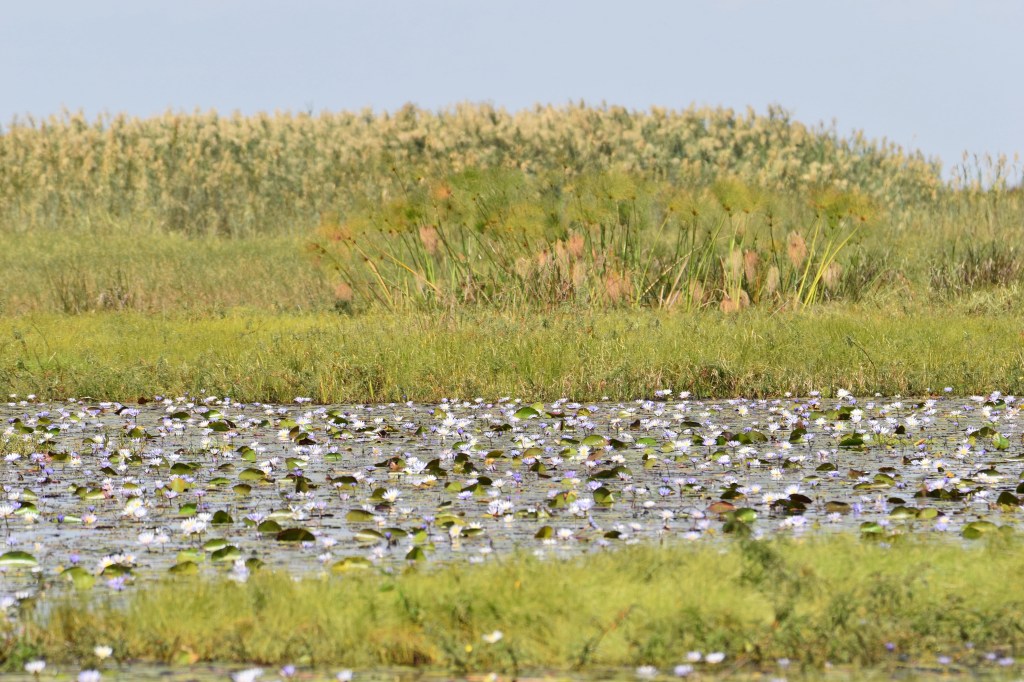
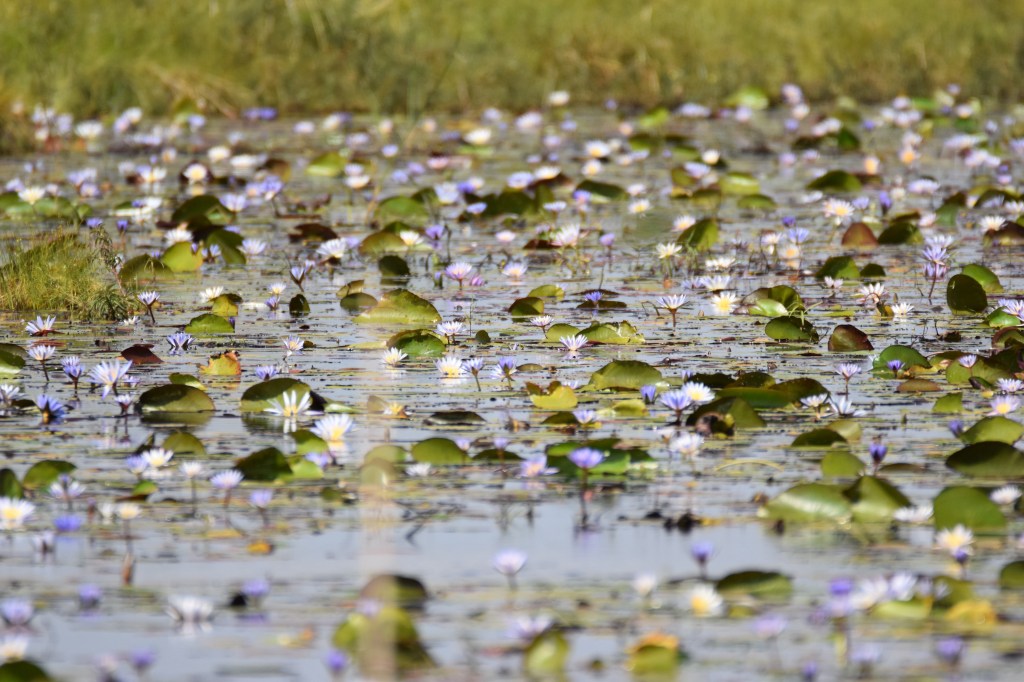
Purple water lilies
Blue breasted bee eaters
Katanga masked weavers
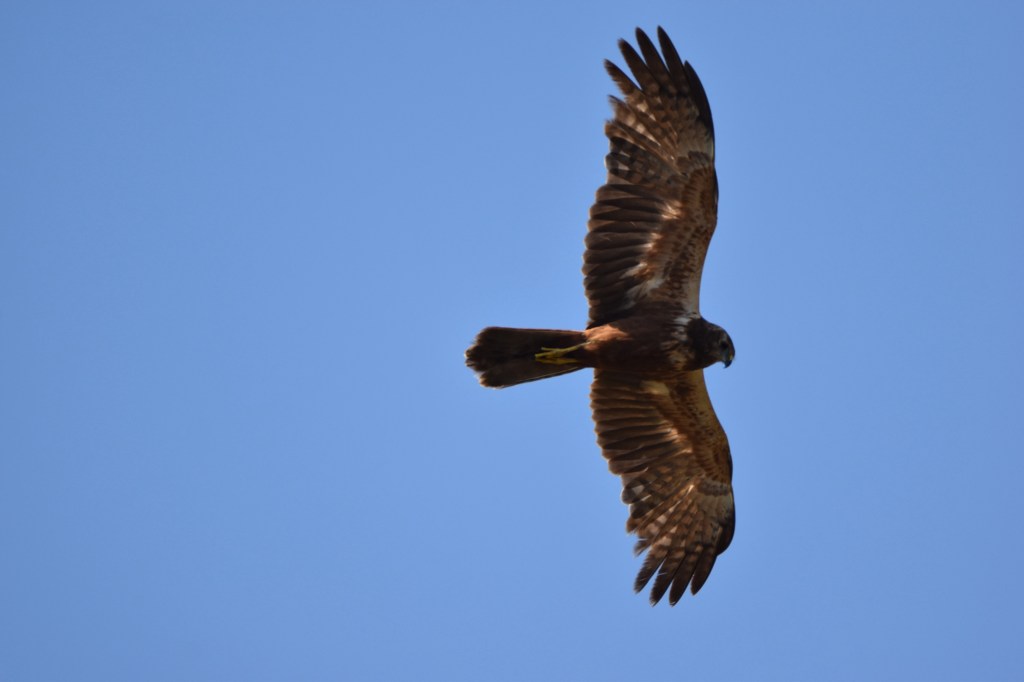
African marsh harrier
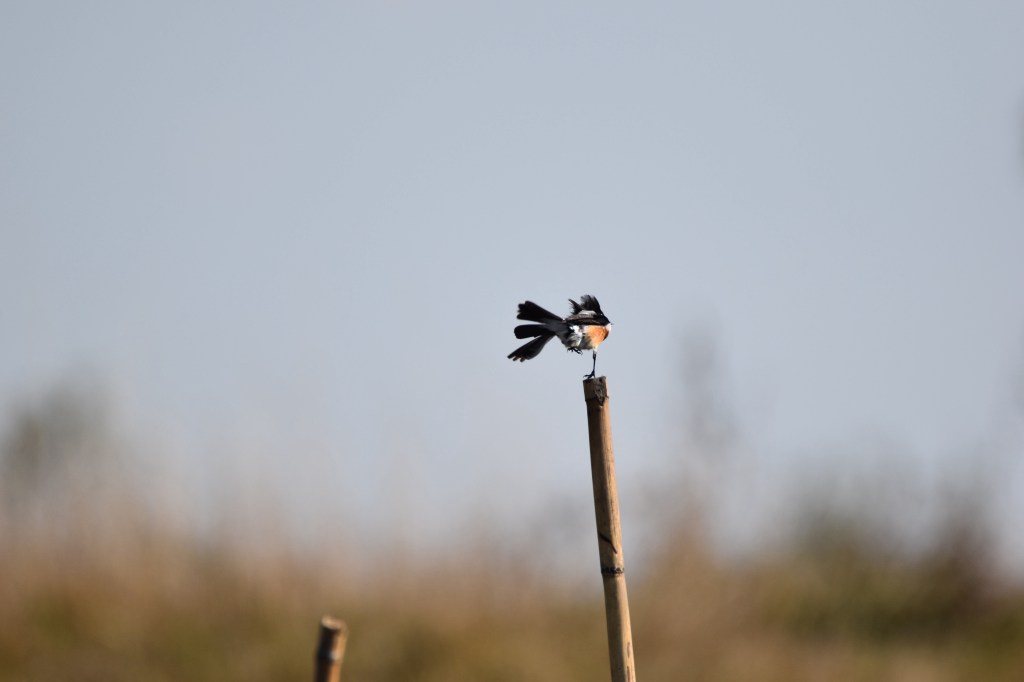
African stone chat
Bangweulu water snake
White throated swallows
Fan tailed weedle bird
Fullerborne’s long claw
Shoebill
Distance: 15km
Cumulative Distance: 5,518km
 Small Holiday Big Dream
Leave a comment