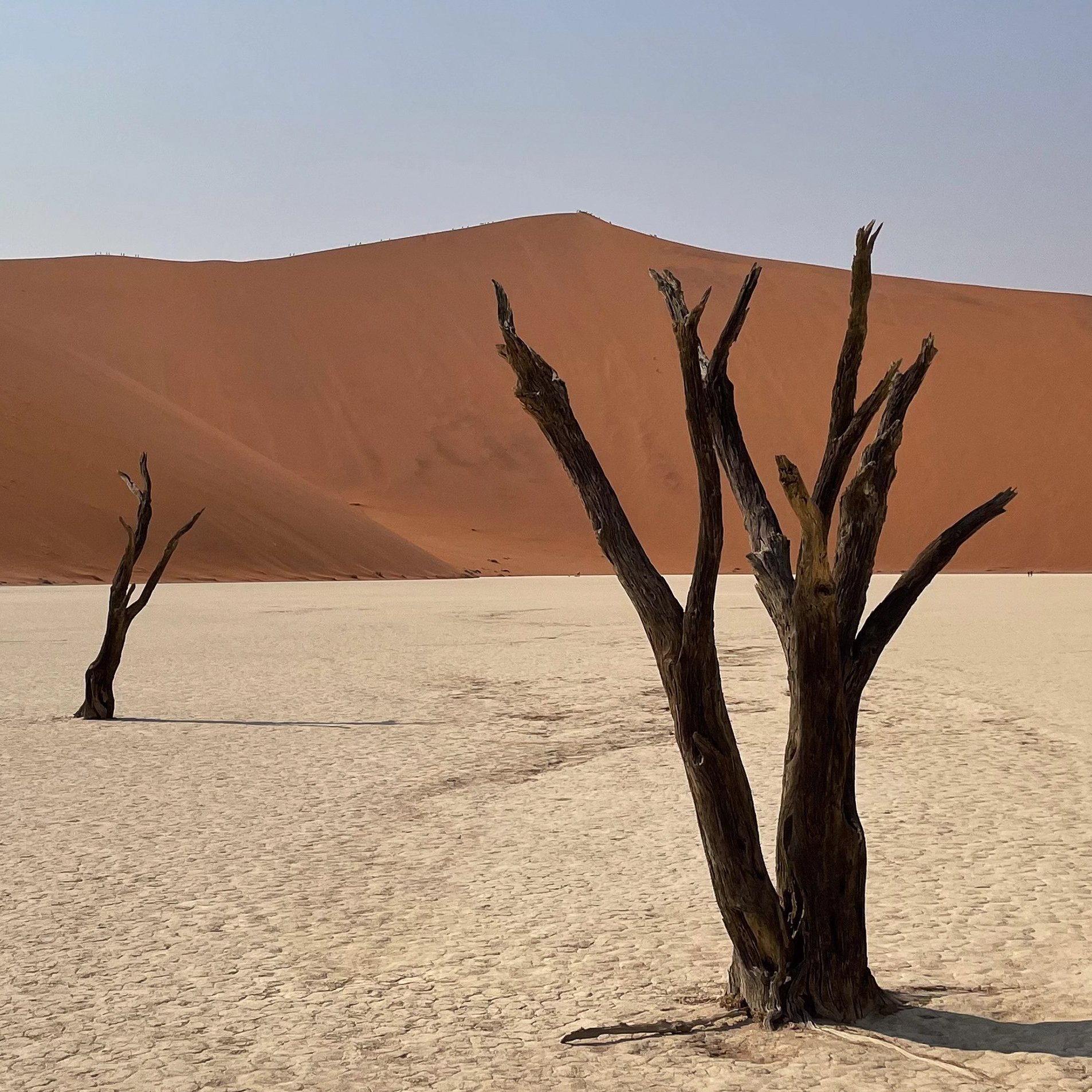
One of the biggest national parks in the whole of Africa, Kafue was our next destination. Famous for the hordes of tsetse flies and dangerous elephants, we were nervous, but excited.
Potholes all the way
Leaving Mongu before dawn, it took us a full 7 hours from Mongu to reach Kasabushi camp in Kafue. The road between Kaoma and the park gate was the worst potholed section of road we’ve ever seen. Small islands of tarmac peaked out of the sandy canyons, and for 70km it was impossible to travel more than 35km/h.
Still, travelling slowly gave us time to appreciate the sights and sounds of western Zambia. There was an abundance of people walking up and down the main road, many of them carrying loads of firewood or charcoal. In the villages the inhabitants were selling small piles of five or six tomatoes. Charcoal seems to be the most common item for sale, huge sacks full of the blackened wood, the big sacks are overfilled and at the top the extra charcoal is held in by a paper netting. In each village we passed through the schools were grandly announced by big white stone slabs with brightly painted lettering. The best part of the schools signs are the ubiquitous mottos. “Enter to learn, depart to serve” or “hard work for a brighter future” are highlights. Occasionally the mottos are on message; “HIV is real” or “end gender violence” feel more helpful.
We were racing Sarah’s mother and aunt to our campsite. The two had just arrived in Lusaka earlier that morning and had a shorter and smoother transfer than our slog across the west. Fortunately we beat them to camp by barely five minutes, although we did have a 20 minute detour to drop off some scouts we had offered a lift back from the gate to their camp. (To clarify: A scout is military employee responsible for the protection of wildlife in the national parks, we did not pick up a group of young boys)
Kasabushi camp is right on the bank of the river Kafue where it breaks into many small streams flowering over a series of rapids. Huge granite boulders dot the watercourse whilst the banks are lined with huge riverine trees and the odd palm tree. Watching the sunset here was spectacular, and we had the place almost entirely to ourselves, surely one of most beautiful campsites in Zambia.
We fought with Jacqui and Clare, Sarah’s mother and aunt, about who would sleep in the ground tent and who would be safe up on the roof. We eventually won the argument, it would be best for Sarah and I to sleep on the ground, especially for their first night in Zambia.
Wildlife:
N/A
Distance: 349km
Cumulative Distance: 4,188km


Kasabushi
Lions were active early in the morning, we could hear them behind our heads as we woke with the dawn chorus. They were chatting away as they strolled along the spinal road from north to south. At least we inferred as much from the noises they were making. As they had passed camp, we decided to head out southwards to try to track them down.
The pride had laid some beautifully crisp tracks for us to follow, but they disappeared near the Kaingu boat launch. Somewhere nearby they were lying in the grass, we’d have to wait for the evening to try to catch them on the move once more.
The terrain is difficult for safari around Kasabushi, the woods are thick and the grass is tall, visibility is fairly poor, especially this time of year before much of the burning has been done.
The other thing to contend with is the tsetse flies. Kafue is notorious for them and we can confirm there are thousands. Attracted to anything moving quickly they will gravitate towards the car, and follow it for many kilometres. In areas of miombo woodland the bonnet fills up with flies trying to find their next meal. This makes driving with the windows open a challenge, and so most of the time the windows were kept mostly shut, dampening the experience of the surroundings. Tsetse flies are like horseflies, when they bite it’s slightly painful, but what’s worse is the swollen itchy bites which last for several days. Luckily as far as flies go they’re fairly dumb, attracted to motion and dark colours they will land and bite. If you remain still and wear light colour clothing they should leave you alone. They are clumsy and you should feel them land on you, so if you swat them off soon enough you should stay bite free. Easier said than done, especially when they’re present in huge numbers. There’s no real diseases passed on with a tsetse bite, to humans anyway, so they’re just a nuisance.
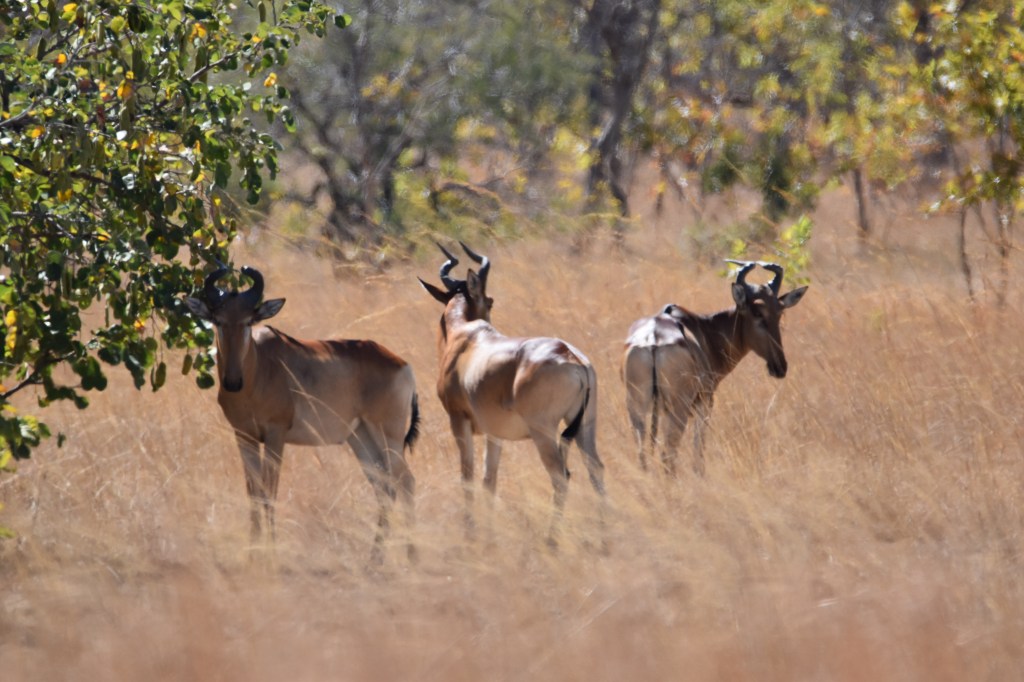
A small herd of Liechtenstein’s Hartebeest was the only fauna of note. Nevertheless I was a new species for us, paler and more two tone than their southern red cousins.
Giving up temporarily on the wildlife, we had breakfast at a stunning spite in the Kafue rapids, where the clear blue water plunges between huge round granite boulders. It’s a very pretty sight, especially with a hot cup of coffee in the crisp winter morning.
At lunchtime, new owners Tessa and Quintin gave us a tour of the main lodge which occupies a stunning location overlooking the river. For the time being our budget will only stretch to camping, but one day maybe we will return.
Our evening drive was even less successful than the morning. However, on our return to camp we discovered a pride of lions had just passed through the campsite. The light had already gone for the night, but we bundled into Quintin’s pickup for a quick glimpse of the lions as they disappeared into the bush to begin the night’s hunt.
Wildlife:
Litchenstein’s Hartebeest
Lions x4
Distance: 49km
Cumulative Distance: 4,237km
Bongololo
For a change of scenery we headed to North Kafue. Being the size of wales, and only crossed by gravel tracks, it took us around seven hours to reach Bongololo camp.
On the way our wildlife spotting was patchy. Near Kasabushi we saw an elephant and her calf, she was very much not impressed with our presence and we made haste to exit. Kafue elephants have a deserved reputation for being aggressive and dangerous, and they are. A month or so before our visit an elephant had killed a tourist in a guide driven game vehicle at a wilderness safaris camp. This was one of two incidents we endeavoured to hide from our new travelling companions, the other being the Bosobogolo leopard attack. As self drivers we had to be extremely careful, and so we weren’t hanging around to watch any Kafue elephants.
An African green pigeon was about the most exciting spot of the morning, along with a small herd of buffalo. As we neared Bongololo camp the terrain changed gradually, and started to have a much better feel. The thickets were more dispersed, and the grass shorter, visibility was much better in all directions.
The campsite was in a very open location, amongst some trees on the banks of the hippo filled Lufupa river, and overlooking the grassland plain. Setting up camp we once again insisted on staying in the ground tent. Whilst the campsite felt idyllic in the afternoon sunshine, Sarah and I were certain that come nightfall it would feel like a much wilder place.
How right we were. After an uneventful and short evening drive we returned to camp to cook dinner. As we sat down to eat we heard the lions’ roar beginning to the north of us. A coordination call from a male lion, to try to locate his companions. These were the Mozhi boys, a coalition of three young males looking to establish themselves. One of them was barely 100m from us, and heading loudly our way.
The calling from the lion became more frequent, and continued to be unanswered. By now he was almost uncomfortably close, but we still had no visibility of where he was. He would almost certainly pass us by, following the main road around the campsite, but we couldn’t be sure. Then, all of a sudden the cries were answered, by another lion to the south of us which sounded even closer than his friend. We all enjoyed our dinner, perhaps a bit nervously, but overall we felt much safer as a group of four rather than just the two of us. Fifteen minutes passed and the lion did not approach the camp, not that you would expect him to.
We had just finished up dinner when a game viewer pulled up into camp. It’s was stacked full of staff from the main camp, Mozhi, one kilometre south of our campsite. They didn’t have any guests in this evening so had been enjoying an evening off with a couple of drinks. A couple of staff were returning the campsite attendant, Malenga, to his posting at our campsite in the game vehicle when they came across the male lion in the middle of the road. This set off an impromptu night drive, where they drove back to camp to pick up the rest of the staff, and then to pick us up. The vehicle pulled up at our campsite and a voice excitedly said, “do you want to come to see a lion?!” So began the most African experience ever.
Despite having left the lion just a minute or two earlier, re-locating him was an issue. The guy had melted back into the darkness. Nearby Puku weren’t helping the search, they remained silent too, unaware of the nearby danger. Camp staff in general rarely get to see much wildlife. It might be a surprise, but many of the cooks, housekeepers, and waiters have never even seen a lion. An empty lodge is great time for them to head out and see for themselves what their guests experience on a daily basis.
Cue the chaos, everyone had a flashlight and an opinion on where the lion might be hiding. The inexperience shone through as suggestions rained in, expecting to find the lion in the most impossible of places. “There’s something in that tree, up high”. “Big?” “Yes big, like a lion, we must look”. Chief among the voices was camp manager Ludwig, whose authority shone through, as did his poor understanding of lion habits. A few beers in, and with a merry crew, who can blame him.
Chris, the experienced camp guide, led the drive. He diligently honoured the calls to search high in the trees, but also properly scoured the area for the lion. However we had no luck, and the lion was lost for the night. Still, it was possibly one of the most enjoyable game drives we have ever been on.
The rolling disco returned to camp, lights swirling in all directions. A cold snap had hit Kafue, and the temperature was already down in single digits. We headed to bed early, ready to get up for our early morning trip to Busanga.
Wildlife:
Green Pigeon
Defassa Waterbuck
Litchensteins Hartebeest
Puku
Distance: 146km
Cumulative Distance: 4,383km


Busanga Plains
We were awoken half an hour before our alarms. A leopard was calling right behind our heads, it was somewhere along the riverbank, and maybe only a few metres away from us. Leopards make a sound which you wouldn’t expect. A spine tingling sound of a rough saw cutting wood, the noise travels right through your bones and sets your hair on end. It was the clearest, crispest, and closest leopard call we had ever heard. I wish I had a taken a sound recording. Leopards are usually shy and will stay away from campsites, avoiding all contact with humans. Nevertheless they remain a silent and deadly hunter which must be respected in the wild. The recent story about a couple who were attacked in their rooftop tent by a hungry leopard in Botswana, was fresh in our minds. An unprecedented case in exceptional circumstances, nevertheless we were determined to be safe and responsible around all wildlife.
Cue our astonishment when Jacqui, Sarah’s mother, jumped out of the tent without a second’s thought. We still felt a responsibility for our new companions until they had at least acclimatised to bush camping. Despite our pleas to remain in the tent until we had checked the area, she unzipped the tent and strolled purposefully towards the ablution block oblivious to the panic on Sarah’s face. Sarah and I hastily exited the tent and scanned the riverbank, thankfully the coast was clear.
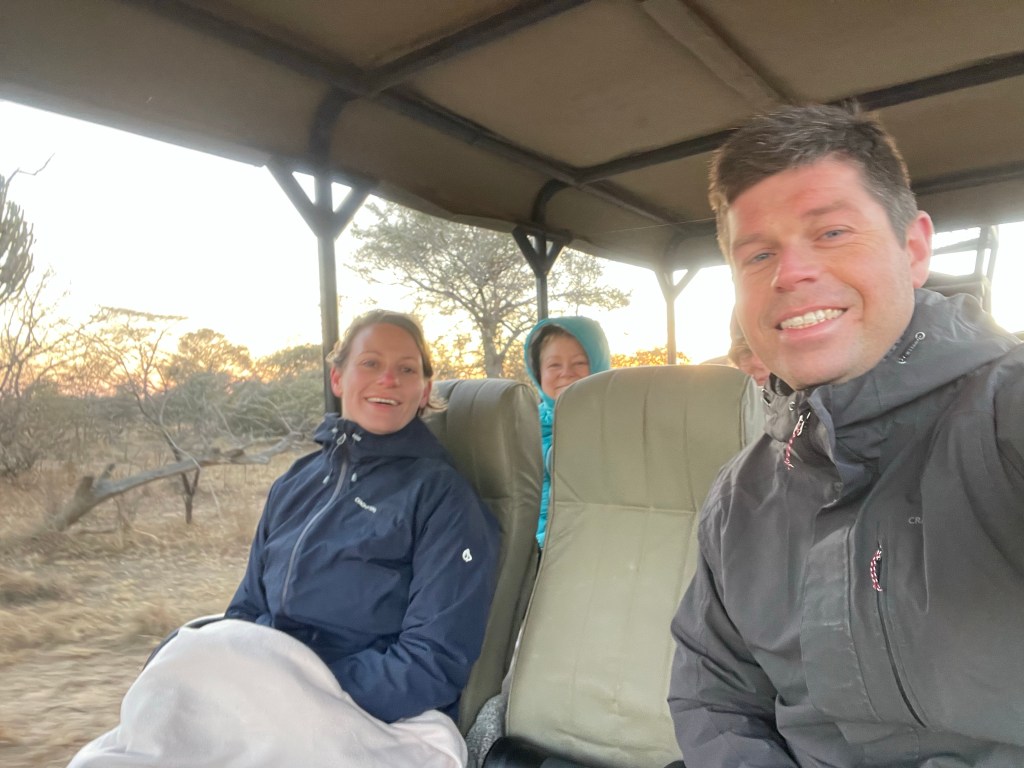
Oscar the guide picked us up at 5:30. It was nice to be driven for a change, although in the back of the open game viewer the air was freezing. We had been given blankets and hot water bottles, but my toes soon went numb. We had arranged for a full day drive, and it would take us a full hour and a half to reach Busanga plains.
Driving in the dark pre-dawn is something seldom done, and it was interesting to scan for wildlife. Eagle eyed Oscar spotted a leopard in a thicket on the side of a riverbank, something we’d never have found on our own. The leopard disapproved of our arrival, and after twenty seconds or so sprung to his feat, strolled down to the waterside and leapt athletically over the water onto a log the other side. He tiptoed along the log like a balance beam and snuck off into the forest on the opposite side.
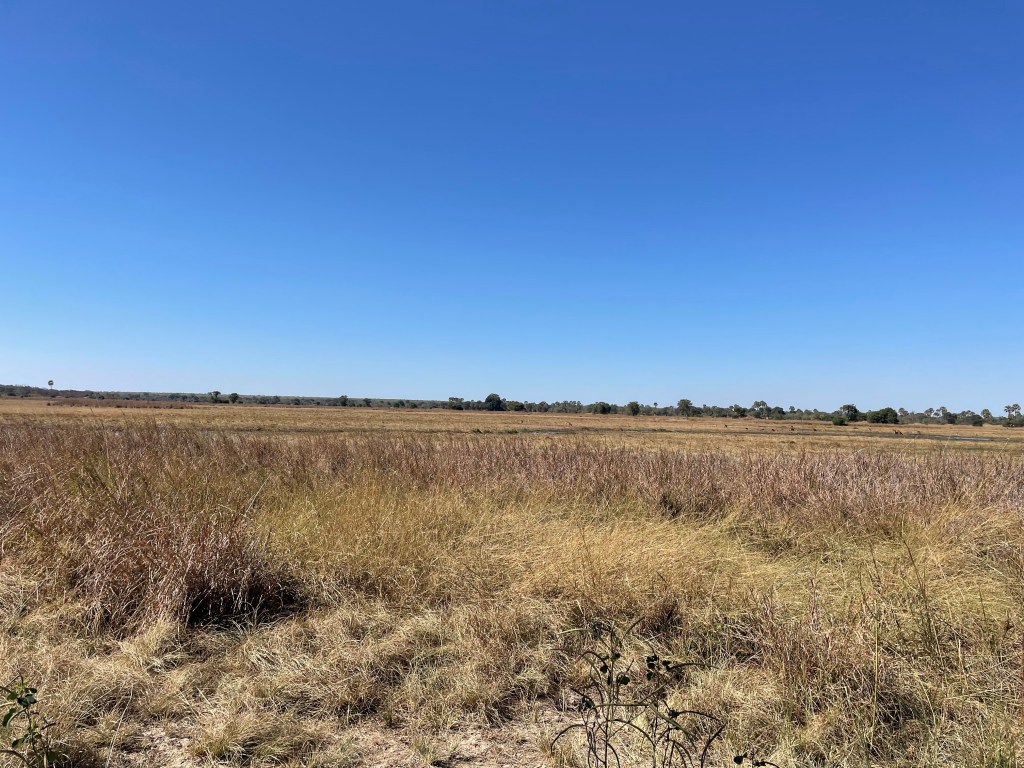
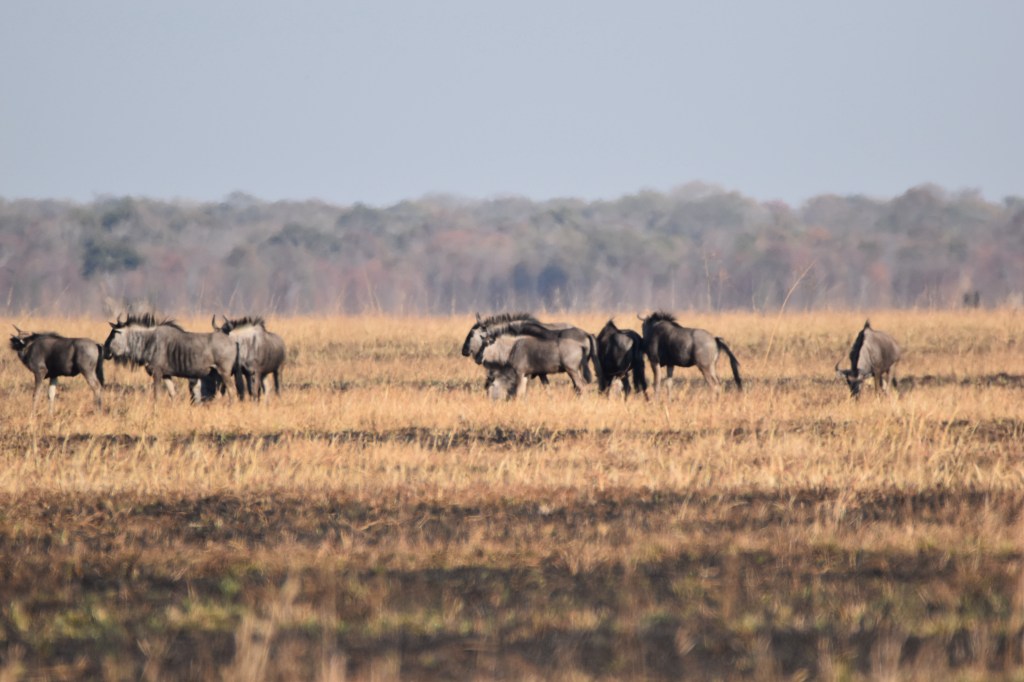
Daylight unfolded as we entered the plains. The patchy woodland melted away, and all that was left was grassland as far as the eye could see. The feeling here was similar to Liuwa plains, an endless expanse of openness pockmarked with wildebeest, zebra and oribi. There was however a wider variety of animals here, in the wetter areas great hordes of red lechwe, a smaller number of the very similar Puku, and a variety of cranes. More than anywhere else, here in Busanga we saw plenty of vultures. Beginning to take flight and starting to soar as the thermals started to form.
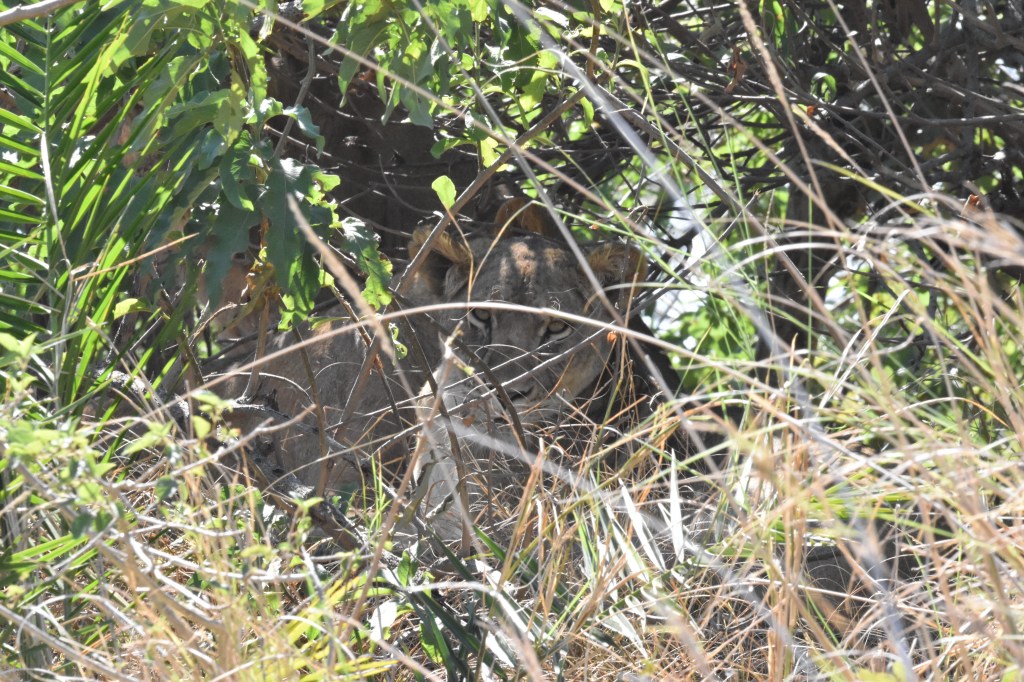
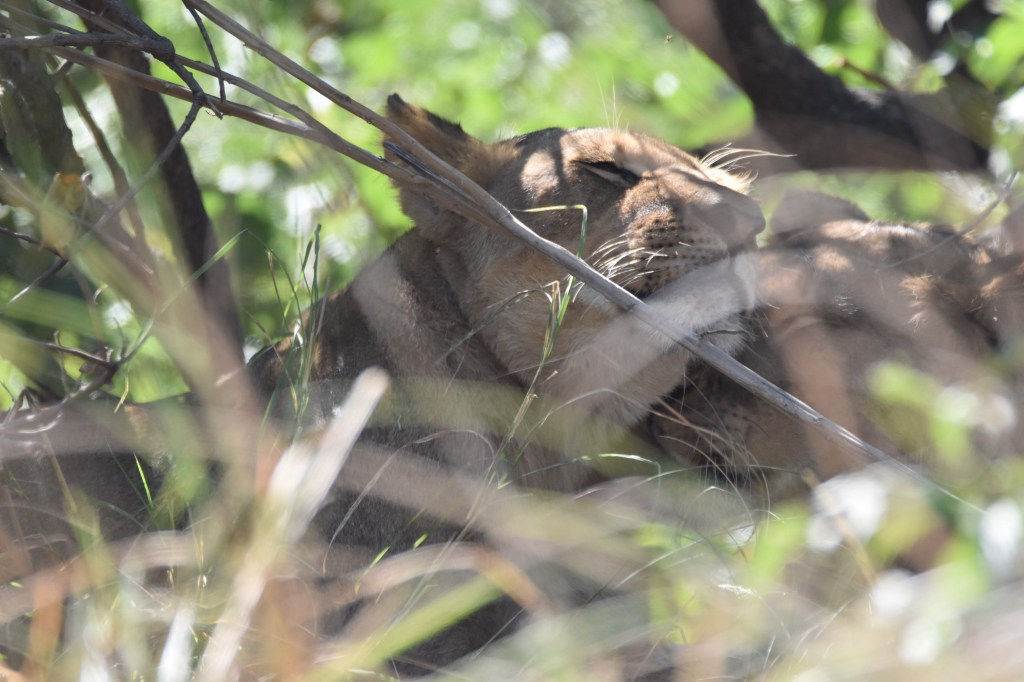
There were many skeletons of red lechwe around, this is lion country, and the prides here are notorious. We scoured the plains for signs of the lions, but by now they were firmly hidden and sleeping under a thicket. Luckily the guides are in the know, and there’s a network of people who might know where to find them. After asking around a little bit, Oscar managed to find us a small pride of four lion sleeping under a bush right outside shumba camp. Sleeping lions don’t do much, they wake up as you approach, have a look at you, and then go straight back to sleeping. We didn’t exactly have a great view, so we soon departed.
A herd of Roan heralded our exit from the plains. These large brown antelope are funny looking for their huge floppy ears below their large curved horns. White lines over their eyes give them a clownish look. It’s fairly uncommon to spot them as herds are more confined to remote and unvisited areas. We were more enthusiastic about these than the lions, to Oscar’s surprise.
We also paused to view some of the magnificent Defassa waterbuck, a different subspecies from the common Zambian waterbuck, these guys are without the distinctive white toilet seat marking, and instead have a plain white rump. They are huge and fluffy and look like giant teddy bears.
We encountered a very angry elephant returning to Bongololo. Our guide Oscar was justifiably terrified, probably moreso for his job security. We gave the elephant plenty of space, and he huffed and puffed and trumpeted at us. Ears flapping clearly unsettled, he stopped short of a mock charge but even still we had quite the fright.
The rest of the journey back was uneventful, even the tsetses were taking a siesta.
Wildlife:
tsetse flies
Red lechwe
Defassa waterbuck
Lions x4
Roan
Angry elephant
Kudu
Warthogs
Martial eagle killing a lapwing chick
Distance: 0km (km on our odometer)
Cumulative Distance: 4,383km






 Small Holiday Big Dream
Leave a comment