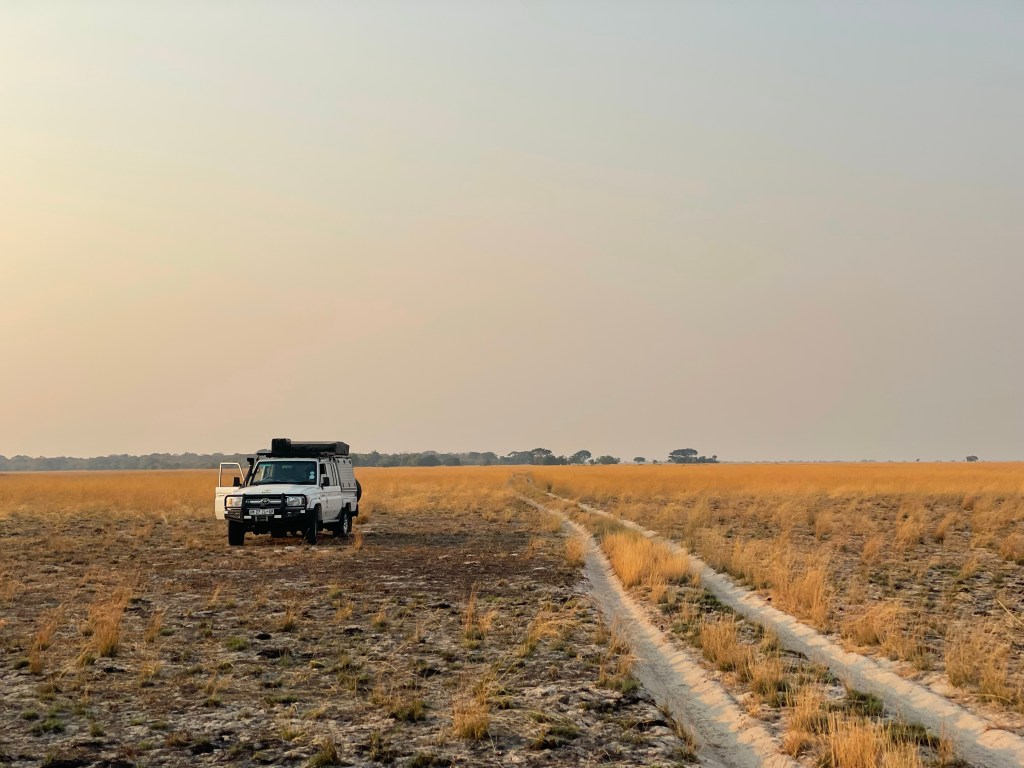
In remote western Zambia there’s a national park famed for its wide open vistas and huge hyenas. Few people visit, it’s a long way to drive, and there are few lodging options. We had the whole place to ourselves.
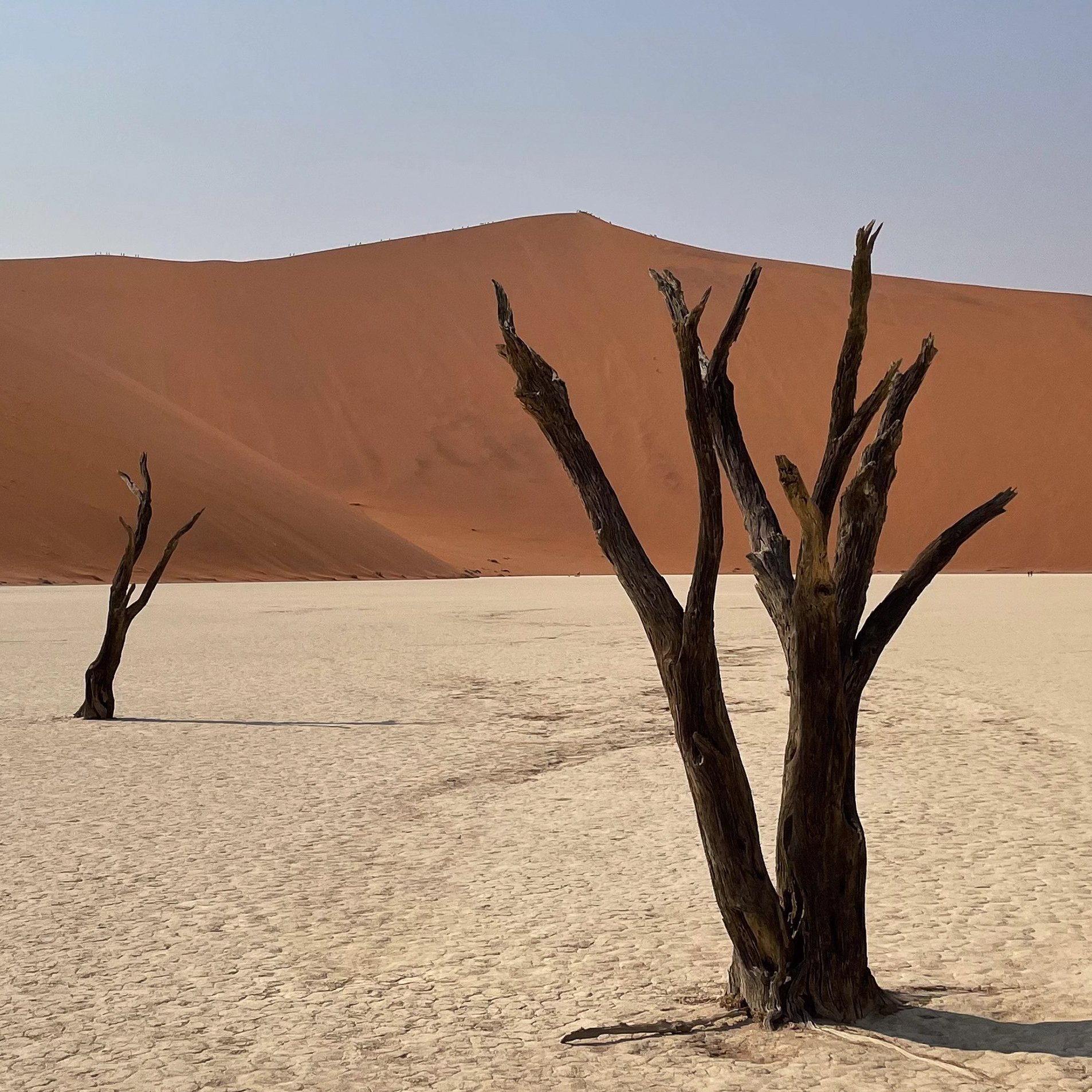
Sand, sand, and more sand
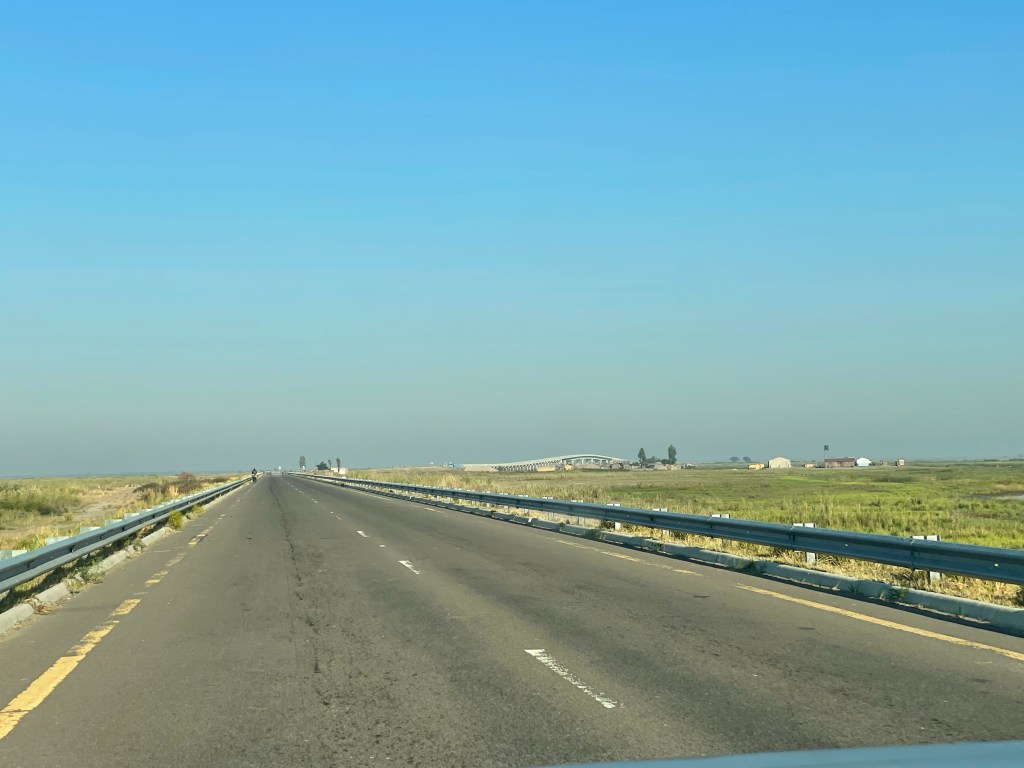
Kalabo is only an hour’s drive west of Mongu. It’s a small town which serves as the launching point for journeys into the Liuwa national park. There’s a fantastic new Chinese built road from Mongu across the Barotse floodplain. The journey time must have been cut by a factor of ten. There are several small channels to cross, and of course the huge main Zambezi channel, navigating all this on dirt tracks and small ferries would have taken all day. The town is a small dusty place, the Main Street lined with market stalls and hand painted specialist shops with mostly religions names. God Knows General Store, was a favourite name. The diesel on offer here was budget Angolan stuff, served directly from the barrel. We had brought a full tank with us from a reliable brand in Mongu and were happy with that.
The Luanginga river separates Kalabo from Liuwa. Over which there are two brand new bridges. Last year the only way was via pontoon crossing. Like the boteti river crossing earlier in our journey this was an element of fun we were disappointed to miss.
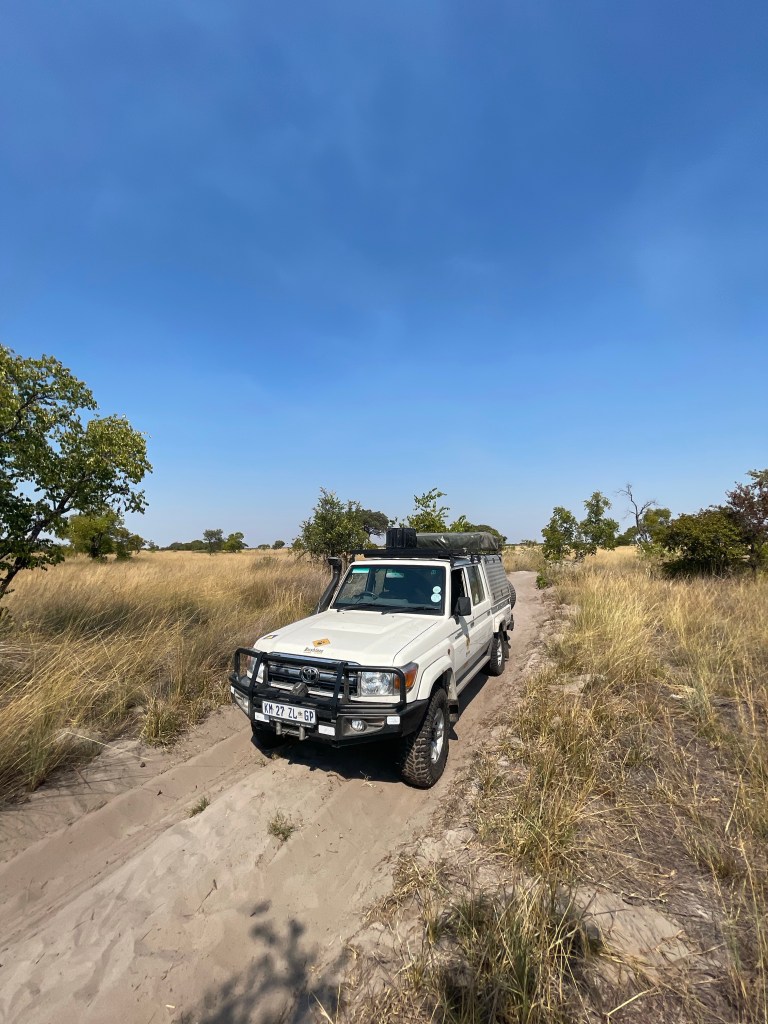
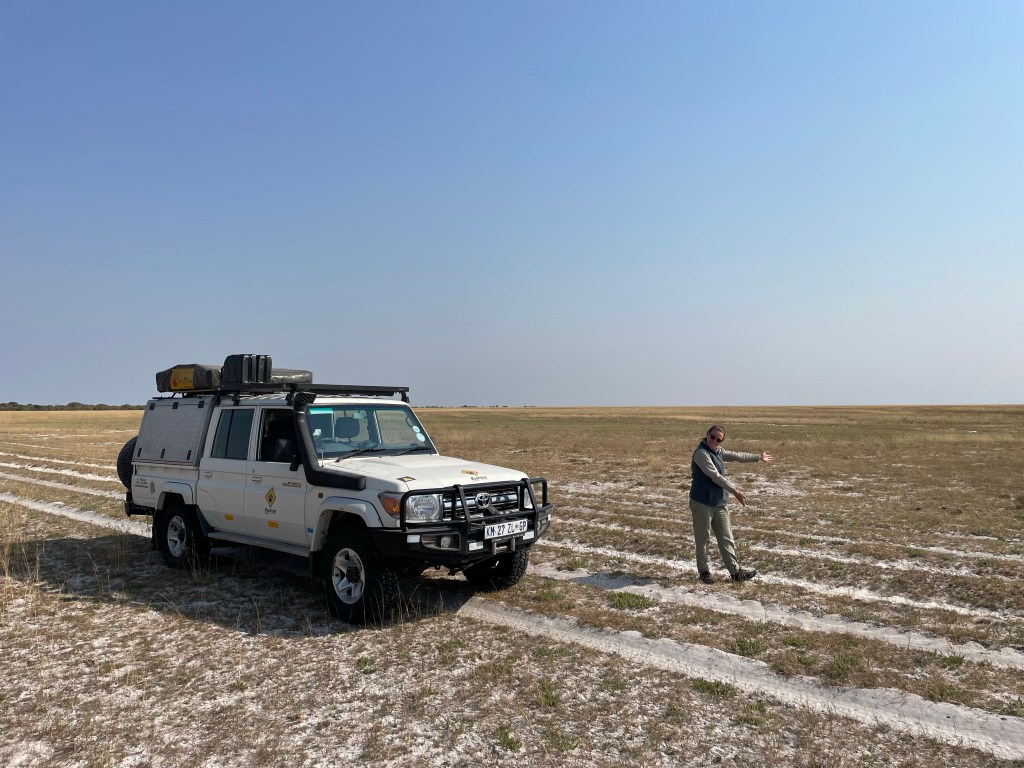
After the second bridge the tar road ends abruptly and the deep sand begins with gusto. In fact the thirteen kilometres to the park office are among the worst we’ve driven. The spade emerged to dig us out twice, but nothing too serious.
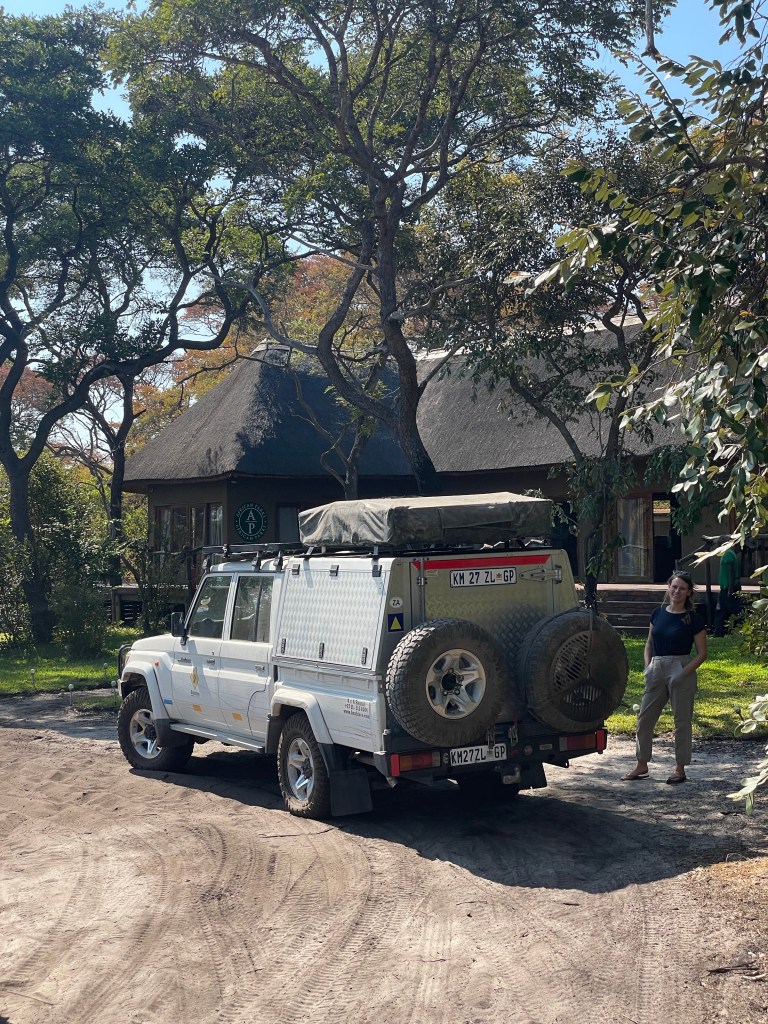
The African Parks office at Liuwa is an incredible building that they’ve spent far too much money on. We parked in the empty parking space and climbed up the beautiful hardwood stairs to the reception. One of the first things the staff said to us, after the few minutes of “how is your day going”, was that we owed them $20 still. We hadn’t even told them we had a reservation, let alone our names. It turned out we were the only visitors arriving that day, the last visitors left yesterday, and only one group is arriving tomorrow. The park is all yours for today, nobody else is coming. We had heard Kwale camp was quiet for game, so negotiated to move all of our three nights to Katoyana camp. This turned out to be a great move.
Setting off from the parks office the roads were equally as terrible. Thick deep sand in long unforgiving sections. No advice was giving as to the route to take from reception to Katoyana, so we opted for the most direct route. This was a terrible choice. The stretch that bypassed Kwale camp was the worst section of sand we had driven. We got horribly stuck about halfway along the section. With no help coming for at least a day, it was up to us to rescue ourselves. The usual low-range and diff-lock tricks were swiftly exhausted, digging us out just seemed to dig us down further. The mats provided weee of no use and just seemed to get sucked under the wheels. We were belly down on the middle of the track. Sweaty and exhausted already we turned to the winch.
The nearby tree was deemed too small, but with no real option we tried it anyway. Our previous time out with the winch ended in calamity with a badly gashed hand, the only way was up. As we unwound the winch we realised it was a bit loosely and messily coiled, and so opted to fix it by winding it fully out and back in again. This was a huge mistake. The end of the winch cable was not attached to the car, and just came away. We were left holding the loose winch cable and were in a bit of a pickle.
Lying down under a car in the 30 degree heat of the afternoon isn’t fun. On the scorching hot sand it’s even less fun. When said sand sticks to every bit of sweaty bare skin the whole thing is disgusting. It took us a whole hour to budge together a fix for the winch. A spare posidrve bolt gifted to us by Eddie from whispering sands at Sioma was the saviour. Wedged into a gap in the winch’s drum it managed to hold long enough to complete a couple of turns and get the winch cable back onto the spool.
We turned the car on and began to pull ourselves out. The barely adequate tree began to bend, and the crack, and then lean at a very unnatural angle. We stopped before we ended up with a tree through our windscreen. The base of the tree had been badly burned by the recent bushfires and was obviously a weak point. After this failure we opted for a stubby thicket of trees as our anchor point and miraculously the car began to move.
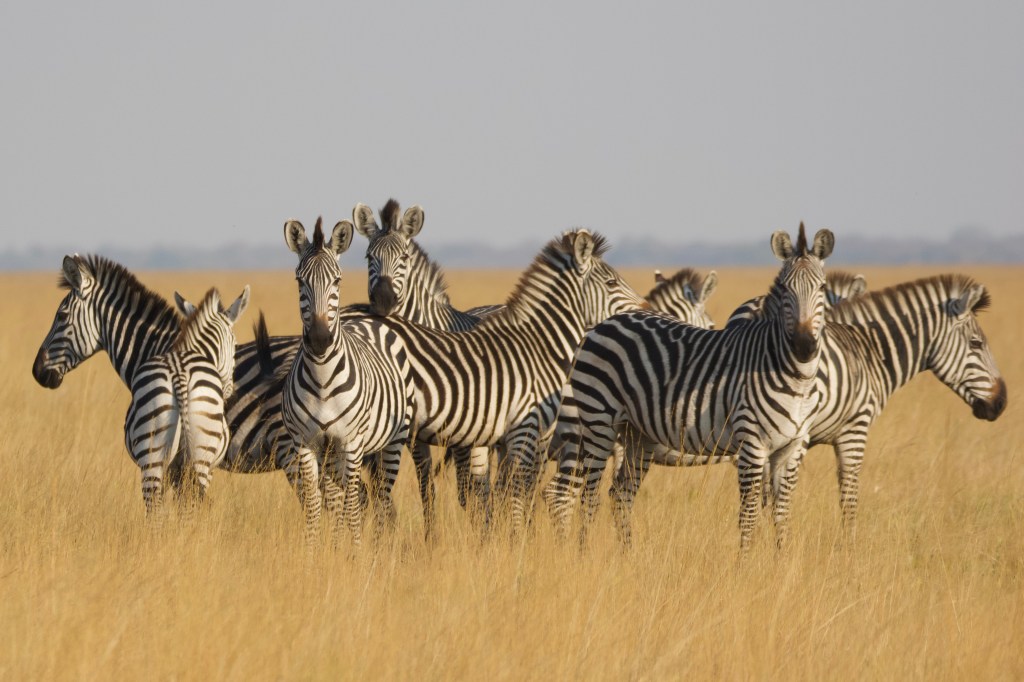
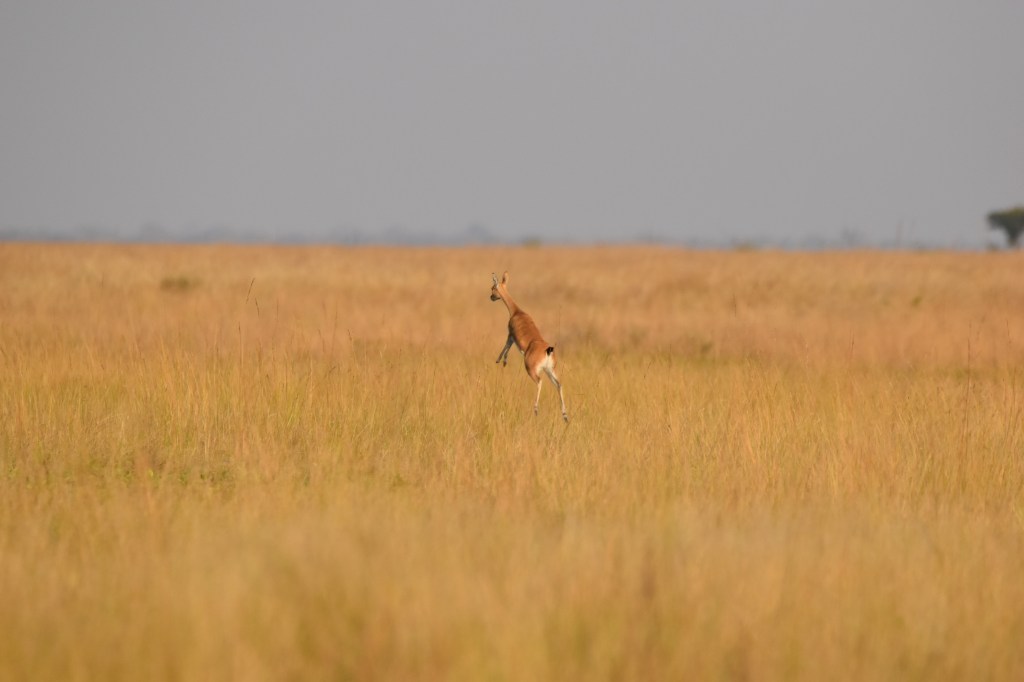
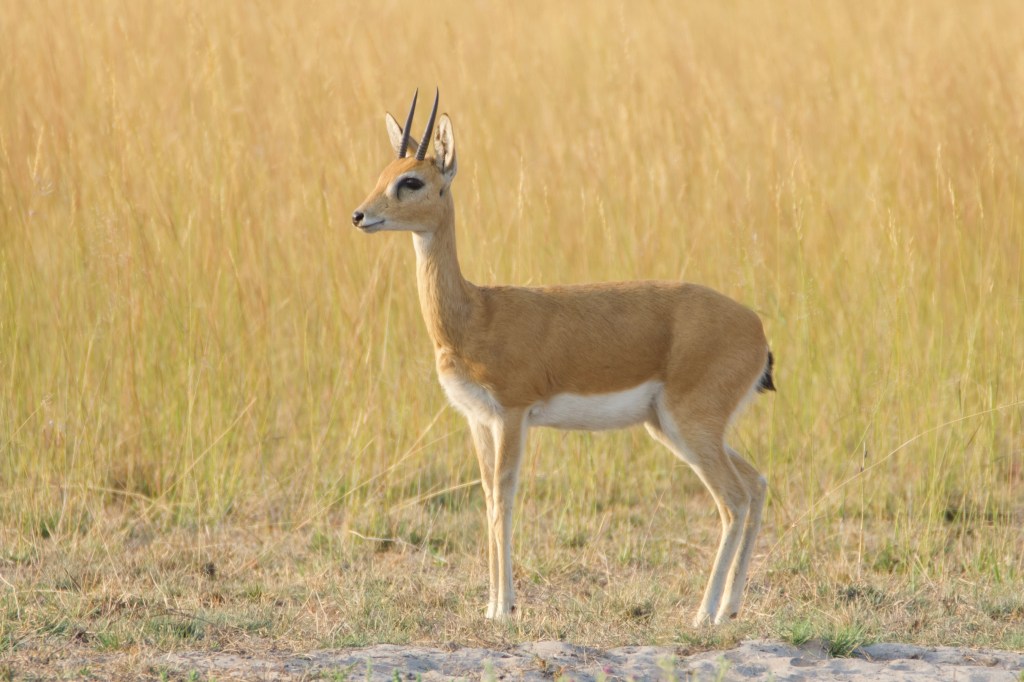
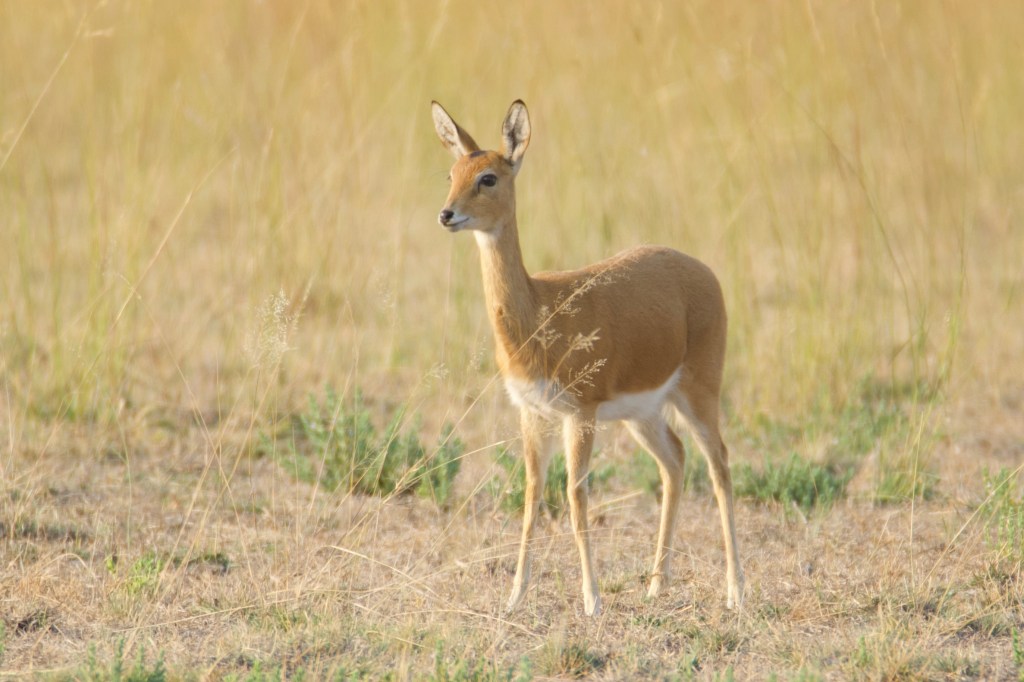
We reached the landmark sausage tree, and from there the going was easier. Covered in sweat and sand we headed straight towards our camp without stopping to view much wildlife. Not that there was a whole lot to view. We came across a few small herds of zebra and wildebeest, and a number of small oribi in the long grass.
As we neared camp we were amazed to see a small village. A few small huts and a small cultivated area were not what we had expected to see. The children predictably ran towards us shouting for sweets, and a couple of big horned cows were pulling a cart of firewood. African Parks marketing material seemed to omit the fact a small number of people still live within the boundaries. Mind you it is still a tiny number in an enormous endless wilderness plain.
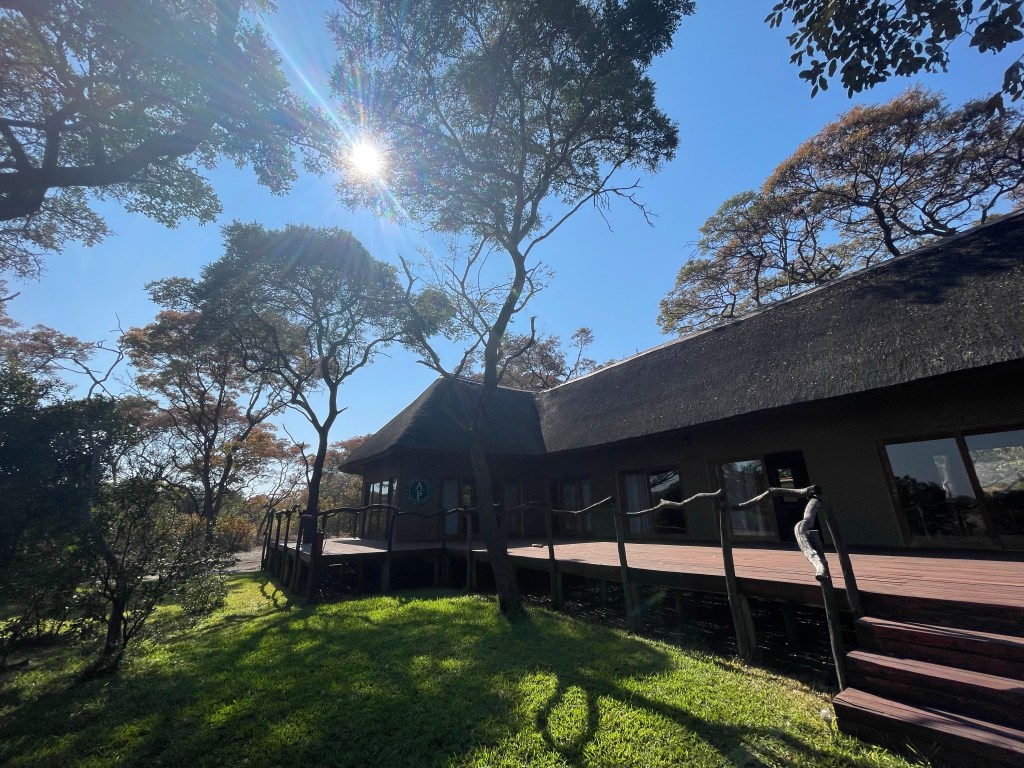
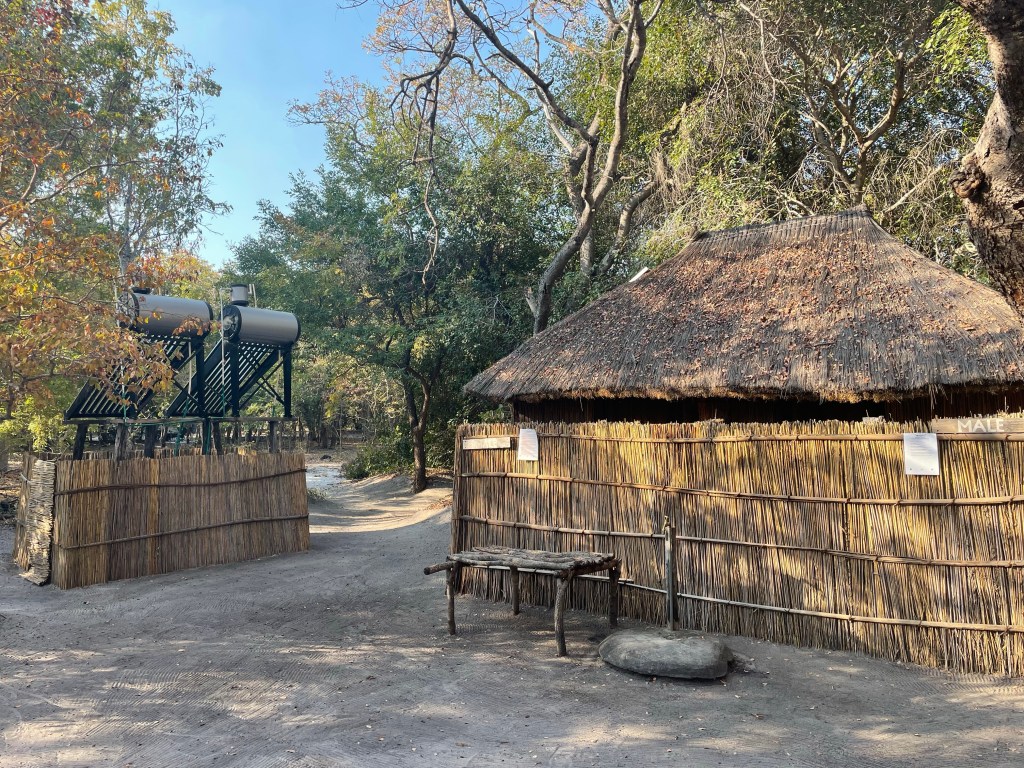
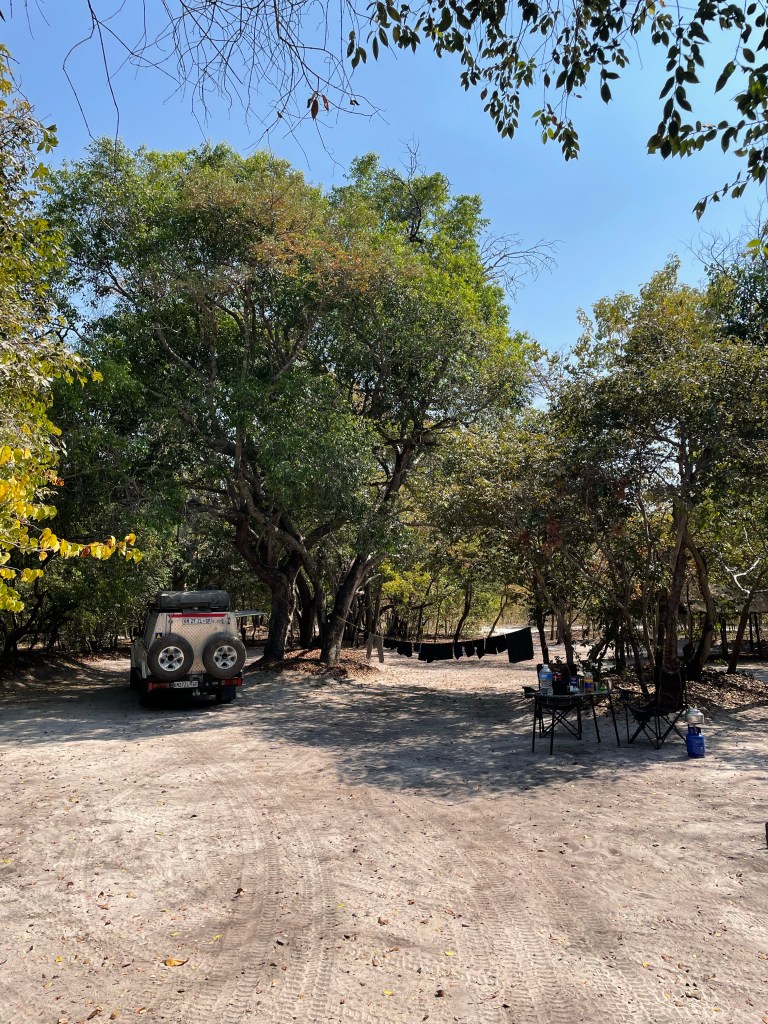
We were pretty sour on Liuwa by now, the whole place had treated us pretty badly. As we arrived at Katoyana we pretty much dived headfirst into the showers. Solar heaters made sure there was plenty of hot water, so at least we could get clean.
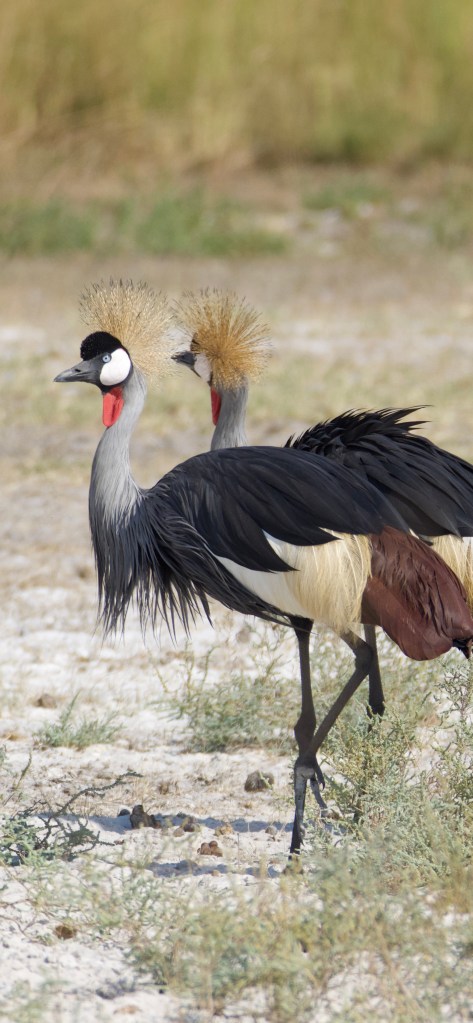
We went for an evening drive and saw nothing. Just a few golden crowned cranes and wattled cranes. Maybe Liuwa was a waste of time after all.
Wildlife:
Zebra, Wildebeest, Oxon
Distance: 142km
Cumulative Distance: 3,530km
Liuwa Safari day 1 – Wild Dogs!
The best time to spot wildlife, especially predators, is around dawn and dusk. Given how sparse the game is in Liuwa we needed to take every chance we had. So we cruised out of camp 30 minutes before sunrise at a smidgen before 6:30. We headed southwest from Katoyana, towards Matamanene Camp, where we heard there might be more game.
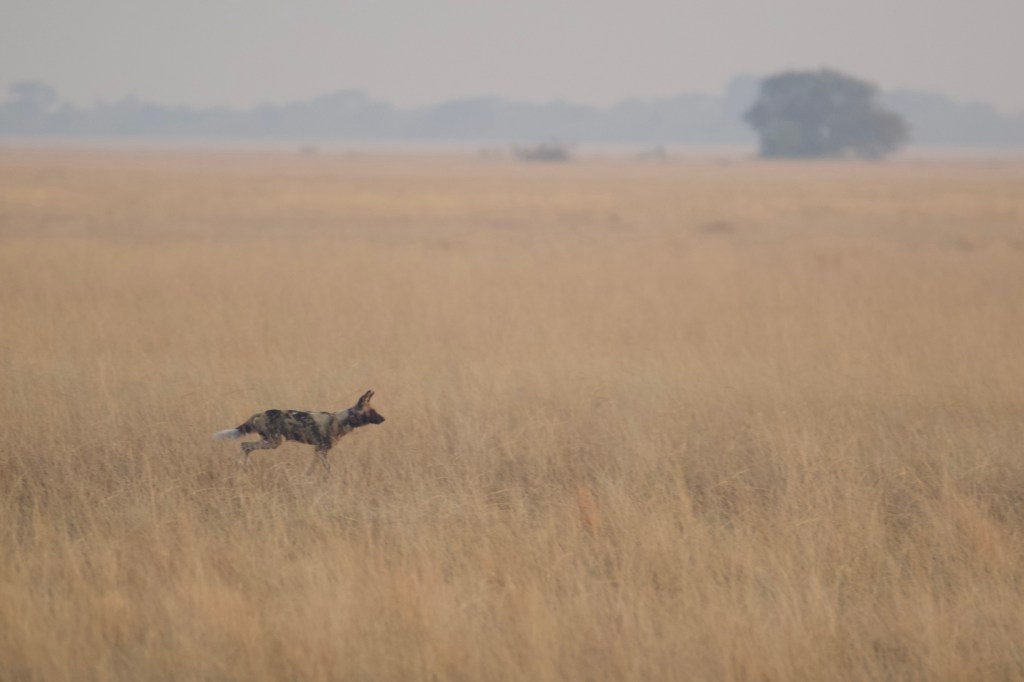
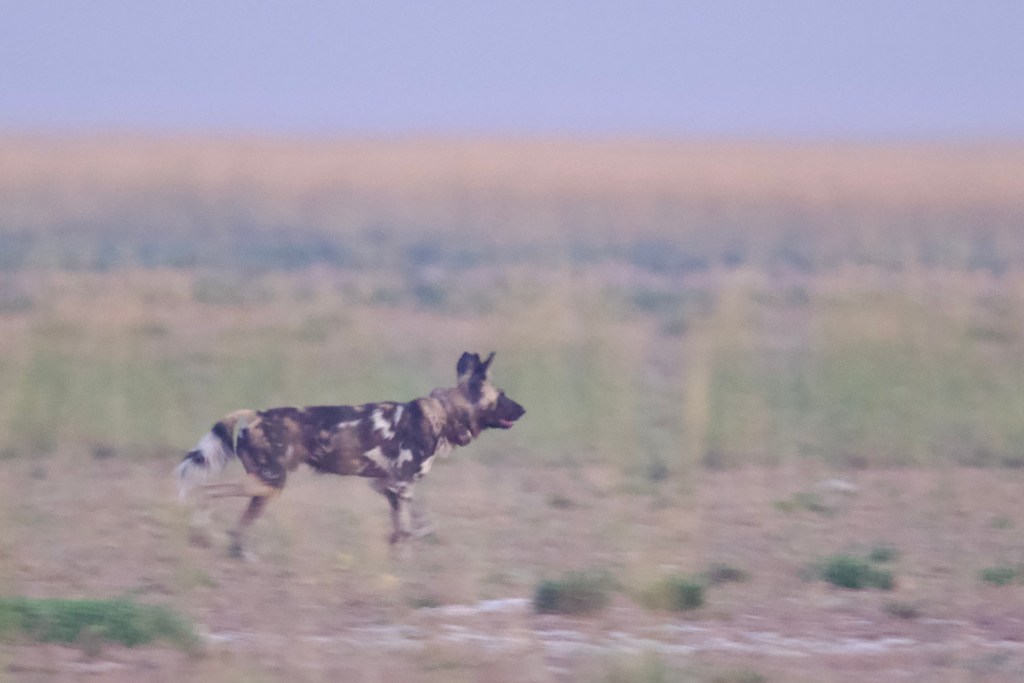
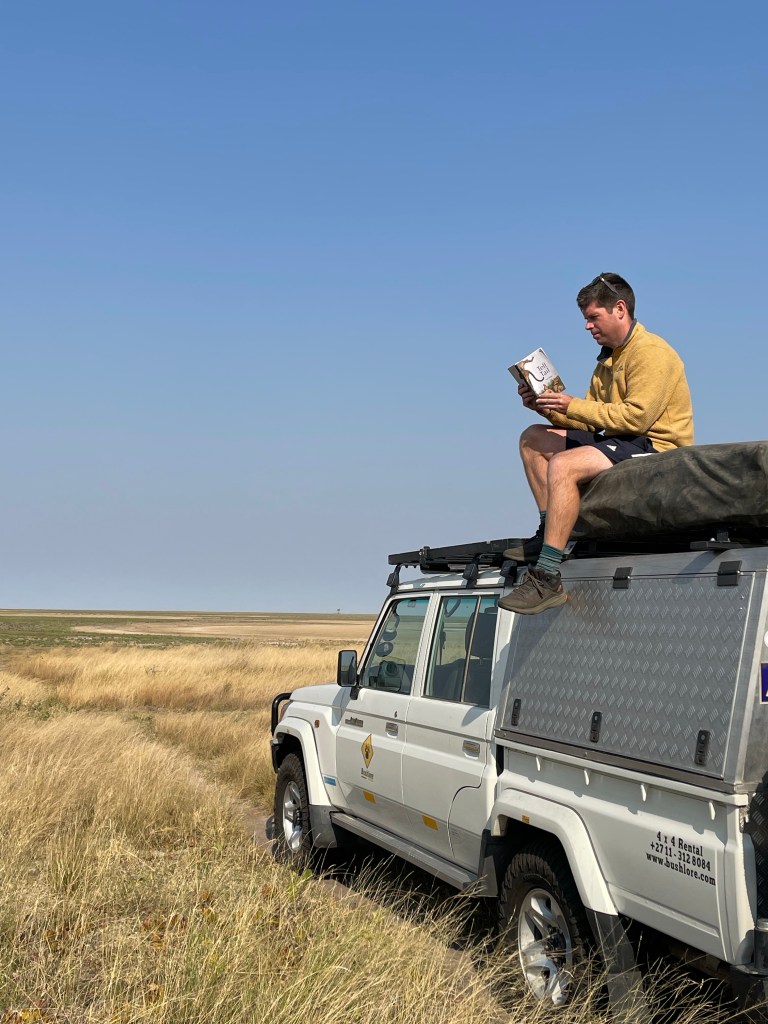
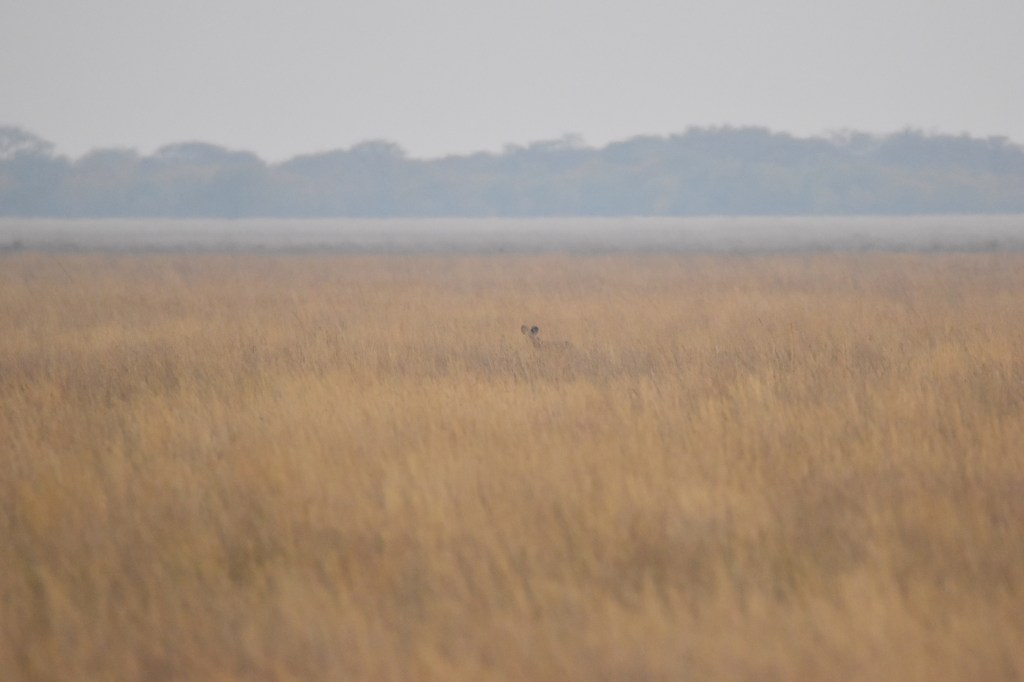
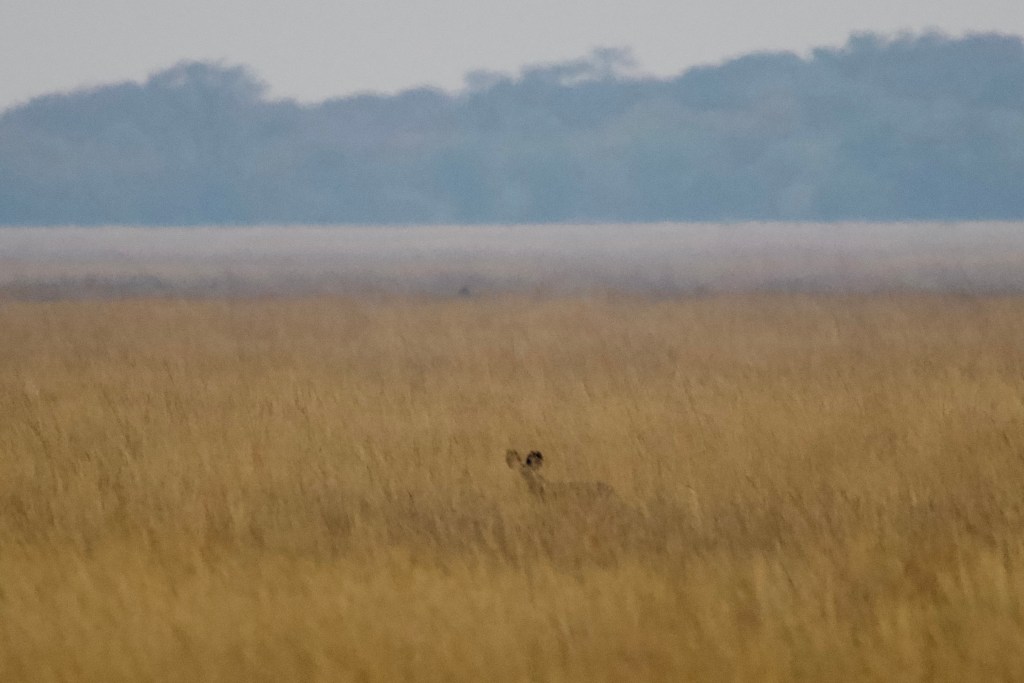
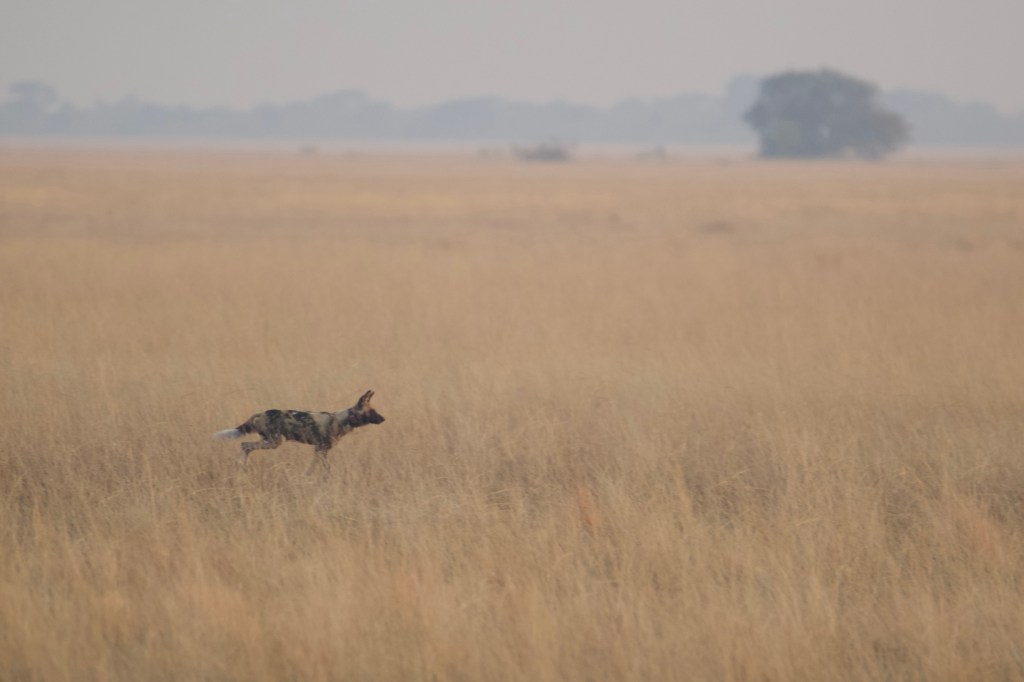
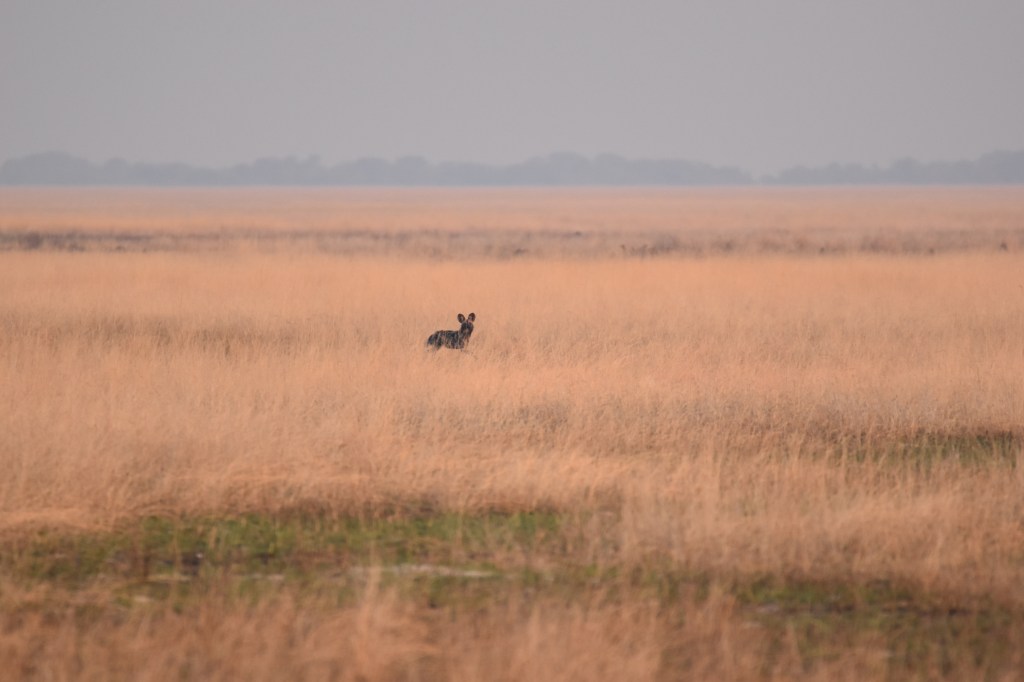
Before we had even the chance to wake up properly a familiar shape lumbered out of the tall grass and into the clearing ahead. Still 20 minutes before sunrise there was little light, and in our half-awake state it took a few seconds to realise the identity of the creature. “Hyena?”, “no Jackal?”, “that’s a dog”. We had finally stumbled across the most prestigious of sightings; African Wild Dogs. Or to be precise, one African Wild Dog. These animals move quickly, never staying still for too long, especially at dawn and dusk. They also always move in a group, so the other dogs were here somewhere, but how many? We briefly caught a glimpse of two more dogs in the fringes of the long grass. Then, barely thirty seconds after we first caught sight, they were gone. Melting back into the long grass, moving smoothly and deliberately, as if on a quest for something. We wheeled around and attempted to follow them, but it was no use, and then as a last shot we tried to drive down another road a kilometre or so away in the direction they were heading. Maybe they would cross the track and we would get lucky with another sighting. We clambered atop the Land Cruiser and waited for almost an hour, scouring the tall grass with our binoculars, but the dogs had vanished. It’s exceptionally rare to spot the wild dogs anywhere, and particularly in Liuwa plain where they have been more recently re-introduced. Only a small pack of wild dogs is present in the entire national park, and we had bumped into some of them.
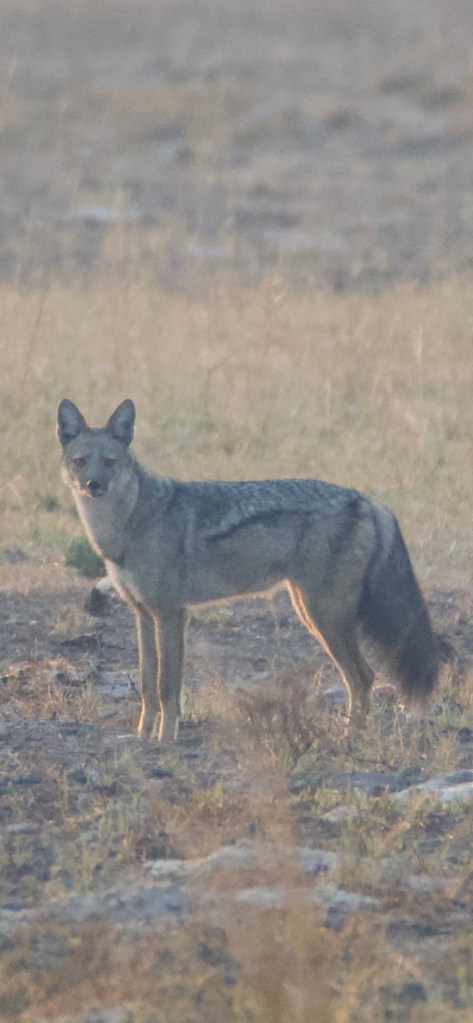
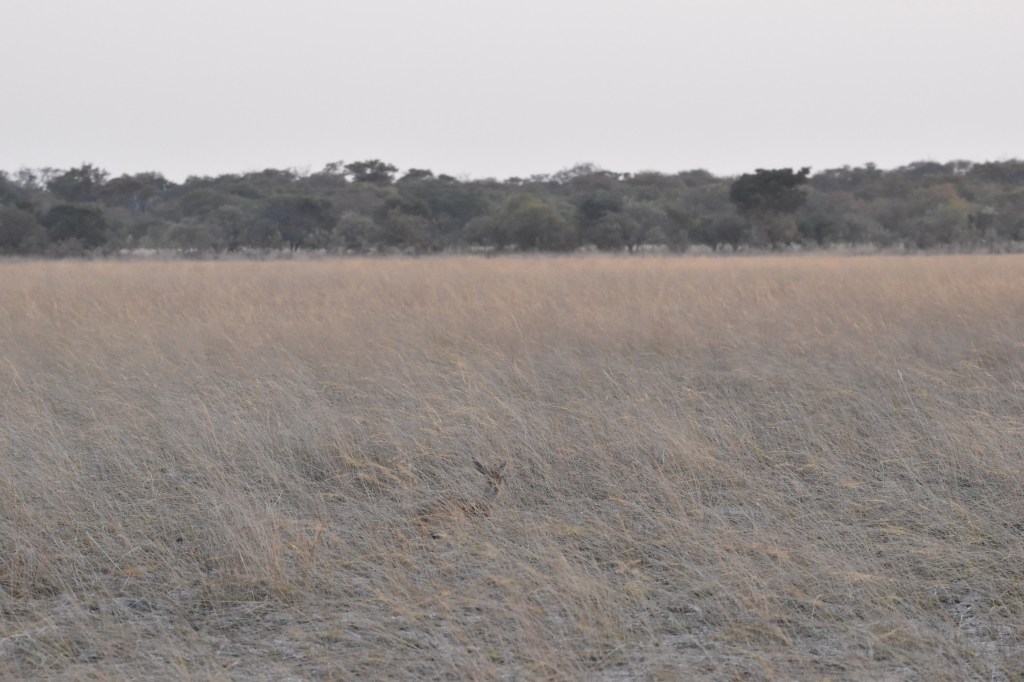
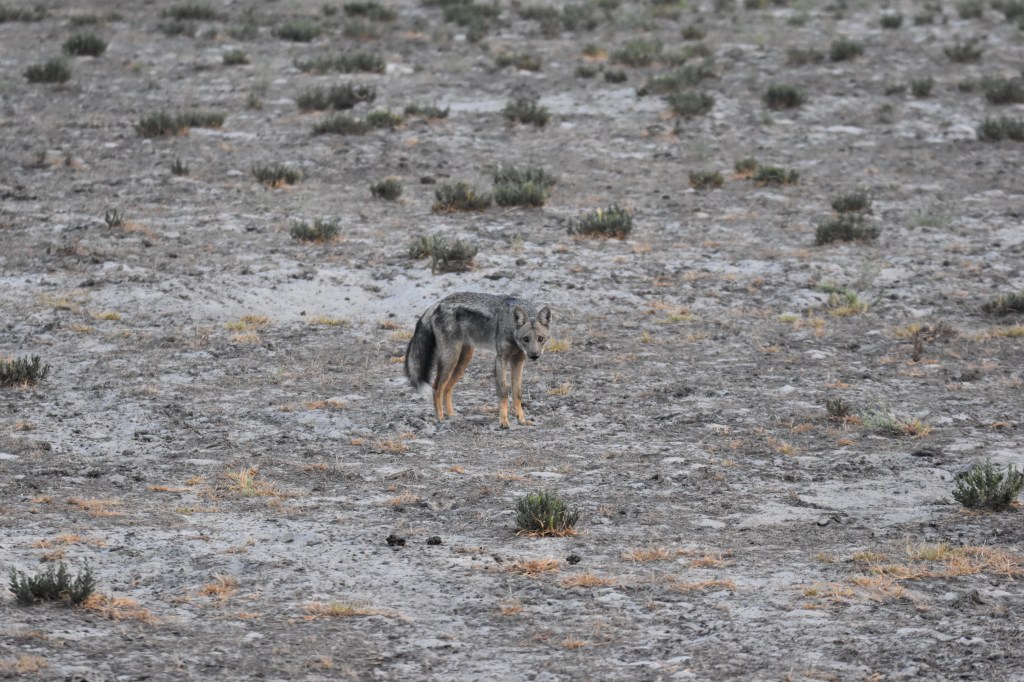
Suddenly, to our right, a dog like shape trotted out of the grass curiously and busily working the ground. It was a side-striped jackal. Even more canine looking than the African Wild Dogs, and certainly more closely related to domestic dogs. It wasn’t the dogs we were looking for, but a new sighting for us nonetheless.
The question remained, where were the rest of the dogs this morning?
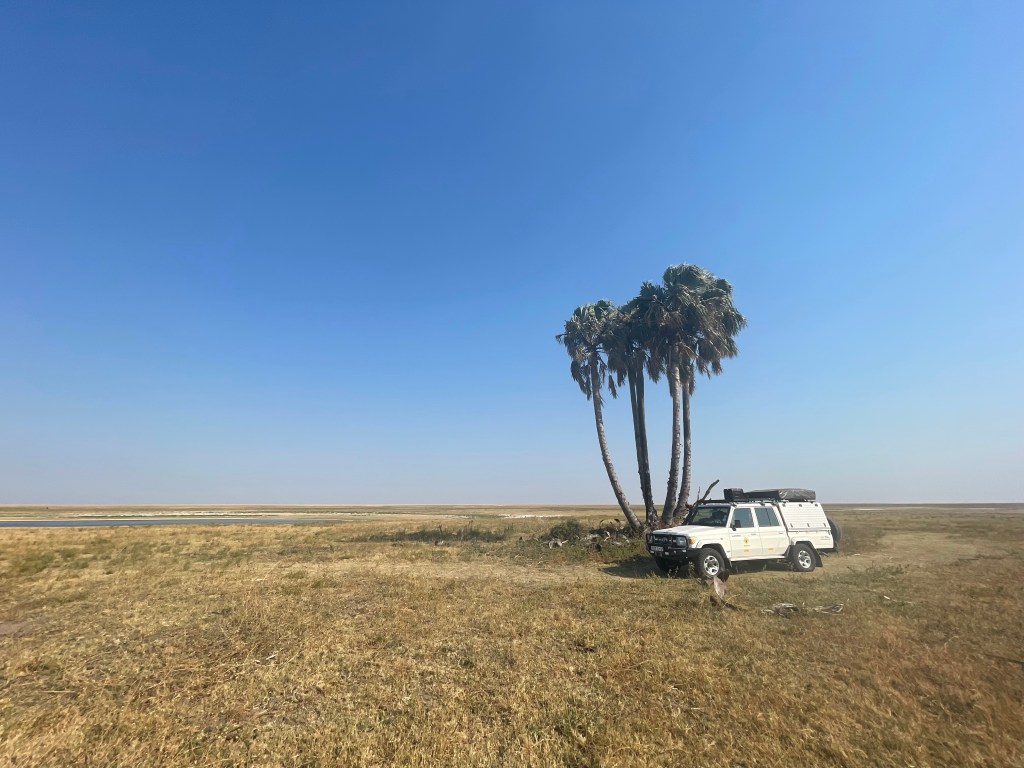
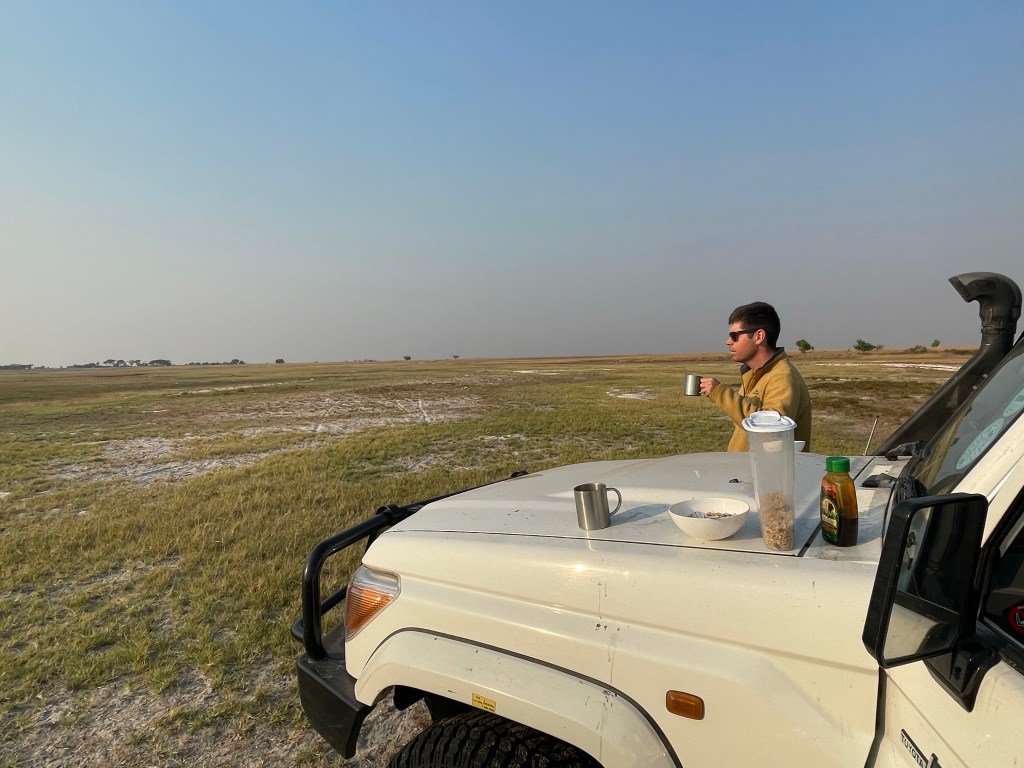
We drove on to kings pool, where we spotted a small herd of buffalo, a surprise in Liuwa. Strangely that means that in this trip we have seen four of the big five, and incredibly the last one to find is a Lion. We continued to Matamanene, and then further on to Lone Palm. The name is very descriptive, a lone palm tree stands out on a small termite island above the vast Liuwa plain and is plainly visible from miles around. Solitary wildebeest dot the landscape, in fact almost every possible dot on the horizon turns out to be a wildebeest. A bigger group might be a zebra, and anything closer an Oribi, but game diversity here seems quite low. We had been told to be in the lookout for cheetah in this area, but no cats were forthcoming. At lone palm we stopped for a cup of tea and breakfast, as is customary. A vacuum flask prepared the night before was sufficient for a couple of cups, but on the occasion we wanted more we could bring out the gas stove and kettle.
Returning back towards Katoyana we stopped in the dry river bed near kings pool. Something odd was moving along the horizon ahead, and it took us a while to recognise what they were. Humans, there were people walking along the river channel with fishing equipment, heading to fish in the pools further along. It was very much a surprise to us, to see people on foot in a national park, far away from any camp was a novelty. Many kilometres to the east, nearer the Zambezi valley but still within the national park, there are areas of settlement within Liuwa plains. This was the first we’d heard of it.
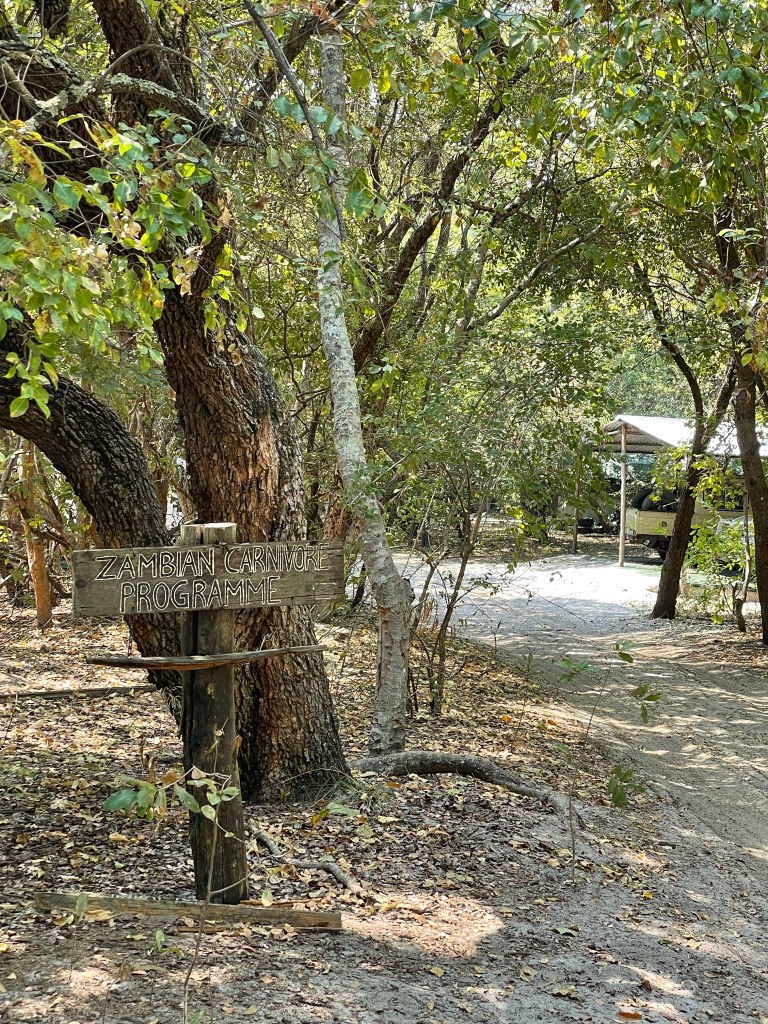
It was at that point a motorbike appeared directly ahead, and began to approach us. For being the only visitors in the entire park, it sure was busy here. Any trepidation about the motorbike approaching was laid to rest as Maurice introduced himself, and offered his assistance if we were stuck. We assured him we were just letting the fisherman cross in front. Maurice was working for the Zambian Carnivore Programme (ZCP), and had spent the morning out tracking hyenas and wild dogs using the radio tracking equipment in the front of his bike. We mentioned our lucky sighting earlier in the morning and he sounded pleased for us. He wouldn’t be drawn into giving us too much information, but both the Lions and Dogs were in the direction of Katoyana camp to the north. He’d not tracked cheetah, but they were prevalent around lone palm. After a short chat he scooted off into the adjacent woodland, where the ZCP camp was rather secretively located.
After lunch and chores, we headed out for an evening drive, hoping for repeat successes. Heading toward the northwest, in search of the lion pride laid up somewhere near the river valley, our path was blocked by a large grass fire. Burning grassland is the national winter sport in Zambia, hazy horizons had been the norm ever since we crossed the border at Katima Mulilo. This fire however was right across our path. After getting as close as we could, we saw the flames on both the left and right of the track. Even the small strip of grass between the tyre tracks was ablaze. We abandoned our plans to head north and tracked back south to Matamanene and lone palm. The afternoon on the wildlife front was quiet.
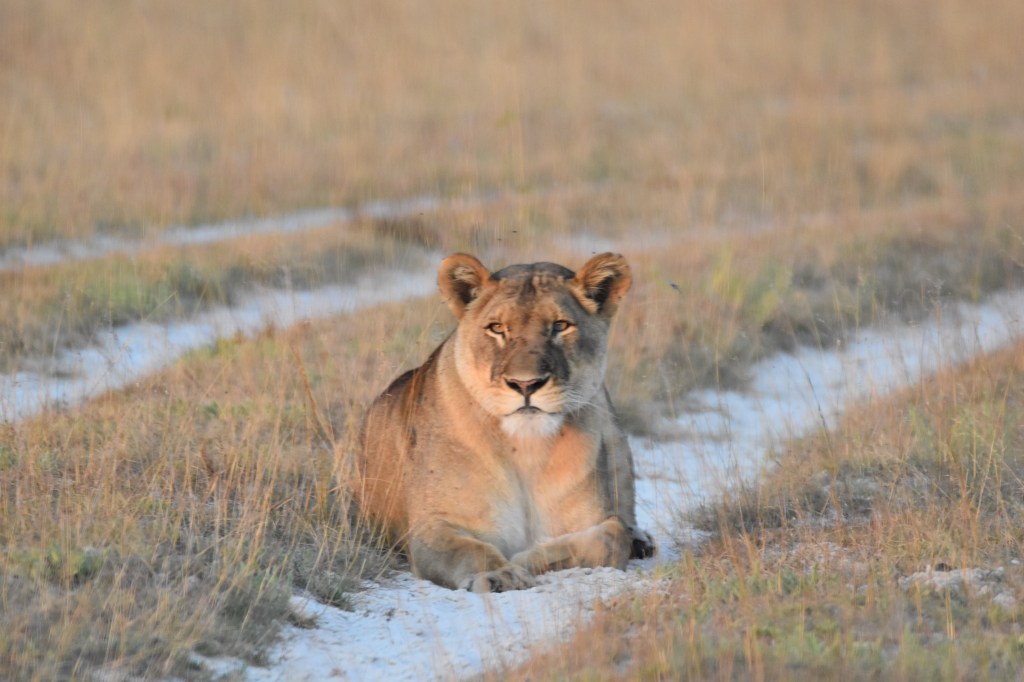
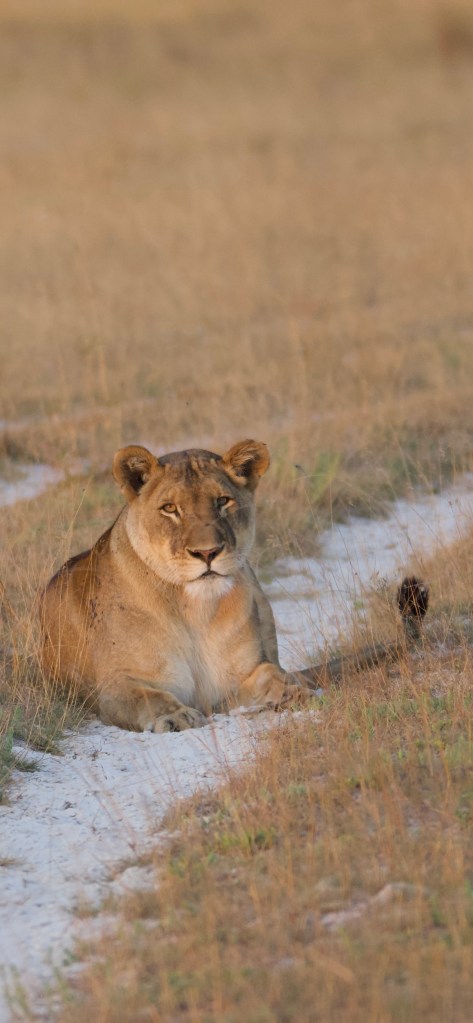
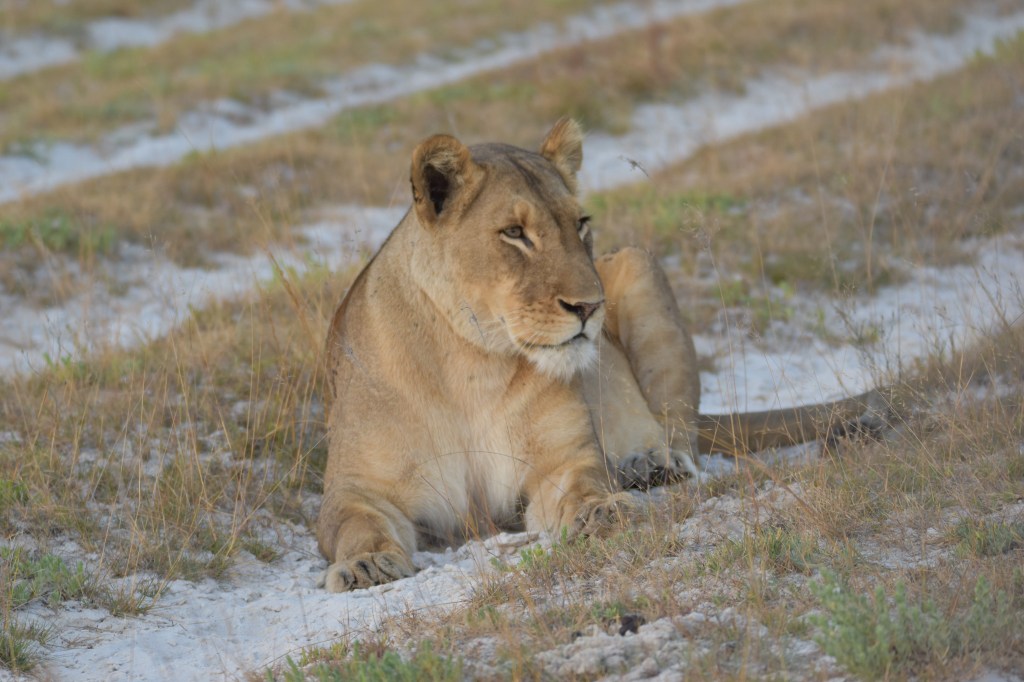
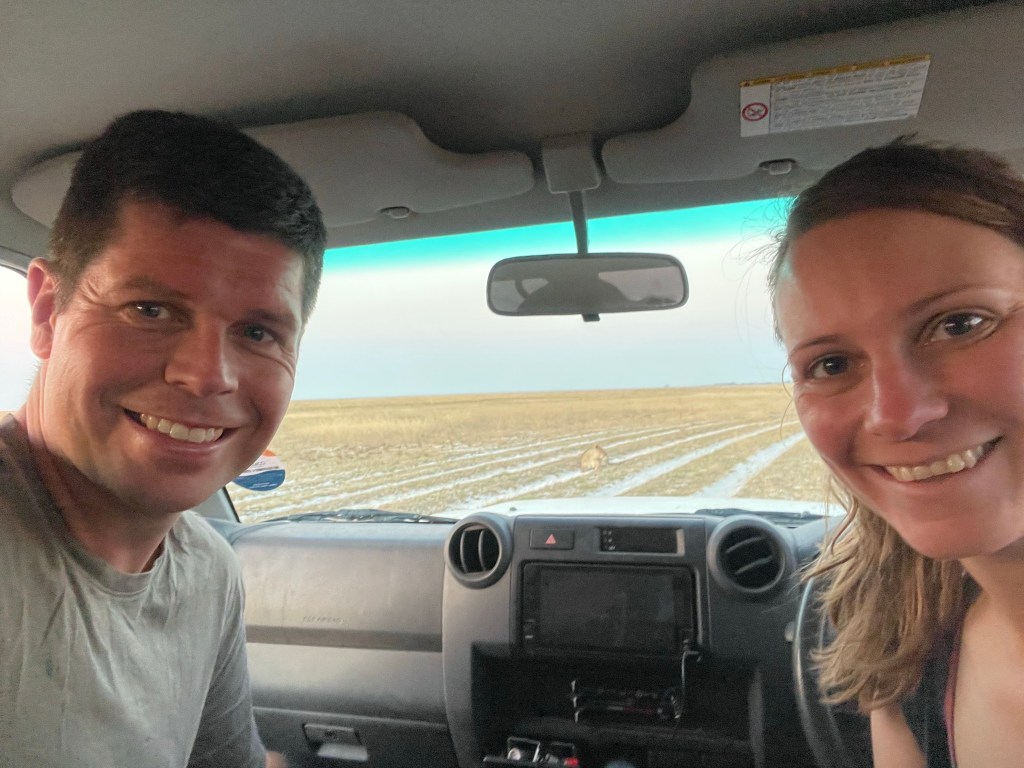
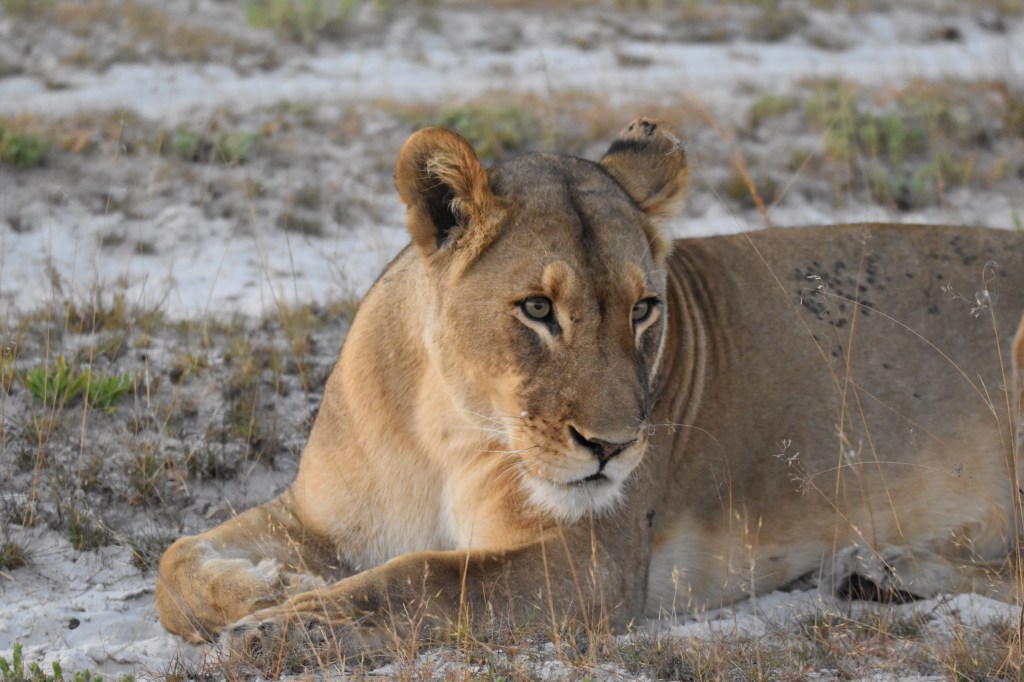
As close to sunset as we dared push it we began to head back to Katoyana. 25 minutes or so away from camp, an animal track appeared on the road. As was custom, Sarah drove up on to the side of the road so we could get a look at the footprint. Mike was leaning out of the passenger window as she asked what it was. “Don’t get your hopes up, but it’s a lion” was the reply. The tracks were poorly defined in the soft dry sand, but unmistakably a large lion’s. We had driven the same road just an hour or so before, so these tracks had to be fresh. Almost as the reasoning left our mouths we caught sight of the lone lioness strolling down the middle of the road ahead. We rolled forward to catch up 200m or so, and as soon as she spotted us approaching she plonked herself down in the middle of the road. Immovable, she stayed there for long after we were to leave her. She was a very healthy chunky looking lion. Perhaps bizarrely she appeared to be alone, no lions were following, nor did she look around for any others with any urgency. Being Liuwa, we of course had the lioness all to ourselves, taking many photos selfies and videos. The sun had just slipped below the horizon when we began the 20 minute drive back to Katoyana camp. We would be late, but it would be worth it. We joked that knowing our luck we’ll run into the dogs again out hunting.
We were travelling quickly, maybe 30km/h and about seven minutes away from camp, when an Oribi overtook us on our left hand side. Boy was he sprinting for his life. Oribi usually scuttle away with a graceful skip and an athletic vertical jump every couple of strides, this one was motoring along like the hare on a greyhound track.
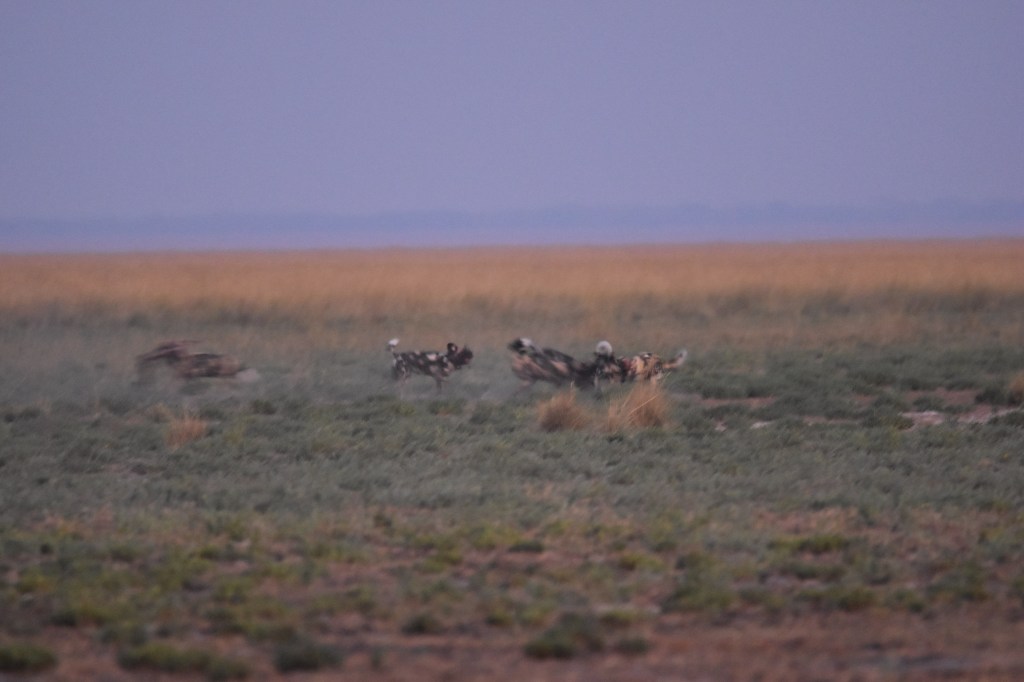
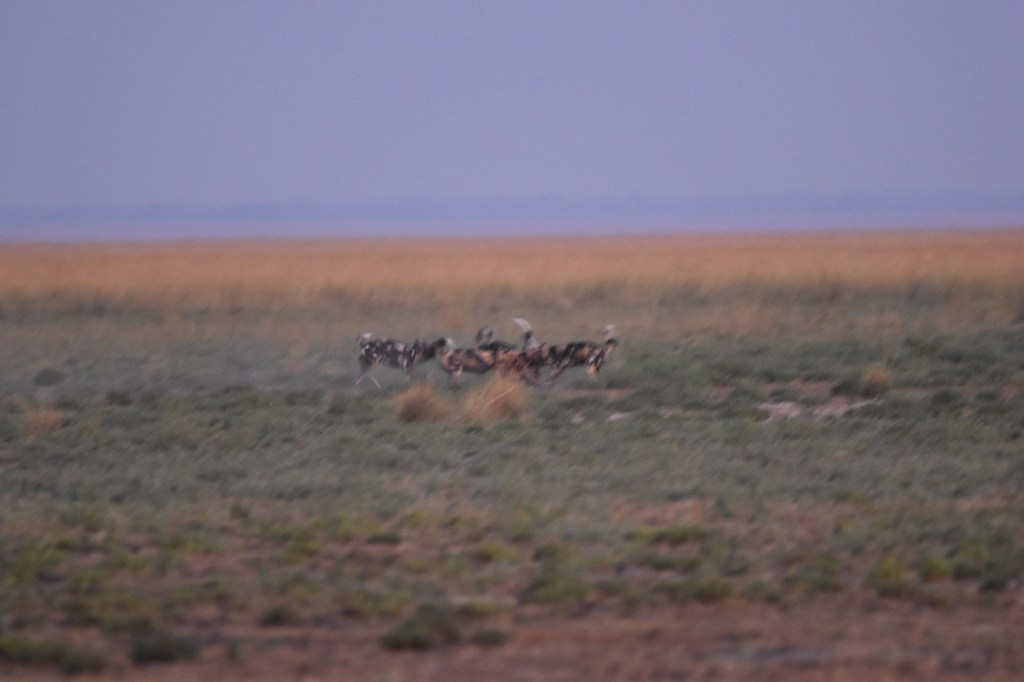
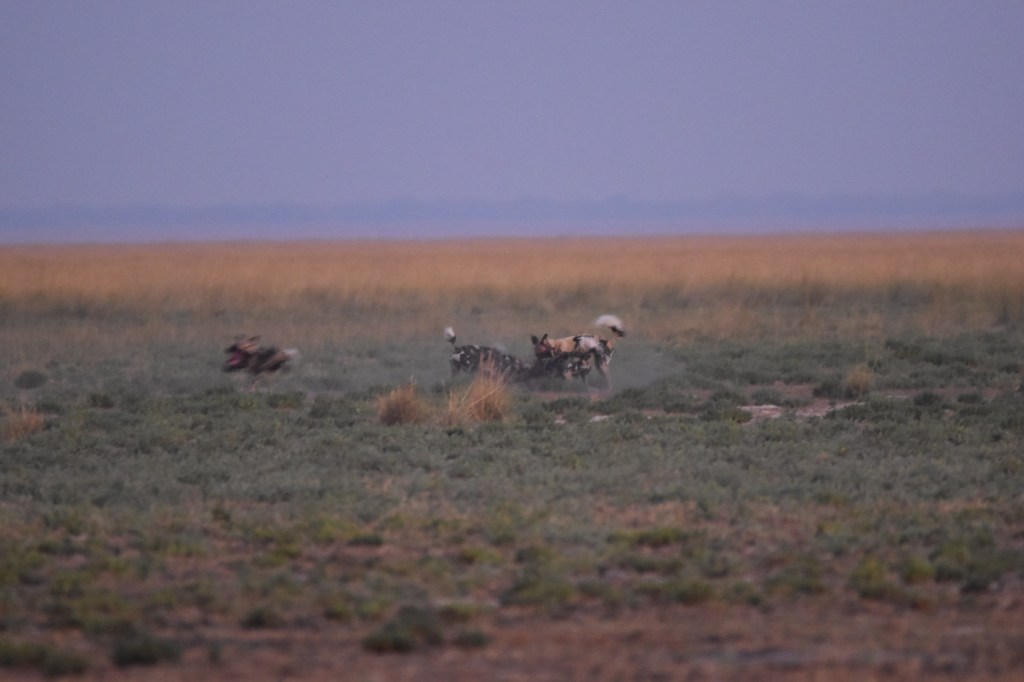
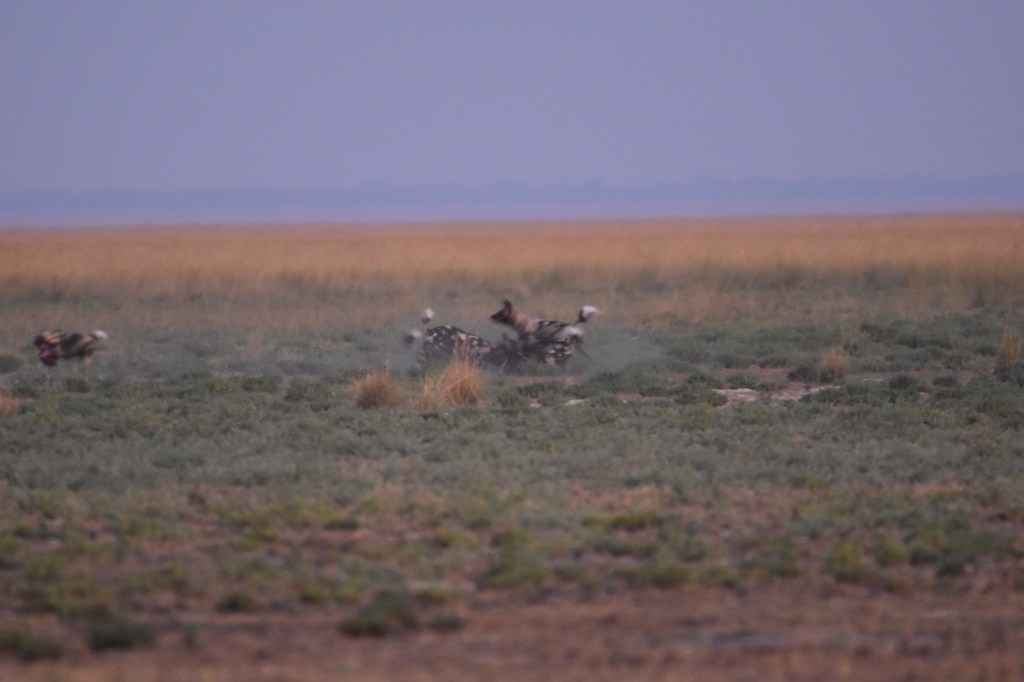
It quickly became apparent why. The oribi doglegged to the right, straight across the path of the vehicle, maybe 50 metres ahead, we squinted through the binoculars and through the long grass saw the familiar ears of a wild dog. Moments later we spotted the second dog, coming up from behind our left shoulder to join her colleague in front of us, she was the one who must have originally scared the oribi out into the open. By now the antelope was far to our right, the two dogs in front of us slowed to a trot. Had it escaped? The dogs one by one broke into a sprint, head down racing off to our right. We could hear chatter from the dogs, a strange squeaking sound, certainly not the sound you would expect. Then we spotted it, the oribi has been caught, and there were already six dogs tugging at the poor little antelope. The two other dogs soon joined. We headed towards the commotion, light fading we could only just make out the shaped of the animals. As we arrived, barely 200m from where first we spotted the oribi sprinting we found eight wild dogs tucking into individual pieces of oribi. Within a minute there was nothing left. The dogs kill in the most brutal way, starting to eat whilst their prey is still alive, the oribi was literally pulled to pieces. Incredibly we’d seen the wild dogs twice in one day, and both times in exactly the same location.
Wildlife:
Wild dogs x3
Side striped jackal
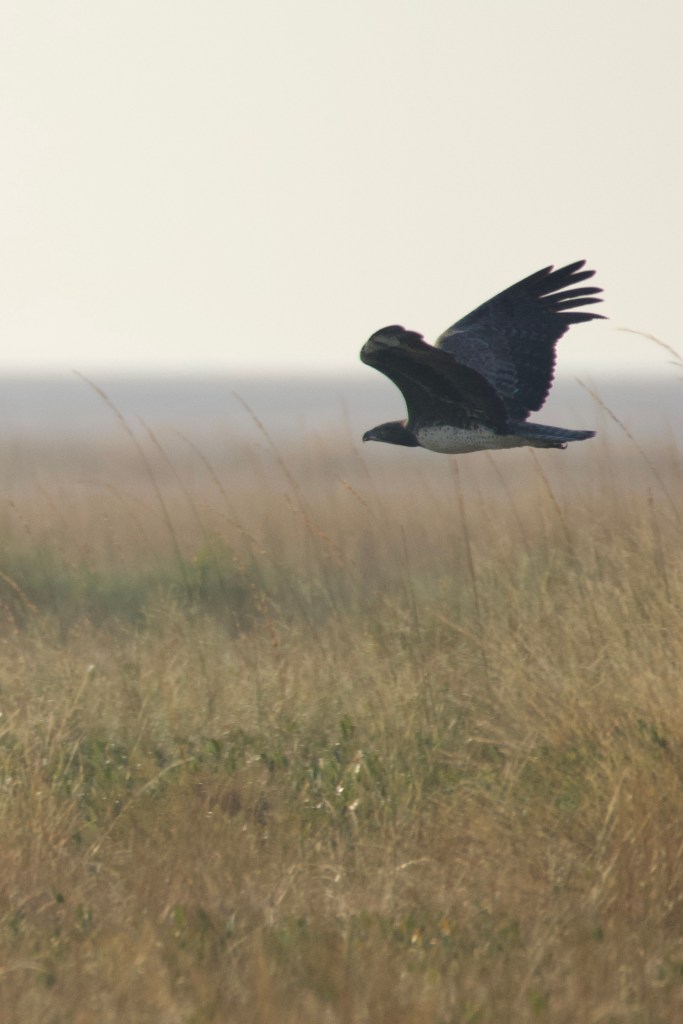
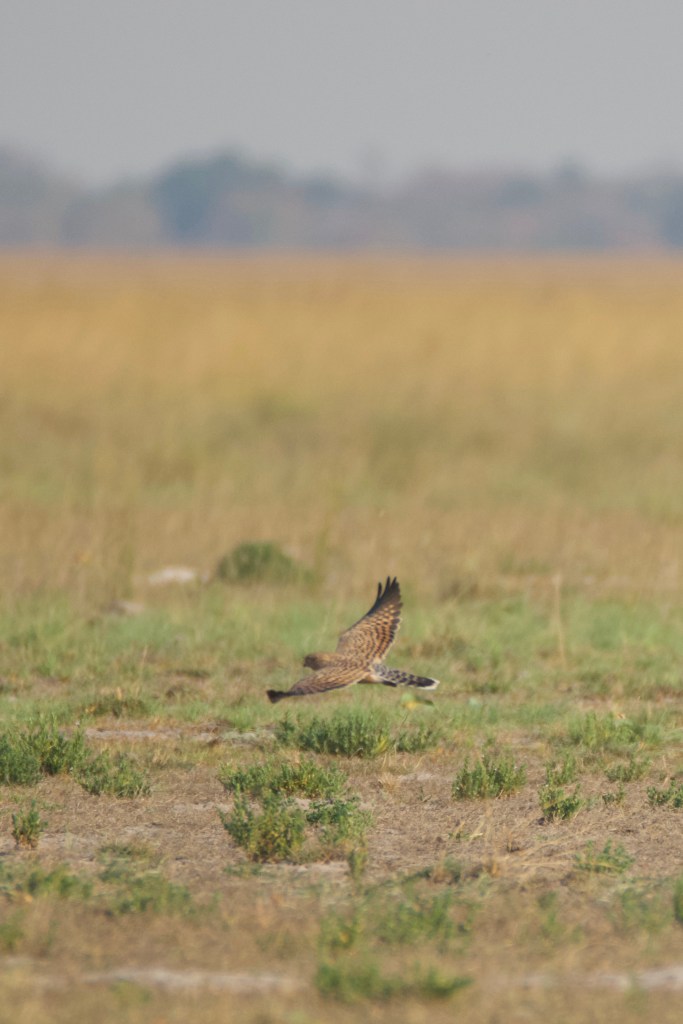
Martial eagle
Buffalo
Lion
Dogs x8
Distance: 89km
Cumulative Distance: 3,619km
Liuwa Safari Day 2 – Lion pride
No prizes for guessing where we headed for sunrise. This morning, however, luck had deserted us and the wild dogs were not in their usual spot. In fact all game was proving rather difficult to find. We did however find Maurice, the man from ZCP, on his motorbike heading to visit the wild dogs den. We showed him our footage from last nights hunt, and he asked us to drop into the ZCP camp so we could share the files. We obliged, it was very interesting to see inside the camp, the number of people they had working at Liuwa was surprising. Operations there are on a pretty industrial scale. There was a big whiteboard up with all the data on the carnivores in the area, especially the hyena clans.
The only animals of note we found that morning were a couple of domestic dogs. Not really something you hope to see trotting through a national park. They will of course be a nuisance to the sensitive birdlife and wildlife.
In the afternoon there were numerous murmurations of black winged pratincoles. It’s an impressive sight up close, and something that doesn’t convert well to photos.
Crowned cranes remain a pretty sight, and there were numerous groups, some of which had over 20 individuals in. Saddlebill storks and wattled cranes also dotted the landscape.
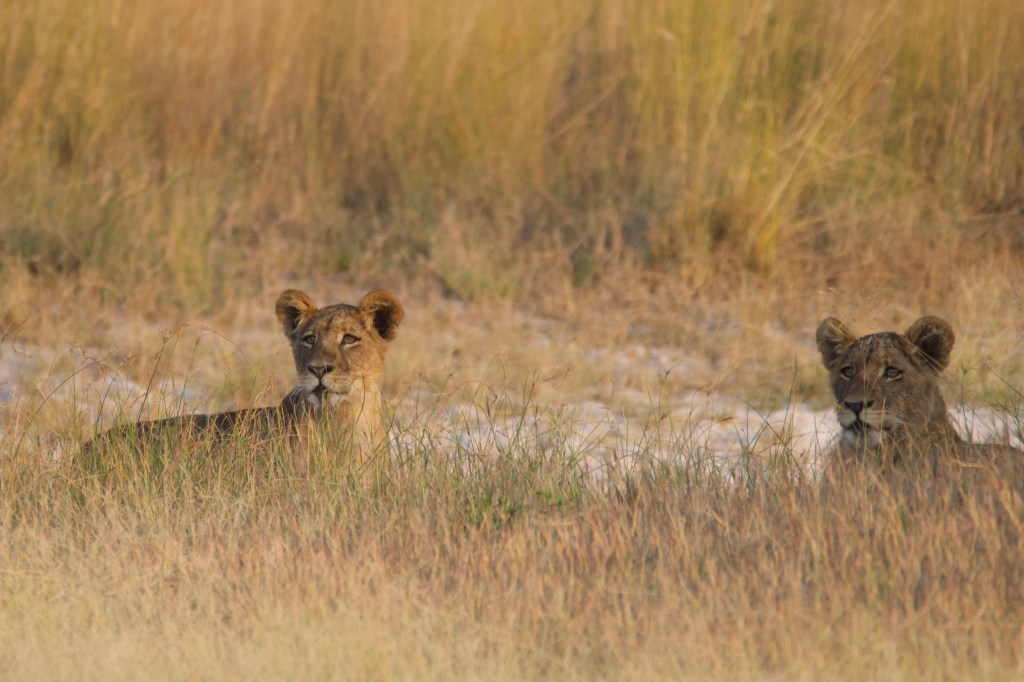
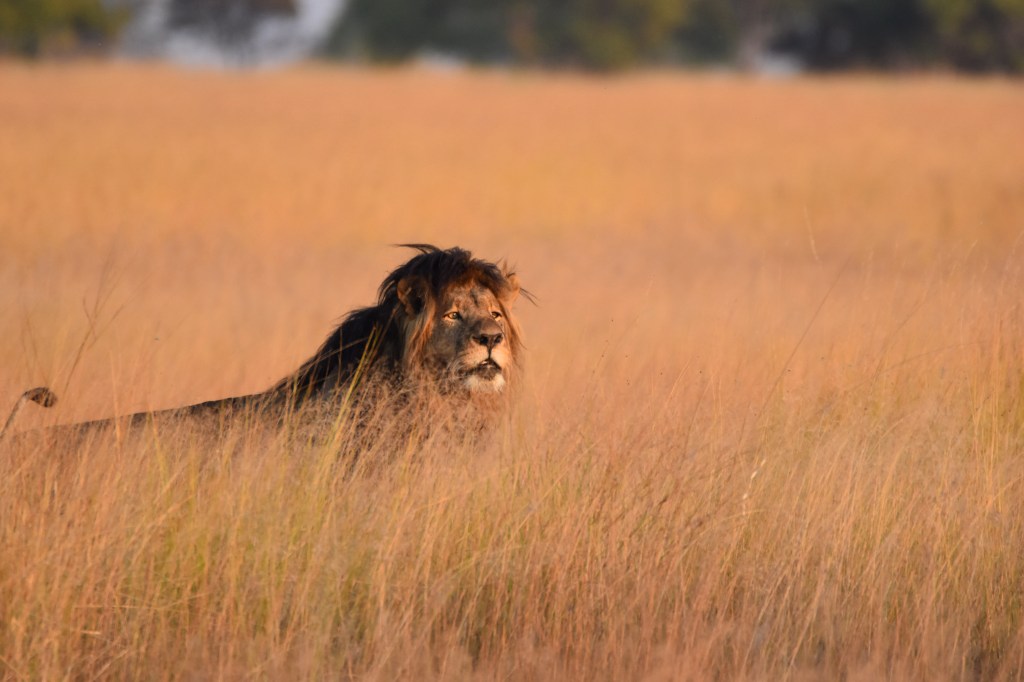
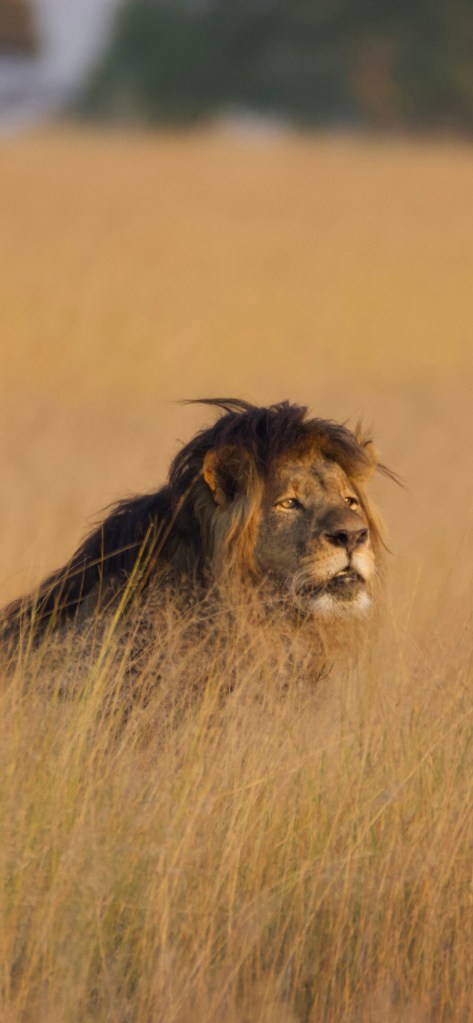
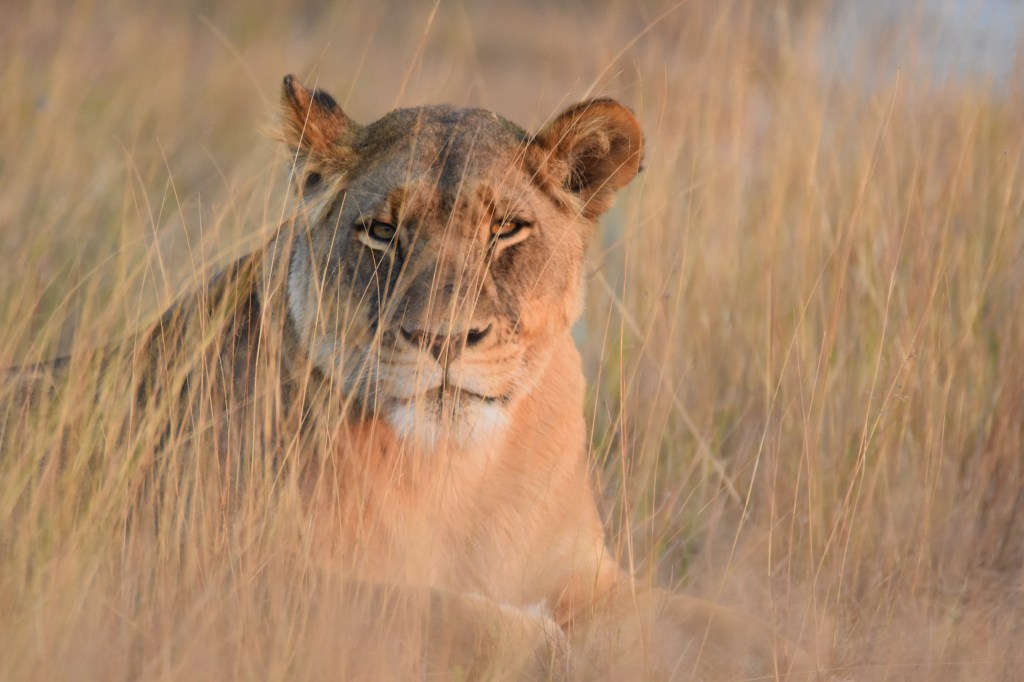
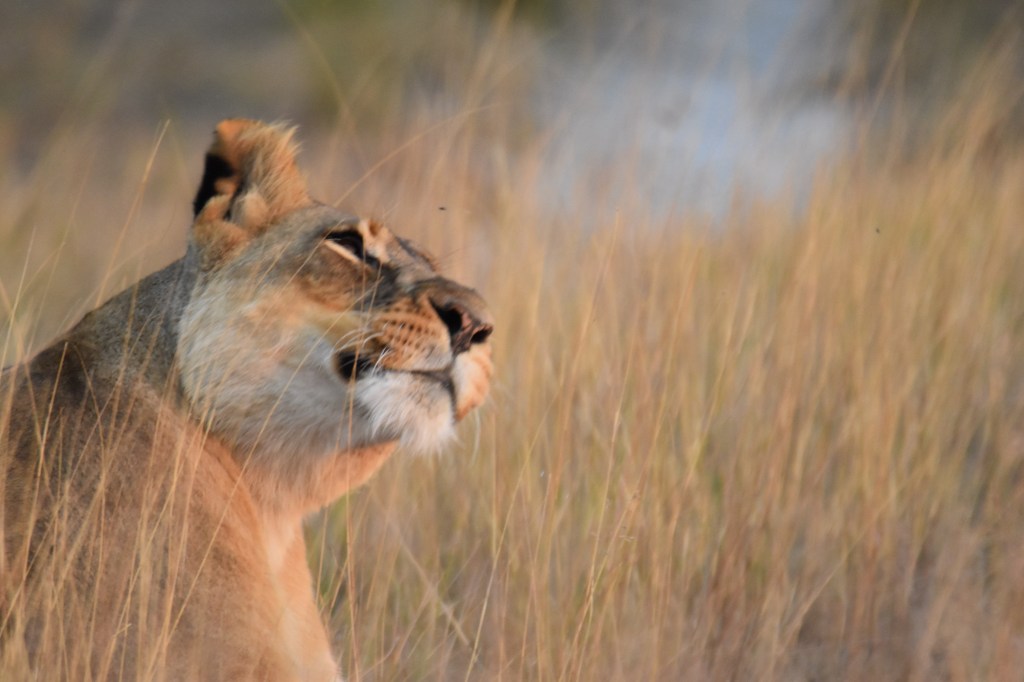
Very late on, out on our evening drive, just by chance we happened to spot the shapes of a couple of lions walking along in the tall grass near the closed up king Lewanika Lodge. It was a chance sighting, a glimpse of the back of a strolling cat just caught our eye. We approached the spot where they had disappeared into the grass. We must have been less than 10 metres away, but we couldn’t see even a single patch of skin. The lions had vanished. We knew they were there, so we tried a few different angles to spot them. Finally, after carefully driving around them through the long grass we caught the face of a curious cub sticking his head above the grass to see what the commotion was all about. We waited until the sun had nearly set, trying to count the lions, and eventually some of them got restless and shifted their positions. We counted two lionesses, one of which was collared, and two fairly grown up cubs, one shy and one curious. Finally a huge male stood up out of the grass, squinting into the setting sun. A shaggy black mane clung to the top of his head like an awful wig, the michael fabricant or Elton John of lions. Under his ugly mop he wasn’t a looker, a big squashed nose, wide set eyes, and a mouth that wouldn’t close. There was no doubting the cubs were his. Remarkably he wasn’t particularly battle scarred like many male lions. We were to later find out from a guide in South Luangwa that his given name was BonJovi.
That night hyenas wailed and whooped outside the camp, but none of them came close.
Wildlife:
Wildebeest, zebra, oribi, crowned cranes
Black winged pratincoles murmuration
Lions near king lewanika lodge
Distance: 86km
Cumulative Distance: 3,705km
Leaving Liuwa
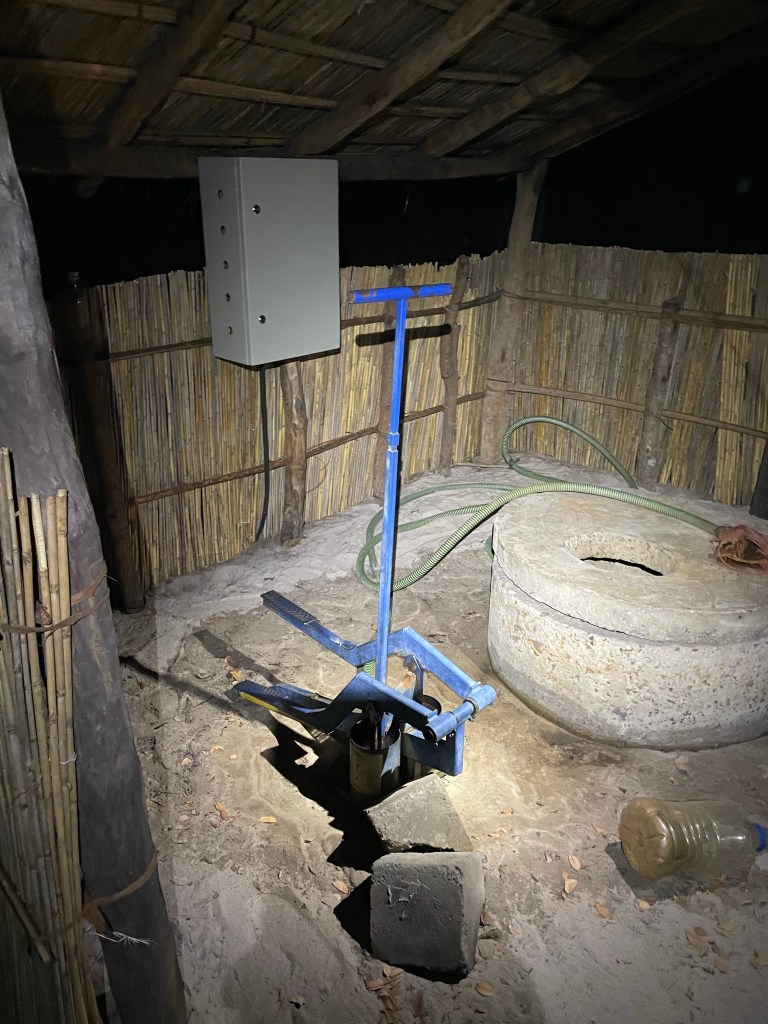
Our last day in Liuwa. Given our success with sightings here, in such a sparse area for wildlife at the wrong time of year, we weren’t expecting to see anything of note. Before we left Katoyana we left some Fanta and marshmallows on the water pump to give our awesome camp attendant Naramino some sustenance when he’s filling the water tower.
Despite low expectations, we headed to our usual spot, before sunrise, turned off the engine and waited. We climbed onto the top of the Land Cruiser and scanned the horizon. The minutes ticked by, we were sat waiting and watching an empty patch of grass. Ten minutes, fifteen minutes, the sun was starting to peek above the horizon. Suddenly a dog like shape trotted towards us out of the morning gloom. It was a side striped jackal, she continued on the road towards us, gave us a wide berth as she rounded the vehicle, and continued on her merry way. As she reached the edge of the long grass she froze, and peered into it. Surely she couldn’t see anything, the grass high above her head she could probably only see a metre or two at best. Ears cocked forward, she was alert. We watched, and waited.
Right on cue, oribi started pinging out of the long grass, heading in every direction. They must leap up to get a good view of what is chasing them, but from afar it looked like a giant game of whack-a-mole. Then we saw them, the familiar radar dish ears poking up out of the grass. Mickey Mouse with a dog shaped face. We had found them again, the wild dogs were on the hunt.
Anyone who has ever seen wild dogs will know they are a nightmare to follow. They move quickly, and without direction, even more so when hunting. We counted the shapes moving through the grass, three, four, five? The dogs we could see moved further away, nearer to the biggest tree around. They were long in the distance and mostly out of sight. The lack of roads makes it difficult to get close, and we decided to circle around to the perpendicular road which crosses the route back to the woodland where we knew their den was. It was a kilometre or so in the direction the dogs had run in, but we had to go the long way around.
As we reached the junction outside the Katoyana campsite we observed the group of three South African cars emerging from the camp. People who had joined us at Katoyana campsite for our last night, and we’d given them our intel on the wildlife.
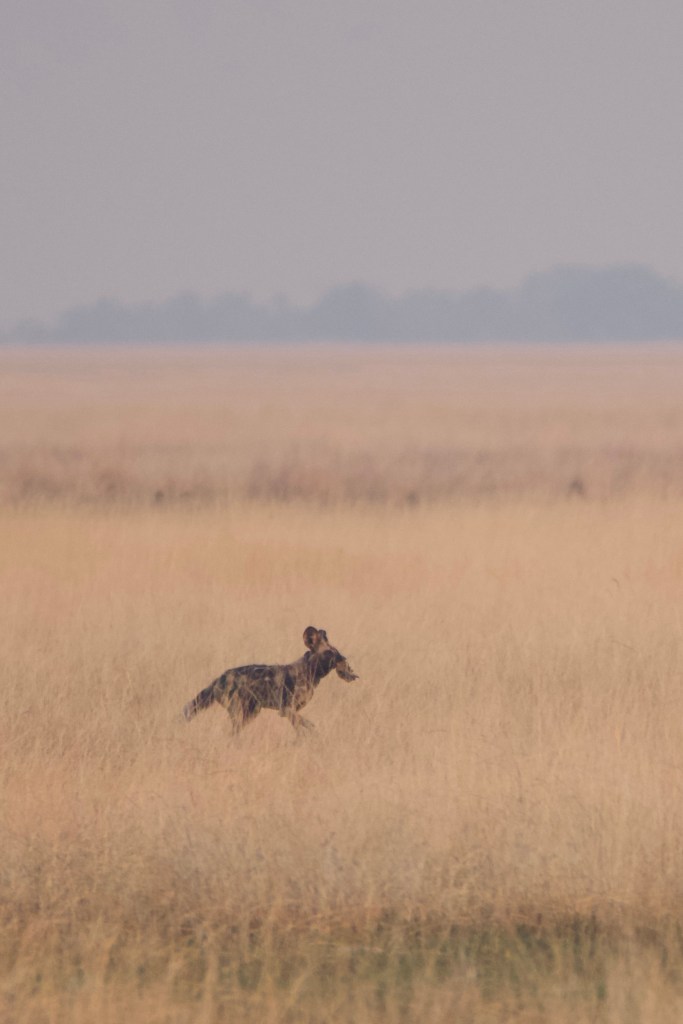
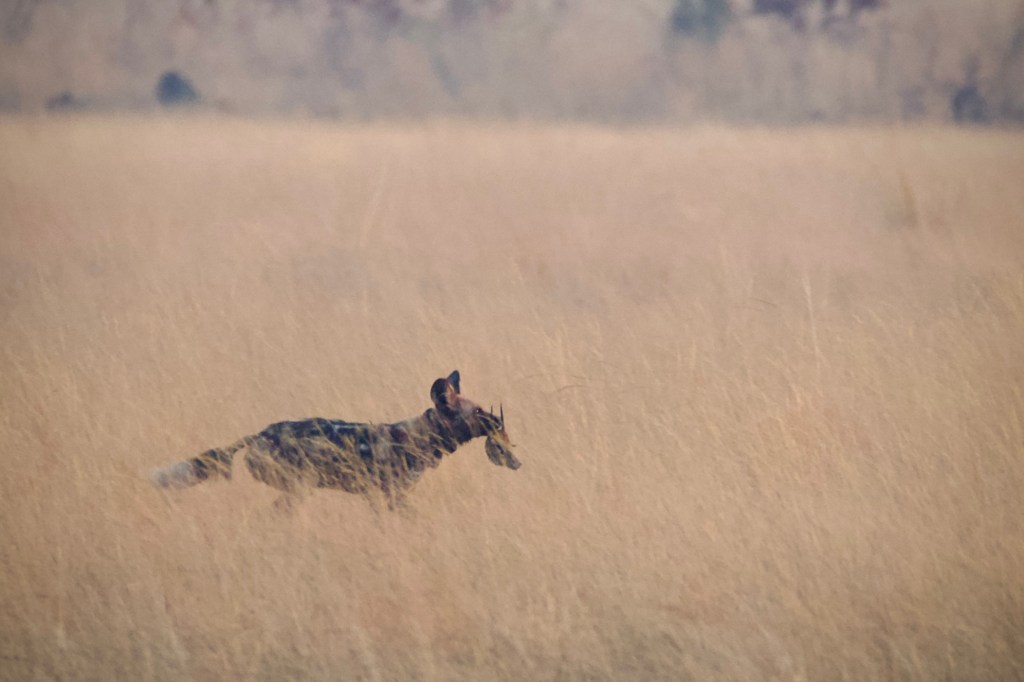
They took the woodland side road, so we headed left along the plains road. As we were moving west we spotted a dog far ahead in the distance. We raced forward, maybe 50km/h to get closer to the dog. It was purposefully crossing the road towards the woodland, and we wanted to catch one last glimpse. As we neared the first dog, more started emerging from the grassland to our left. They were heading directly towards the three South African vehicles in convoy, they were in for the sighting of a lifetime. Suddenly they started their engines and pulled away, we wanted to alert them to the wildlife just over their shoulder but there was nothing we could do. They drove away.
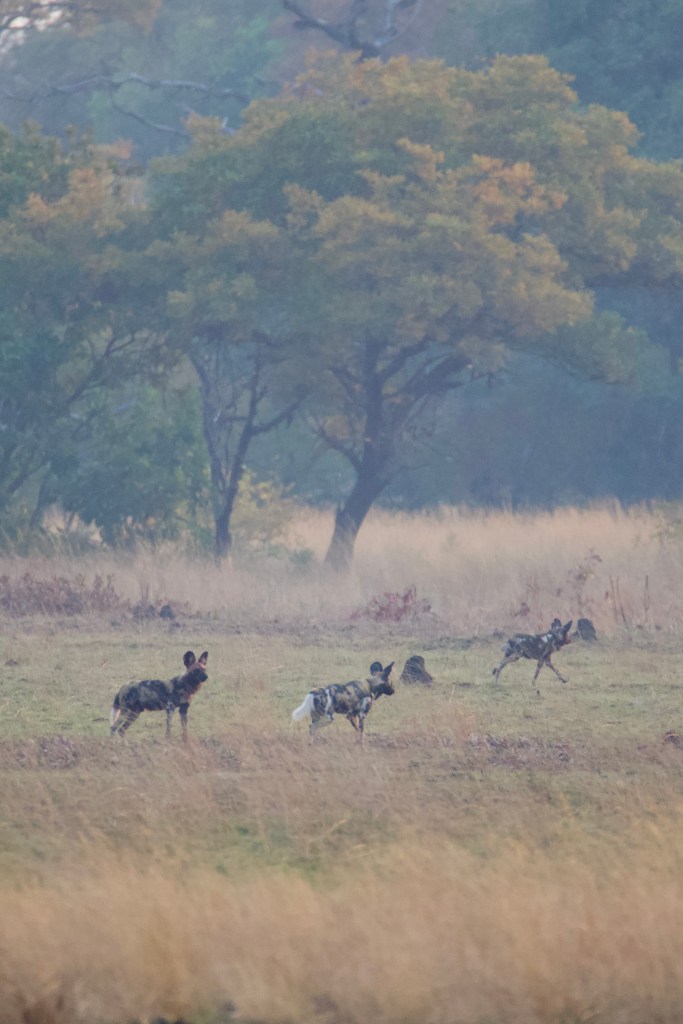
In total ten wild dogs crossed our path, many of them collared, all of them beautiful. One of the last dogs was carrying a piece of the prize of their oribi kill. She was proudly strutting back to the den with the head of the poor antelope, holding it up triumphantly by the horn. We watched the dogs slow file back into the woodlands where they returned to their den and to their newborn pups.
Three weeks later we would learn from Maurice, our friend at the ZCP, that the pups are doing well and had begun to feed on regurgitated meat. It sounds like the future for the dogs is bright.
We had a quite frankly unbelievably lucky time with the wildlife in Liuwa, and more spectacularly we had every sighting completely to ourselves. To see the wild dogs three times in three days, and to have lion sightings twice, was quite the thrill. Sadly the famous hyenas and cheetahs that Liuwa is so known for eluded us. Perhaps a return in the peak season from November to February is in order.
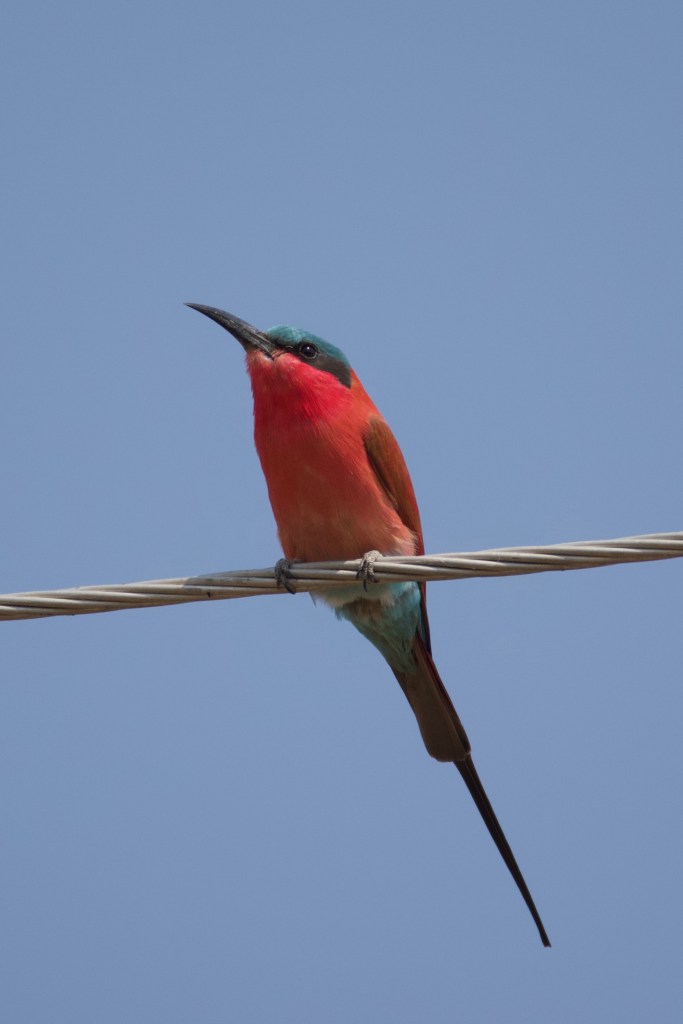
We exited the park via Kwale and did not once get stuck. Neither on the road back to Kalabo. Just before we reached the Luanginga bridges at Kalabo we spotted a familiar red bird sitting all alone on the power lines. A southern carmine bee-eater. We had not expected to see a single one of these beautiful creatures in our entire trip, for they migrate north into the Congo to escape the cold Zambian winters. This poor guy had clearly missed the boat, and was rueing his luck spending cold nights in single digit temperatures.
Back on the tarmac at the bridge we started to reinflate our tyres up to pressure. It was a quiet spot, in the bush away from the town. Suddenly people approached us from all directions asking for sweets, money and food. It’s a terrible situation that rural Zambians associate the presence of a white person with hand outs of sweets and money. In particular travellers should stop giving the children sweets, strangers giving out sweets would not be tolerated back home, it is not acceptable here. Of course these communities do rely on aid to an extent, and travellers will of course feel compelled to assist. It is however important that any donations are done discreetly and via the appropriate channels to avoid encouraging begging. There are many great foundations doing good work, and I’m not talking about the religious ones, they are also a stain.
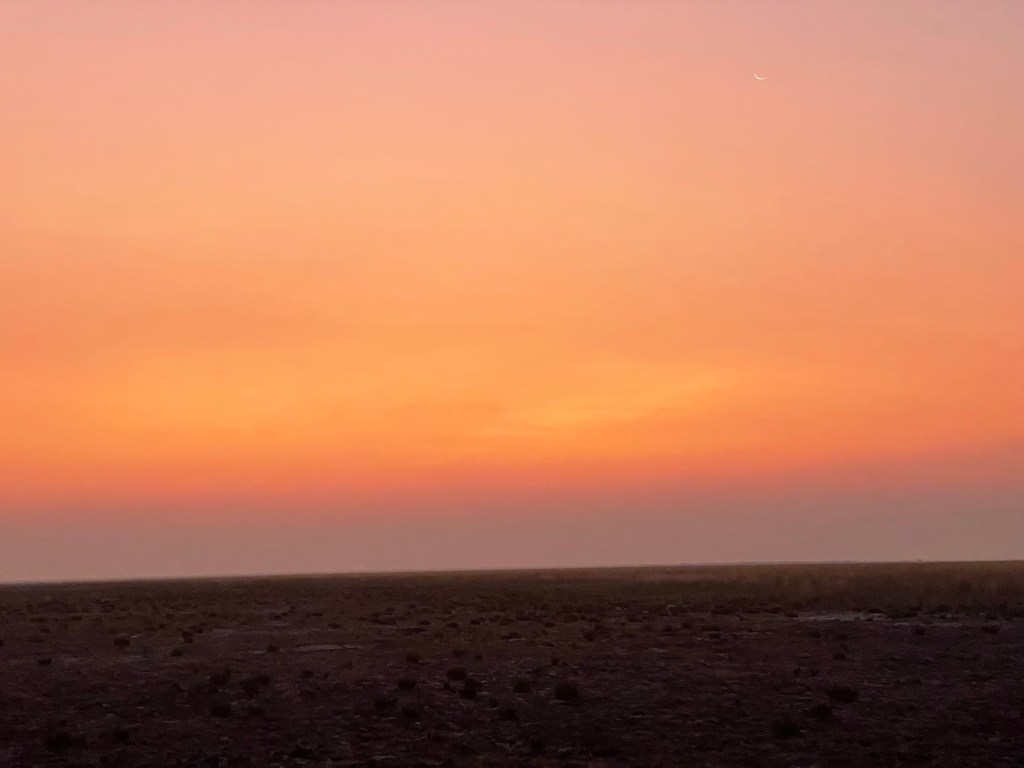
We returned to Mongu, driving over the incredible Barotse floodplain once more. Many people were using their donated mosquito nets to fish with. From the top of the hill we saw the sunset over the endless valley and reflected n a great trip to Liuwa plain.
Wildlife:
Wild Dogs x10
Carmine bee eater at Kalabo
Distance: 134km
Cumulative Distance: 3,839km

 Small Holiday Big Dream
Leave a comment