Last year we whizzed through the Caprivi Strip in a couple of days. We needed to spend more time here. A finger of Namibia pointing towards the middle of Africa, the Caprivi strip is named for the German chancellor of the day. Britain traded Heligoland and a small slice of the Bechuanaland protectorate for the strategic island of Zanzibar, a terrible deal for Germany.
Nowadays it’s the part of Namibia with a more African feel. Lining the roads are villages with the small circular huts. People strolling up and down the only road with goats, donkeys and cattle being a 24 hour hazard.
Over the border to the south in Botswana is some of the most exclusive and expensive safari land in the whole of Africa. A handful of km to the north is Angola and it’s uninhabited and seldom visited wilderness. The Zambezi region of Namibia is a contrast, relatively densely populated region. Consequently the wildlife suffered, so the national parks are a little behind in terms of wildlife density. Nevertheless it’s a region full of promise.

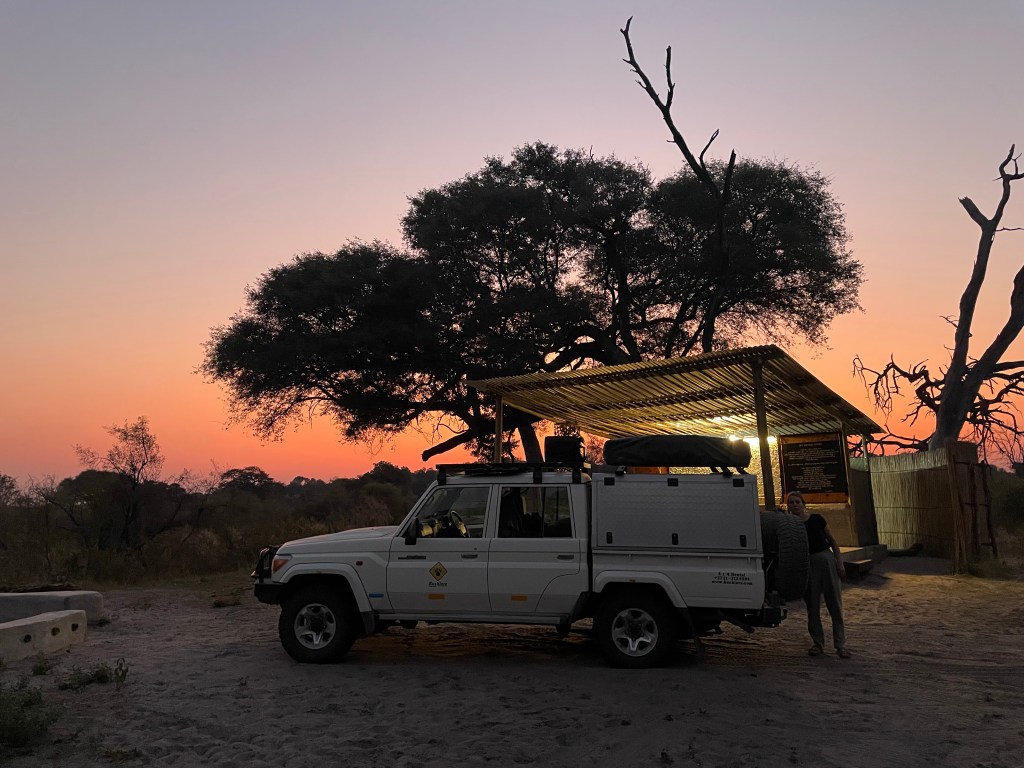
Kwando Core Area
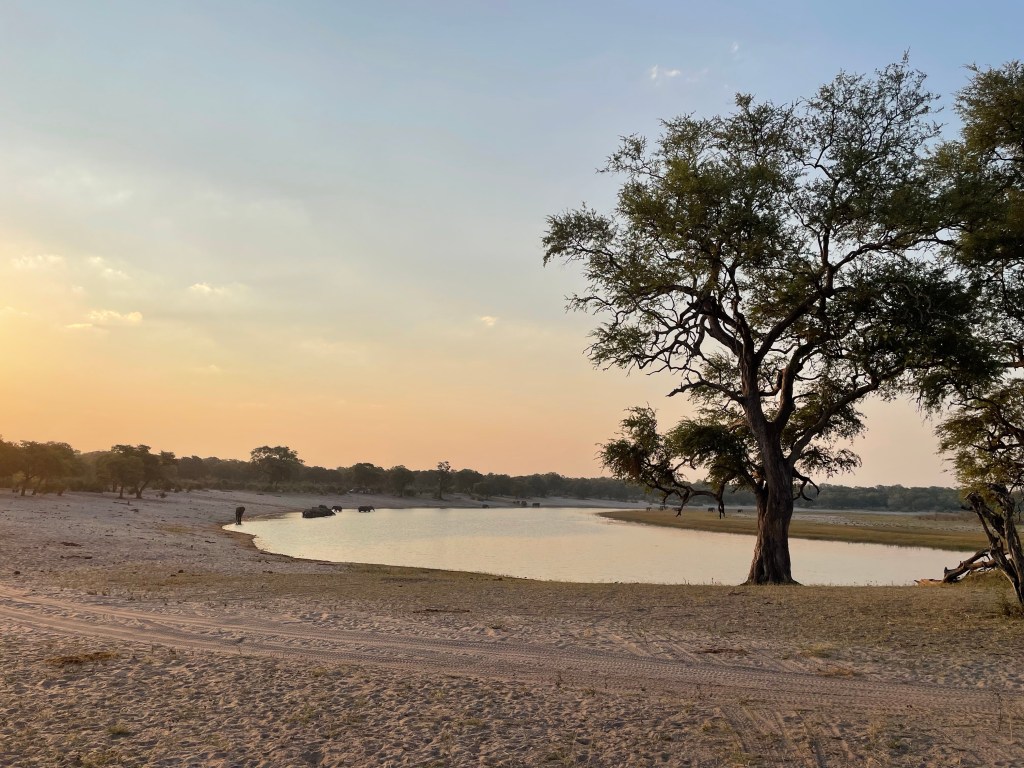
The ‘horseshoe’ is a spectacular ox bow lake on the western edge of the Kwando flood plain. It is also the sandiest place known to man.
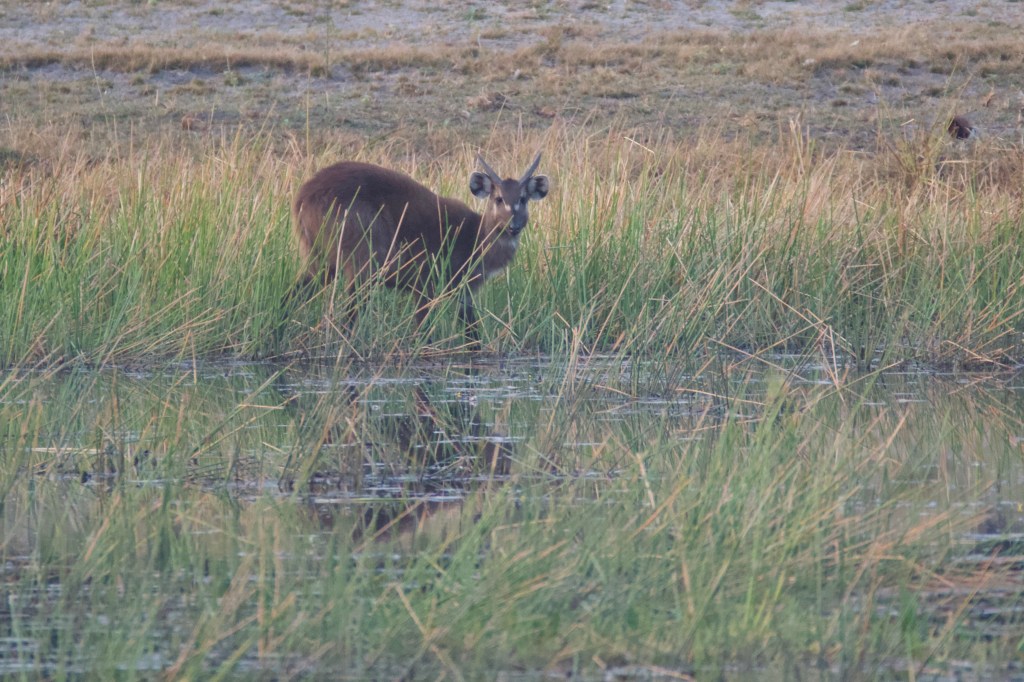
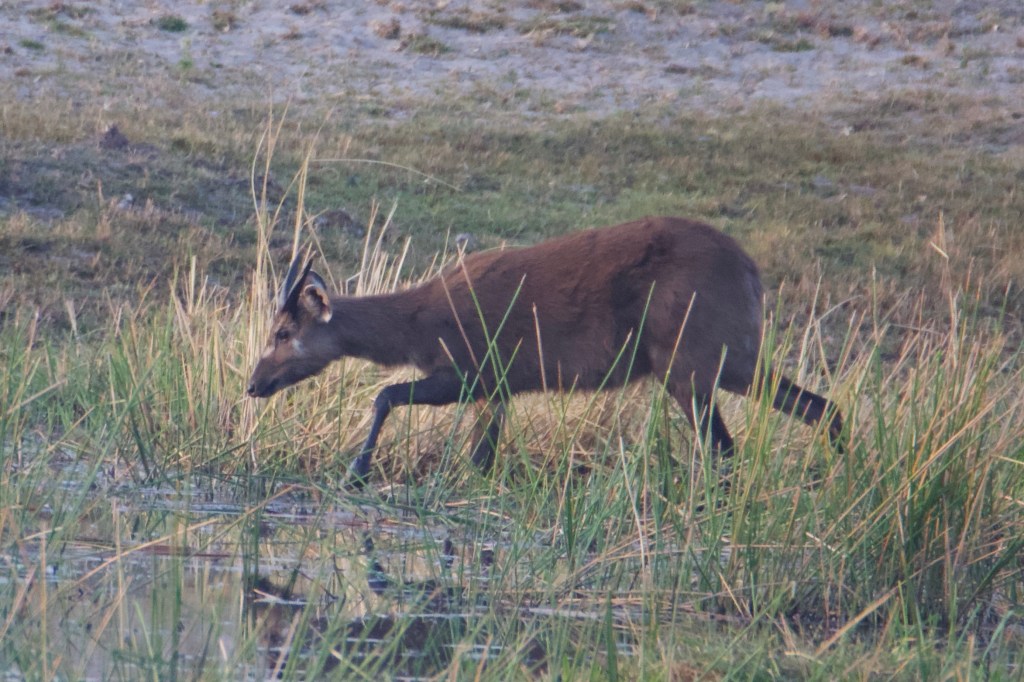
As it is the feted destination in the Kwando core area, we headed to the horseshoe at sunrise to check out the wildlife in the area. A small herd of Red Lechwe were grazing on the opposite bank and, to our surprise, so were three dark brown sitatunga. Still one of the rarest antelope to catch sight of, here we were seeing them again in short order. The sitatunga really really love water, and these guys were happily grazing knee deep amongst the reeds on the side of the lake. Soon, they spotted our presence and melted back into the trees on the far side.
The rest of the horseshoe was quiet so, after a cup of tea enjoying the view, we headed further south to see what we could find. Along the riverfront, near an area known as ‘survival’ the familiar sight of fresh lion tracks greeted us. There was also that familiar sense of failure which accompanies a couple of hours searching but without luck.
We stopped for breakfast overlooking the Kwando river, as the herds of lechwe on the opposite bank grazed peacefully, and curiously harassed a passing saddlebill stork. A martial eagle sat still in the very top of a tree nearby. He was motionless as we passed below, staring us down with his fierce yellow eyes. The largest eagle in Africa, he looked every bit the part. On our return journey to camp we caught a brief glimpse of a sable heading into the woodlands, too quick to get a photo, but a majestic antelope nevertheless.
Part of the difficulty of being on safari is finding the time for everyday chores. When staying two nights in the same place there’s often a lull in the middle of the day, when the temperatures are hottest. It’s a perfect time to catch up on all the things needing to be done. Washing clothes by now was pretty imperative, and finding somewhere to hang them all up required some innovation. Cleaning the car windows and brushing the grass seed off the radiator also took time, but was pretty crucial for a good game viewing experience. As was making sure the tyres are at the correct pressure.
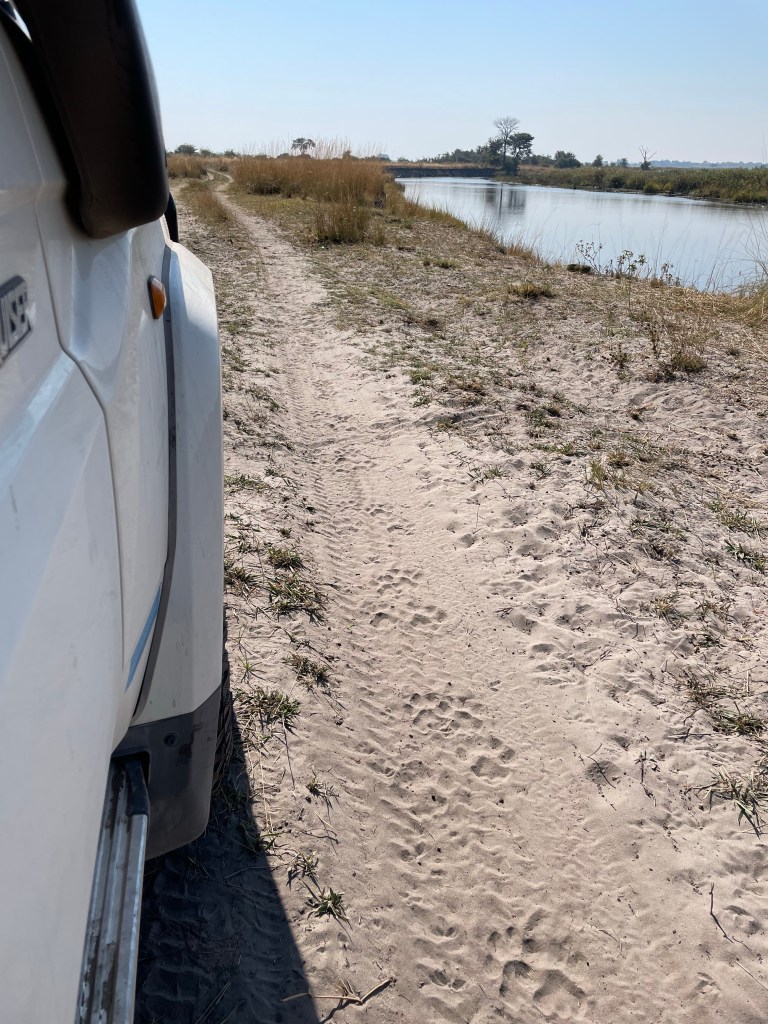
We headed back towards the horseshoe in the evening. Immediately after leaving the first viewpoint there was a deep patch of sand. We became pretty hopelessly stuck. Digging out a car is never fun, and certainly not in the late afternoon sun, but the digging worked and this time no winch was required.
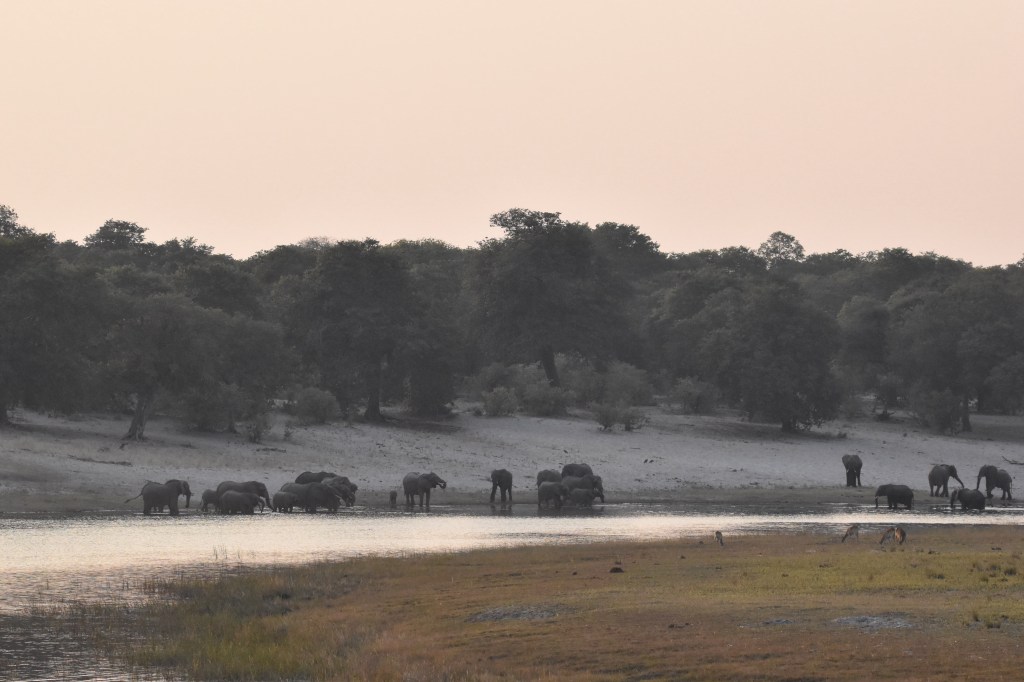
Many herds of elephants come down to drink at the horseshoe in the afternoon. So many in fact they don’t really allow any space for any other animals. We made it around to the far side of the horseshoe, between the herds of elephants, mercifully without getting stuck. The elephants came fairly close, but were at least very relaxed about our presence.
Night was very peaceful and we heard nothing. However in the morning we noticed a hyena had come to investigate the ashes of our fire. No doubt hunting for any stray pieces of boerewors. Frustratingly this was the first night I had not set up the motion detection camera, so we have no more proof than the footprints in the sand.
Wildlife:
Sitatunga
Lion tracks
Martial eagle
Sable
Elephants
Distance: 51km
Cumulative Distance: 2,712km





Crossing the Kwando
Crossing the Kwando
Despite feeling like an excellent safari area, yet again we saw precious little on our morning drive. By this point we had been leaving earlier and earlier before sunrise in order to catch a glimpse of something interesting.
For those unfamiliar with the ways of a safari. The best time to see any wildlife, and especially carnivores such as cats, is just before sunrise, and just after sunset. This is when things are most active. Most parks prohibit self-driving in the “dark”, and some define this more tightly around sunrise and sunset. In order to catch wildlife at its most active, you generally need to be at a point of interest at this time. Somewhere like a waterhole, or hunting area. Campsites are generally sited away from these points for fairly obvious safety reasons. Driving as early as possible in the morning (within the rules of course) is the way to go.
And yet still nothing.
To top it off we got stuck in the sand. Down a very infrequently used road, very close to the Botswana border. No amount of digging could get us out. Once we were firmly resting on the differentials we needed a different tactic. We employed the winch. Wrapping the tow strap three times around a nearby tree, we connected the winch hook and crossed our fingers. Miraculously the car came out of the sand with very little effort. In the process of feeding the winch back in, Mike sliced his and open on a rogue wire sticking out of the cable. Lesson learnt, don’t feed the cable back in to the winch. The cut was deep, but small and clean, and healed within a few days.
Kongola is the village near the park exit, just over the only bridge over the Kwando river. It has all the trappings of a small town. A petrol station, an ATM, and a small craft market. We succeeded in getting some Namibian cash for the first time, and spent most of it on souvenirs from the Mashi craft market. Many places take card anyway, both Namibia and Botswana have excellent payment facilities, they will hand you the green FNB card reader before you’ve even said how you want to pay. Cash is still useful for buying firewood though.
We headed south to Rupara Rest Camp just outside the Nkasa Rupara National park. Here they have three lovely private campsites overlooking a mostly dry riverbed, and once again private ablutions. (Ablutions meaning shower, washbasin and toilet)
Wildlife:
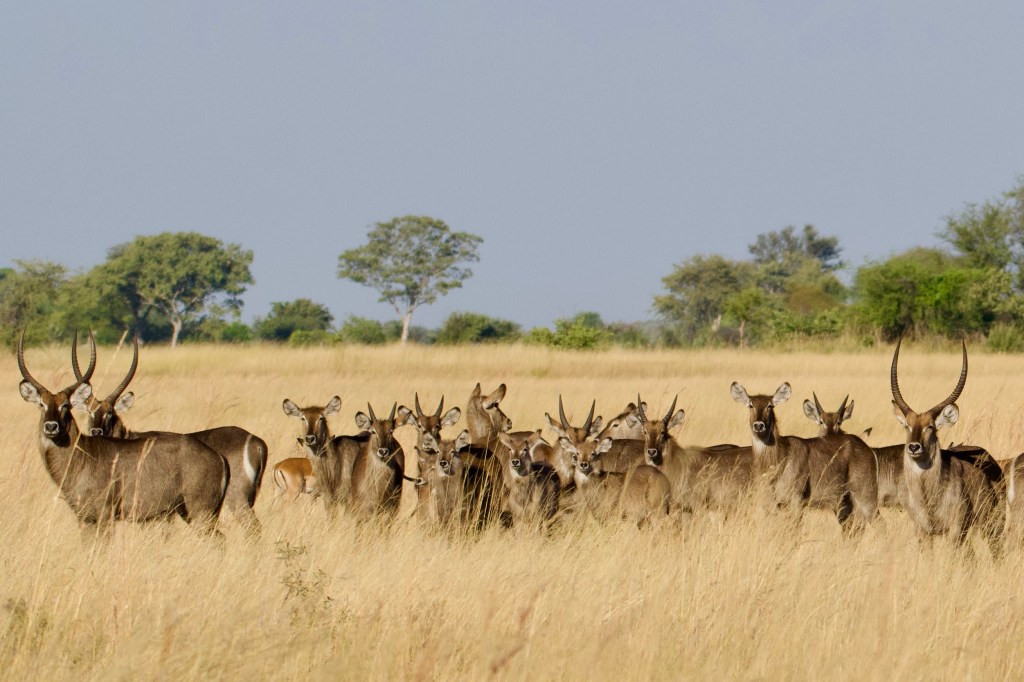
Large herd of waterbuck
Distance: 133km
Cumulative Distance: 2,845km



Nkasa Rupara NP
Nkasa Rupara National Park is Namibia’s answer to the Okavango delta. The small triangular portion of the country, at the southern tip of the Zambezi region, is home to the Kwando swamps. Here the Kwando river, after making its way from the Angolan highlands and southwards across the caprivi strip, floods the grasslands in a delta reminiscent of the more storied delta further west. At the foot of the swamps the floodwater is swept up by the renamed river, the Linyanti heading northeast, another famous name familiar to Botswana Safari goers. Across the linyanti from Nkasa Rupara there are some of the most prestigious safari lodges in all of Southern Africa, Kings Pool, Selinda, Kwando Lebala, all commanding $1000+ pppn. Further downstream still, finally this waterway becomes the yet more renowned chobe river before emptying into the Zambezi at kazungula.
The thing is though, the swamps are dry. The flood failed last year, and the rainfall has been so pitiful this year in both Namibia and the Angolan highlands that the flood has failed again. The national park is dry, all the way down to the linyanti riverside.
We entered the park at a smidge before 7am. The gates were locked, but our arrival must have woken the staff as they hurriedly came to let us in. Not many people seem to visit, let alone at sunrise, in the park we were the only self drivers we saw, although we did see a couple of game viewers from the lodges adjoining the park. Success had been limited for all by the time it was time for a tea break.
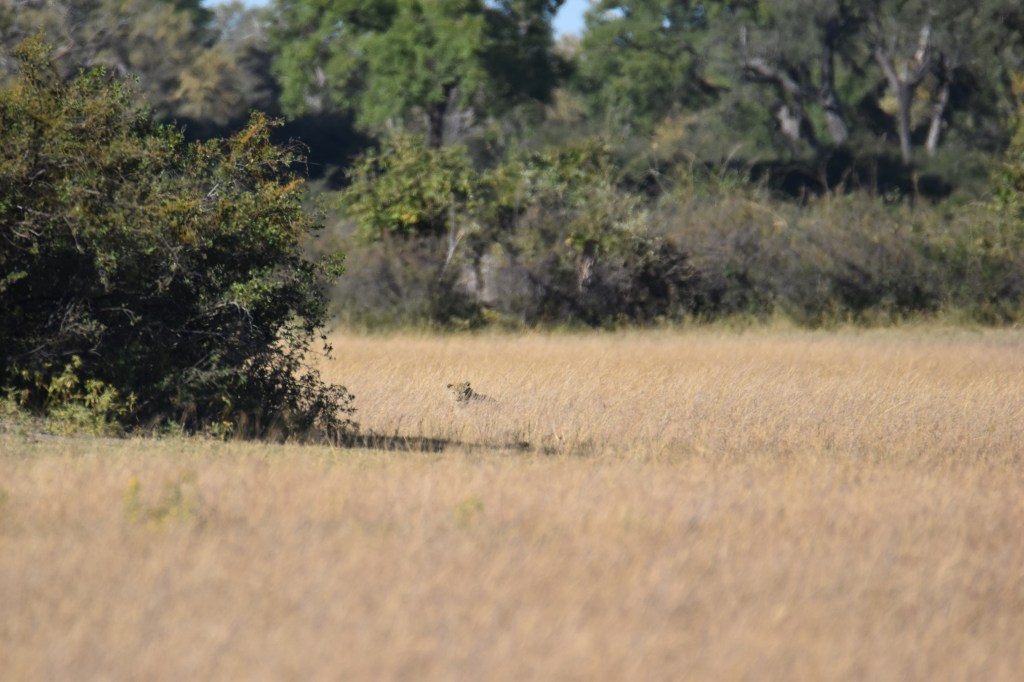
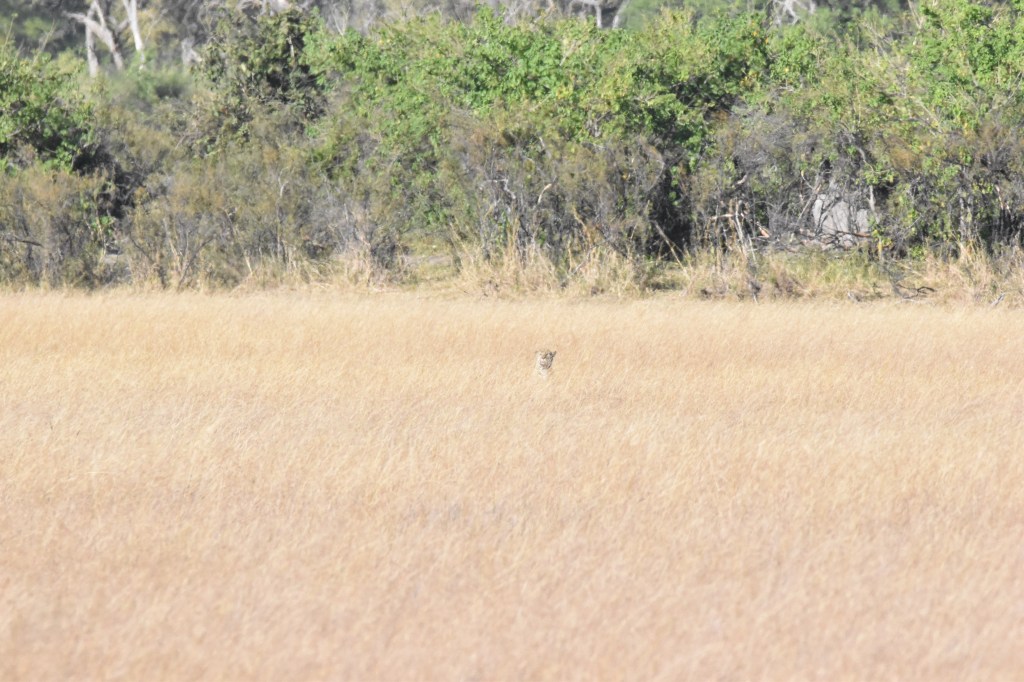
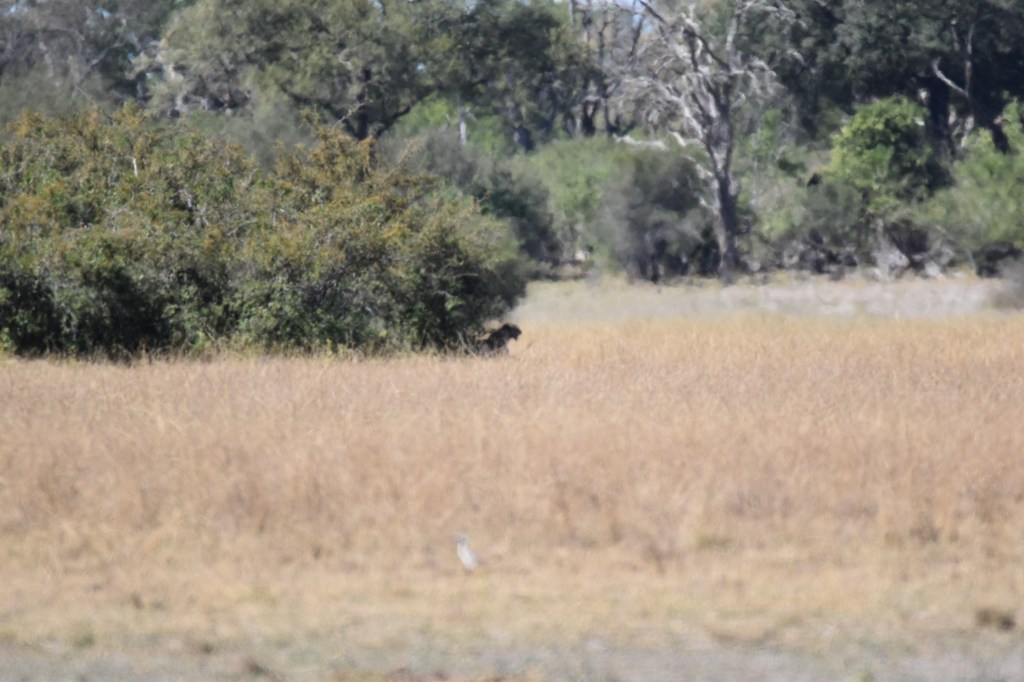
As we headed down to the riverside for a cuppa, Sarah spotted something next to a thicket on our right. A leopard! Immediately he slunk back into the cover. We circled the thicket but could not see inside, so retreated a couple of hundred metres and watched.
Incredibly the leopard reemerged, and began to make his way across the grassland toward another thicket when he froze. He had clocked us again. He dropped to the ground out of sight, and yet still made good progress out into the open. For some reason he stayed out in the open for a good hour, until it was far too hot for a leopard to be out. He crawled his way back to the thicket, mostly out of sight, but occasionally popping his head up to check on us. We resolved to check in on him later.
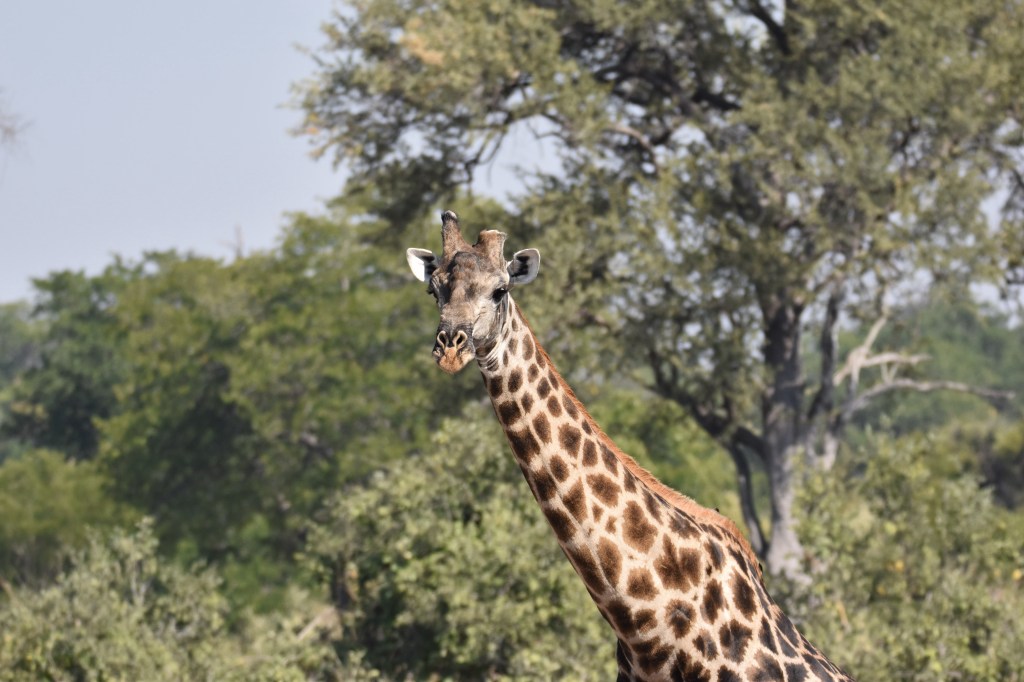
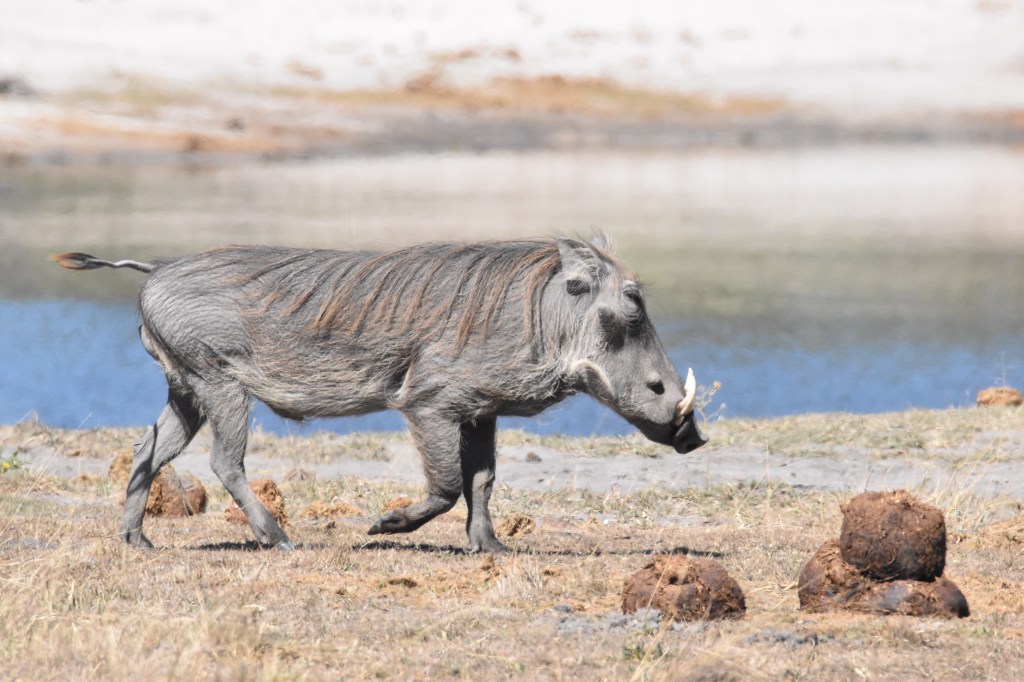
Overall the park exceeded our expectations. Despite its promising location, good reviews of the region had been fairly scarce. Sandwiched between two live-giving rivers, the Zambezi region is one of the more populated areas around, and therefore the wildlife has suffered in the past. We were pleasantly surprised by the amount of game in the park. There were large herds of Red Lechwe and Impala, and the occasional her of zebra. We saw a few small clusters of Puku, rare this far south. There were many warthogs, by far the most abundant and busy creature in the park, there were easily mistaken for something else in the long grass, their low profile looking almost cat like.
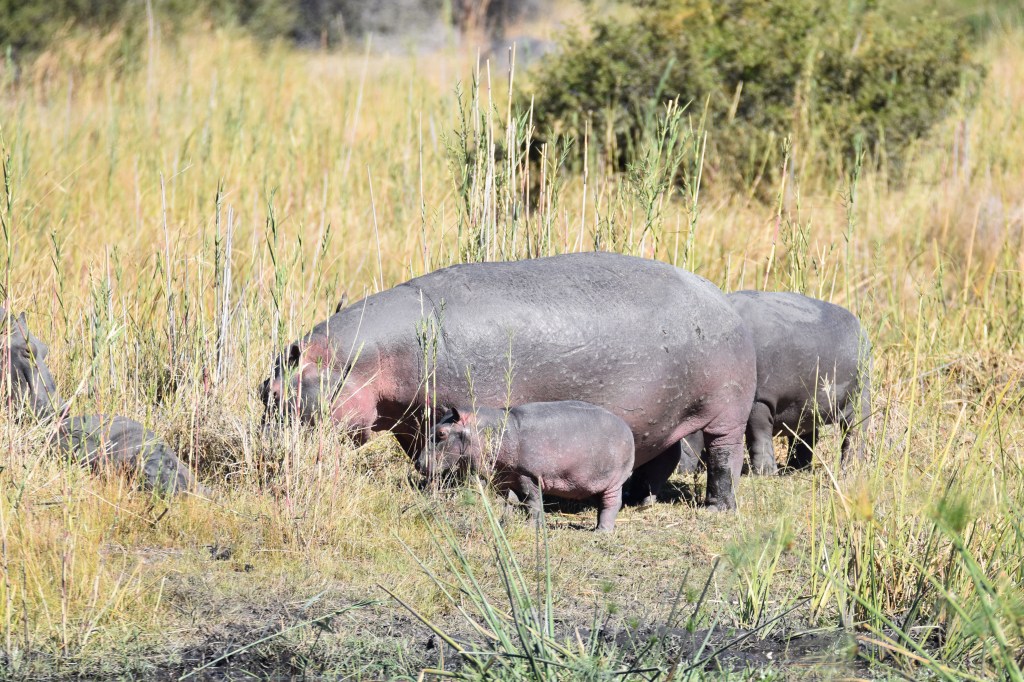
Down by the riverside there were pools of hippo. Although concerningly many were out grazing in the midday sun. Usually hippo should be spread out in the swamp, but the lack of water means they’re all at the river at the moment. In the afternoon, like clockwork, the elephants came down to the water to drink. Large groups emerged from the forests on the Botswana side. Fewer elephants weee in the Namibia side, however there were still plenty, plus crossing the river is no issue for an elephant.
As we were searching for the leopard again in the late afternoon sun, a large herd of elephants emerged from the copse to the left of our car. Only a few metres away, they treated our car with great caution. Some elephants were more alarmed than others. A young male in particular was unimpressed, but also scared of us. Once he’d rejoined the herd at the next thicket, he wheeled round and gave as a two step mock charge and trumpeted. He dared not get any closer.
Heading towards the exit of the park we came across a hippo grazing on the grass in the afternoon sun. This is very odd behaviour for a hippo. They sunburn easily, and graze at night to avoid the heat. This hippo was a good 400m from water already, meaning he must have been out in the sun for some time. Our presence clearly rankled, and he charged back towards the water. Hippos can move very swiftly, and are one of the most dangerous animals in Africa, especially if you get in their way. This guy had no intention of stopping, but fortunately we were well out of his path.
We left the park content with a full day of driving.
Wildlife:
Leopard
Warthogs
Elephants
Red Lechwe
Puku
Hippo
Wattled cranes
Distance: 71km
Cumulative Distance: 2,916km





- The infamous Binga-Karoi road
- Mana Pools: A bucket list location?
- Camping Among Lions: Chitake Springs Experience
- Chirundu: The worst border in the world
- The Wild Dogs of Jeki: Sunrise in Lower Zambezi
 Small Holiday Big Dream
Leave a comment