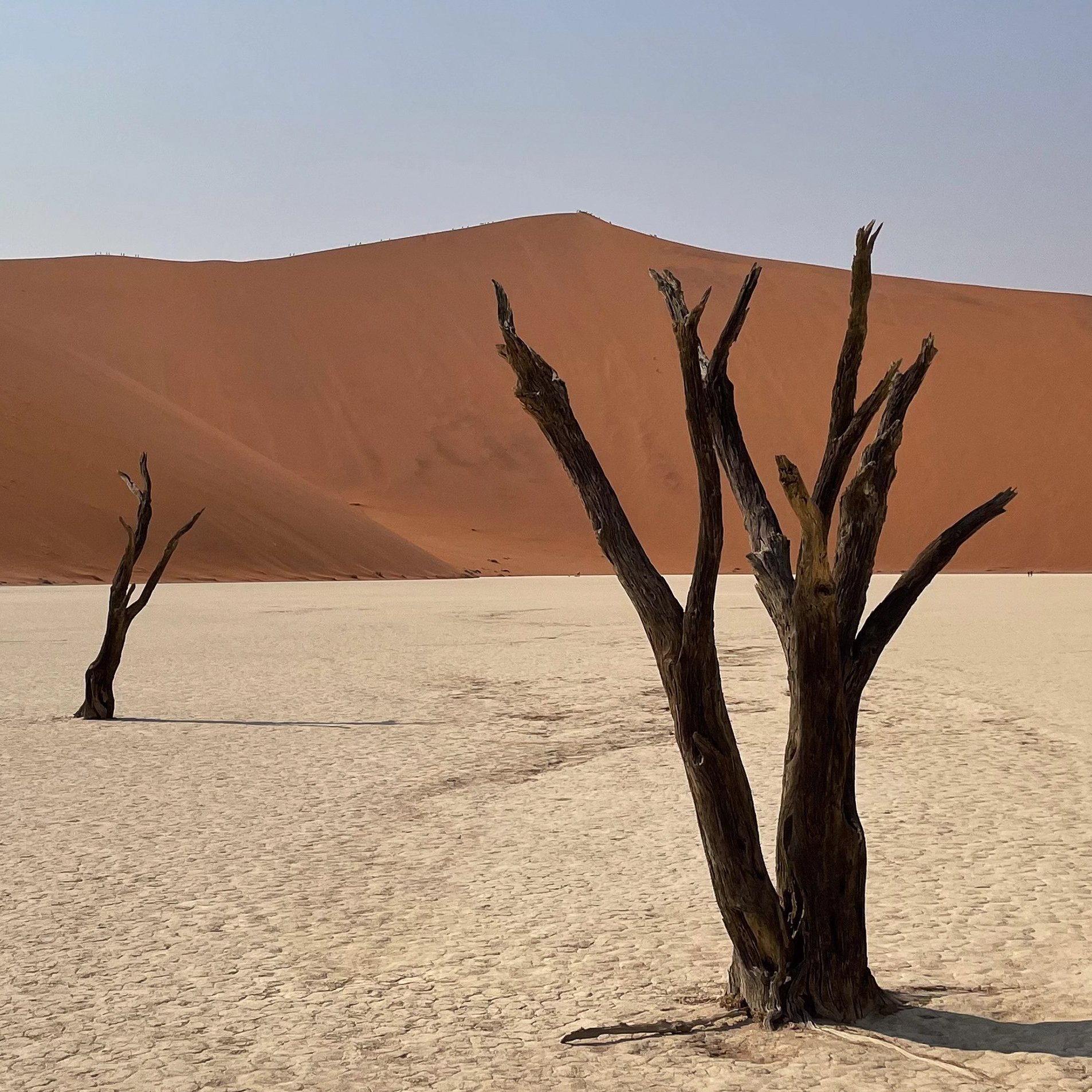
Our journey took us around the western side of the Okavango delta and out into Namibia at the mohembo border. The less visited side of northern Botswana. We shall return via Chobe and Moremi later in the trip.

Makgadikgadi National Park
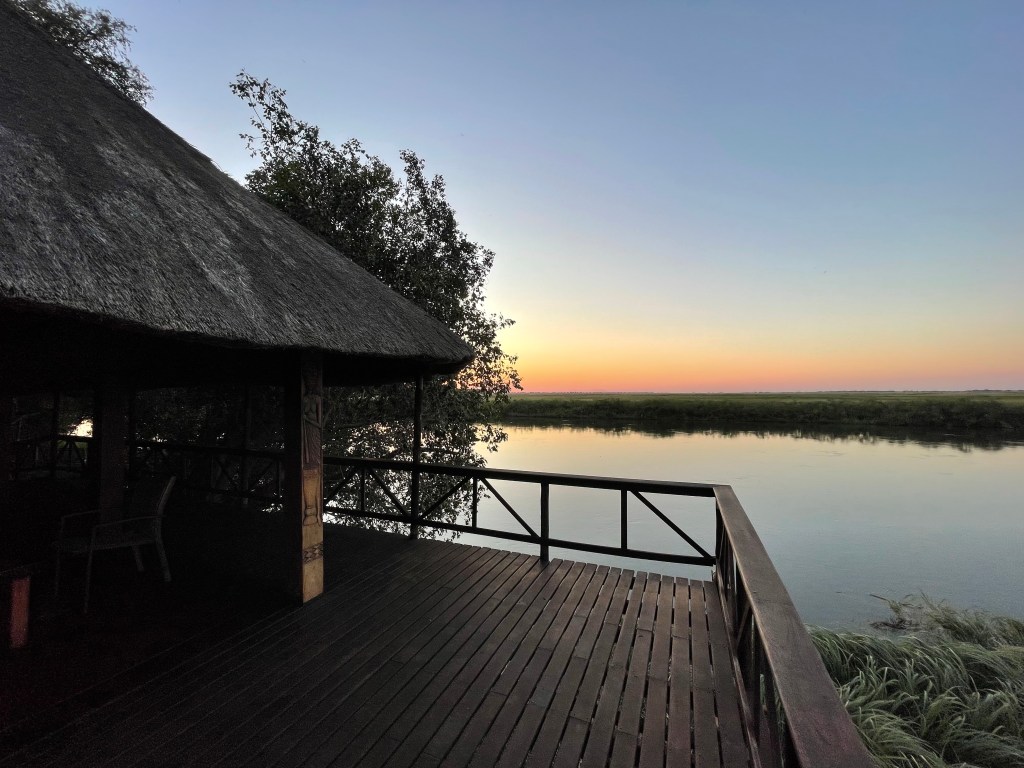
Camelthorn Farmstead is a beautifully kept campsite run by the delightful Theo and Marnie. Centre stage is a deck overlooking the Boteti river and the Makgadikgadi National Park. Wildlife viewing is easy here.
The Boteti river has been gradually drying up for an over the last ten years. It is the continuation of the Thakalamane river in Maun, and where surplus Okavango delta water ends up should all the adjoining pans and channels fill up. An exceptional flood is required for this to happen, and it did in 2009, after which the river flowed for several years. In 2020 during Covid, the flood reached the foot of Camelthorn’s deck, but sadly with no visitors around to see the spectacle. 2024 has been exceptionally dry, although the flood is yet to reach Maun, it almost certainly won’t reach much further than that when it does arrive.
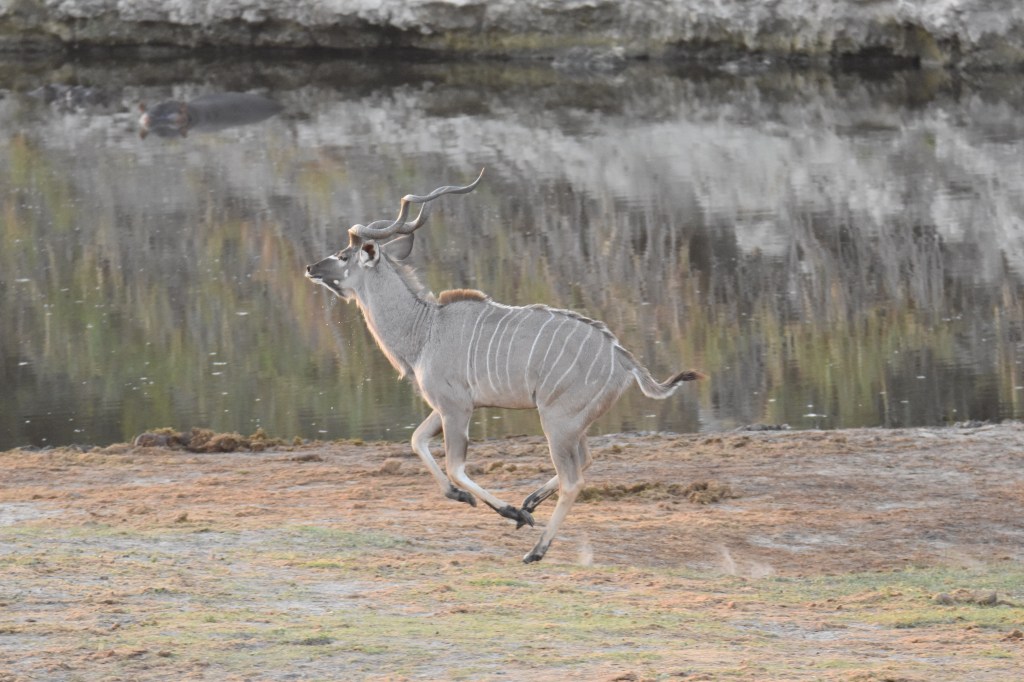
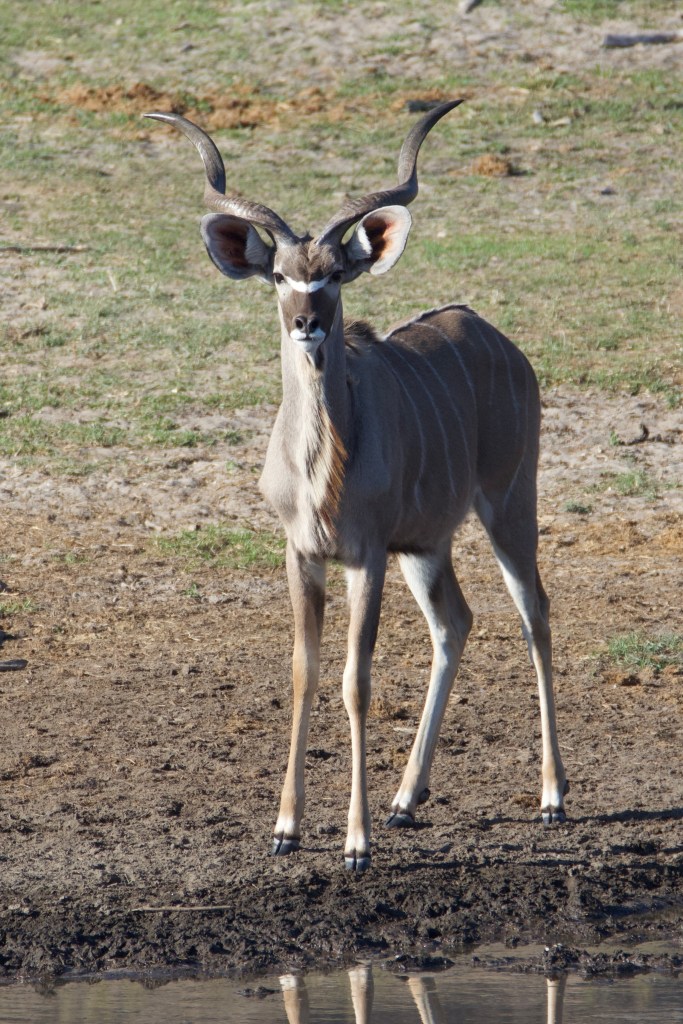
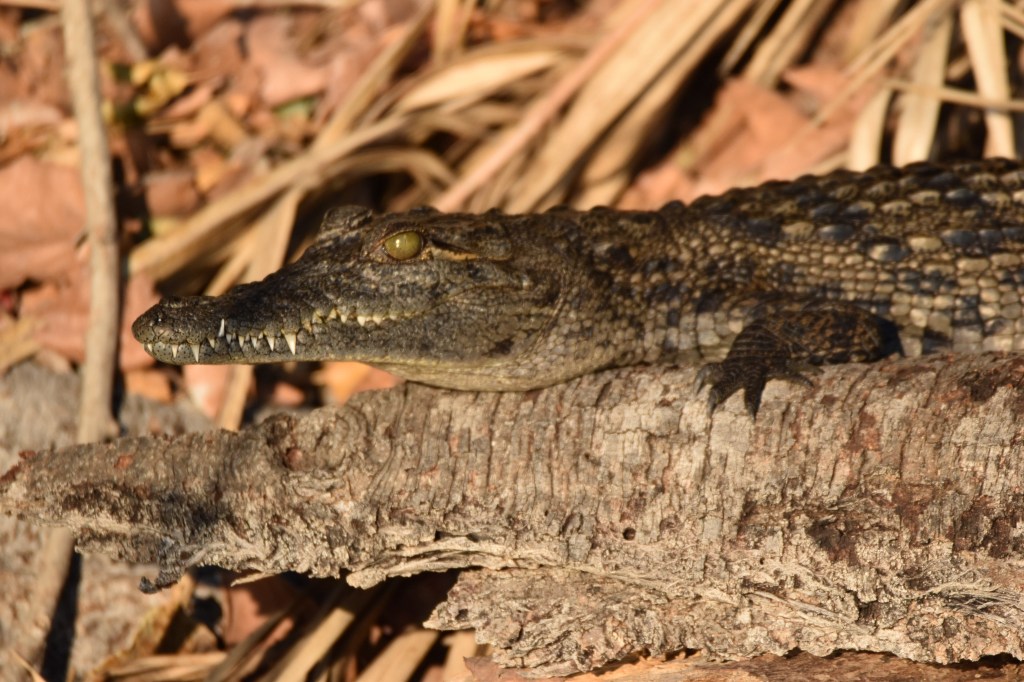
Opposite Camelthorn’s deck is the eastern bank of the Boteti river. An imposing 10m high wall of sand and rock carved by the river. At the foot of the bank is a large waterhole, home to a large pod of hippo and a whole load of crocodiles. During the daytime the waterhole is visited by an array of animals, we saw Kudu, Impala, Wildebeest, Elephants, and of course Zebra. More on the zebra later.
We saw in the sunrise in the deck and then set to work on our admin. The main task was hand washing all our clothes, but there were other chores to do, such as filling and filtering our water supply, re-inflating our tires, sorting out the food drawer etc. A thrilling morning.
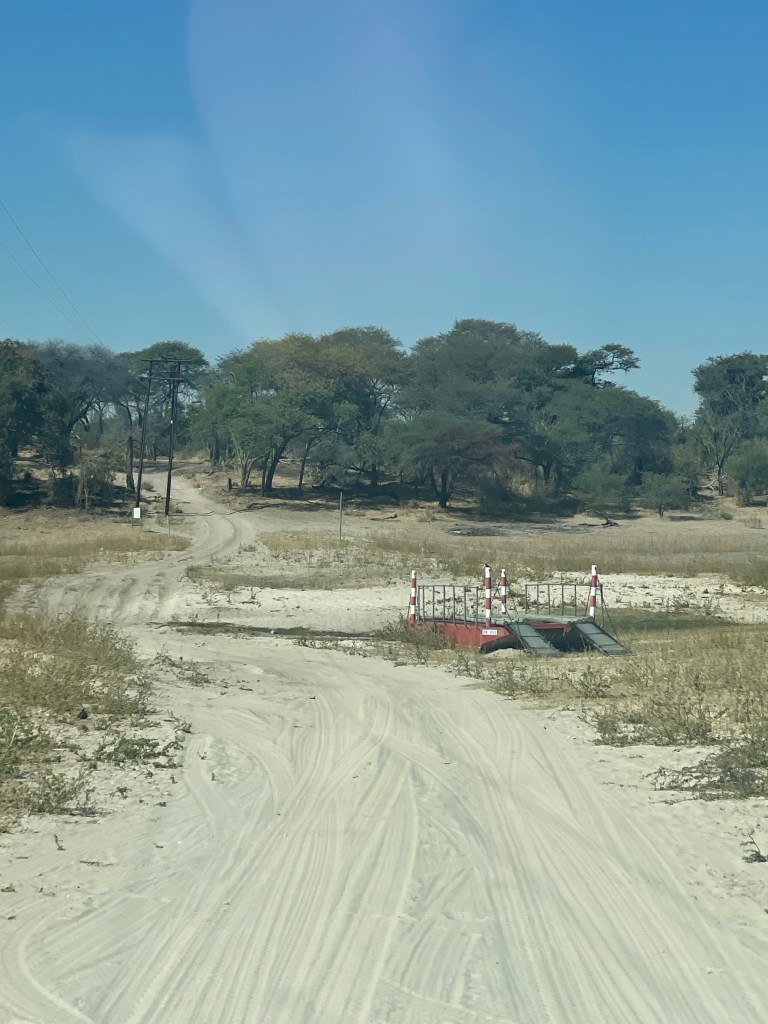
After noon, we headed to the National Park. The park gate was 20 minutes south of Camelthorn in the village of Khumaga. Here the locals run a ferry across the river to reach the reserve. Said ferry is currently resting on the dry and dusty riverbed and we drive right past it.
Another 20 minutes driving north on the sand roads in the national park, and we were on top of the eastern bank of the Boteti river, overlooking the Camelthorn Farmstead. The same hippo and crocs are in the pool below. Perhaps entering the park was a waste of £30 and we could have saved all the hassle and stayed in the shade on the other side of the river. This was not the case.
At the next viewpoint we could see a whole swath of the dusty green valley floor, and what we saw was magnificent. Thousands upon thousands of Zebra all grazing the valley floor and drinking from the few pools of water. Amongst them what looked like small islands of elephants, hogging the best water as per usual. Wildebeest and Impala roamed between the herds, but the zebra outnumbered the very everyone ten to one.
Further along the riverbank the track plunges down to the riverbed, and here we drove along slowly creeping our way through the different groups of zebra. Often the startled zebra would canter off out of our paths, and occasionally screaming in their unique way. If you’ve never heard a zebra it sounds nothing like you would imagine, it’s halfway between an ice-cream van jingle and an ambulance siren, combined with the timbre of a rusty gate. You would never believe it when you first hear it.
At one point Mike managed to get the car stuck in the deep sand, it was fairly deep, but not in an un-rescuable position. Just as we got out our shovel and started digging, of course a Safari vehicle comes around the corner. It also happened to be a vehicles already met, all the way over at Letiahau in the CKGR. Chris, the ever helpful safari guide from Maun, offered to tow us out and we politely accepted. Embarrassed, we continued our drive, but drove much more aggressively in the deep sand from then on.
We returned to camelthorn in time for sunset. The hippos, like clockwork, left their pool to come out and graze. A good number of them slipped under the national park fence and down towards the village where the grass is clearly greener.
Wildlife:
Zebra
Kudu
Elephants
Hippos
Crocodiles
Distance: 40km
Cumulative Distance: 1,735km








Maun
Maun is the epicentre of Botswana’s tourism industry. Many of the most exclusive and expensive African safari experiences begin and end at the airport here. As such this is the first place in a while where our arrival in a rooftop tent equipped 4×4 didn’t turn heads. Only an hour and a half from Camelthorn on the Boteti River, today was our shopping and stock up day.
First we went for some creature comforts. Lunch at the Dusty Donkey, where a chicken and avocado sandwich, or a cheese and spinach quiche is the norm. Somehow we yet again bumped into Chris the safari guide from Maun. We had first met him and his clients down at Letiahau in the CKGR, and again when they towed us out of our sand hole in the Makgadikgadi National Park. The surroundings this time were more genteel and relaxed.
Maun itself is booming. There are now multiple sets of traffic lights and a new mall. Traffic is starting to become a problem, as the population grows rapidly. We spent over 2,000 Pula in the Spar and the mall on food and drinks, we also bought some new camp chairs, a vacuum flask, a tyre pressure gauge, and some more pillows. Squeezing everything into our car looked to be a challenge, but there is ample capacity in the cruiser.
Airbnb messed up our booking, so it briefly looked as though we wouldn’t get our one night in a bed for the next 5 weeks. Fortunately things were solved in a batswana way. Several phone calls, nothing really solved, but an agreement that we could stay the night in the adjacent apartments. They were adequate.
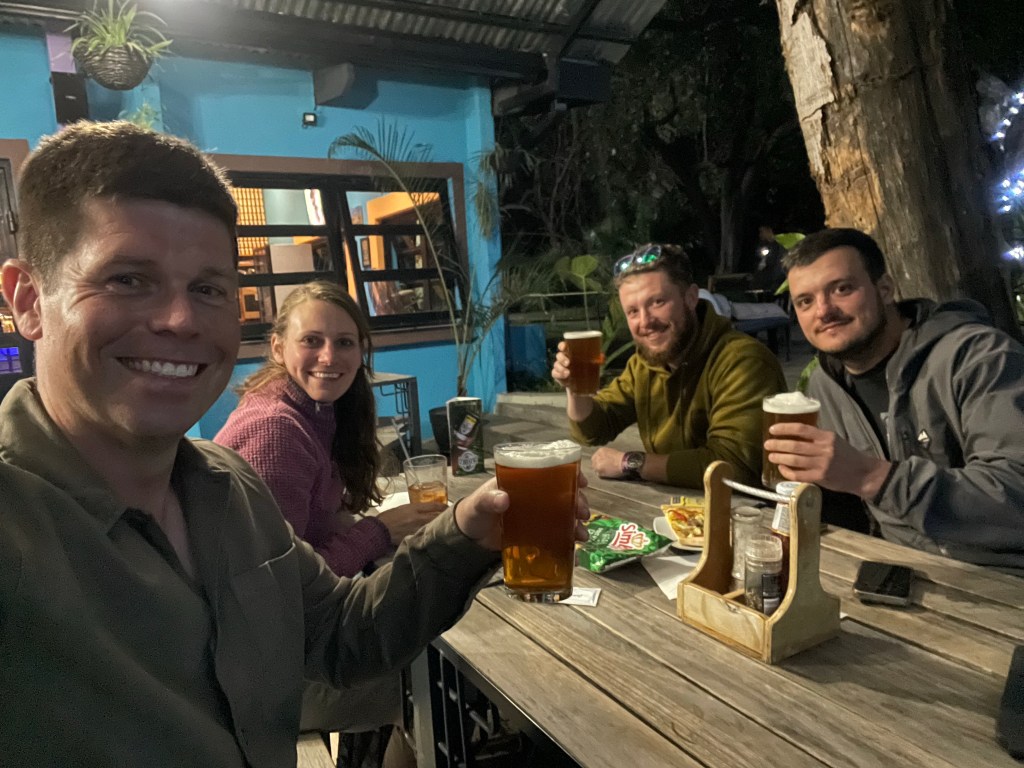
The Okavango brewery brew some decent beers and have some average food on offer. Exactly the sort you’d expect from a brewery. It was a perfect place to meet our Czech friends Dan and Milan for a catch up. They had spent two more days in the CKGR whilst we were at Boteti river. Before we left them we suggested they take a night away from the deception camp at Letiahau, and we gave them some pointers of tracking lions. We were keen to see what they had found.
Before meeting they had text us “we owe you a dinner”, which made us nervous. If they had managed to track down those damn Sunday pan lions we’d be annoyed.
The pair bounced into the Okavango brewery. Whatever they’d found it had clearly made their trip. They had camped at Letiahau as we had told them to, and set up at the waterhole before sunrise, waited there for hours, and saw nothing. But on their return to camp they spotted three cheetahs on a freshly killed springbok barely a couple of metres from the road. Their pictures are among the best I’ve ever seen.
Wildlife:
camelthorn waterhole, hippo, elephant, kudu
Distance: 173km
Cumulative Distance: 1,908km
Western Panhandle
Western Panhandle
From Maun, most tourists head to the Okavango delta, north of the town. Few will head south tho the Kalahari, or east to the Makgadikgadi and Nxai pans. Many will head north east to Moremi, Khwai, and Chobe. Every single one of these destinations is an epic choice for safari. Barely any tourists head west.
Our destination was Drotsky’s Cabins near Shakawe right up on the border with Botswana, on the western bank of the Okavango river. This area is known as the western panhandle, the place where the river begins to spread out into the Okavango delta.
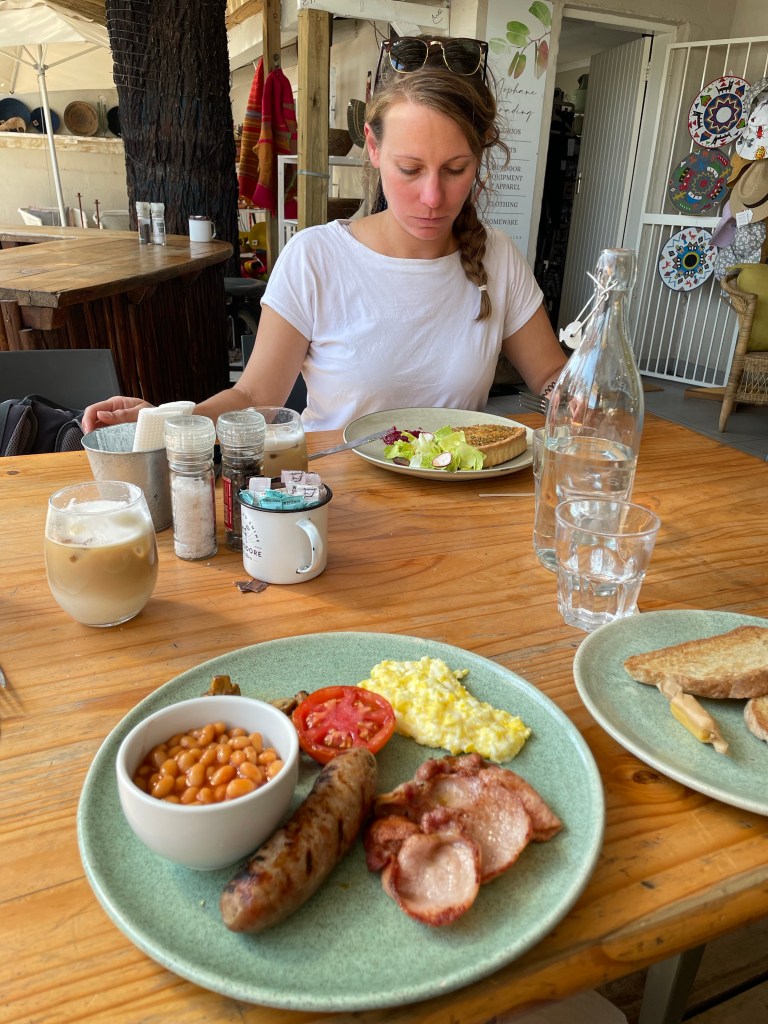
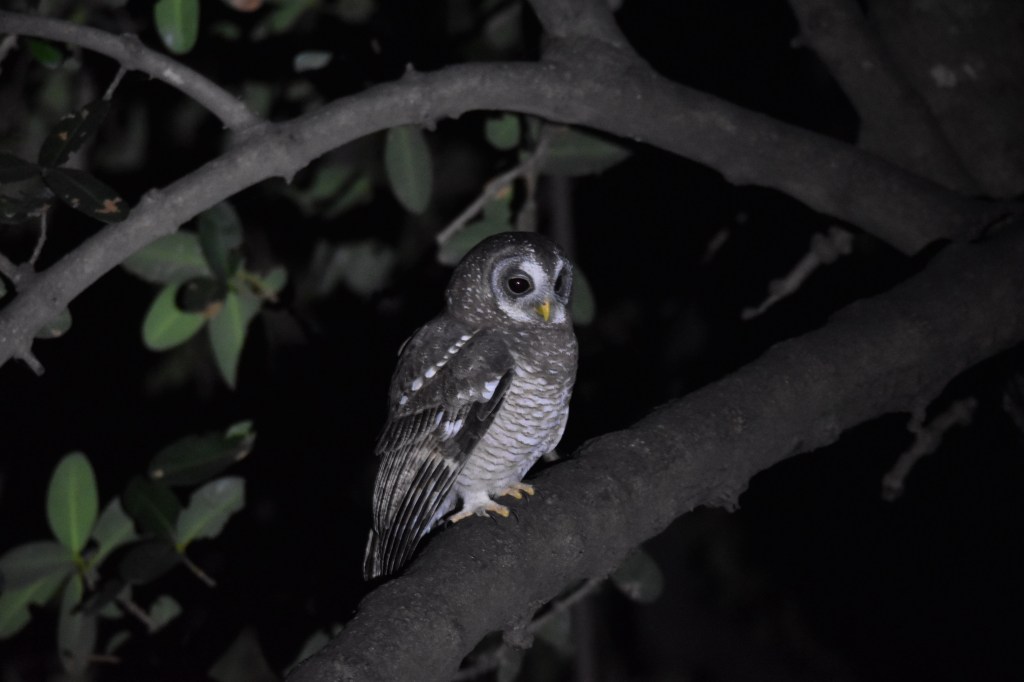
After an easy morning in Maun, and an expensive breakfast at the duck, we set off for Shakawe. Reaching Drotsky’s just before sunset, we set up camp in the last of the light. Drotsky’s is a beautiful camp, the bar is on a deck overlooking the surprisingly fast-flowing Okavango river, the white sand paths are freshly raked, and a pair of bush ucks totter around the patch. Campsite 11 was our allocated spot, a large area shaded by some huge trees, we backed on to a small pool of the famous swamps. We were serenaded to sleep by the tinkling of frogs, the odd baritone grunt of a Pels owl cutting through the air, and the chuckling of hippos in the distance.
Wildlife:
Wood owl at camp
Distance: 356km
Cumulative Distance: 2,264km

Pel’s fishing owl
There were two main draws for us in the Shakawe area: the Pel’s fishing owl, and the Tsodilo hills.
Drotsky’s is right on the river and offers boat trips, paid by the hour, up and down the Okavango. The main reasons to go out on a boat are either; birdwatching, or fishing. The latter holds no interest for us, however this is a great place to come if you’re keen to catch the prestigious tiger fish. For us, the birds held all the interest. In our Roberts guide to southern African birds, a disproportionate number of reference photos were taken in Shakawe, this is clearly the place to go.
The night before we asked the campsite host what time would be best to go out on a boat to catch a glimpse of the Pel’s fishing owl. Counterintuitively he recommended an early morning boat trip, two hours, upriver towards the town. This story is somewhat shortened, as this is Africa everything takes a long time, and asking a direct question will never yield the answer you need. This information was gleaned over a tedious hour at the bar. At least there was a stunning sunset and an ice cold Windhoek draft.
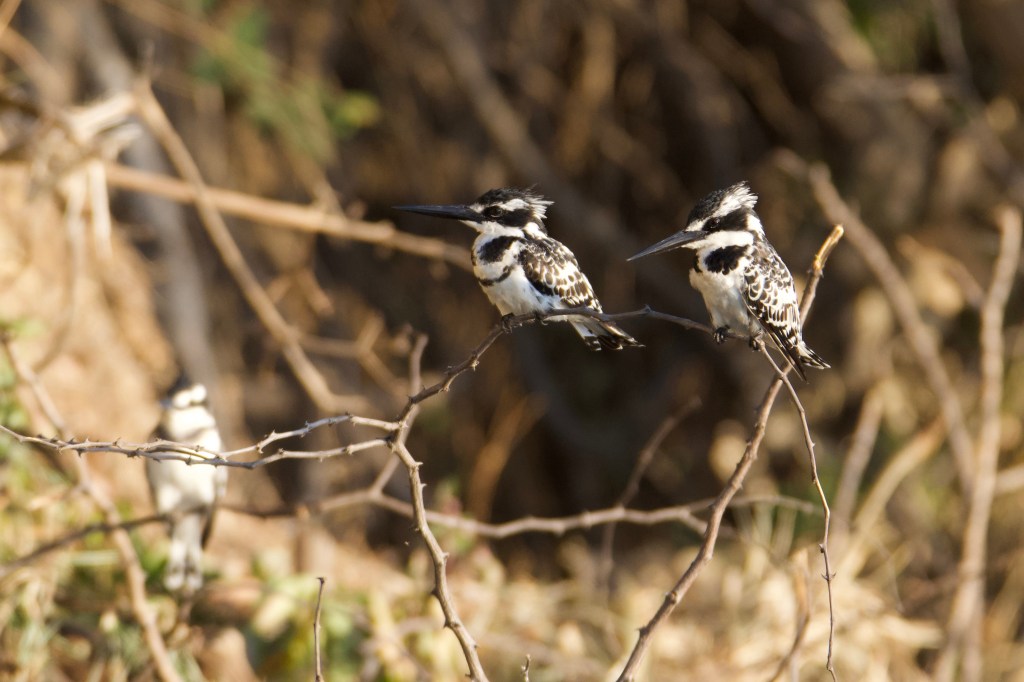
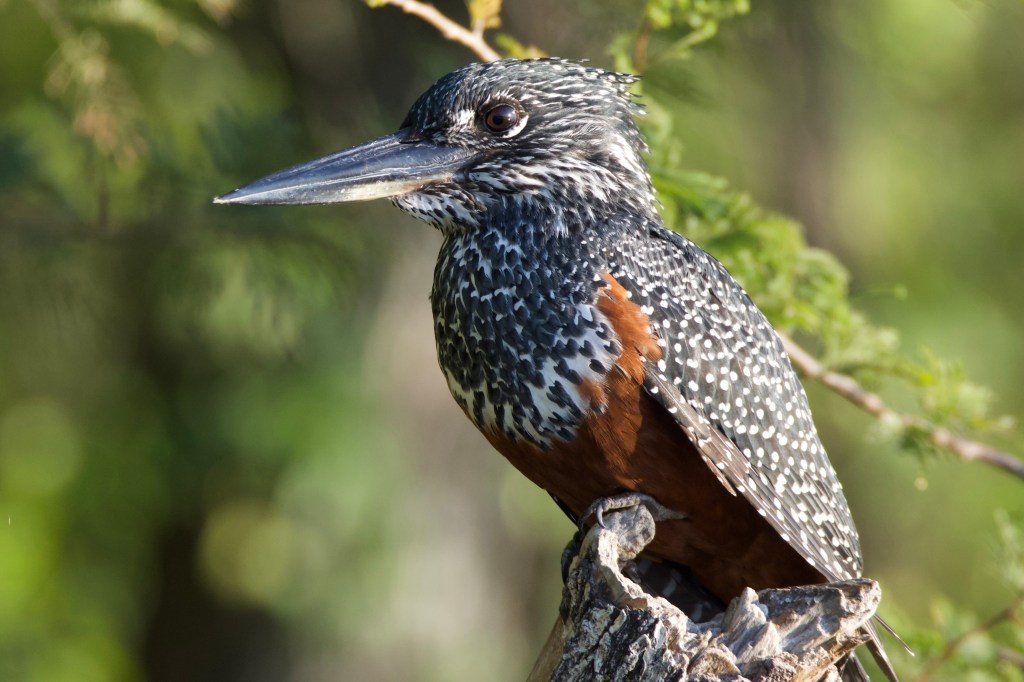
Next morning, at 7:30, we met our guide Holly at the boat launch. We spent the first twenty minutes within 50 metres of the pier. There were giant kingfishers, pied kingfishers, bee eaters, fish eagles, herons, hammerkops and all sorts. Even water monitor lizards were found. The whole place was alive, and every photo turned out fantastically due to the golden morning sun to the east. The western bank of the Okavango is forested with large trees, huge jackalberries, large camel thorns and the like. The perfect habitat for birds fishing in the river or catching the morning insects. To the east was the swamp, a mass of reeds and hippo grasses. Holly explained that the owls were to be found twenty minutes upstream, and if we were ever to get there in our allotted two hours we had better make haste. The river arched away from the forested riverbank and into the swamp, the boat accelerated and was surprisingly swift. Sarah had recommended we take our waterproof jackets as well as our jumpers, I considered it a waste of space, but as usual she was right. The fresh morning air was cold, especially when speeding up river.
Occasionally Holly would stop the boat abruptly. Somehow, squinting into the morning sun without sunglasses, he would pick out interesting birds among the reeds. He was a very good guide. First, we caught a glimpse of the elusive Sitatunga. One of the most difficult antelopes to see, they are confined to wetland habitats and are extremely skittish. We spied two, grazing amongst the reeds until we rudely interrupted their breakfast. Within seconds they had slinked off into the reeds.
Holly continued to delight with his eagle eyes. A western banded snake eagle wasn’t hard to spot, perching conspicuously atop a lifeless tree, but he posed nicely for us. Different types of herons and storks were plentiful.
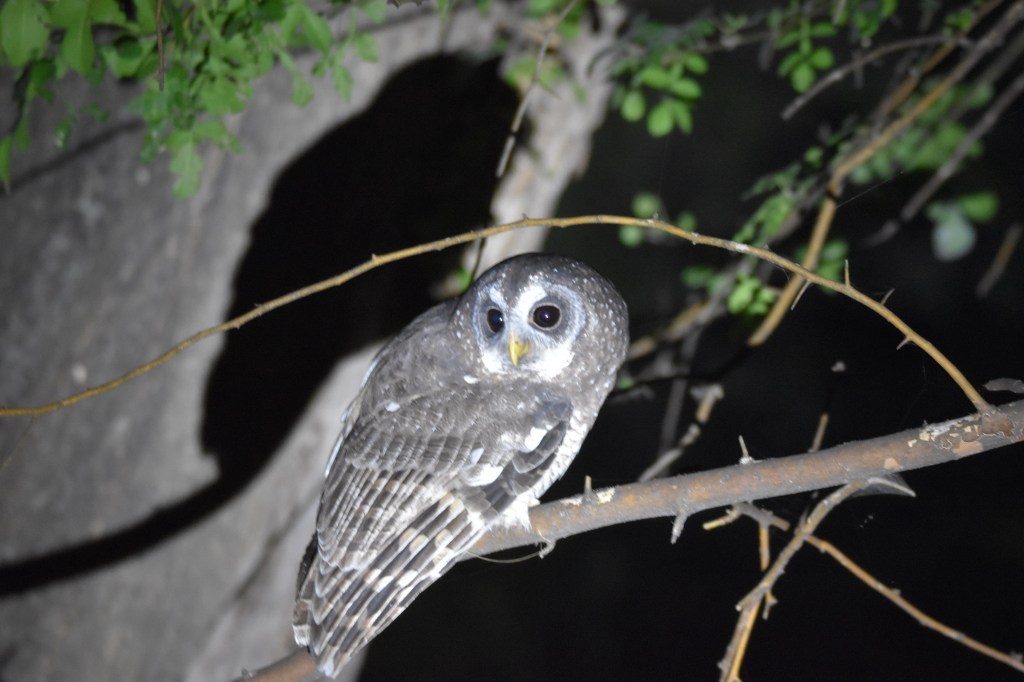
The Pel’s owl was hard to spot. We arrived at the prime riverbank location, right next to downtown Shakawe. We were instructed to look into the trees for a brown blob hiding in the middle somewhere. To be honest we had no chance. Out of nowhere Holly proclaimed he had spotted the owl. It was another five minutes until we caught on to where he was looking. There was the massive bird, partially obscured by leaves and with his back turned against us. A few minutes later Sarah spotted a second brown blob in the same tree. There was a second owl there too! Pels owls form a monogamous pair and will often be found near each other, however here we were lucky to see them both in the same tree. The female owl was facing us and we got some incredible photos. The male was larger and darker but his hunched figure facing away from us in the shade was less photogenic, even if his plumage was spectacular. The owls hide near the middle of the tree under the thick foliage so can often be difficult to spot. If spotted by the fish eagles during the day there is often a fight, sometimes to the death. Two fish eagles were perched less than 20 metres from the owls, but had no clue they were anywhere near.
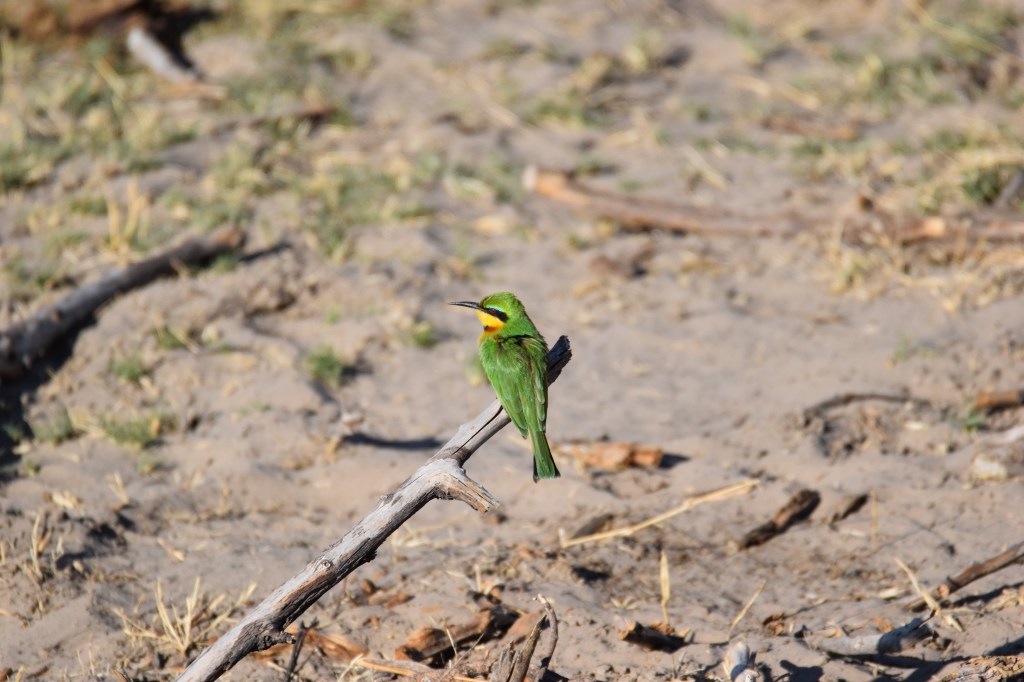
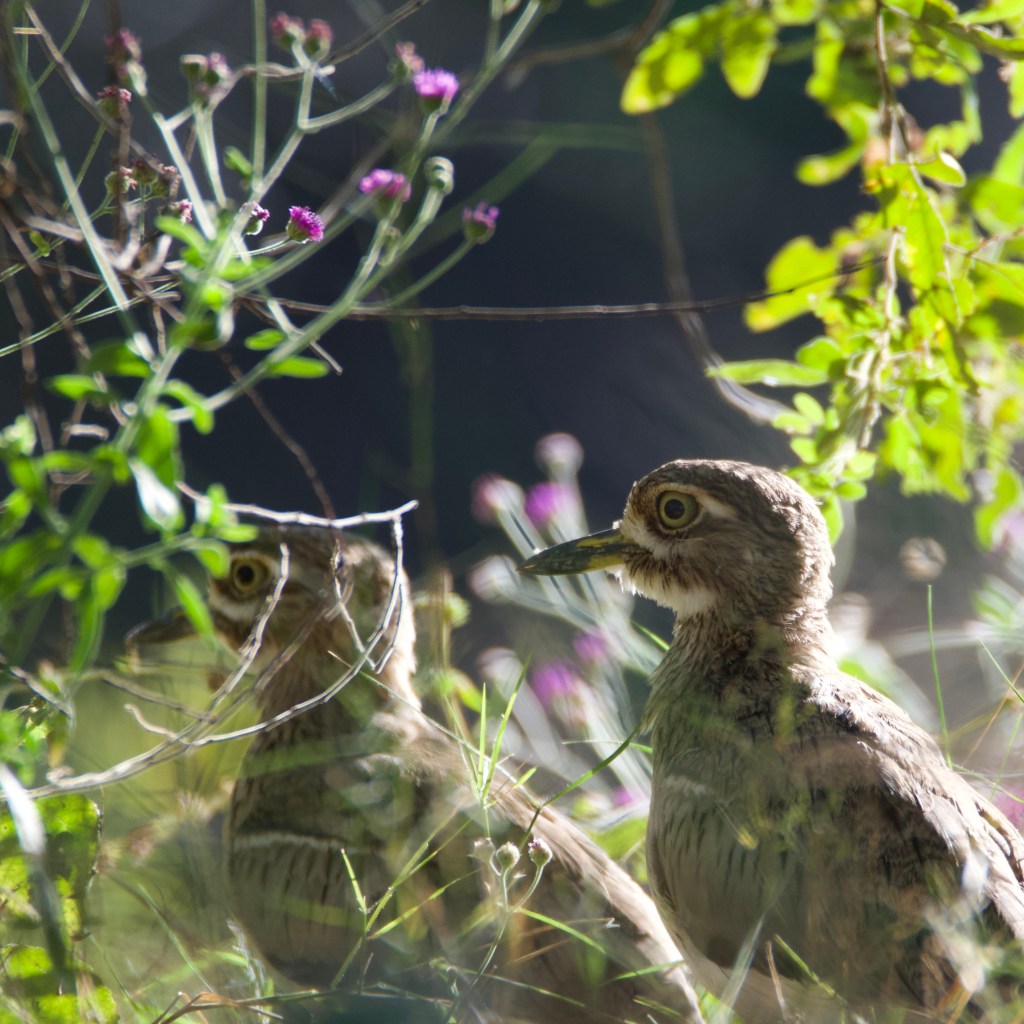
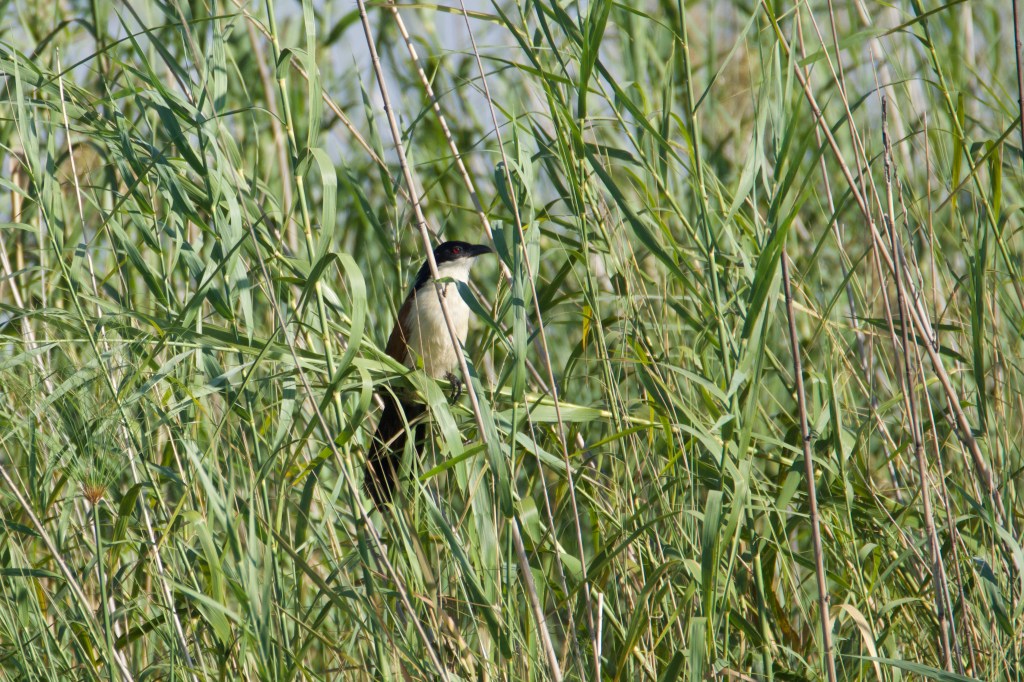
Holly informed us it was time to return to camp. On the trip back we had a brief look for a white crowned night heron to no avail. We amused ourselves with the little birds, the African green pigeon, water thick-knee, various coucals, and of course the bee eaters, being highlights.
The £40 we spent on the boat and guide was some of the best value safari we could have hoped for.
Wildlife:
Sitatunga
Water monitor lizard
Pels Fishing Owl x2
Pied kingfishers
Great kingfishers
Hammerkop
African green pigeon
African fish eagle
Water think knee
Swamp boubou
Copper tailed coucal
Purple heron
Goliath heron
Western banded snake eagle
White fronted bee eater
Distance: 134km
Cumulative Distance: 2,398km






Tsodilo Hills
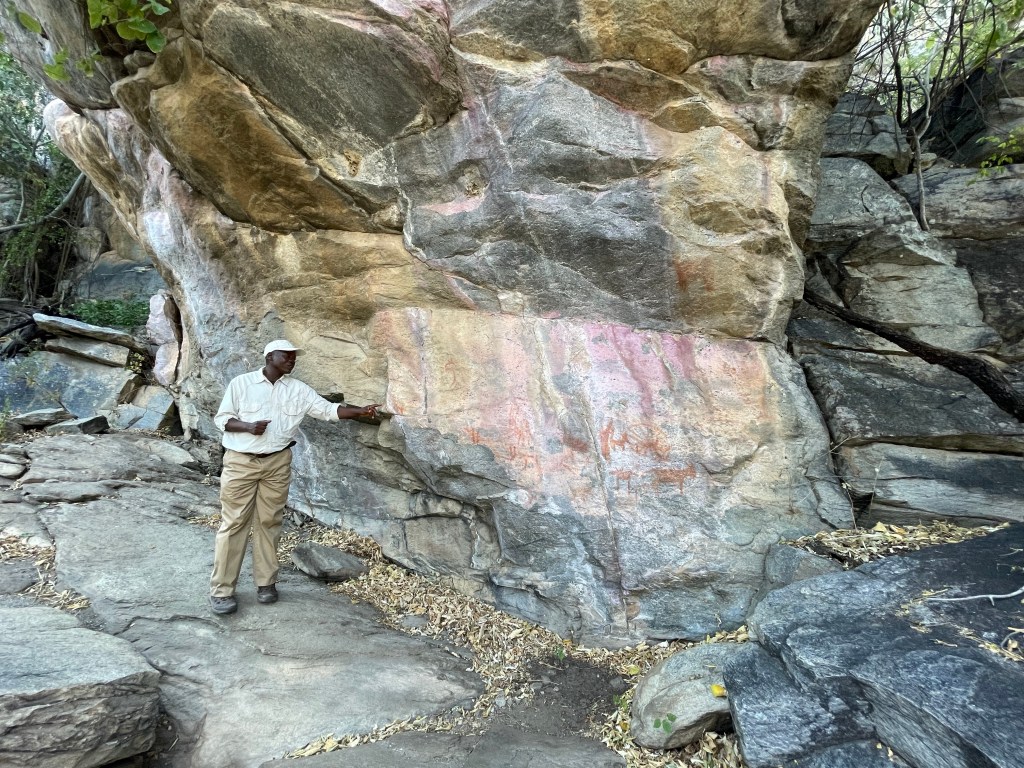
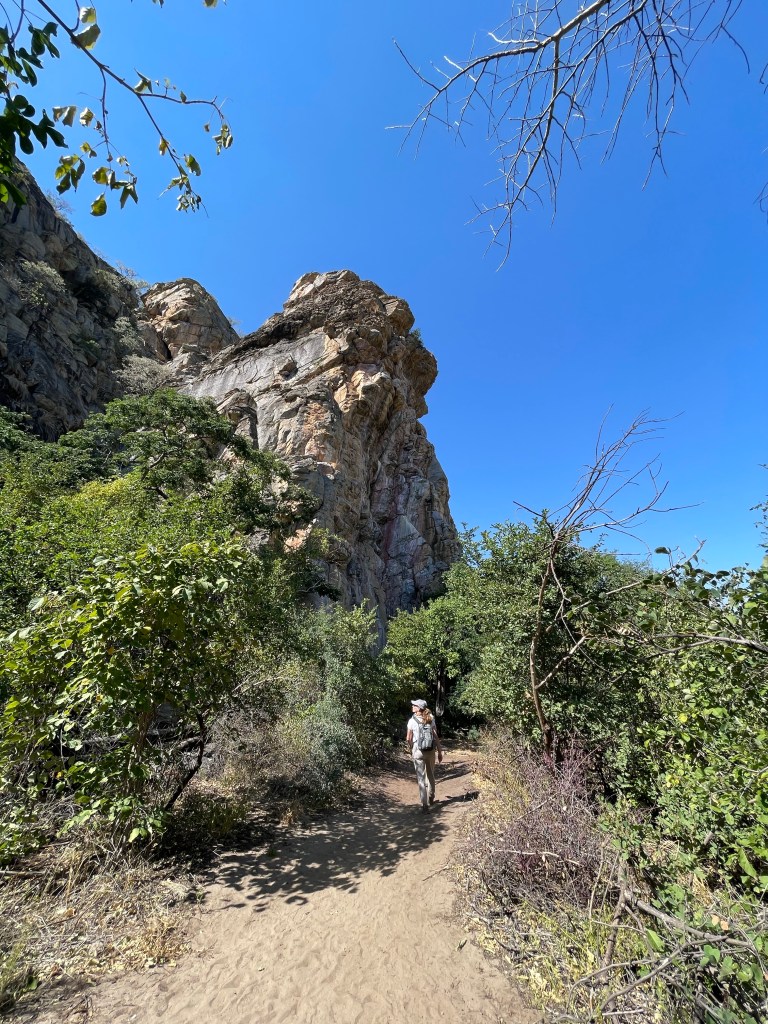
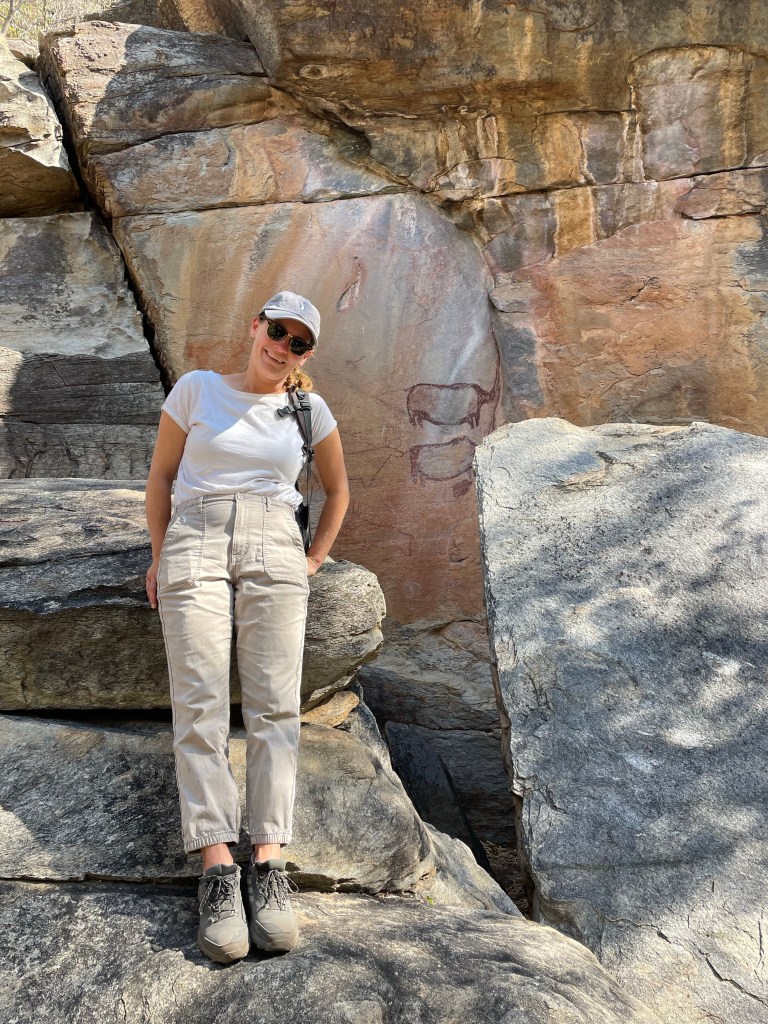
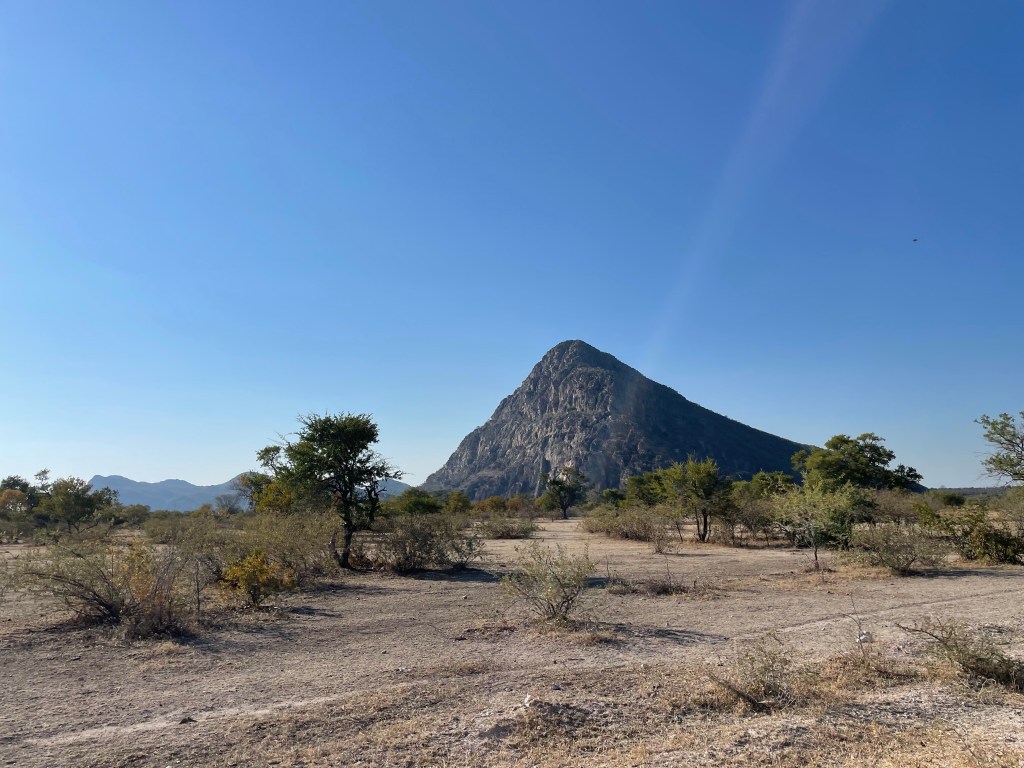
Tsodilo Hills are a world heritage site, and by now you may have seen we’ve visited a few. We visited a very similar site, Twyfelfontein, in Namibia last year. Visiting Tsodilo reinforced our previous opinions on rock art.
Claims that the art is many thousands of years old are plentiful, and grounded in research, but again the claims feel far fetched. In certain places the rock has chipped away or come loose, and there is still a drawing visible. ‘This is because the paintings were made when the rock was soft and the pigment leached in, therefore when it erodes the painting remains’. I’m not so sure about the granite ever being soft but that was the explanation proffered.
The red paintings were by the Khoisan people, and the white paintings by Bantu, they coexisted or they didn’t, but they never painted in each others colours. The Khoisan paintings are much older, they contain only wild animals, whereas the Bantu brought domesticated animals, and drew them. Apart from the red paintings of donkeys, they are by Khoisan people who worked for the Bantu. Everytime the reasoning gets more convoluted.
There’s no doubt the place has historical and cultural significance, but over the thousands of years of paintings there’s no sign of any instruction, which seems off. Anyway, it’s a nice place to visit for the afternoon.




The Okavango River Bridge
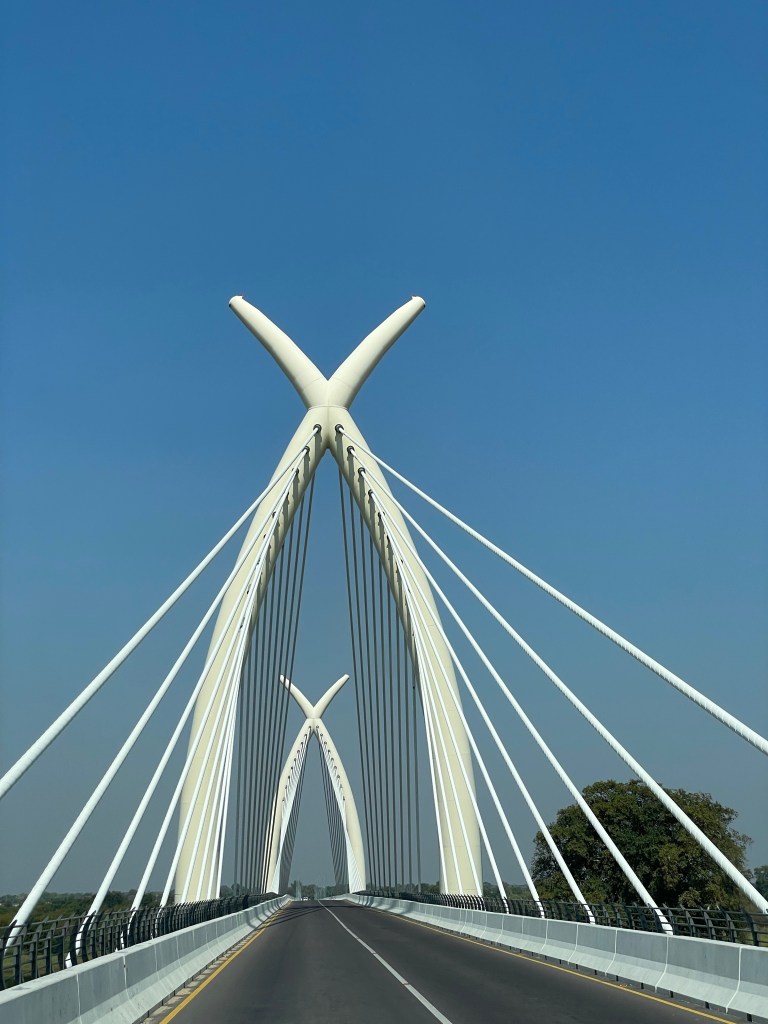
The Okavango river Bridge is a fantastic new construction, opened at the end of 2023. Cable stayed with two towers resembling crossed elephant tusks. It must have cost a lot, and I’m not sure I want to find out who financed it. The bridge links the communities of the western and eastern panhandles. Previously you could have waited here all day for ferry in long queues. Now it’s no more than a couple of minutes drive.
From Shakawe it’s only a few kilometres to the Namibian border at mohembo. The border crossing was easy, and fairly light on the paperwork, but it still took us nearly an hour to pay our road tax thanks to some decidedly doddery staff.
Divundu is little more a than a crossroads which has seen a rash of development as its fairly strategic location is realised. We shopped in a brand new choppies, reasonably well stocked with fresh produce. Choppies is at the bottom of our hierarchy of Southern African supermarkets. Woolworths and Food Lovers Market are the two fanciest, akin to M&S or Waitrose in the UK with the best fresh produce and international foods. Spar is the best of the rest, common and well stocked, like a good Sainsburys. Pick n pay is a notch above Shoprite. Choppies is the most basic along with metro cash and carry, the Aldi and Lidl of Southern Africa.
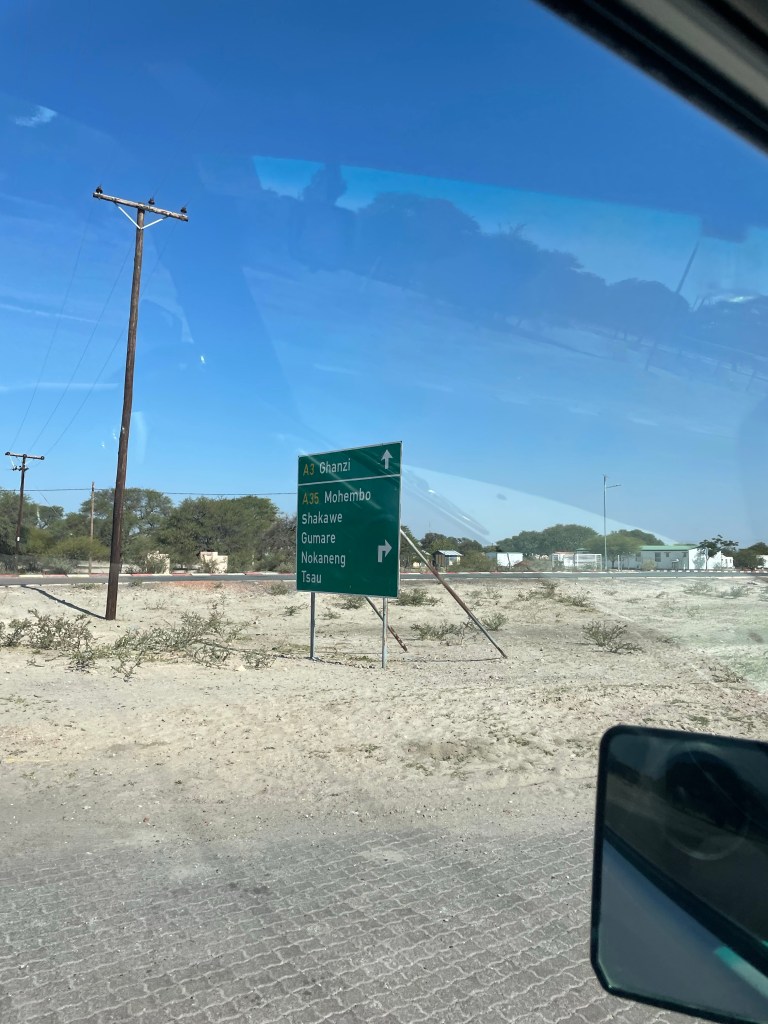
It’s a 2 hour drive across the caprivi strip to the Kwando river. Significantly smaller than the Okavango river, the water level already seemed very low. The drive from the Kwando core area park gate to Nambwa campsite, where we were booked for the next two nights, takes around an hour. As per usual we were attempting the drive in the fading light. Here, the roads weee some of the sandiest we’d encountered yet, and the risk of getting stuck was high. Around two-thirds of the way to Nambwa we came across a South African couple bogged down to the axles. The man was trying to free their Toyota fortuna and caravan, whilst his wife was still sitting in the car. We helped to dig them out, and after encouraging the woman that it was indeed safe enough to get out the car we managed to get them going again, only to get briefly stuck ourselves. The combination of sand and sweat in the late afternoon heat is not pleasant. We made it to Nambwa after sunset.
The campsites at Nambwa have been recently relocated away from the riverside and the fancy lodge so the hoi polloi can’t ruin their vibe. We were delighted to have a private ablution block, with power and a hot shower courtesy of a wood fired donkey. The raised platform and sink made everything a lot easier, it the build quality of the block was a little suspect. The first building the staff at Nambwa had built without their mentor, we think they could still have done with some oversight.
Yet again the night was quiet.
Wildlife:
Crested Barbet
Distance: 263km
Cumulative Distance: 2,661km

 Small Holiday Big Dream
Leave a comment