
Day 2
Enjoying the jungle is difficult. At all times day and night it’s unbearably hot and sticky, and to top it off there’s always something trying to bite you.
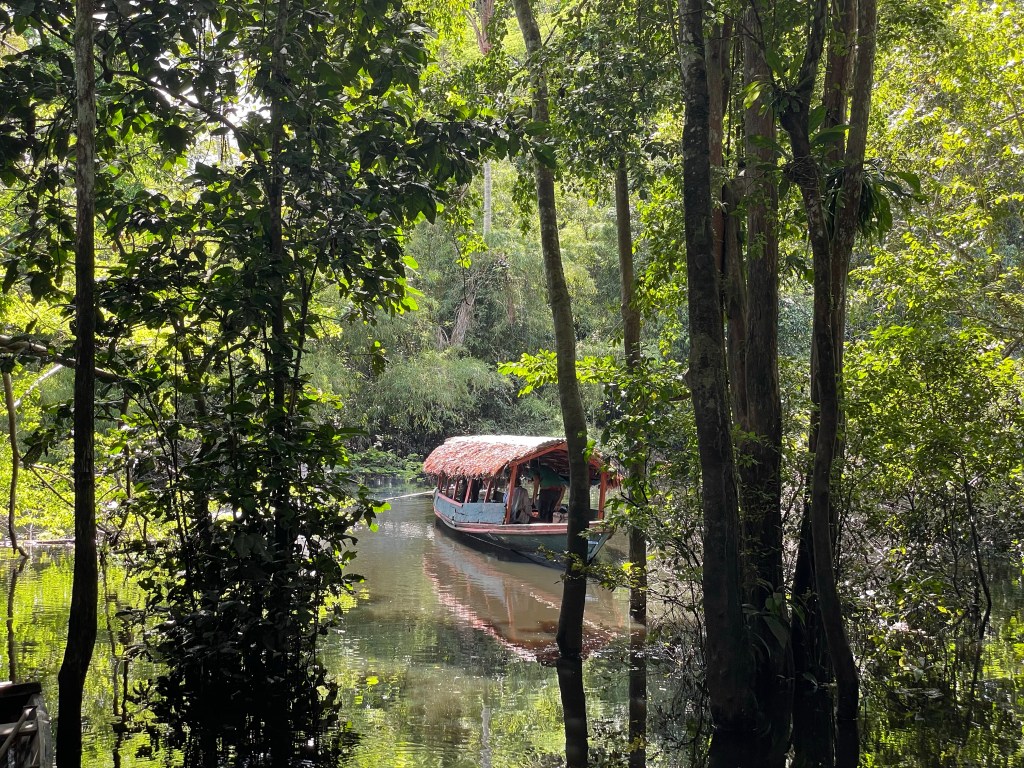
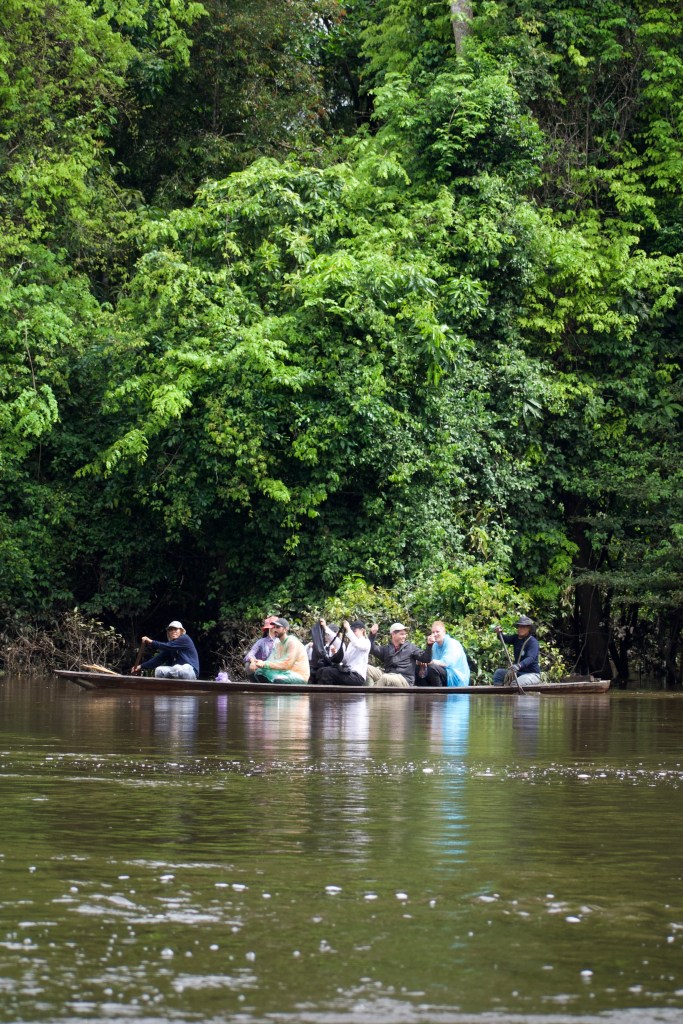
Alongside our boat, we were towing a canoe, this would be our transport for our explorations of the jungle. With seven passengers and two guides, it was a tight fit. Most of the time the water was a centimetre or so below the edge of the boat, although many times we took in a fresh load of the muddy brown Amazon water.
The rivers of the Pacaya Samiria had a different feel to the main channel of the Maranon. The main Amazon river is a light muddy brown colour, much like the Thames in London. You couldn’t see anything in the water for the density of the mud. This made sense to us, having seen the headwaters of the river up in the highlands of Peru and how much material they were carrying downstream. In the Pacaya Samiria the silt was much blacker, giving the impression of a colder deeper river. Although visibility was still absolutely zero.
Cast
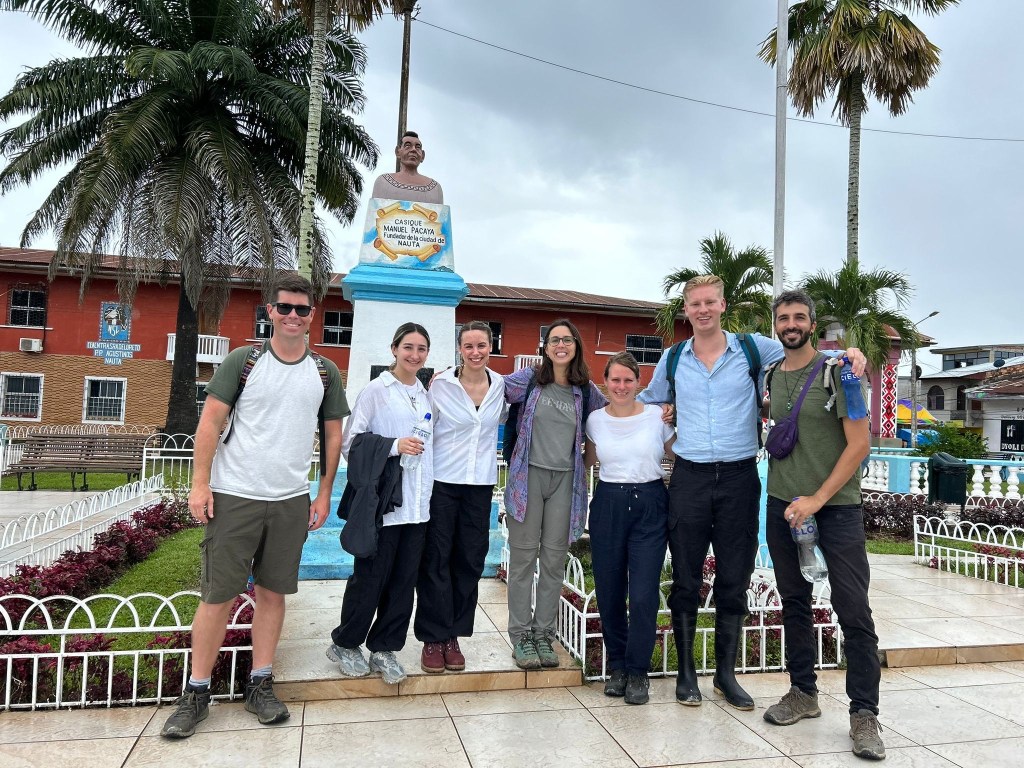
Let’s introduce the other characters of our jungle expedition.
Roger is our guide, a clearly experienced jungle operator, worked fiercely hard in all aspects of the tour, a one man jungle machine. He paddled the canoe, found the wildlife, led the walks, built the camps and everything else. He didn’t speak a word of English.
Junior is our translator and junior guide. The complete opposite of Roger, he is simply hopeless at everything, especially translating.
Our boatman didn’t have a name, he drove the boat and cooked the food, and was good at both. He didn’t do much else, but didn’t really need to.
The three guides along with the seven of us passengers made us up to 10 in the boat.
Expedition
We left our hut in Buenos Aires at 5am, just before dawn. It was raining, but we jumped in the canoe nevertheless. We paddled upstream to a quiet spot in the river where we stopped to watch the river dolphins playing in the dawn light. There are a couple of kinds of dolphins, namely grey dolphins and pink dolphins. Over the course of our Amazon trip we saw plenty, as they would pop up all along the river. It’s quite difficult to photograph the dolphins in the river, they pop up every minute or so and often in a completely different spot to where they were before. Every glimpse was fleeting, but it was special to see these endangered animals in the wild.
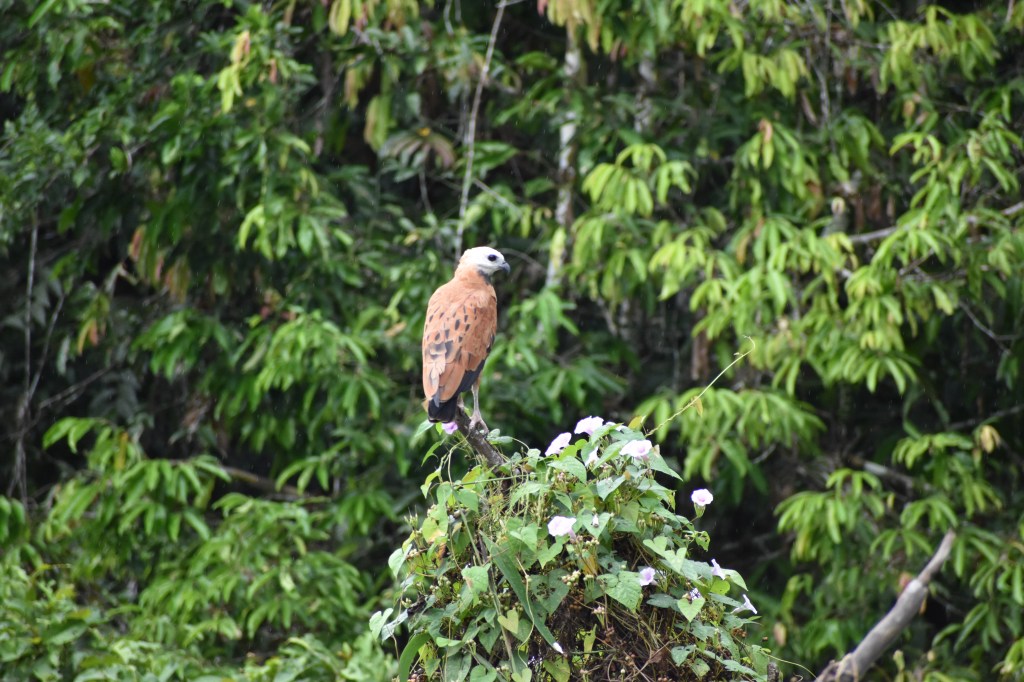
We returned to camp with a boat full of water. Along the way we spotted an iguana in a tree, as well as many eagles, kingfishers and herons along the banks of the river hunting for breakfast.
After our breakfast we boarded our boat and headed upstream towards camp for the evening. It was another three hours away from the village.
It shouldn’t be surprising, but there is an awful lot of water in the Amazon. Even the smallest tributaries are wide and deep, but what’s more they flow extremely quickly. In many places the currents are so strong even the motor boat is barely moving. As a rule it took three times as long to travel upstream as it did to cover the same distance downstream.
The Pacaya Samiria is a seasonally flooded forest sandwiched in a triangle between the Maranon and Ucayali rivers, even with those two monster streams nearby there was still a huge amount of water flowing rapidly through the reserve. Where did it all come from? It sounds stupid but it really was incredible.
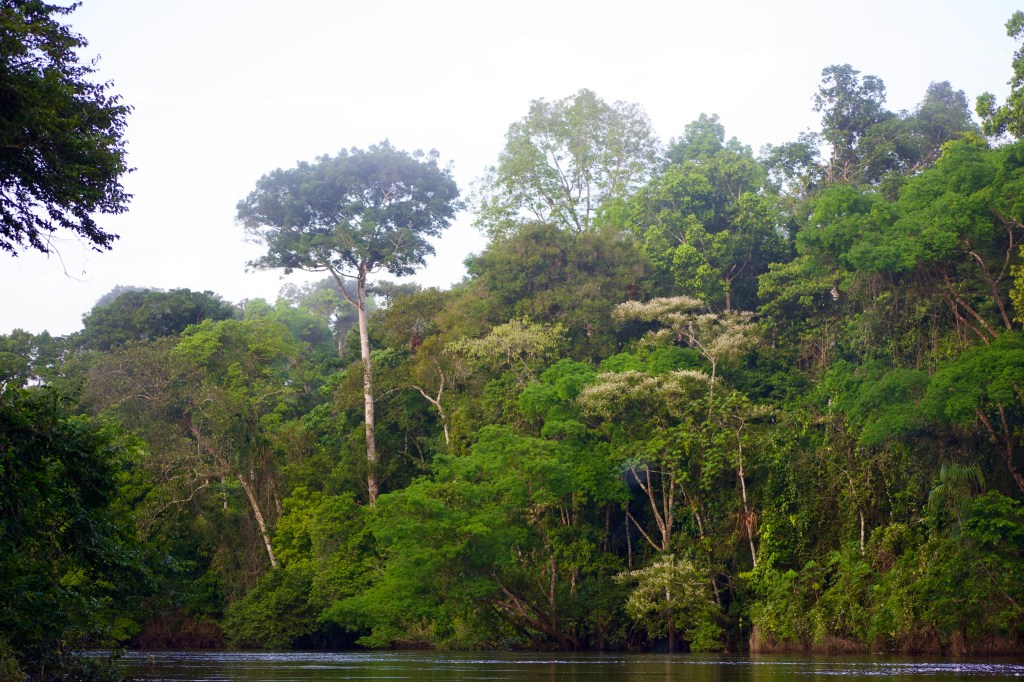
Upstream from the village the primary rainforest really began to impress. Here the trees and the undergrowth on the banks of the rivers have been untouched, so some of the trees are unbelievably enormous.
After making it to camp we headed to a quiet spot under the trees to go fishing. Now we had heard about stories of tons of piranhas fighting ferociously for the bait the second it touched the water. That wasn’t the case here. In fact, after what seemed like hours dangling a wooden stick in the water, the whole group had the grand return of one measly little fish. It wasn’t even a piranha.




Mud
In the distance the howler monkeys were making some noise. Of all the sounds of animals I’ve ever heard the howler monkey is the most threatening and ominous. The deep guttural growls sound menacing, and even knowing they’re far away it still instills a sense of worry.
For our afternoon we were told to take our torches just in case. The walk took over three hours and covered over five kilometres, (it’s a long way in this climate…). It was pitch black well before we turned back to camp. Seems like the torch wasn’t just optional.
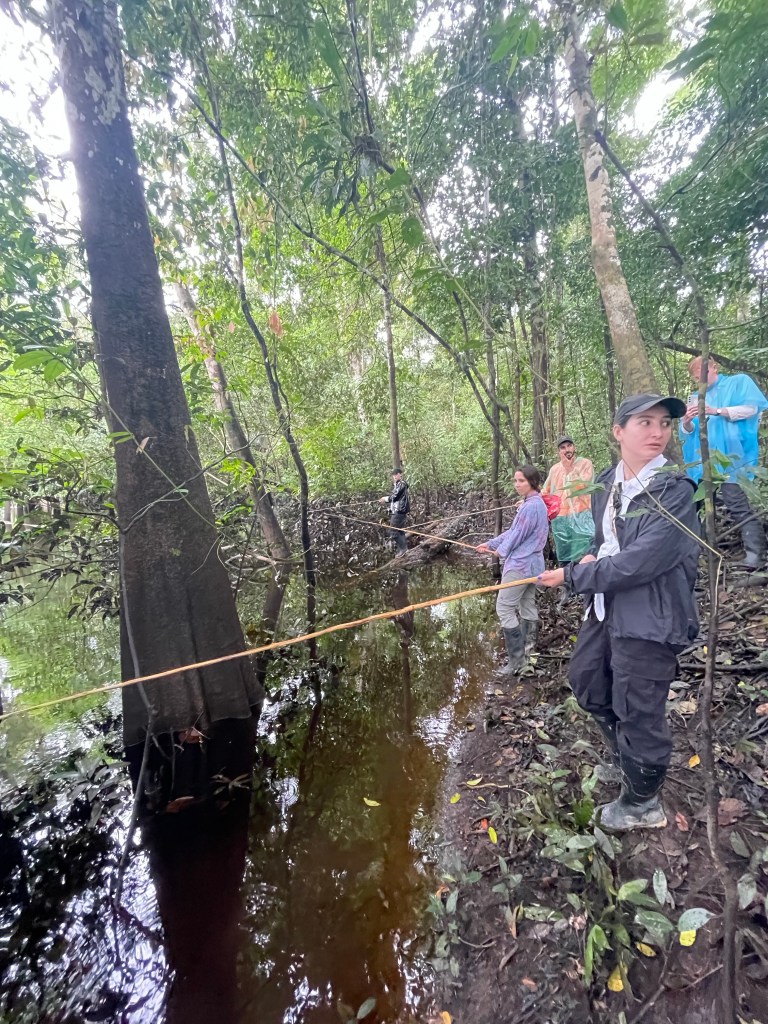
It may be obvious to some, given how wet it is in the rainforest and especially in a flooded forest, but any dry land is mostly a sticky muddy mess. To start with there were a bunch of treacherous water crossings, over stagnant pools full of who knows what. These involved balancing on submerged bits of barely visible trees. Those of us with a hole in our wellies were having a great time.
Trees
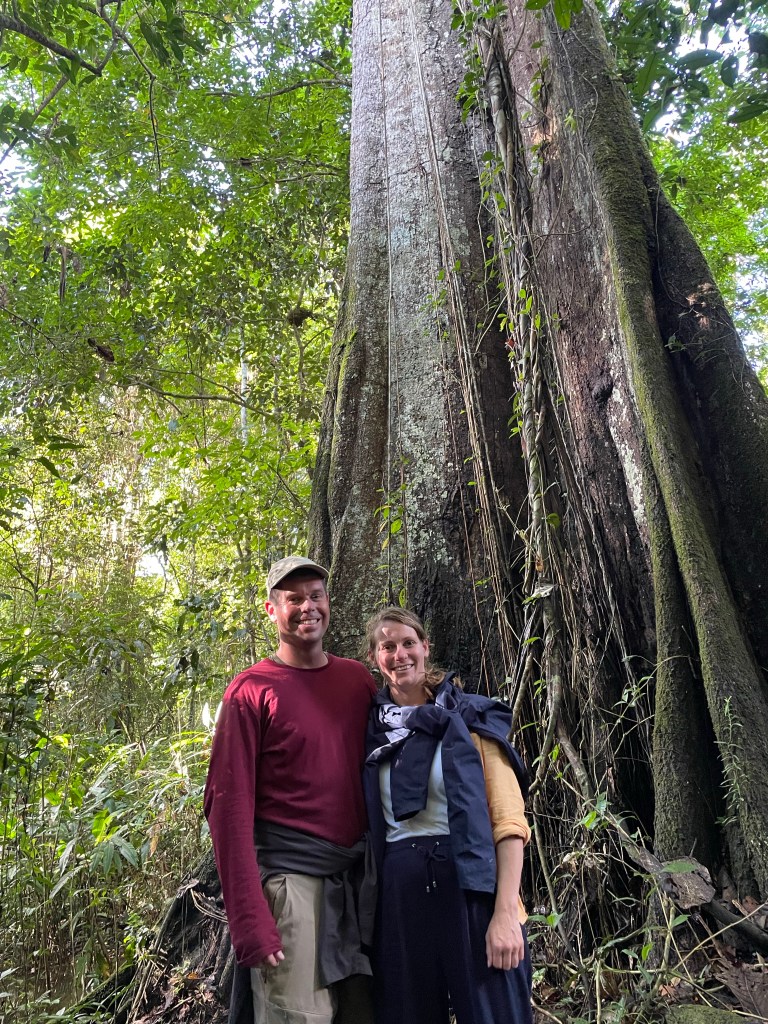
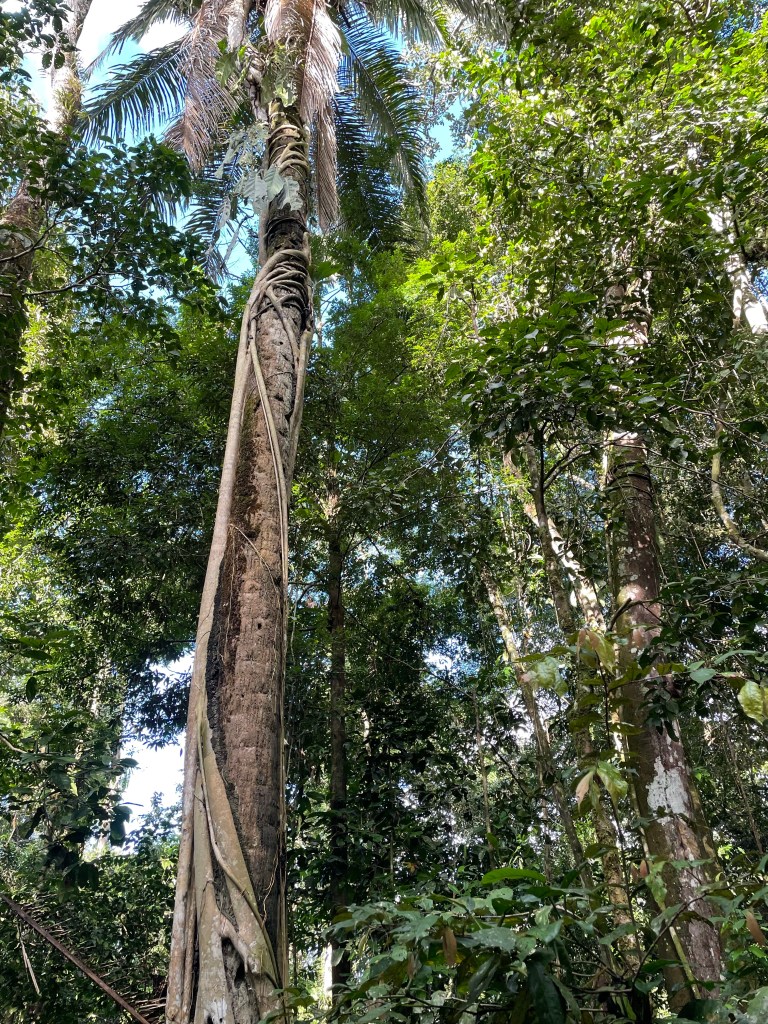
Another obvious observation; the trees in the primary rainforest are absolutely incredible. We reached a 250 year old tree which was the tallest and oldest in the area. Around the base was probably 30m or so. Huge buttress roots divide the base of the tree almost into house sized rooms. Lianas cling to the trunk, but they couldn’t bring this giant down.
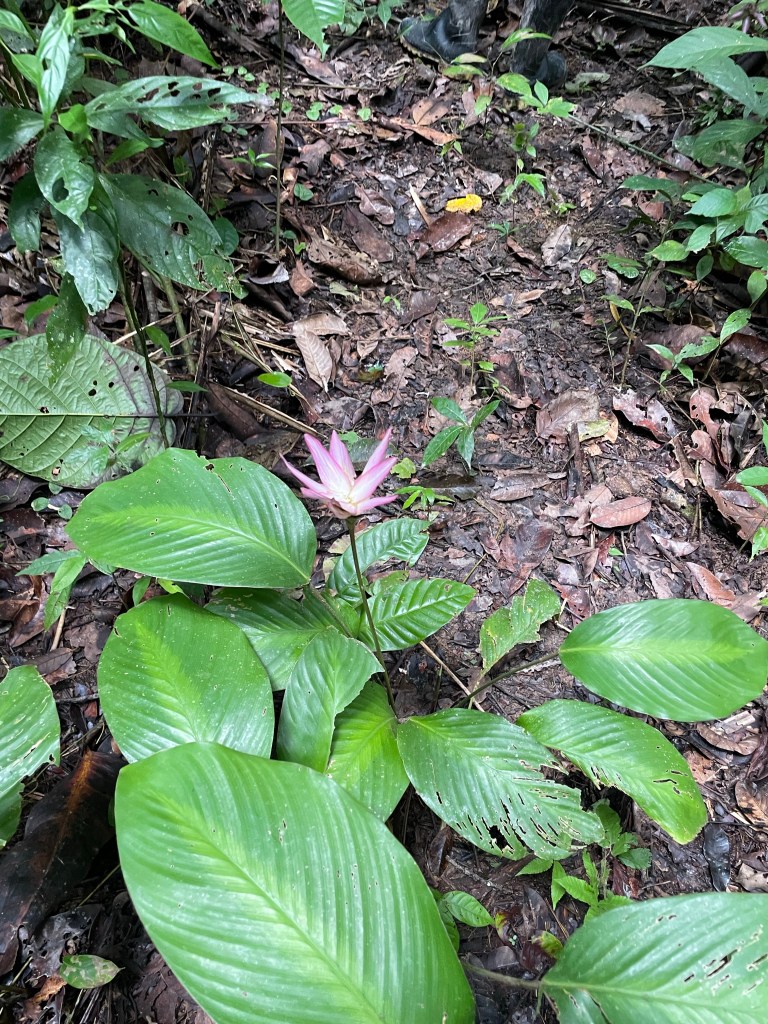
Other trees of note;
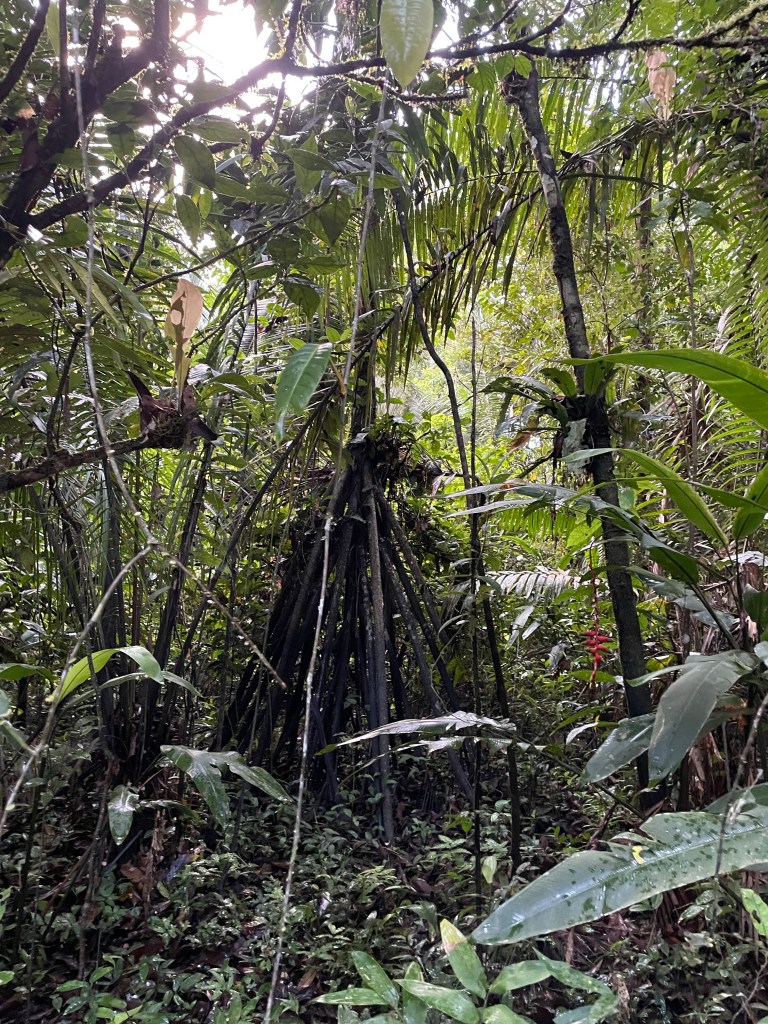
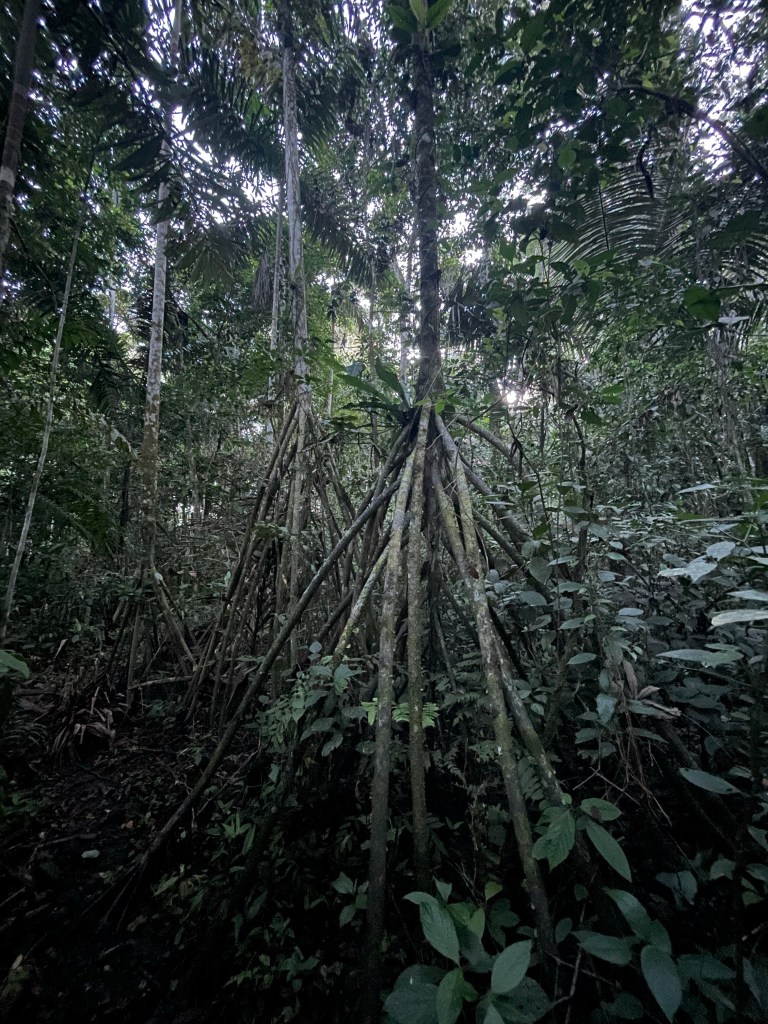
The walking palm – has a nest of roots which looks like a wigwam or a witches broom, probably extending 4-5m from the base. These trees move, they actually walk, a metre or more a year (sources vary – BBC claims 20m!)
The fake garlic tree – the bark smells just like really strong garlic.
The Hubo tree – the bark can be used to make a tea used to cure an upset stomach. Those of us with upset stomachs refused to try it for fear of making things worse.
The fire ant tree – had a ring of dead ground around it maybe about 3m diameter. Fire ants live inside the trunk, and the tree is deadly poisonous to everything else. Plenty of reasons not to touch it.




Dark
After dark we turned our attention to caiman spotting. Flashing the torch around the stagnant pools, occasionally their eyes would reflect with a blood red glow. We managed to find a few, including a small one which we got a little bit close to. All the time being swarmed by the bugs of the pools.
The only other animals of note were probably the giant Amazonian frogs, the size of a rabbit, and completely unmoving when disturbed.
The water crossings on our return were even more treacherous than on the way out, but we all made it across safely.


Camp
By the time we returned to camp everyone was quite tired, and fully drenched in sweat. The boatman had cooked dinner, but what he hadn’t done was pitch the tents. He hadn’t even unload them from the boat. To say Roger was annoyed is an understatement.
Sat in the boat we had our standard dinner of fish and rice, after that we headed to bed. With a bit of planning it’s possible to get into the tent without letting any bugs in. Sarah and I succeeded and only had a solo mosquito to deal with. Others were less successful (Fabian…). There was no chance we would get up to go to the toilet in the night, any excess liquid would have to be sweated out. Luckily this was no problem.
It really is very difficult to sleep in the humidity of the Amazon rainforest. The air temperature must still have been in the high 20s, and not a breath of wind. Inside the tent it was so extraordinarily sweaty that it took an age to sleep.




- The infamous Binga-Karoi road
- Mana Pools: A bucket list location?
- Camping Among Lions: Chitake Springs Experience
- Chirundu: The worst border in the world
- The Wild Dogs of Jeki: Sunrise in Lower Zambezi
 Small Holiday Big Dream
Leave a comment