We had eschewed one of the famous hikes in the Cusco region for something perhaps a little more adventurous. Everyone does an Inca trail or a Salkantay trail, and we only had limited time. Would Huaraz live up to the hype?
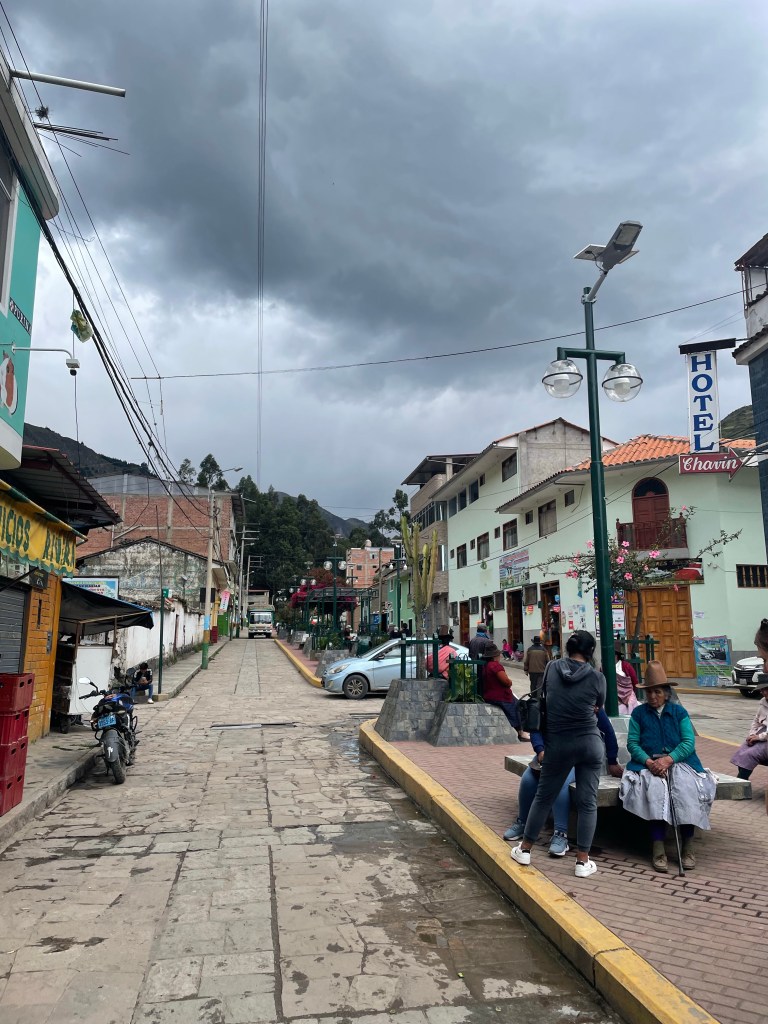
What a great surprise it was. Huaraz was a scruffy and genuine town that was very welcoming. There were still plenty of tourists, so it was easy to get around, but fortunately no Americans too the atmosphere was a thousand times more relaxed than Cusco. No restaurant touts, no harassment in the street, no soliciting for tips, it was great. For some reason the place seemed to be a honeypot for Brits, we met more here than anywhere since San Pedro. What was best though was the incredible mountain scenery, unforgettable.
Rocotuyoc
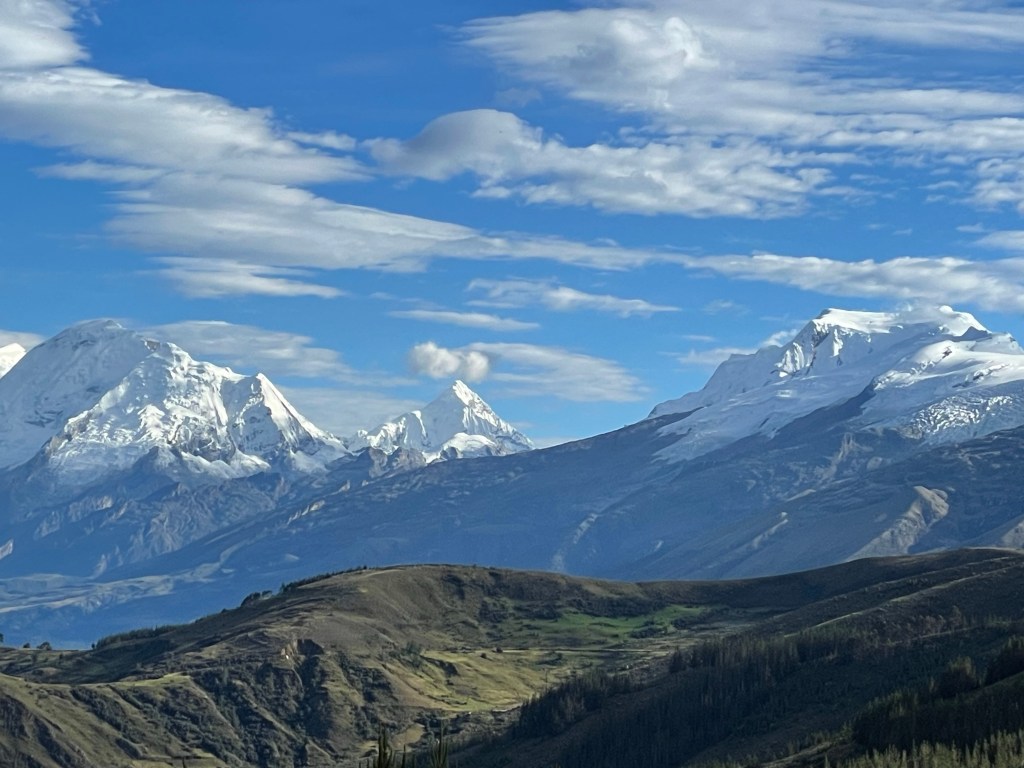
Huaraz is a reasonable size town, slap bang in the middle of the best hiking in South America. Nestled in a deep valley between the spectacular snow-capped 6,000m peaks of the Cordillera Blanca and the less impressive but still lofty Cordillera Negra, the town has great views all around to the mountains.
Naturally we arrived on a night bus, reaching our hostel early, at 6:30am. The hostel owner, Chris, had a good reputation for organising hikes and tours for his, so we asked him what we should do with our day given a long hike was off the cards. He suggested a trip to Rocotuyo, and we were on no position to argue. So at 8:30 we boarded a minibus, which did the standard whip-round the hostels to collect day-trippers, and off we went into the mountains.
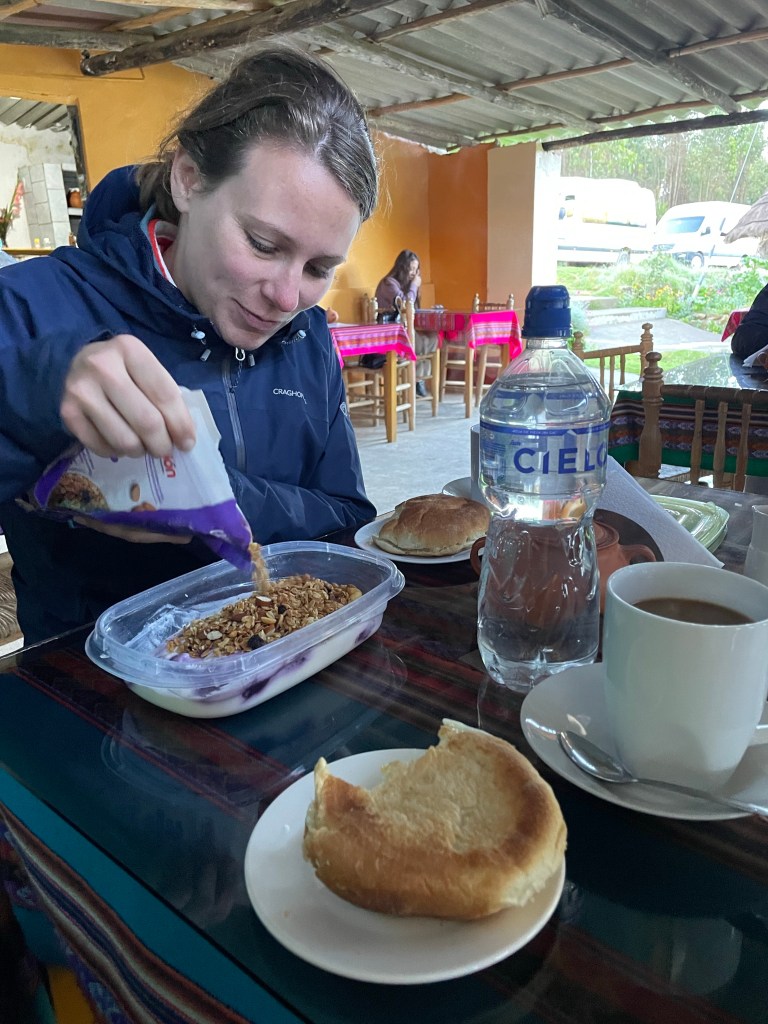
It was a day tour, so we stopped at a tourist restaurant to order our lunch for later, and have a snack for breakfast. The restaurant took some persuading to offer a vegetarian option, but in the end, egg and chips was deemed acceptable by the chef and we secured our order.
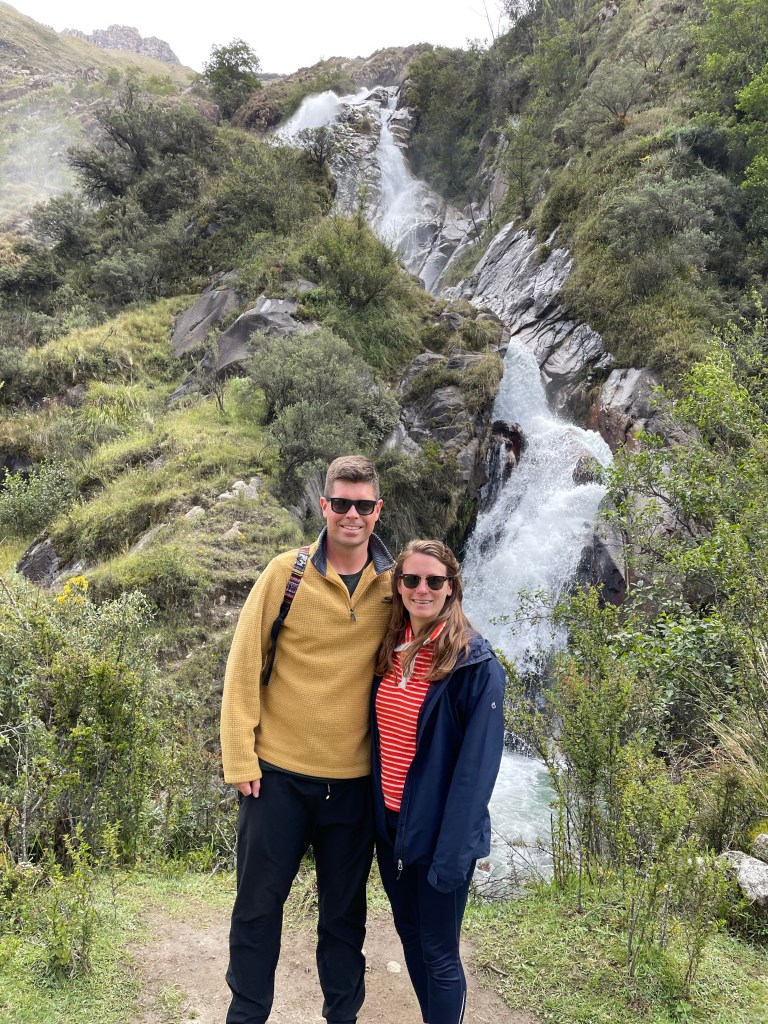
Rocotuyo was great because we could drive all the way to the lake. At 4,500m above sea level it was a good job we were already acclimatised. After a brief stop at a waterfall we began the ascent to our destination. The minibus drove up the gravel track for a good hour. The track was more a footpath which they had decided they could drive up, every tight hairpin took at least three points to get around.
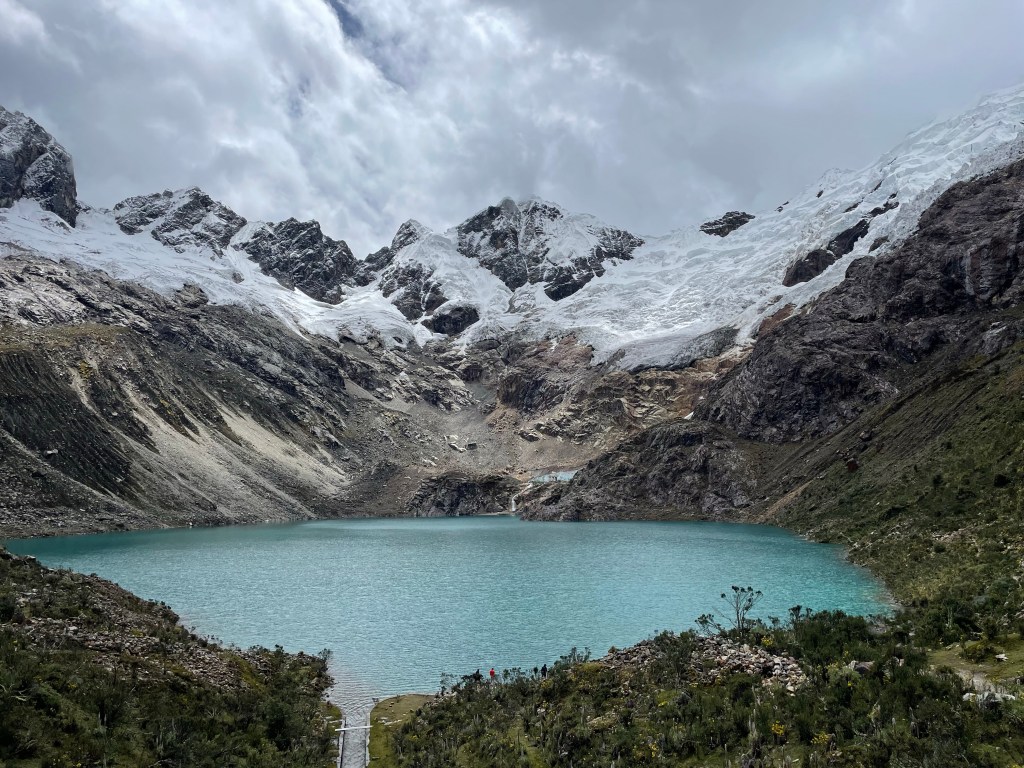
The lake was stunning, a 15 minute walk to the far end of the lake led us to the foot of a glacier. Small icebergs were floating in the icy blue waters. Above were snow capped peaks mostly obscured by swirling clouds, but occasionally peeking out into the brief glimpses of sunshine. The scene was every bit the alpine ideal.
We returned to Huaraz to ask Chris to recommend us some actual walking for tomorrow.





Laguna 69
The hike to Laguna 69 is the picture postcard day trip in the cordillera blanca. Every trip report, blog, or travel website espouses the virtues of this particular walk. So we ought to have it in our agenda.
Minibuses was the name of the game again, 50 soles per person (£10) for the ‘tour’, which was basically transport to the starting point for the walk, plus a stop at the obligatory restaurant. A 5am pick up and 2 hour drive later we were at the foot of the enormous Huascaran and Huandoy peaks, the road snaked up the valley between them.
At 6,768m Huascaran is the tallest mountain in the range, and possibly the tallest mountain in the world. Or at least the summit has a solid claim to being the furthest point on land from the centre of the earth. (The main competition is Chimborazo in Ecuador – further north and closer to the equator, but lower in elevation). Either way we won’t be climbing Huascaran any time soon, it’s for hardcore mountaineers, and even then it’s a dangerous ascent.
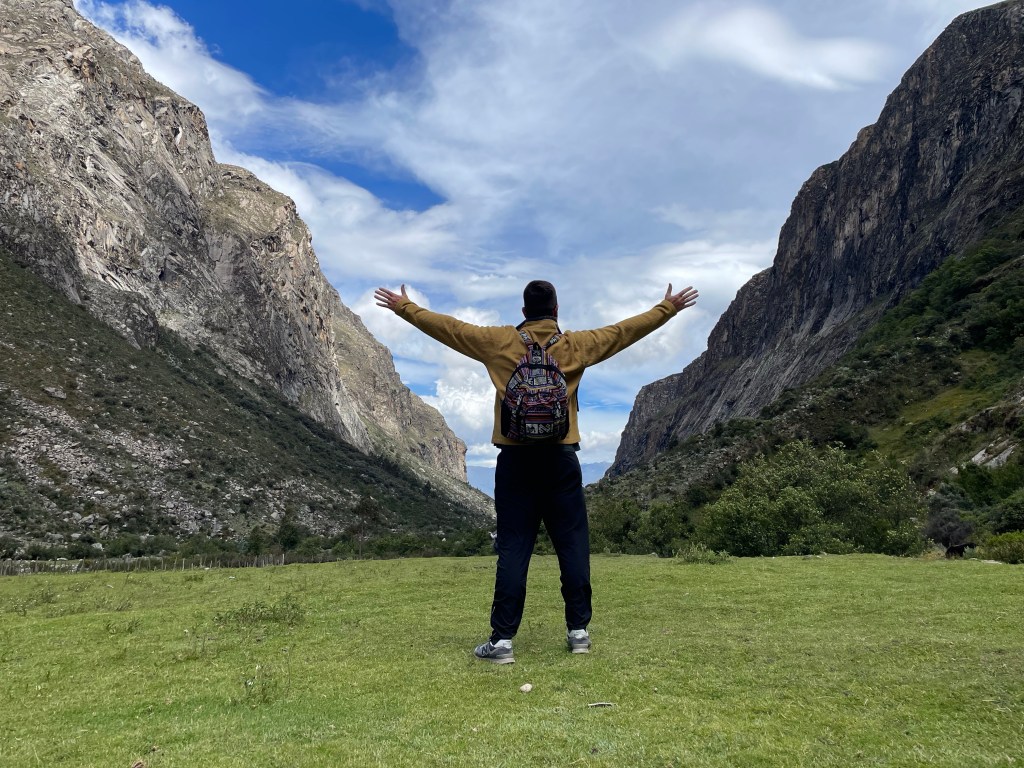
Huandoy is a pointier prettier peak than Huascaran’s enormous dome. At nearly 6,400m it’s just as impressive a sight. Between the two is a deep glacial valley with the picturesque photo stop on Chinan Cocha Lake.
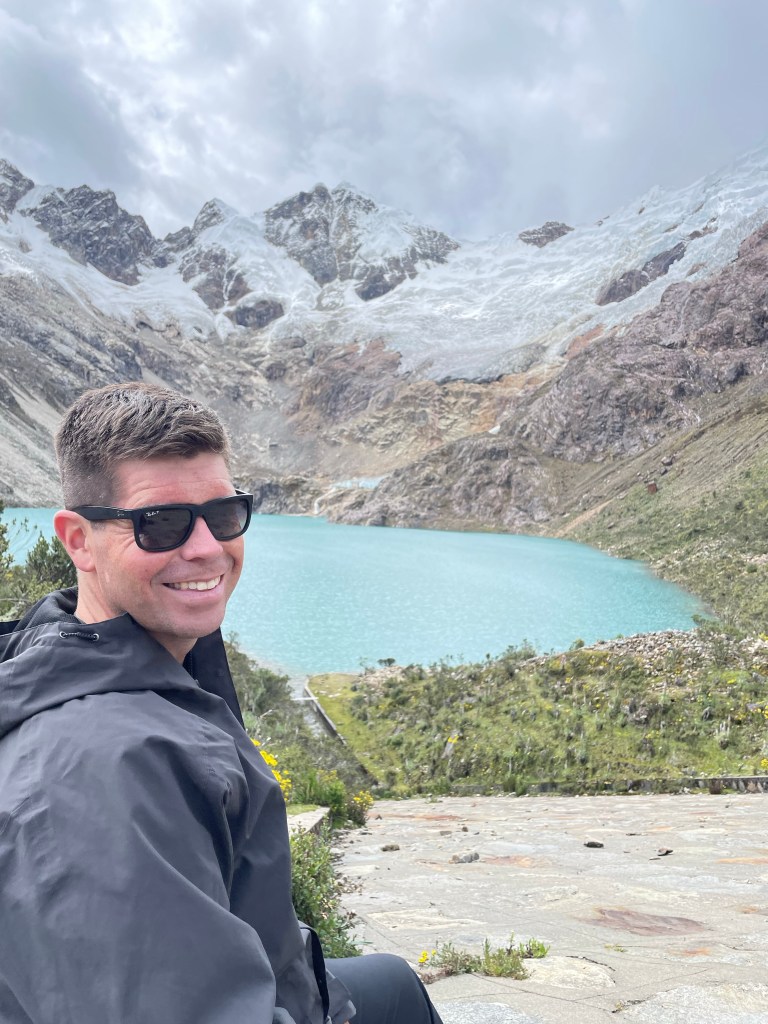
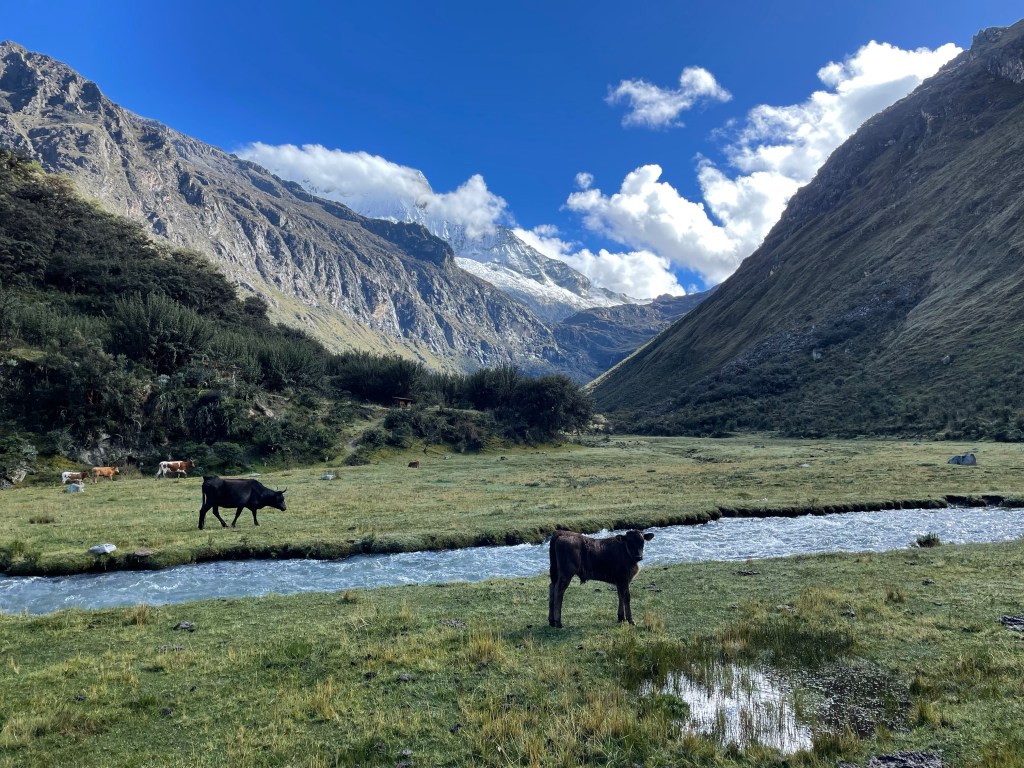
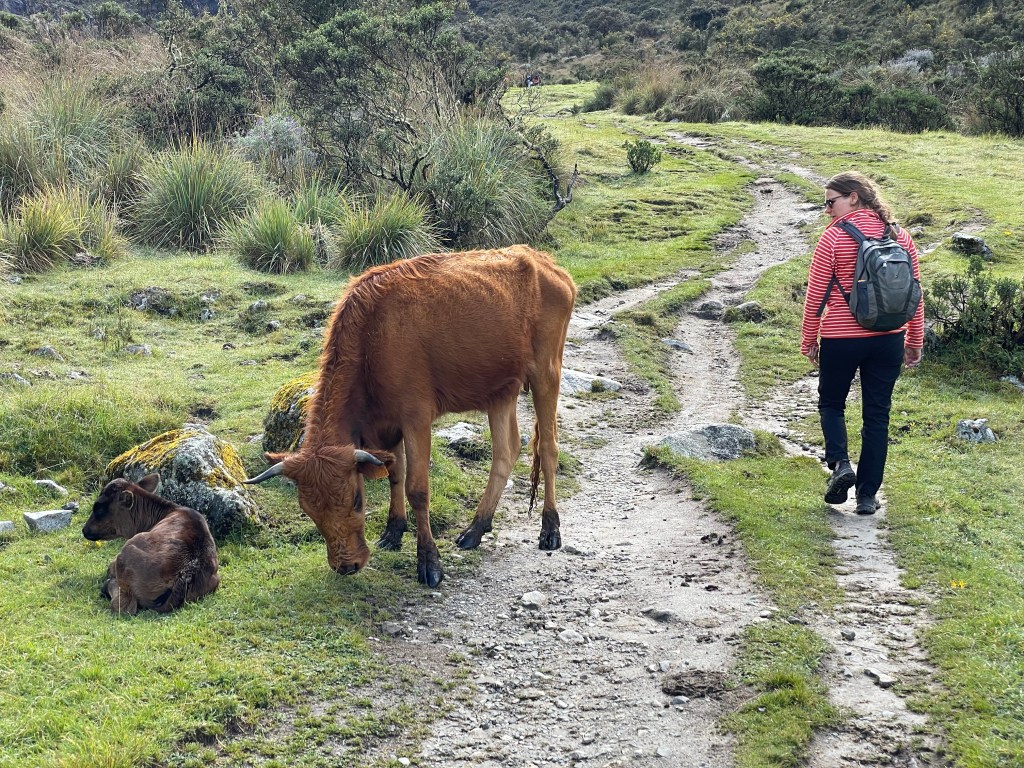
The hike to Laguna 69 starts in this valley, with its beautiful clear streams and grazing cattle. We are given three hours for the ascent, but in reality it doesn’t take more than 2.5 hours at a pretty easy pace. An hour is budgeted at the lake before we have to descend, so after 1.5 hours at the lake for lunch it gets pretty cold. The lake is at 4,600m so you need to factor this in.
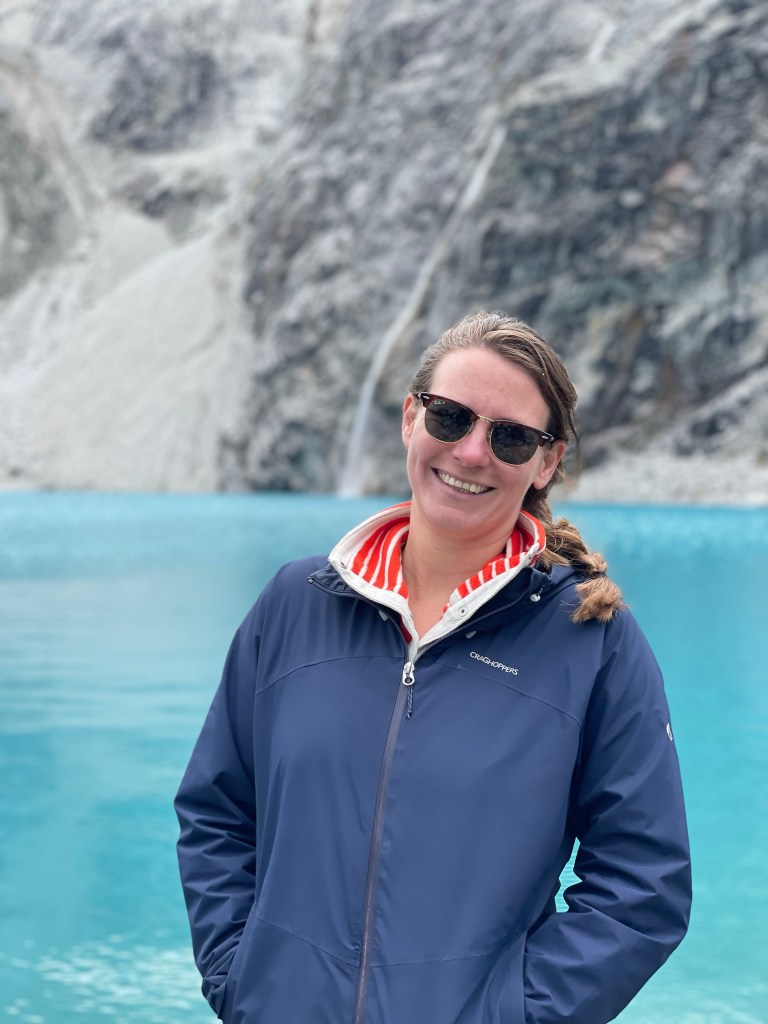
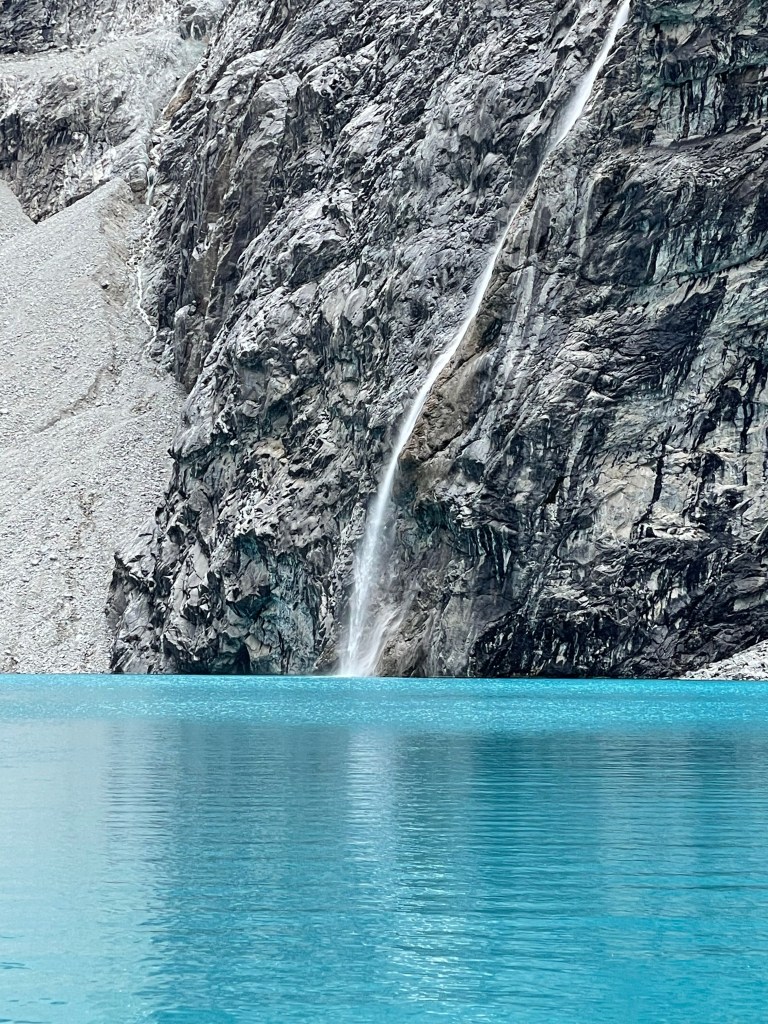
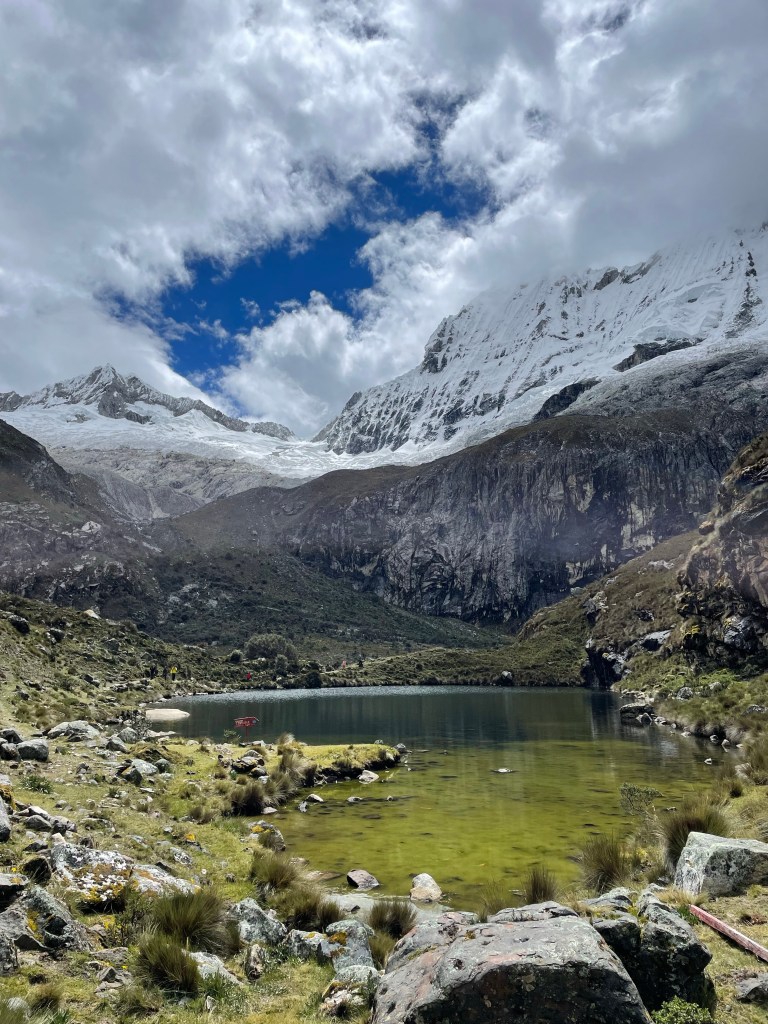
The lake is every bit as picturesque as we had hoped, and the clouds held back just enough so we could get a glimpse of the glaciers and the peaks behind. For a very straightforward three hour hike the view was a certainly a great reward.
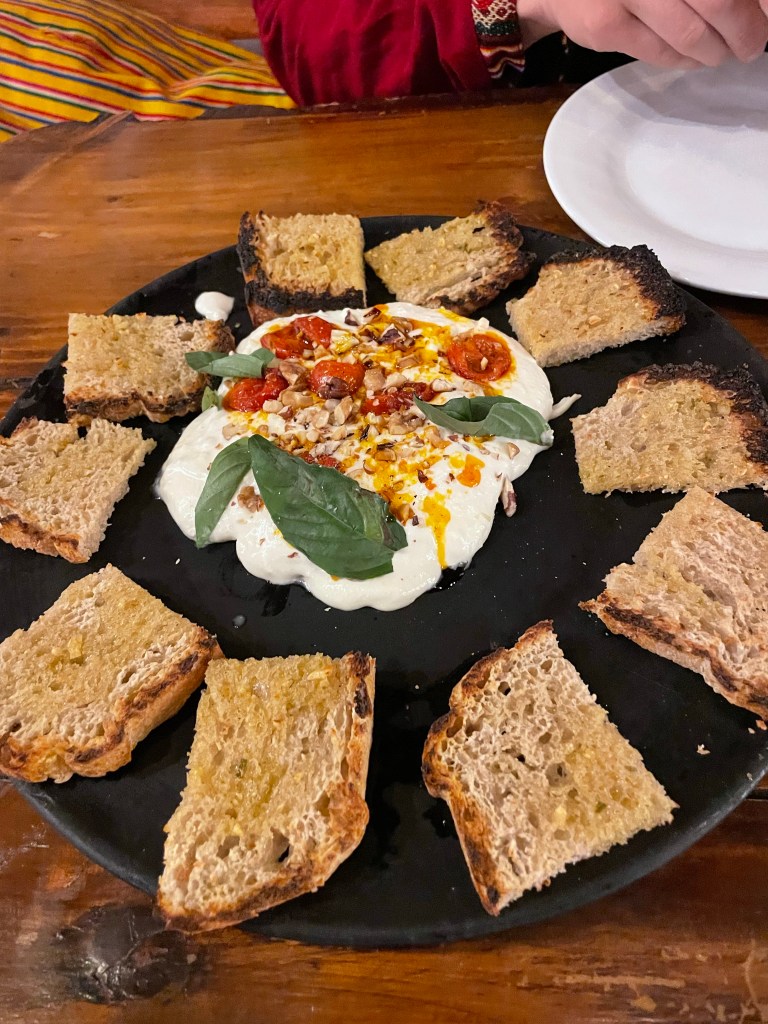
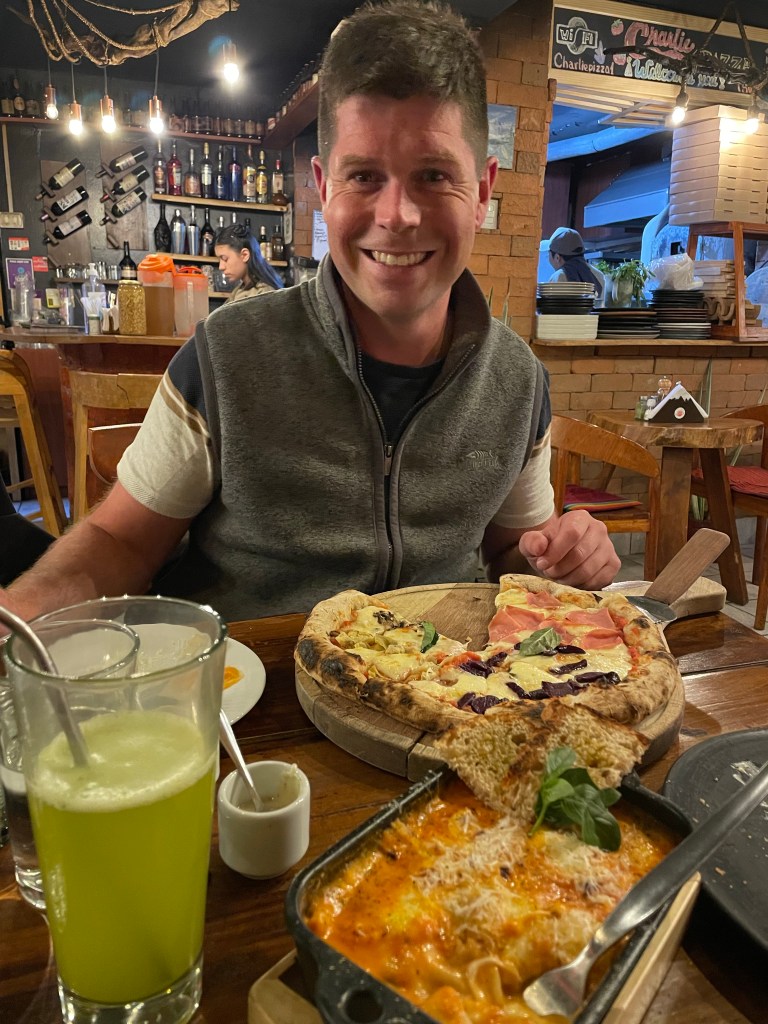
We treated ourselves to a pizza on our return to Huaraz, and to be fair Charlie’s pizza is really very good. Even if every single visitor is British…









Lago Mullaca and Paso Zorro
Our hostel host, Chris, had been talking up his favourite day hike almost since we arrived. It’s tough but rewarding was the line. A 1.5 hour taxi ride to the start followed by 10 hours of hiking, 1,400m of climbing, and reaching 5,000m.
Setting off at 6am, the first hour in the car with our driver Miguel, was possibly the most challenging of the day. Somehow his 30 year old diesel car dragged us up to 3,600m, and that was despite his driving. He waved in the general direction up the hill and vaguely told us to throw rocks at aggressive dogs, and that was that.
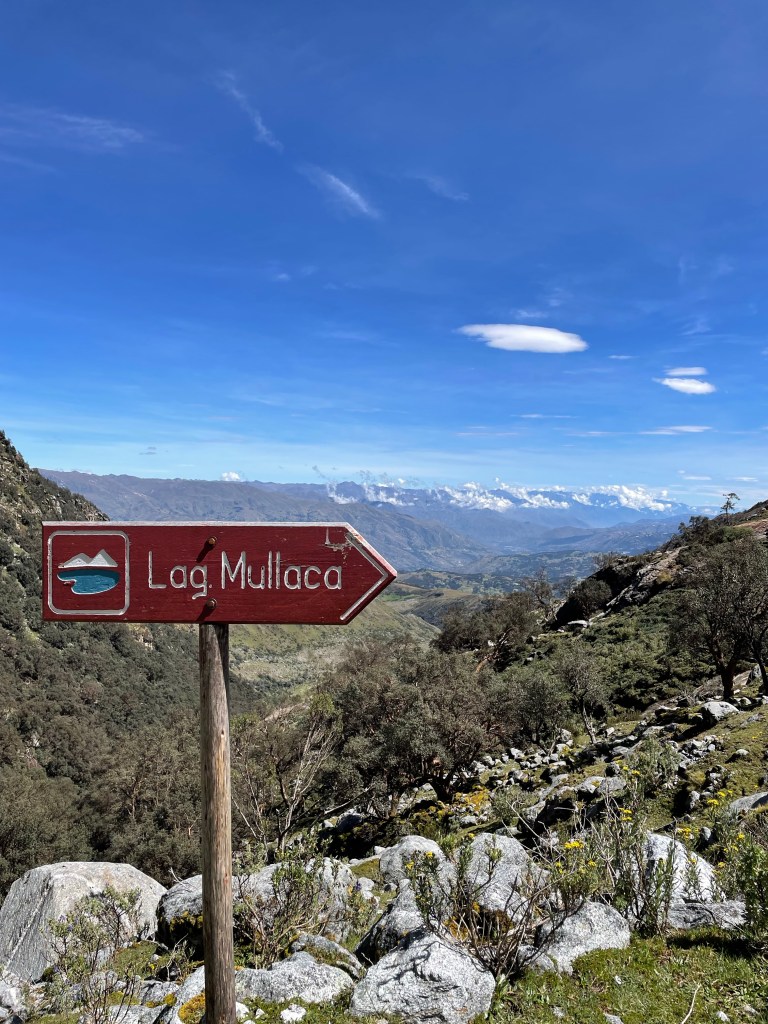
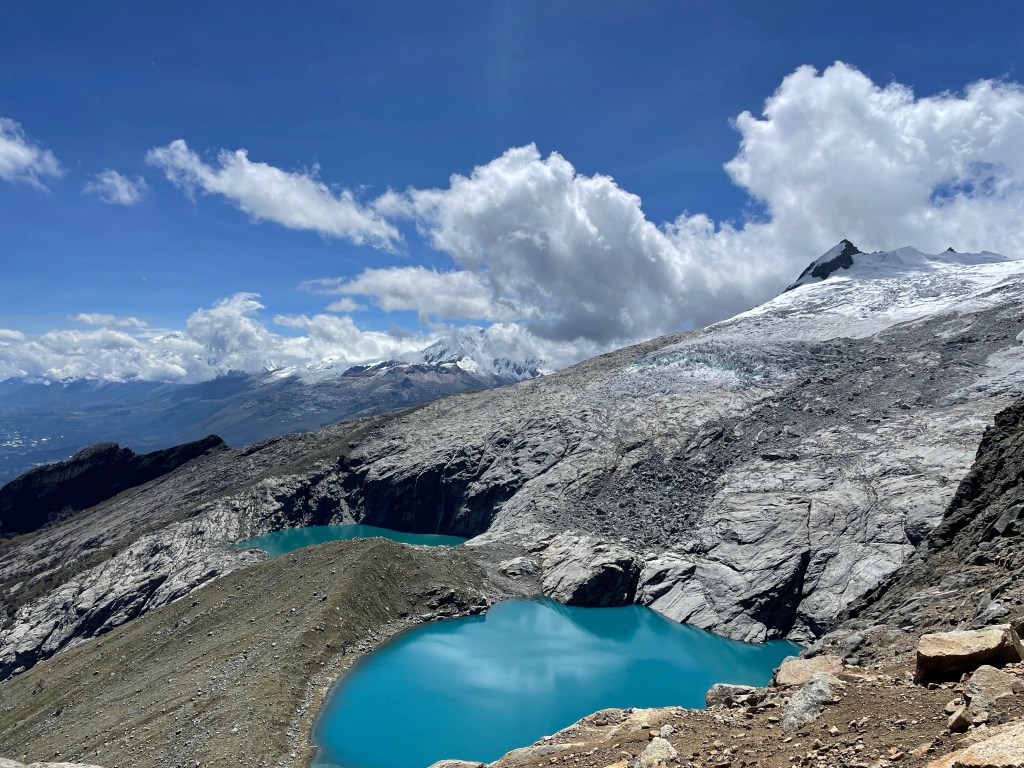
Laguna Mullaca was the first target. Reaching there was about as tough as the Laguna 69 hike the day before. Roughly 3 hours uphill to reach 4,500m and the glacial lake.
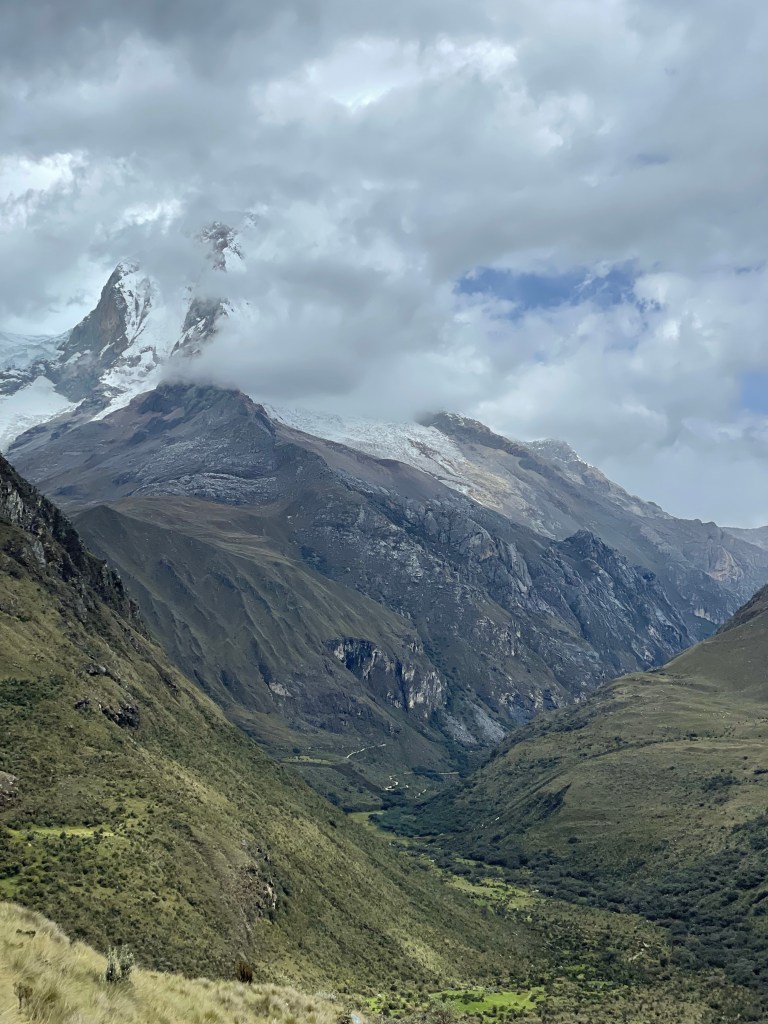
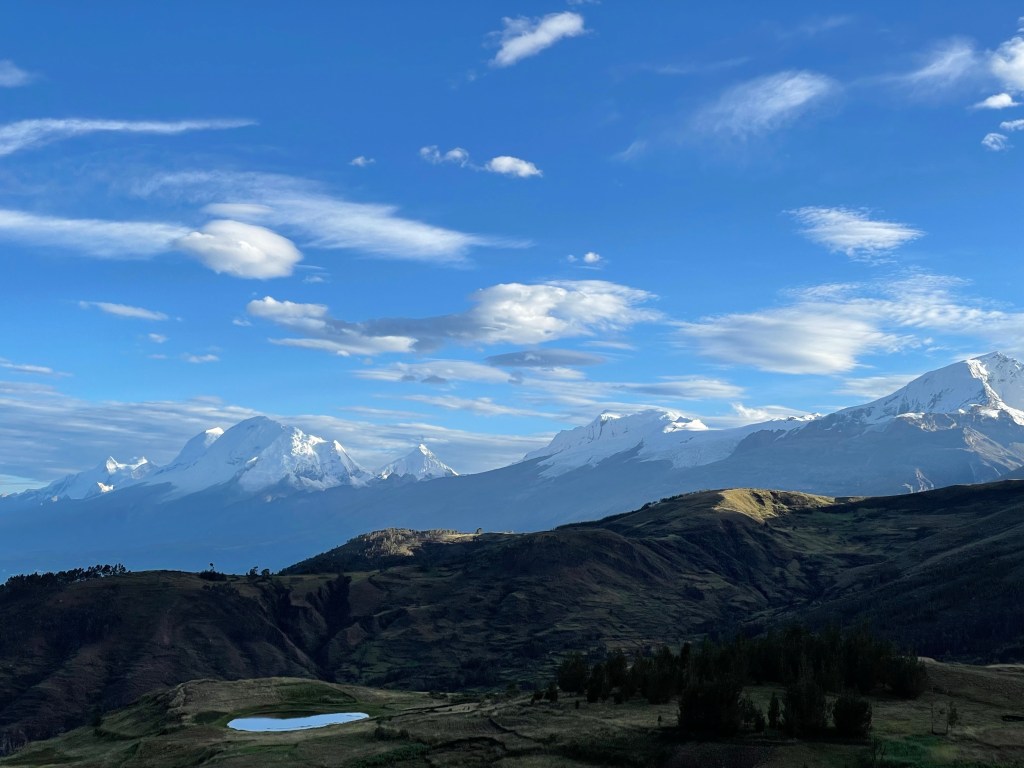
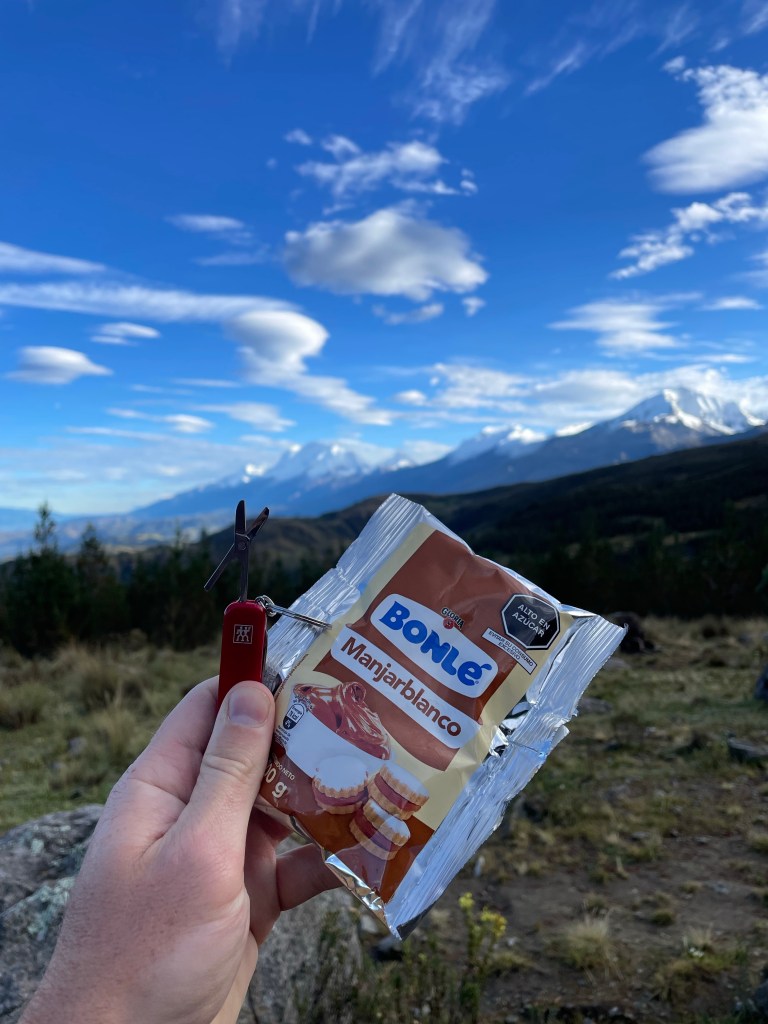
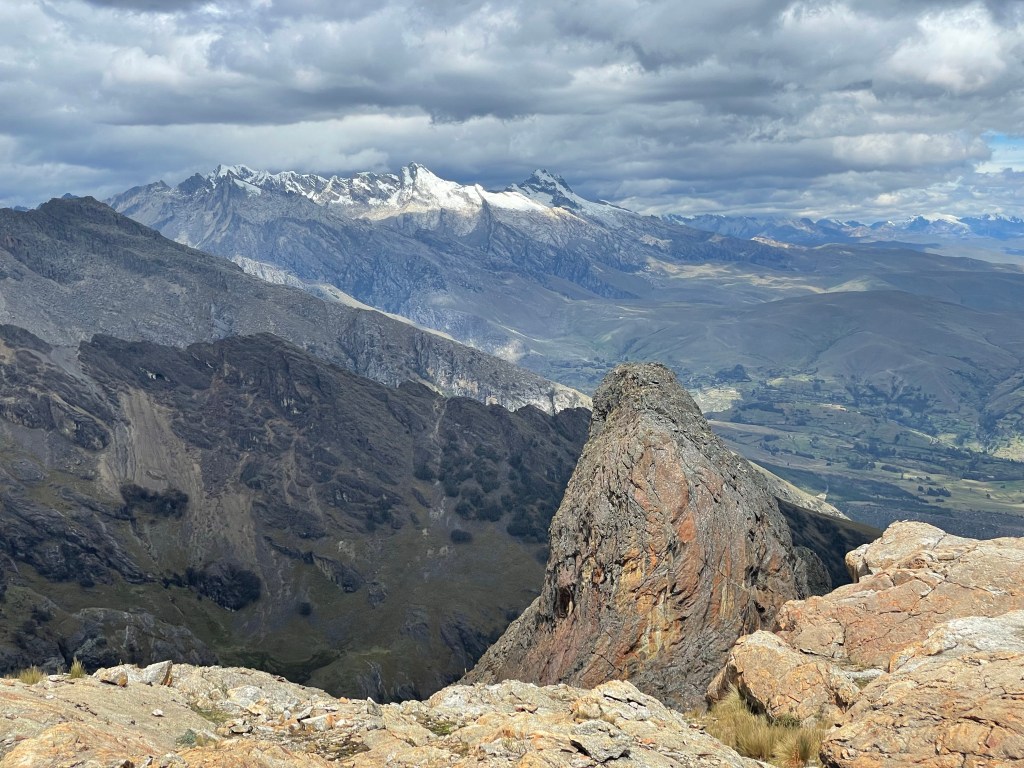
Early in the morning the skies were clear, and as we climbed we were treated to incredible views northwards along the cordillera blanca. The 6,000m+ peaks of Huascaran, Huandoy, Chopicalqui, Copa and Hualcan all clearly visible in a single vista.
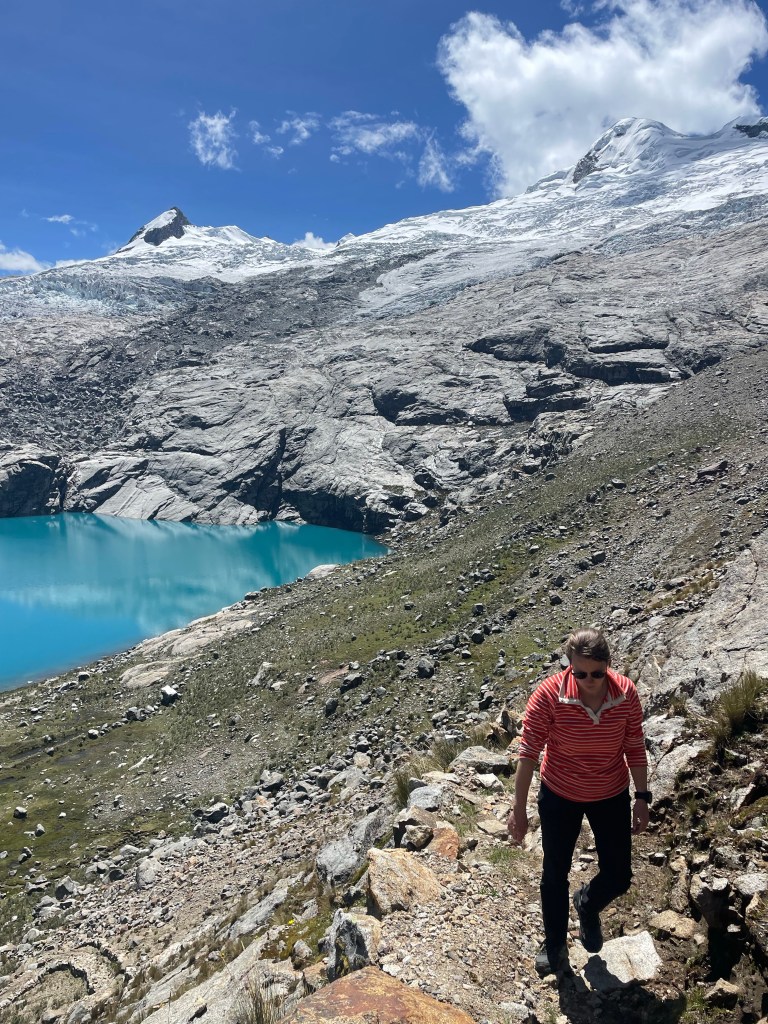
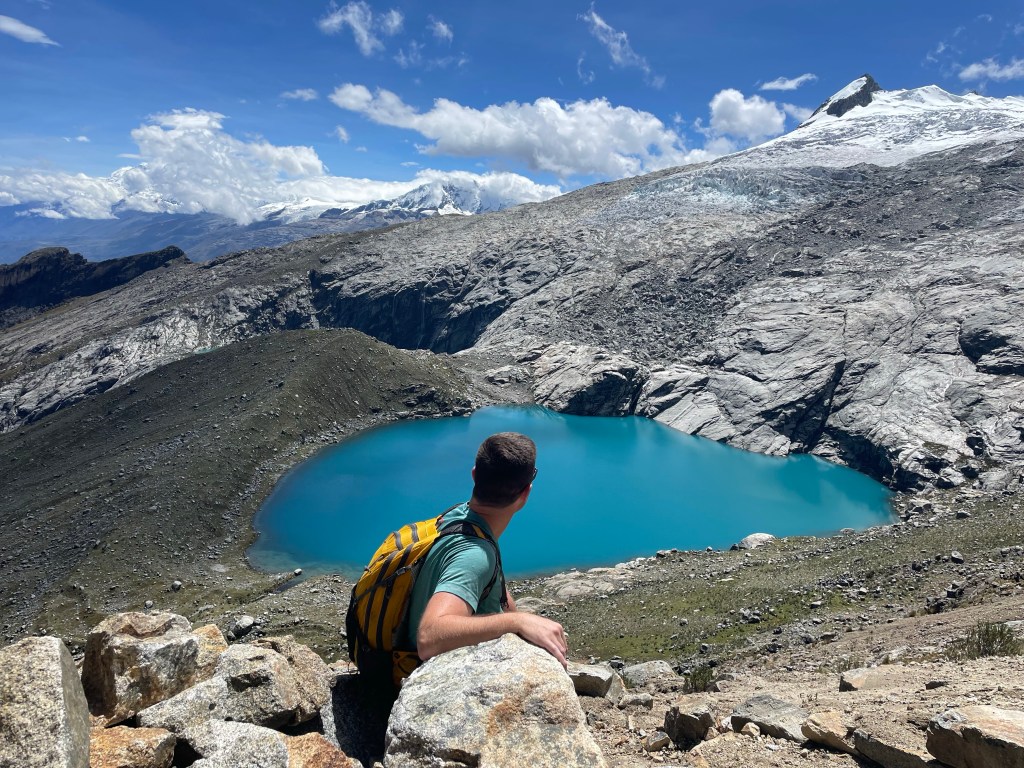
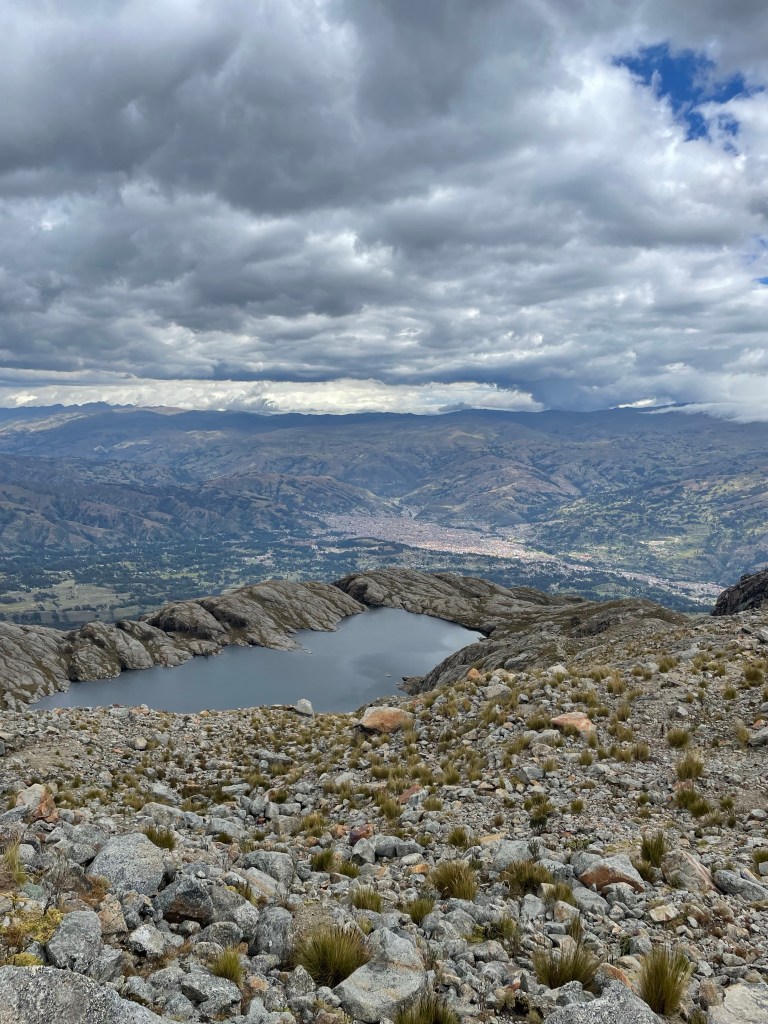
Close to the lake the climbing began to get tough, the effects of altitude starting to kick in. Mullaca itself was a stunning blue, with a huge ice sheet hanging above it.
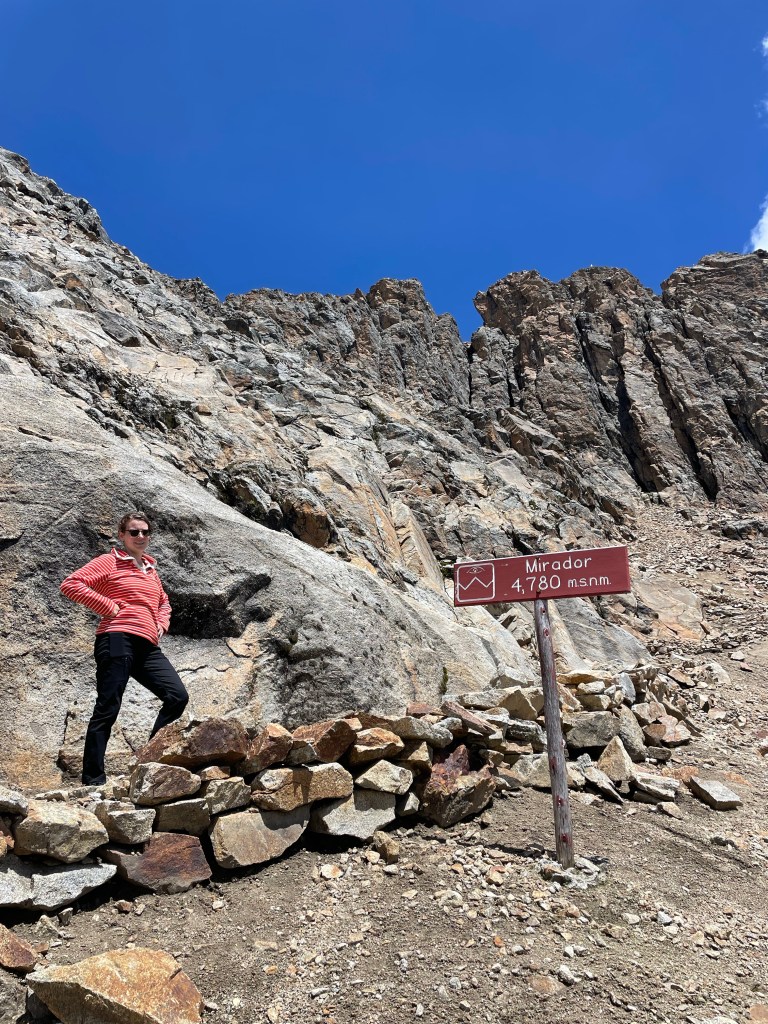
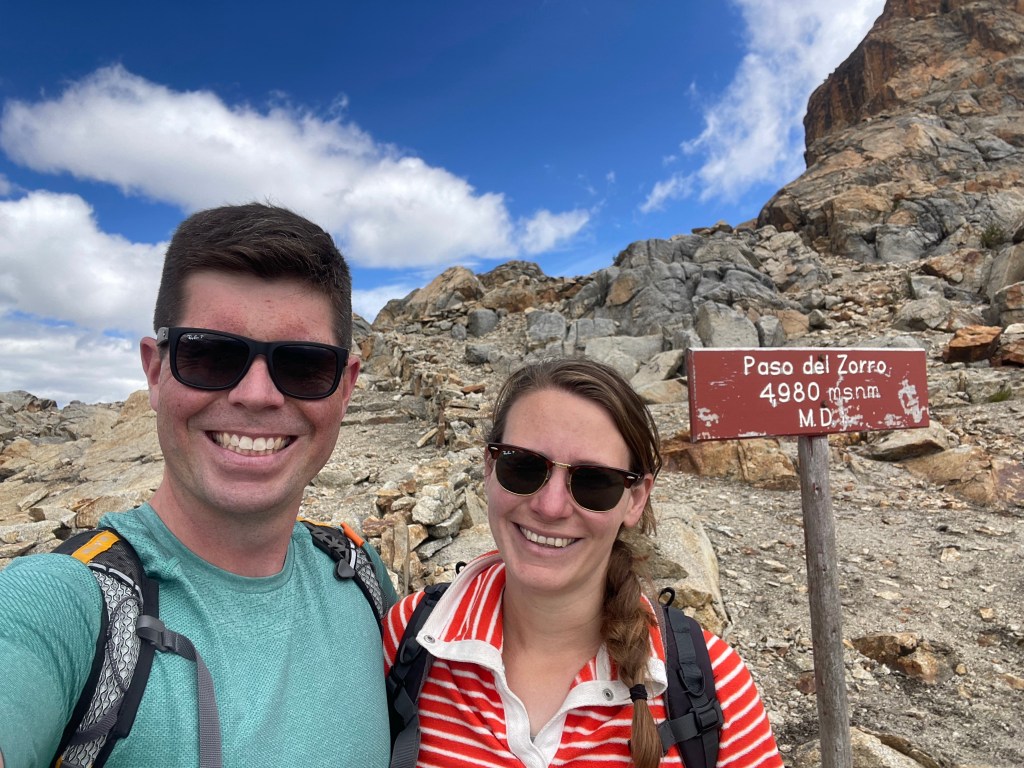
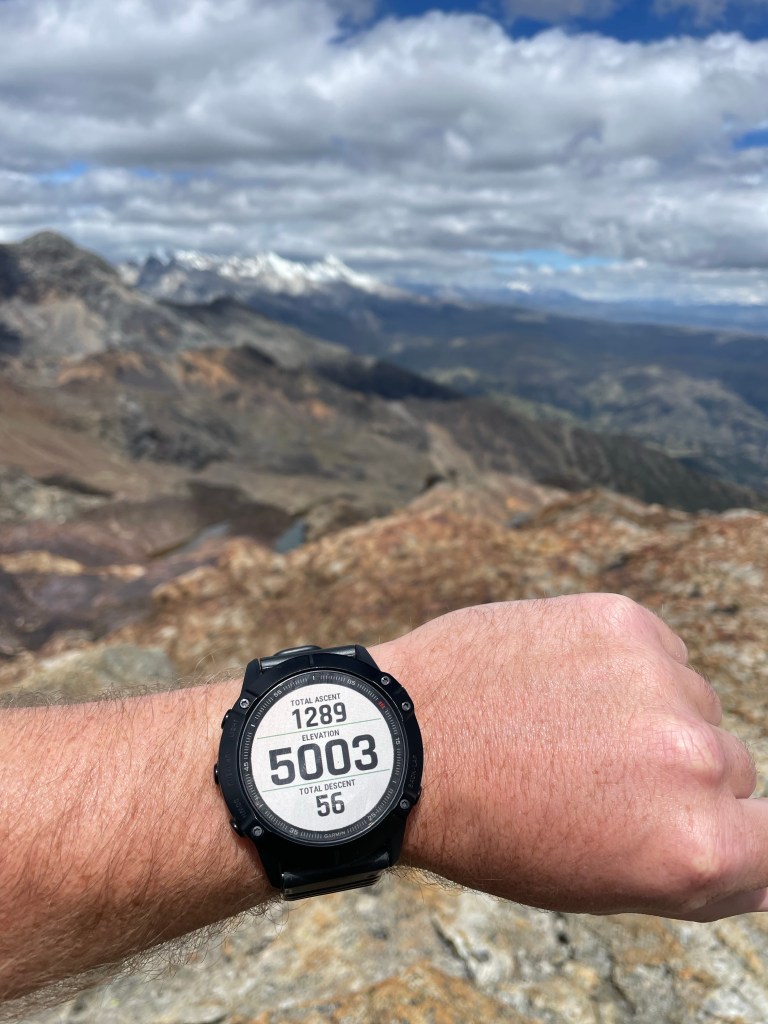
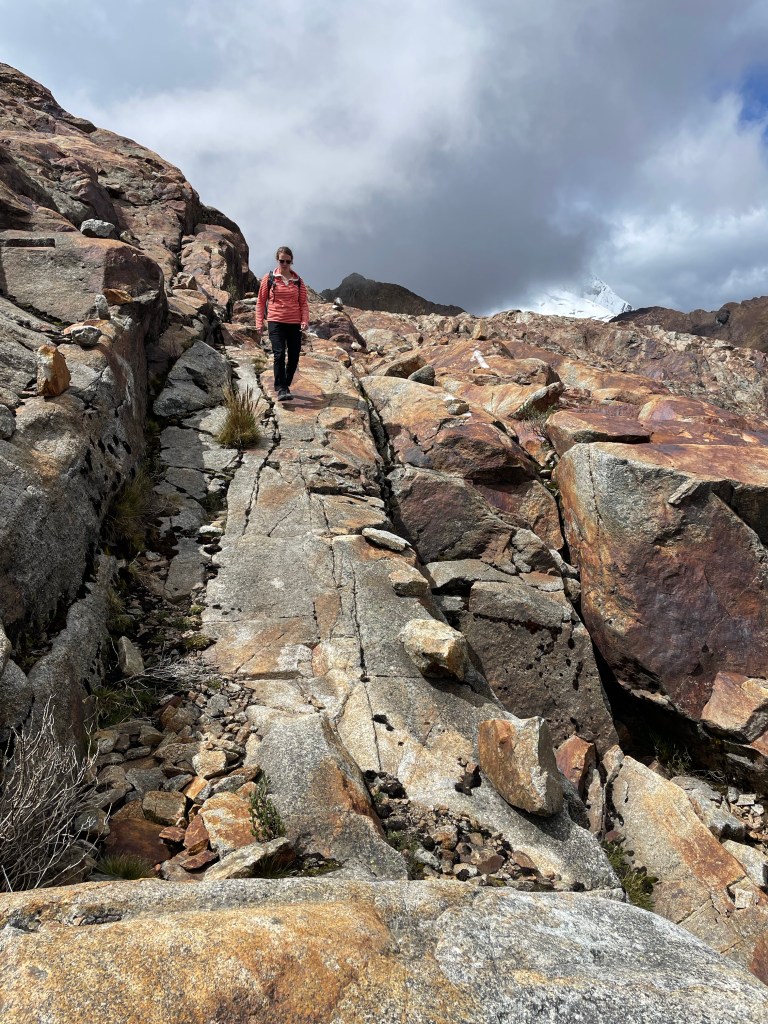
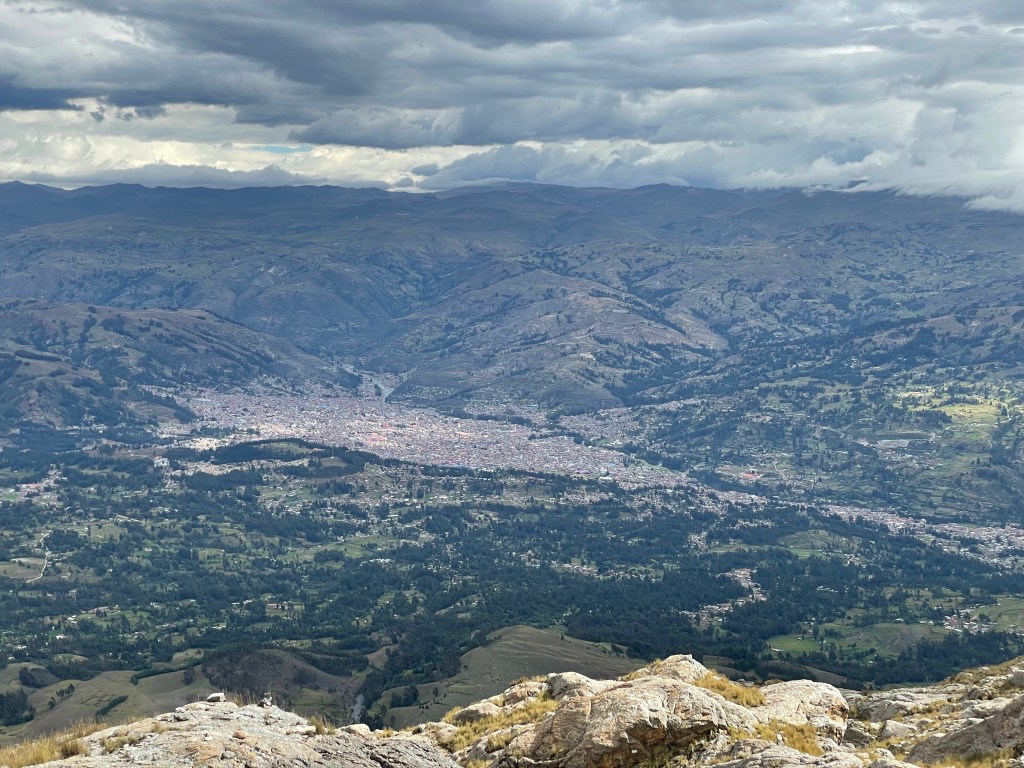
From there we climbed almost vertically up to paso zorro. Towards the top we were stopping every 20 metres or so to catch our breath. At this point Sarah swore she’d never climb a mountain again. The 500m climbing took us over 2 hours, and in that time we covered barely one kilometre. Paso Zorro itself was at 4,950m, so to break 5,000 we scrambled up a little further. From there we could see north along the cordillera Blanca, although the cloud had built to somewhat spoil the view. On the other side of the pass we could see all the way down to Huaraz, and the 2,000m of descent which awaited us.
Descending took us 4 hours, and we reached Wilkawain 10 hours after we began. As we were walking down the street a Collectivo taxi stopped and asked us if we were heading to Huaraz. We couldn’t say no, but it was only 2.5 soles (50p) each for the 20 minute ride into town.
Paulino’s is an Indian restaurant in Huaraz. We had been missing good food, and Indian food in particular. Paulino’s was a passable interpretation of a decent Indian restaurant and was a welcome treat.




Chavin de Huantar
After back to back day hikes we wanted a more chilled day before our night bus. A day trip to Chavin de Huantar was the answer.
First we had to find Mike’s missing laundry – which turned out to be mixed in with the shop owners load – quite how they thought the large t-shirts and shorts were theirs I don’t know. I don’t think any Peruvian has ever dressed like that.
Problem solved we pressed on to make our way to Chavin. Armed with the knowledge that colectivos left from somewhere near the market, we set off. After asking around at the central market (it’s a big and bustling place taking up at least two city blocks) someone offered us space in a car. Hesitantly we accepted. One the final spot was filled, the guy proceeded to drive like a maniac.
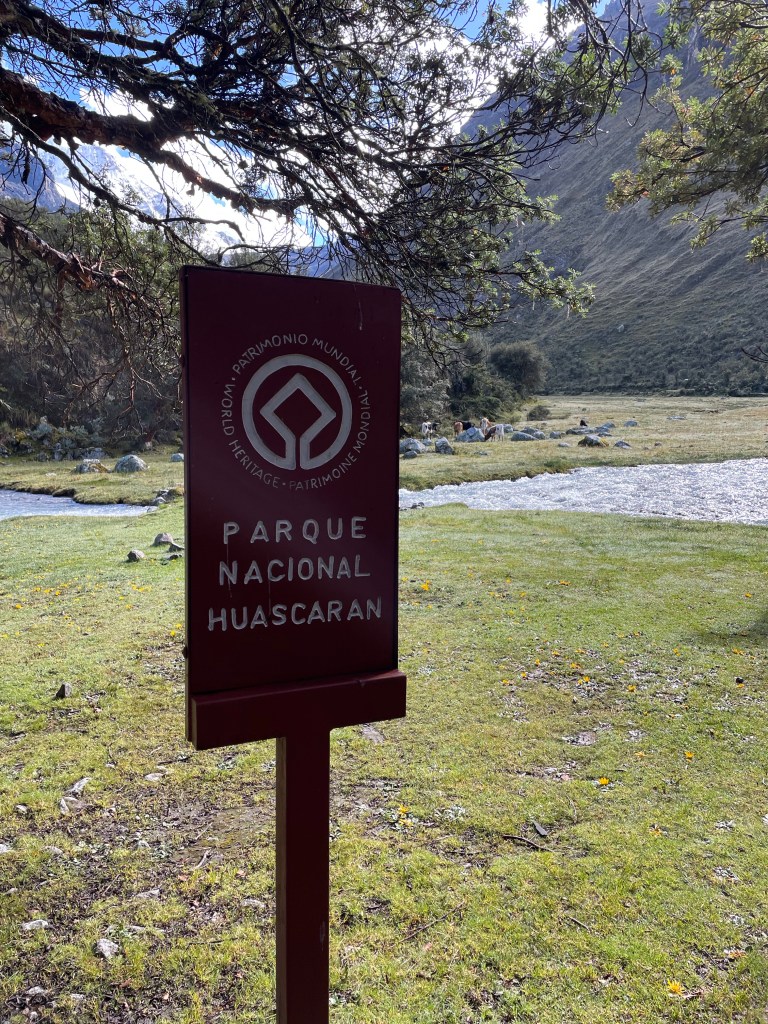
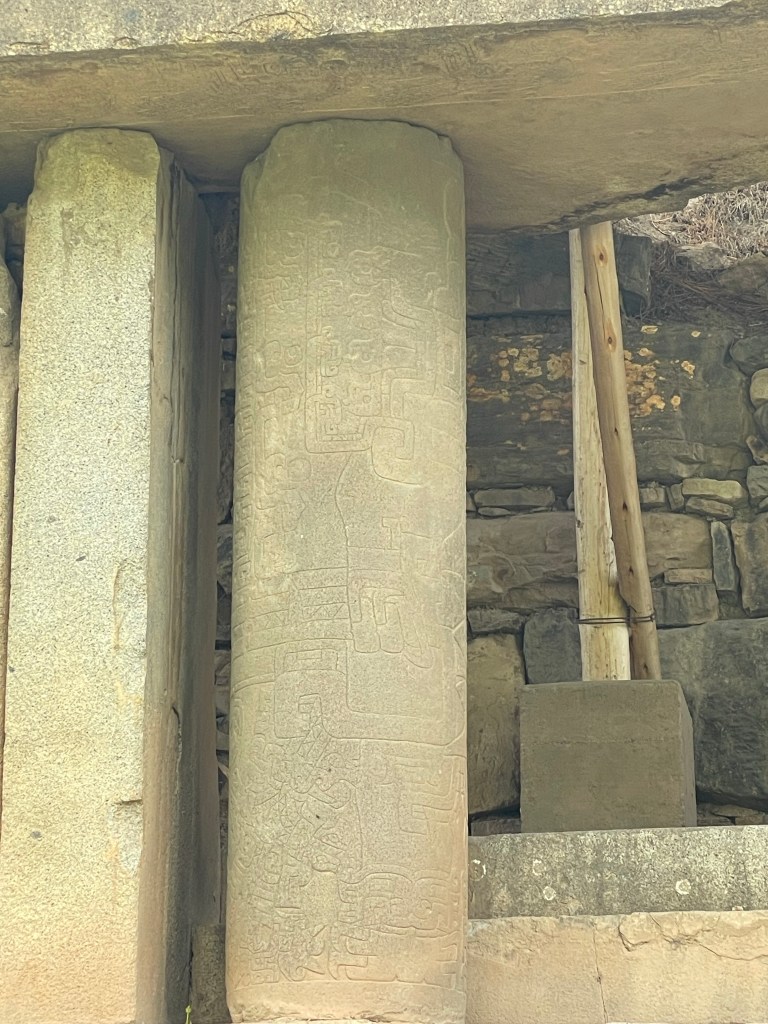
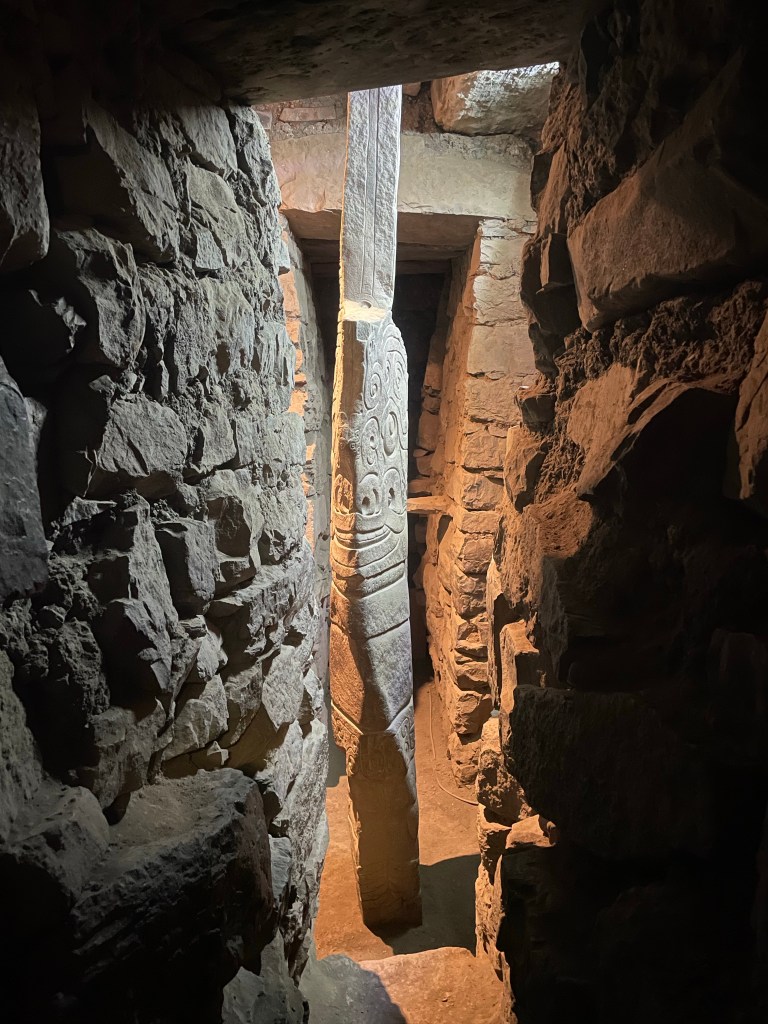
The archaeological site at Chavin was amazing. We were the only people there and had it to ourselves, and it was another one on the recurring UNESCO world heritage list.
Chavin culture pre-dated the Incas by around a thousand years. Here the ruins are from 1,000-500 BC. There are some remarkably preserved ruins, but also many intricately carved stones. The main highlights were: going inside the rooms of the main temple and seeing the Lanzon de Chavin a 4.5m tall carved stone monolith, also known as a sacred wanka. The carved half man half cat heads in situ were also a treat, and one of the main cultural highlights of the whole of Peru.
Getting a bus back was easy, everyone in the plaza de armas was waving at the only white people in sight who clearly wanted to return to Huaraz.
We returned to Lima on our trusty Cruz del Sur night bus. But not before a pizza at Charlie’s, and a hairy taxi ride with our ‘favourite’ driver. High as a kite he was regaling us tales about his ‘farm’ whilst cutting up Huaraz traffic.






- The infamous Binga-Karoi road
- Mana Pools: A bucket list location?
- Camping Among Lions: Chitake Springs Experience
- Chirundu: The worst border in the world
- The Wild Dogs of Jeki: Sunrise in Lower Zambezi
 Small Holiday Big Dream
Leave a comment