Reviews of Machu Picchu hint at the fact that it’s the Mt Everest of tourist traps, but it’s quite good so you kind of have to go.
The plan was to strike quickly, in and out in 24 hours. To disappoint the fans, we dropped the idea of an Inca, Salkantay, Lares, or another ‘trek’ in favour of some walking further north in Peru (Great decision in hindsight).
How would we cope with the hordes of Americans? Let’s see.
Cusco Museums
We had a ticket and we were damn well going to use it. The Cusco tourist pass which had cost us 130 soles each a couple of days earlier permitted us entry to a handful of Cusco museums.
Museo regional de Cusco was average at best. There were a couple of interesting pre-Incan artefacts, and of course some Inca stuff, not worth going out of your way to visit, but when you’re in Cusco with a free ticket…
The museo de arte contemporáneo is a waste of time, and a waste of a fairly nice building. The single room took us less than 90 seconds to visit, modern recreations of old musical instruments seemed to be the theme. Across the square from the regional museum, and next door to choco museo, at least we didn’t go out of our way.
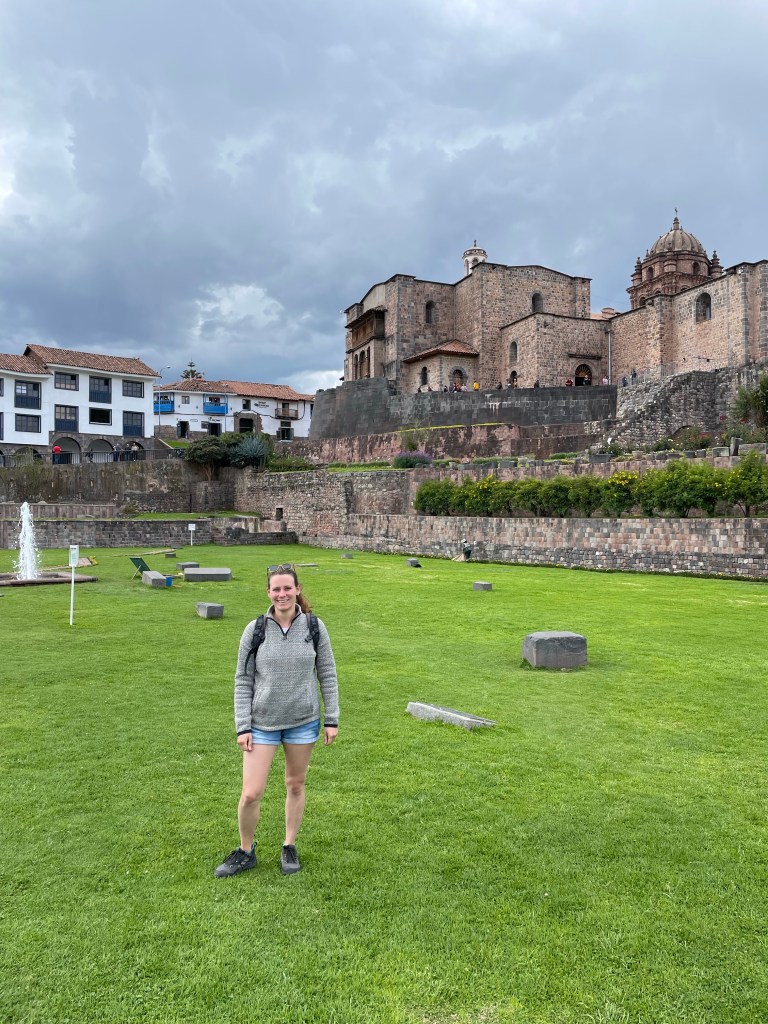
Qorikancha site museum was the best of the three. One of the most important sites in old Cusco, there’s some good Incan artefacts on display. Here there’s another child mummy, in worse condition that lightning girl and juanita, it’s quite a creepy sight.
The alpaca museum is not a museum but a shop. We’ve already covered this trick, so here’s another example. In case of interest they sell alpaca wool jumpers. Expensive for sure, but at least you know they’re genuine rather than the ones at the market stalls. Although at these prices we’ll take our chance at the market.
In the evening we took a collectivo to Ollantaytambo in the sacred valley. We were staying the night here before heading to Machu Picchu on the train. The collectivo driver was a maniac, using both lanes around blind corners, using his horn liberally, and overtaking on speed bumps. Standard for Peru but terrifying for us.
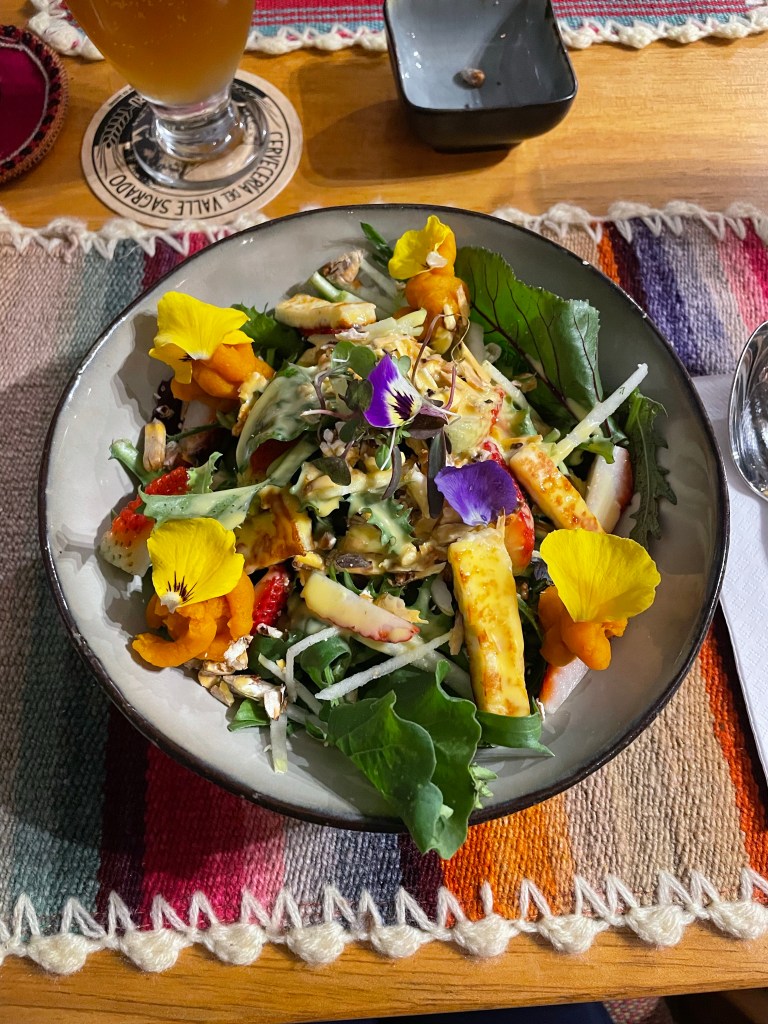
Restaurant Chullpi in Ollantaytambo is brilliant, the host is very welcoming and the food was excellent with a local twist. Wholeheartedly recommended.




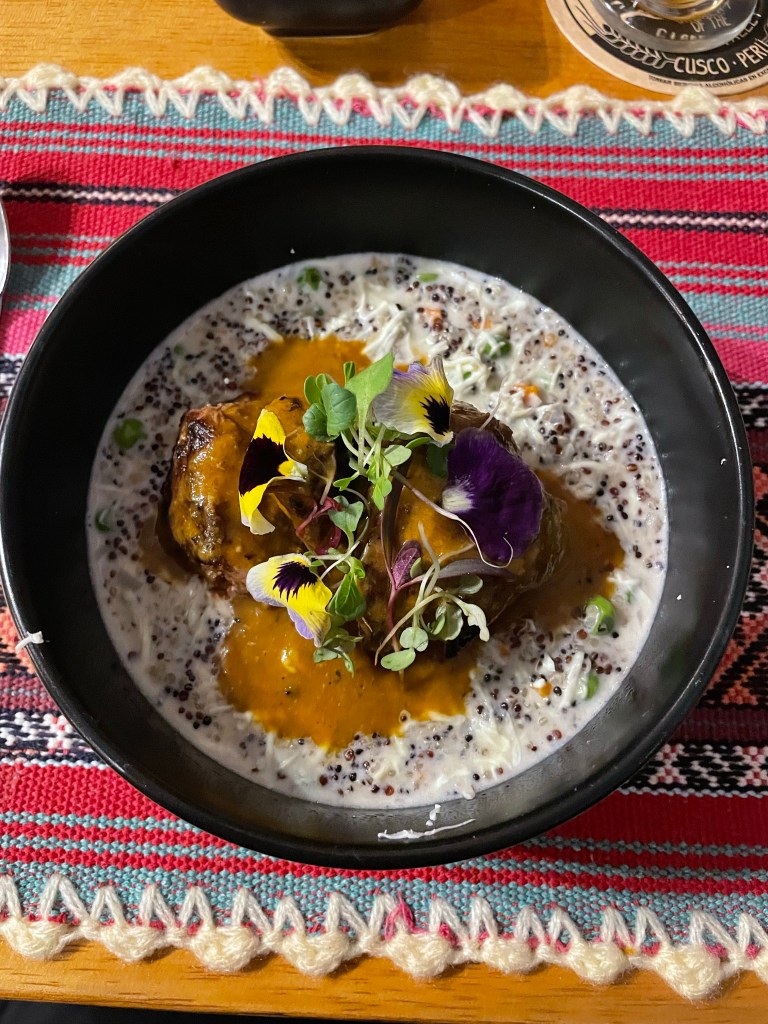

Ollantaytambo
Ollantaytambo is a highlight of Peru. This small town is the end of the road in the sacred valley. From here the only way to continue down the Urubamba river towards Machu Picchu is via the rather overpriced train. Consequently the town sees more than its fair share of fleeting visitors. Most will pass straight through but those who stay are in for a treat.
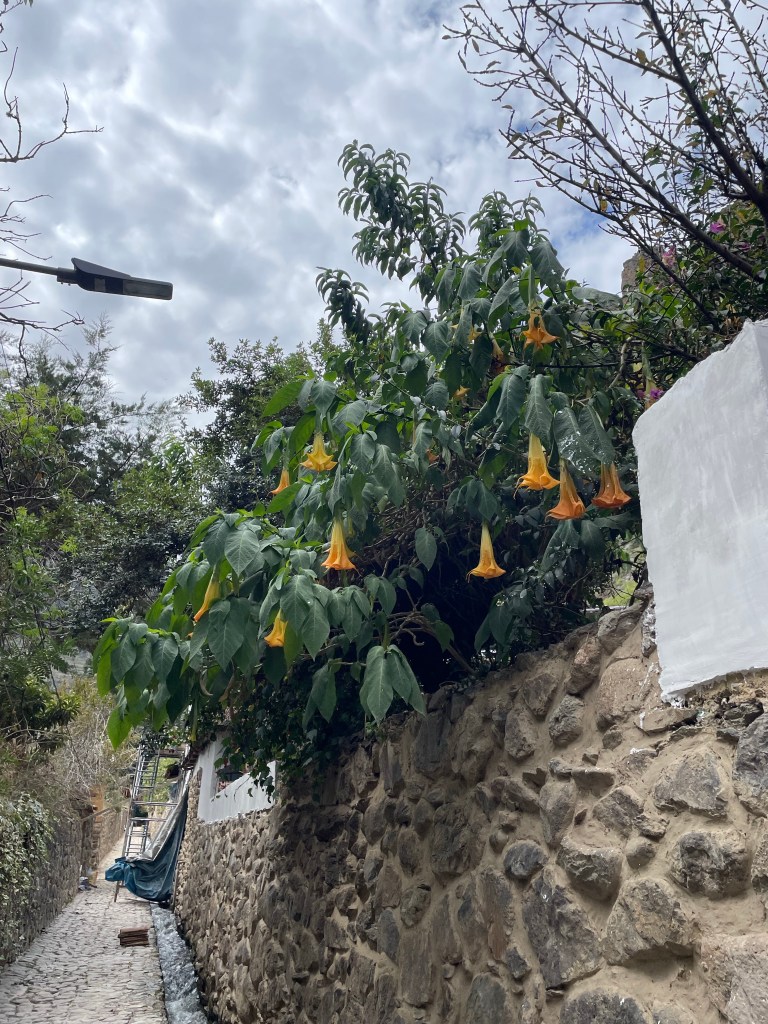
The main archaeological site is on the western side of town, but really the whole settlement is a fascinating Inca treasure trove. The streets are laid out in a tight grid, with narrow cobblestones alleys lined with drainage channels full with fast flowing streams. The foundations of each building retaining their iconic Inca roots with their large multi-angled grey stones giving the place a unique look.
The main ruins are included in the Cusco ticket – so we happily entered and got our ticket stamped (or more accurately hole-punched). As with all Peruvian tourist attractions, information is at a premium. An information board or two wouldn’t hurt, but sadly we’re left to our own (mobile) devices to google things.
The swarm of guides questionable legitimacy outside the sites is always off-putting. The Peru tourist board should fix this – a fixed price visible to all at the ticket office would sort things, and hiring a guide through an official channel, such as the ticket sales window, would make things even better. But the authorities seem to prefer a disorganised mess.
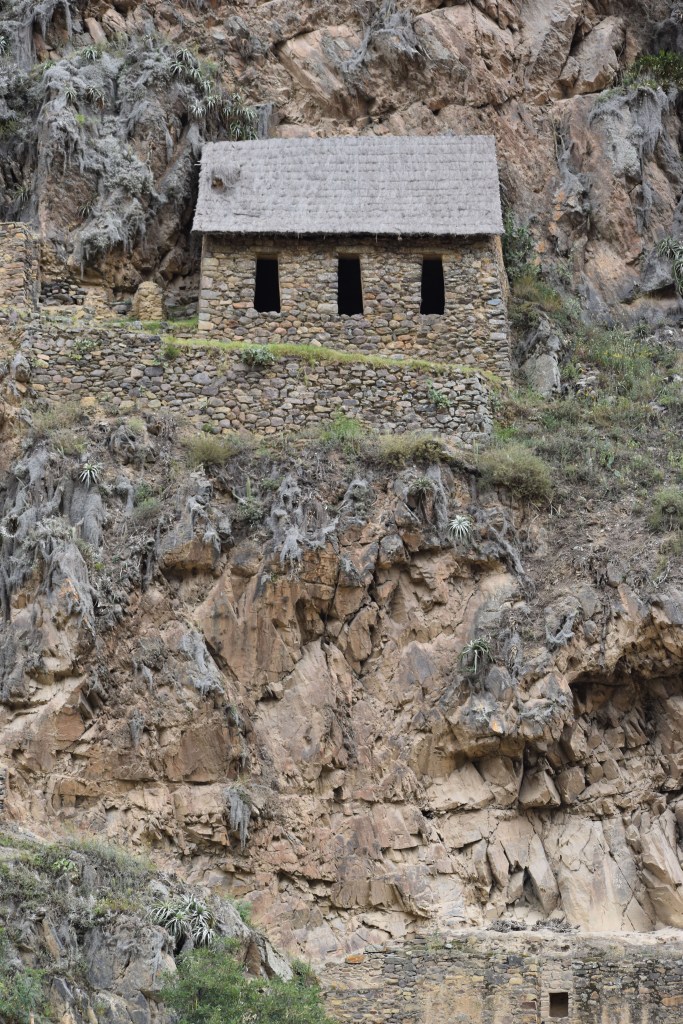
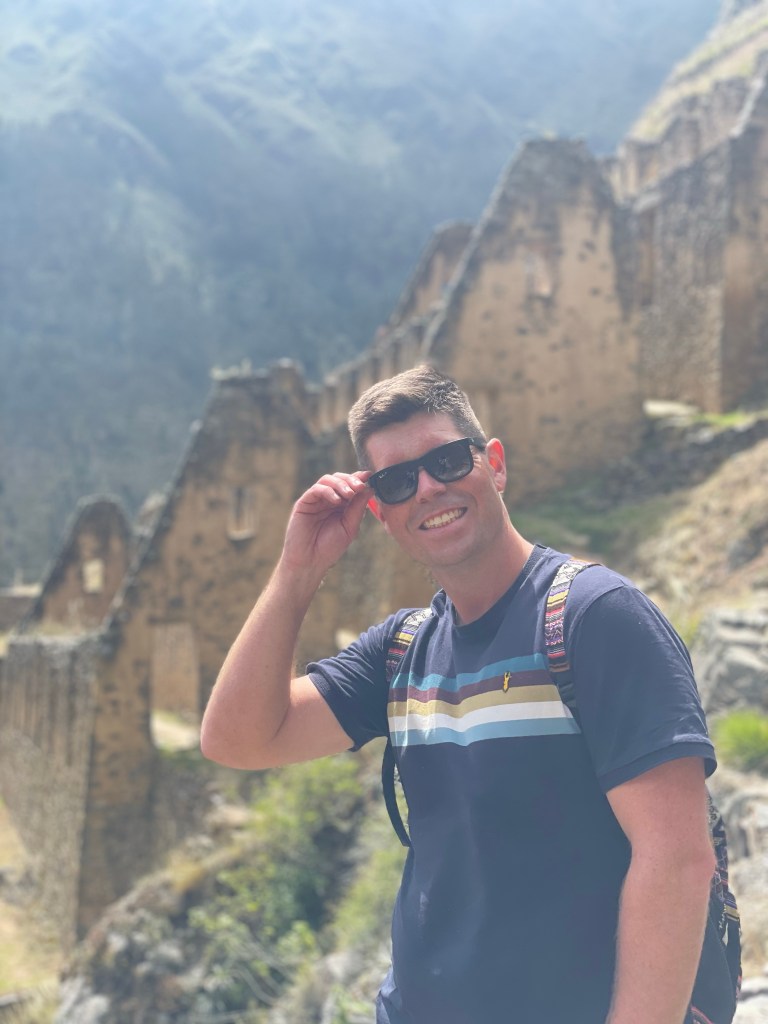
Above the town to the east are the iconic storage buildings perched high upon the cliffs. Free to visit they gave us a great overview of the valley and the ruins.
The ruins and terraces around Ollantaytambo can fill a full week themselves, but it was time to move on to Machu Picchu.
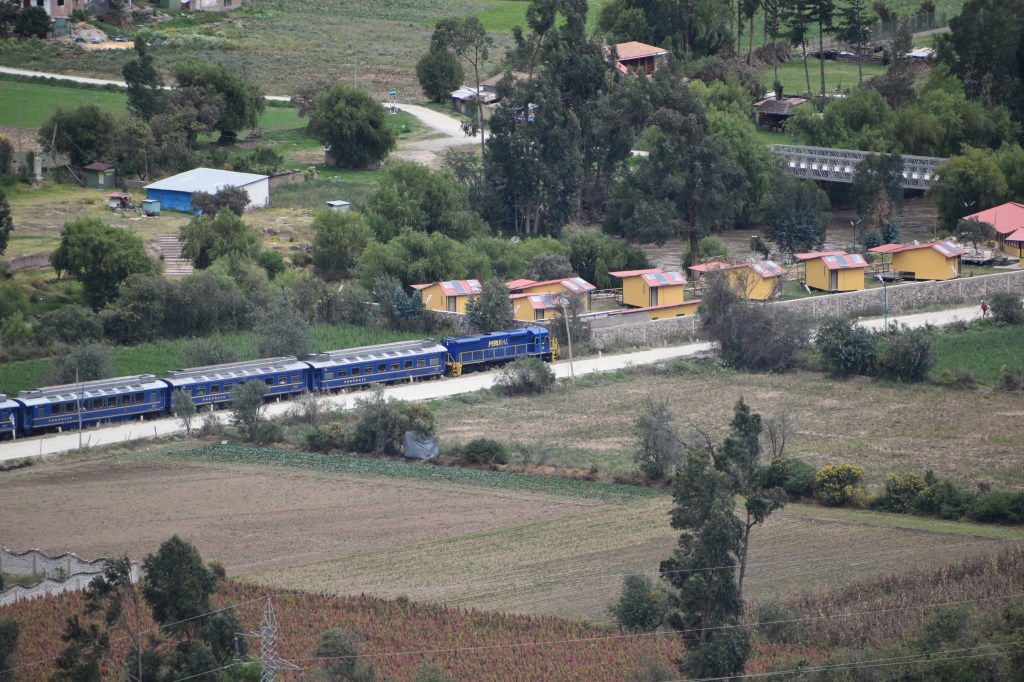
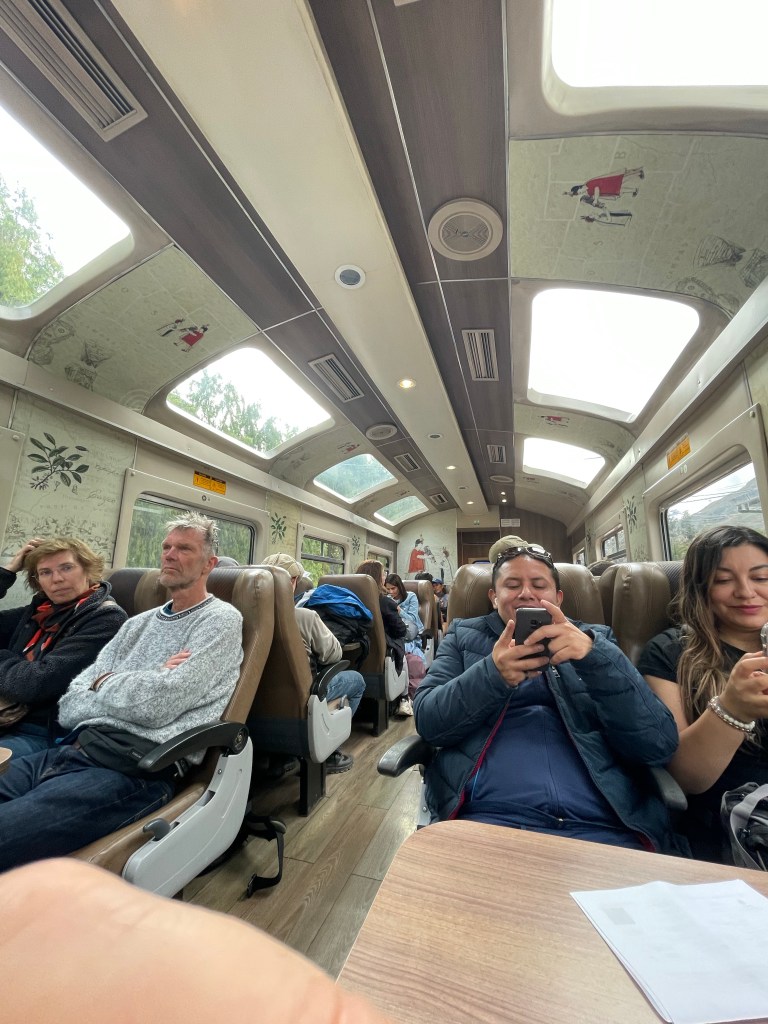
The Peru rail train makes southwestern railway look like an absolute bargain. The price per km travelled is well above £1 which is absolutely eye watering. Frustratingly they charge in US dollars – already hinting at what a disgraceful tourist trap it is – and it cost us over $250 for the two of us to travel the 40km to Machu Picchu pueblo and back. The train ride itself is billed as stunning – and you can pay more for carriages with slightly bigger windows, and small windows in the ceiling. It’s nice, but the extra cost for the ‘vistadome’ ticket is in no way worth it. That said, the standard ‘expedition’ ticket is a rip-off too.
To get to Machu Picchu (just the town let alone the archaeological site) you have limited options:
1. Take the rip-off train
2. Get a bus the 7 hours from Cusco to Hidroeléctrica, and walk 3 hours to Machu Picchu Pueblo.
3. Walk the Inca trail (or a derivative thereof) which requires a year’s booking in advance
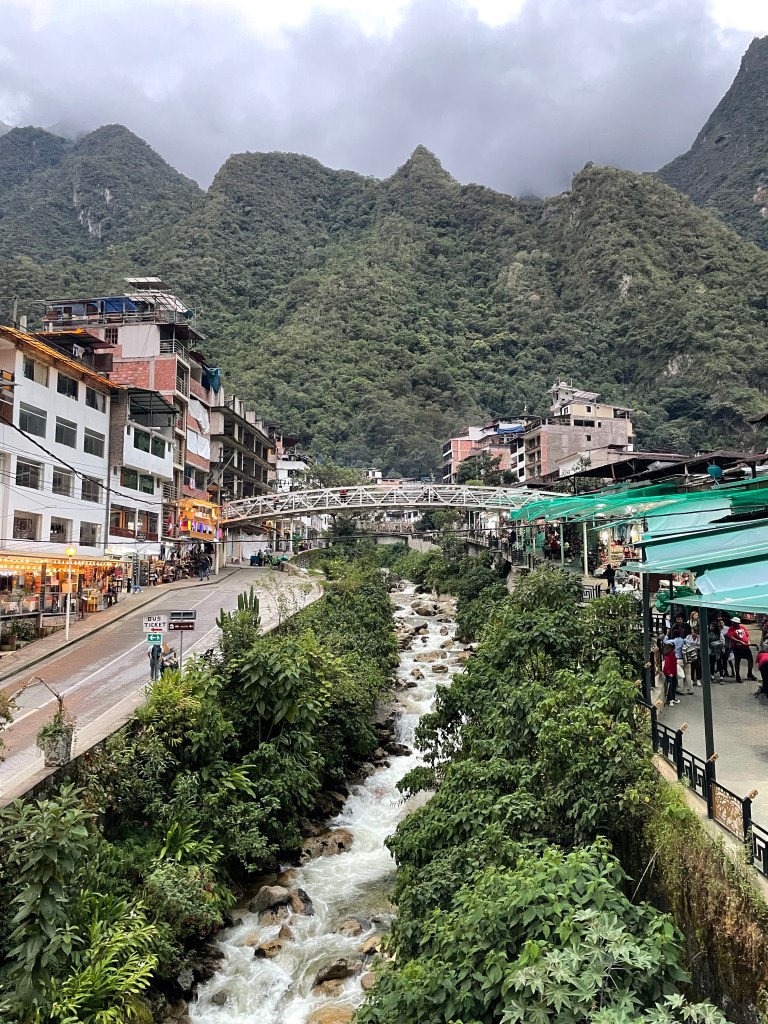
Machu Picchu Pueblo is the new name for the town formerly known as Aguascalientes. The small settlement at the foot of the climb to Machu Picchu, nestled in the only possible space alongside the river.
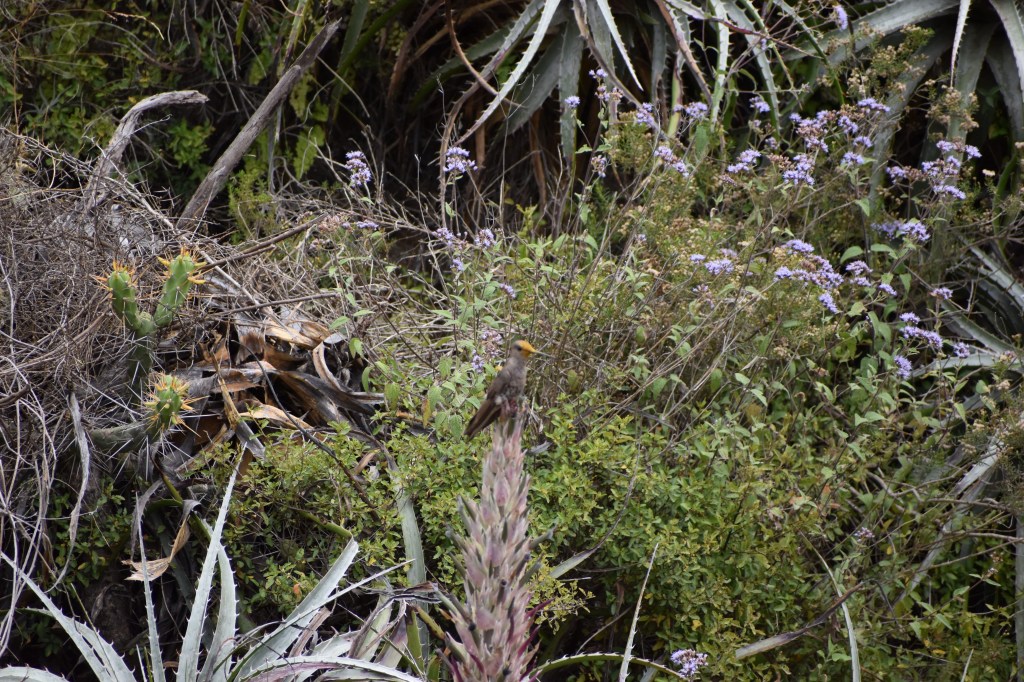
From Ollantaytambo the river descends over 1,000m, and the vegetation changes completely. Up above 3,000m grass covered the valley sides, with the odd copse of eucalyptus trees, and several terraces filled with corn and wheat. Down in MP Pueblo the air was thicker and wetter. Cloud forest lines the valley sides, big trees and shrubs, and also more colourful flowers predominate.
Three notable things about MP Pueblo.
1. The train runs down the middle of the street, and right in front of our accommodation.
2. The train station is hidden in the middle of the tat-market.
3. It’s possibly the most expensive place in Peru. The restaurants are overpriced, and focused on quantity over quality (surely the influence of the hordes of America tourists). But where else are you going to go?
To accompany dinner there was the choice of Abbot Ale or Old Speckled Hen, for the Happy Hour price of £5 a pint. Enough said.

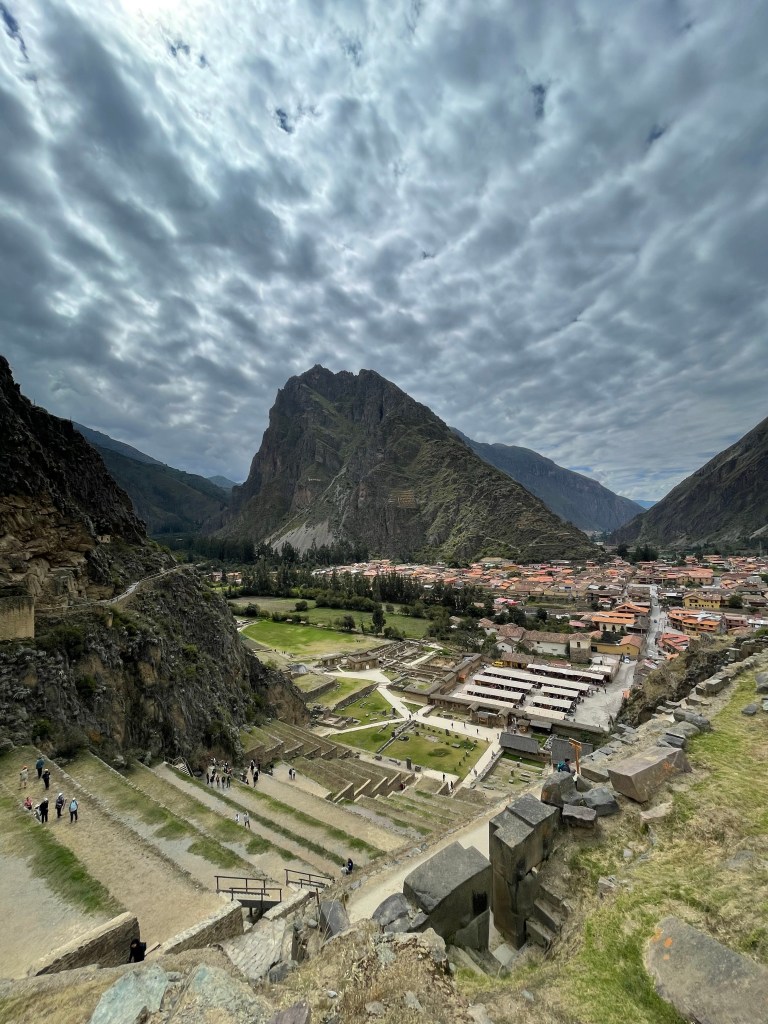

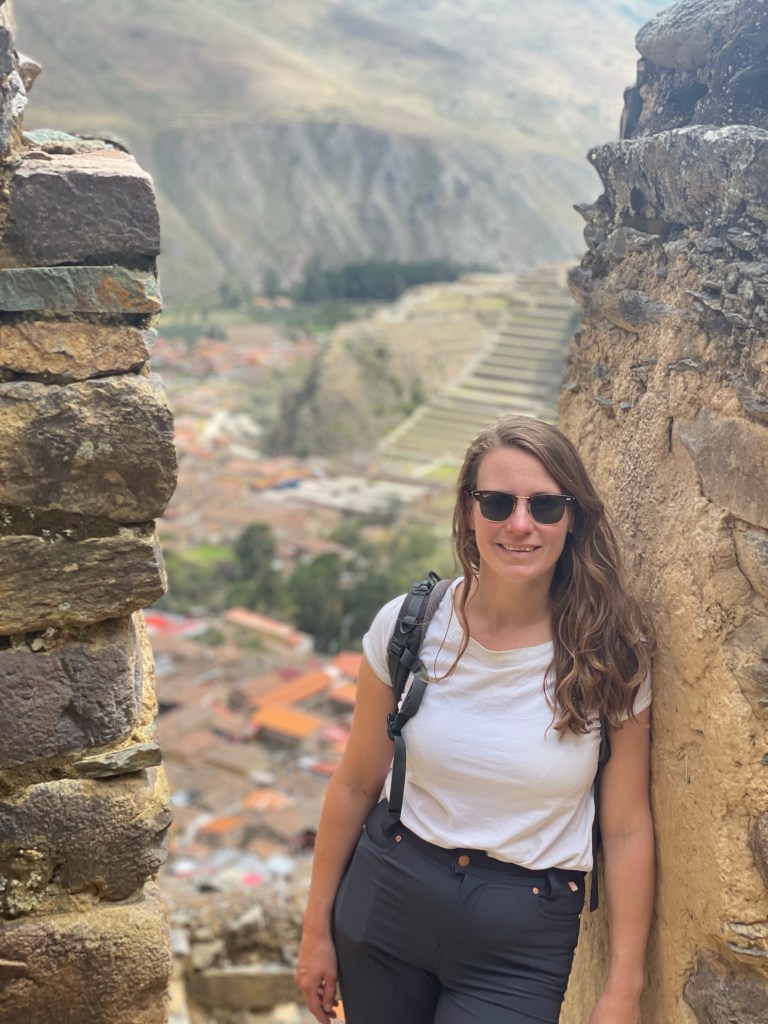
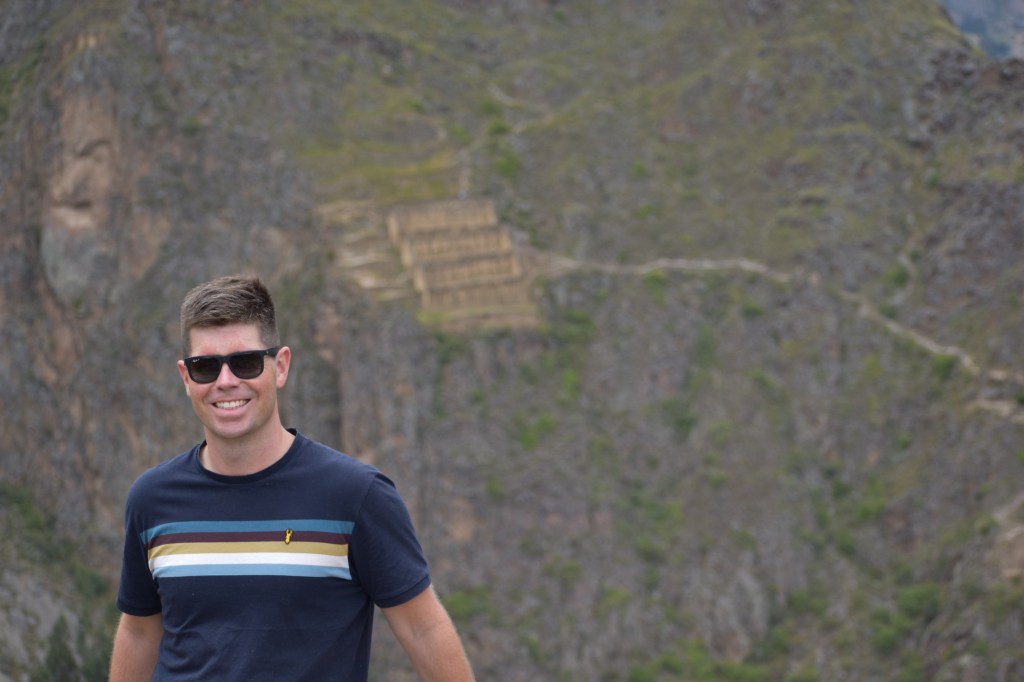









Machu Picchu and Huaynapicchu
Surprisingly well organised is the process of getting into the Machu Picchu archaeological site.
First you have to book a ticket, with the choice of four routes, for a specific date and time. That’s right, you can only visit a part of Machu Picchu, not the whole lot, unless you buy multiple tickets. At £45 a pop it’s expensive if you want your visit to be extensive.
Availability is limited, we booked over a month in advance, and many of the most popular options were already sold out.
We opted for circuit #4, which included a ticket to climb “HuaynaPicchu”, the iconic mountain ‘behind’ Machu Picchu in the iconic photo. This circuit didn’t permit us to visit the upper part of the ruins, which is where the classic Machu Picchu view is found. However huaynapicchu would give us more height, and that’s always better right? Limited to only 400 visitors per day, there was a vague hope this would help us avoid the worst of the crowds.
Secondly, the bus queue is a sight. In the morning the entirety of the main street in MP pueblo turns into a moving bus stop. People are sorted according to the entrance time on their Machu Picchu entry ticket. At $12 per-person for a 30 minute one-way ride, it’s another great cash cow. Coaches are filled to the brim and tourists deposited into yet more long queues at the top of the hill.
So how was it?
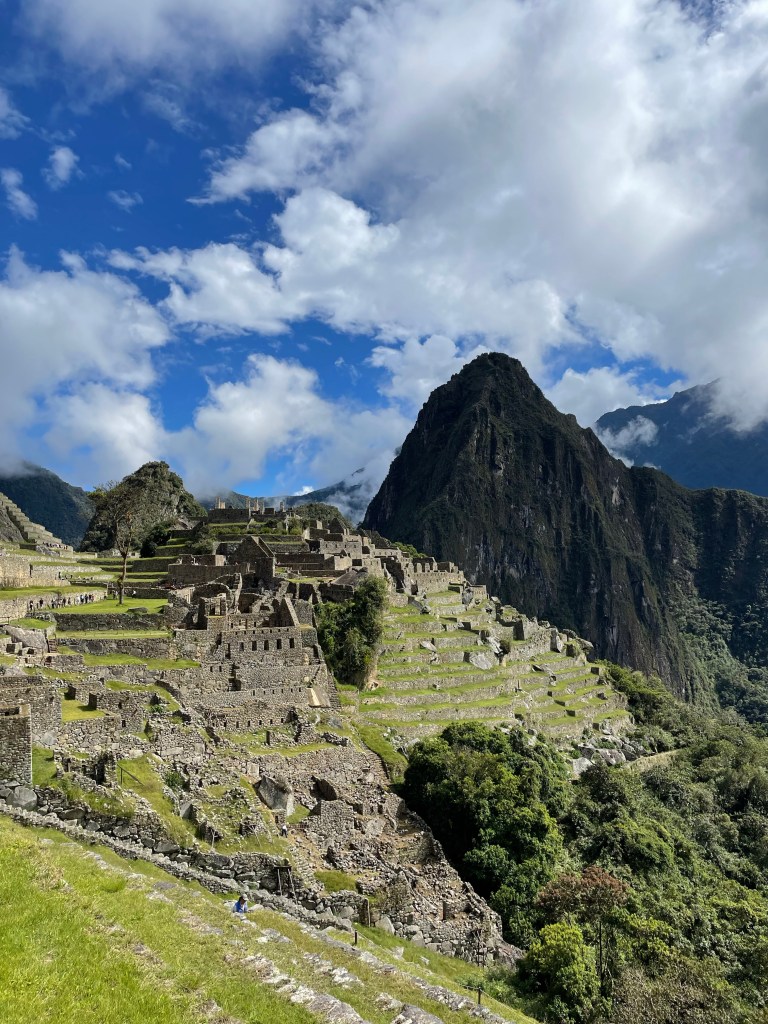
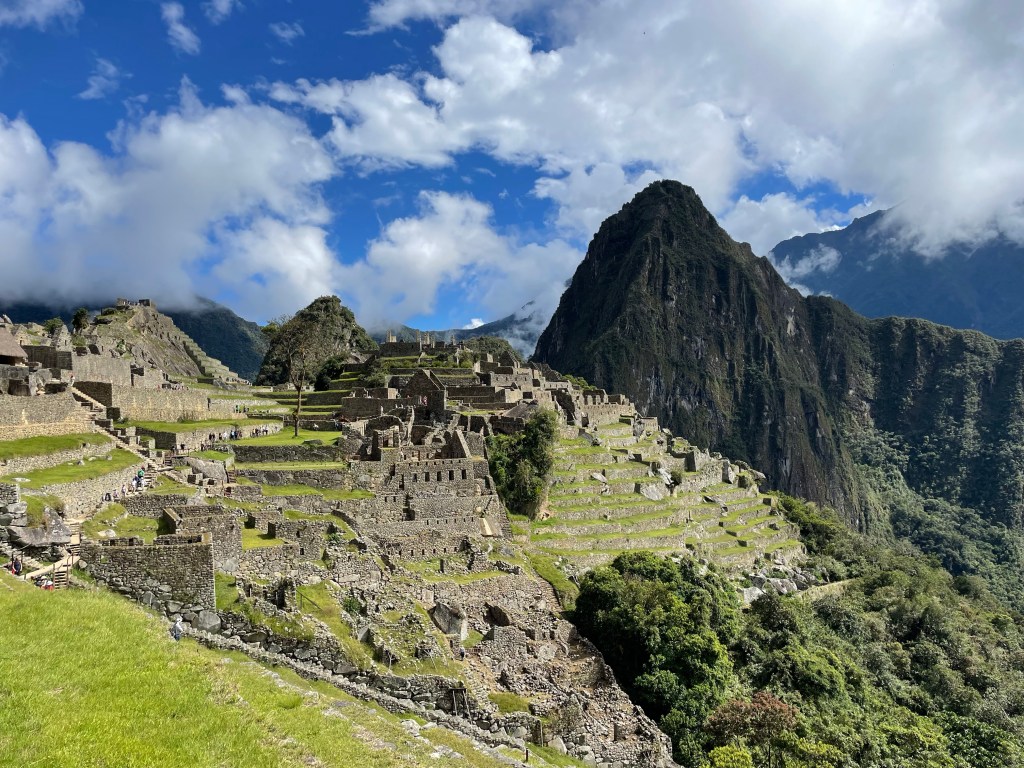
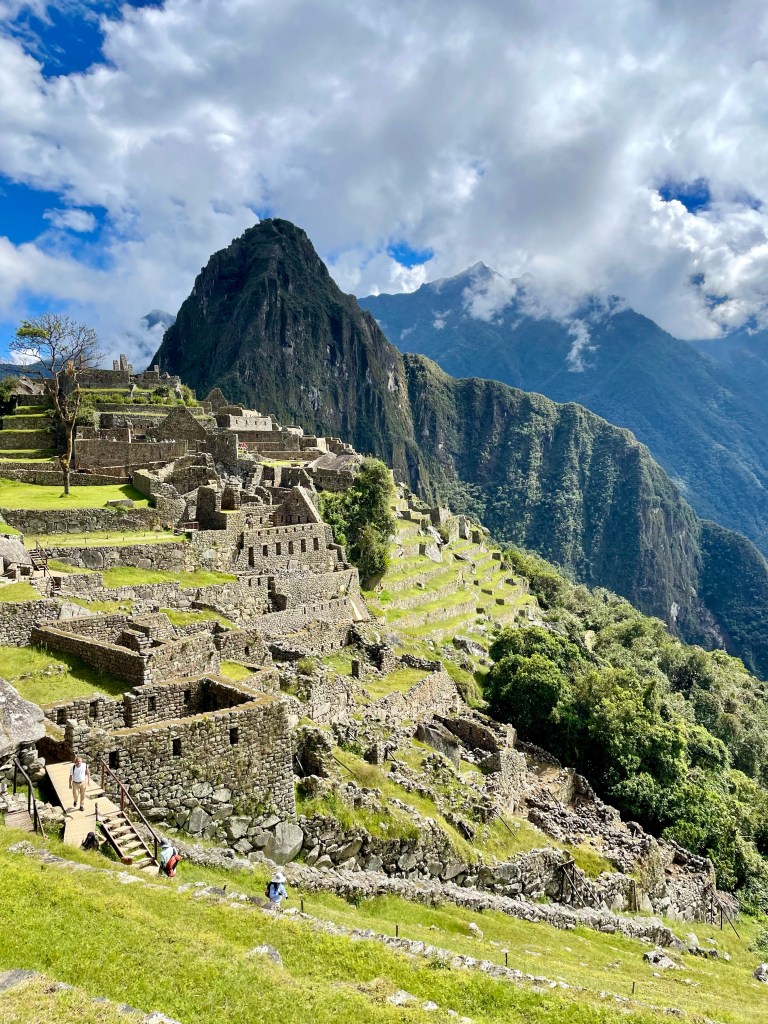
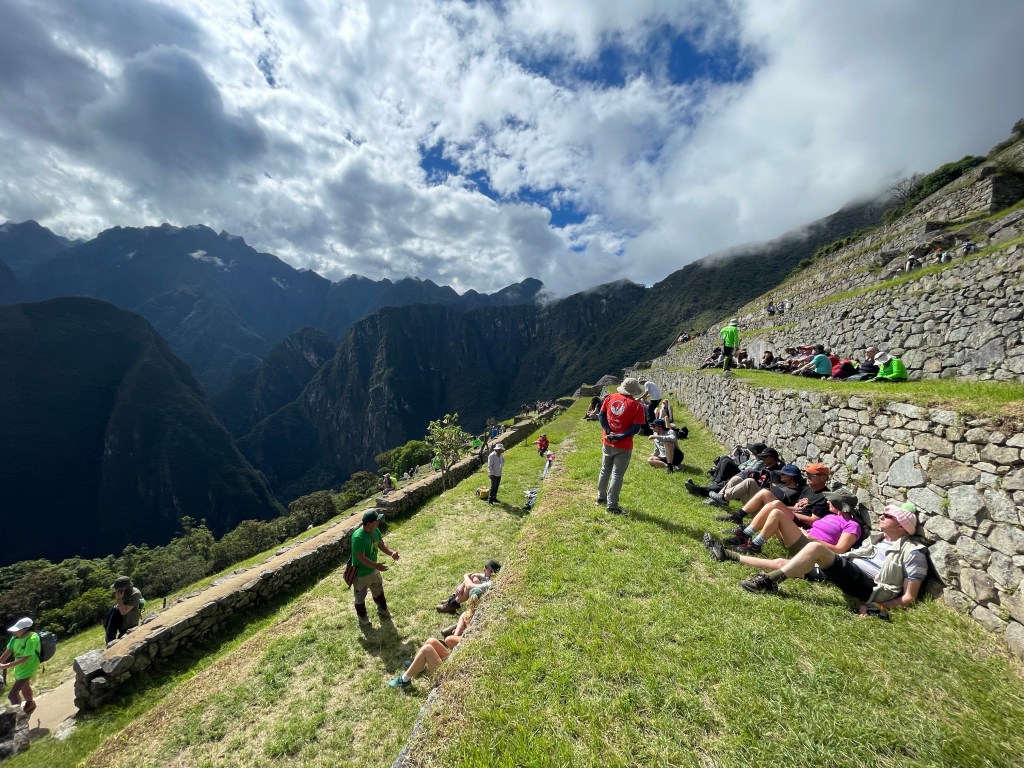
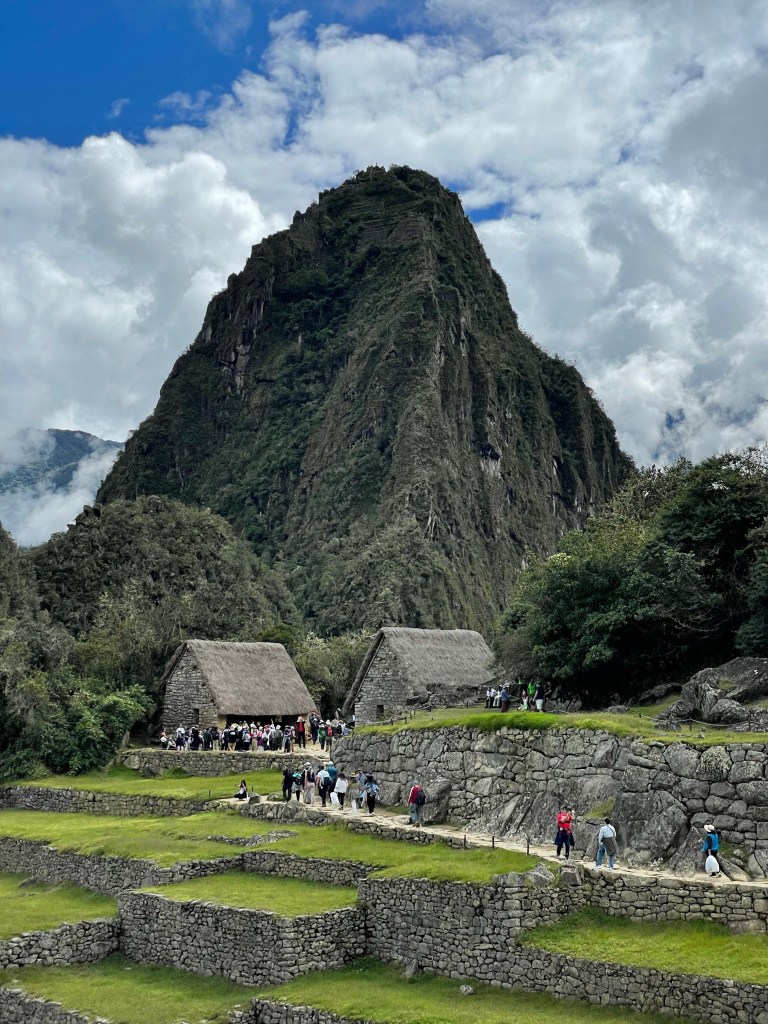
Entering even the lower part of the ruins is quite an impressive sight. Hanging over the 600m drop into the valley below are several houses and terraces. The site is more extensive than expected, especially when compared to Pisac or Ollantaytambo. Perhaps it’s because here a lot more of it has been faithfully restored than at the less well known Inca sites. Despite its impressive size, the place still feels crowded. Of course walking amongst the ruins there’s limited explanation as to what you’re looking at, but the Incas were relatively unsophisticated so even armed with the information there’s not a lot to look at. Coupled with the fact this was more of an outpost than a major centre, there’s not much past temples and houses. More important Inca sites such as Cusco, Sacsayhuaman, and Qoricancha have many more sites of significance.
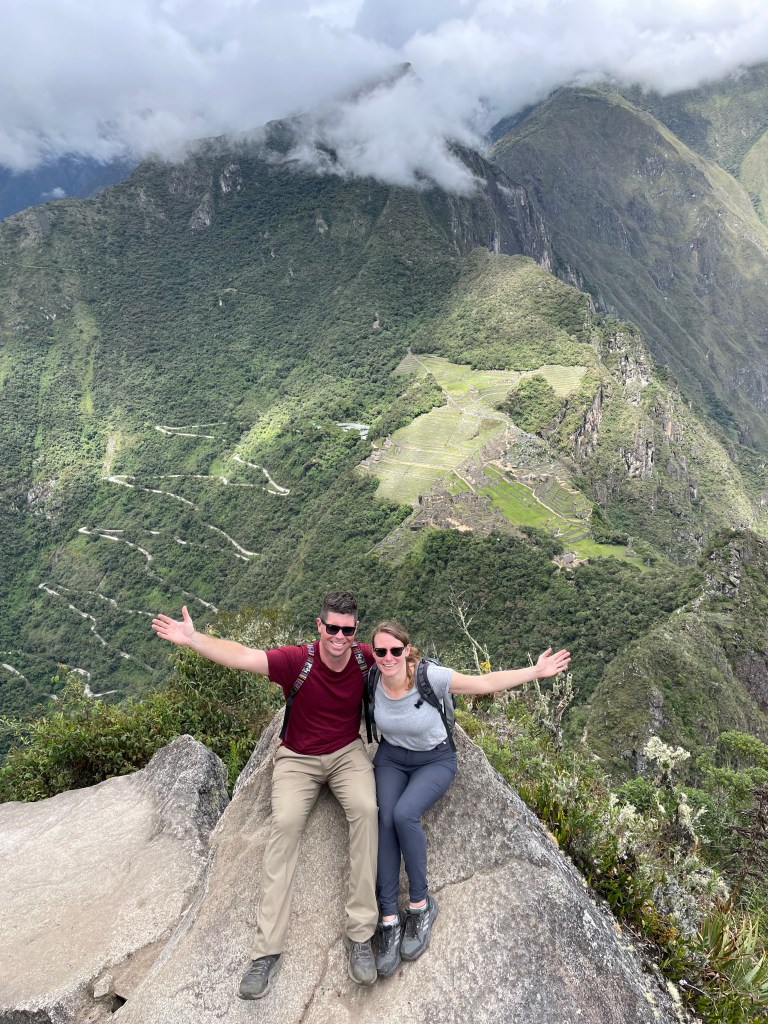
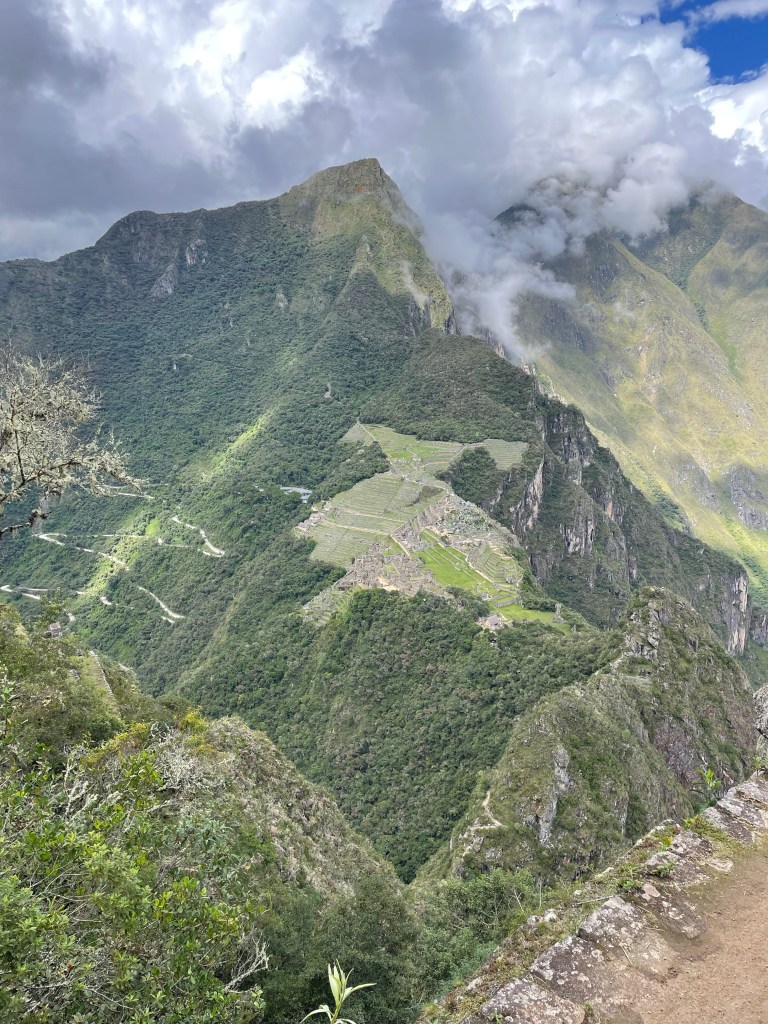
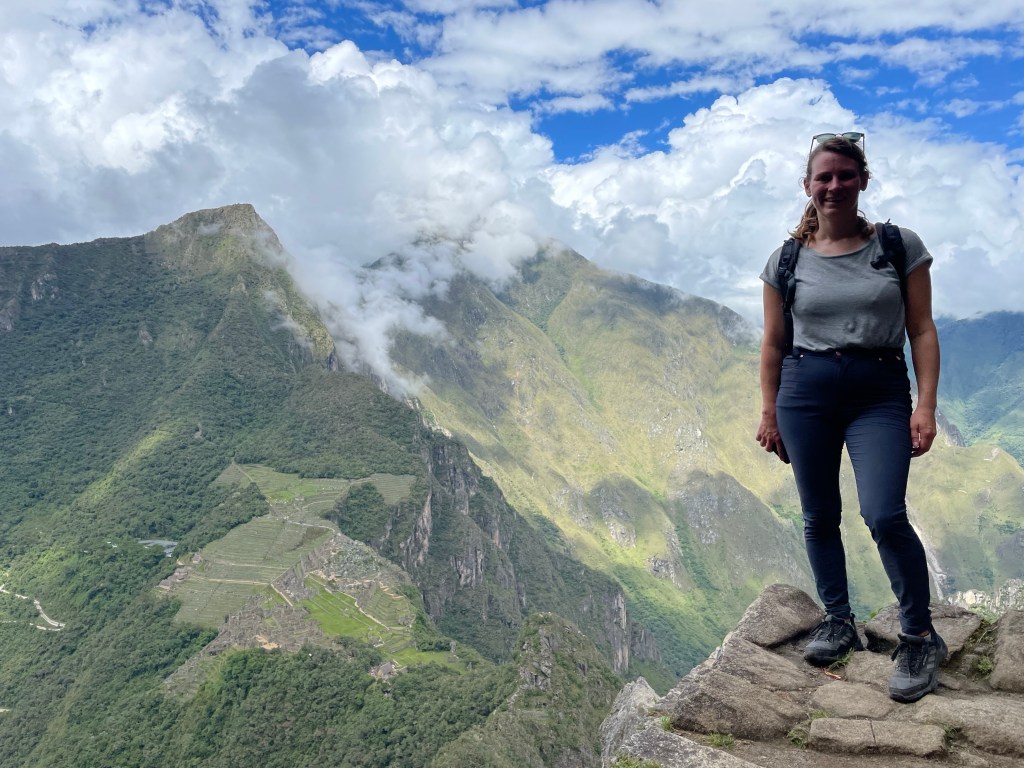
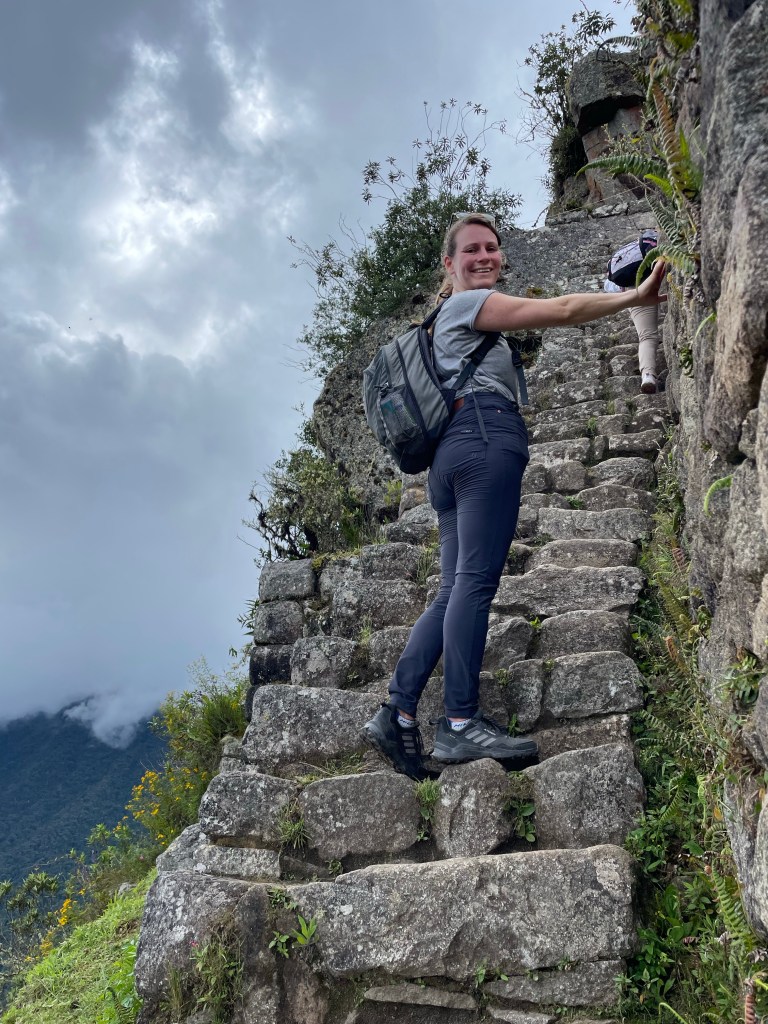
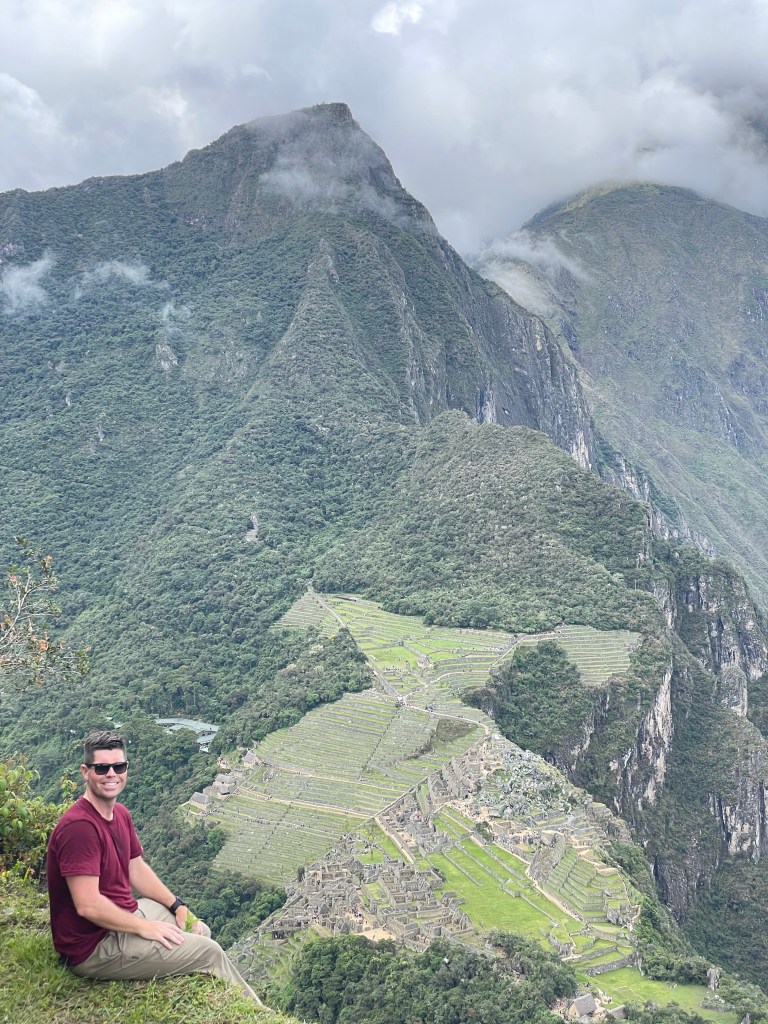
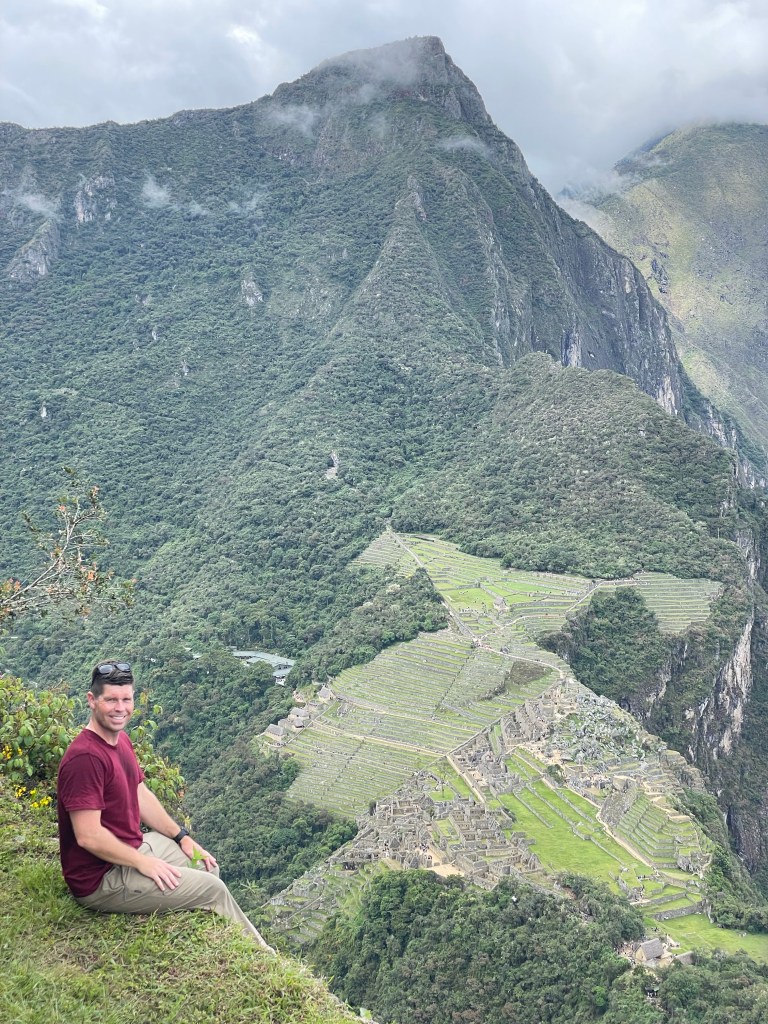
The climb of HuaynaPicchu is, however, incredible. It’s only around 40 minutes to climb to the top (you can’t really go faster or slower as it’s a single file train of climbers). It’s a mostly straightforward and well maintained footpath. The final few metres of the climb is up an incredibly steep set of terraces that seem to magically hang above the town below. At the summit you really do get a magnificent view. Machu Picchu appears as a small square of green perched high up above the forest below. Swarms of brightly coloured tourists busy themselves amongst the houses. The Inca trail group hikers like to wear matching fluorescent t-shirts which adds to the effect.
Several epic photo opportunities later it’s time to descend the mountain with great care. In several places you feel directly above the town, and at one point there’s a narrow tunnel to almost crawl through. There’s the standard gripe about American walking etiquette, with politeness being a completely alien concept to north and South Americans alike, but that’s for another post.
Back in the midst of the ruins the heavens opened for us. Mike left his raincoat at the hostel. We walked the whole way down to MP pueblo in the rain, to took 90 mins, we were soaked through, but sod paying another $12 for a bus downhill!
We returned to Cusco that evening via Peru Rail’s very substandard combination (for the price) service of train and bus. But we got there.














- The infamous Binga-Karoi road
- Mana Pools: A bucket list location?
- Camping Among Lions: Chitake Springs Experience
- Chirundu: The worst border in the world
- The Wild Dogs of Jeki: Sunrise in Lower Zambezi
 Small Holiday Big Dream
Leave a comment