Southern Peru is well on the tourist trail, and soon we will reach the pinnacle of tourist mania, Machu Picchu.
There’s a bit more to like about this part of the country than just the Inca ruins. Arequipa is a beautiful city, Cusco is buzzing with activity, and the Sacred Valley is, well, full of Inca ruins.
Arequipa walking tour
Arriving anywhere at 4:30am isn’t fun. If your night bus arrives at 6 or 7am then you can just head to a cafe, get breakfast and get in with your day. At 4:30am your options are limited.
Arequipa bus station is a good size, as it should be for Peru’s second city. This early in the morning it was surprisingly busy, although the shouting was at least less intense. If you’ve ever been to a Peruvian bus station you’ll no doubt feel the scene. Sourcing a taxi is usually a one-sided negotiation, the driver holding all the cards, and the fresh off the boat tourist out of options. At 4:30am the feeling is even more acute. So when the driver at the head of the queue asked for the surprisingly cheap 10 soles (£2) for the fifteen minutes into town, our concerns flipped from rip-off merchants to serial killers.
Soundly our taxi dropped us off outside our hostel. We were chancing it slightly on the availability of early check in. Nobody answered the door. A pack of dogs barked ominously a few blocks away.
Thirty cold minutes in the dark Arequipa morning we waited until the hostel proprietor opened the door apologising profusely. Our entire stay here couldn’t have been better, the staff and owners were so nice. At 5:15 in the morning we were shown to our room, and caught some extra sleep.
A walking tour is a great introduction to any city, our guide today took a bit of warming to, and I don’t think we ever even got his name, but by the end we were some of his biggest fans.
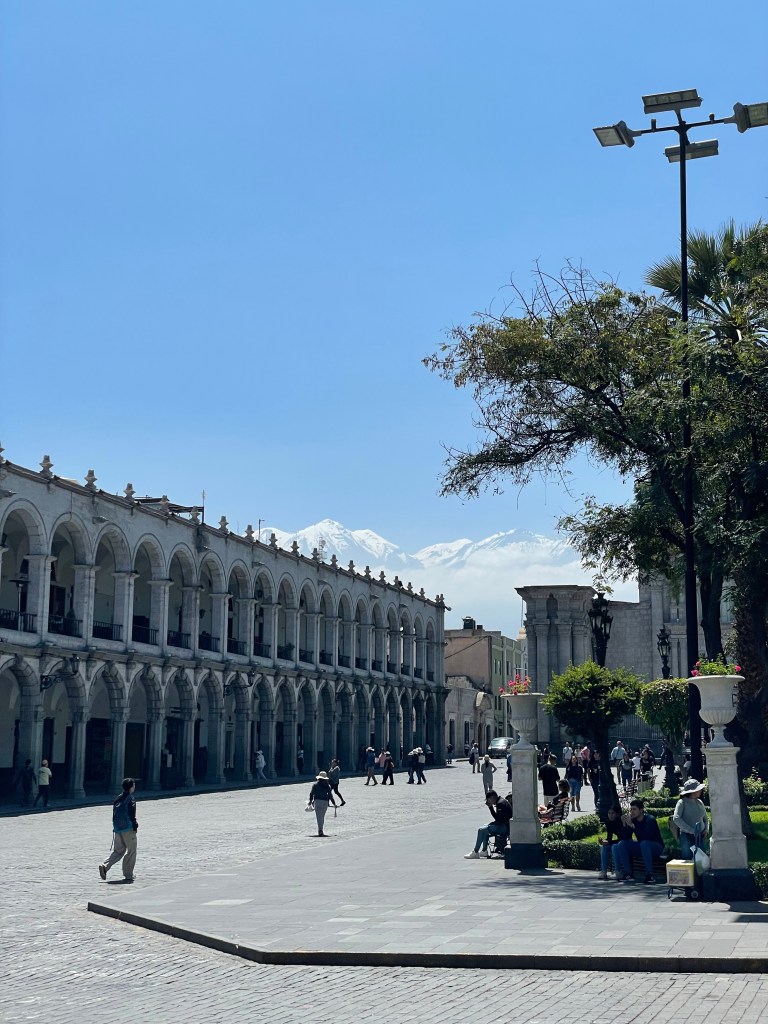
Arequipa, like sucre, is known as the White City, for many of its buildings are built of very pale volcanic ceja. Our first port of call was perusing the colonial architecture of the city. To be fair the city does have some magnificent buildings, and not just on the main square. Impressive hoses built in Spanish, French, and English styles line almost all the streets in the historic centre. Whilst most are full downstairs with various pizza restaurants, fancy coffee houses, or alpaca will boutiques, upstairs is a different story. Many of the upper floors lie derelict, Arequipeños blame this on the central government and their bizarre taxation / corruption.
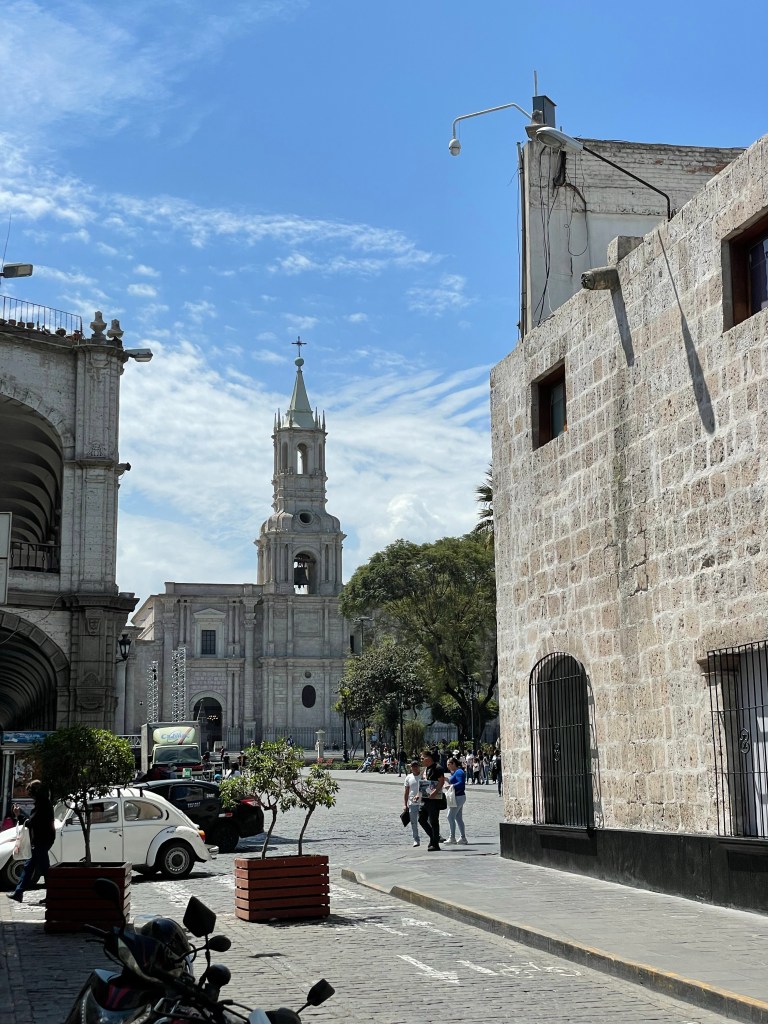
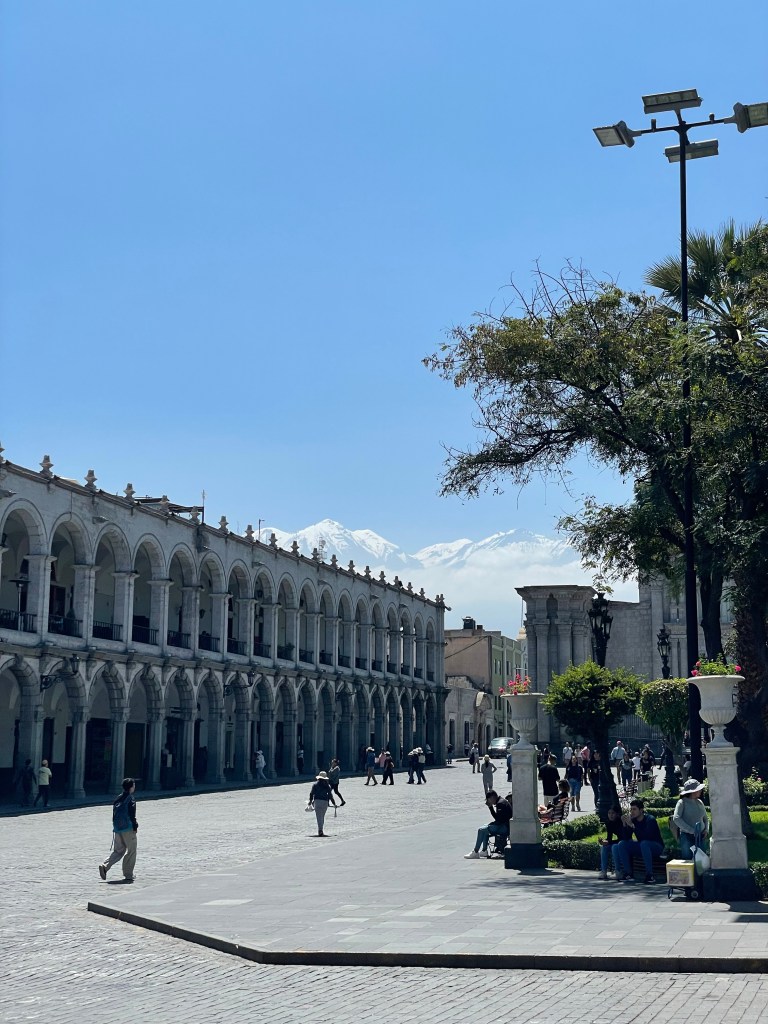
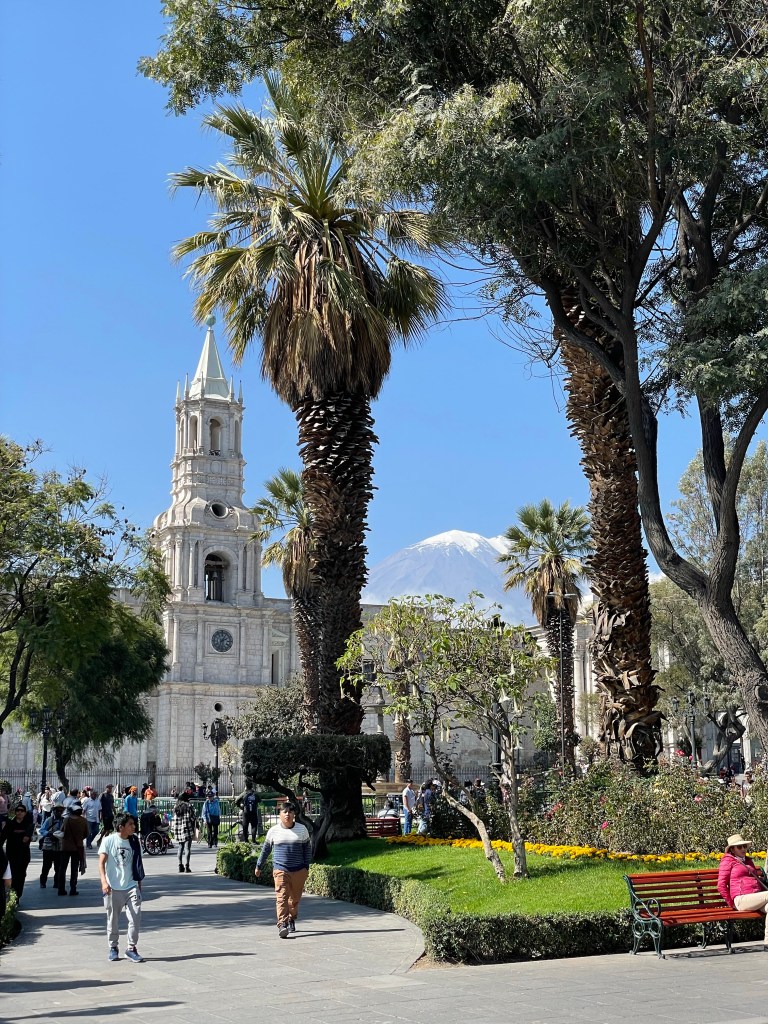
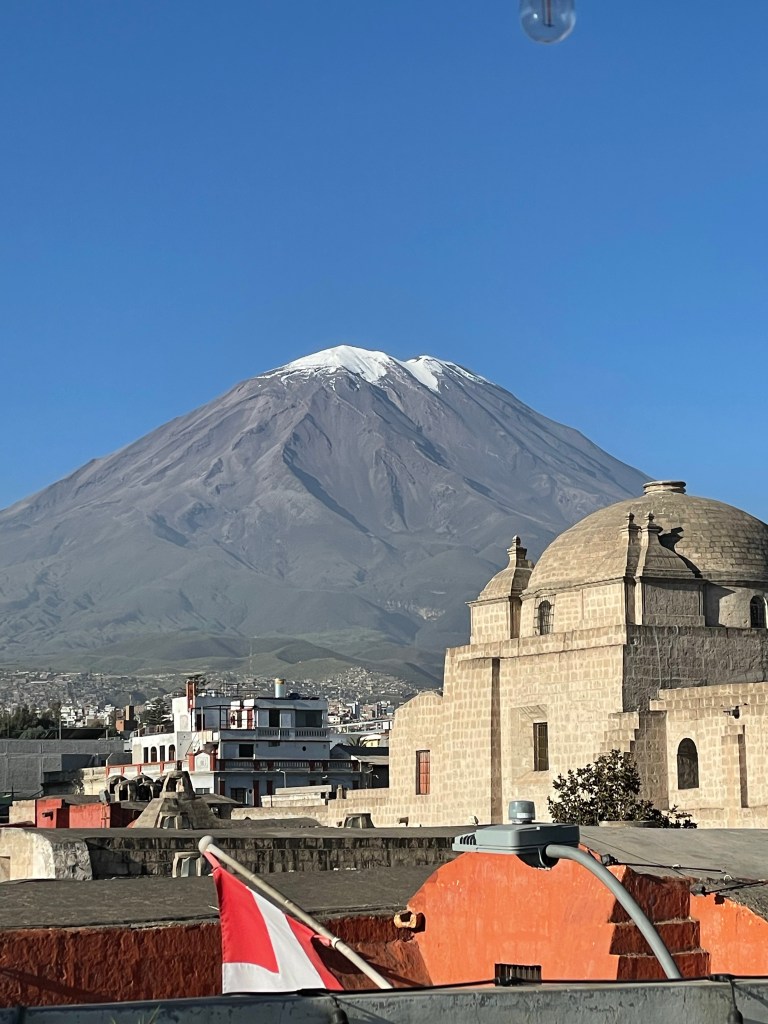
Plaza de Armas is a great sight when the skies are clear, for behind the great cathedral with its widely separated twin towers, are the twin volcanoes of Misti and Chacani. The snow capped peaks offer a great backdrop to the palm trees and statues of the plaza.
We were led around a few nice rooftops for views, and shown the very smartest colonial courtyards. Eventually we ended up in the barrio where Arequipa was founded, when 21 wounded Spanish soldiers limped into the natives settlement after clashes with the Chileans to the south.
Arequipeños are a minority in the city now. Whiter and more European than general population, they see themselves as not Peruvian, not Andino, but uniquely Arequipeño. In years gone by the city has petitioned for independence from Lima, however in time it has revolved, the population is becoming more Andino thanks to migration in from the hills. Locals such as our guide seem to bemoan the fact that the city is losing its uniqueness, but to us the place seems lively as ever. Possibly thanks to the large numbers of tourists propping up the local avocado toast economy.
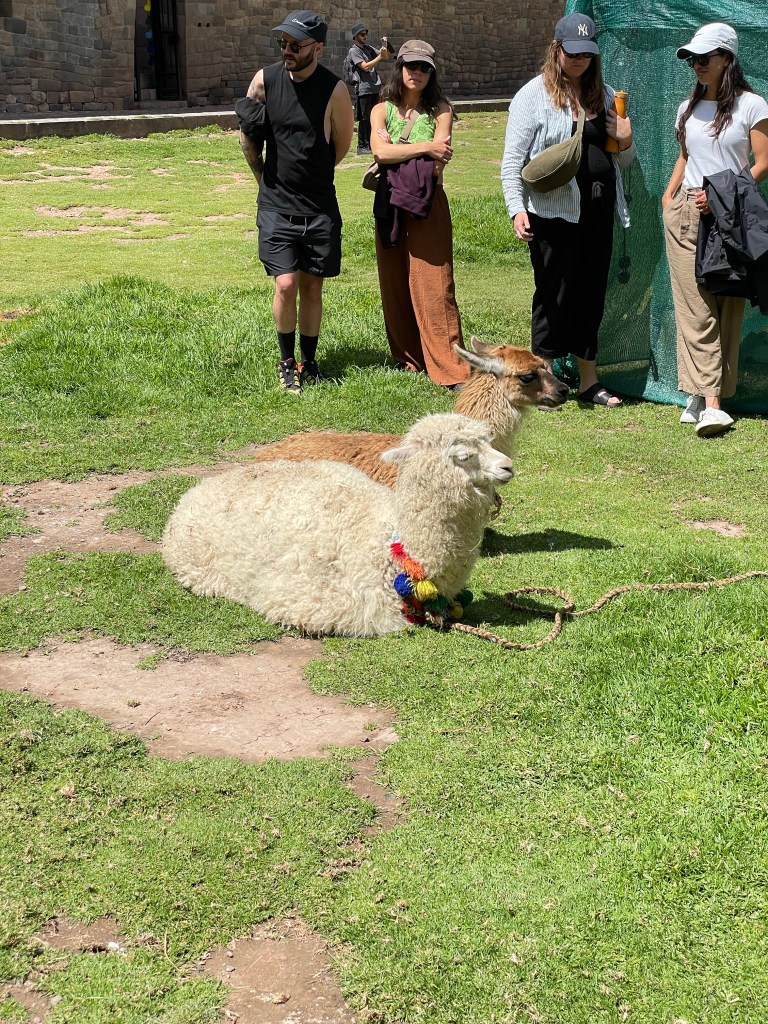
Of course our tour ended at Alpaca World. After petting various domesticated camelids we were invited to buy woolly jumpers.
The restaurant next to our hostel runs highly regarded cookery classes. Highly regarded by flashy western tourists to boot. So it was somewhat of a surprise that they couldn’t rustle up a vegetarian meal. In fact the waiter struggled to suggest anything vegetarian until the idea sparked that choclo con queso (sweetcorn and cheese)was in-fact vegetarian. We moved on and had excellent arequipa inspired pasta at Mumis. Touristy but recommended.


Mummy museum and Arequipa market
We’ve covered Inca sacrifice previously, but as a brief refresher, the Inca people used to take children to the top of mountains, get them drunk, whack them on the head and if they weren’t done for already let them freeze to death.
That means most decent sized cities in the Andes have at least one excellently preserved mummified child on display. Arequipa has Juanita.
She’s a bit more creepy than the Llullaillaco (will be in the spelling test) children in Salta, although still in fantastic condition. The small museum also houses artefacts found at her resting place atop the Ampato volcano.
It’s incredible to think these mummies are only 500 or so years old, the textiles and knick knacks they’re found alongside look almost new. Juanita was so named because she was found by an American bloke called Johan, how sweet.
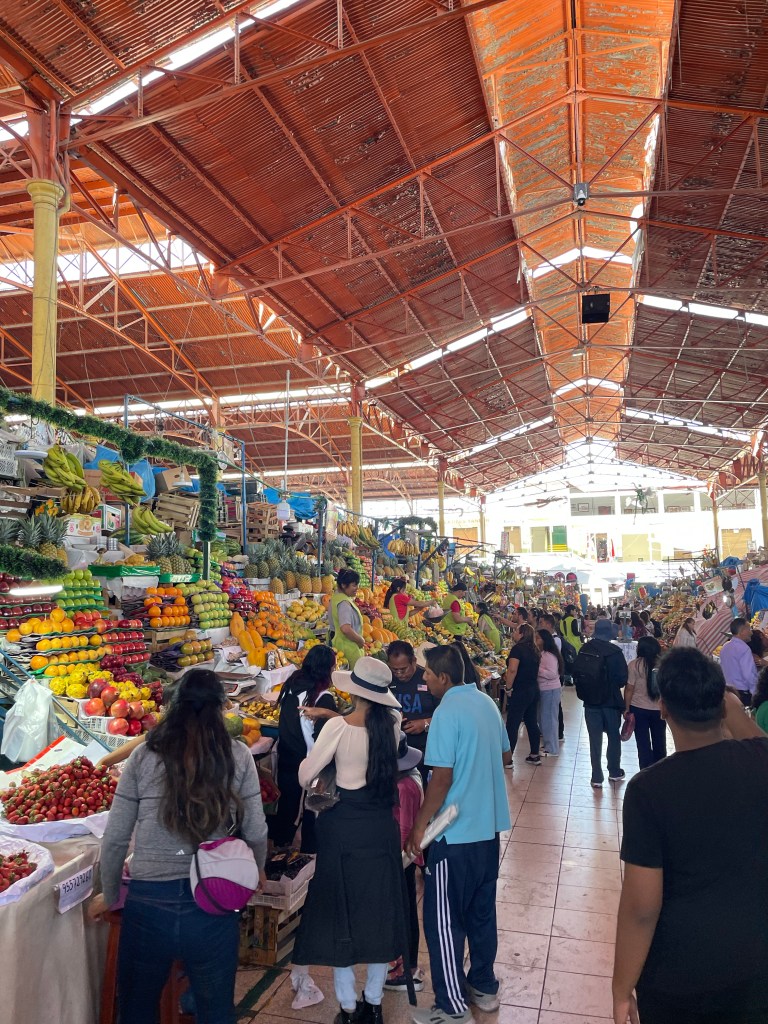
It was Sunday – and on Sunday Arequipeños eat Adobo – ideally before noon. Apparently the best adobo runs out by early afternoon, and if you’re late you’re left with the potentially dodgy stuff. As it was approaching midday we headed to the central market to source an adobo without really knowing what it was. Turns out it’s a thick meat soupy curry thing. It was very tasty and highly recommended to try it in Arequipa, it would do better as a dinner I think, but I can’t tell the locals what to do. The restaurant owner actually laughed when asked if there was anything vegetarian on the menu. So Sarah had tea for lunch. (Ok we went for a coffee and sandwich afterwards)
We also ate our way around the market. The fruit smoothie stalls were a gamble, but worth it. We had fruit drinks with Lucuma and chirimoya, fruits that don’t really work to eat on their own, but are great in a mixed drink. We also attempted chicha – the purple fermented mildly alcoholic corn drink known as Inca beer. It wasn’t our taste, we managed to give away our bottle.
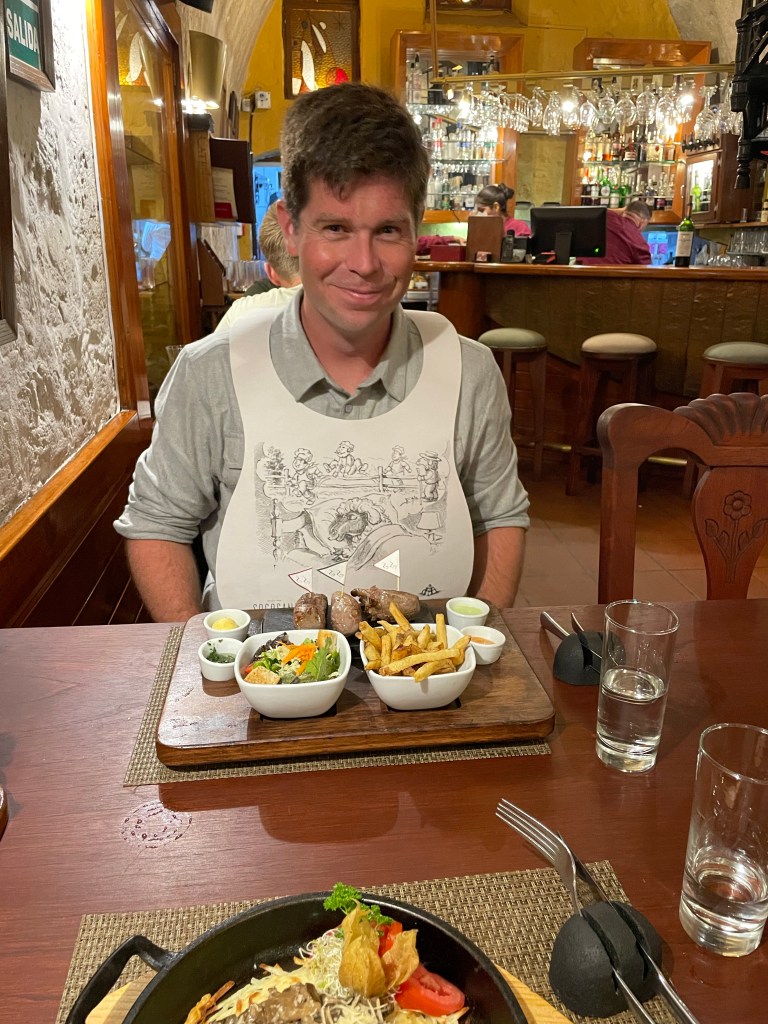
After a more relaxed afternoon (exploring Arequipa more obviously) we headed to ZigZag for dinner. It was excellent, a highlight. The trio of meats on the hot stone were perfectly cooked; lamb, beef and alpaca all brilliant. Alpine/Andino fusion was the schtick, so Sarah had rösti as you do.






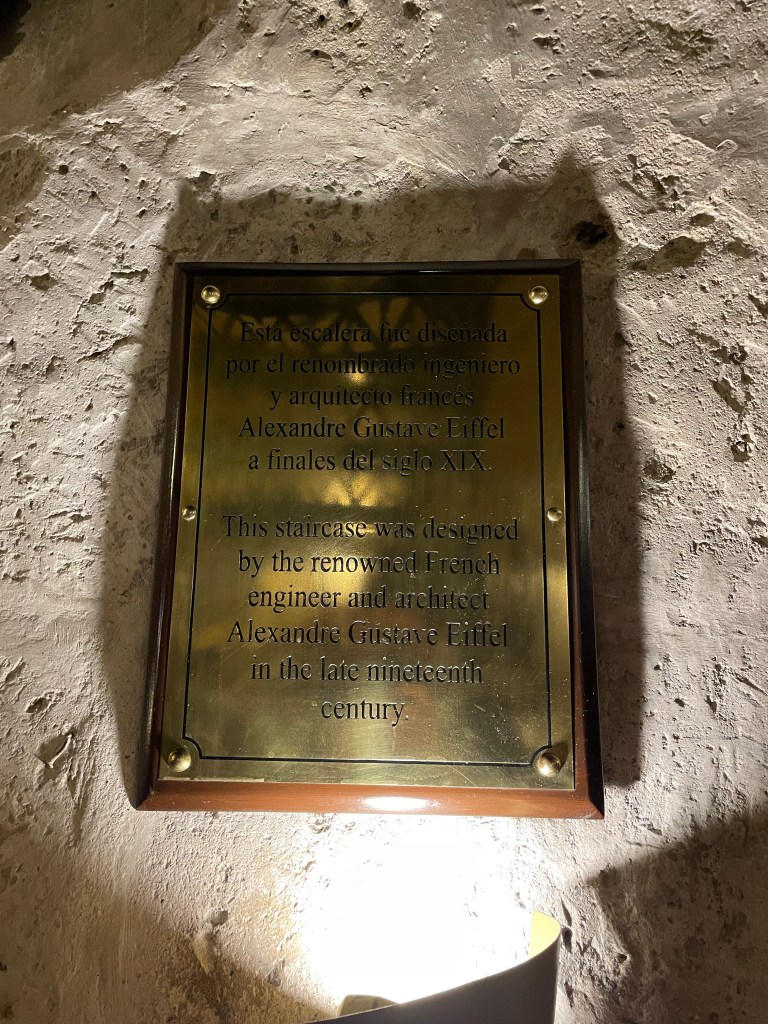
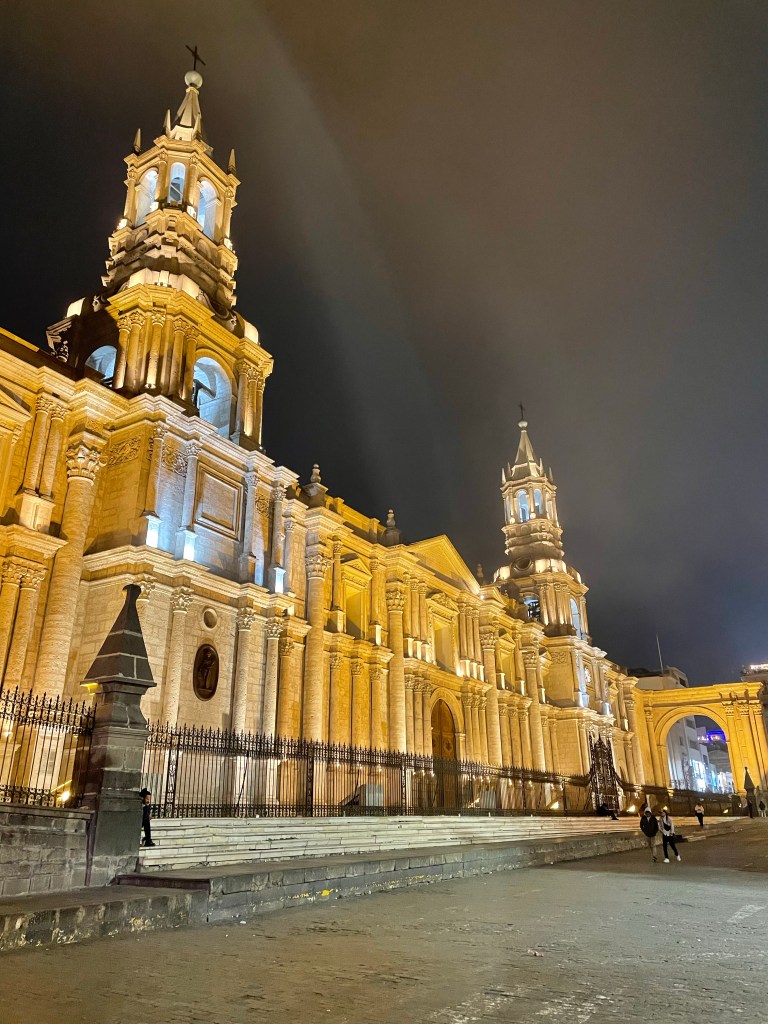
Santa Catalina Monastery
I’m rarely complimentary about religion, the pointless cause of many global problems. However Santa Catalina monastery is a highly recommended thing to do in Arequipa.
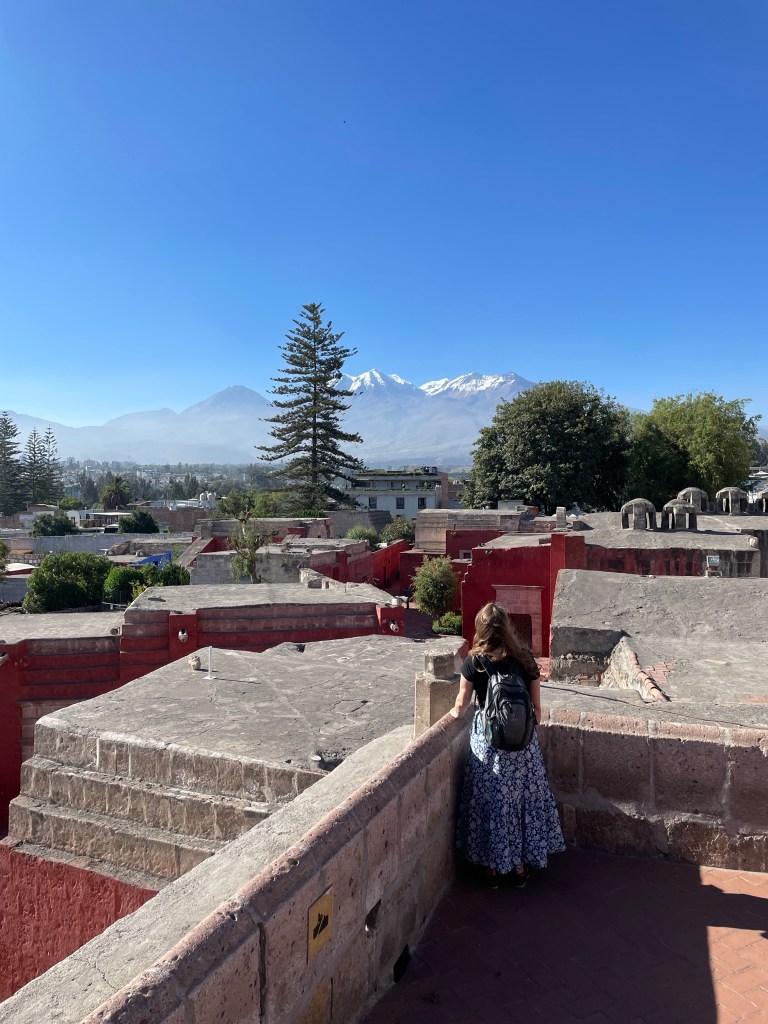
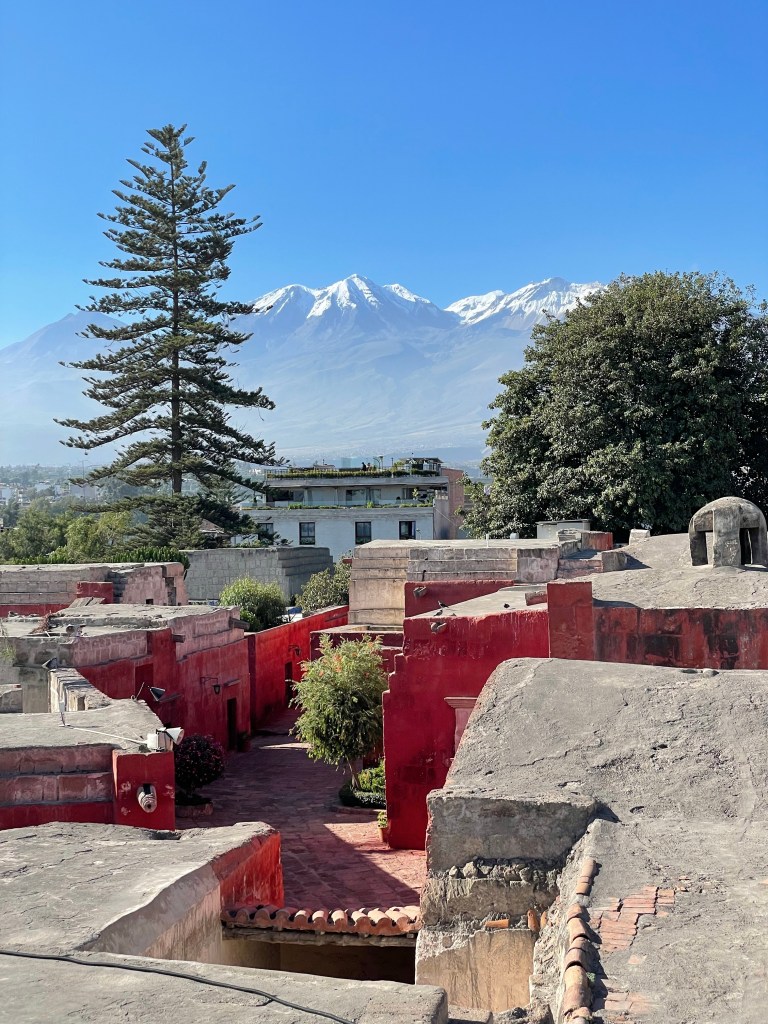
The walled convent (it was full of nuns) was the size of a double city block. Inside the community functioned completely isolated from the outside world. Colourfully painted walls, ornately detailed cloister gardens and picturesque recreations of city streets are picture postcard pretty.
All of this represents a tragic waste of human talent, as its occupiers were locked away for their entire lives making little paintings or embroideries of Jesus.
Yanahuara is the district over the river from the historic centre of Arequipa. From there there’s a nice view back over the town, in the late afternoon sun the volcanoes looked magnificent.
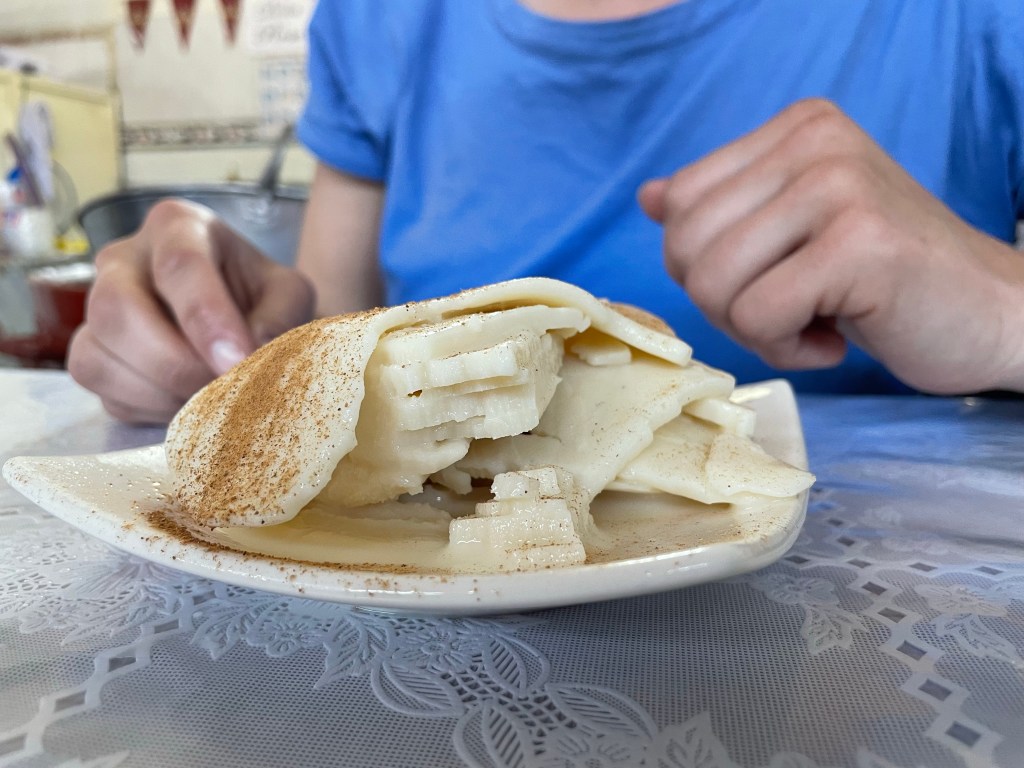
Buñuelos are a typical Peruvian snack, and we got some over in Yanahuara. Made with a dough not a batter, they are a ring of deep fried carbs. Covered in honey subtly flavoured with aniseed, we can see why they’re a hit.
We’d booked the posh nightbus to Cusco. Cruz del Sur. It must be like travelling first class, the service is fantastic, except for the fact you’re on a bus. (Read the Lima post for more Cruz del Sur details)

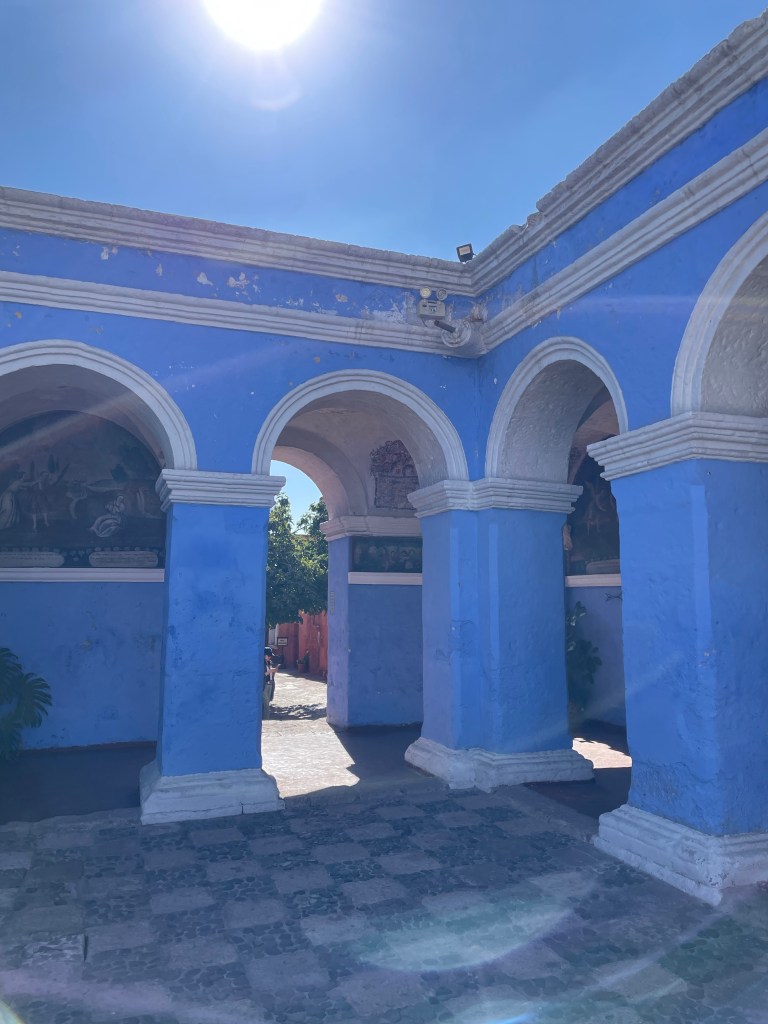


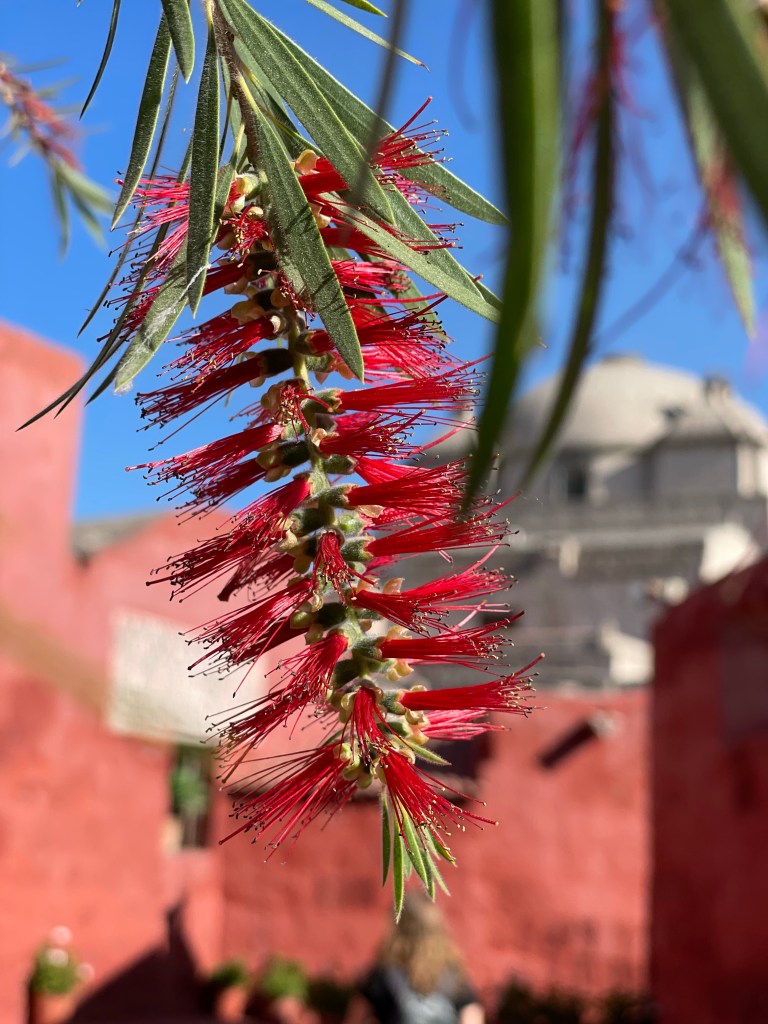


Cusco and Sacsayhuaman
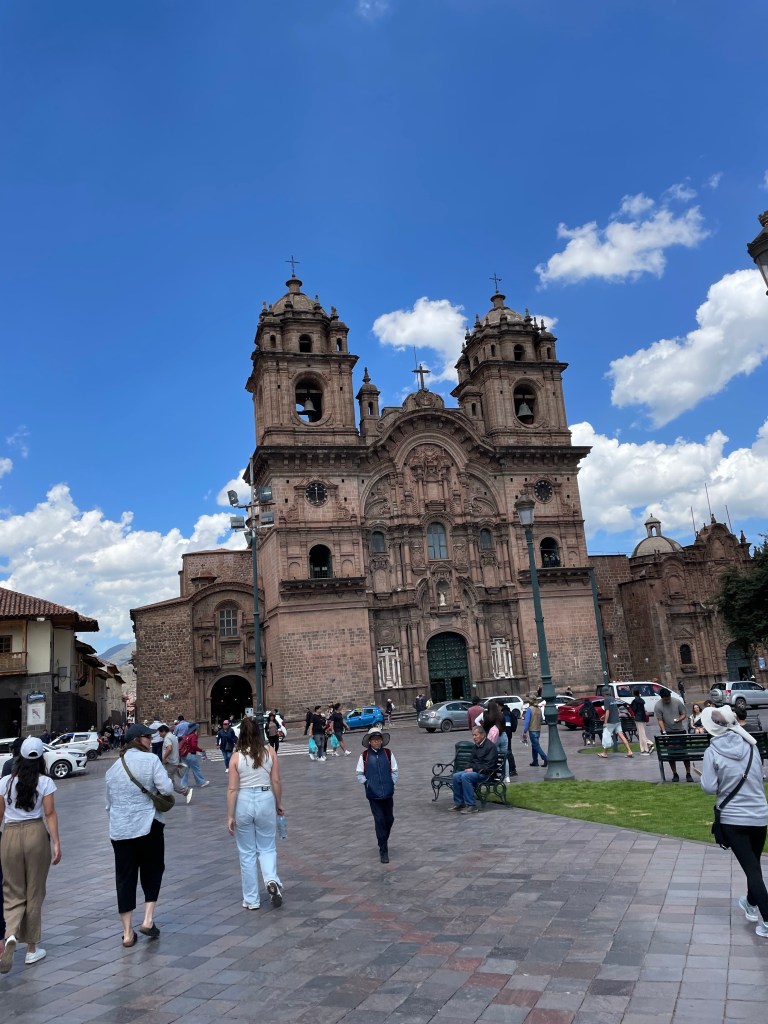
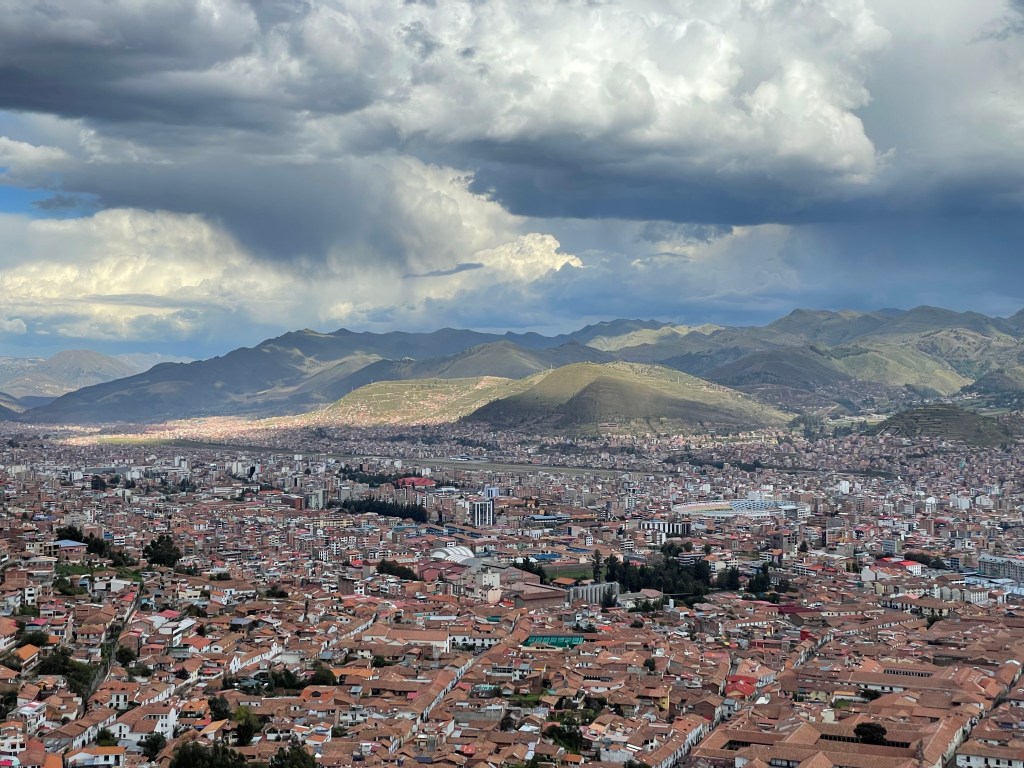
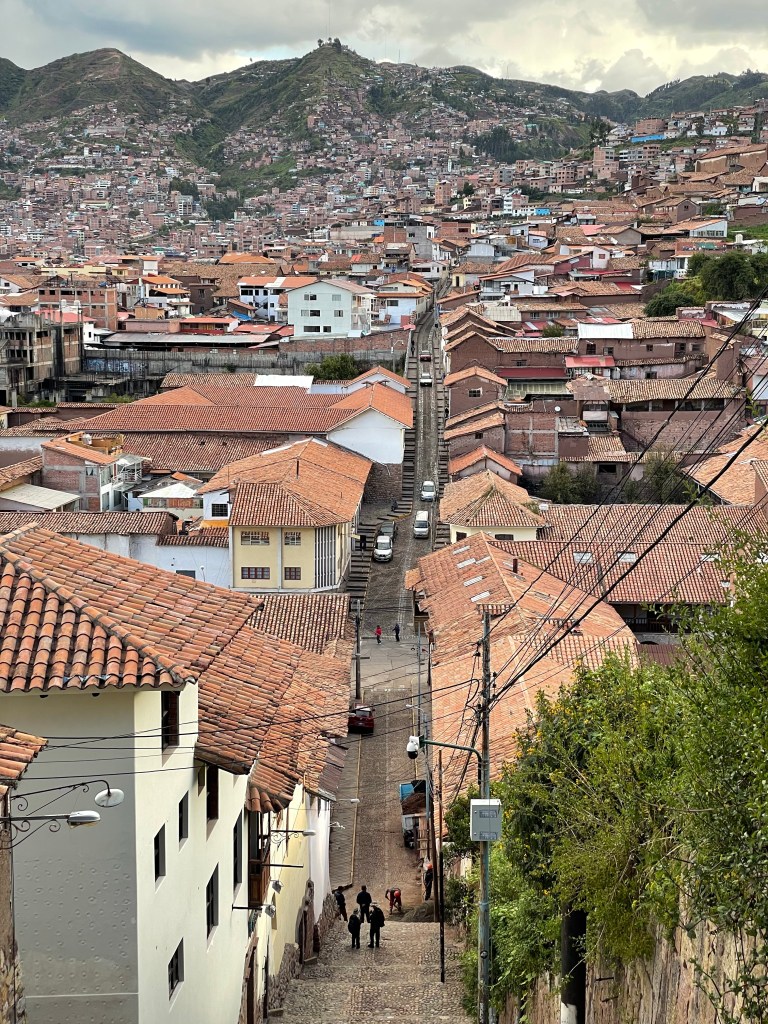
Cusco is a very touristy place. With good reason, it was the centre of the Inca universe. Many of the buildings in the town are built on top of the old Inca settlement. Stone walls made from gigantic rocks form the bottom half of lots of houses. Churches and other fancy buildings built by the Spanish also repurposed materials from important Inca sites.
Our standard practice after a night bus is to take a morning walking tour. Cusco’s covered plenty of ground. There are three fairly nice city squares in the city, most prominent is the Plaza de Armas. Our guide went to great lengths to explain how special it was that the square had two churches on it, I’m not sure anyone really cared. They are fairly nice bug ornate buildings but constructed from muddy brown stones. The Inca walls by contrast are a beautiful shiny grey.
After our tour concluded we continued to wander. First into the neighbourhood of San Blas, where we climbed some of the hill, and had a really nice Japanese meal for lunch. UFO Asian food – recommended if you’re in the mood.
Continuing our climb we reached the entrance to Sacsayhuaman. Entry is via the Cusco tourist ticket costing 130 soles (£26) per person, but that gives access to 16 different sites and museums around Cusco and the sacred valley. We had our work cut out working out where they all were.
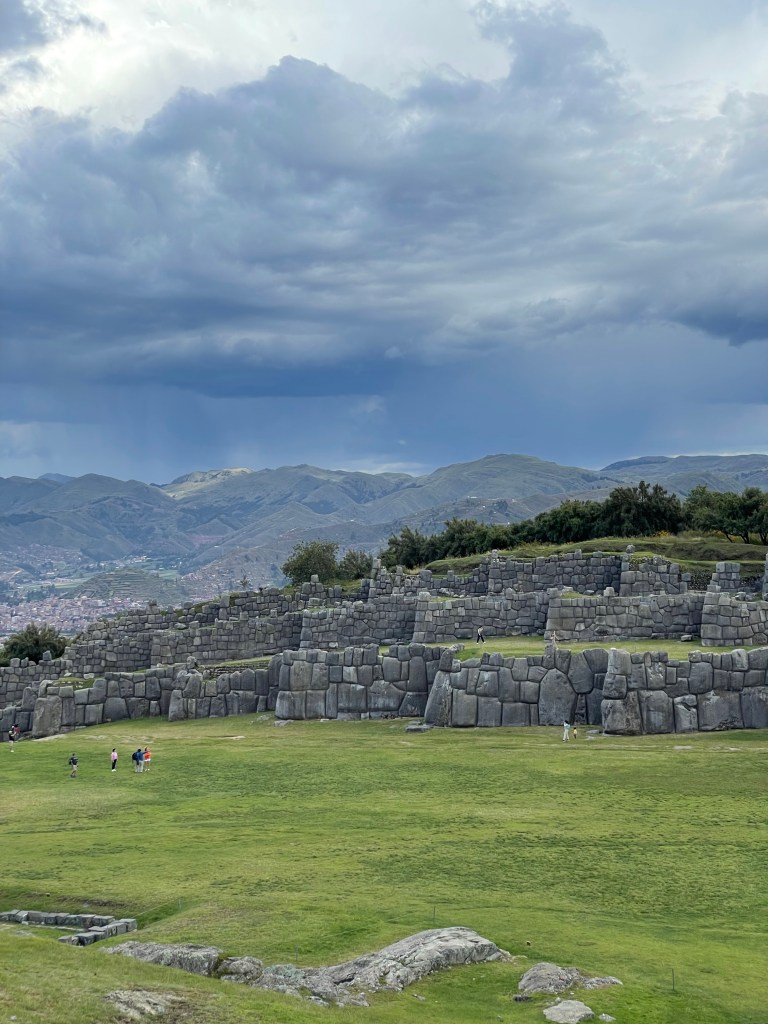
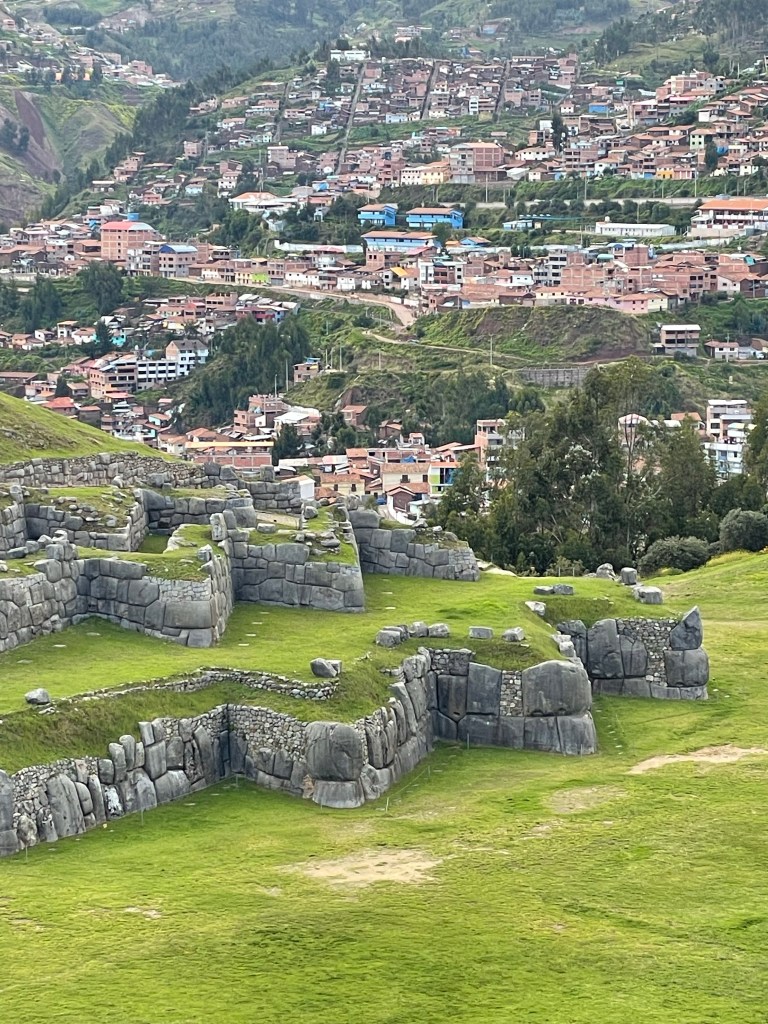
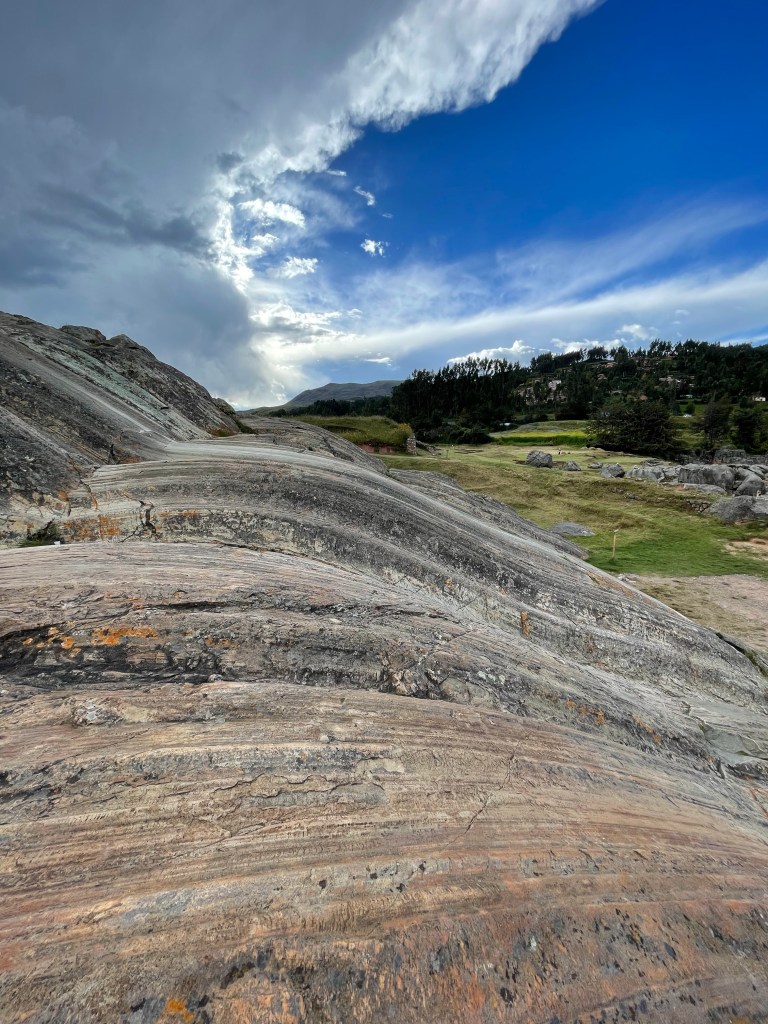
It seems as though very little is known about the purpose of Sacsayhuaman. It’s a large fortress on a hill overlooking Cusco, but there’s some houses, temples, tunnels, and even a natural sliding area (that’s going to need an explanation). It was also part of the grand street plan of Cusco. The layout of the city is designed like a puma, Sacsayhuaman is the head and its walls the teeth. This makes no sense, until you see the angular shape of the walls, then it sort of clicks.
The walls are the main draw. Built from enormous stones, each one carved into the unique shape required to slot into place. Frustratingly there’s very little information available at the site, the whole place could do with an information board or two. There seems to be a rule that you want information you have to hire a guide, but the situation for hiring a guide is a farce and the pricing opaque. Almost if it’s deliberately designed to give a poor visitor experience. This scene is repeated at historical sites all across Peru.







Pisac
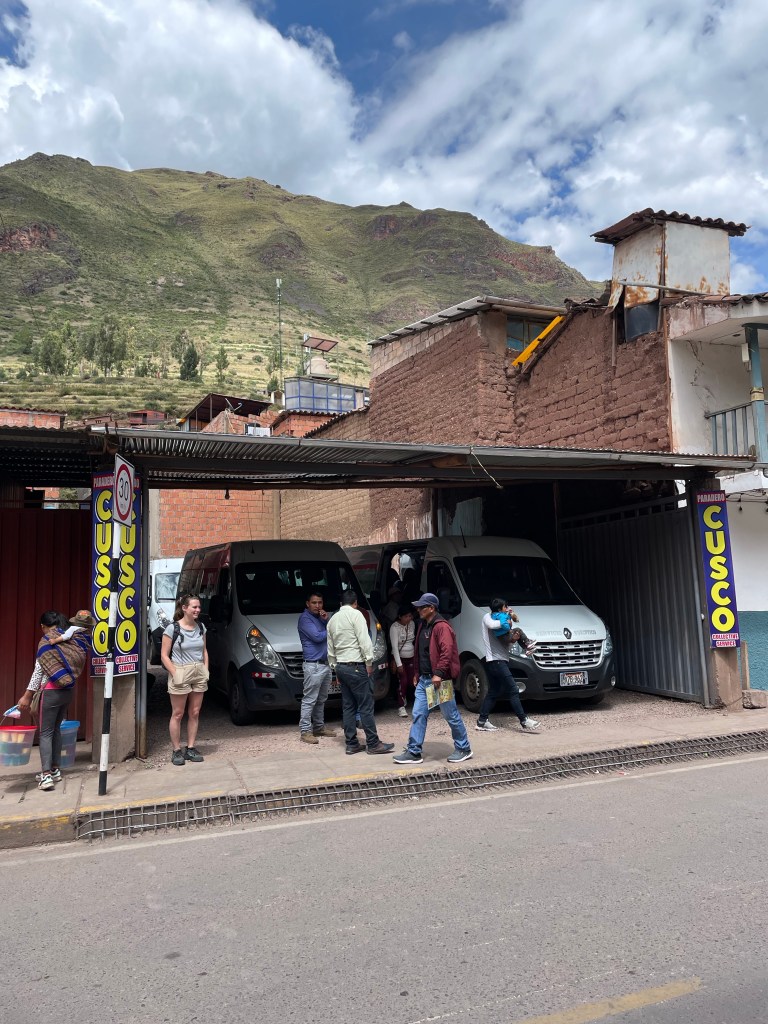
Colectivos run from outside the brewery in Cusco, for 5 soles each (£1) it is the most economical way to get to Pisac.
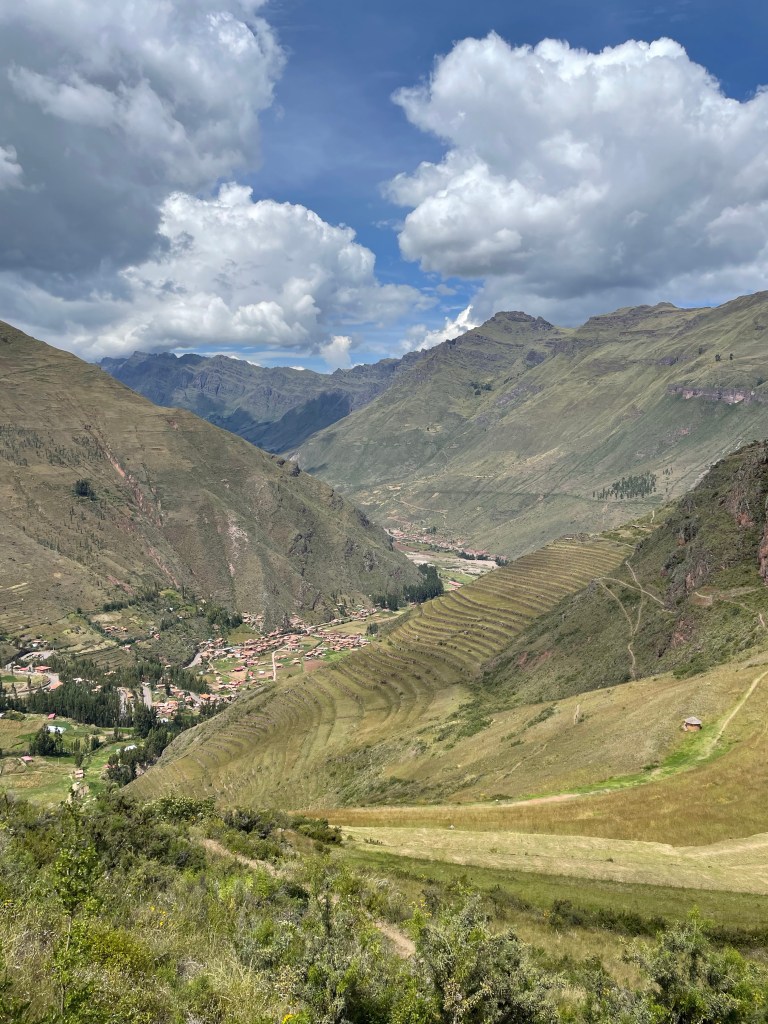
Pisac is a 45 minute drive away, over the hill from Cusco and down into the sacred valley. The archaeological site is situated high up on the side of the valley 600m or more above the town on the river.
Get a taxi to the top, it’s a long way and will save hours of hiking up. Although it does mean partaking in our favourite activity of running the gauntlet of predatory taxi drivers hanging outside the collectivo depot. The price seems to be 35 soles for a car, we shared with a French couple who couldn’t stand to chat to us, but it saved us 15 soles so it was almost worth it.
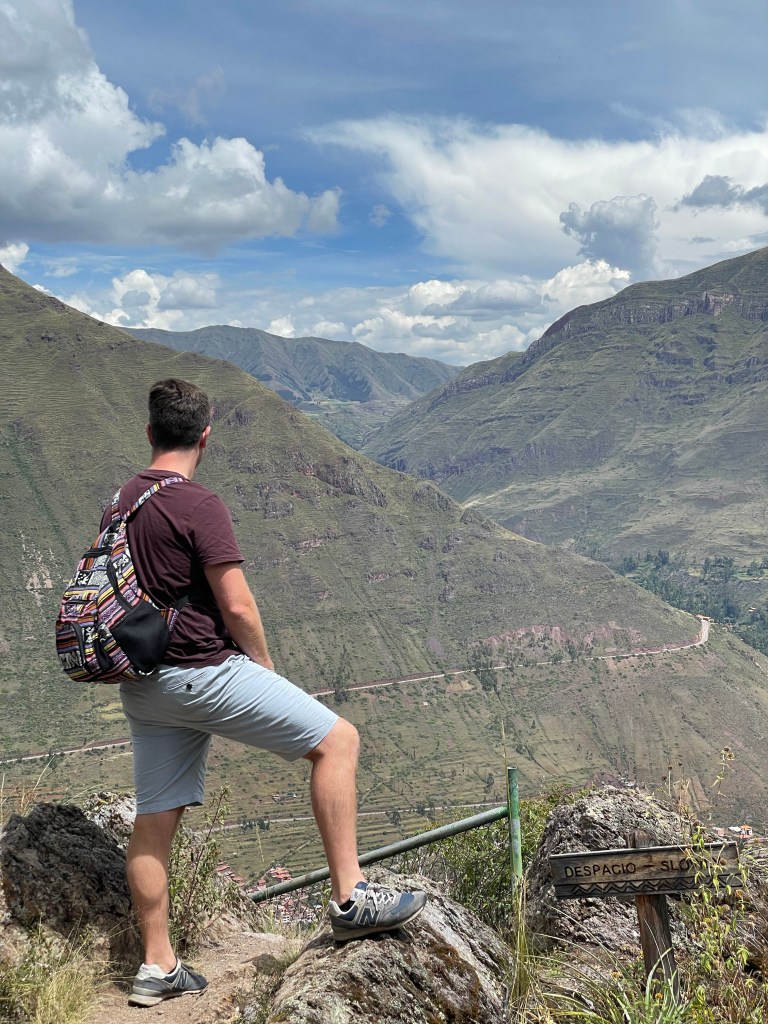
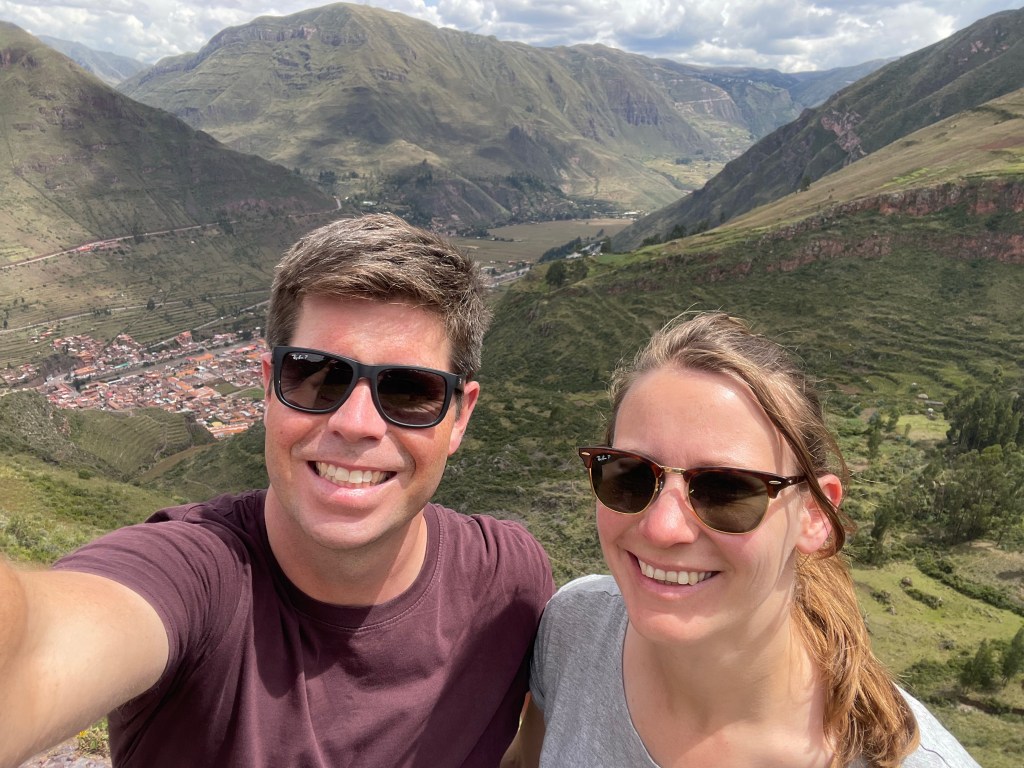
The ruins themselves are fairly uninspiring, but their location is incredible. Walking the long way down into Pisac is incredible as you feel like you are directly above the town and one trip could send you tumbling all the way into the plaza.
Around the ruins the hills are steeply terraced so as to add more agricultural land for the Incas and the civilisations which came before. The sacred valley is some of the most fertile land in the entirety of the Inca territory, therefore every possible square metre is used.
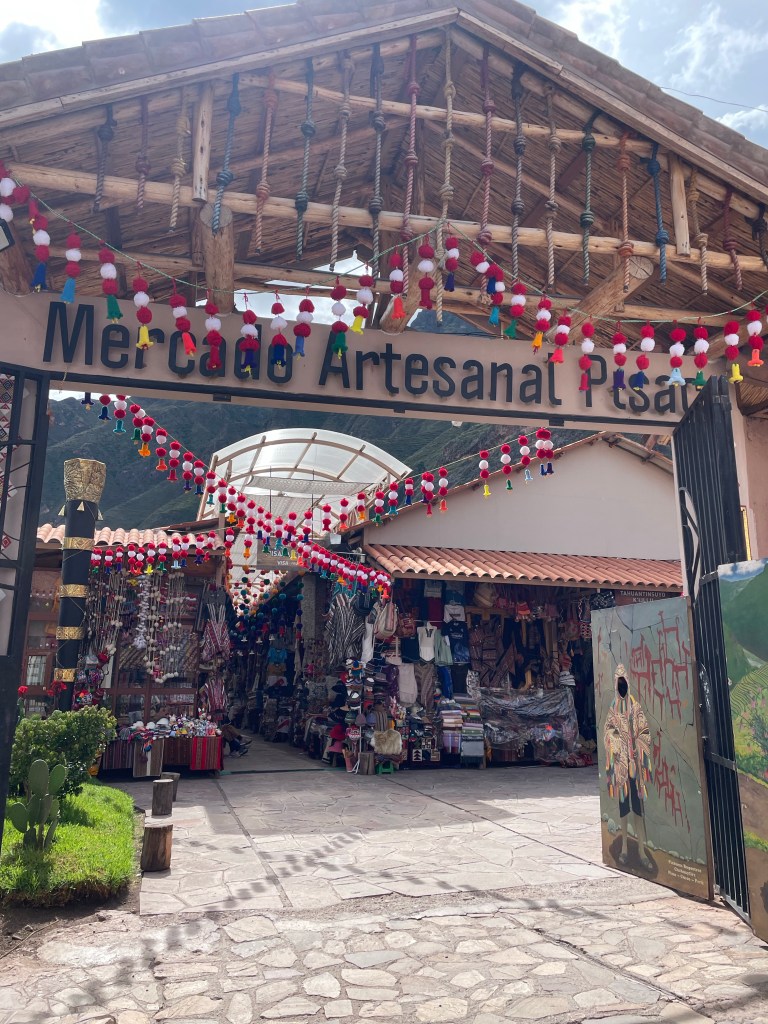
Pisac town has the highest tourist tat seller to tourist ratio of anywhere I’ve seen, and Peru is terrible for that. There is an enormous dedicated ‘artesian’ market, and an additional street, all selling the same Chinese made trinkets. To be fair there are a few unique sellers with genuine handmade crafts, although we didn’t find anything we liked.
We had a curry for lunch at a nice little restaurant which attracted all the weirdos. The doors were plastered with flyers for all manner of workshops; energy transfer classes, reiki sessions, dragon religion ceremonies, ayuhuasca stuff, and general hippie nonsense. Luckily the vegetarian curries were very tasty.
Back in Cusco we visited the twelve-angled stone. What a treat. It’s a stone in a wall with twelve corners, it’s huge, and great fun to visit for like 30 seconds. We even managed to pick up a fridge magnet of it.
Choco Museo is a chocolate shop disguised as a museum. They do this quite a bit in Peru, so treat any coffee museum, Inca museum,m or the like with scepticism. The chocolate was good, and even more fortuitously it was next door to the cervecería valle sagrado. The beers here were excellent, and the manager got special dispensation for Sarah to bring in a hot chocolate from the chocolate shop. So Mike had two really good beers – “be kind” and “inti punku” – and he even bought the t-shirt too.
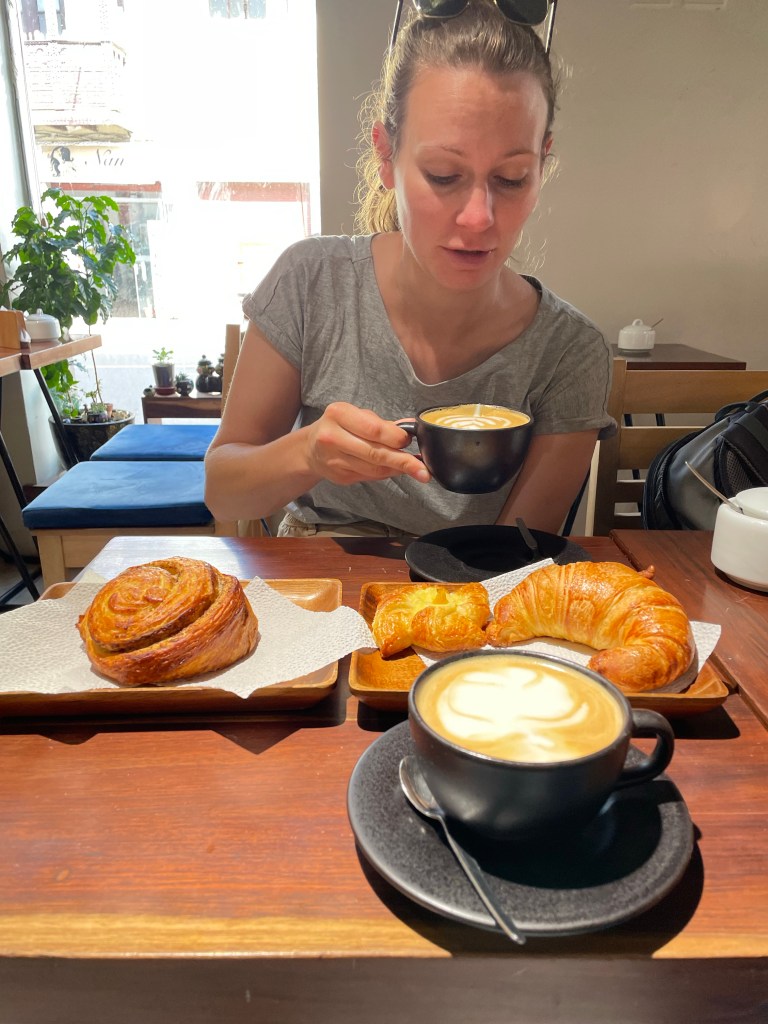
KusyKay restaurant served traditional Peruvian cuisine, including deep fried guinea pig if anyone was keen. The chicharrón (crispy pork belly) was more Mike’s style. The vegetarian options were numerous and it all looked very fancy. Overall it was very good if slightly pricy and a little bit forgettable.






- The infamous Binga-Karoi road
- Mana Pools: A bucket list location?
- Camping Among Lions: Chitake Springs Experience
- Chirundu: The worst border in the world
- The Wild Dogs of Jeki: Sunrise in Lower Zambezi
 Small Holiday Big Dream
Leave a comment