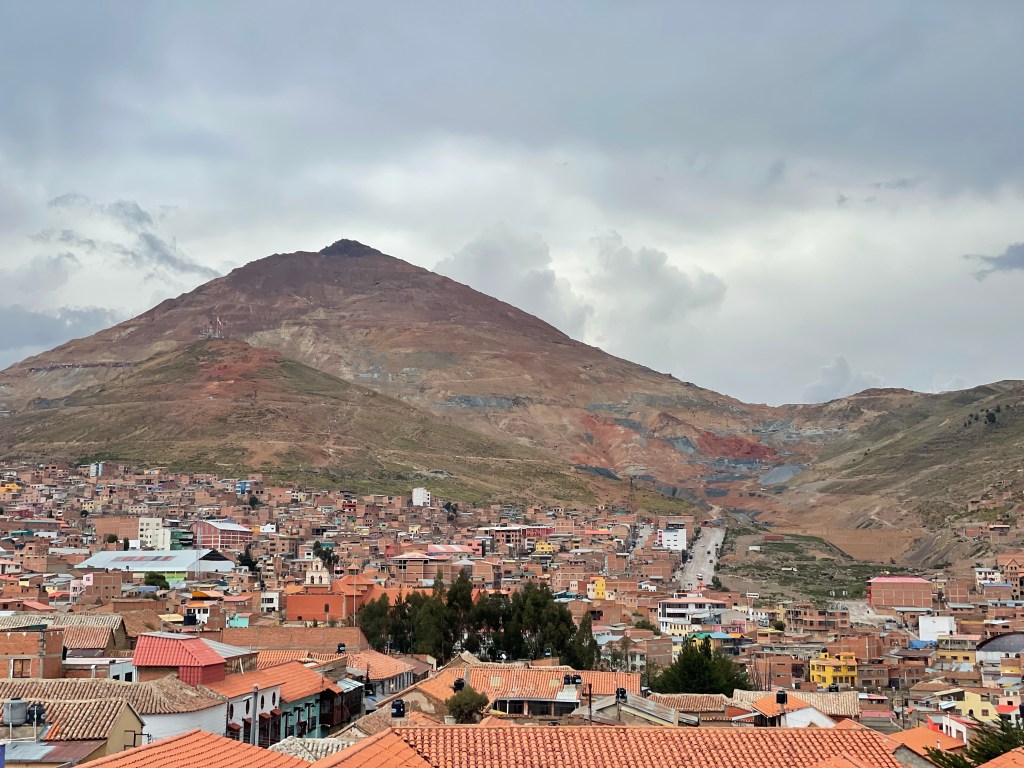
Potosi was a city of fabulous wealth, at one time home to the world’s largest silver mine. Over time its global standing has been has been eclipsed, but nevertheless the mining activity in the hills around the city remains a key driver of the economy here.
At over 4,000m the city is the second highest in the world (after newly minted city El Alto on the outskirts of La Paz). The air is thin, and walking around town is a slog, especially amongst the acrid fumes of the ancient diesel buses running up and down the hills. Potosi is also home to Bolivia’s mint, mostly due to it being where all the silver is, but is also a good indicator of the city’s national importance.
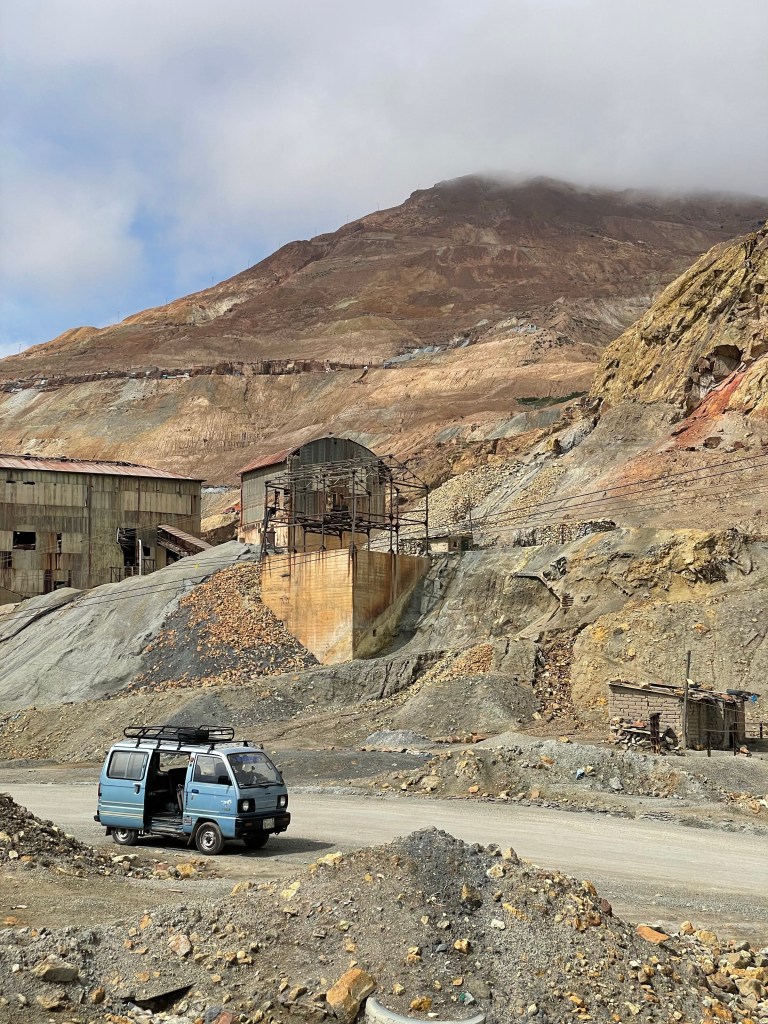
Cerro Rico – the rich mountain – so named for its abundance of minerals, has been mined for hundreds of years. In years gone by, under the supervision of first the locals and then the colonist Spaniards, it is estimated that millions of miners have lost their lives in the mountain.
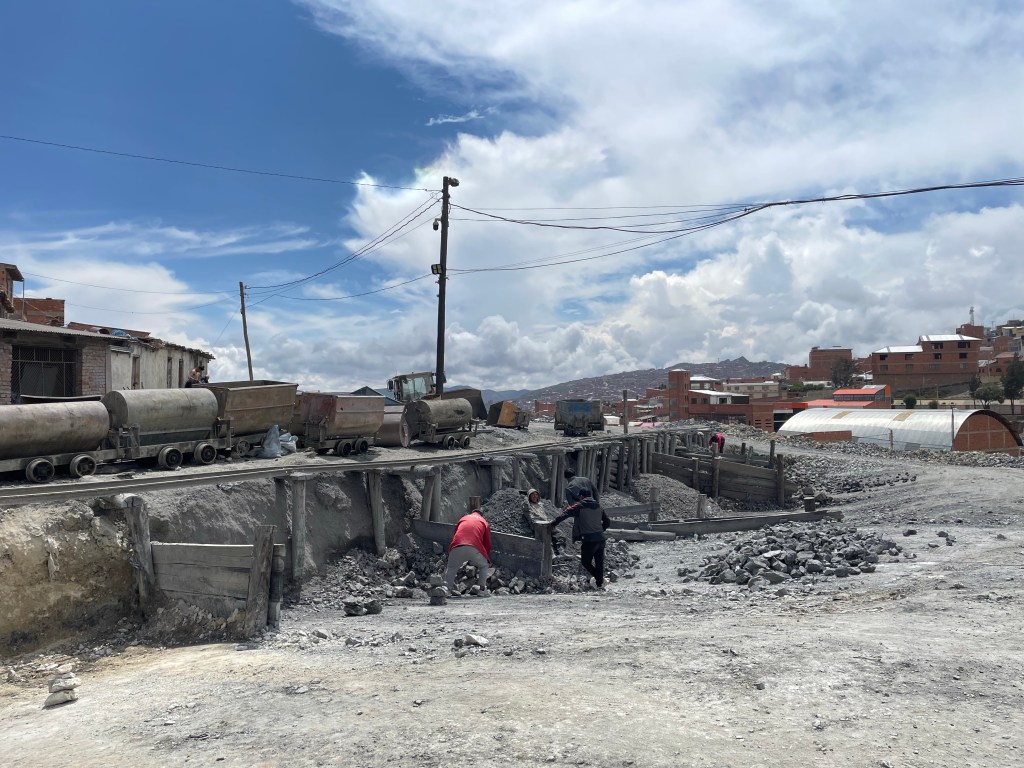
The silver in the mountain has been mostly exhausted, to the extent that the major mining corporations have moved on. That’s not to say mining activity has ceased, large parts are now mined as a network of cooperatives. Still economically viable, and more equitable for the miners, providing them a surprisingly decent wage compared to the average here.
Now one of the main reasons to visit Potosi is to understand the city’s rich history based on its mining activity, and to take the opportunity to visit the working mine itself.
There are lots of blogs out there, each more hysterical than the next, decrying the ethics of visiting such a workplace. Blogger after blogger proselytises about terrible working conditions, the cramped and claustrophobic tunnels, and the extreme danger of simply being on a tour. If you were to take any of these at face value you’d think twice about going into the mine.
We went on a tour and it was fine. The main draft was large and well ventilated, and there was ample space to get out of the way of the mine carts being pushed up and down.
We ventured off the main route to visit some miners at their actual workplace, the air wasn’t amazing, but at 4,300m oxygen was at a fair premium already. Plus the miners insisted on smoking the most pungent cigarettes which didn’t exactly help things. All the miners we saw seemed happy, the fact that it was Friday lunchtime meant that the beers were already flowing inside the mine. Clearly they enjoyed the camaraderie inside and were happy to hang around. Some of them had travelled across the country to work here, attracted by the good wages on offer. An inexperienced miner could earn £1k per month, with the managers earning a multiple of that. The cooperative system seemed to work well for them.
That’s not to say life is a breeze. Debilitating lung conditions and cancers are just around the corner for the miners. Safety standards do exist, but probably not to the extent of a western mine. I am certainly grateful that I don’t have to work in such conditions, but suggesting it’s exploitative of the miners seems off. As for the ethical dilemma over whether to visit; this is the workplace of thousands, and accountable the livelihoods of many tens of thousands more, and they gracefully permit tourists to experience it. There is no quandary.
So we embarked on our tour. First stop was the miners market.
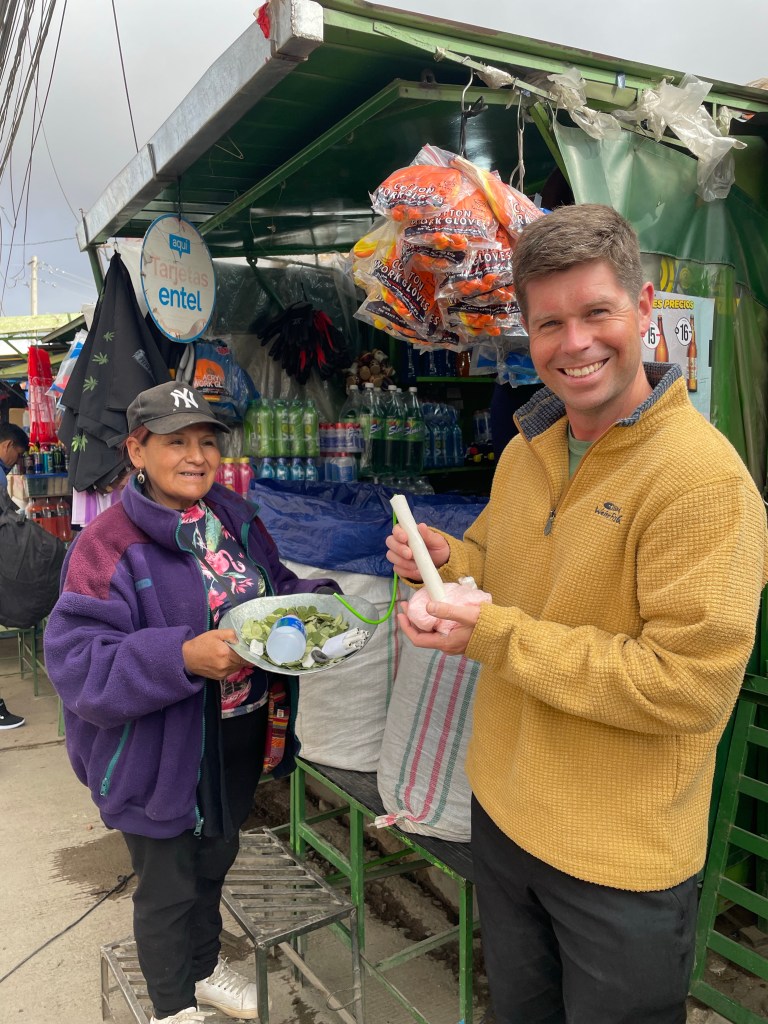
One of things to do is to bring in some gifts for the miners – helps them be a bit more comfortable with the presence of a few western tourists. Online reading beforehand suggested that 96% alcohol, cigarettes and coca leaves were suitable presents. At the market outside the mine even dynamite was available for purchase, alongside a bag of ammonium nitrate for good measure, could this also be an acceptable gift?
Our tour leader was a forthright middle aged woman named Sol. She insisted we take them only juices, water and coca leaves. For 10 BOB (£1) each that sounded like a good deal.
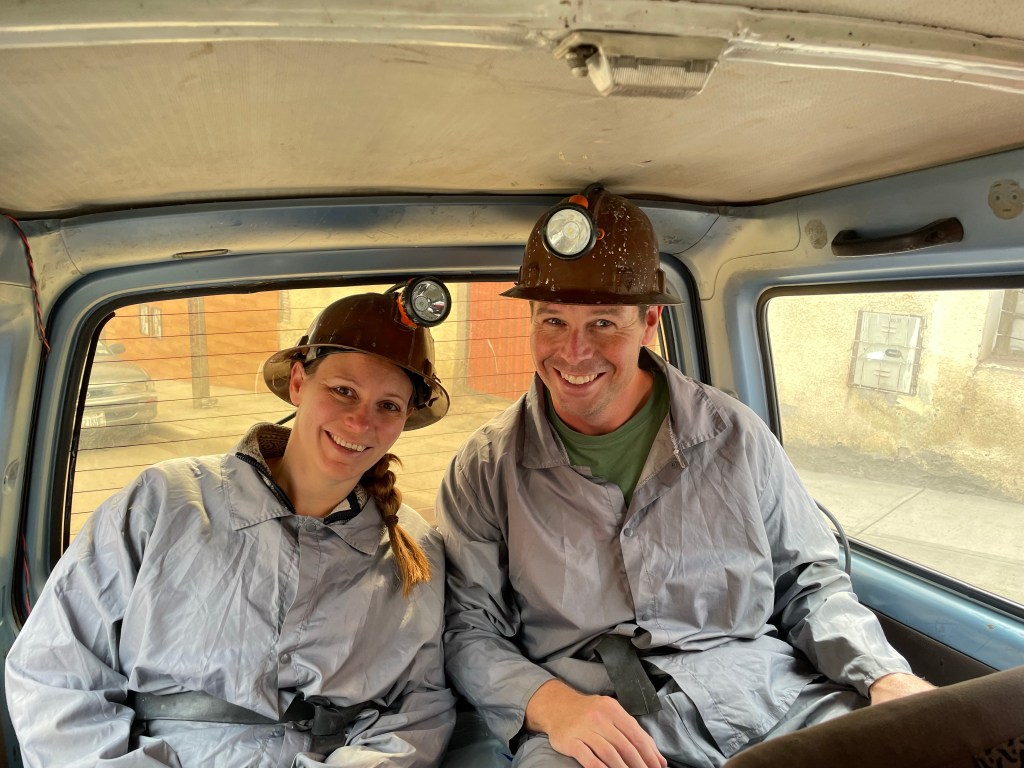
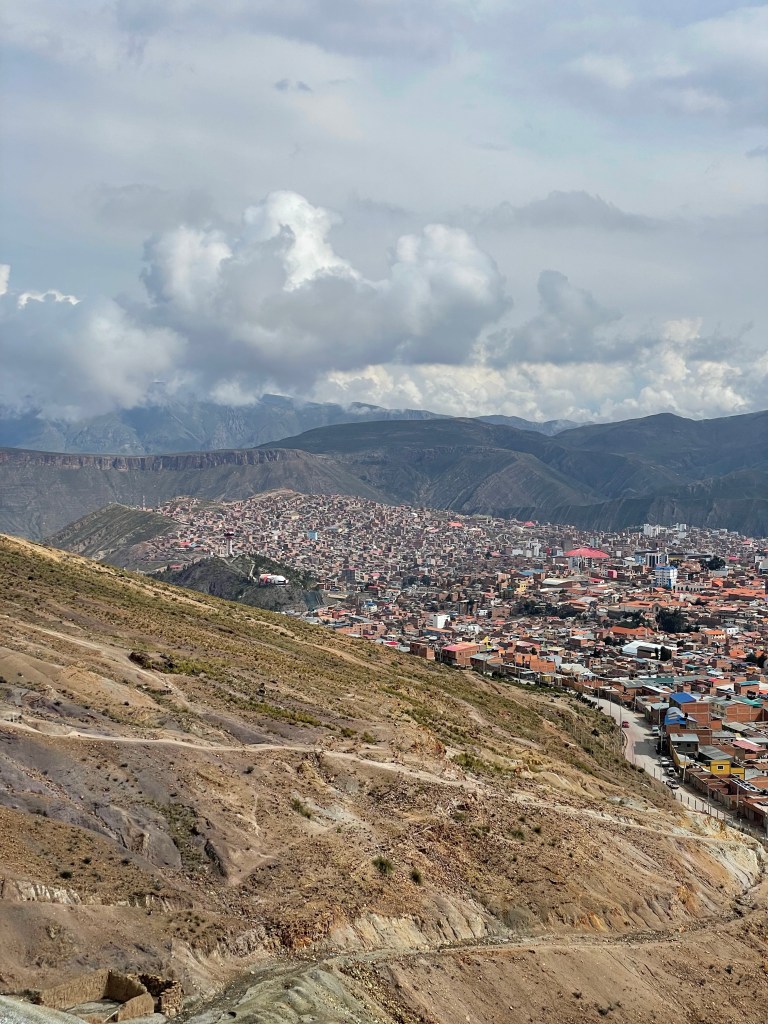
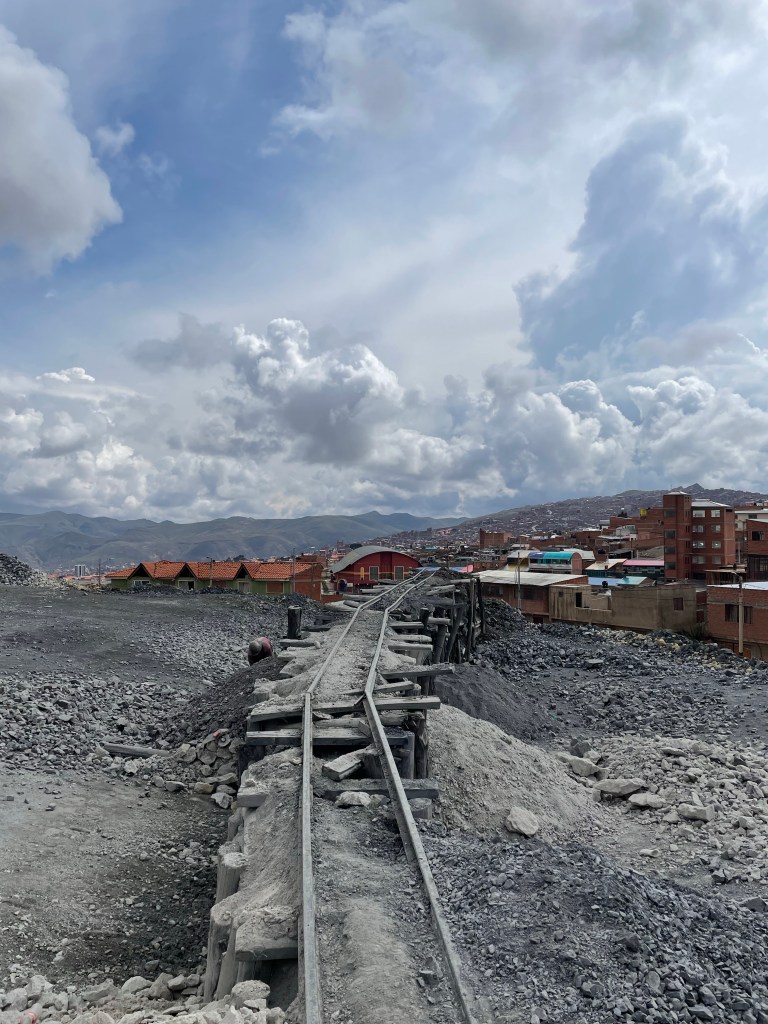
After changing into grey overalls, complete with helmets and headlamps, we headed up to 4,300m and the entrance to the mine. First we clambered on to one of the many spoil tips to get an excellent view over Potosi. In my view this was the most dangerous parts of the tour, almost certainly wouldn’t happen in the UK…
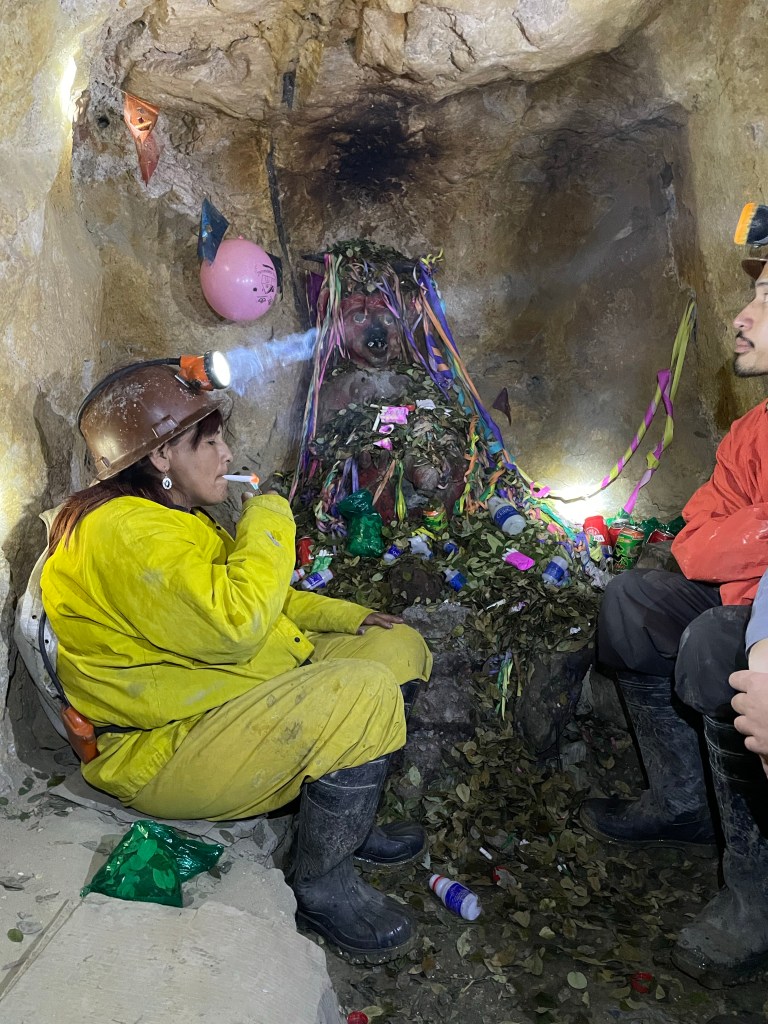
Shortly after entering the mine we visited the statue of the devil. He is the deity in charge of the underground apparently. Dousing him in 96% alcohol and coca leaves appears to keep him happy. As does placing a handful of lit cigarettes in his mouth. Even though the devil is prominent, Pachamama is the one that seems to really command respect.
As it was a Friday, it was important to celebrate the weekend. Beers were flowing inside the mine, but with each small plastic cup poured it was important to offer up a taste to pachamama. This involved splashing a couple of drops of the beer in the ground. The miners were generous in sharing their beer around, Potosina might be a crappy lager, but I’m sure its tastes extra sweet after a week down here.
Actually the miners were very grateful for the water and the juices we’d brought, grabbing them off Sol with a big grin on their faces. The coca leaves we purchased were also supposedly of better quality than the usual ones bought by the miners, so they were lapped up too.
In a few parts of the mine we had to squeeze through some small spaces to access the working miners. But most of the time the shafts were fairly large, and instead we spent a while dodging mine carts being pushed up and down, which is quite fun.
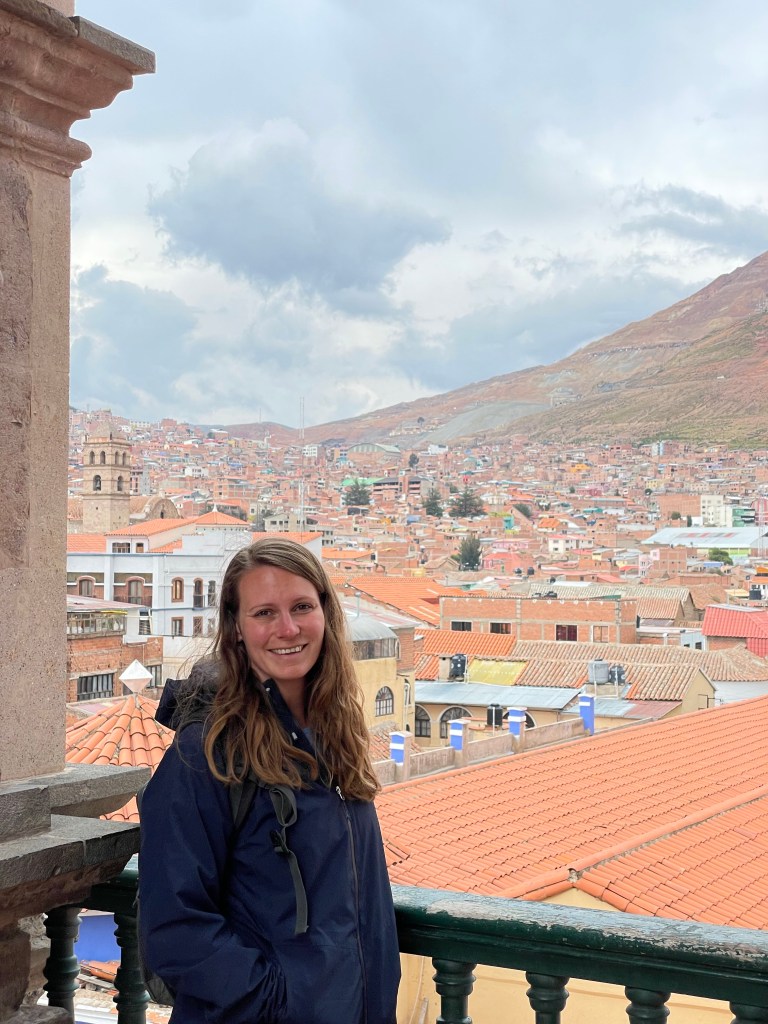
Back out of the mine and out of our mining clothes we spent the afternoon exploring the city. A highlight was the climb up the tower with a panoramic view of the city and the mountain that accounts for its existence.
In the evening we put our lives back in the hands of the perilous Bolivian bus network. We made it to Sucre, Bolivia’s constitutional capital, safe and sort of well.







- The infamous Binga-Karoi road
- Mana Pools: A bucket list location?
- Camping Among Lions: Chitake Springs Experience
- Chirundu: The worst border in the world
- The Wild Dogs of Jeki: Sunrise in Lower Zambezi
 Small Holiday Big Dream
Leave a comment