Entry into Bolivia
Two days in San Pedro was enough for us, and so a second consecutive early morning saw us commence our 3 day tour to the Salar de Uyuni and Bolivia.
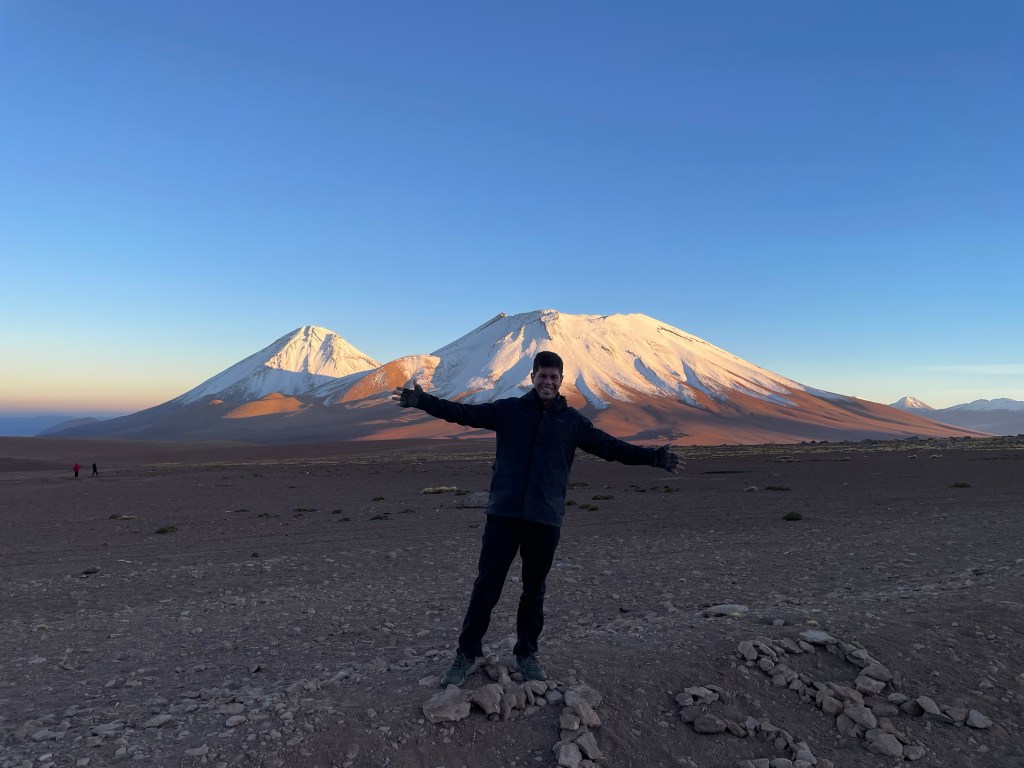
Selecting a provider for the tour is an arduous process. There are a hundred or more tour operators in San Pedro, all will offer the same package, and initially quoted prices vary. We settled on Cruz Andina, and paid US$200 for the tour. In hindsight this was an excellent choice. We were picked up promptly at 6:30am and as the sun rose we crossed the Bolivian border below the mighty Licancabur volcano.
There we met Freddie, our Bolivian guide/driver/chef/photographer for the next three days.
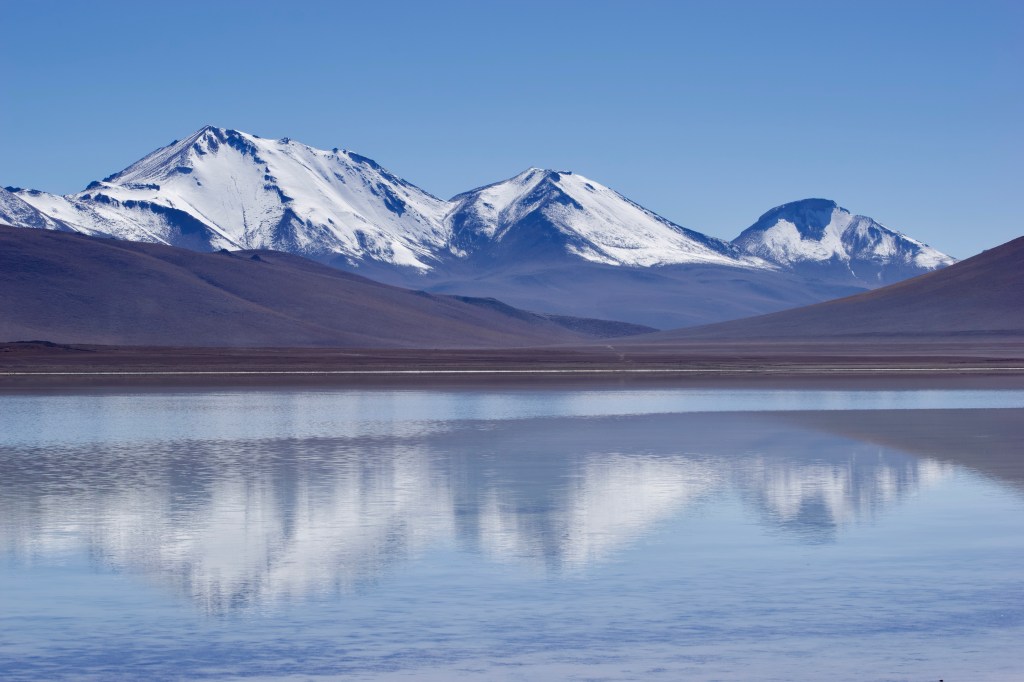
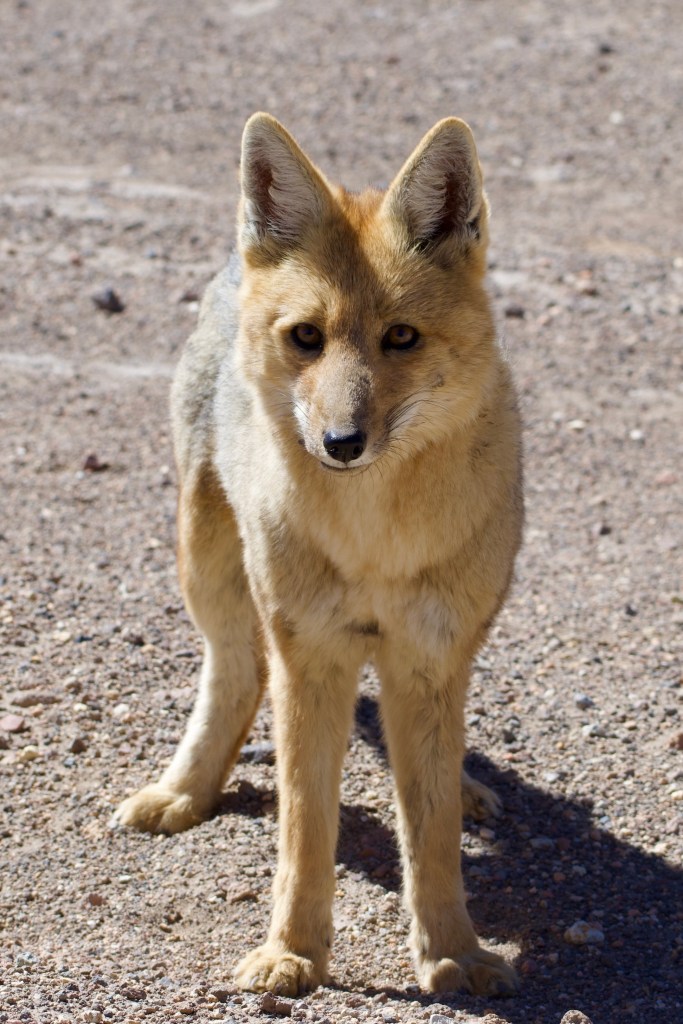
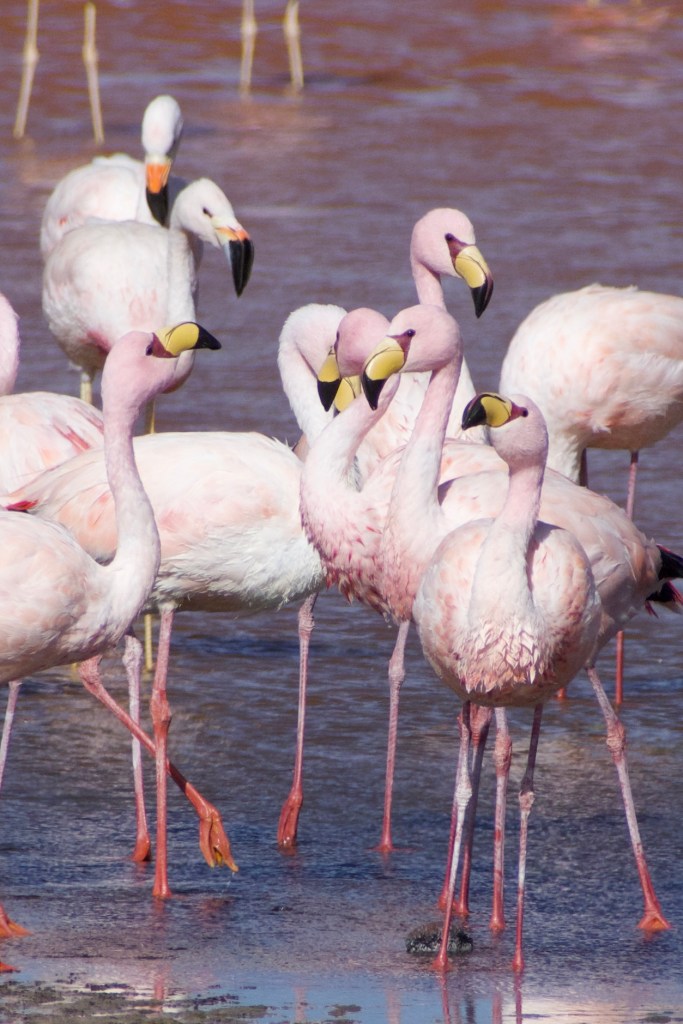
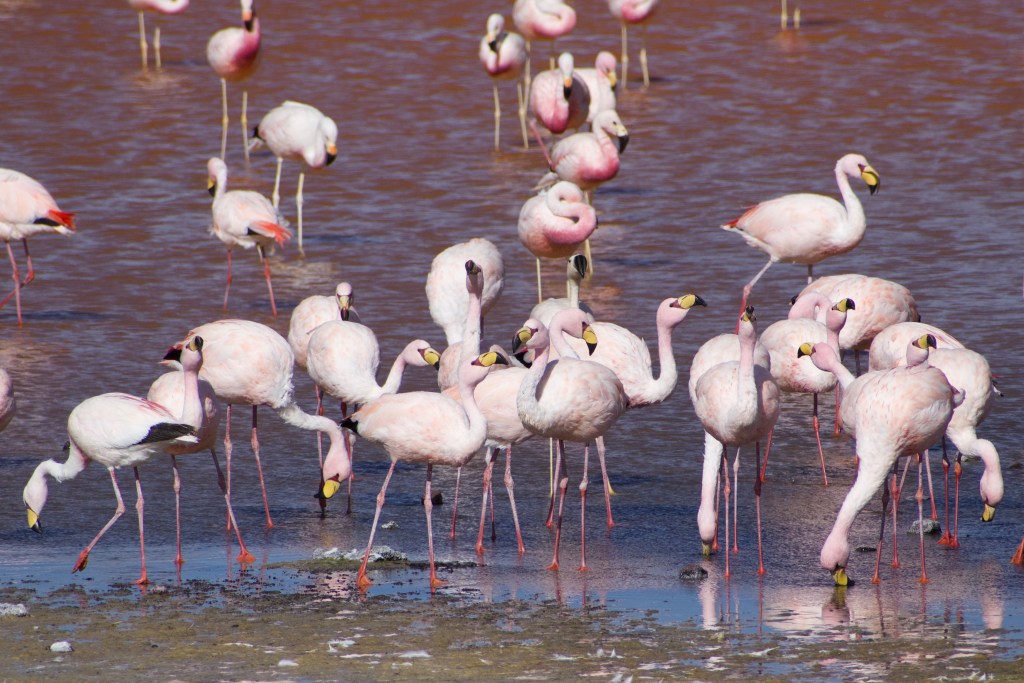
We slowly made our way through the Eduardo Avaroa High Andean Fauna National Reserve. Here there are numerous snow capped volcanoes and colourful lakes. At lunchtime we stopped at the hot springs and took a dip for 6BOB each (60p).
After lunch in at the springs we set off for the geysers, however one of our tour mates had left her passport at the hot springs. We returned to attempt to find it, but Freddie was getting very paranoid about the amount of fuel we had available to complete the trip. All was well with the passport – we caught up with the guide who took it later in the day. Although he was expecting a reward for it.
The geysers themselves were less impressive than the tatio geysers. There were bubbling pools of grey mud, and a sulphur smell that was absent in Chile.
Our final destination Villa Mar was an attractive little village located at the foot of some cliffs in a small valley with a clear mountain stream running through the middle of it.
Our accommodation was way better than expected. We’d read all kinds of horror stories about freezing rooms and cold showers. We needn’t have worried, we even got a private room without asking for it or paying extra. Turns out we’d managed to pick a good operator.







Bolivia day 2
Bolivia is a pretty large country. Over five times the size of the UK in fact. Which means that whilst the Salar de Uyuni looks to be tucked down in the south western corner of the country, we still had another full day’s driving northwards to get there.
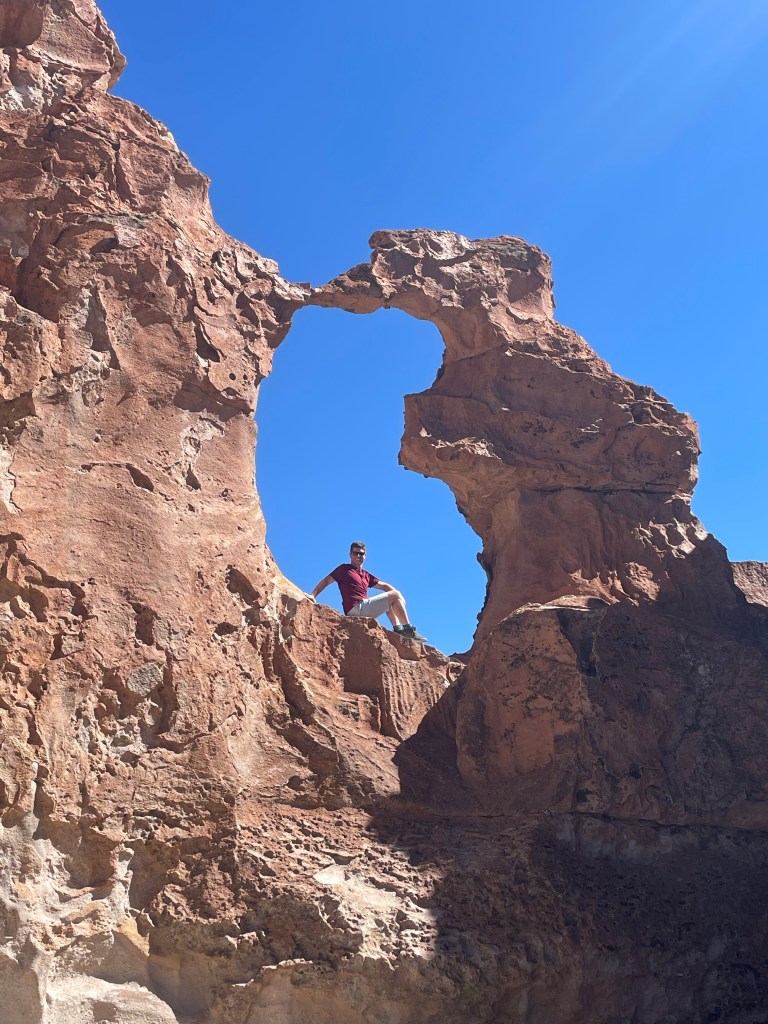
Volcanic rock formations lined the valley as we drive out of Villa Mar. First we had the “copa del mundo” 🏆. Then the “camel” 🐪 (after much discussion we decided it was a 🐪 not a 🐫). Then there were multiple natural arches or holes in the rock, providing ample photo opportunities.
The soundtrack for our journey was an unlimited supply of niche 80s power ballads. Freddie had at least 24 hours worth. And when you’re looking at 3rd or 4th singles from rogue one-hit wonders you know you’re dealing with a true connoisseur. Freddie take a bow. (I will mix some highlights into the insta stories)
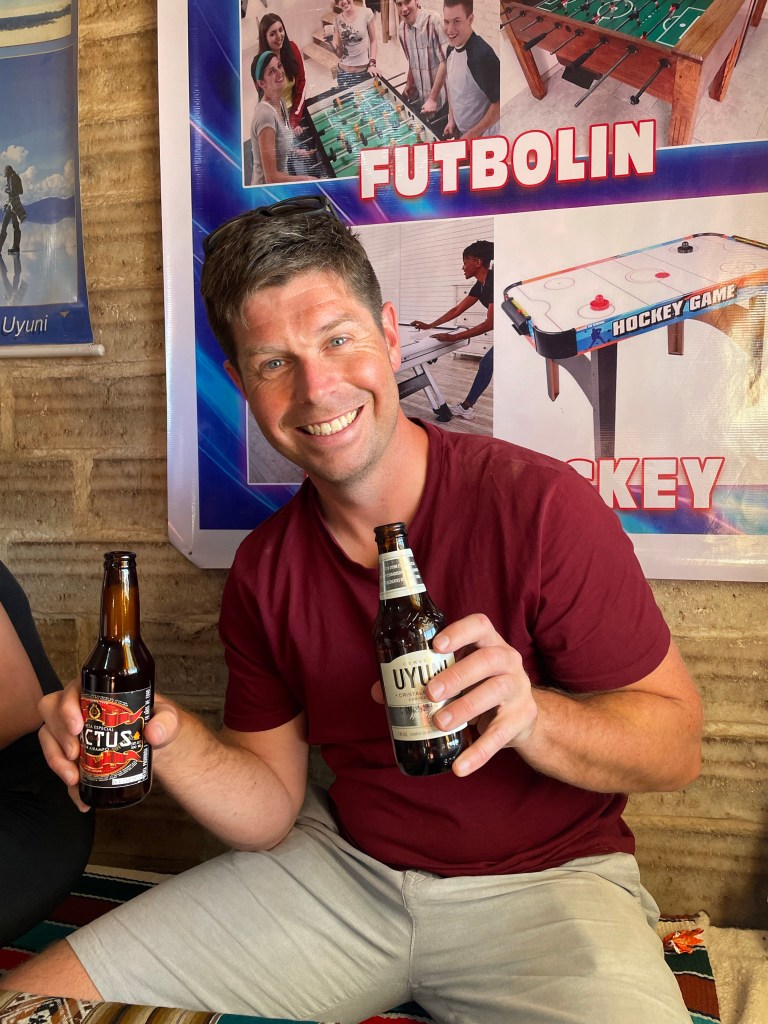
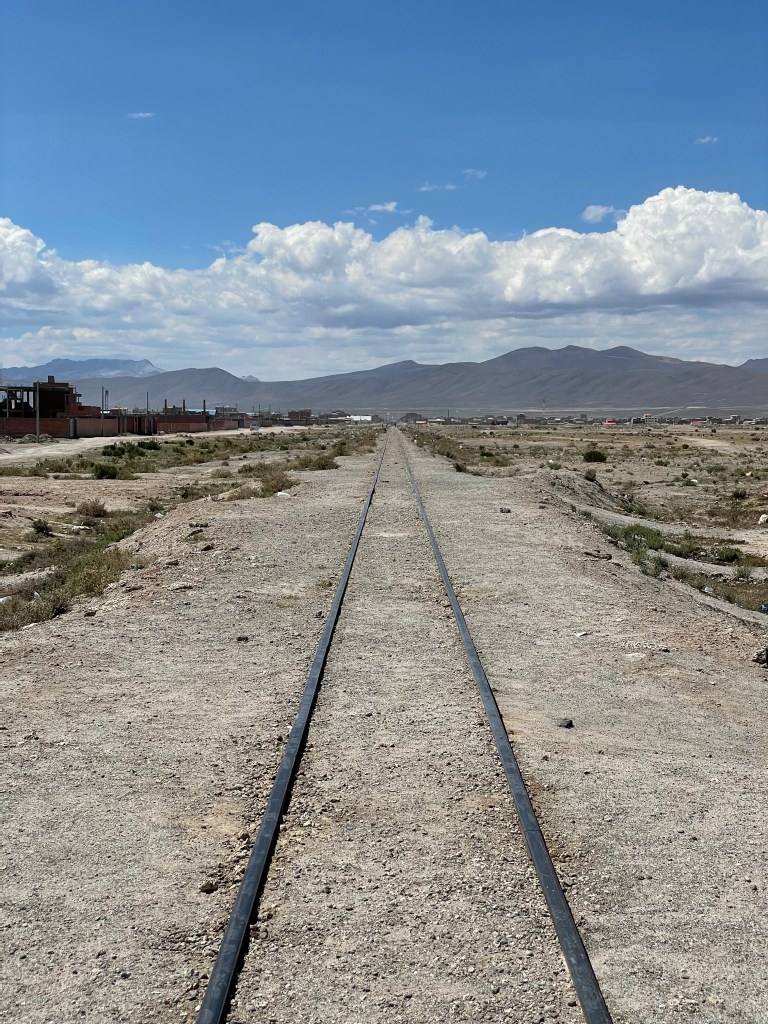
After a lot more surprisingly damp altiplano we made it to Julaca. There we were able to sample some local beers and admire the abandoned train wagons at the end of the line.
We were taken to some huge cactuses overlooking the salt pan at sunset. These were by far the biggest we’ve seen so far in South America.
Our room for the night was in the apparently newly constructed salt hotel near Colcha K. This hotel was owned by our tour company, and was big and comfortable. The whole thing was built out of blocks of salt, and there were numerous salt carvings of llama and condors adorning the walls. At dinner we even got our first taste of Bolivian wine from the Tarija valley.










Salar de Uyuni
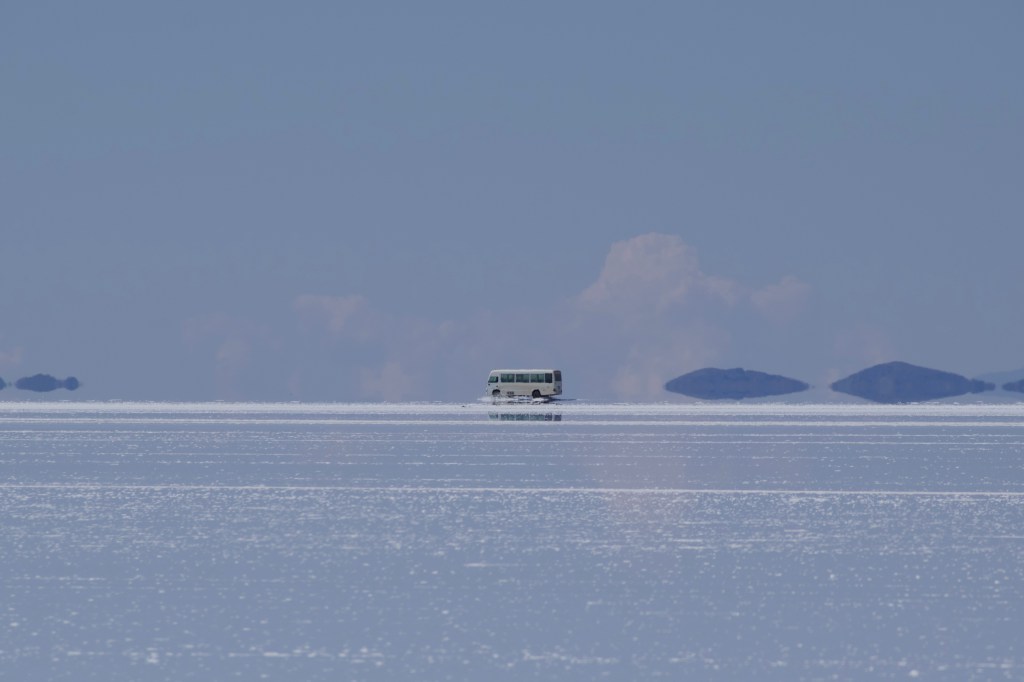
It’s just a huge flat expanse of white salt, it can’t be that impressive can it?
The salar de Uyuni goes in the same bucket as the perito moreno glacier in Argentina. Everyone who has been there will bang on forever about how incredible it is, and until you go and experience it yourself, you will never believe them.
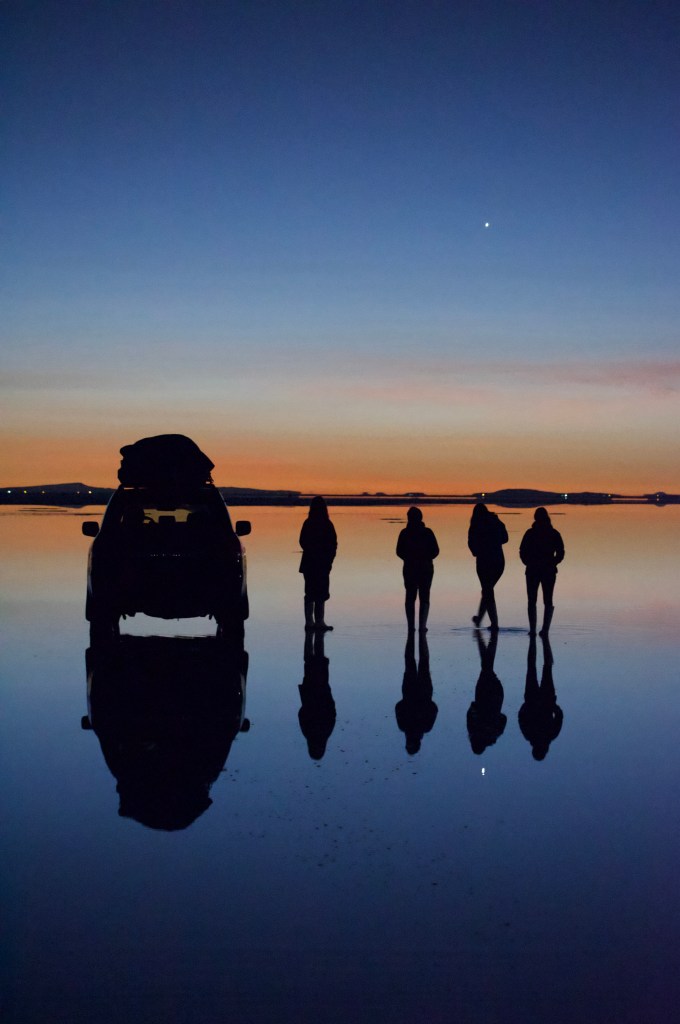
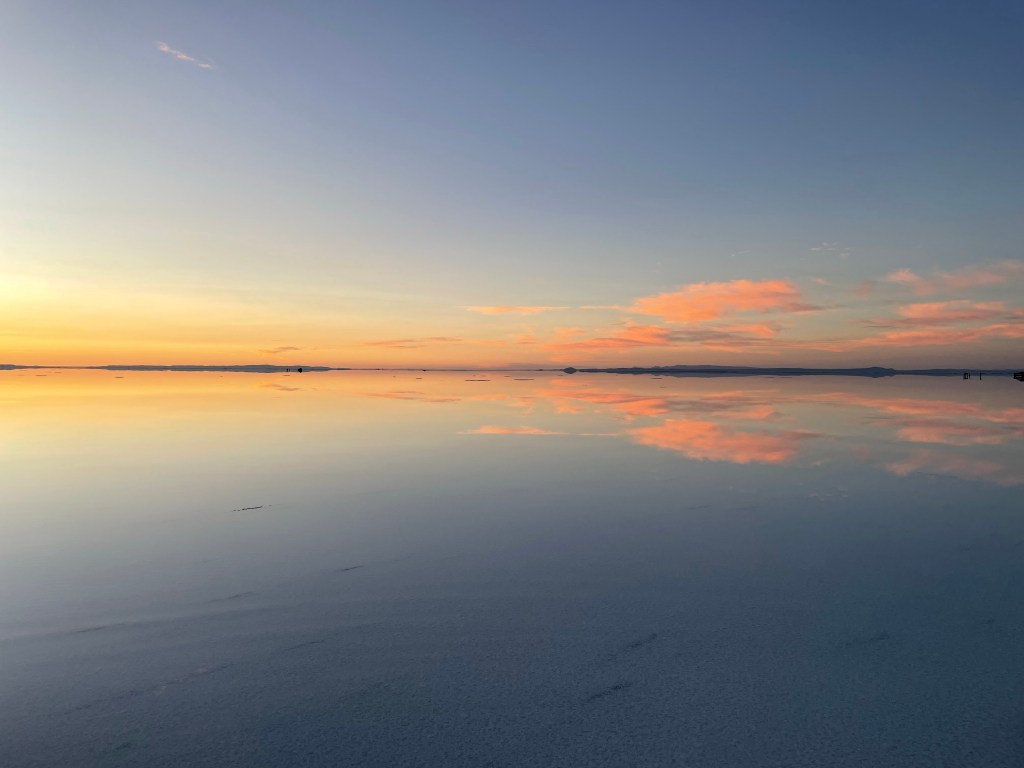
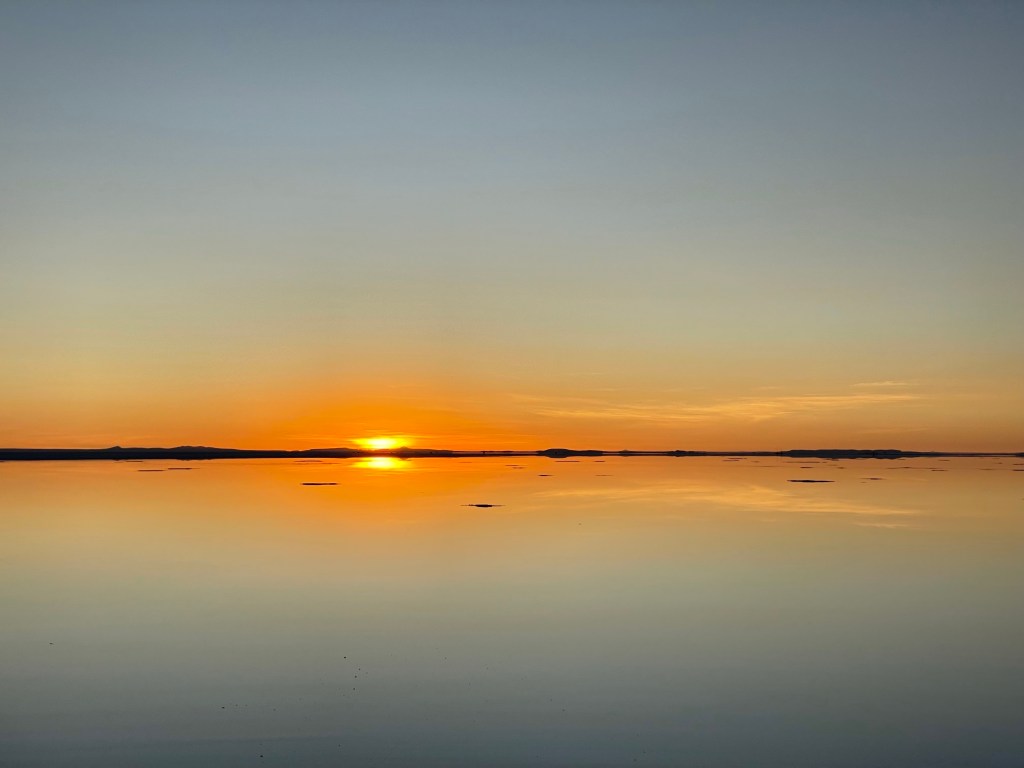
Driving out onto the salt flats before first light was an odd experience. The surface was covered in maybe 5cm of incredibly salty water, and so to avoid splashing it all over the car Freddie crawled along at 10km/h. We were given white abattoir wellies to wear, and we jumped out of the car just as the horizon began to turn orange.
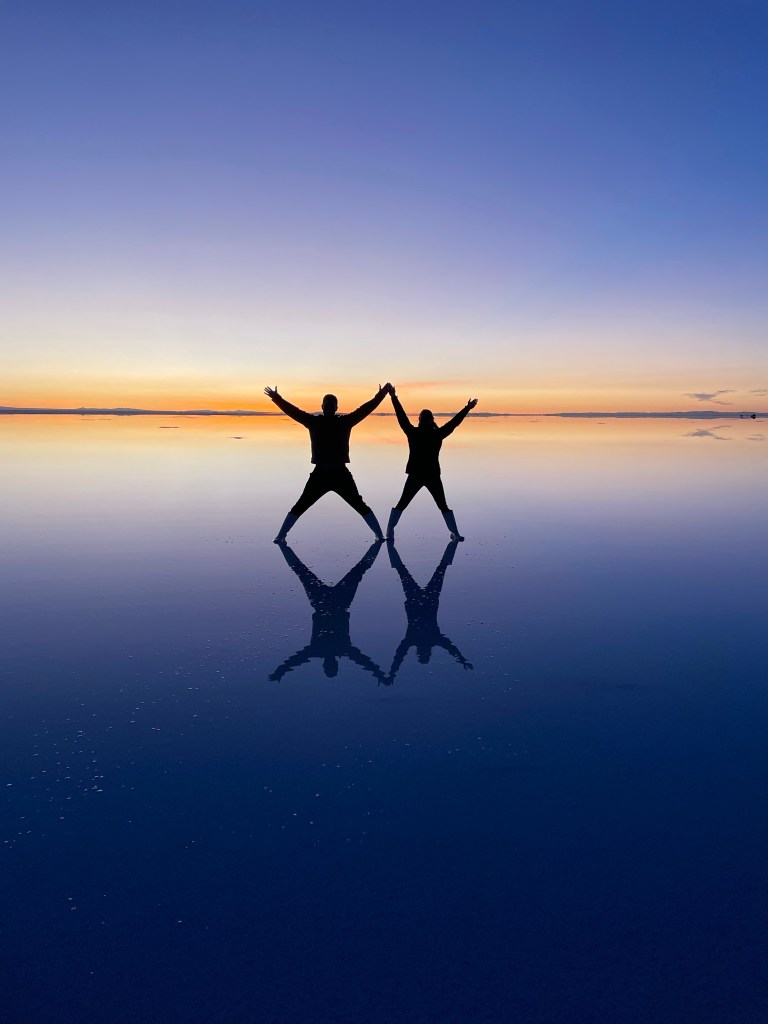
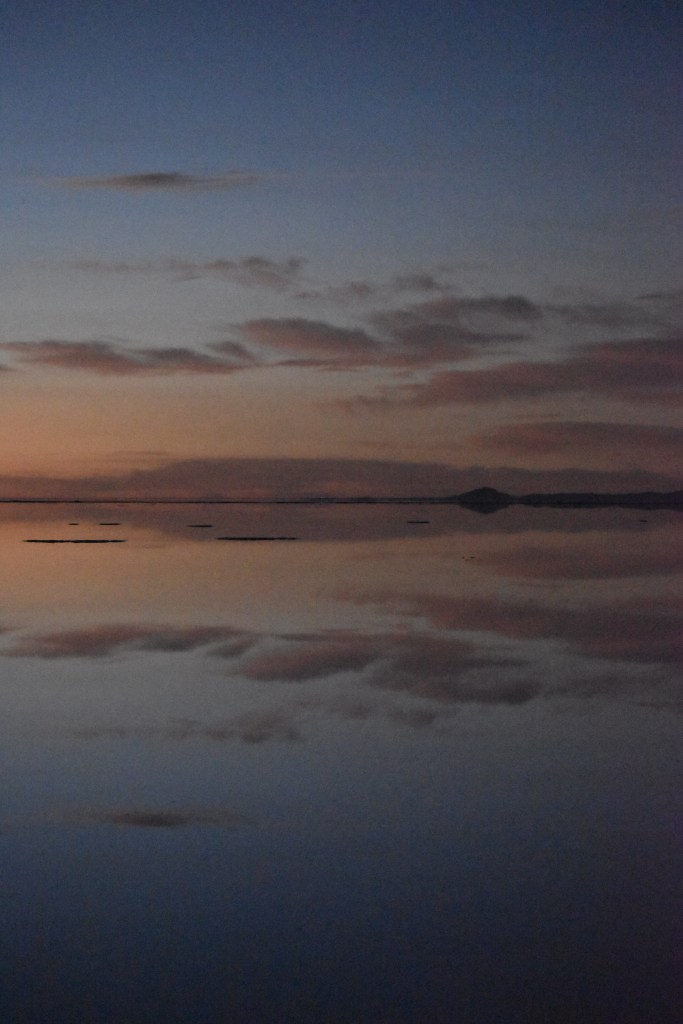
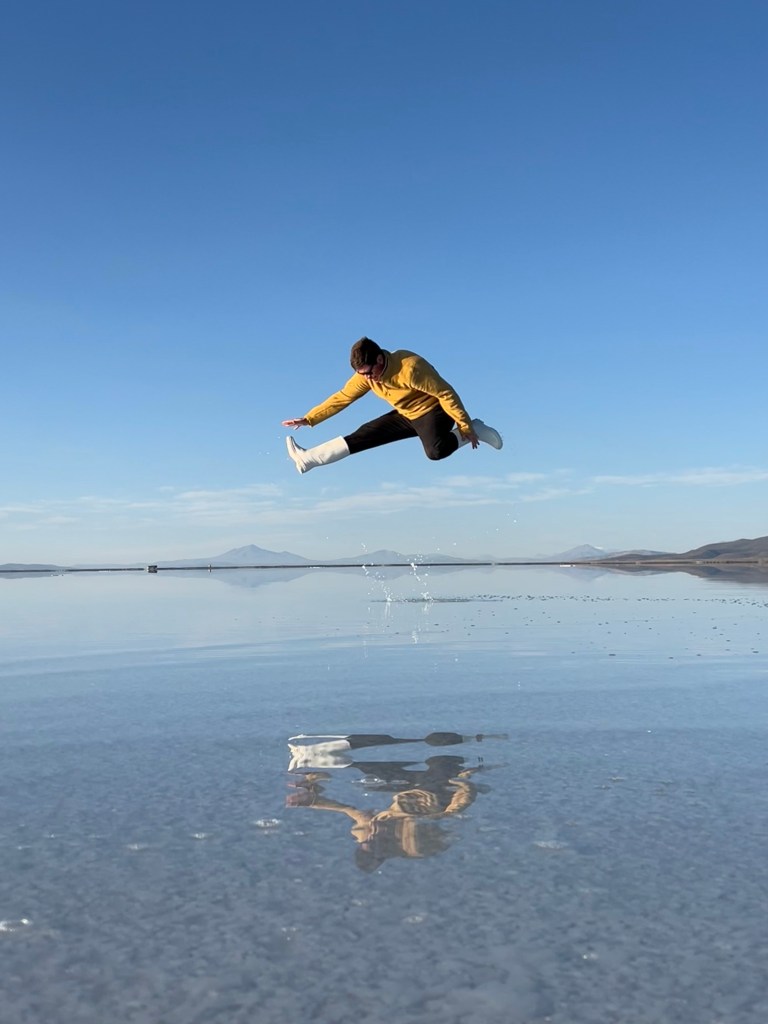
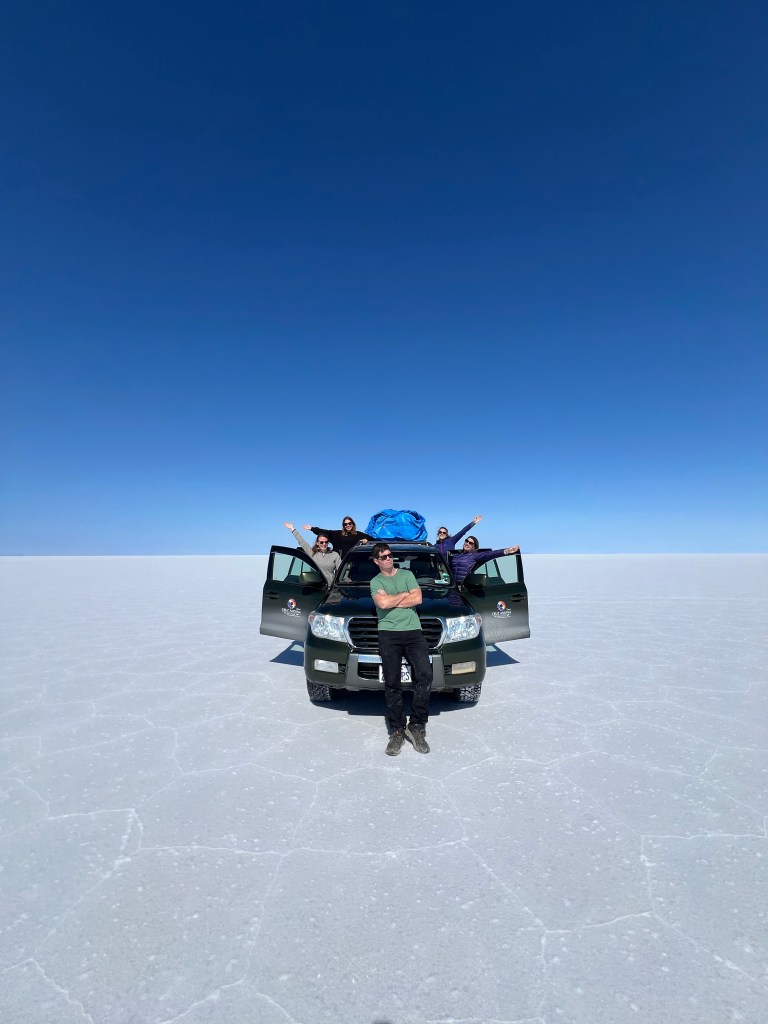
It was cold, close to freezing, and fairly soon everyone’s toes had gone numb in the wellies. Still, there was plenty of enthusiasm for silly photos and videos as the sun came up. Just before dawn was the most spectacular time, the few centimetres of water on the surface of the pan acted as a perfect mirror, reflecting the mountains and clouds so precisely that it’s impossible to tell which way up some of the photos are taken.
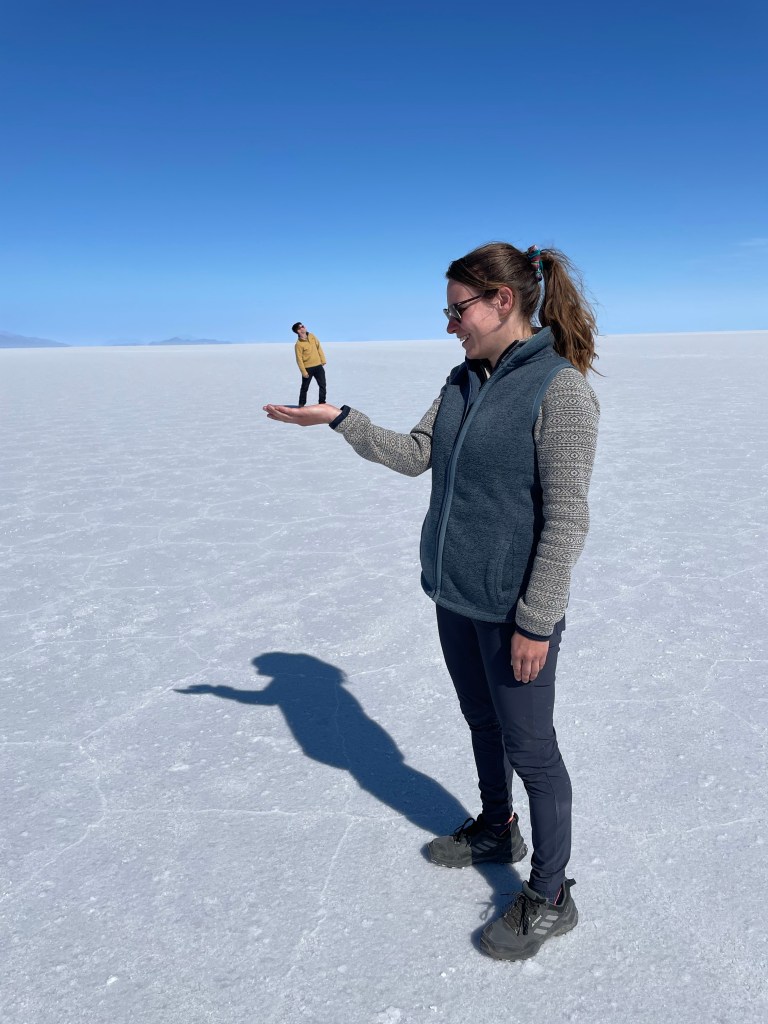
We moved to a drier patch on the pan for breakfast, and more silly photos. Here the baked salt pan was pure and white. Under Freddie’s exacting supervision we produced a few of those videos using the perspective available on the salt pan. Walking a shoelace tightrope or putting everyone in a pot for example.
The original salt hotel is a must visit location on the salt flats, although I’m not sure why. It’s a bit run down, but there’s a bunch of flags and a monument to the Dakar rally to see. It also signifies the end of our journey on the salt flat. Soon afterwards we reached Colchani and the tourist market, where amongst the standard tat you could buy small bottles of salt marked with “Salar de Uyuni Bolivia” and “made in China”.
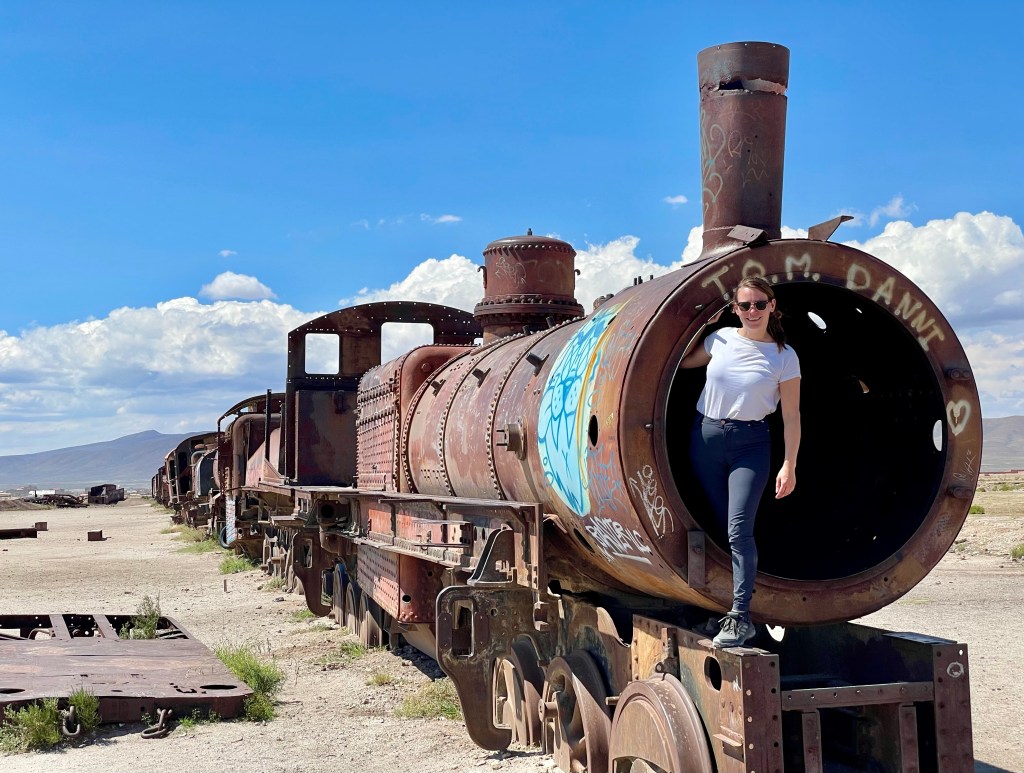
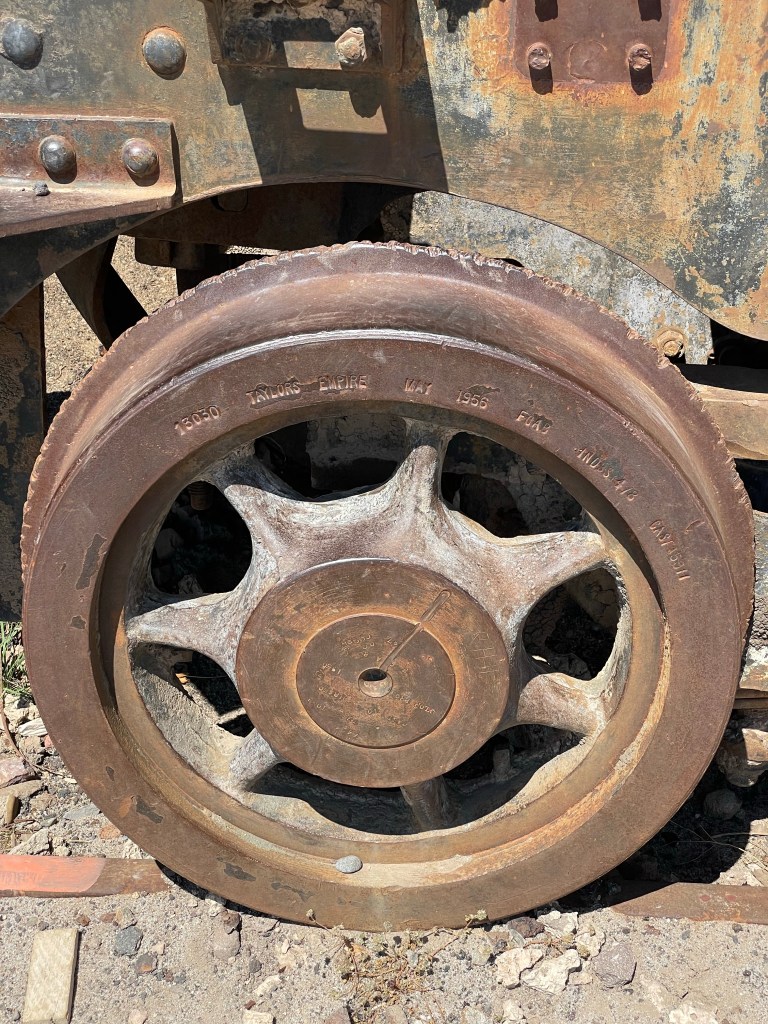
Just outside Uyuni is the train cemetery. Most of Bolivia’s old steam trains have been left here to rust. Many trains bear hallmarks of English manufacturers, and perhaps are remnants of a time when there was more optimism in the country. If you want to know what the trains are then I’ll defer you to Sarah’s father.
There’s naff all in Uyuni, so we hopped on the next bus to Potosi. That being said, you should select your buses carefully in Bolivia. Or even more wisely, you should never google your bus company in Bolivia. Each company seems to compete as to the recency of their latest fatal crash. On our drive into Uyuni we spotted an overturned coach in the process of being re-righted. On the Uyuni to Potosi road, which we were shortly about to travel, 14 people had lost their lives in a head-on bus crash just the day before. I put my phone away. The terrifying state of Bolivian public transport notwithstanding, we made it to Potosi safely.
Potosi is over 4,000m, the bus station at the foot of a steep hill, and our hostel at the top of it. Flagging down a micro bus was fun, even if we had no clue what was going on. For 1.5 Bolivianos each (20p), it was worth getting on a bus going up, and hoping it went in the right direction.
The buses here don’t have numbers, rather a list of destinations in their front window. We figured going anywhere was better than being harangued by taxi drivers at the foot of the hill. On the bus we were the star attraction, most locals seemed to wonder what on earth we were doing on a local bus at 10pm, but we made it to our hostel just fine.













- The infamous Binga-Karoi road
- Mana Pools: A bucket list location?
- Camping Among Lions: Chitake Springs Experience
- Chirundu: The worst border in the world
- The Wild Dogs of Jeki: Sunrise in Lower Zambezi
 Small Holiday Big Dream
Leave a comment