Everyone we had met so far in South America had so very highly recommended northwest Argentina we felt like we ought to go. Talk of super cheap hire cars, incredible scenery, and brilliant hospitality piqued our interest. A week’s visit would slot fairly nicely in our itinerary, so we hastily booked flights to Salta.
Arriving in Salta
What we hadn’t accounted for was that it was the Easter holidays (combined with Malvinas Day on Tuesday 2nd April). Which meant most of Buenos Aires was looking for a cheap getaway for an extra long weekend. That meant cars were not cheap, and availability was at a steep premium.
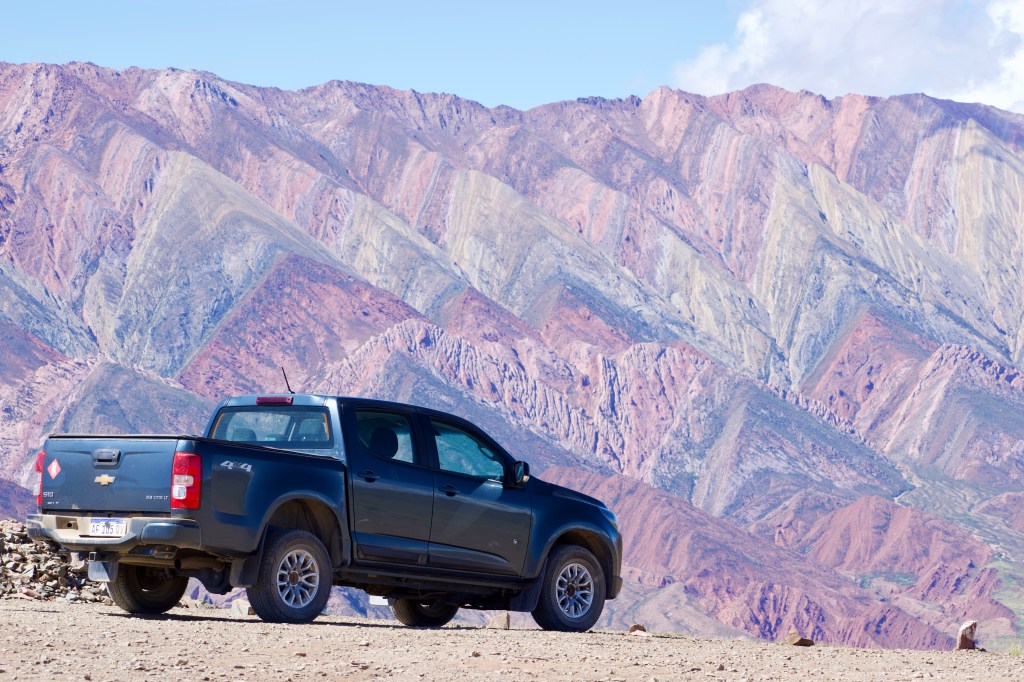
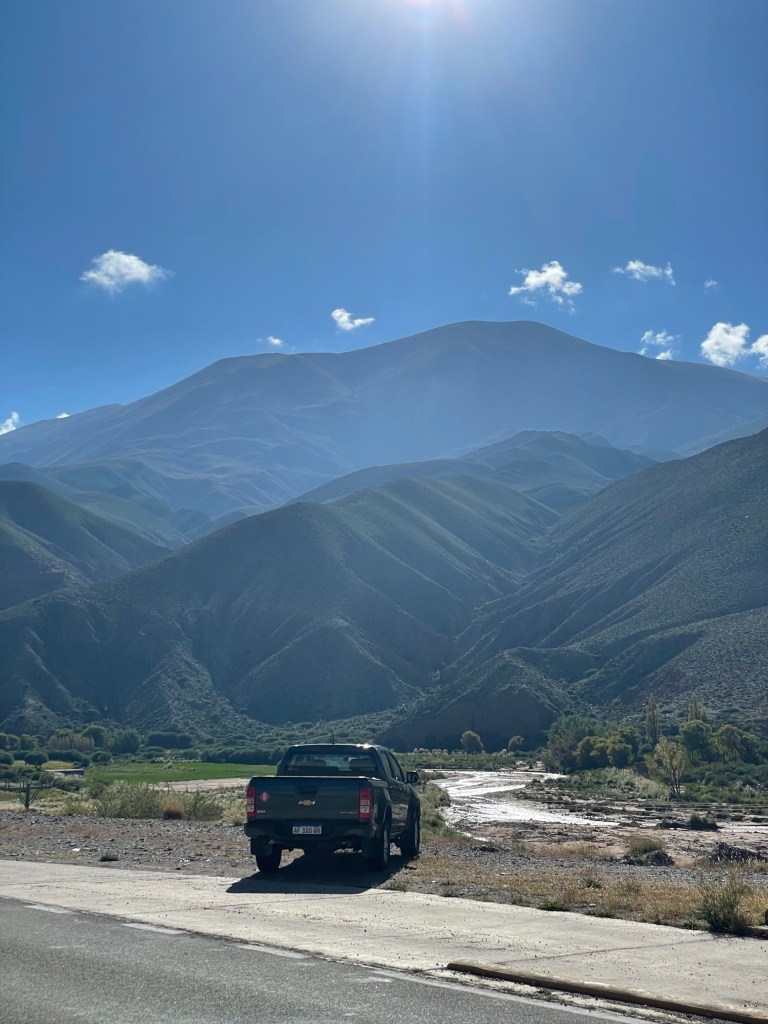
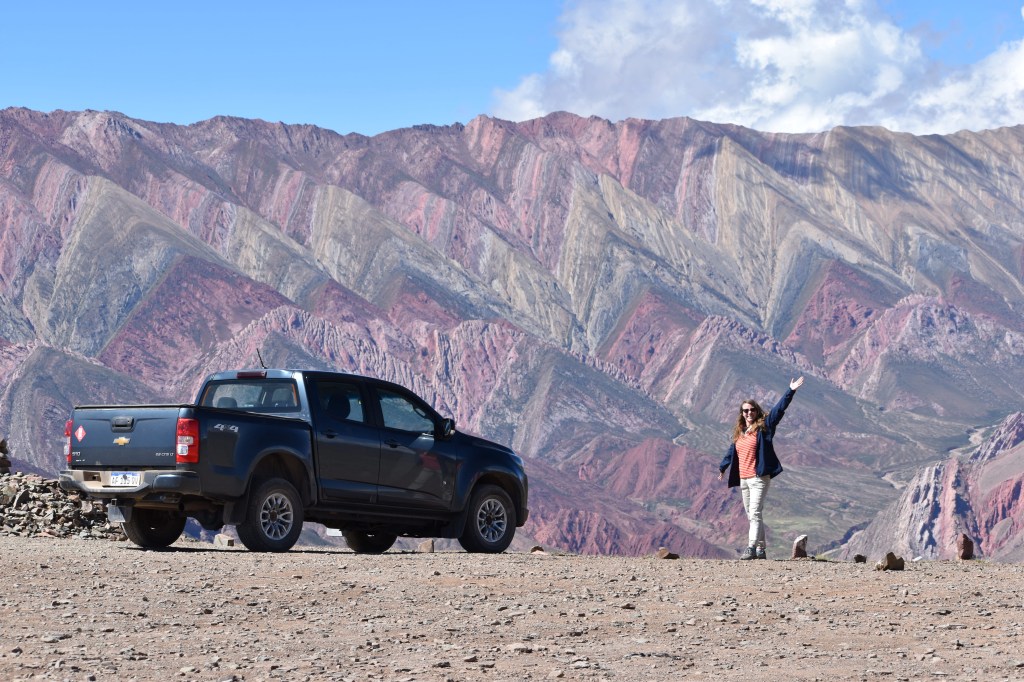
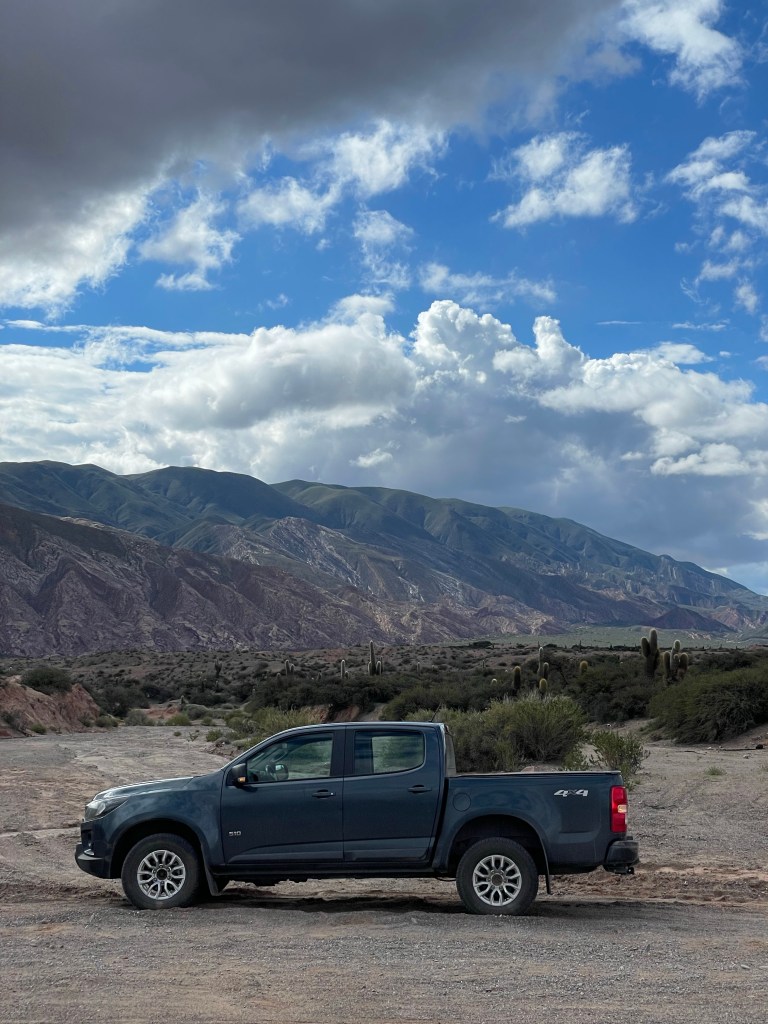
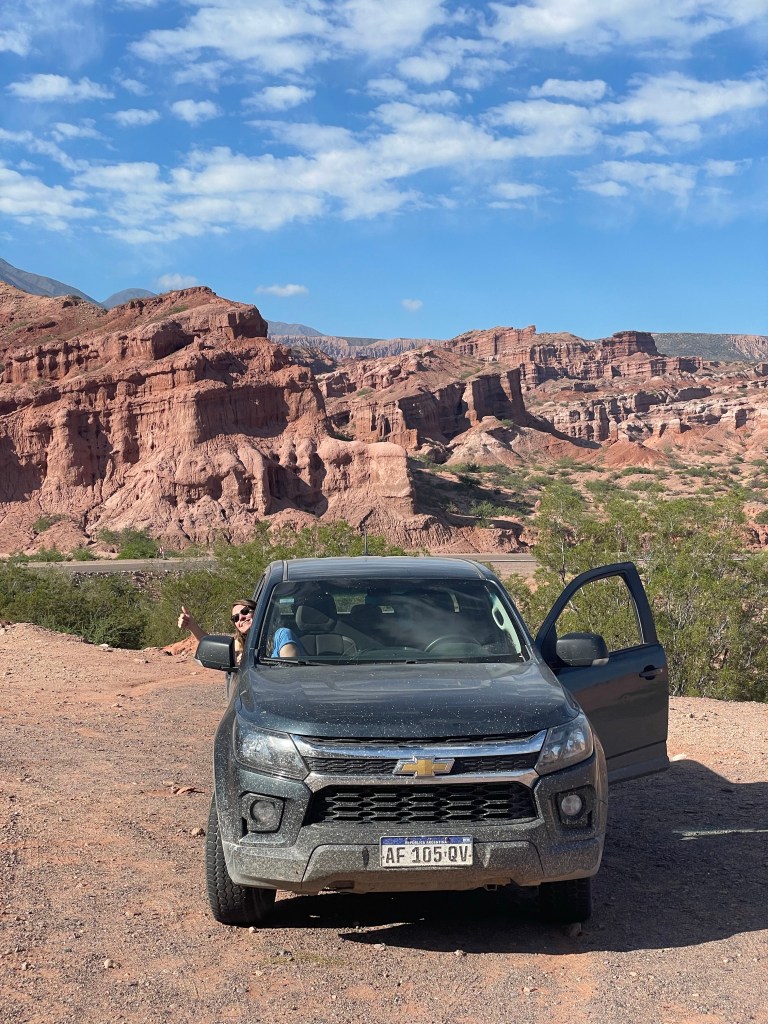
Undeterred we secured a monster truck, about the last available vehicle in Salta. Now I know massive 4×4 pickup trucks are normal this side of the pond, but driving this thing was like driving a ferry. It also drank like a fish, but luckily in Argentina diesel is only around 80p a litre, so the only thing we damaged was the environment.
Before collecting our truck, we had a couple of hours to visit Salta. First we robbed the bank/visited the western union to get 500k pesos in 500 peso notes. With a backpack full of cash we were ready to go.
The museum of high Andean archaeology is a prominent feature on the main square in Salta. Inside are the mummified bodies of three children sacrificed by the Incas on the summit of Llullaillaco volcano.
The remains of the children are 500 years old or so, but are incredibly well preserved, thanks to being on display in a massive transparent freezer. Although for their preservation, only one at a time is viewable by visitors.
“Lightning girl” was on display for our visit, so called because at some point she was struck by lightning and part of her face and clothes were singed.
The sacrifice of children by the Incas was a fascinating and monstrous ritual. The museum does a good job of explaining this in detail. The bodies of the children were left at the highest and most sacred points to be closest to the god(s). Llullaillaco volcano is no joke, at over 6,700m tall it’s the second or third highest active volcano on earth. The logistics of the extraction of the mummified bodies from the summit is as fascinating as the sacrificial ritual itself.
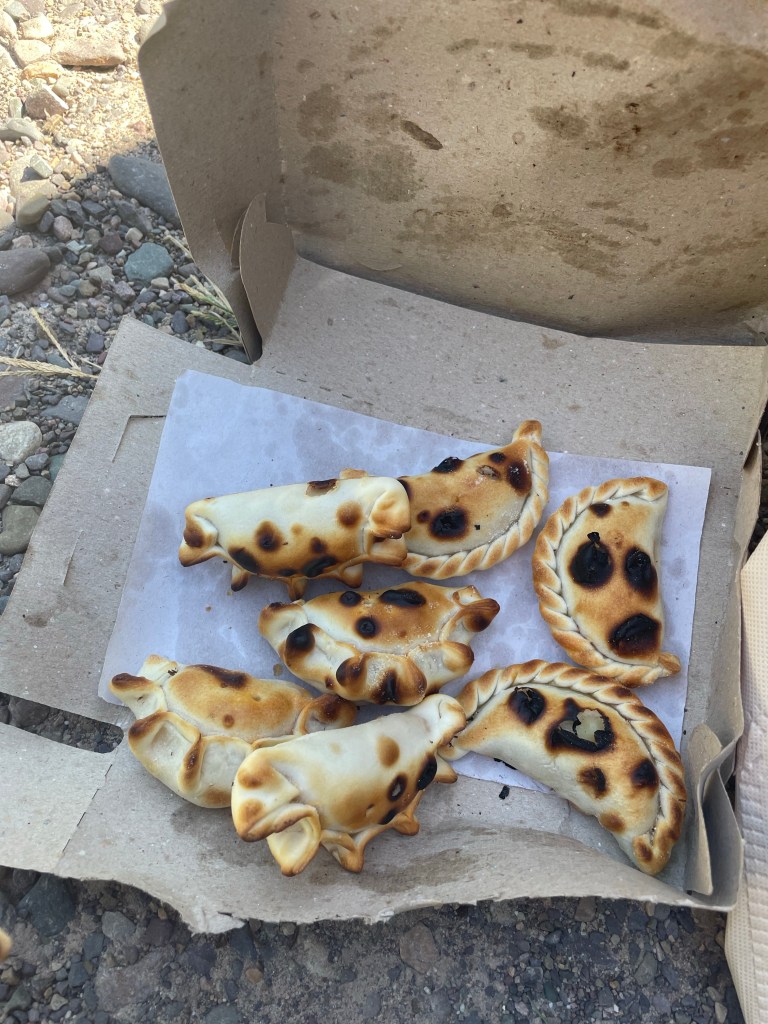
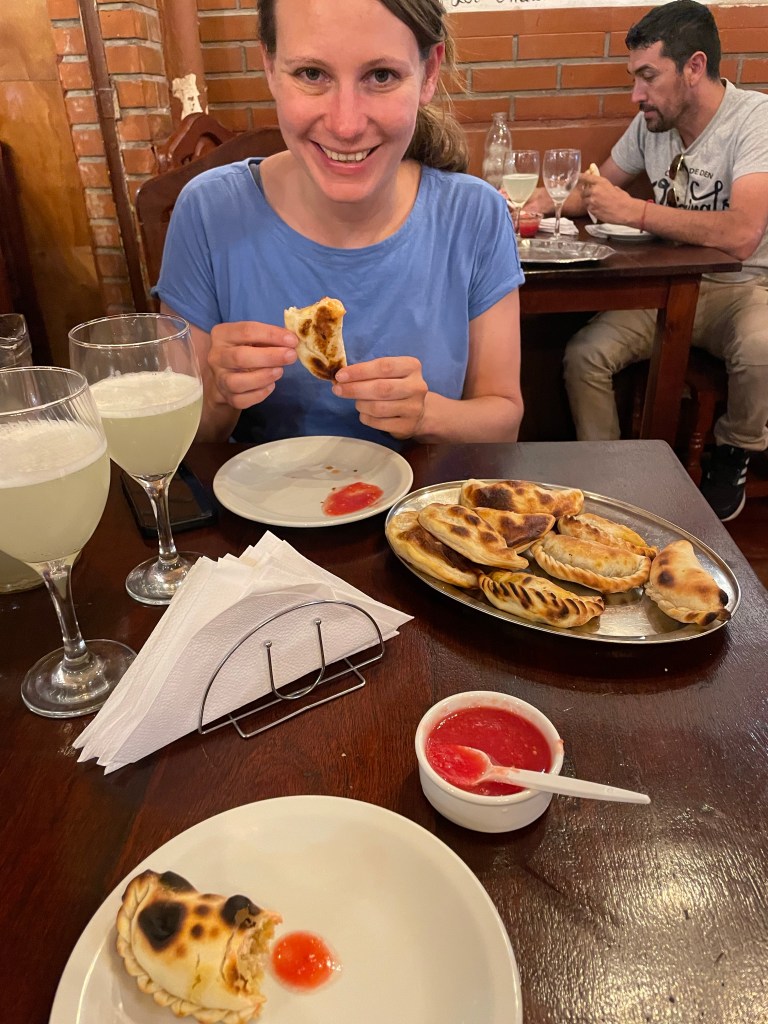
Salta is famous for empanadas. So we had to go to source some for lunch. La Saltenaria was exceptional, and highly recommended to anyone.
https://maps.app.goo.gl/wFXyhCmFfQ9CVJ7P9?g_st=ic
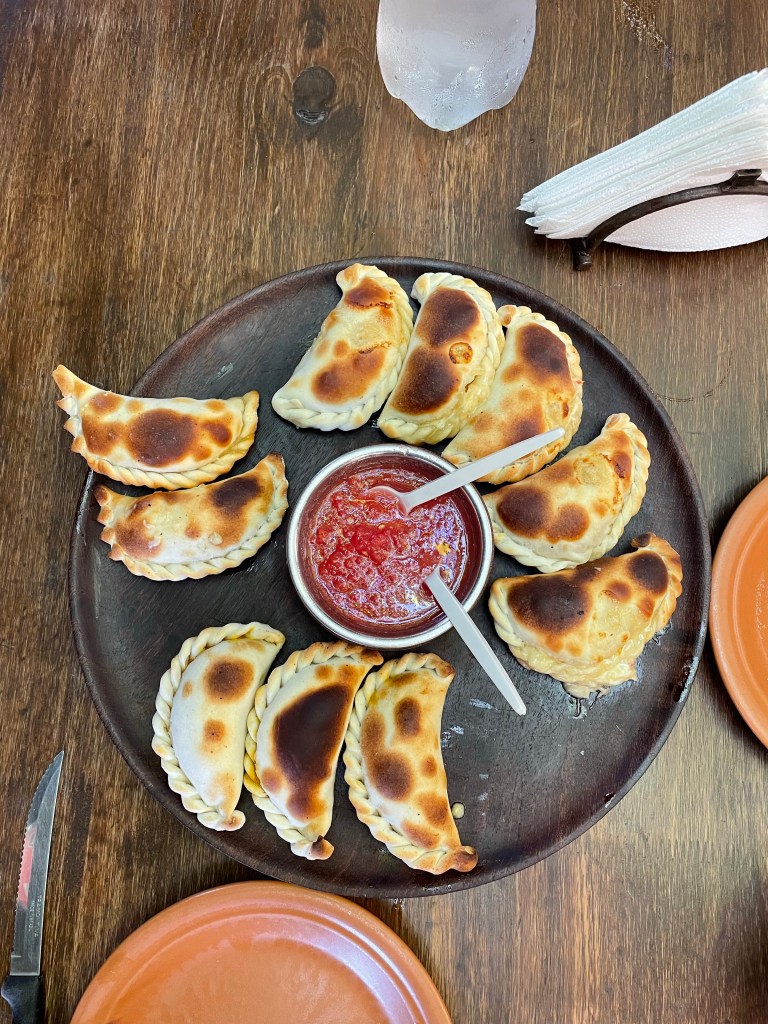
For anyone not in the know, empanadas are mini Cornish Pasties. At La Saltenaria the empanadas go into the hot stone oven fresh (raw?), and come out a few minutes later crispy and golden brown. There’s always three flavours in offer: Saltenas, Pollo, and Queso. The classic saltenas are incredible with small cubes of diced beef. To save some of you translating… Pollo is chicken, and Queso is cheese.
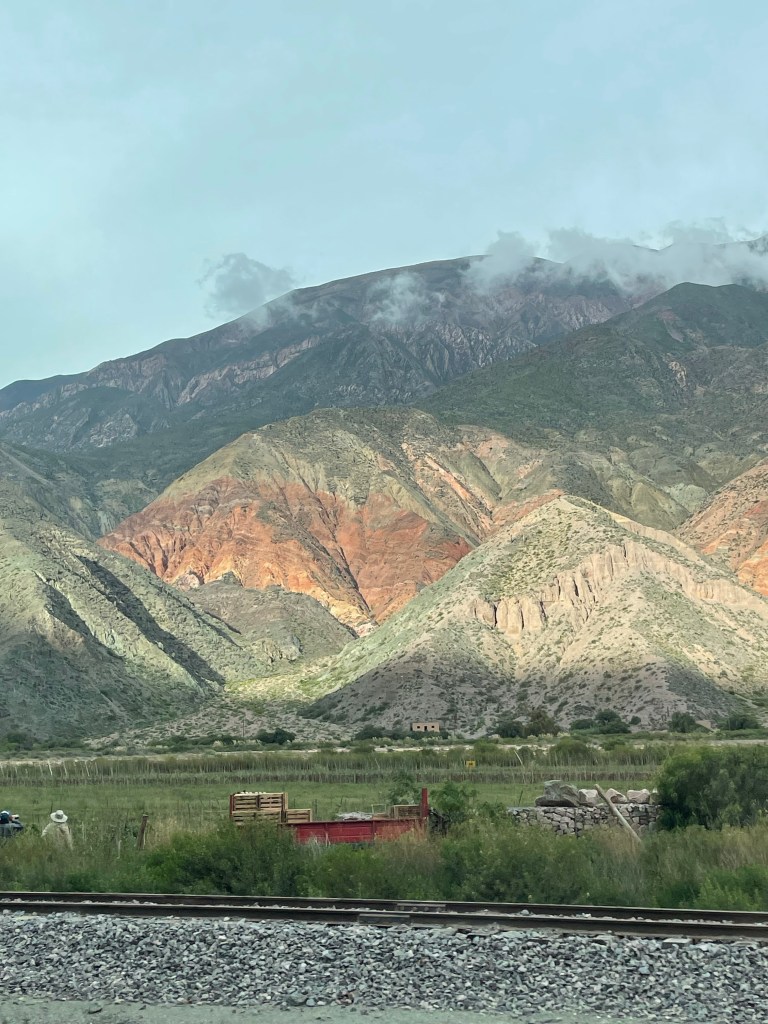
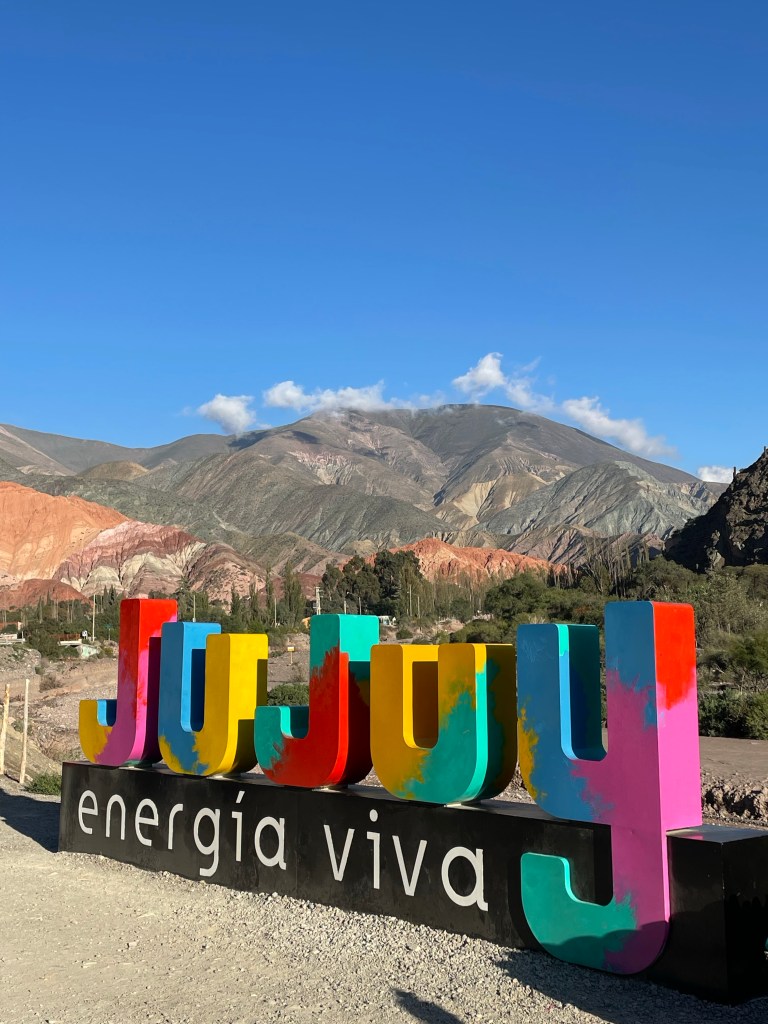
So we had four days with a rental car to visit the big hitters of northwest Argentina. Where better to start than the Quebrada de Humahuaca? A fairly anonymous entry on that recurring UNESCO list, this Andean valley is famed for its colourful rocks and mountain scenery, as well as being an important transit route for the Incas as they moved across their empire.
Tired from our overnight flight we wearily drove north to Purmamarca, a bit of a tourist trap full of day visitors and blanket stalls (as in blankets made of wool). We were grateful for a bed to sleep in and a decent pizza courtesy of Ci Vediamo.
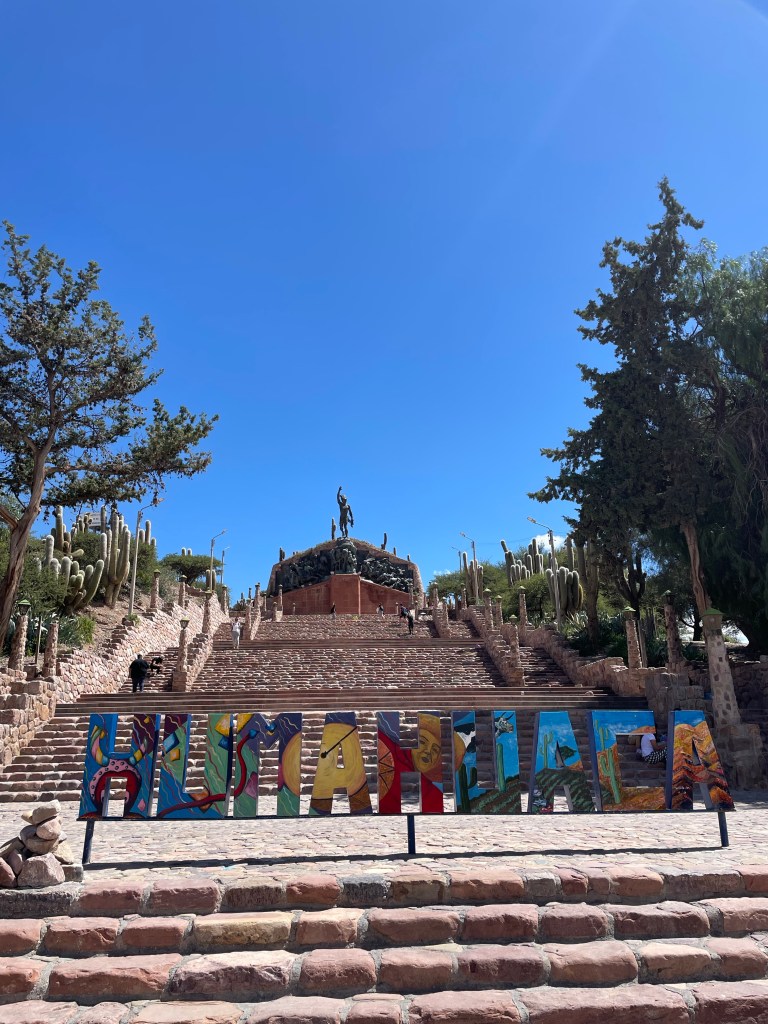
Quebrada de Humahuaca
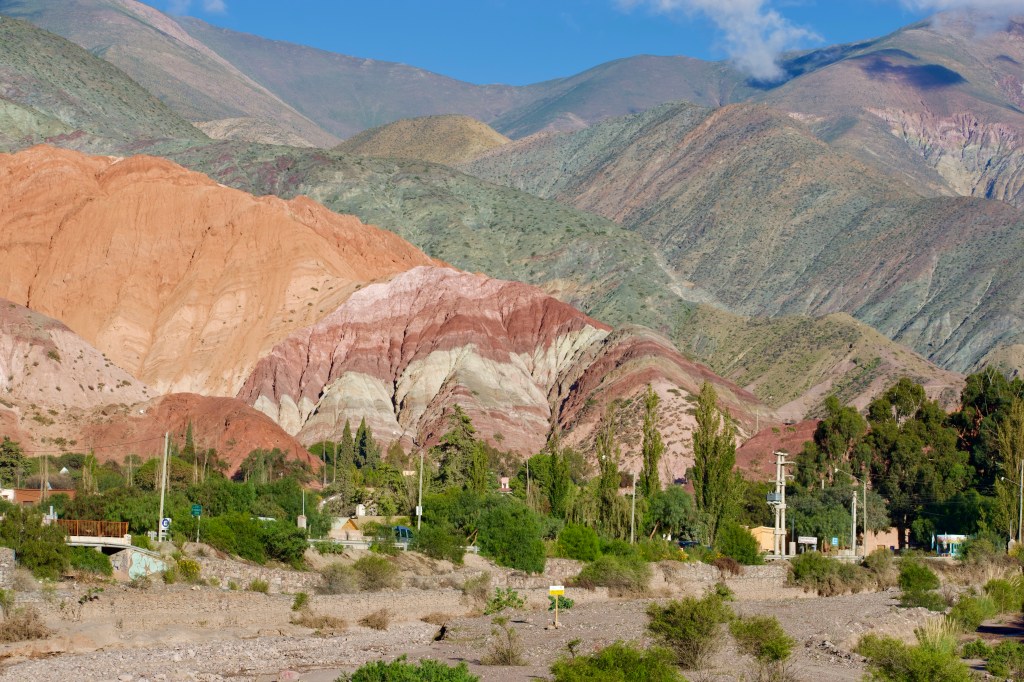
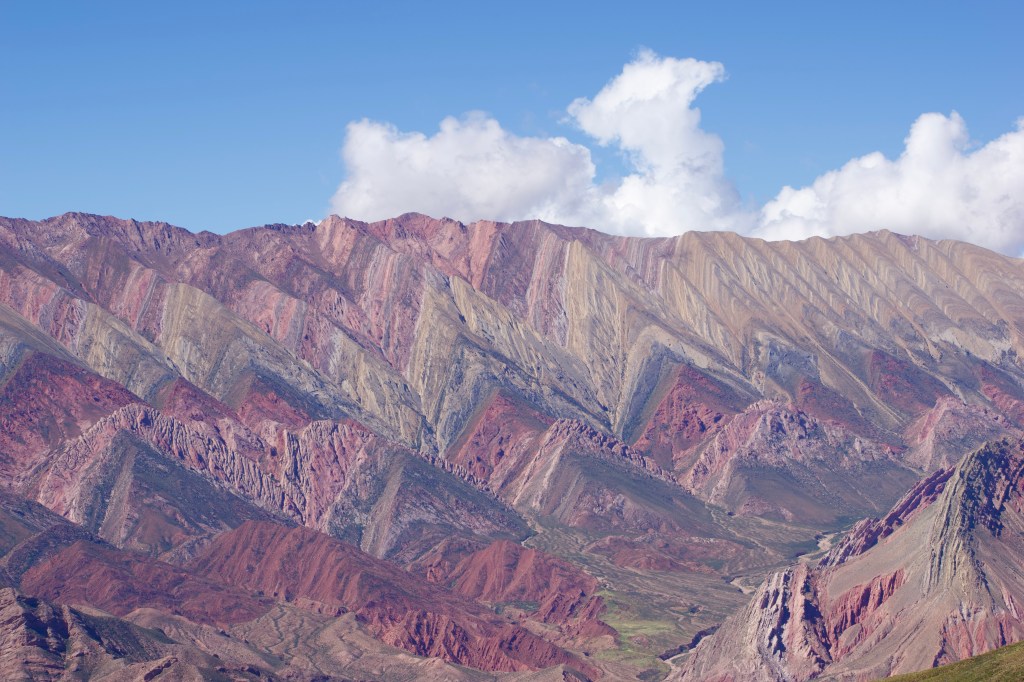
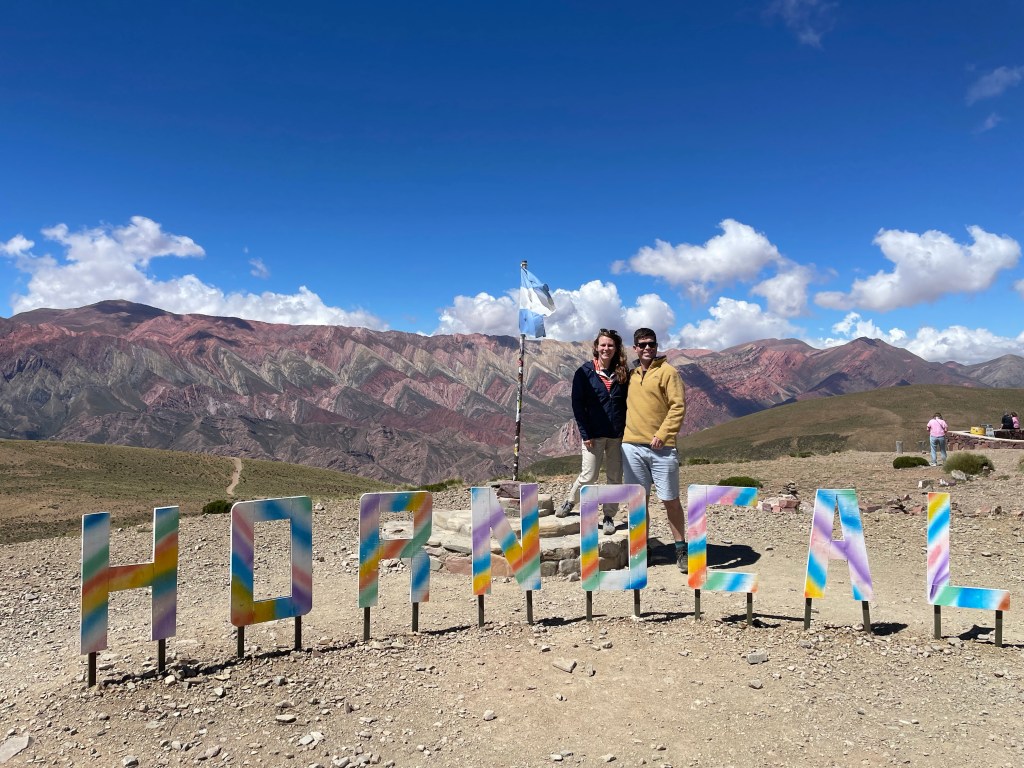
The star attraction of the Quebrada de Humahuaca is the Hornocal. A multi-coloured mountain to the east of the town of Humahuaca. Famously it has 14 different colours, but we would have to verify this for ourselves. An oversaturated advertising poster on the wall at the Buenos Aires airport had really sold it to us, but surely it couldn’t look exactly like that?
There are many ‘rainbow mountains’ around the world, most of them are tourist traps, and the ones that aren’t will be converted soon. Competition for best and most colourful rainbow mountain is stiff. Peru has a solid claim, as do China and Chile. We had been tipped off that the Hornocal is the true #1, but we needed to see this for ourselves.
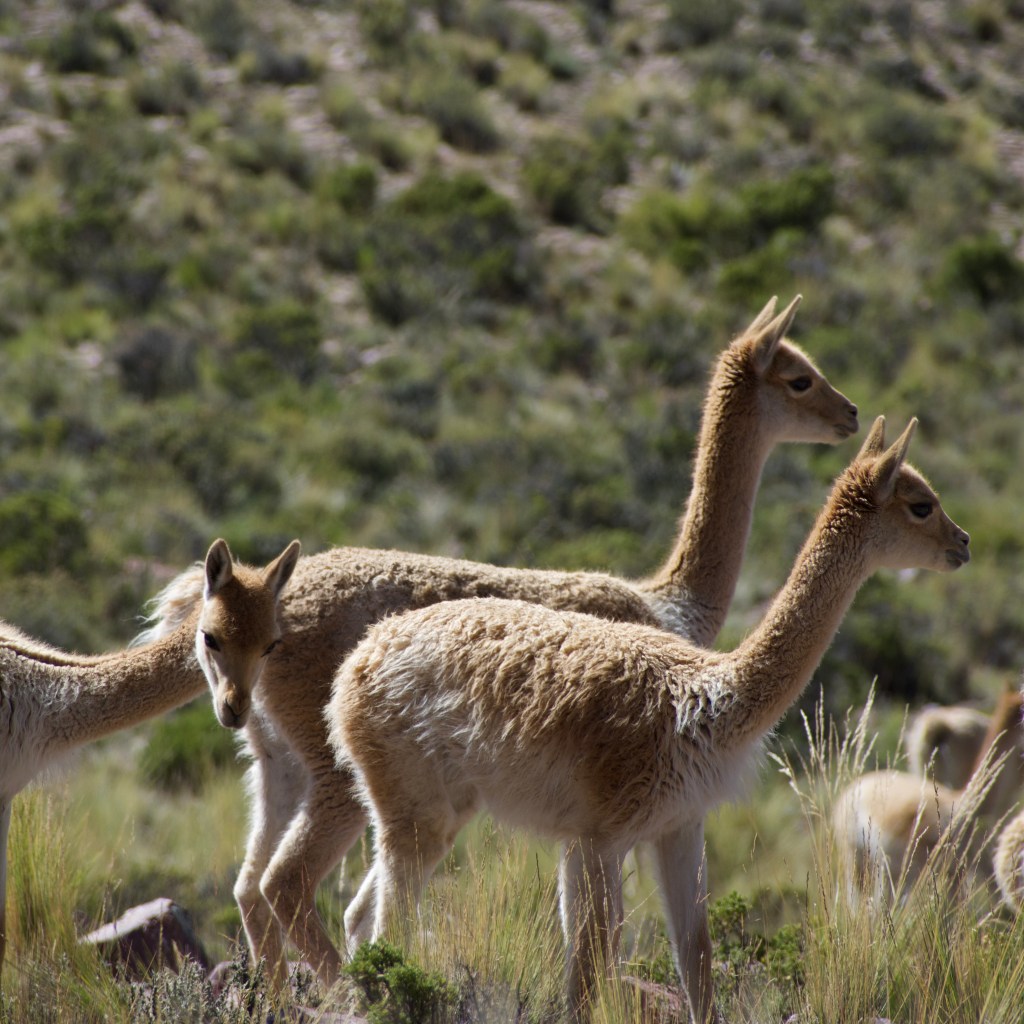
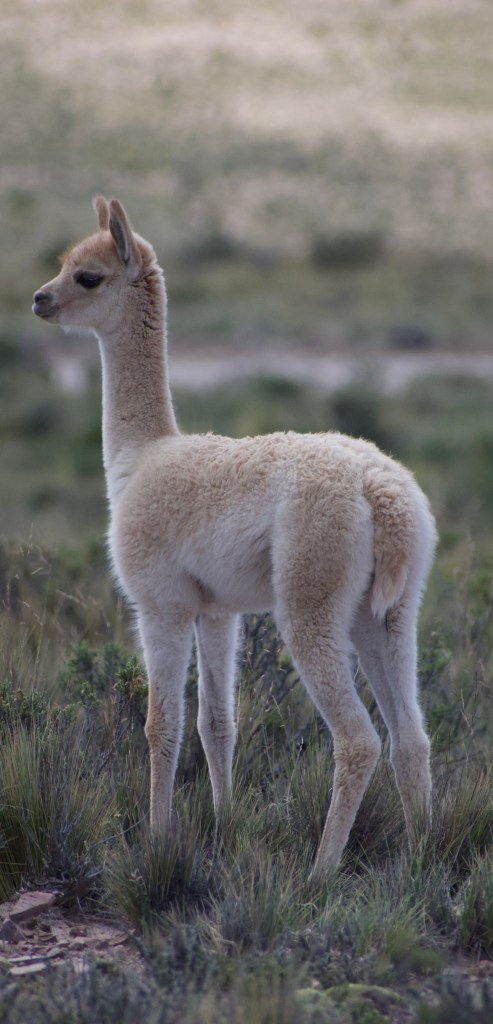
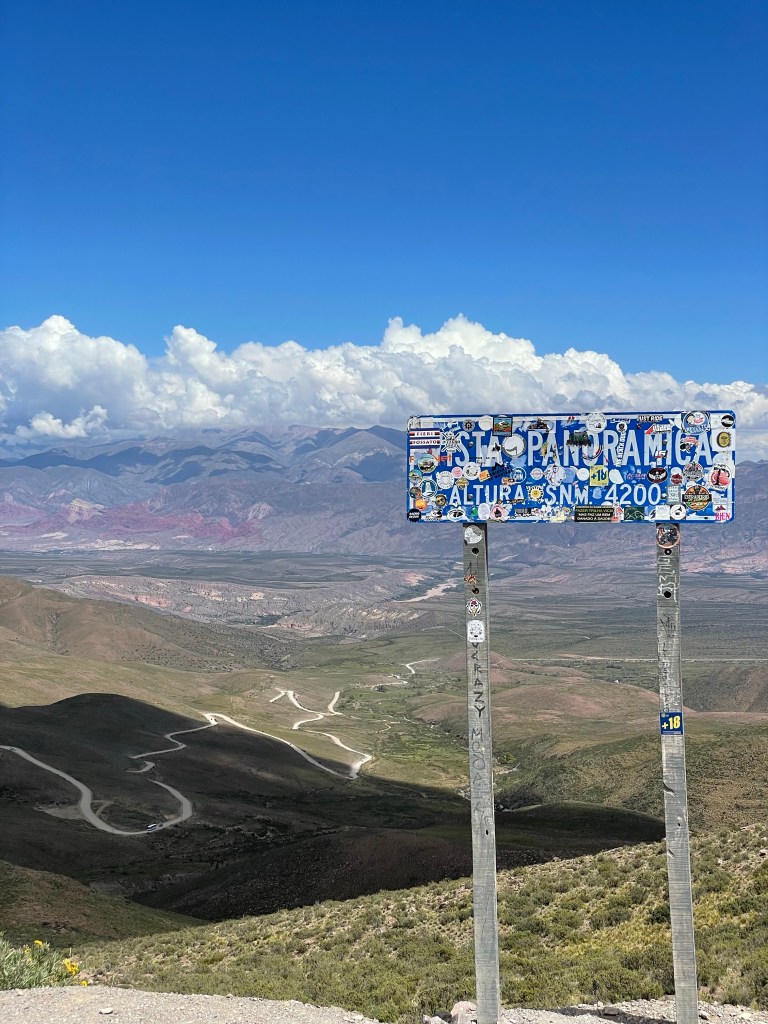
Humahuaca is a pretty little town at 3,000m above sea level, the drive from Purmamarca was filled with incredible views and colourful mountains, it would have been easy to get sidetracked and spend all day admiring views on the drive. The drive up to the Hornocal begins at Humahuaca, and the road climbs steeply through cactus filled valleys and up to the barren summit at 4,350m. There lonely herds of vicuña graze peacefully, until the bus tours from Salta arrive.
A small entrance guards the viewpoint, no pay no view, fortunately it’s only 500 pesos per person which is 30p or so.
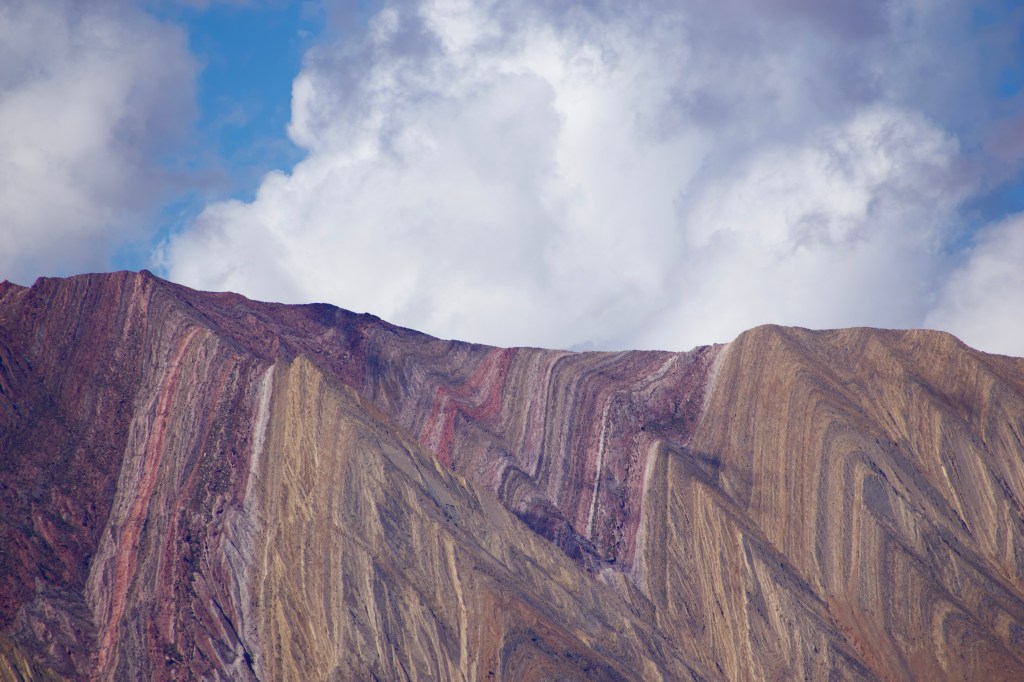
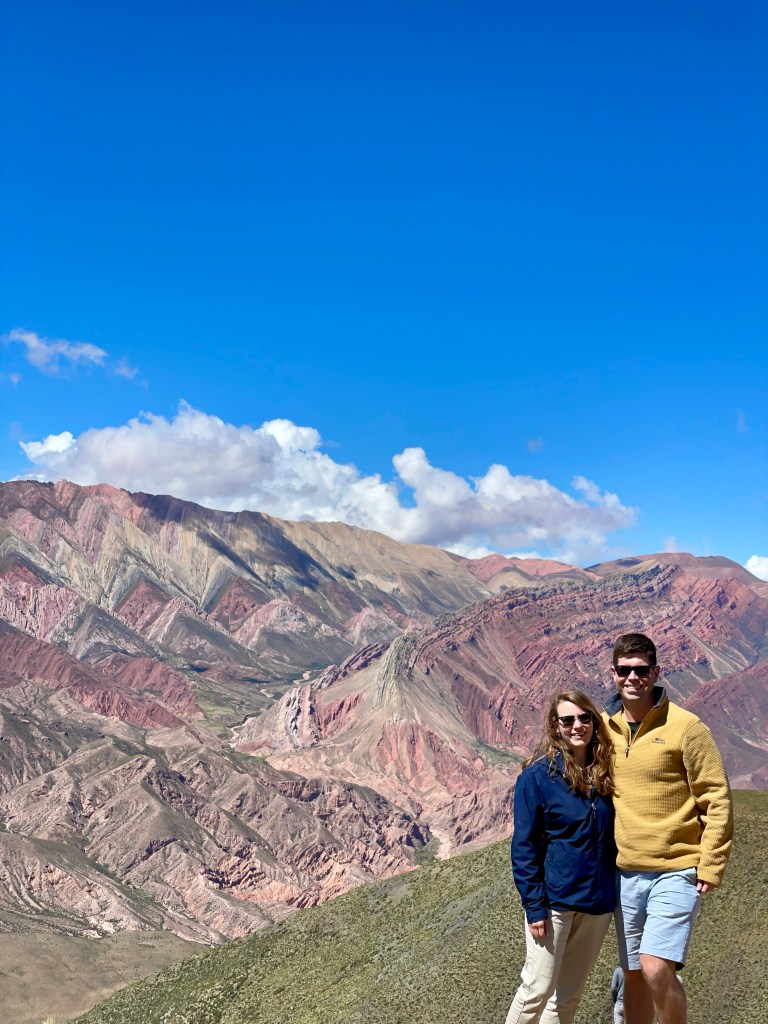
The colours of the Hornocal are easy to explain, bands of red, green, and gold in all hues zigzag across the mountainside. What’s more difficult to convey is actually how spectacular the view and how vivid the colours are. The ridiculous ubiquitous oversaturated photos of various rainbow mountains around the world clearly present a fake reality, but here in Jujuy the colours really are vivid and distinct. It’s hard to count the number of colours, whoever landed on 14 had a sure sense of their authority. In truth you could count 10 or you could count 100 colours depending on your generosity.
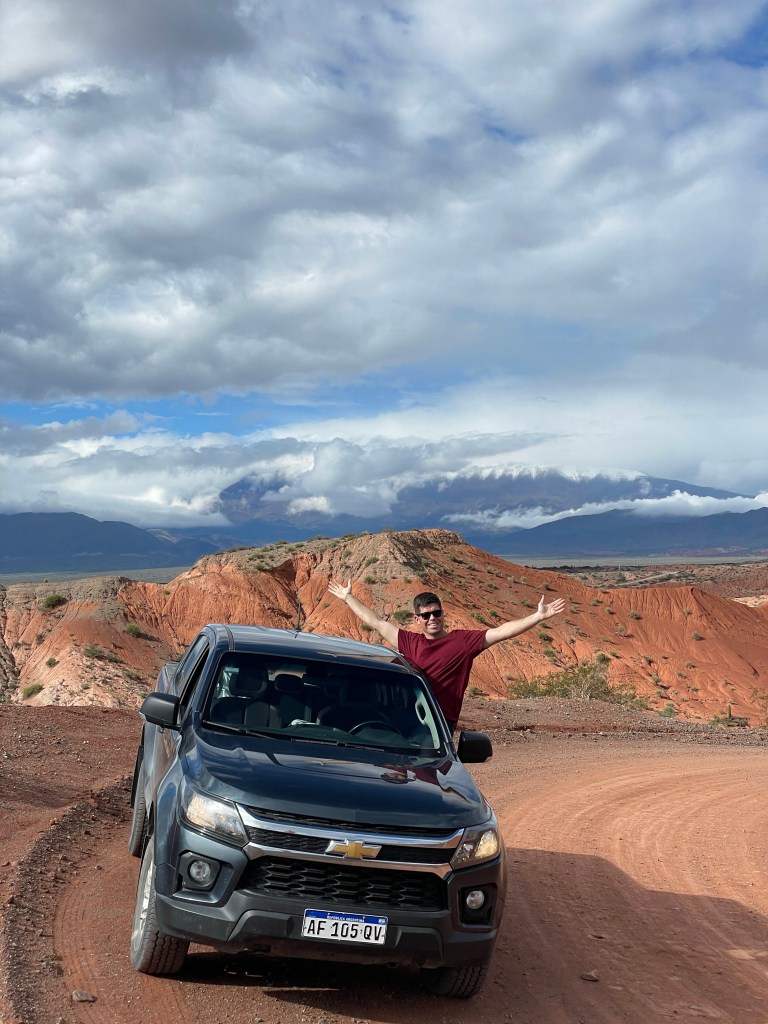
I will try to post photos which convey what it actually looks like. Some of the better descriptors come from photos of us with the mountain behind, to prove I haven’t meddled with the colour settings.
There is a small walk to the lower viewpoint, it’s only about 1km round trip with a short climb at the end of less than 50 metres. The effects of the altitude are keenly felt here, even at a snail’s pace your heart is beating out of your chest.
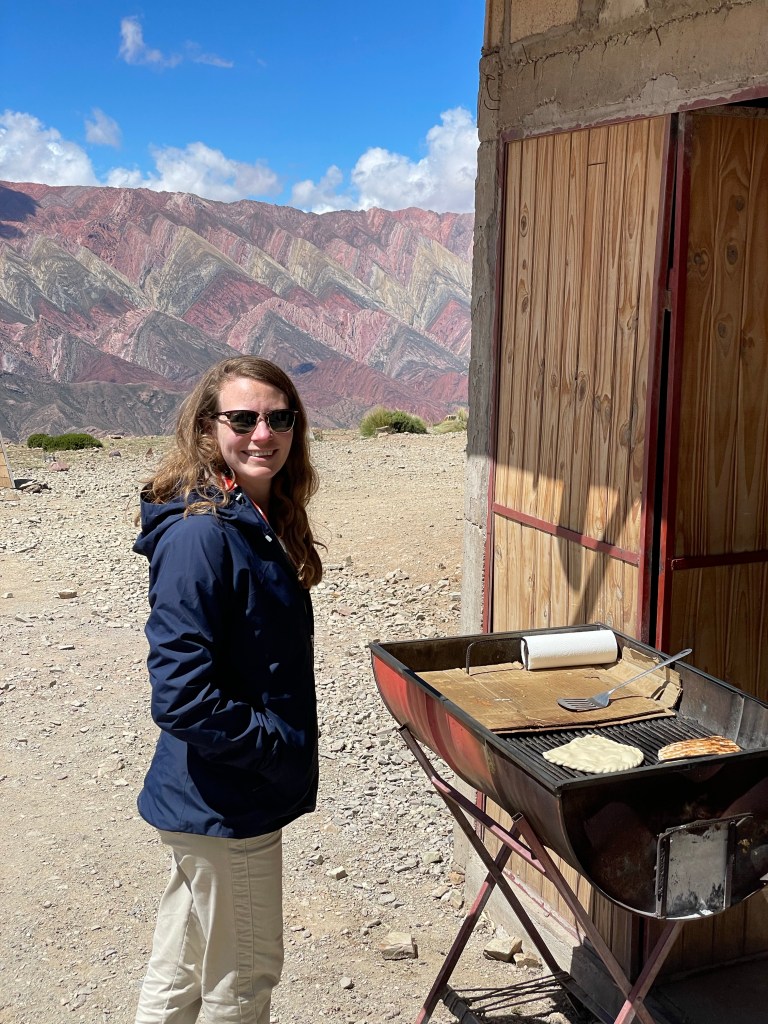
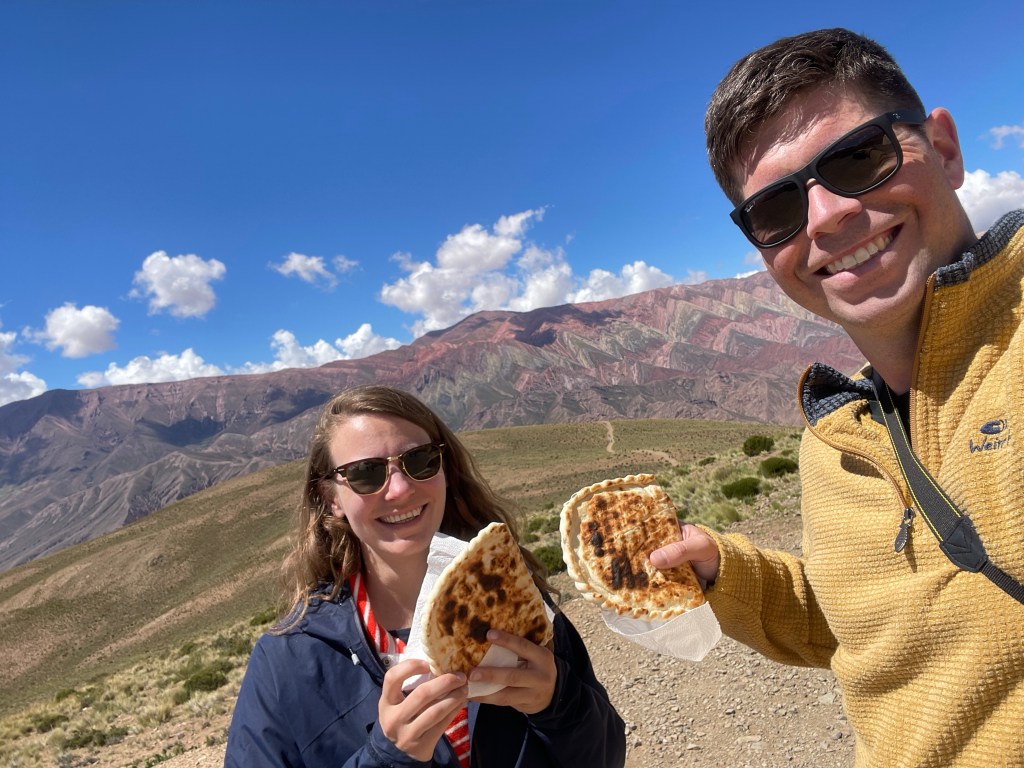
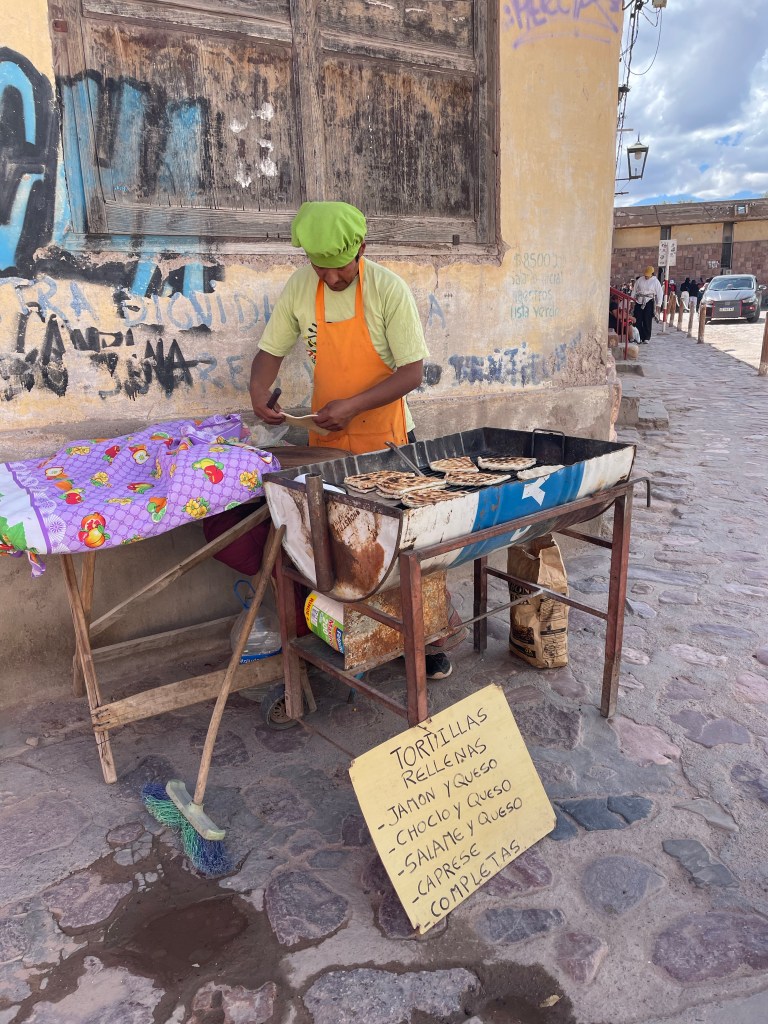
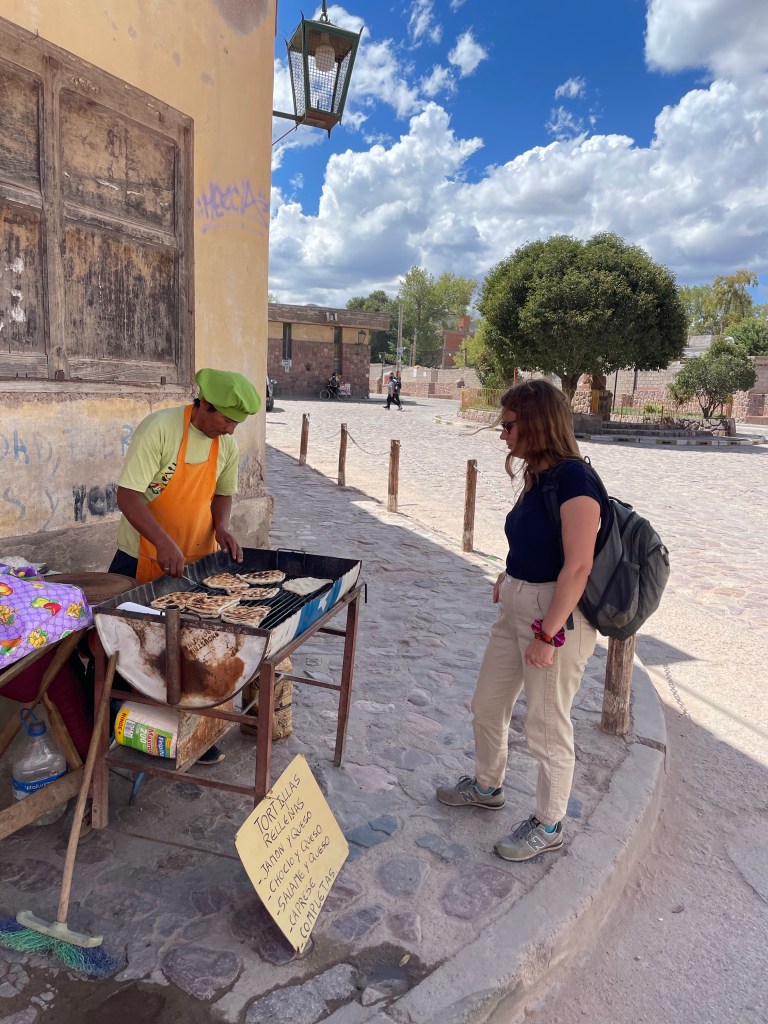
Relief was found with a tortilla rellenos and a swift descent to Humahuaca where we treated ourselves to another tortilla rellenos. These are a bit like cheesey toasted pitta or a flat pasty, cooked over a barbecue in an empty oil drum. Very moreish.
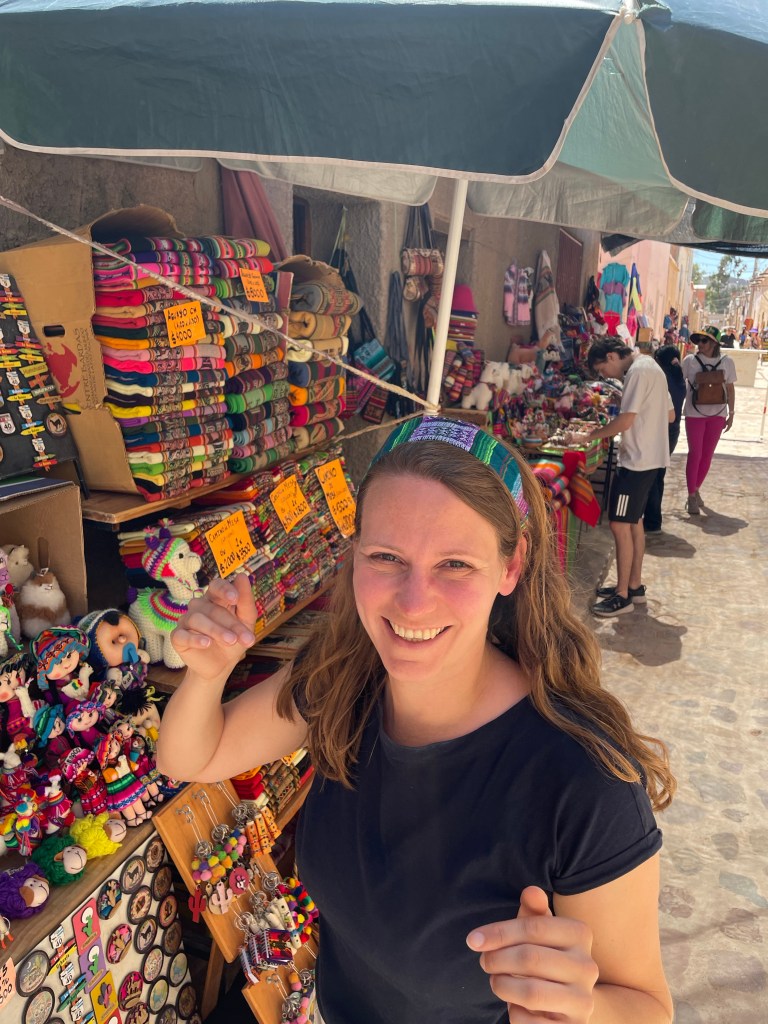
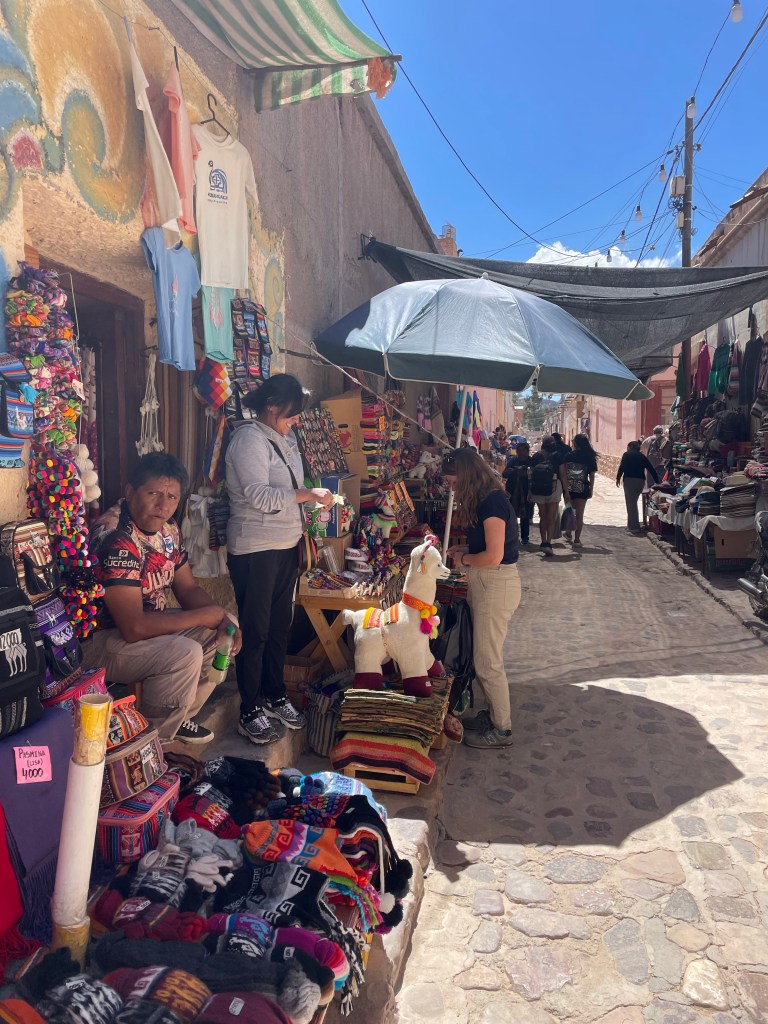
We checked out the market stalls and shops and treated ourselves to woolly jumpers as is the custom in this part of the world…
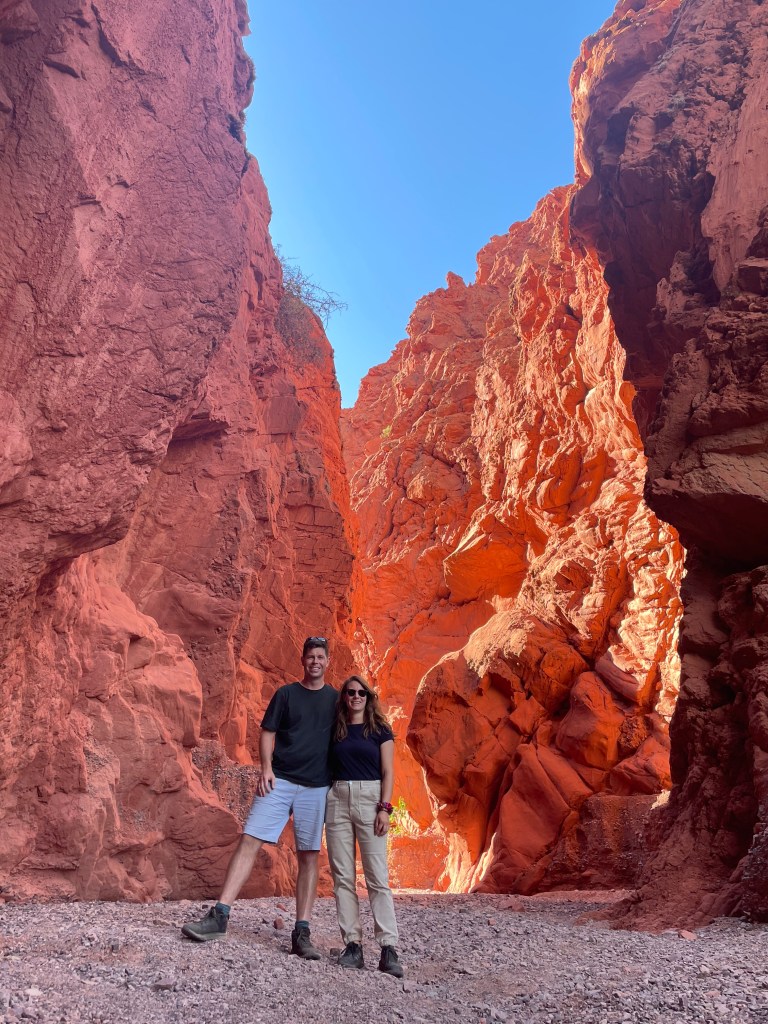
Quebrada De Las Señoritas is valley of red coloured rock with narrow gorges and interesting rock formations. For a price of 2,450 ARS each we were led by a guide on an hour long tour of the valley. The area got its name from the legend of the three local girls who managed to hide the communities’ gold from the Spanish somewhere up in these hills.
Back in Purmamarca we waited ages for some average empanadas at restaurant Kultur2. Don’t go there.
Molinos
Today we ordered the most expensive bottle of wine on the restaurant wine list and enjoyed it. But more of that later.
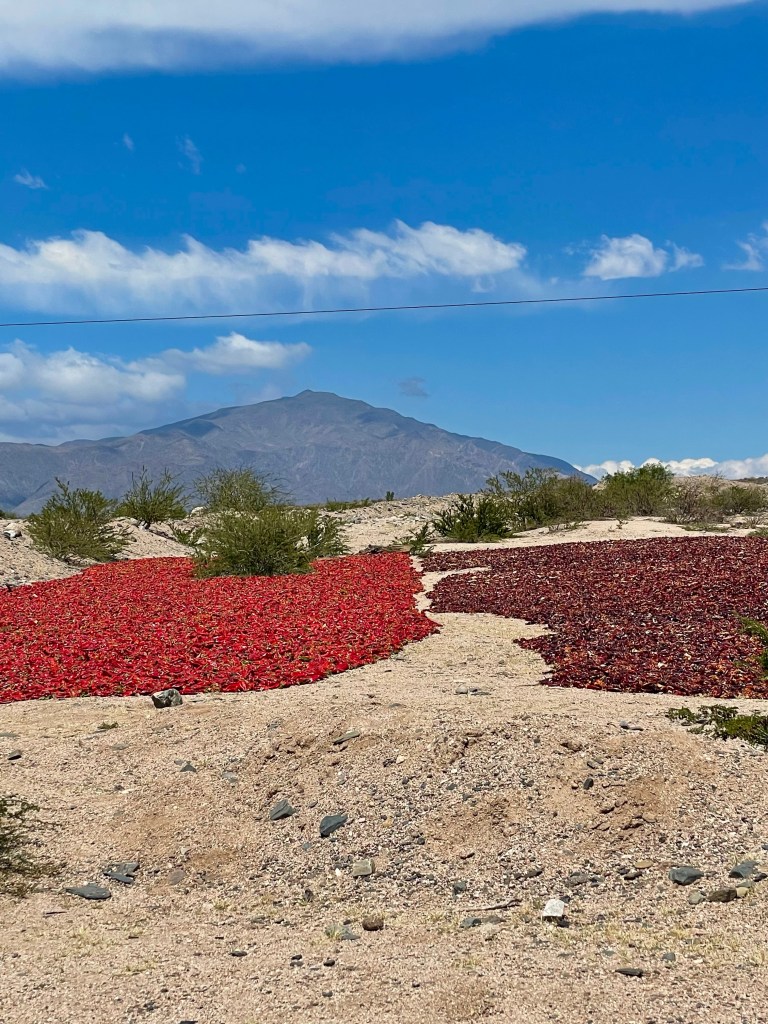
Salta is a great region for road trips, with great loops in almost all directions from the capital. Having spent a couple of days in the very north of Argentina in the province of Jujuy, today we headed back to Salta, and then to the south to the small town of Molinos.
El Papabuelo restaurant in the small town of El Carril south of Salta, does some excellent empanadas, and a stop here broke up our long drive very nicely.
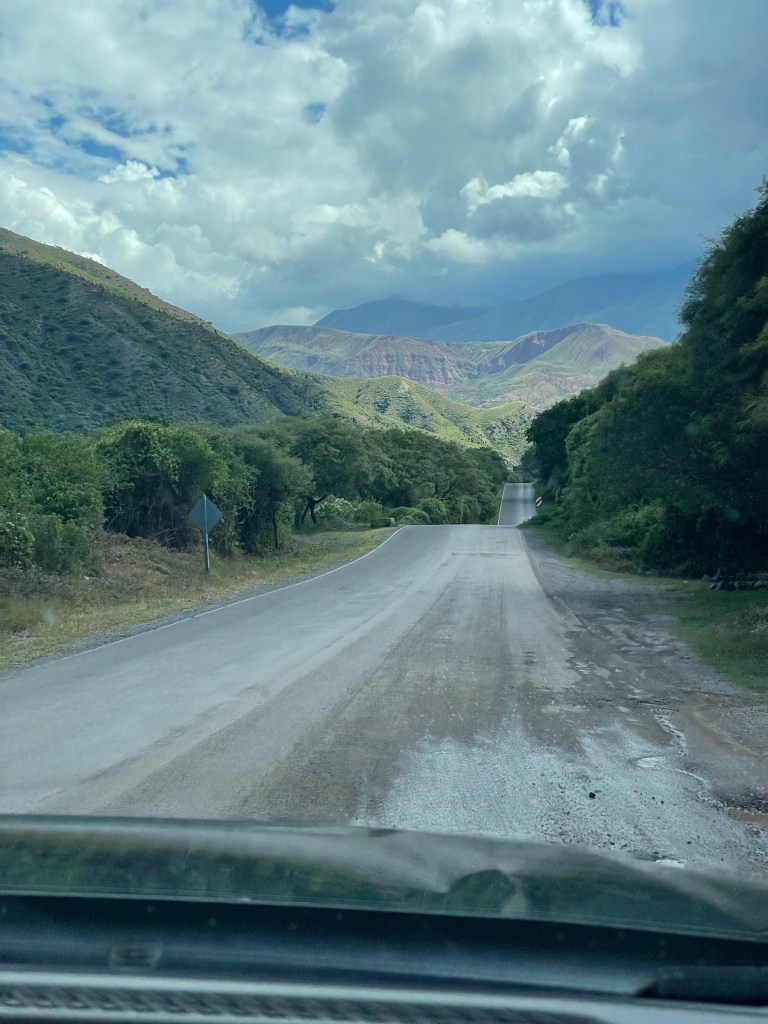
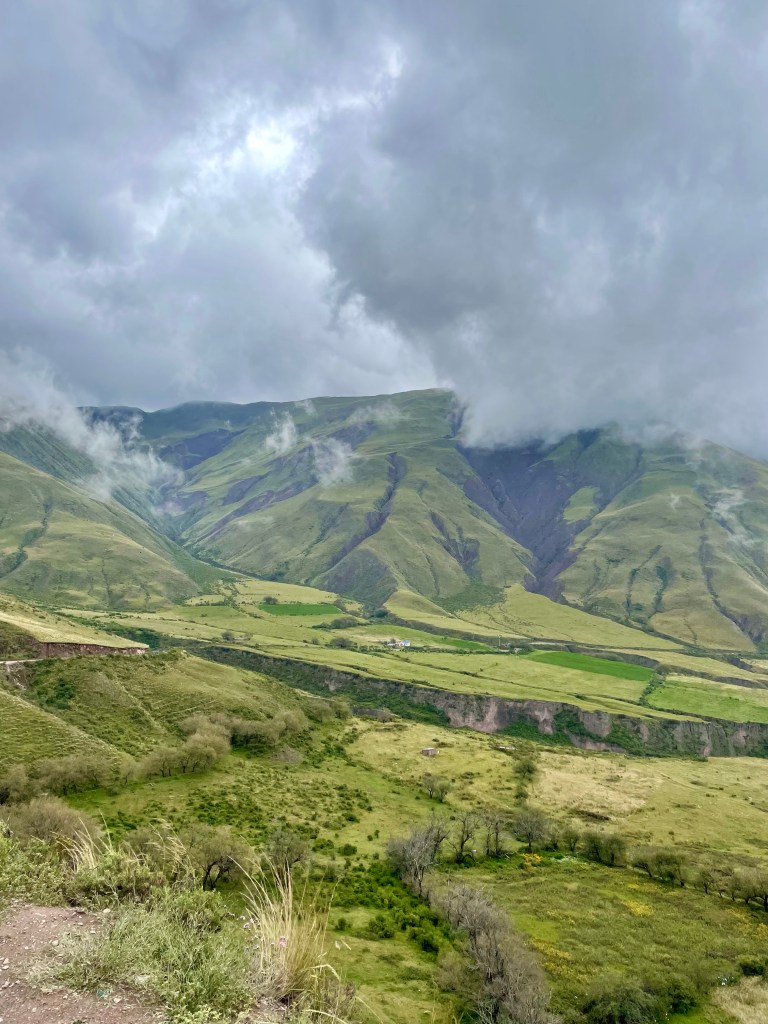
West of El Carril we began the long climb up into the Andes. The summit of the road was at 3,348m, however it was well in the clouds and no views were possible.
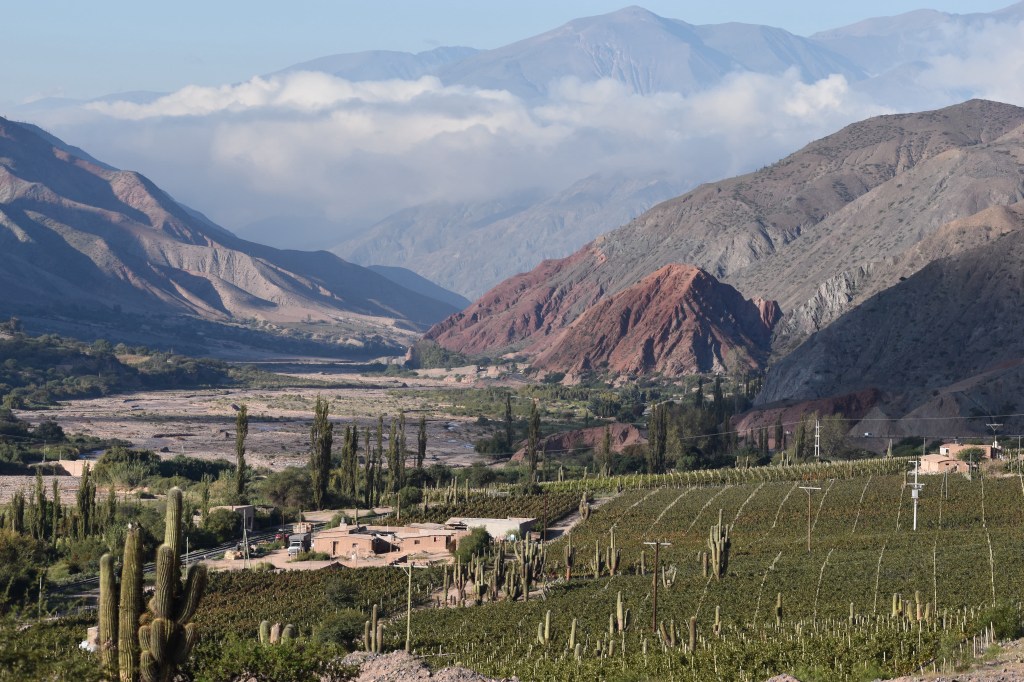
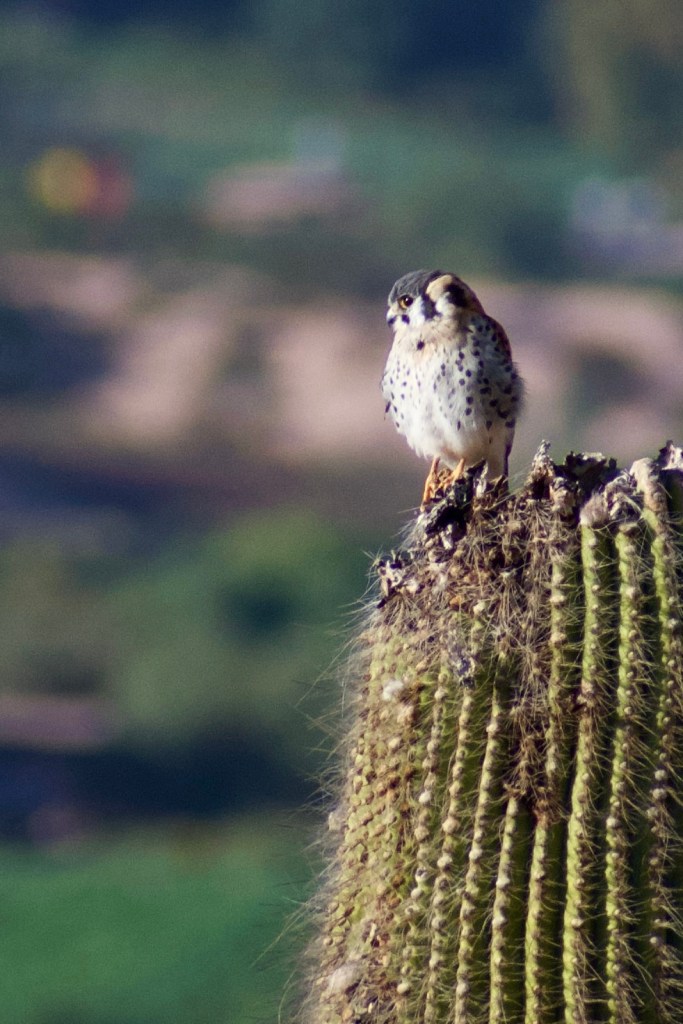
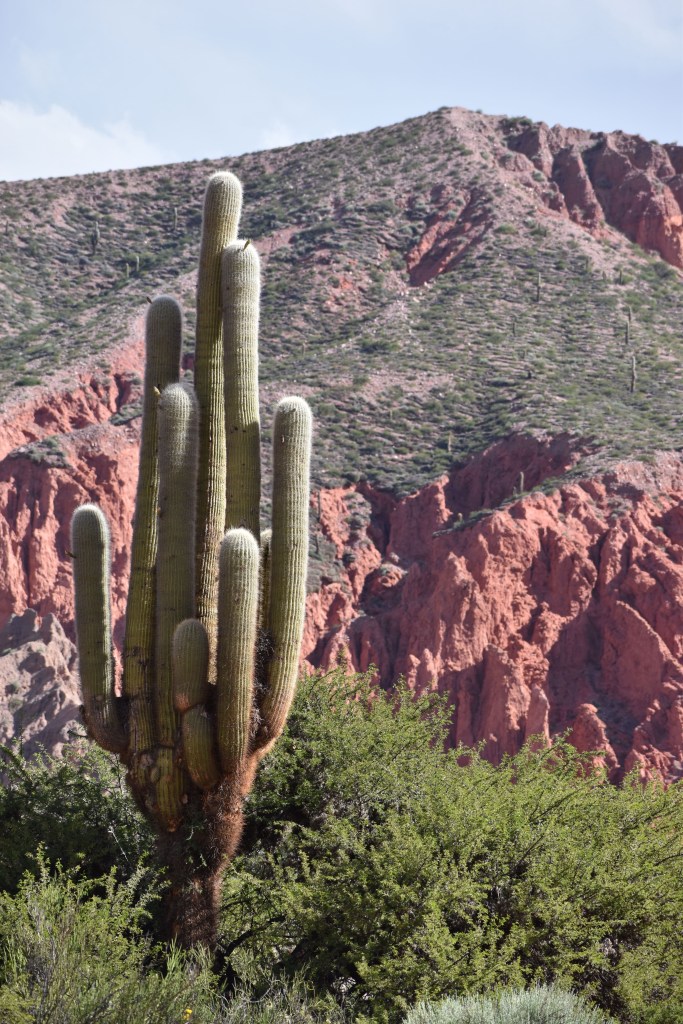
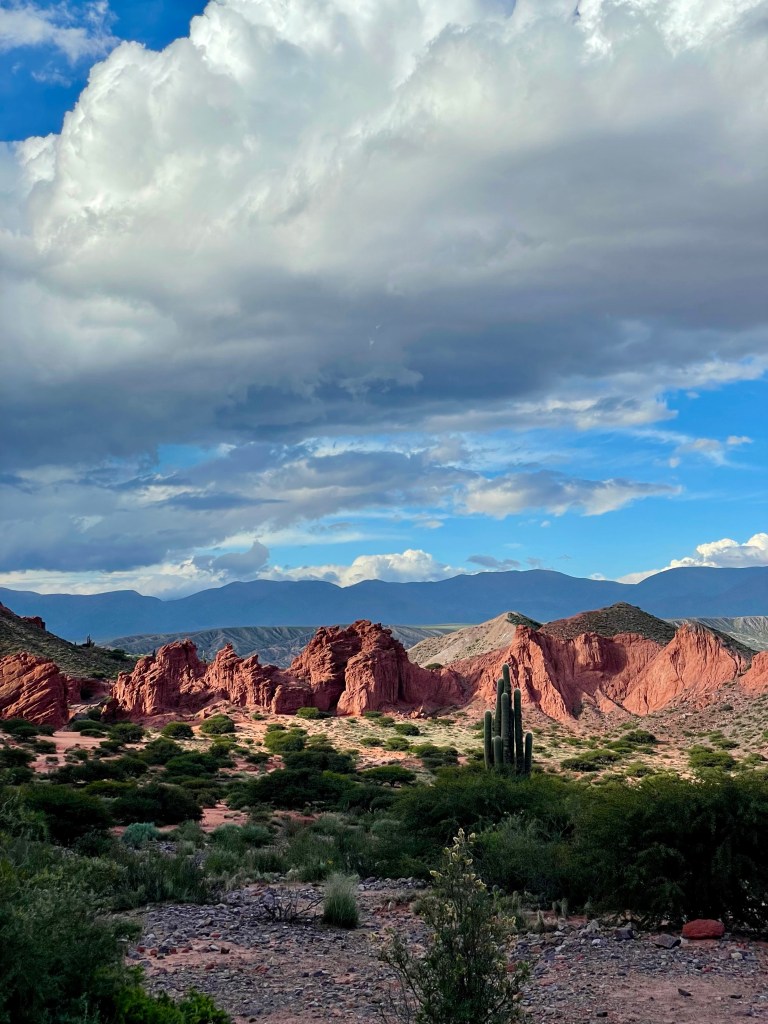
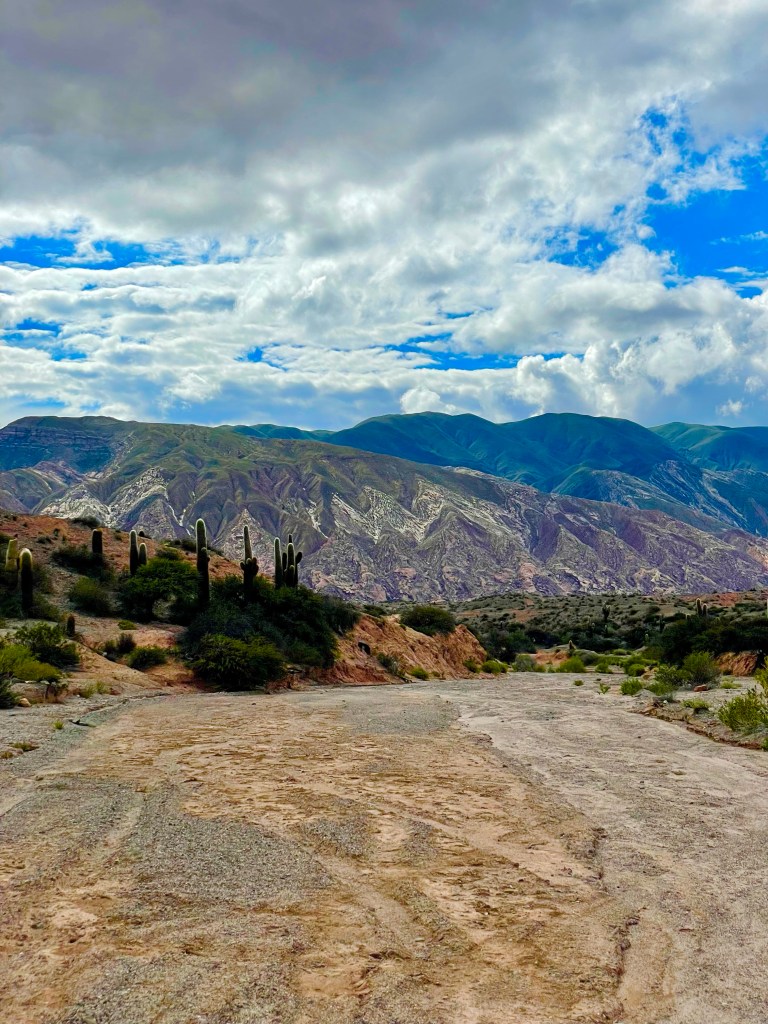
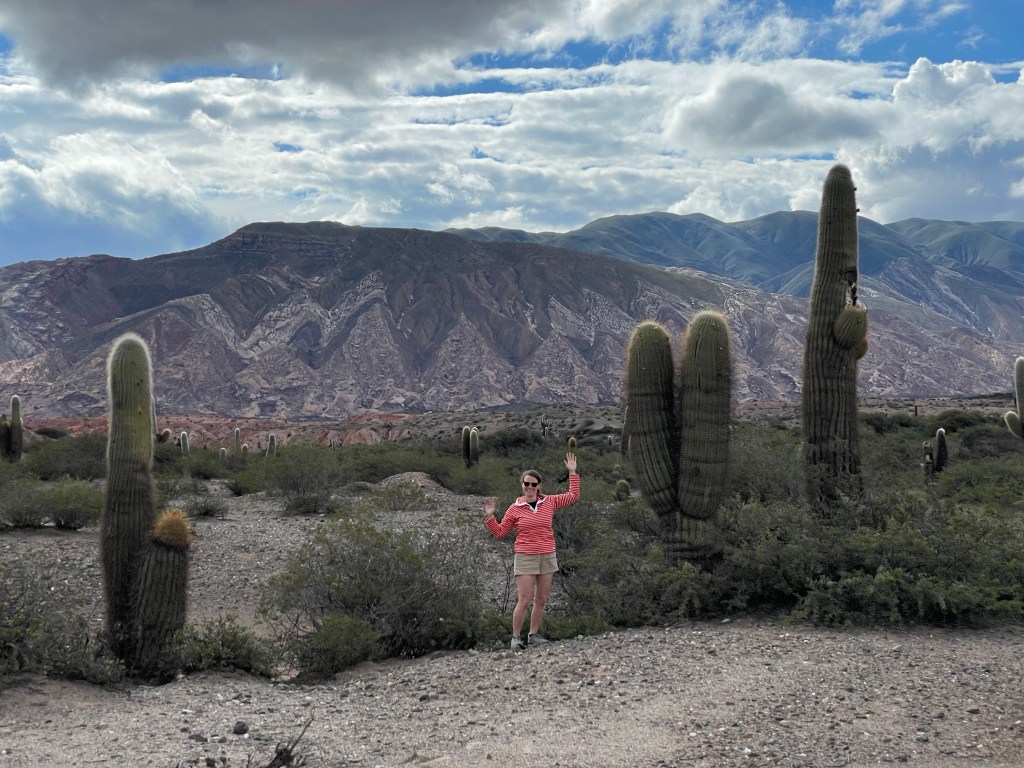
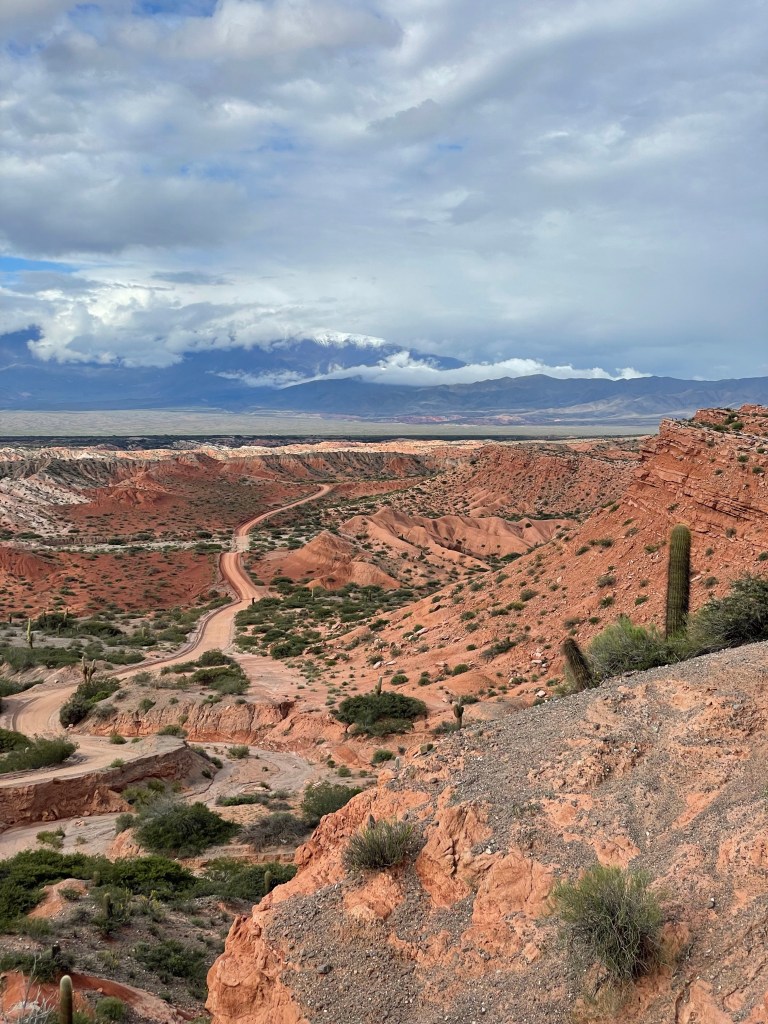
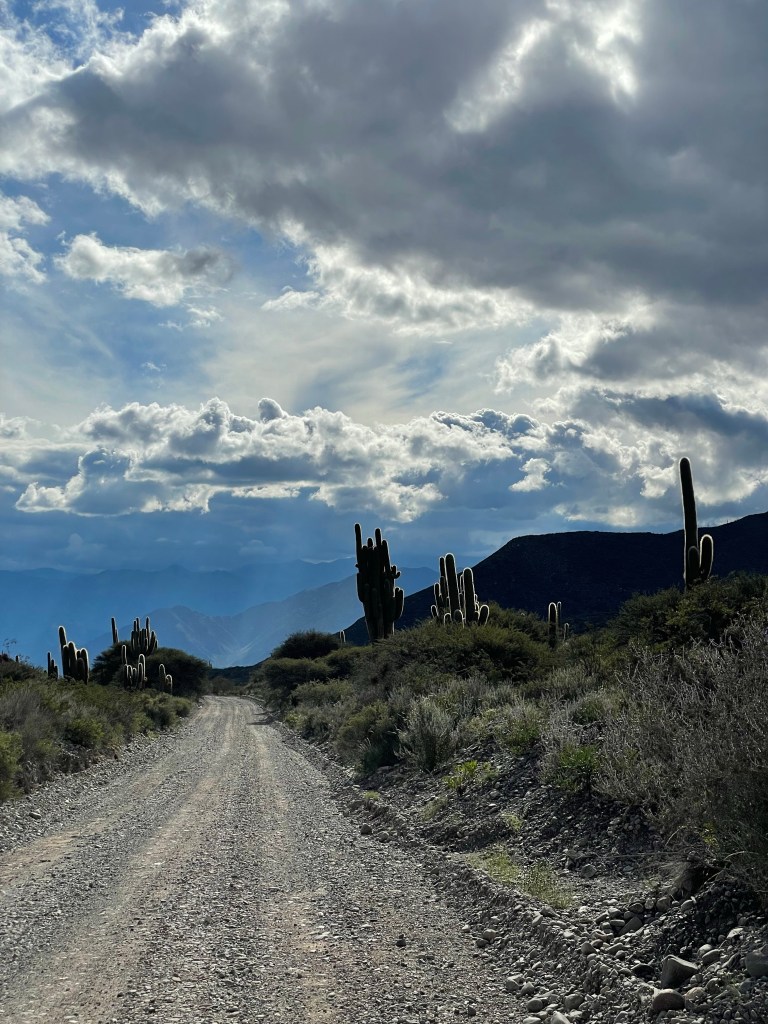
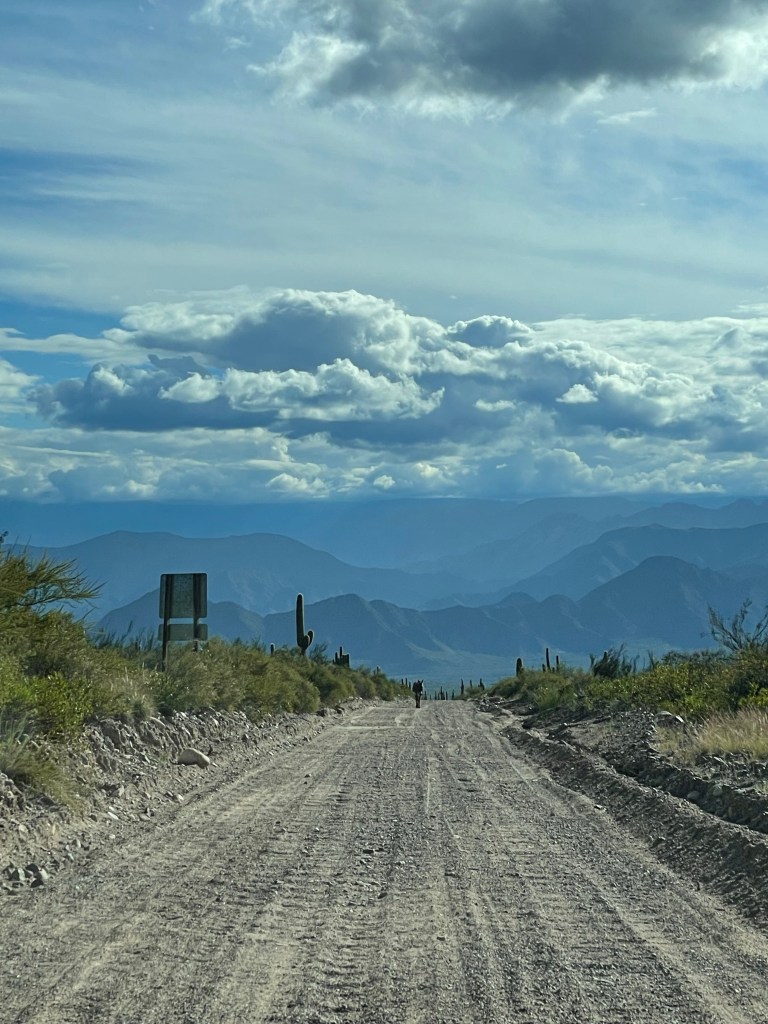
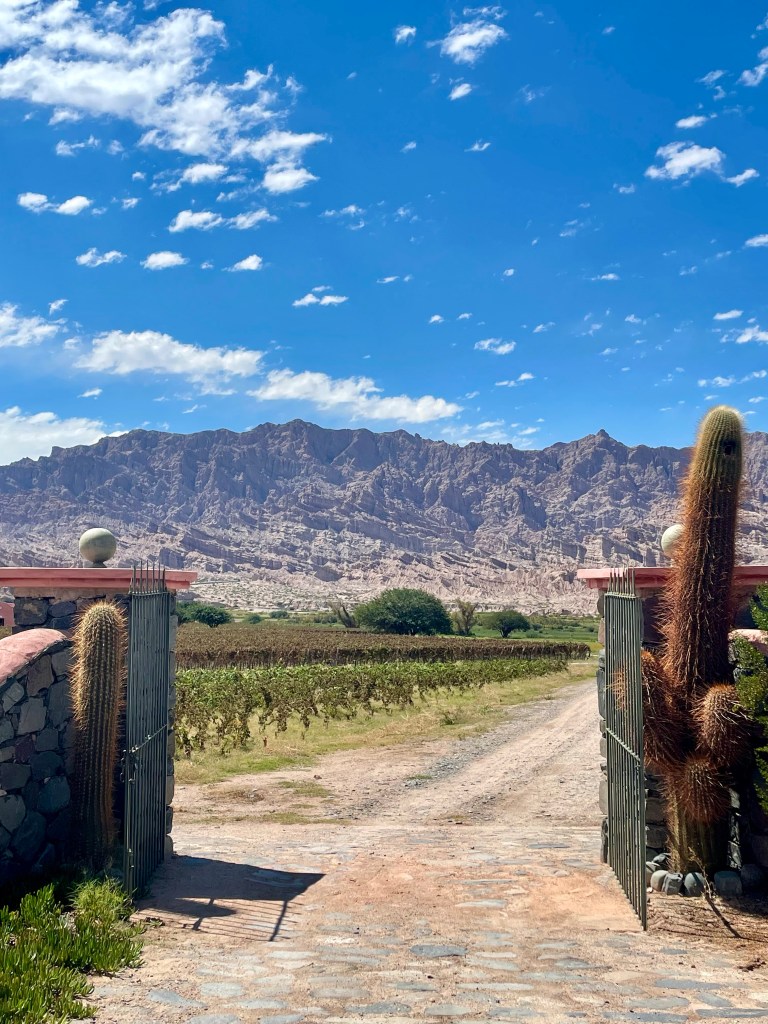
On the other side of the pass were the vast cactus covered plains of the Los Cardones national park. Cardone being the architypal cactus 🌵featured in cartoons and emojis.
Away from the summit the clouds dissipated and we had great views over ‘receta del tin tin’ another brightly coloured mountain, almost rivalling the hornocal.
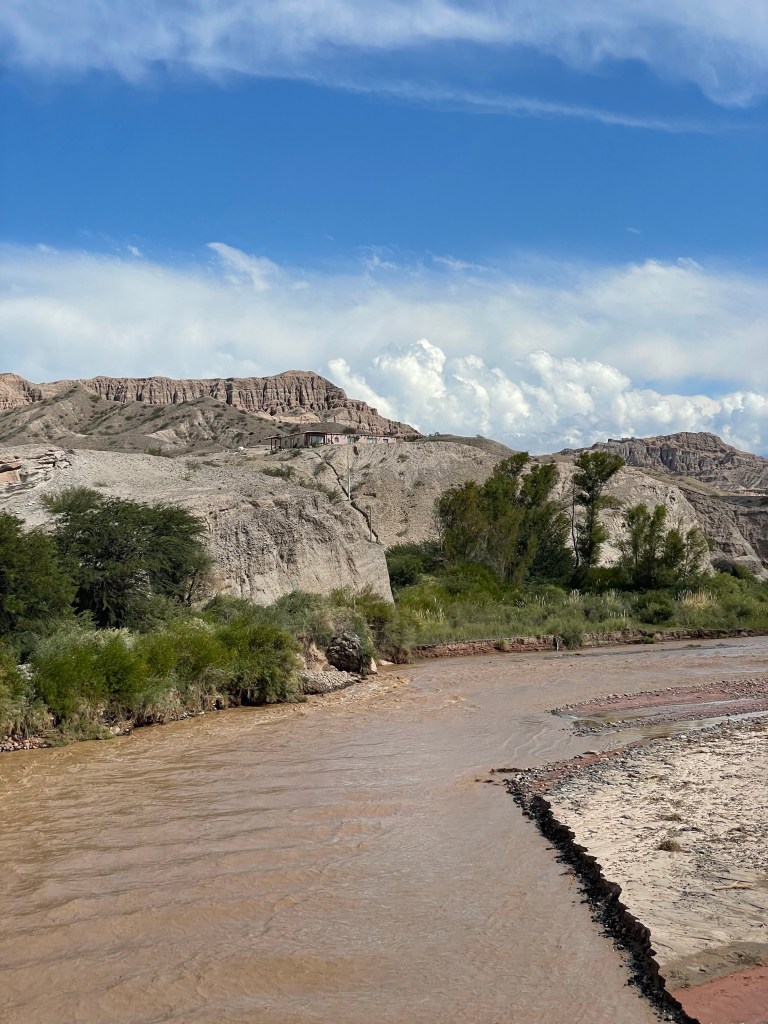
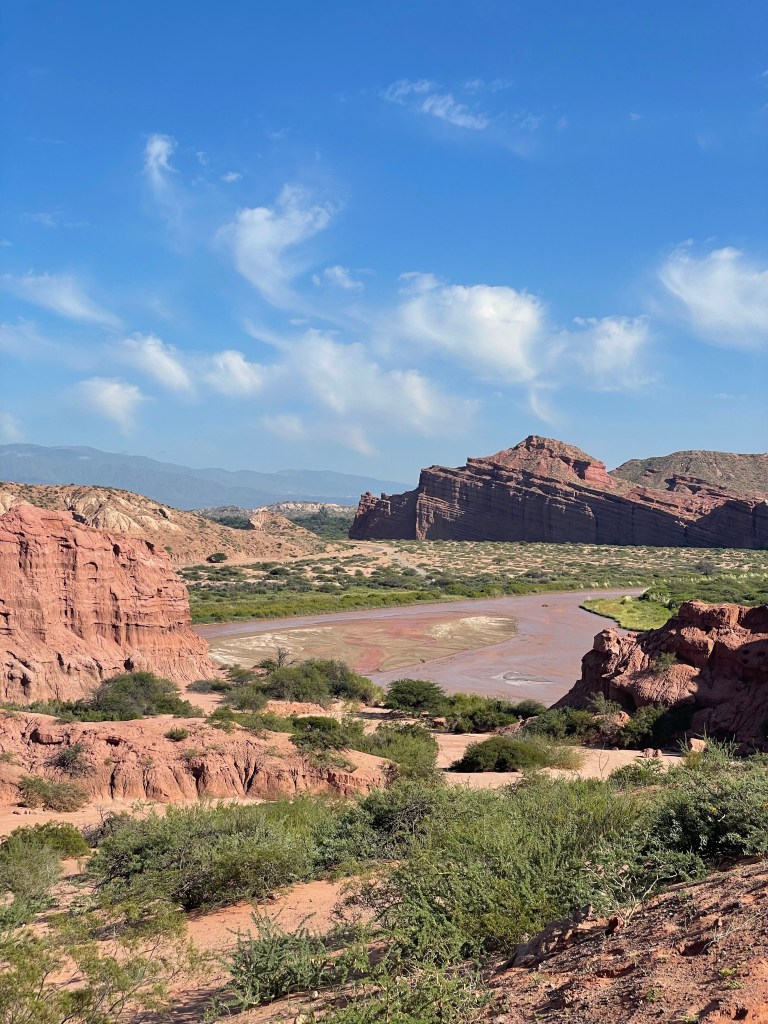
The back road to molinos was a great drive through bright red rocky outcrops on a muddy road. The scenery was spectacular the whole way and we had the road completely to ourselves.
Molinos is a tiny little town with a couple of guesthouses and a single restaurant.
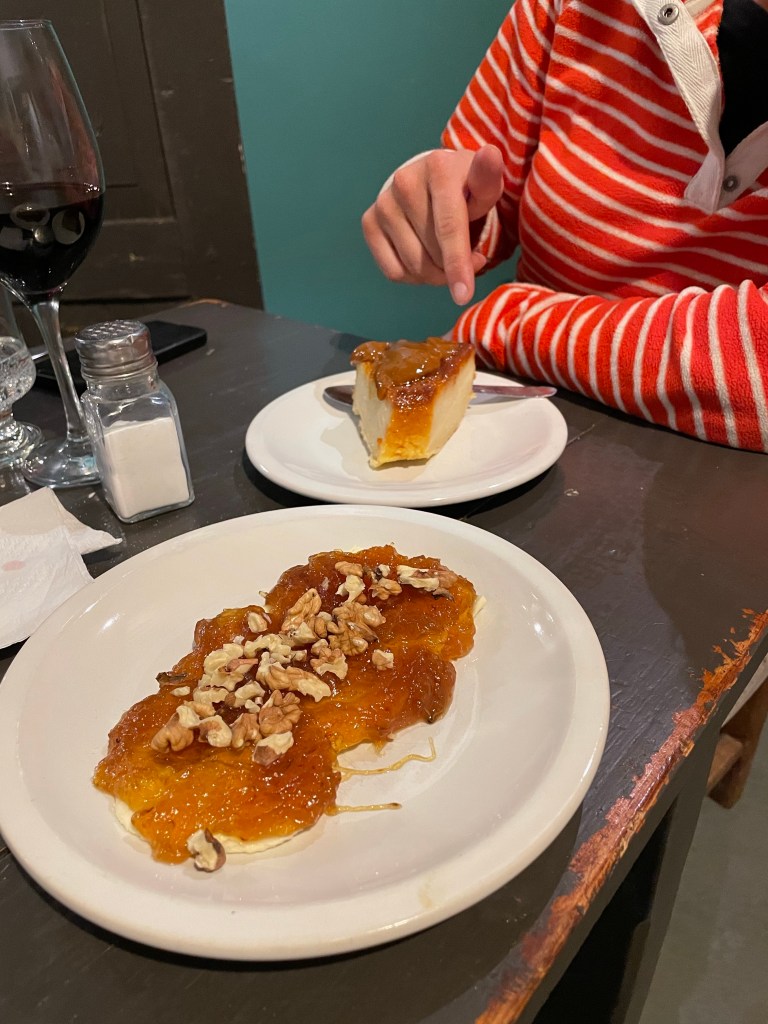
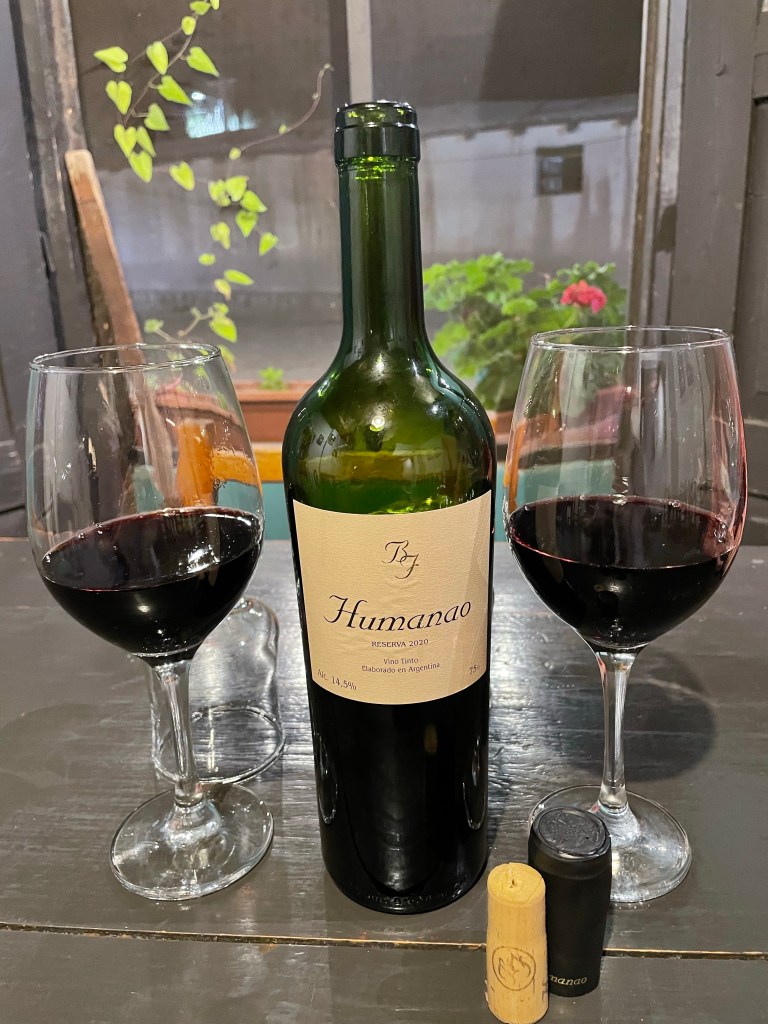
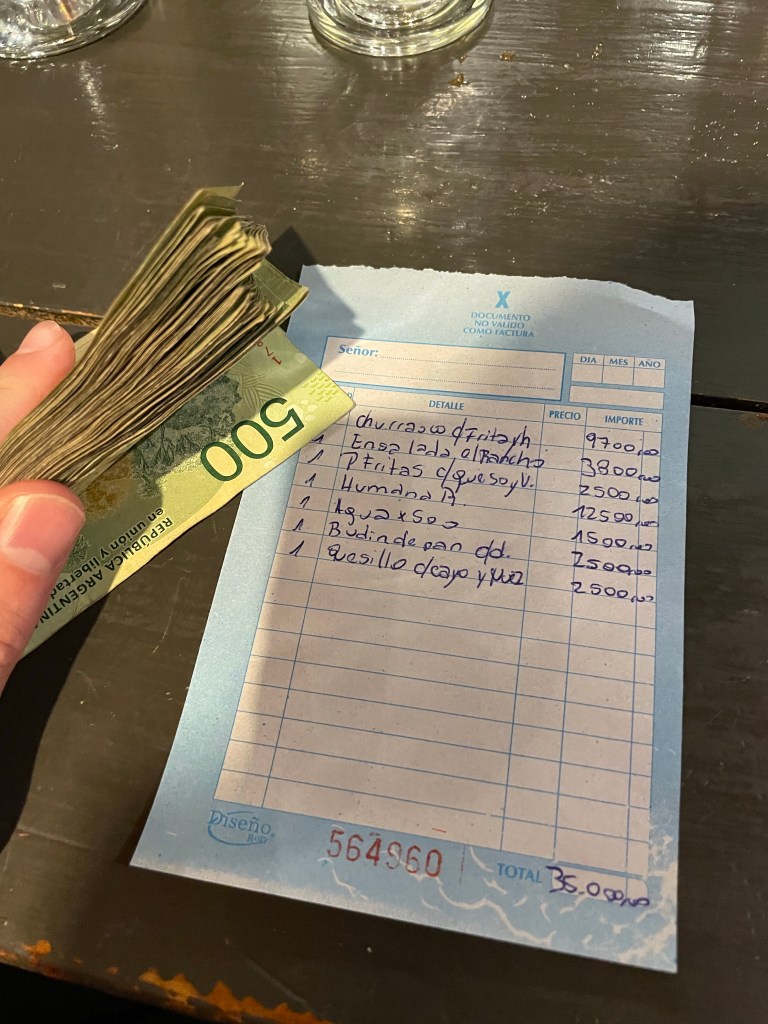
Dinner cost us the grand total of 35,000 ARS (£27) but for that Mike had a 400g steak and we ordered the most expensive bottle of wine from the local vineyard. A Malbec from Humanao, and it was pretty good, especially with the steak! We even had pudding too!
Incidently the vineyards around molinos are the highest in the world. So we’ve been to the southernmost, and the highest vineyards in one trip. So that’s worth celebrating.

Quebrada de las Flechas and Cafayate
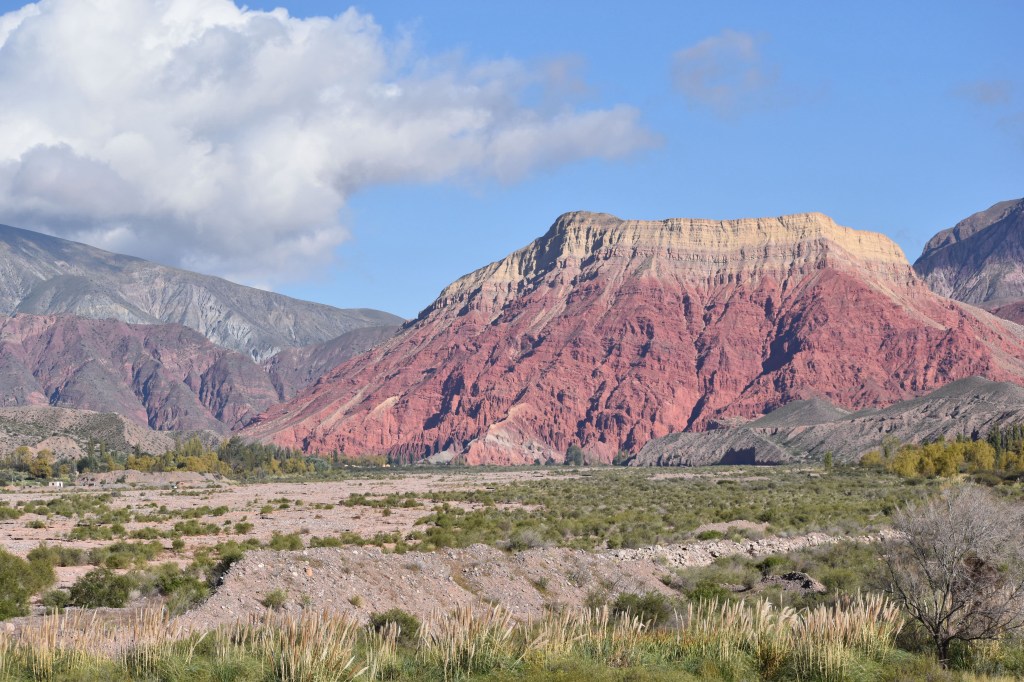
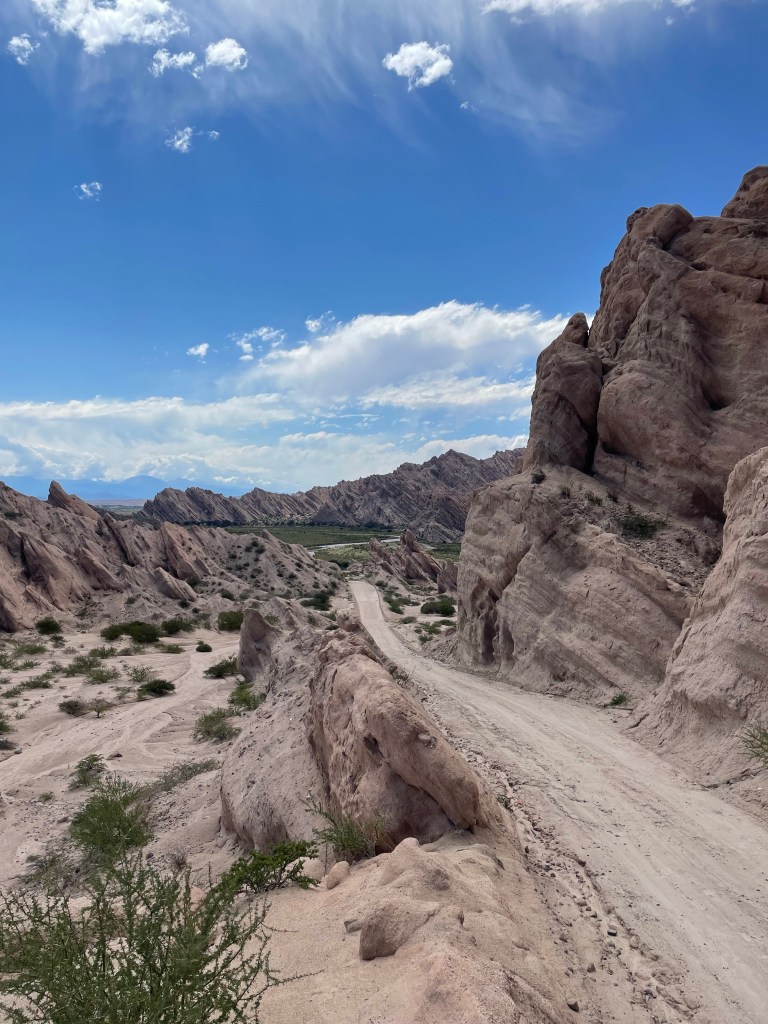
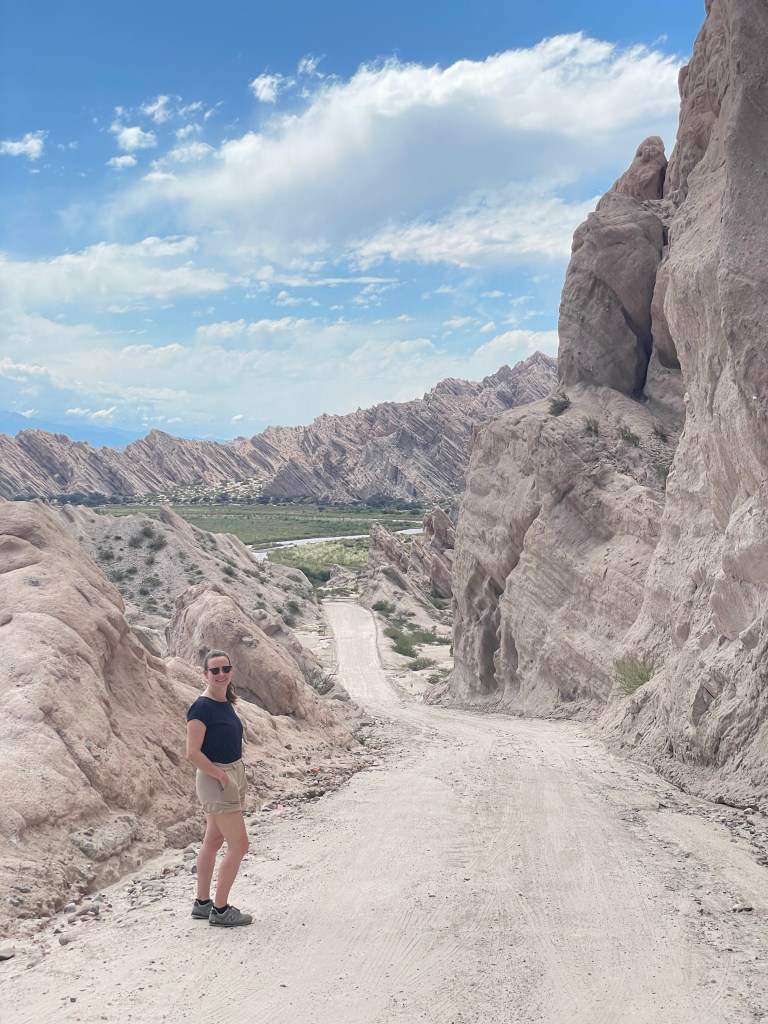
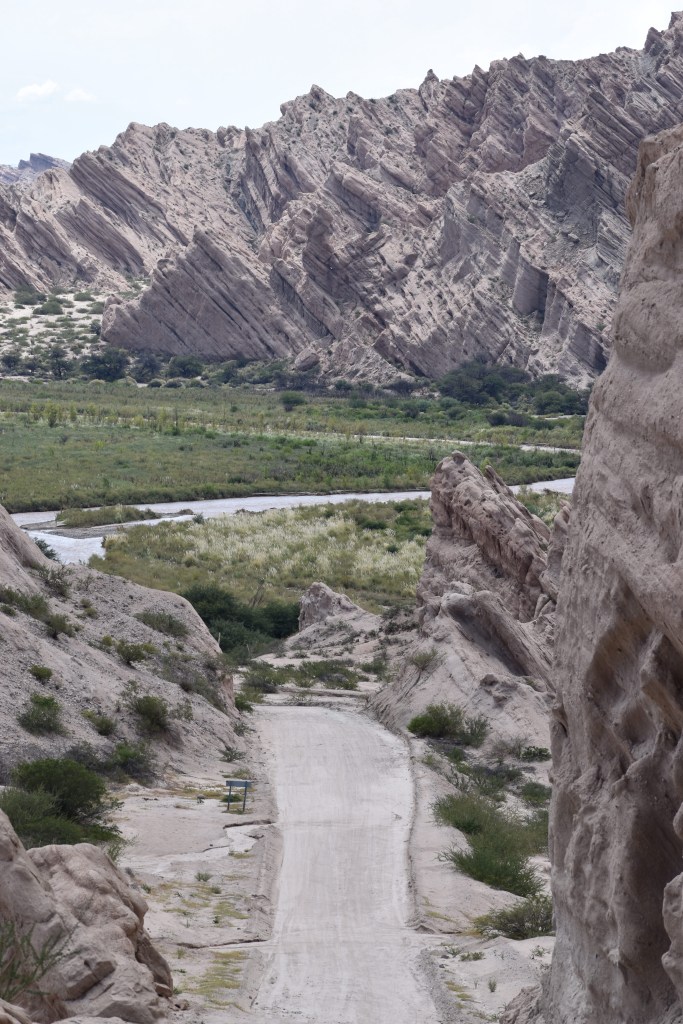
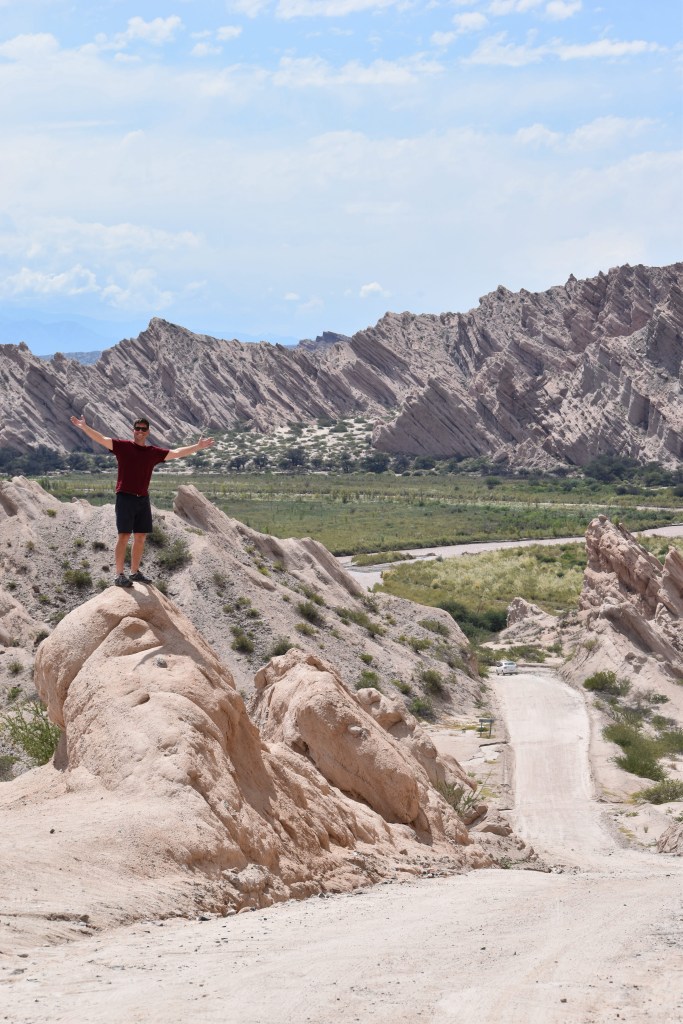
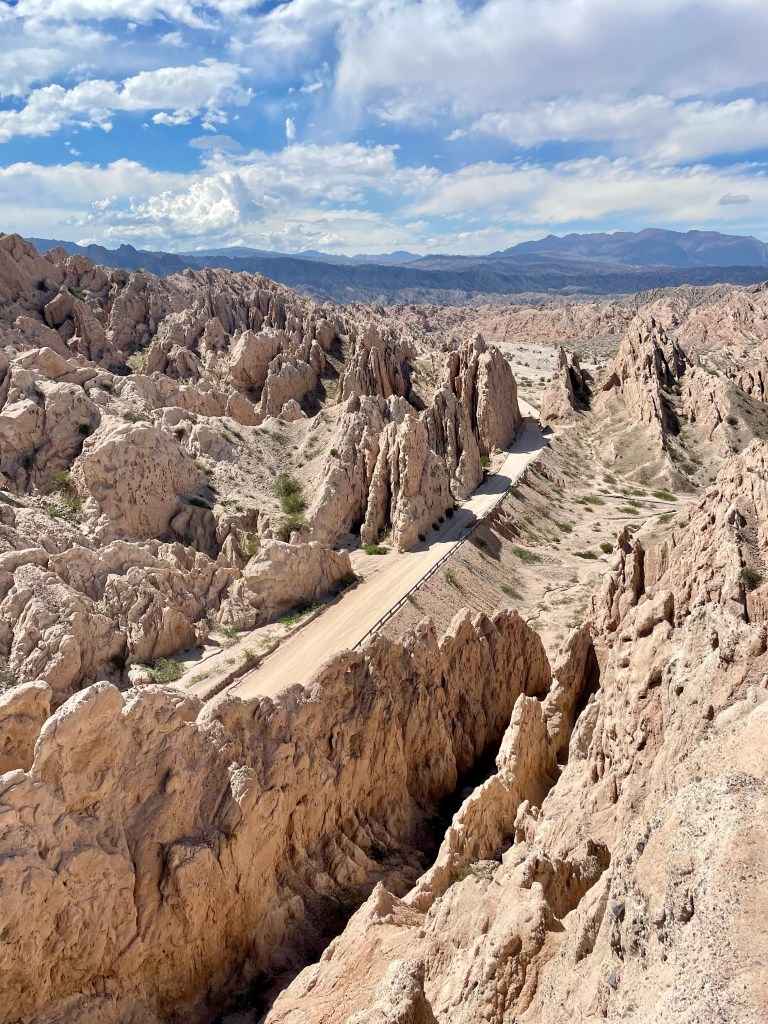
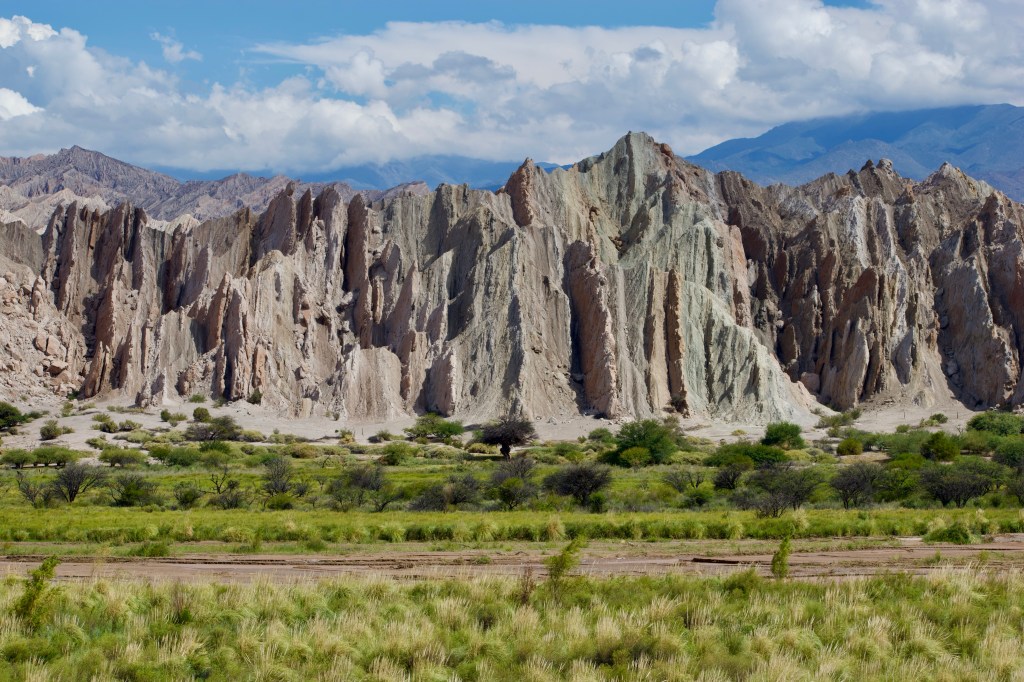
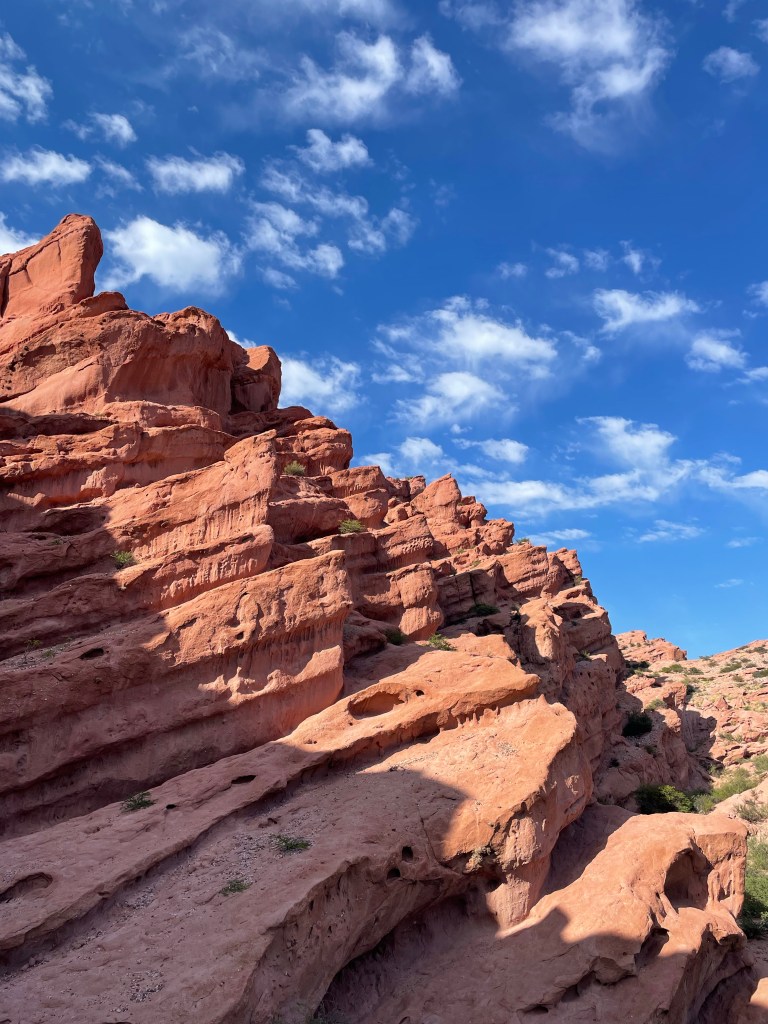
Quebrada de las Flechas is a valley with incredible jagged rock formations. So called because the strata of rock are dead straight and meet the ground at an angle which makes them look like the feathers on the back of an arrow. It’s a complex description so maybe just look at the photos.
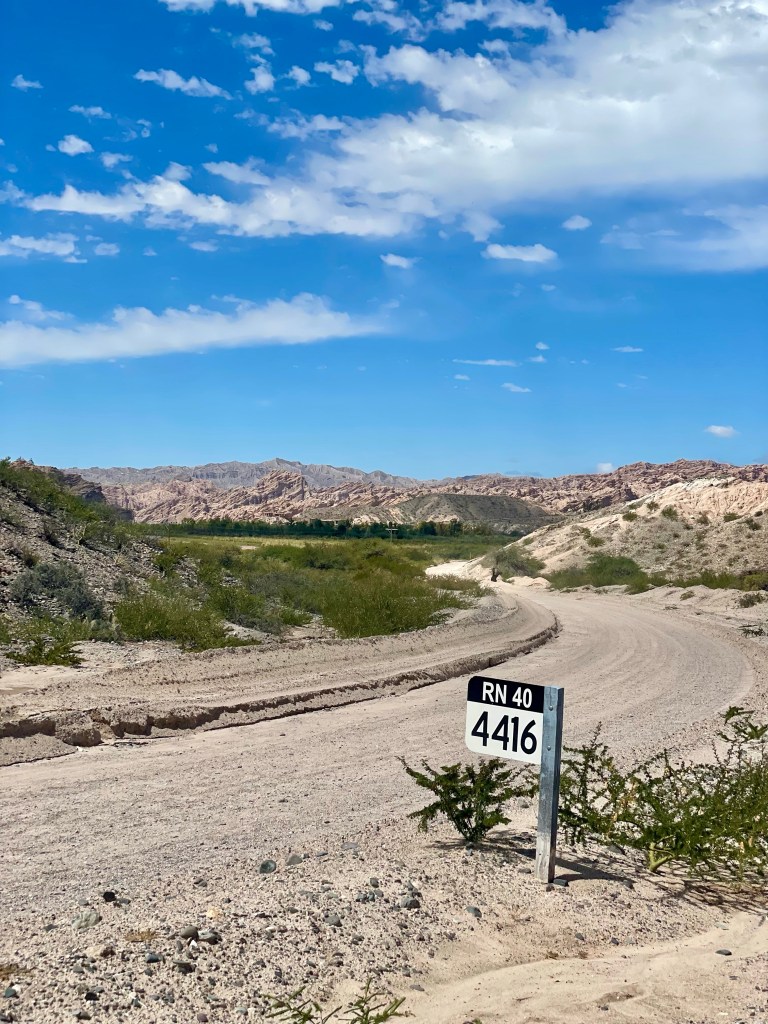
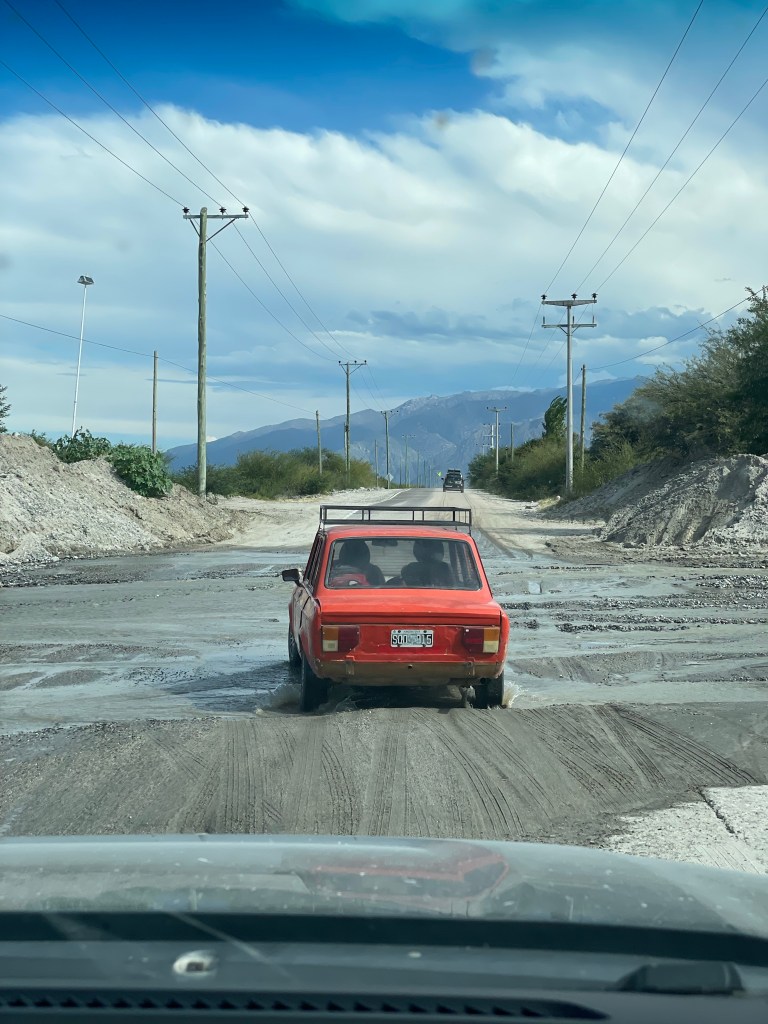
The gravel road to Cafayate runs straight through the middle of the rock formations, which leads to some spectacular driving and even better photos.
Cafayate itself was our destination, a famous wine producing region in Argentina we’d be remiss not to do some tasting.
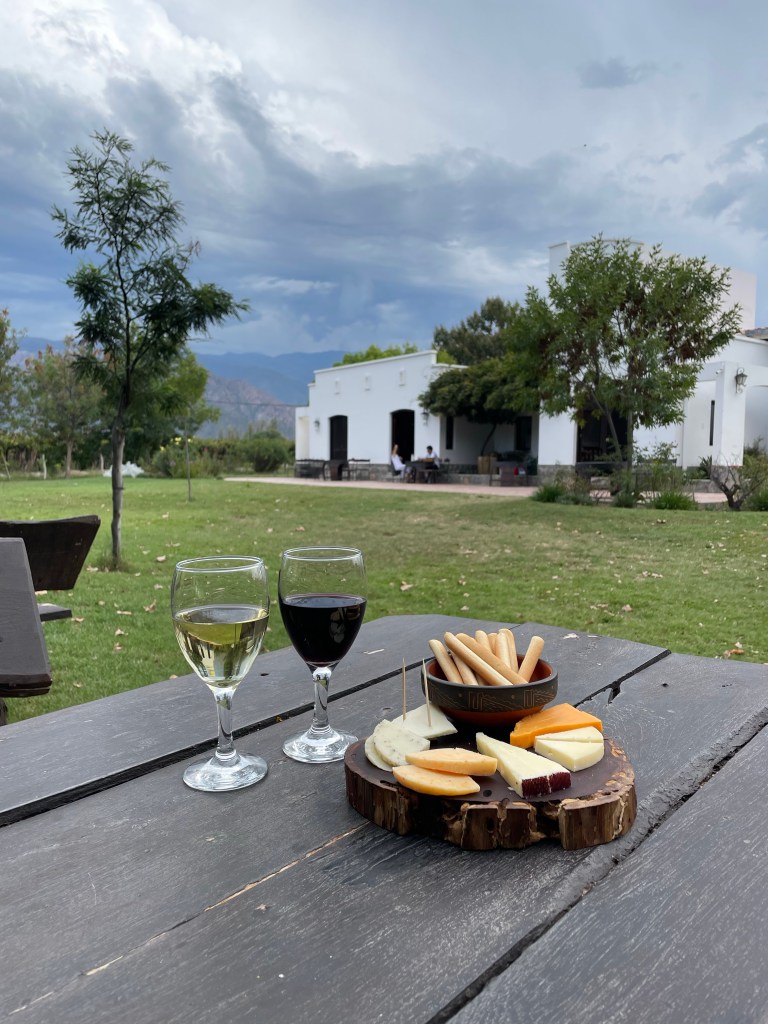
First we headed to the “casa de cabra” or house of goat. For 3,000 per person (£2.50) we tried their tasting experience, which included six cheeses and a full glass of wine each. The cheese was by far and away some of the best we’ve had in South America. Which is to say it was below average. One or two of the best cheeses were maybe as good as budget range in a UK supermarket. It remains a mystery why cheese in general is so bad in both North and South America. The wines were passable, and for the price we were very happy.
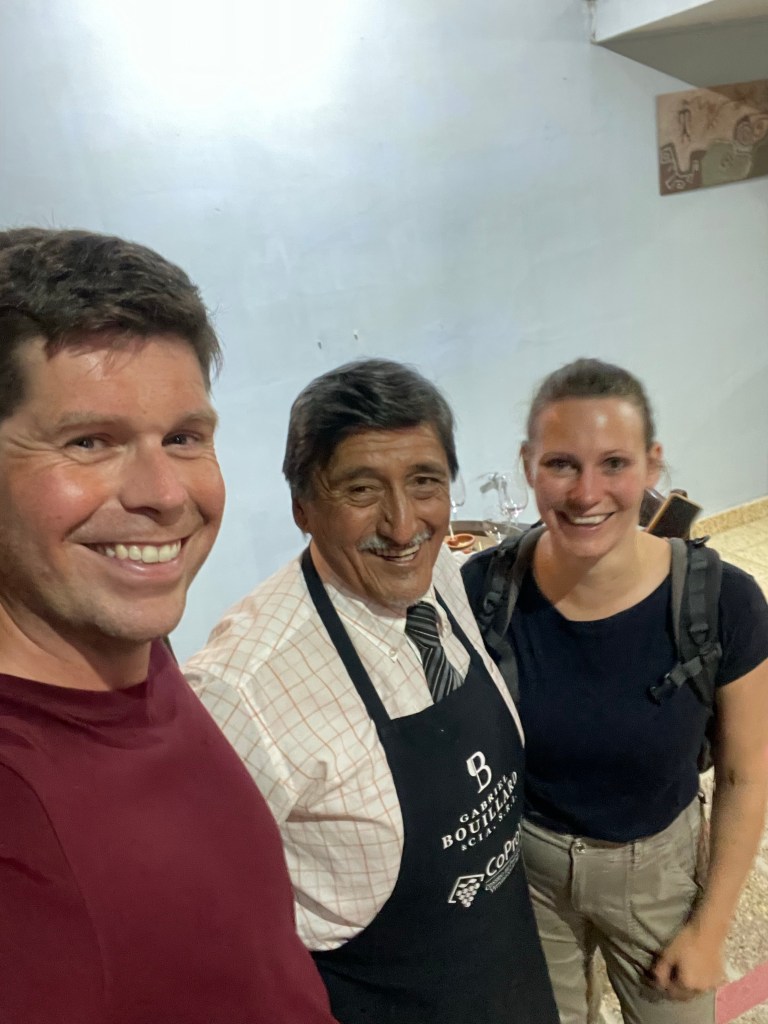
Chato is a charming local man who runs a wine bar in the centre of Cafayate. He has a passion and devotion to wine which is surely unrivalled. The wine tasting experience bought us six glasses of local wines to taste, and a snacking platter which was mostly ham and salami (sorry Sarah). The six wines selected by Chato were all excellent, at least to our untrained palate. Torrontes is a type of grape local to the area which produces quite a sharp white wine, we had been a bit put off by our previous torrontes experience, but this wine was excellent. (AuM from the south of Cafayate for anyone interested). Our final taste of wine was Chato’s own Malbec blend which he light-heartedly admits he loves more than his children.
During the evening we’d accumulated a couple of locals at our table to chat with. The first time we’d really been able to chat at length with Argentinians, and so we asked them all the questions we wanted answering. After another glass of wine we were invited to their cousins birthday party and Mike was sprayed with paco rabanne. However we were hungry and passed on the chance to develop our Spanish language skills further.
The main square in Cafayate was a hive of activity. It was Good Friday, and barely an hour earlier Jesus had been paraded down the street past our wine bar, with over a thousand devoted followers. There was still a long queue outside the main church, presumably to see him lying in state.
Dinner time in this part of Argentina seems to be around 11pm. Certainly if you enter a restaurant before 9pm you’ll be dining alone. Luckily, since we had been way laid at Chato’s, it was about 11pm and we managed to sneak the last table at a restaurant and have a decent meal for 18k ARS (£15 or so) all in. We didn’t finish the wine, by this point we didn’t need to.
Flat Battery
Time was tight today. We had to drop off our hire car back in Salta, a three hour drive away. A flat battery didn’t help. It took us a couple of hours to source some leads and someone to help jump start our car. Our Spanish isn’t great, so it took a lot of hand waving to explain our predicament to passers by, none of whom seemed to be carrying jump leads. Eventually we succeeded. Quite ironically we were parked directly outside a car battery shop, which was closed on Saturdays naturally.
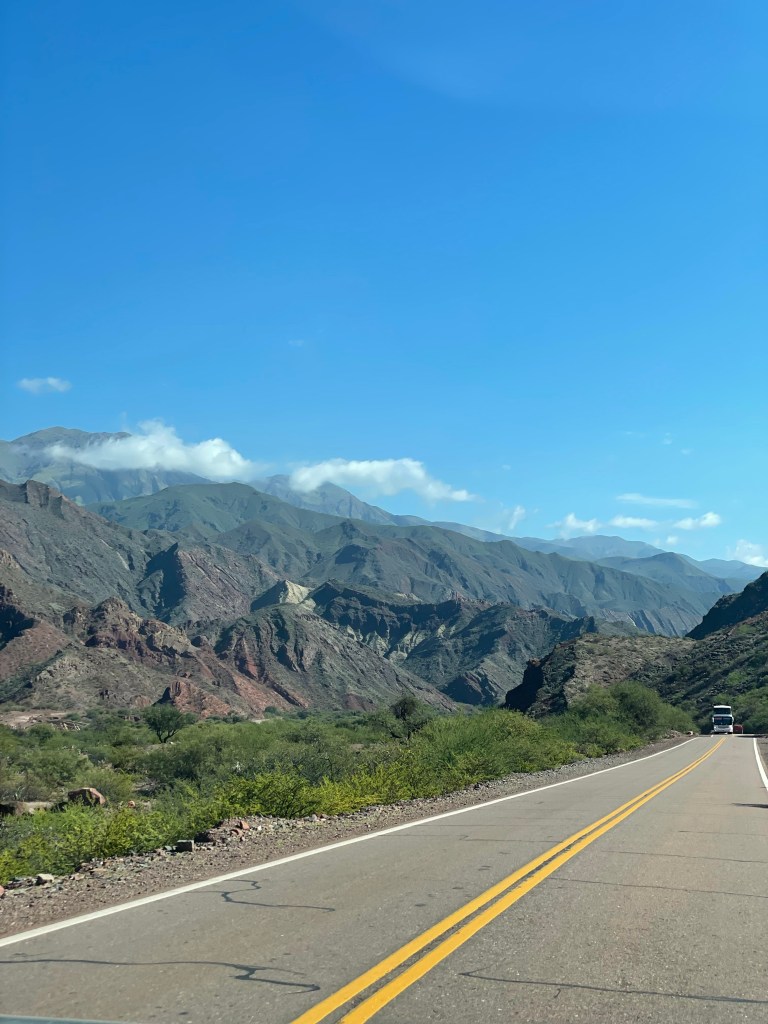
The road from Cafayate to Salta runs downhill through the Quebrada de la conchas. I don’t need to tell you by now that Quebrada means valley. Conchas means seashells, but we didn’t see any of those.
This route is often frequented by day trippers from Salta, touted as a spectacular drive followed by wine tasting, it’s easy to see why it’s so popular. The viewpoints were certainly busier than the previous day’s. However on balance we felt the drive from Molinos to Cafayate was more special.
We were in a tight schedule to return the car by 2pm, but we did manage to swing by the bus station on the way into Salta to purchase a ticket for the night bus to San Pedro.
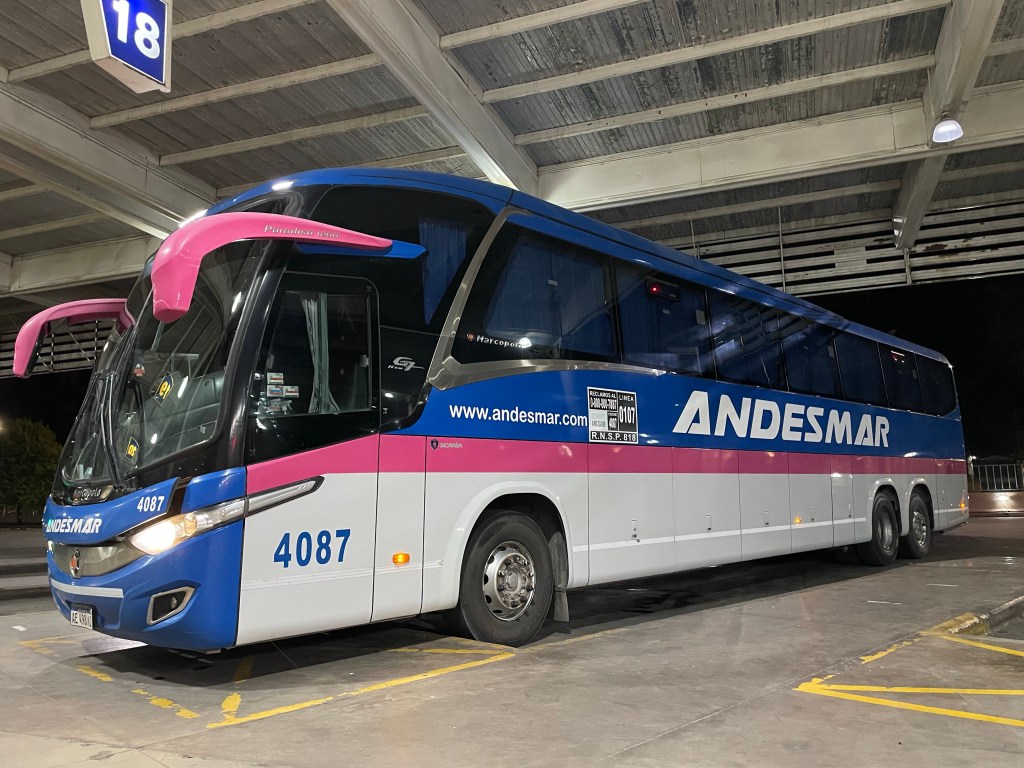
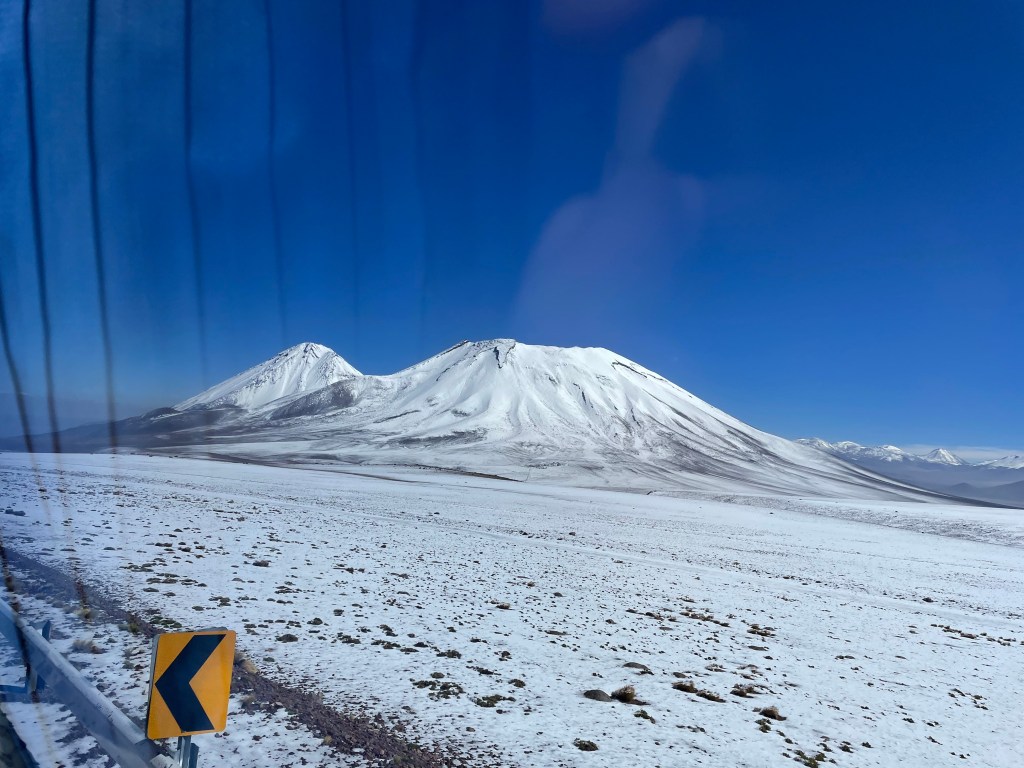
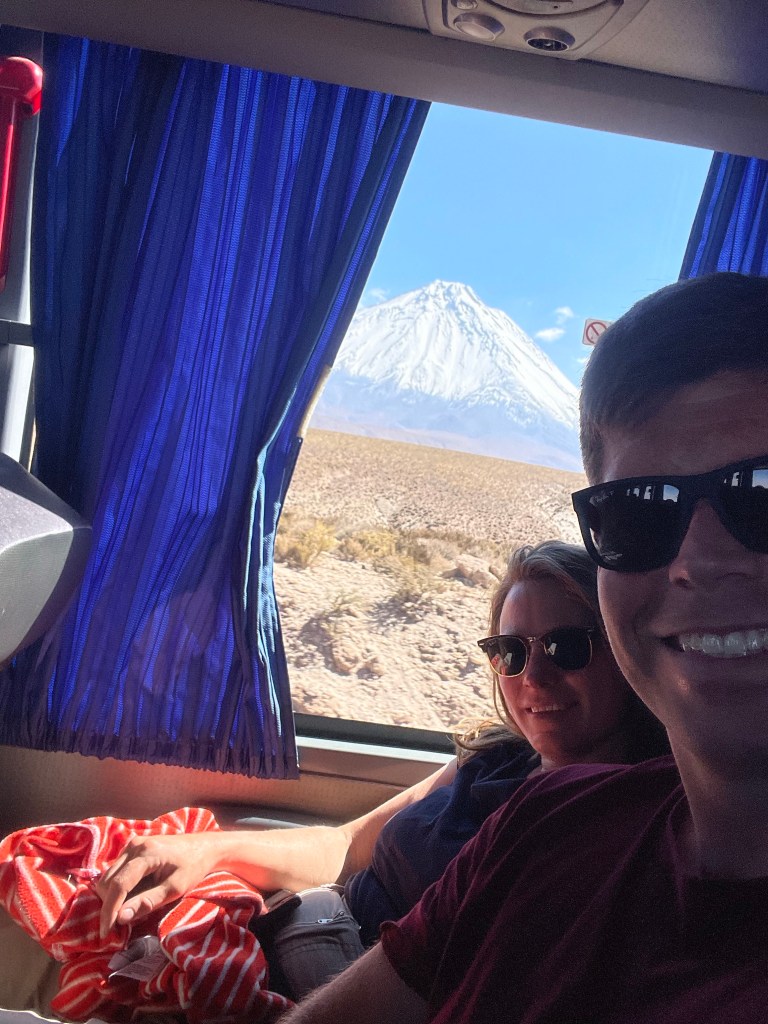
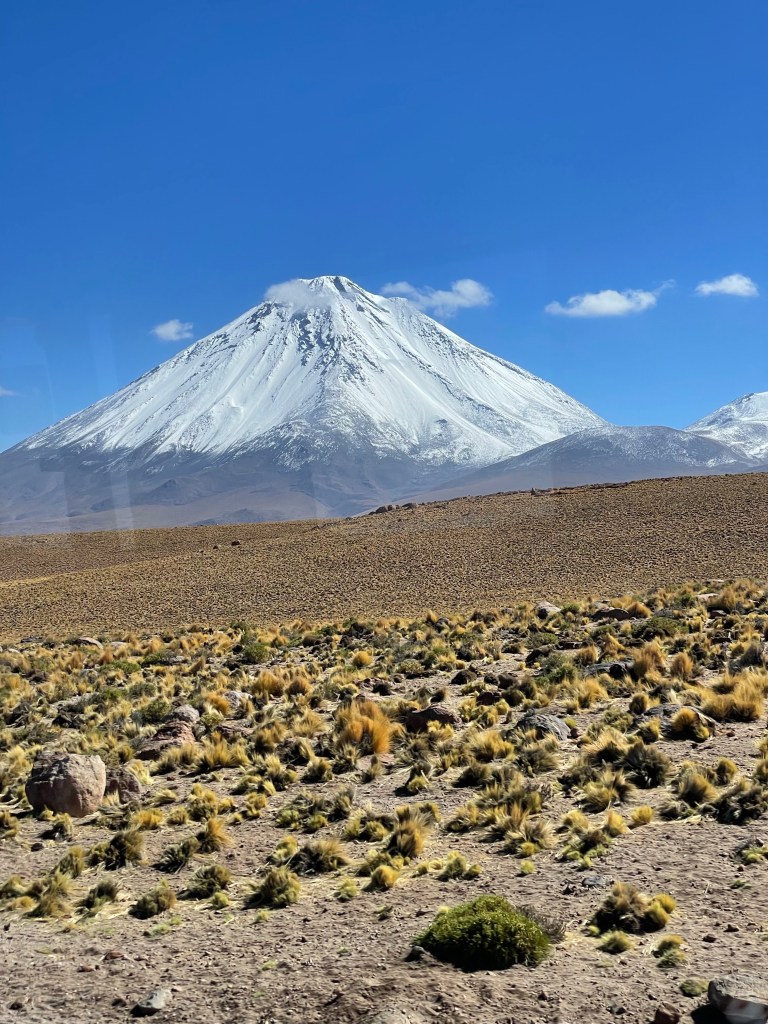
The journey back to Chile had been a constant worry for the last week or so. There is only one bus per day, but a landslide had closed the roads and buses hadn’t run for the last fortnight. We were in luck, the bus was running again, and for 65k ARS each (£50) we secured a seat. Not the cheapest bus ever, but a useful link back to Chile to continue our tour. This would be the fifth and final crossing into Chile, and to be honest we are totally done with Chilean border guards and their painful processes.
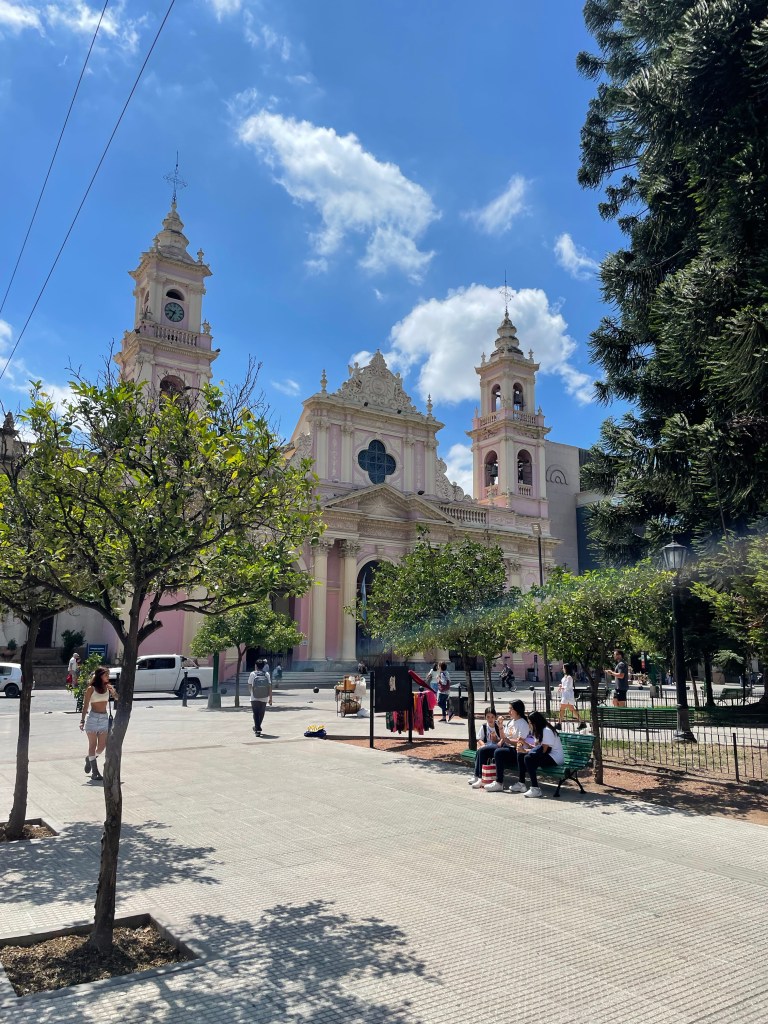
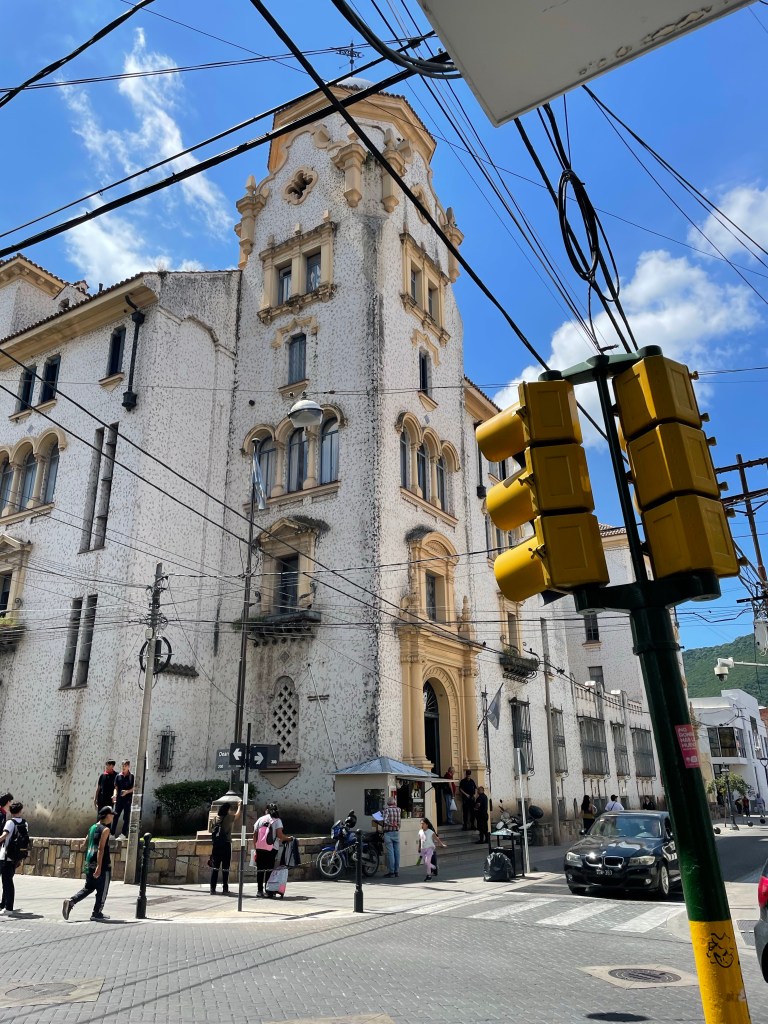
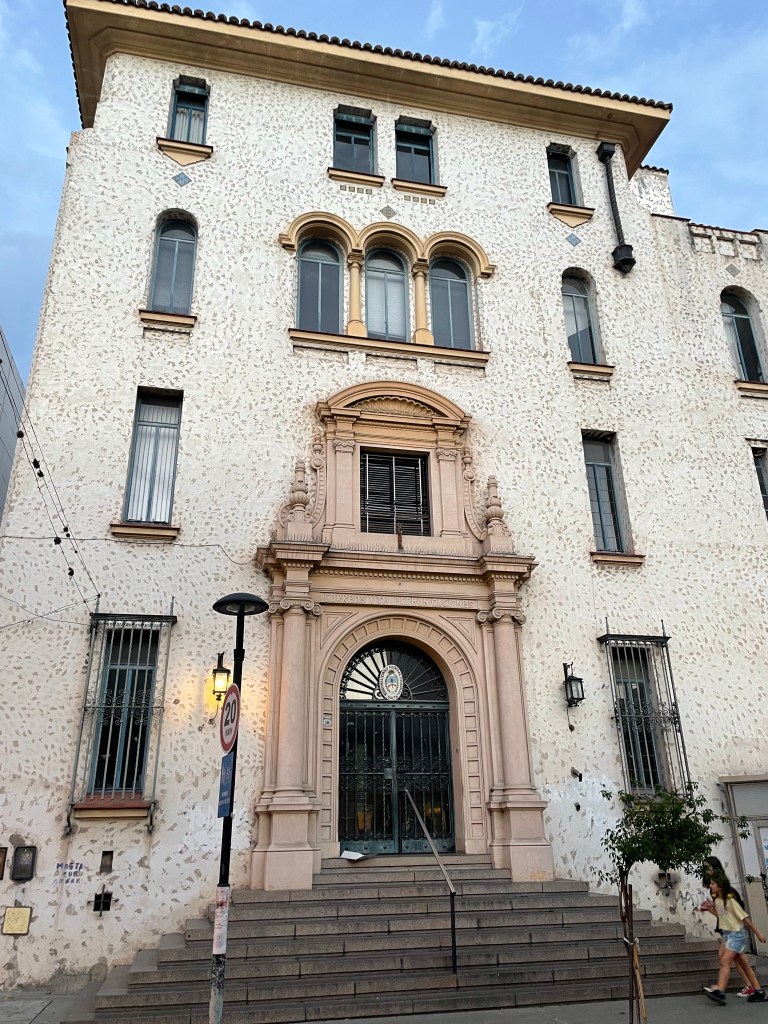
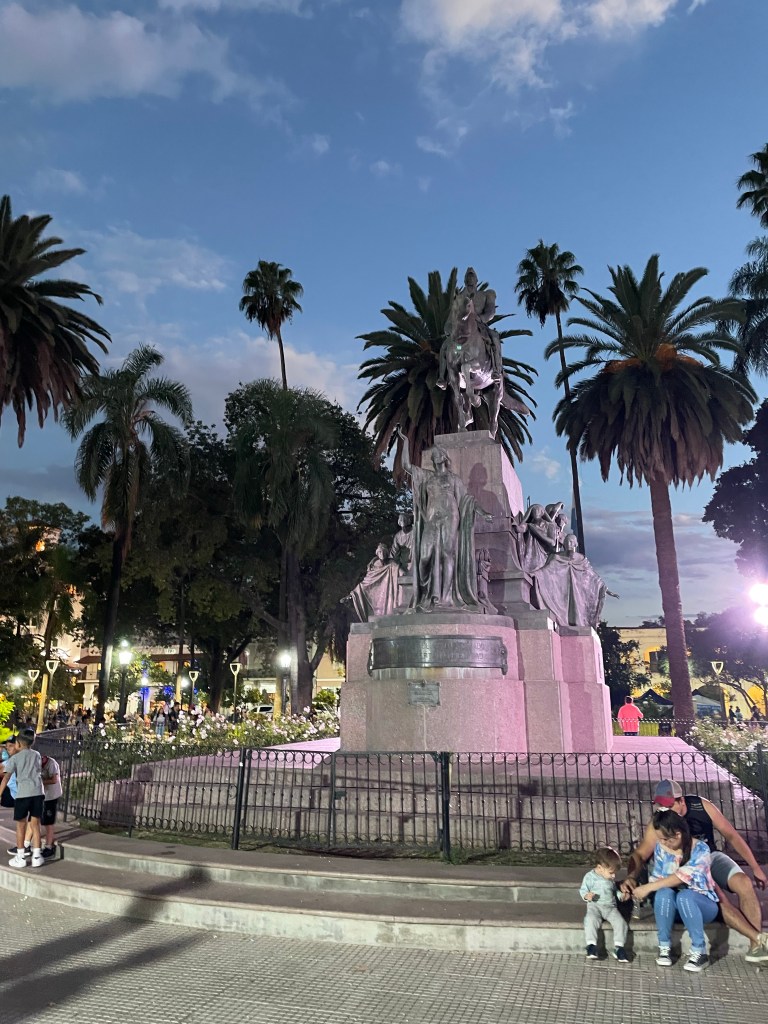
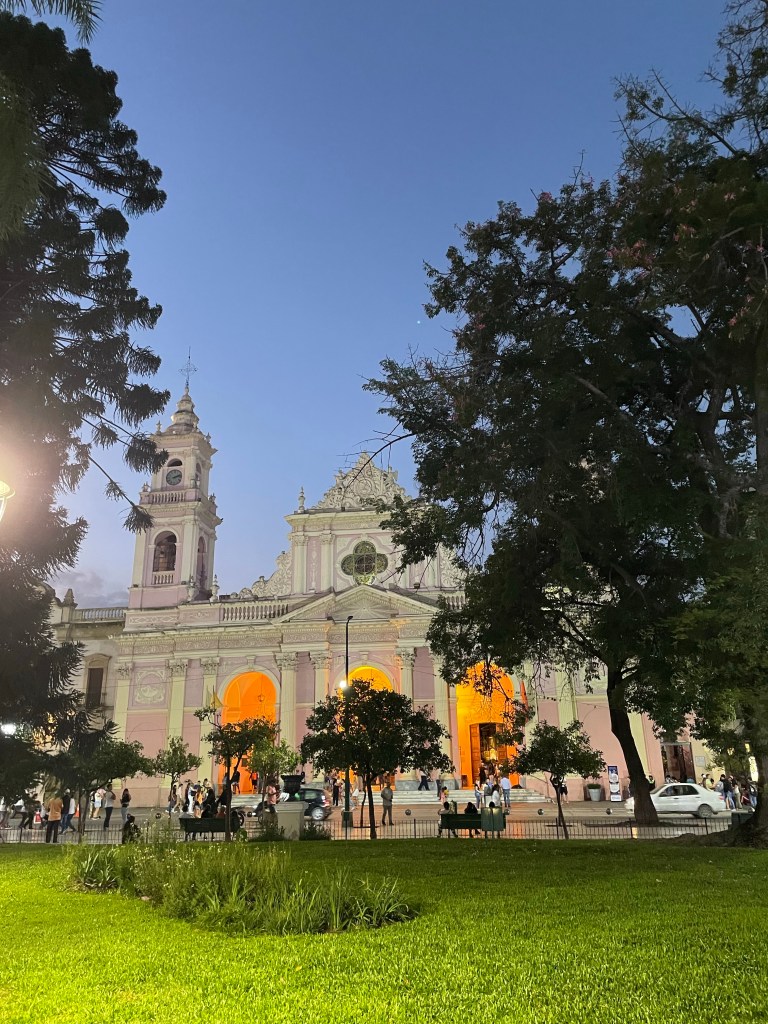
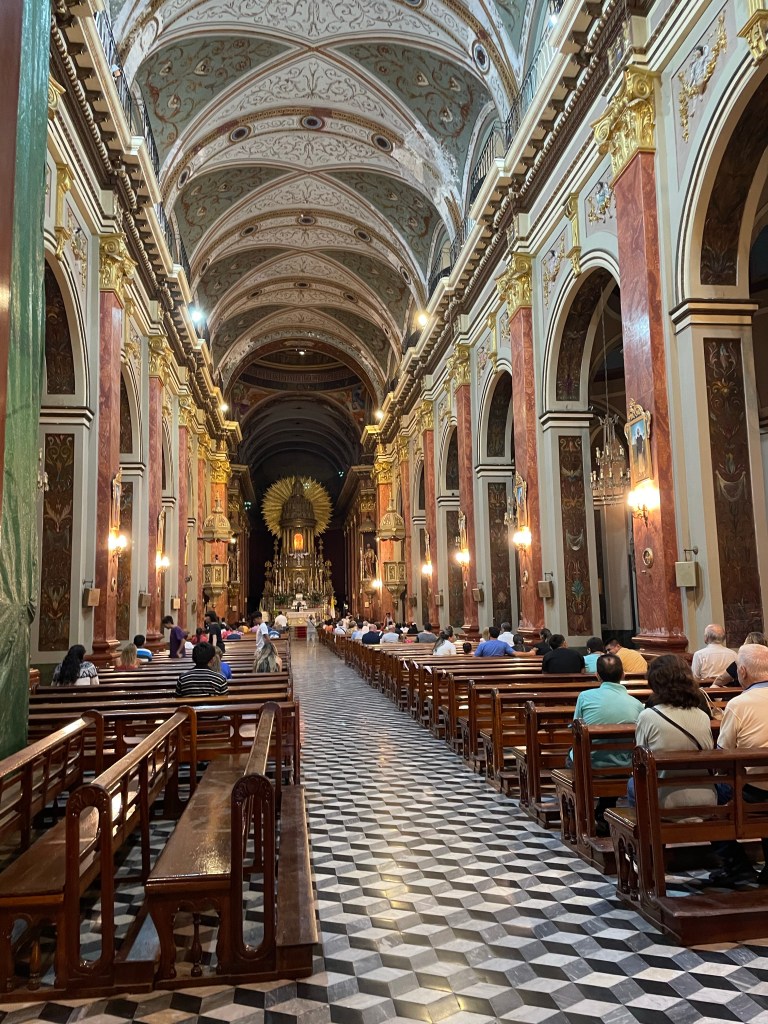
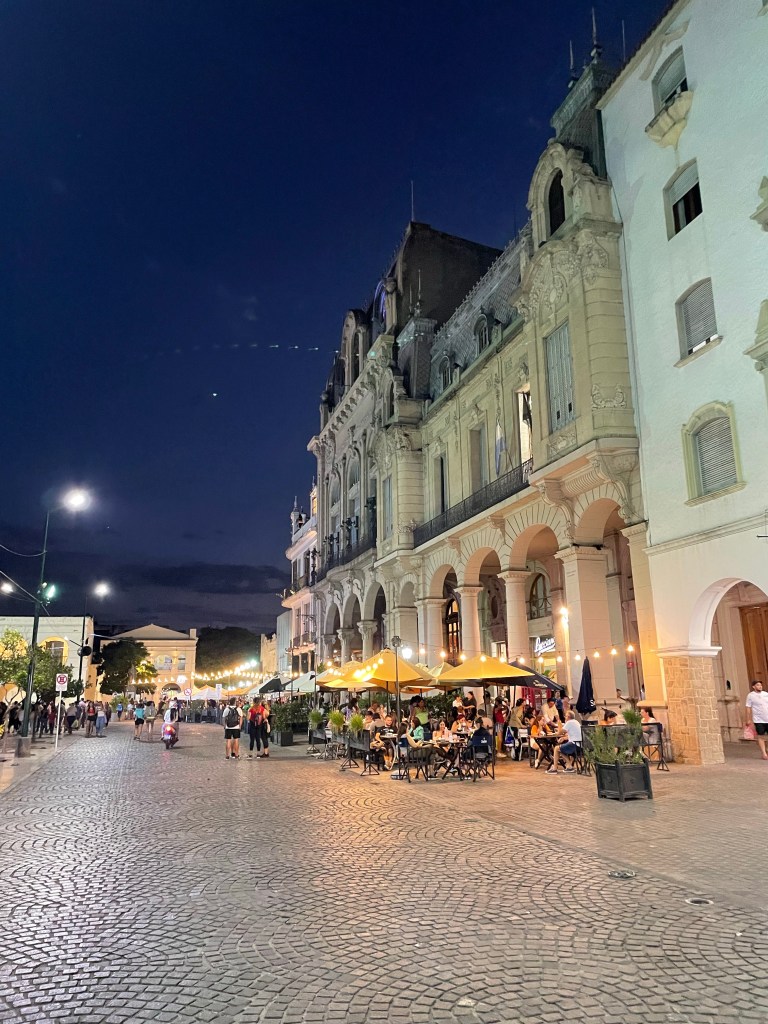
Salta is actually a really charming city. Grand buildings surround the main square, which itself is filled with a variety of big trees, and statues of Argentine heroes. Oddly the main statue is of someone other than General Guemes, whose name adorns every municipal building, airport, and Main Street in the Salta region.
Quite fortuitously we were staying in what appeared to be the craft brewery district of Salta. Unfortunately our lack of pesos meant Mike was limited to two craft beers this evening. Although that was a blessing in disguise as the night bus to San Pedro reaches an altitude of 4,950m. Up there altitude sickness is a real thing, but more likely you’ll just have a terrible headache for a couple of days.
Seems odd to end our time in northwest Argentina on a negative note. We really loved the road trip, and whilst it was only a flying visit, we can see how Salta and Jujuy have enchanted travellers. Pretty much everyone we’ve spoken to who had travelled a good chunk of South America had named it as a highlight of their travels. You can add us to that list.
- The infamous Binga-Karoi road
- Mana Pools: A bucket list location?
- Camping Among Lions: Chitake Springs Experience
- Chirundu: The worst border in the world
- The Wild Dogs of Jeki: Sunrise in Lower Zambezi
 Small Holiday Big Dream
Leave a comment