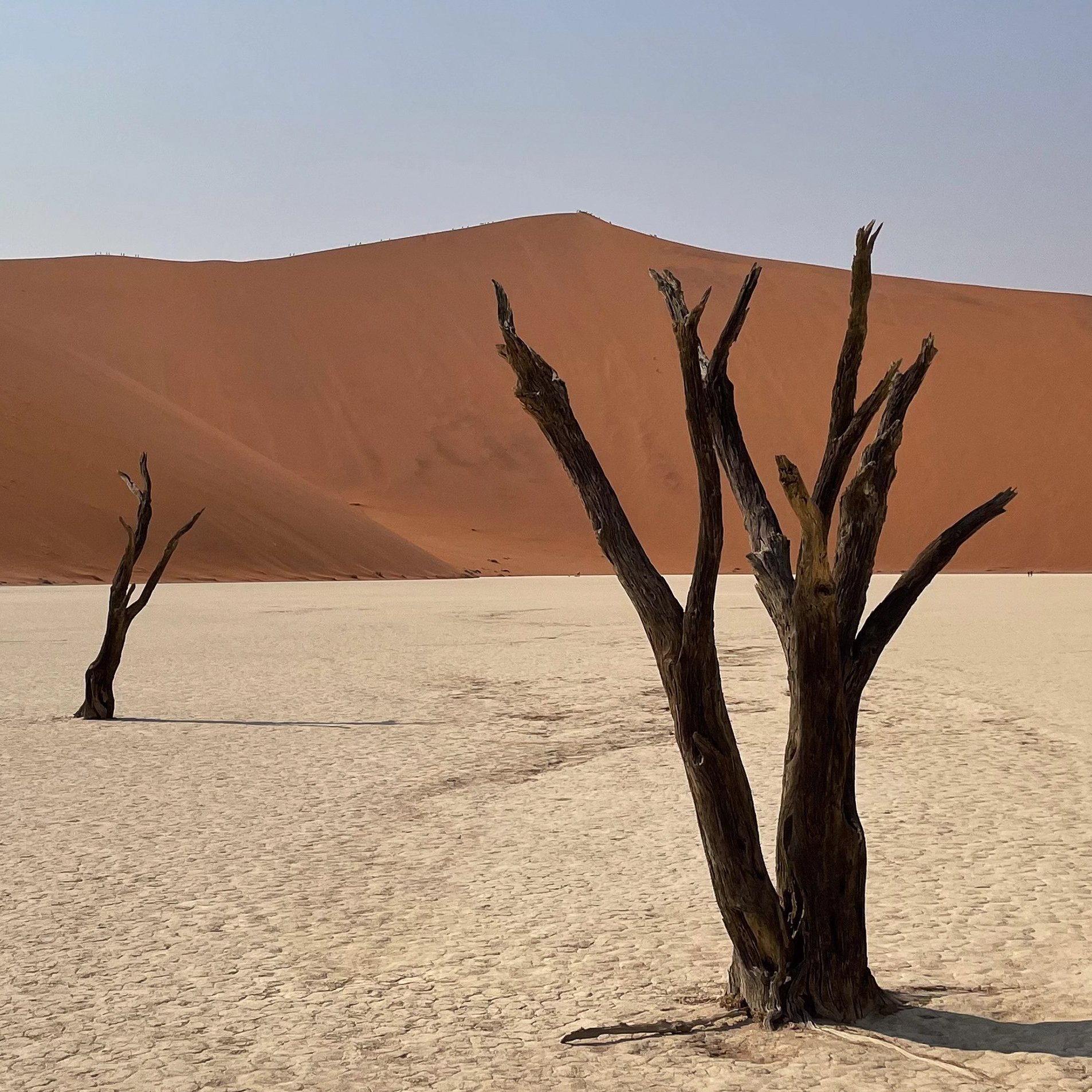
If you recall, (and why wouldn’t you?) we left you in the Chilean Lake District, after crossing over from Argentina. A mixed weather forecast accelerated our plans, so instead of volcano spotting we decided to head for one of the rainiest places on earth: the archipelago of Chiloé.
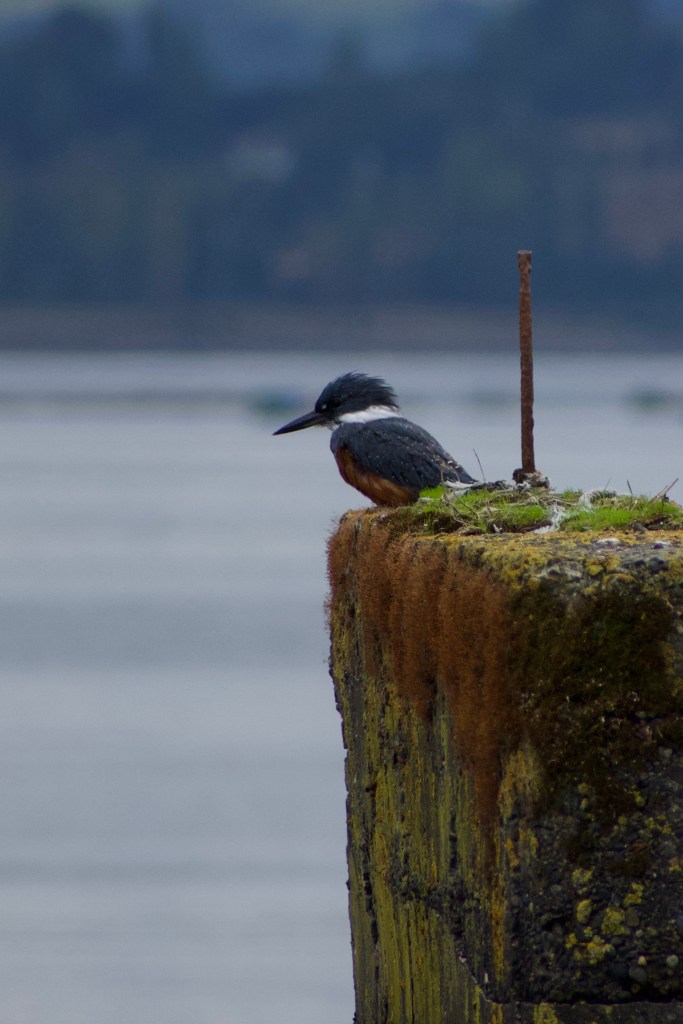
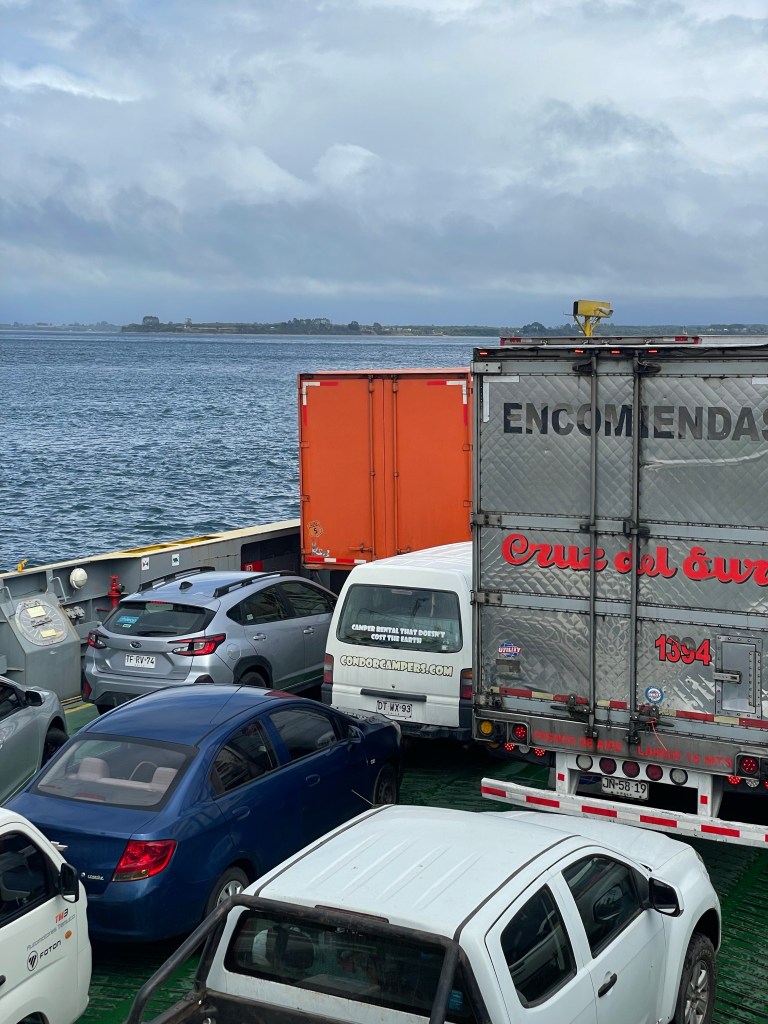
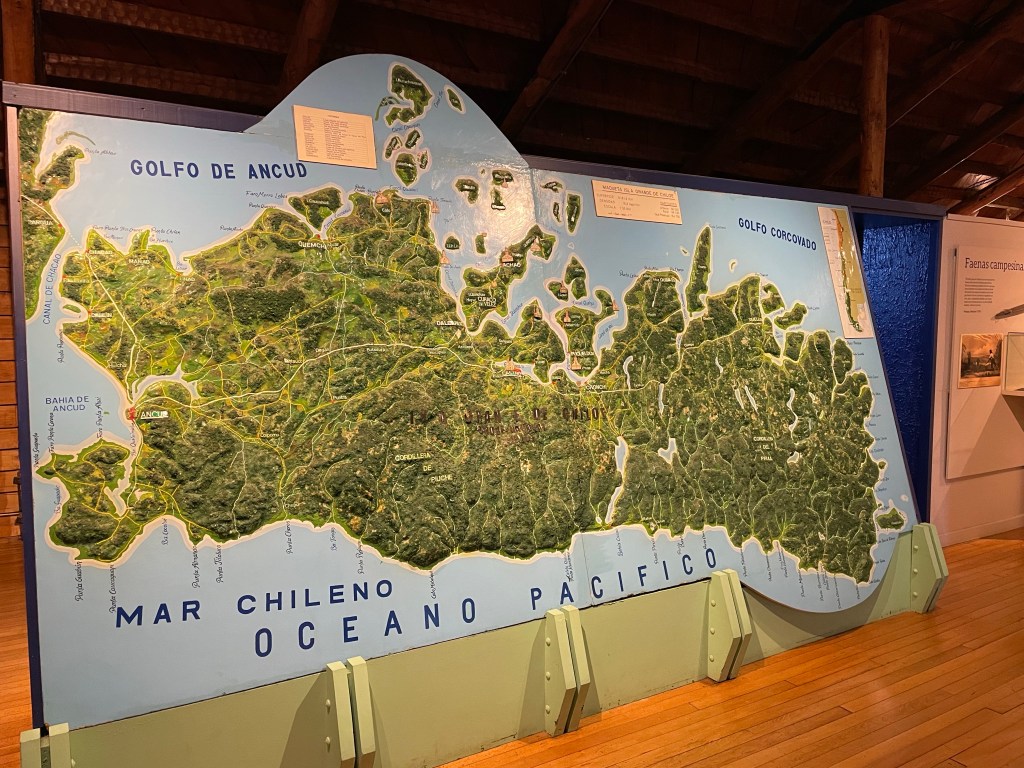
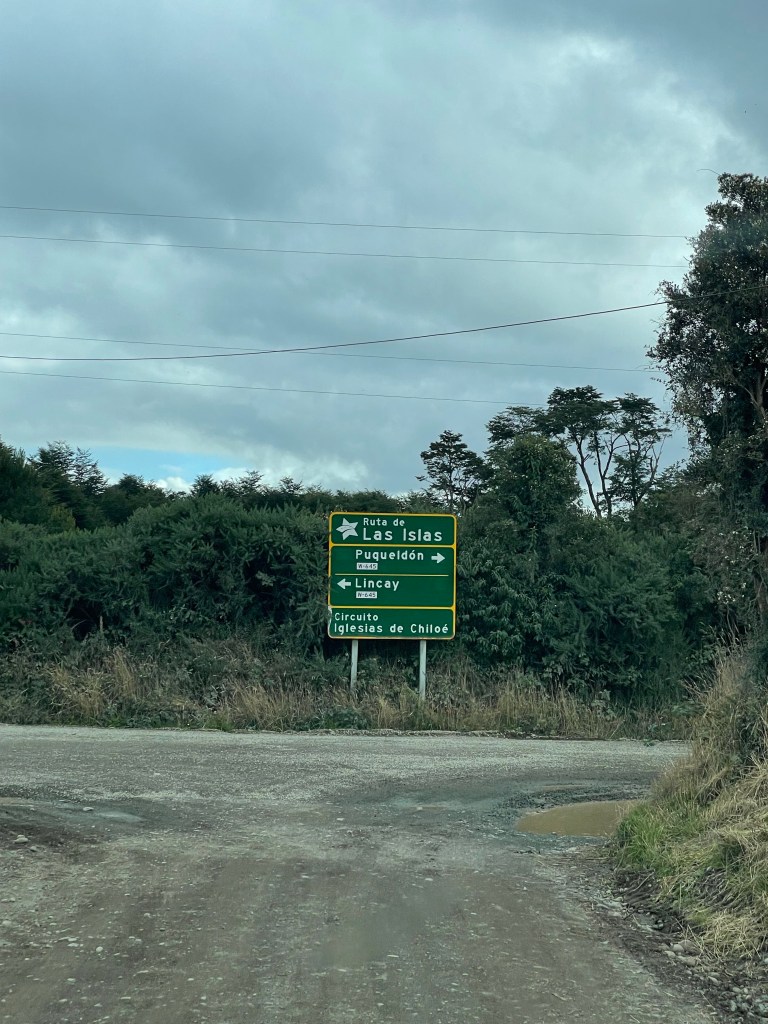
Chiloé is an archipelago of loads of islands, go to Wikipedia if you want an actual count (but don’t go trying to verify any other facts in this post…). The big island, imaginatively named the Grand Island of Chiloé, is the second largest island in all of South America. They’re building a bridge from the mainland, but the locals seem to be in opposition if bus stop graffiti is an accurate barometer of public opinion. The bridge is half-built, so ferries it is from here on in.
Journey to the grand island
We got up early in hopes of having a great view of the Osorno Volcano and to visit the famous Saltos de Petrohue. But sadly the clouds were low, visibility was low, and it wasn’t worth heading up the valley to go cloud watching.
Instead we dashed down the motorway to Chiloe, an island famed for its rain. To be fair it’s famous for other things too. Principally wooden churches which are unique, but not all that old, Gigantic fish soups, and whale watching.
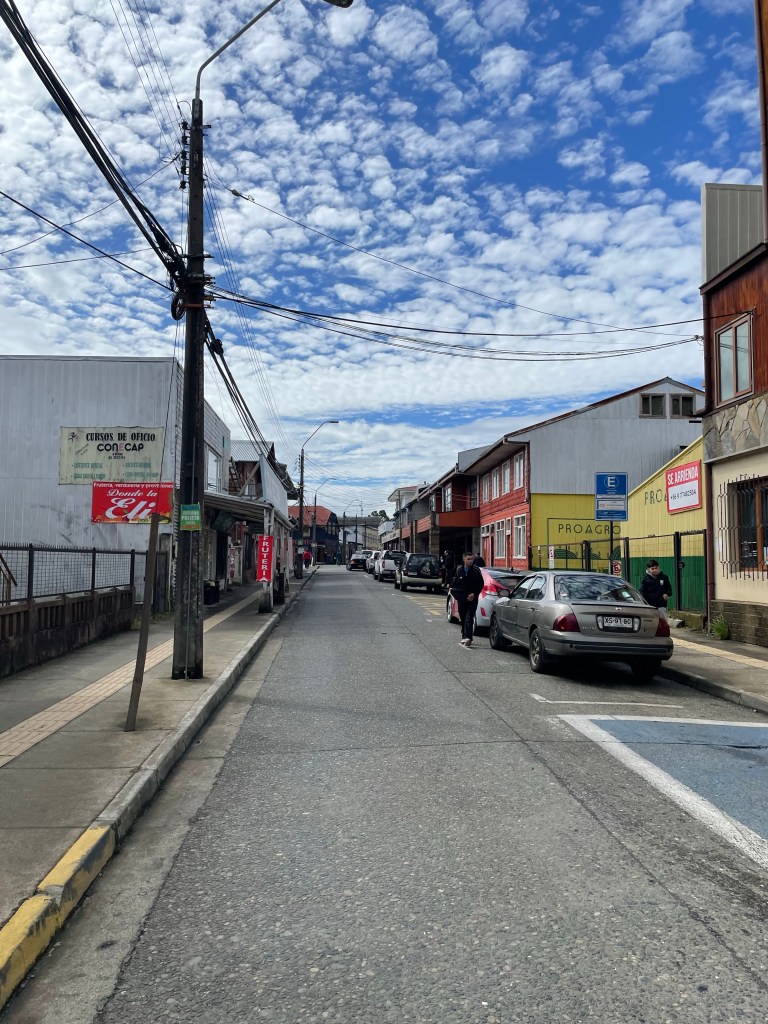
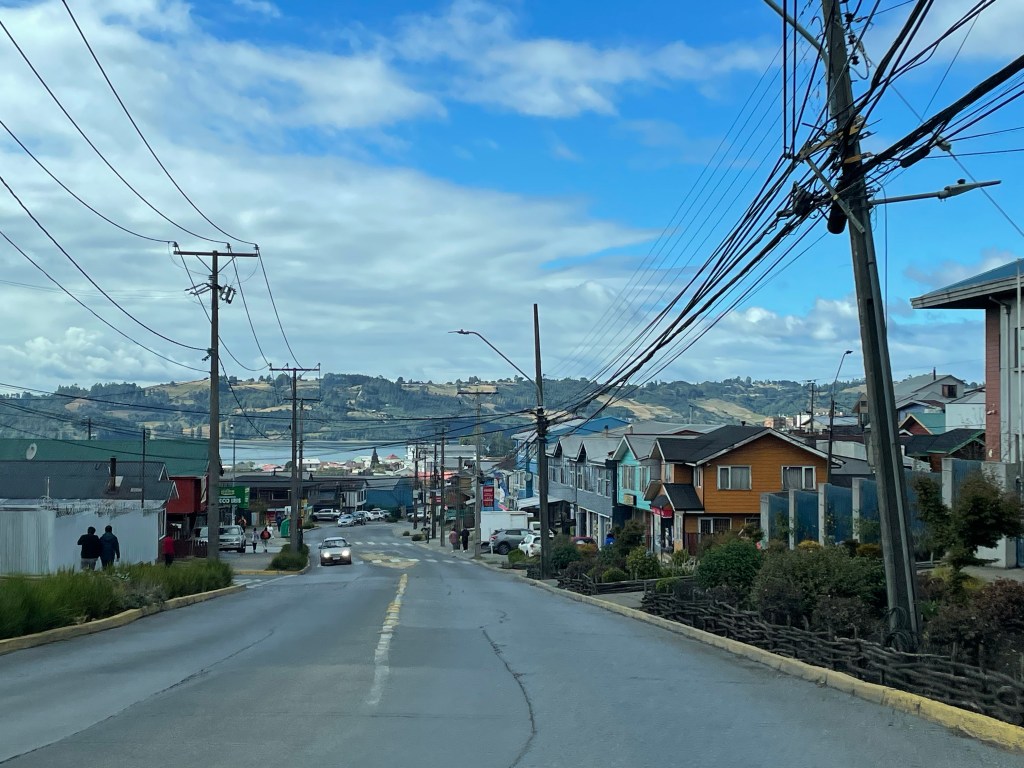
First stop was Ancud, where we checked out the museums for guidance, and exhausted our data allowances on translation. Ancud was a busy little town with colourful corrugated houses, and little in the way of tourists. It rained four times in the 2 hours we were there, but in between the sun poked out and it felt pleasant.
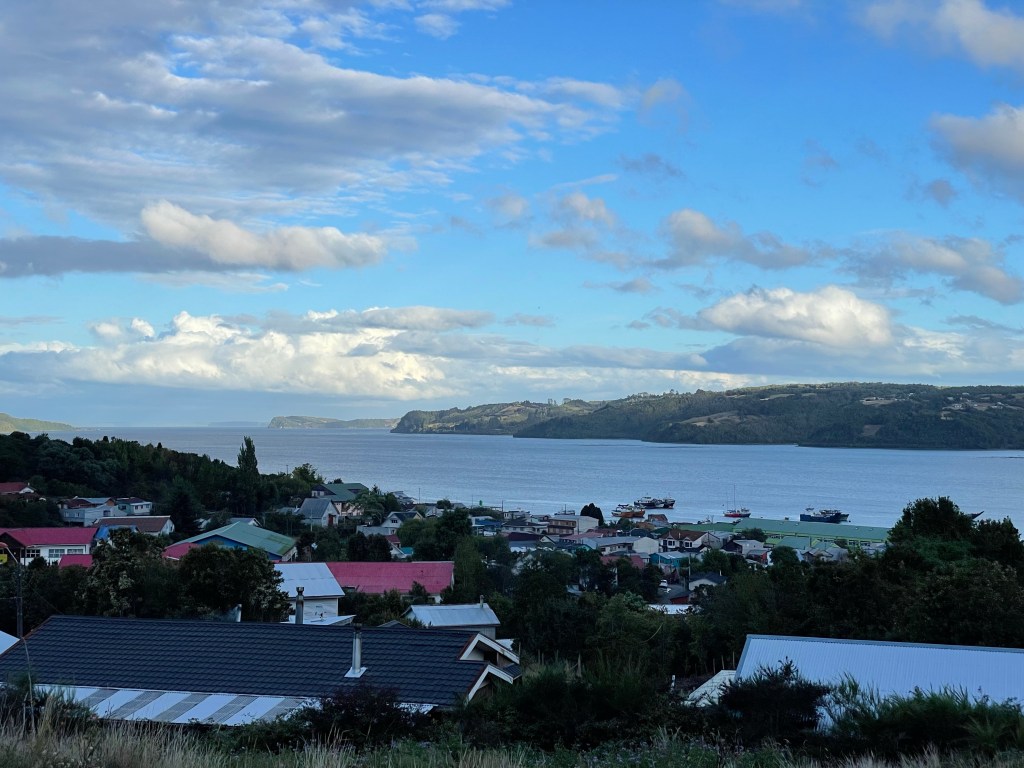
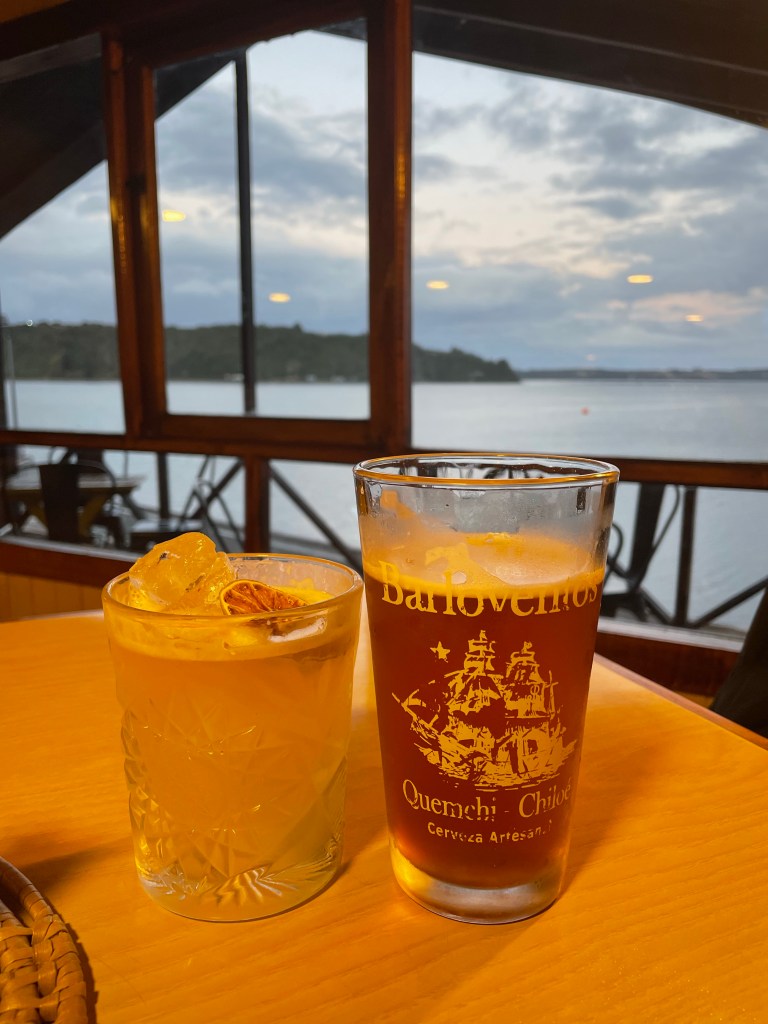
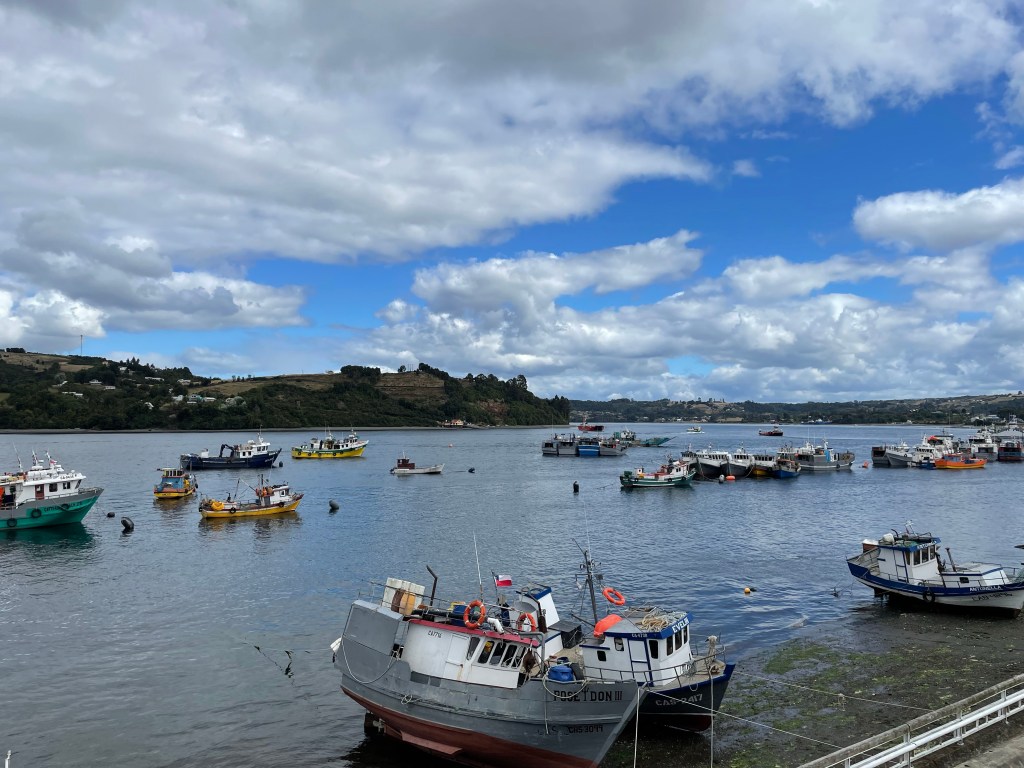
Quemchi is where we set up camp. On top of the hill there is a lovely view of the harbour, and we seem to be the only foreigners currently in town. If the Lake District felt too touristy for us, then we’ve found the antidote. We decamped to the microbrewery for beers and a burger. Seafood stew will have to wait until tomorrow.
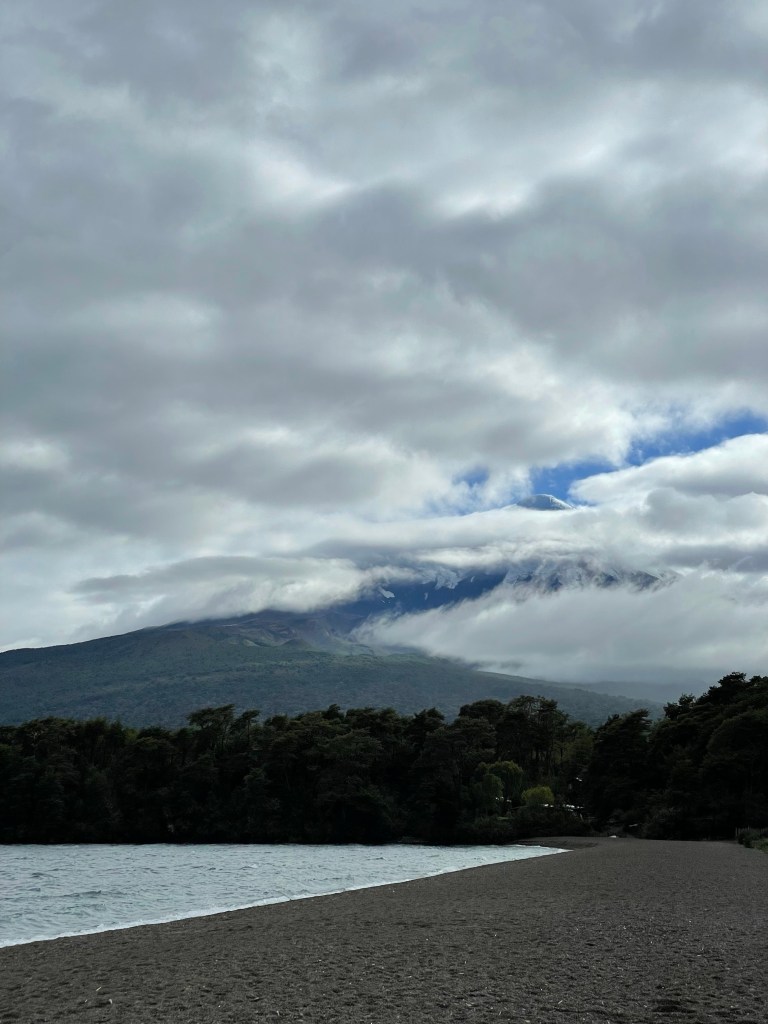
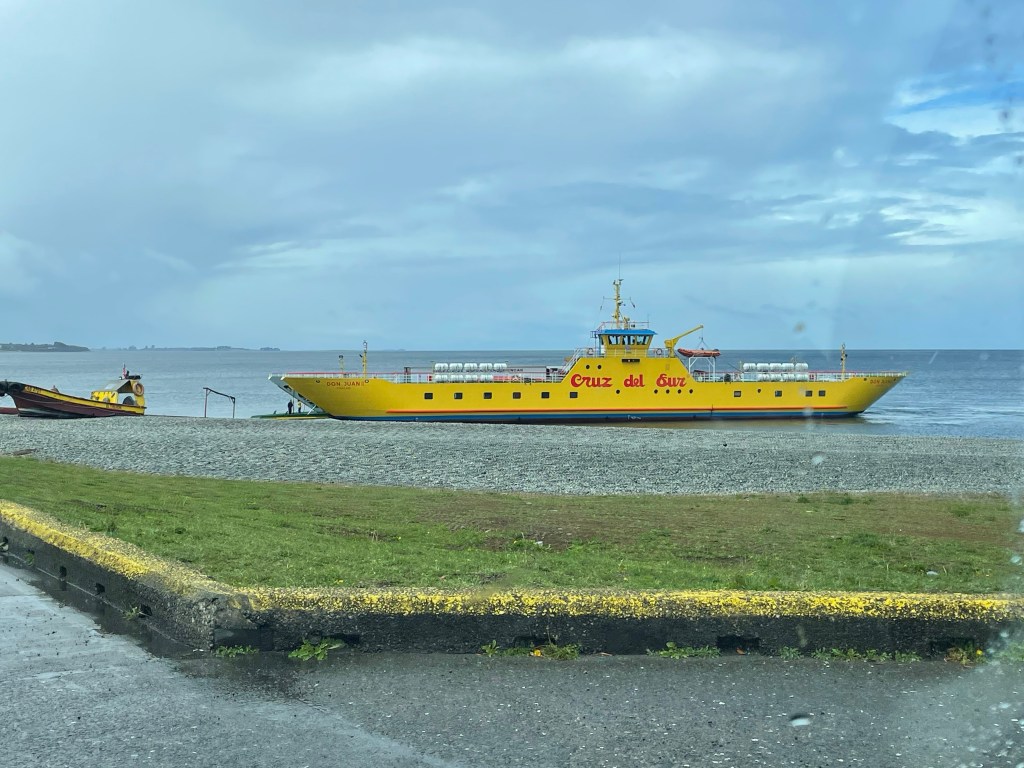

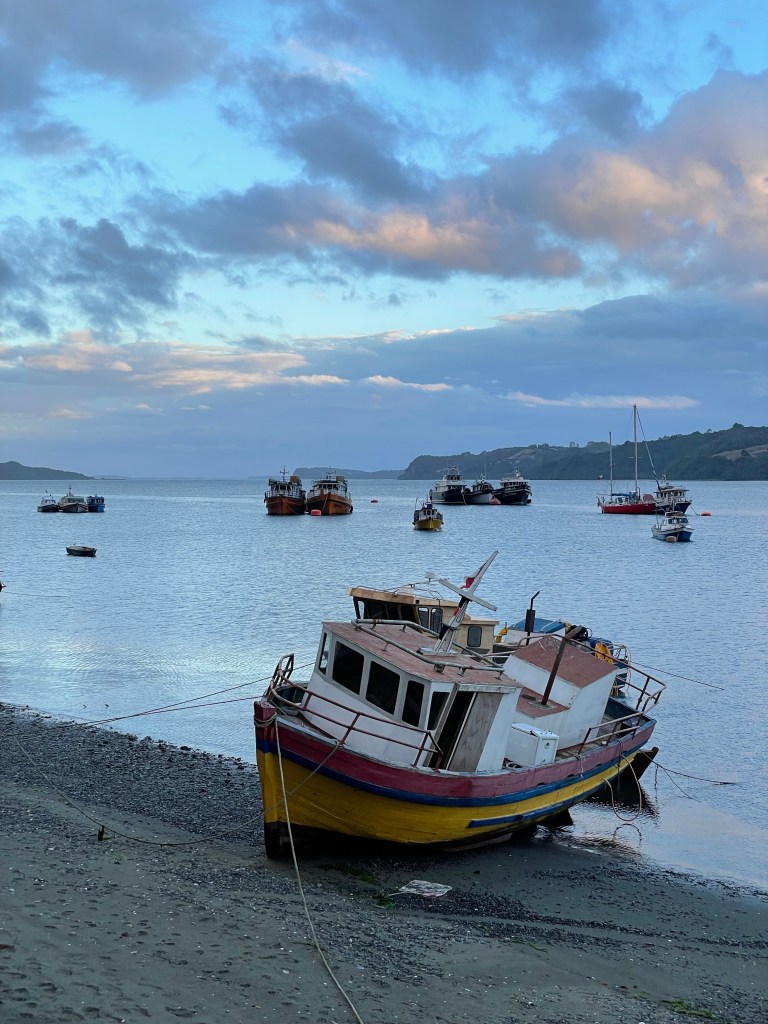
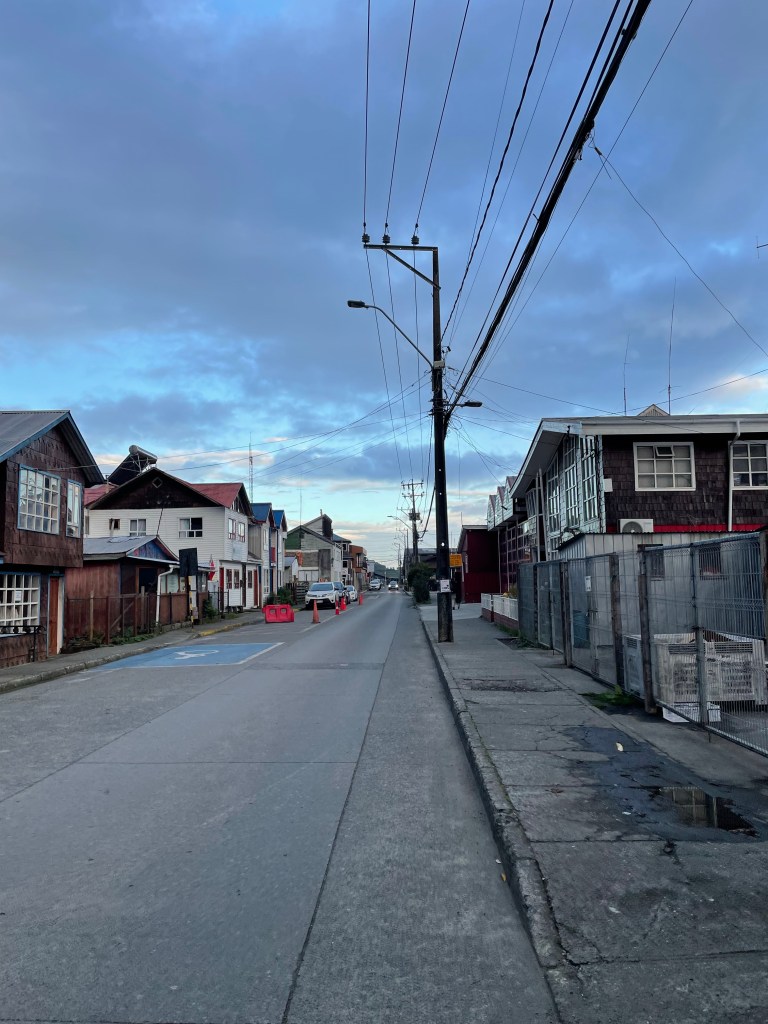
Chiloé and Quinchao
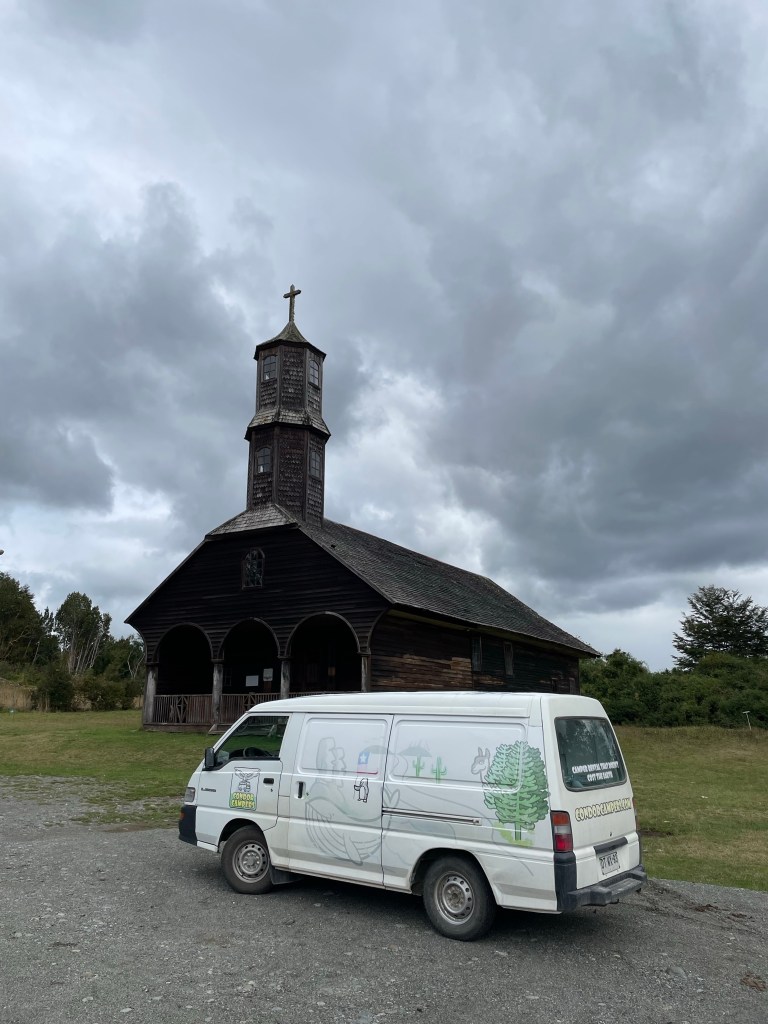
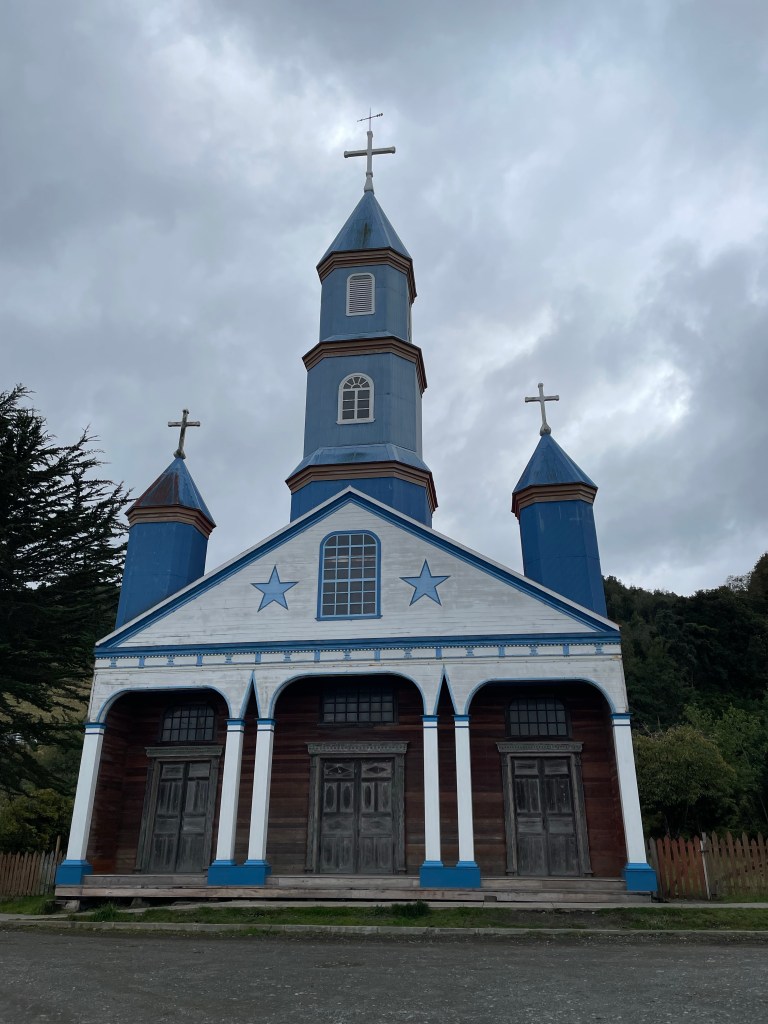
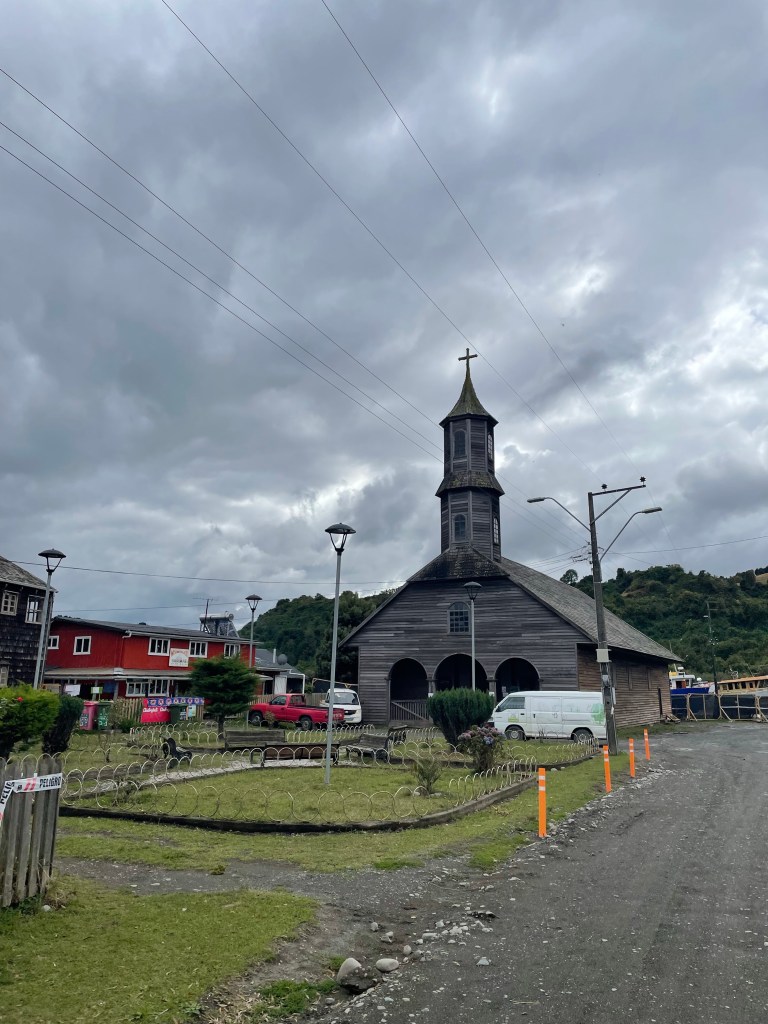
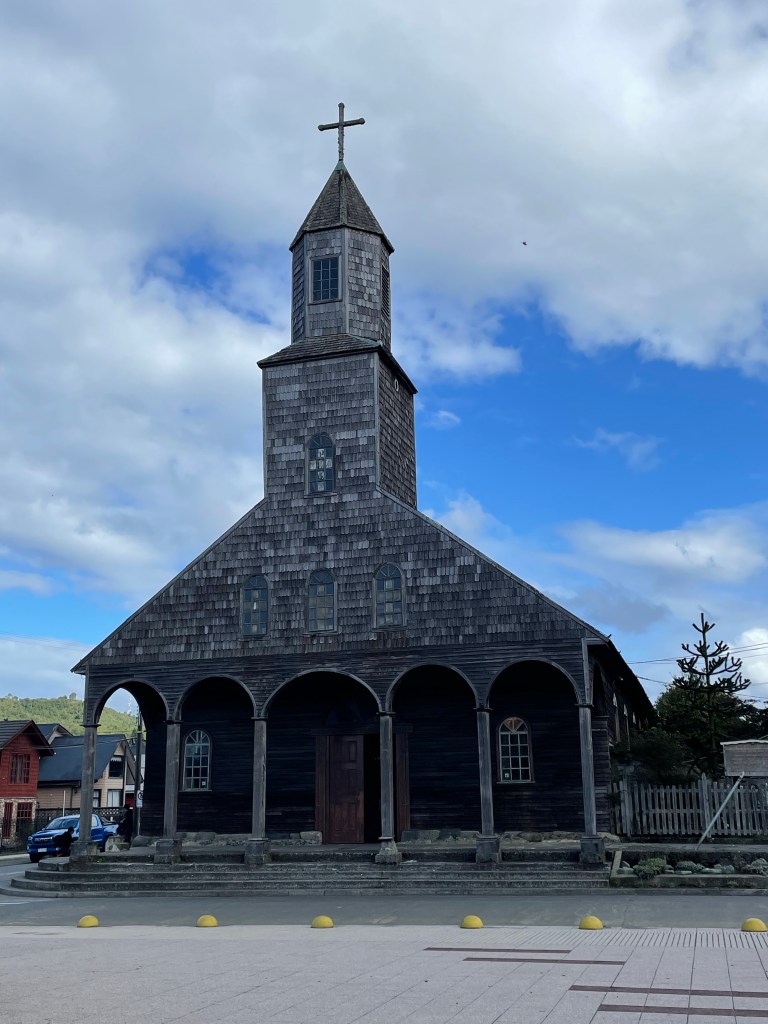
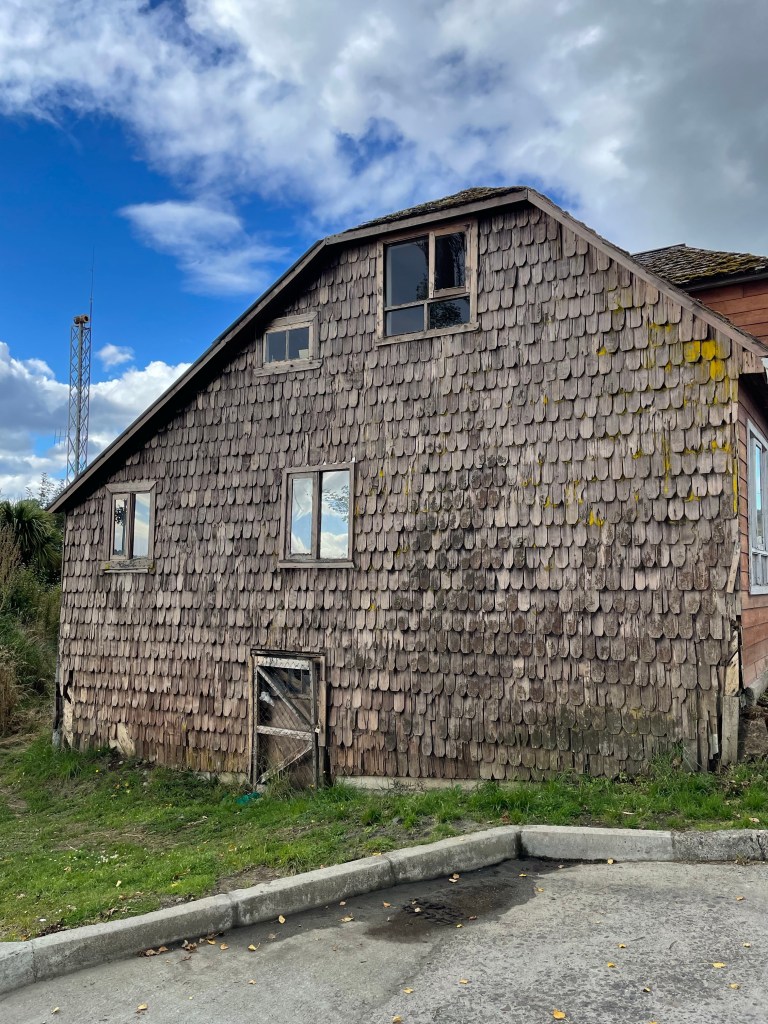
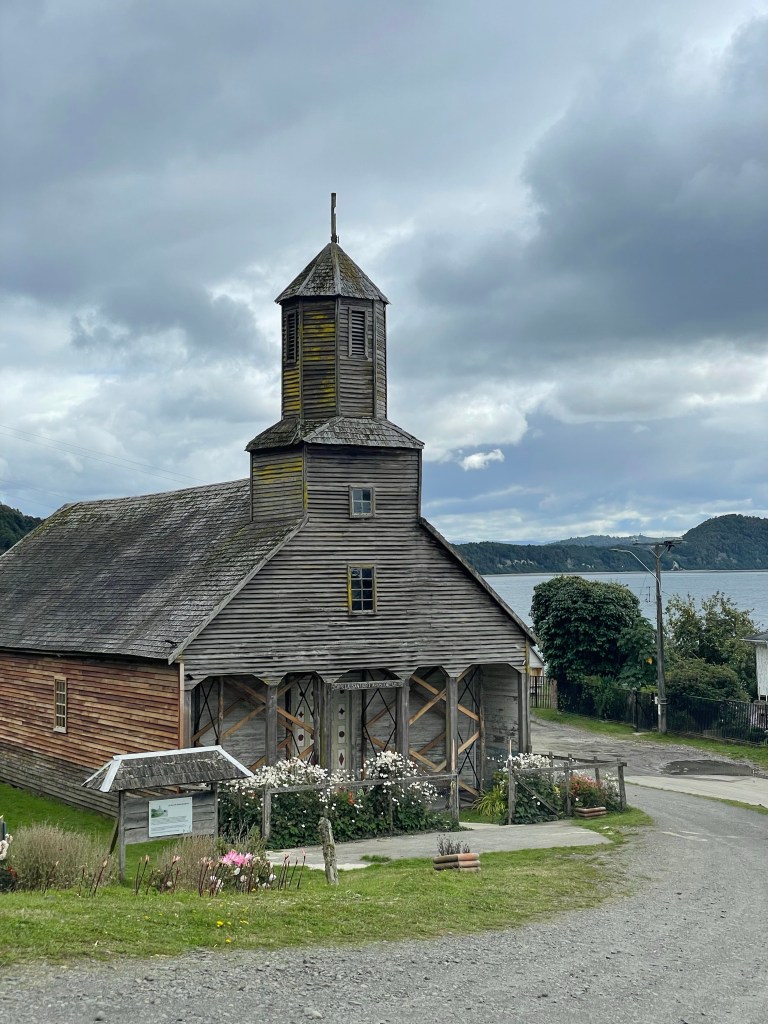
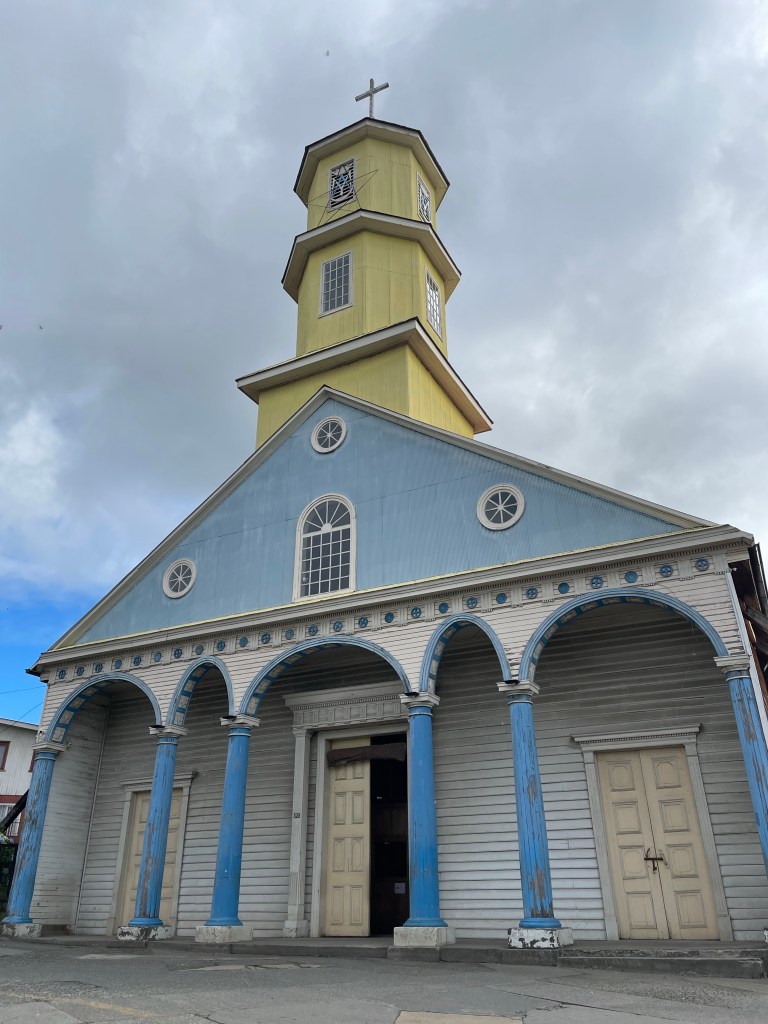
The wooden churches of Chiloé are UNESCO famous, and so we would be remiss not to tour them. I wouldn’t say we particularly care for the history of the catholic church and how they conquered this land, but their style is unique, and much is made of the carpentry skills required to make them. The alerce shingles (wooden tiles) on the exterior of the churches and many houses are quite special, and in many cases a hundred years old or more. Alerce is now an endangered species of redwood tree, so replacing the shingles will be problematic.
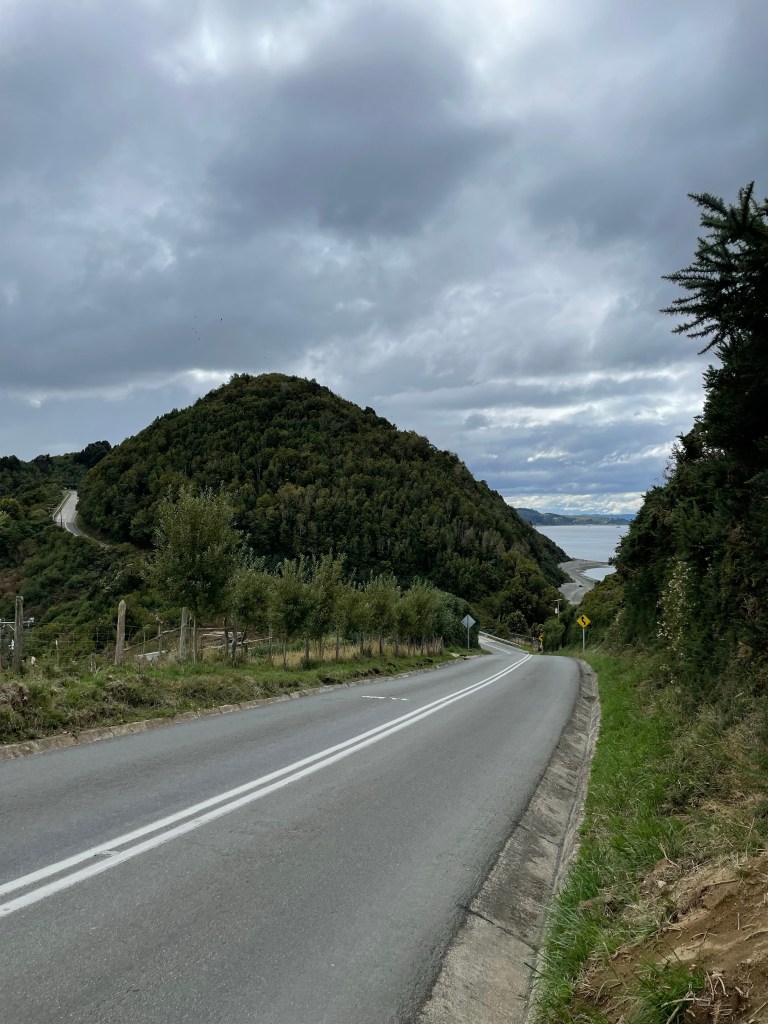
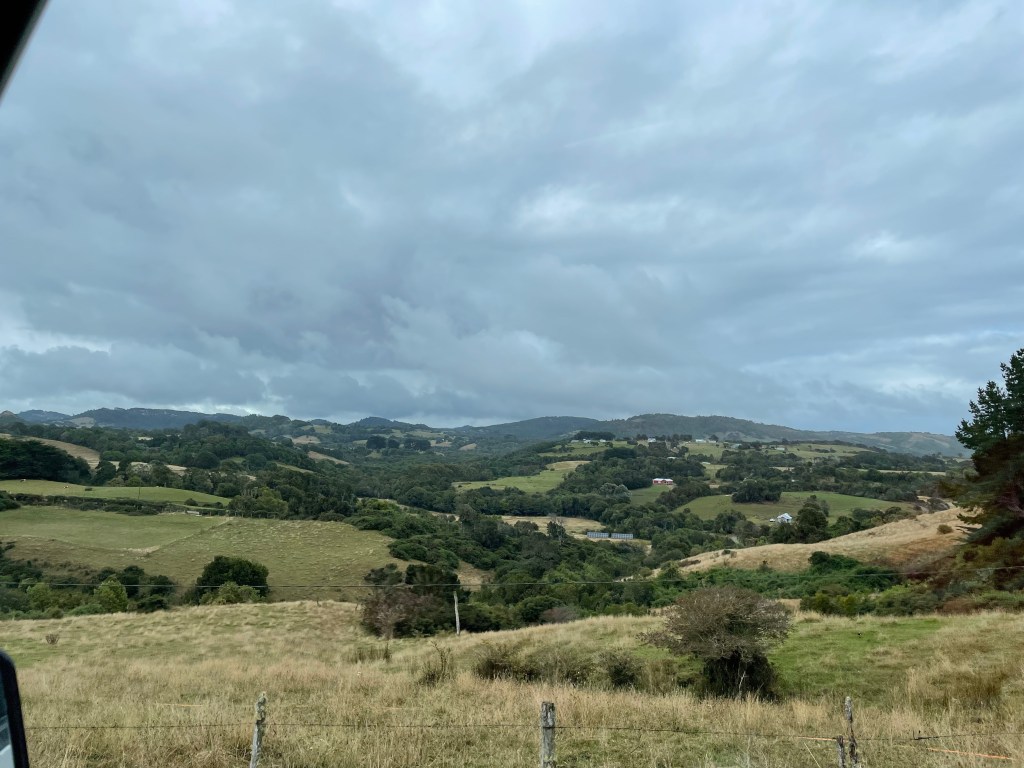
A more exciting aspect of our day was the drive though the beautiful Chiloe countryside. It’s very much like being in Devon, or Wales, as rolling green countryside makes way for small port towns at the bottom of steep valleys.
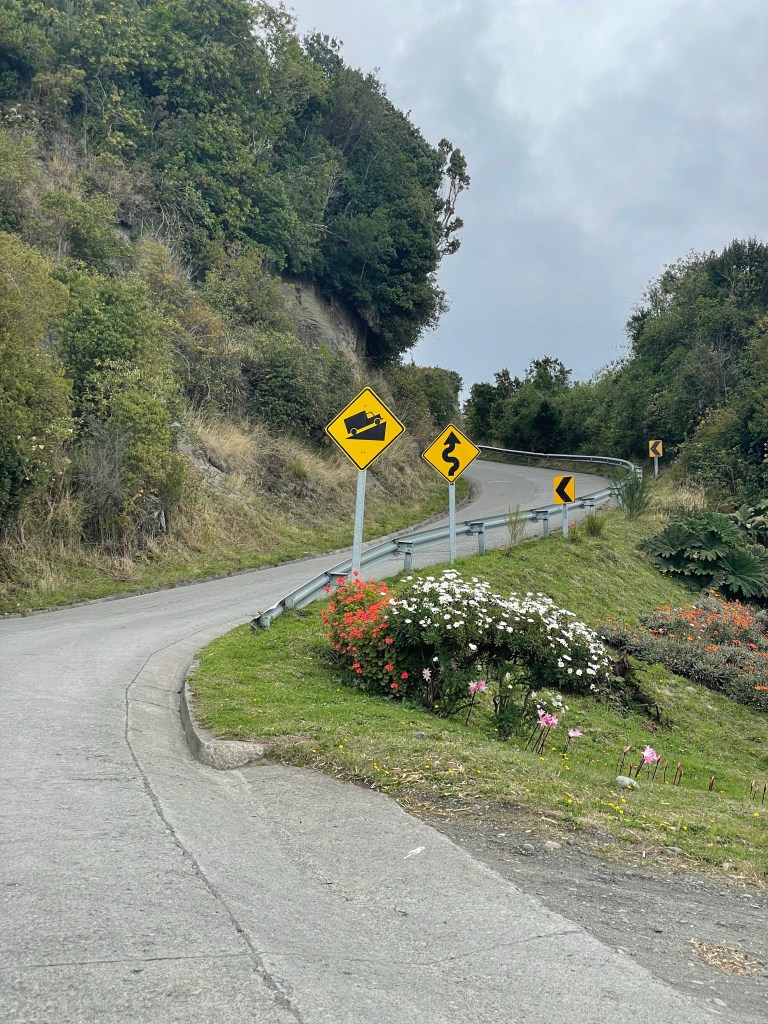
One such valley we barely made it out of, two failed attempts at the steep gravel hill and we had to seek an alternative route. Every town seemed to compete as to how steep the road in was.
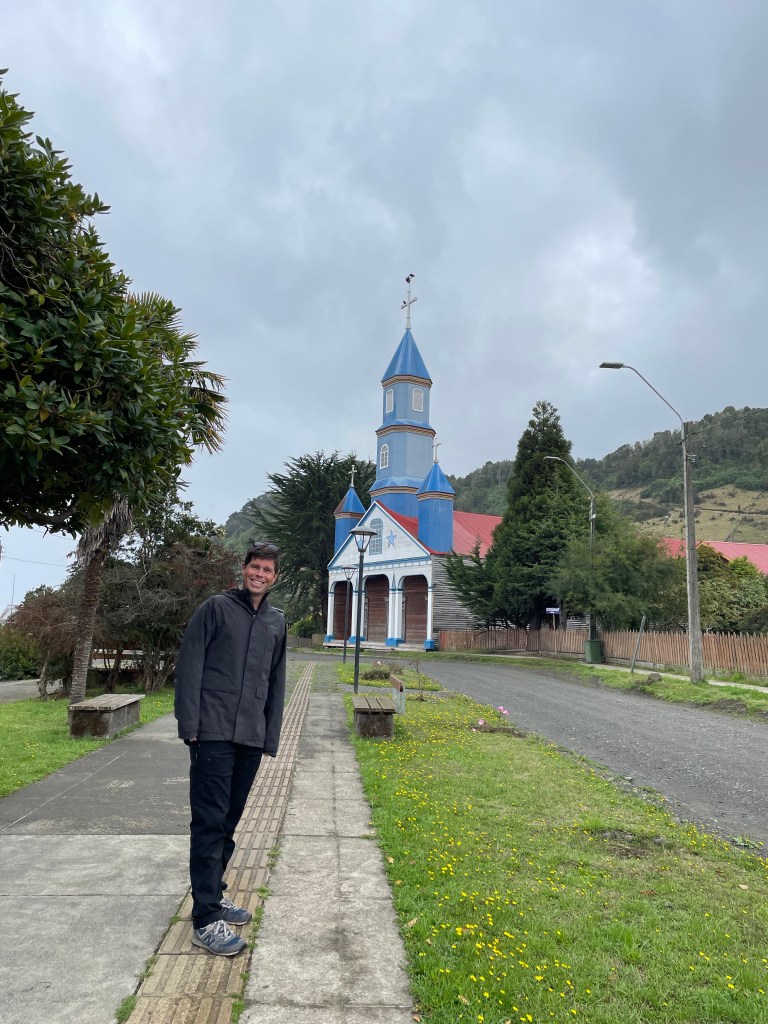
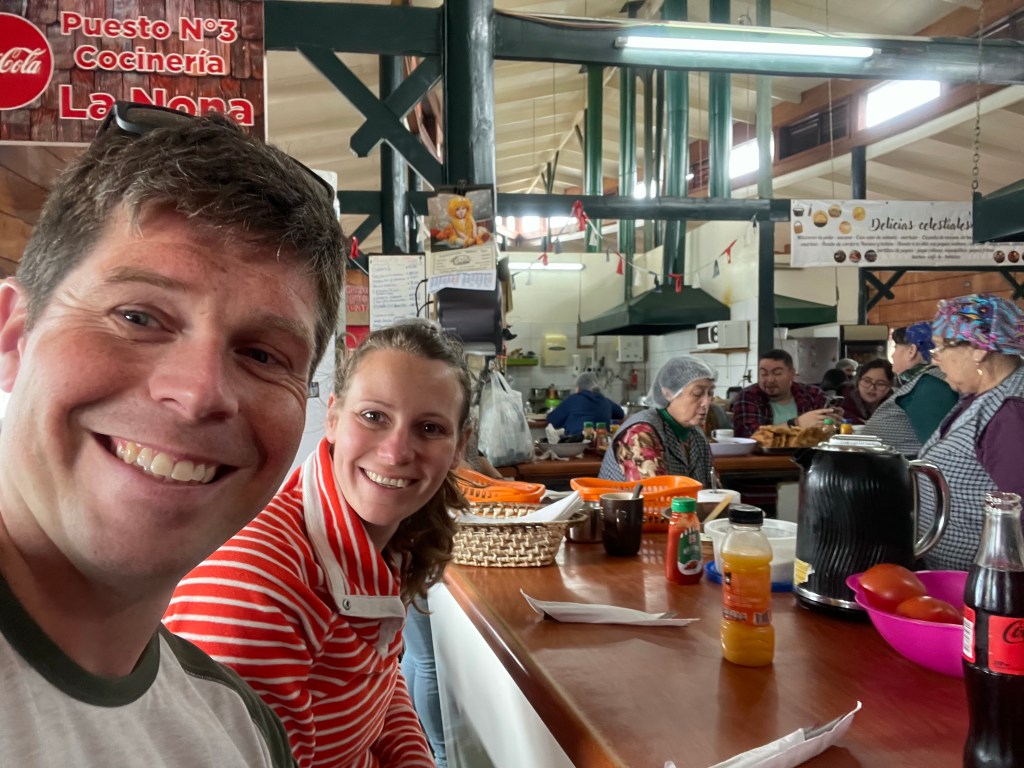
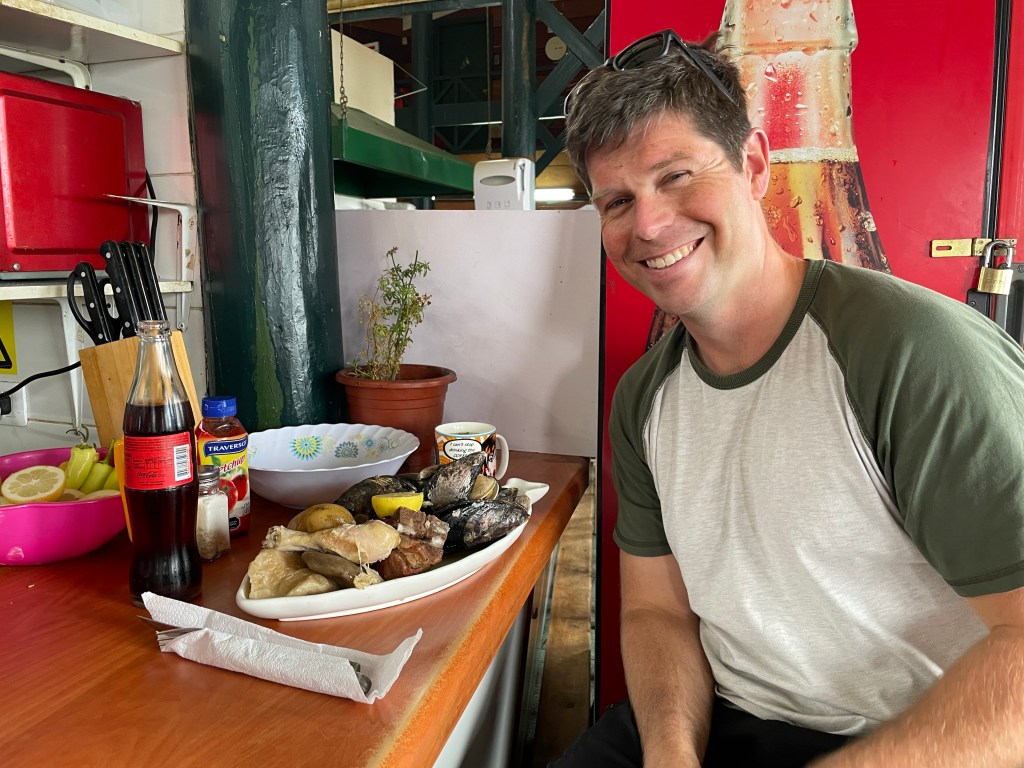
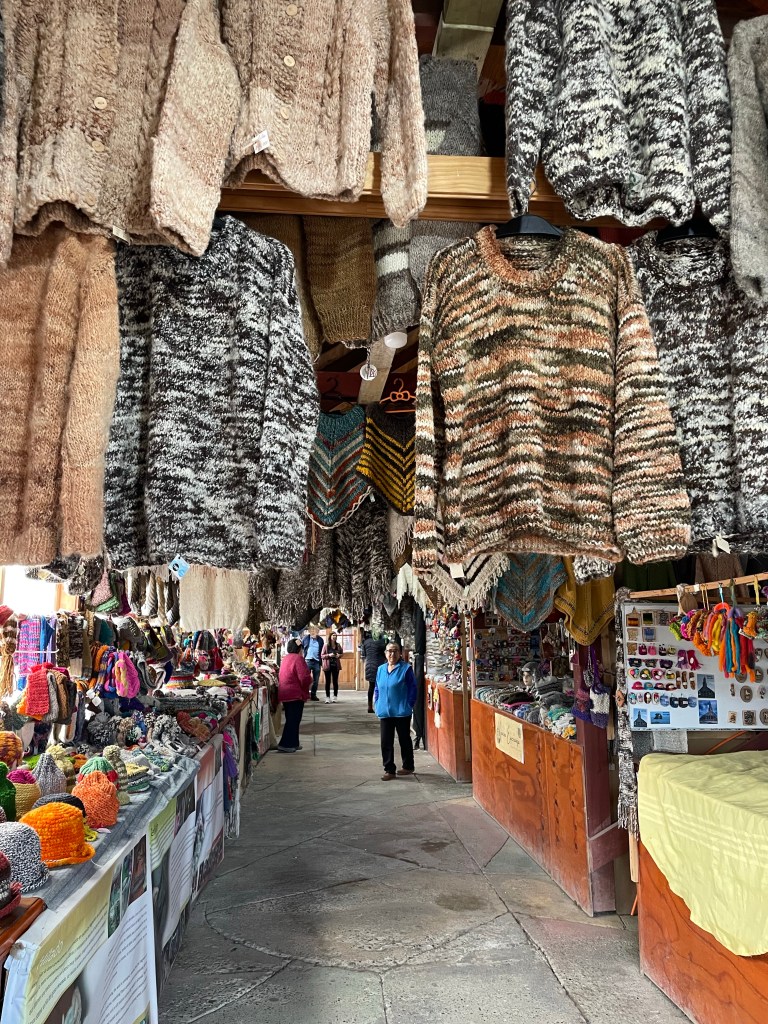
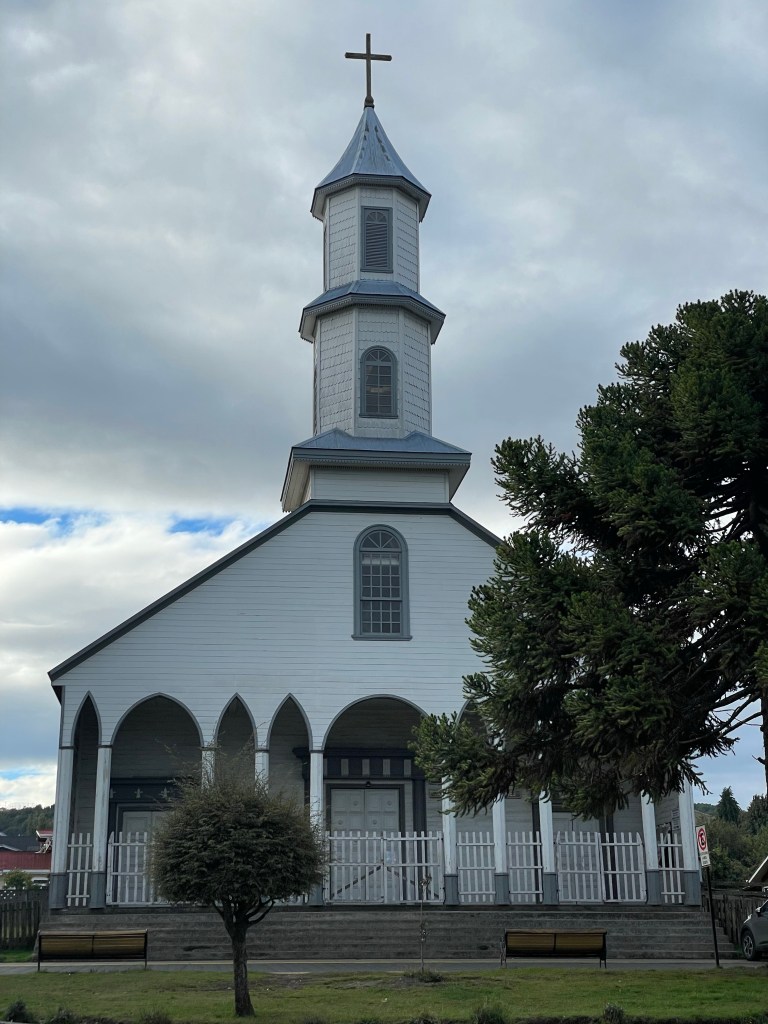
Tenaun had a colourful blue and white church, while Colo and San Juan churches were fairly unremarkable. Dalcohue was a more touristy town. The church is a pretty painted white with blue trim, and we stopped for lunch in the cocinas. A collection of hectic kitchens run by grandmas behind the artisanal market. Curanto is the local dish, a sort of corn soup with a mix of seafood, meat and potatoes. The best thing to say about it is that it was large.
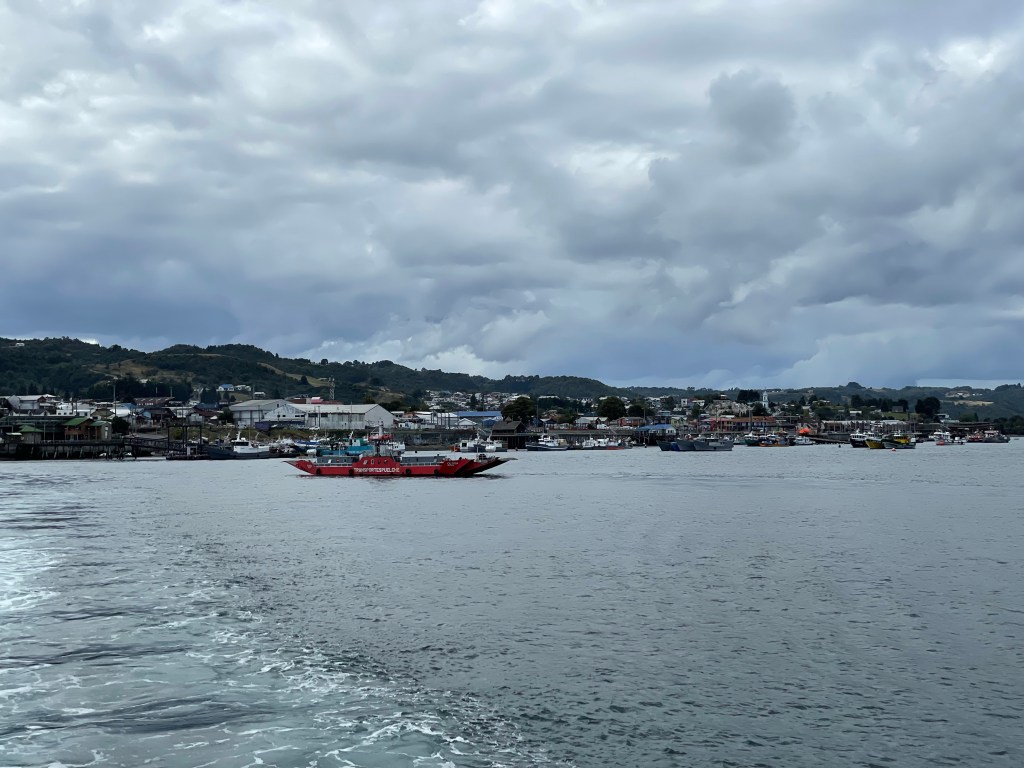
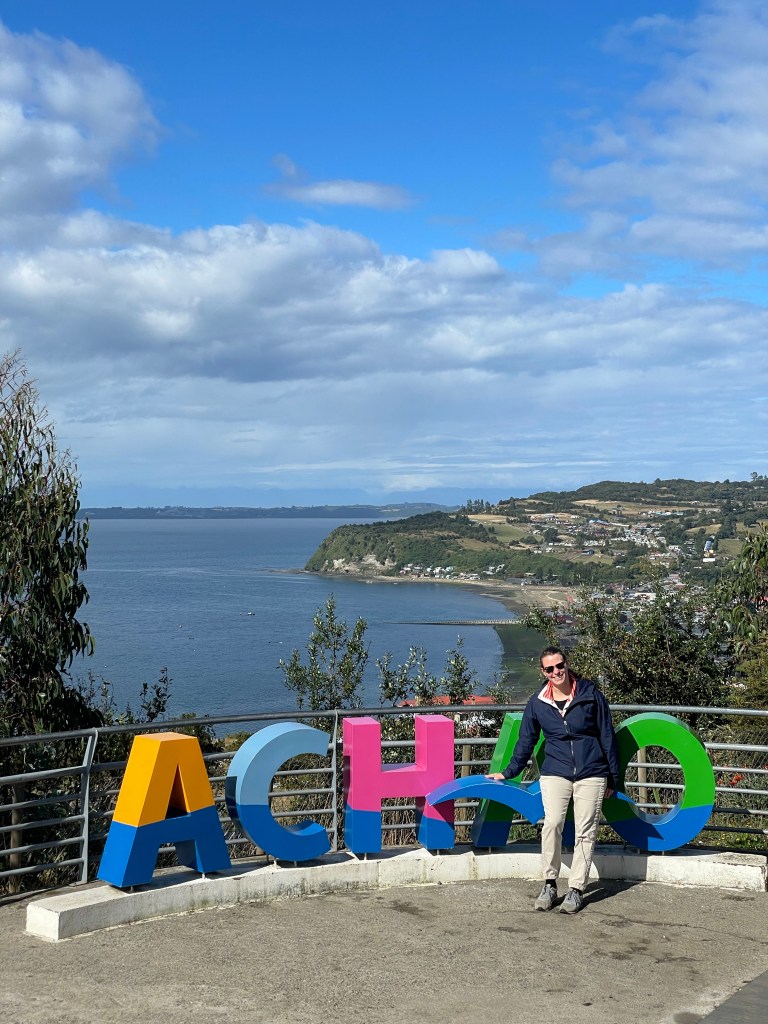
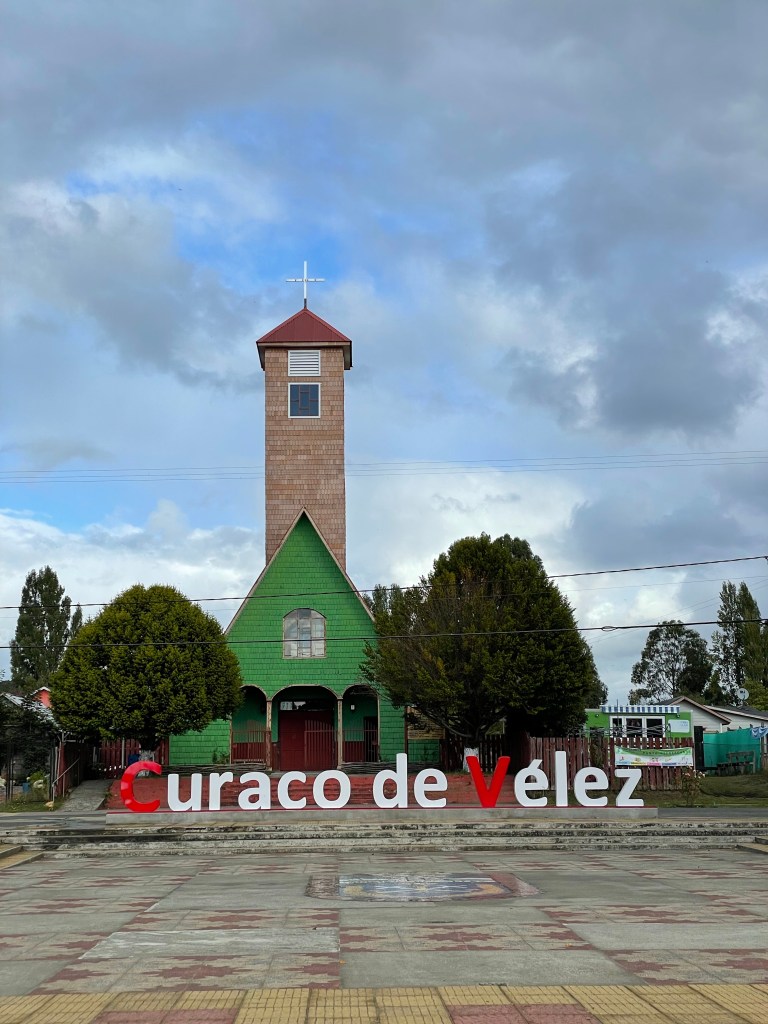
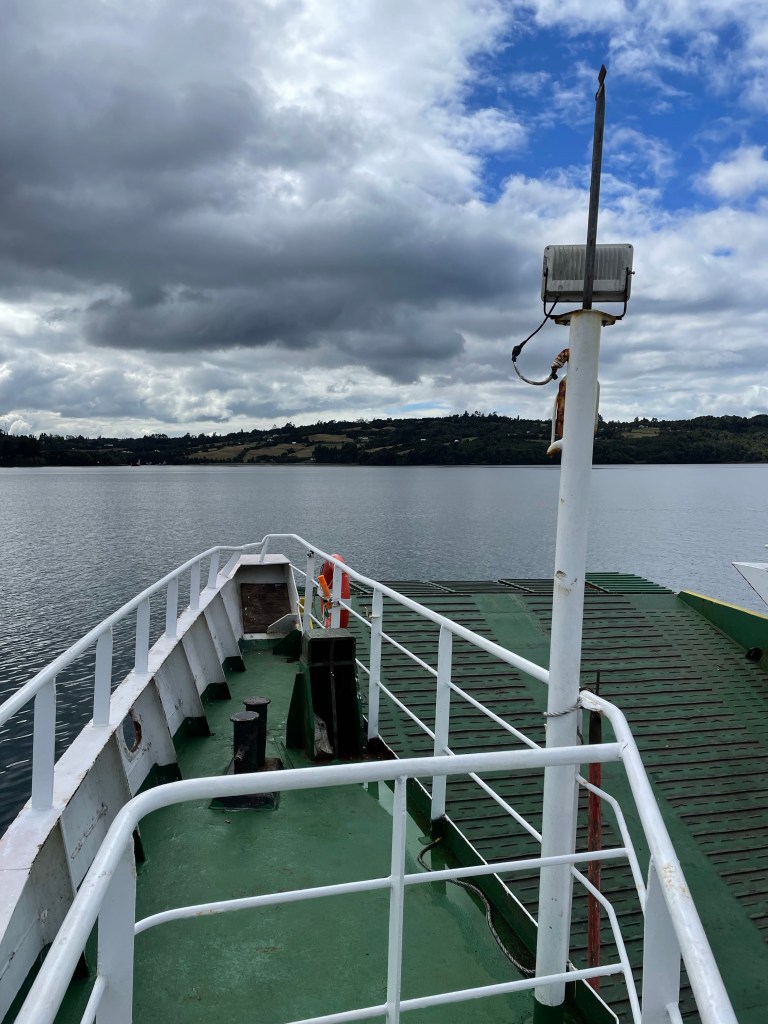
We took the short ferry to Quinchao island, and visited the towns of Achao and Curaco de Velez. Both lovely, as was the countryside connecting them, as we drove down the spine of the island, with great vistas left and right of the channels and islands either side of Quinchao.
Curaco excessively had two fire stations and four fire engines, for what seemed like barely more than a couple of blocks. Plus the main town of the island Achao was only 10km away. Achao had the oldest church, and the only one that was actually open when we arrived. Inside it’s plain and churchy, we may as well not have bothered.
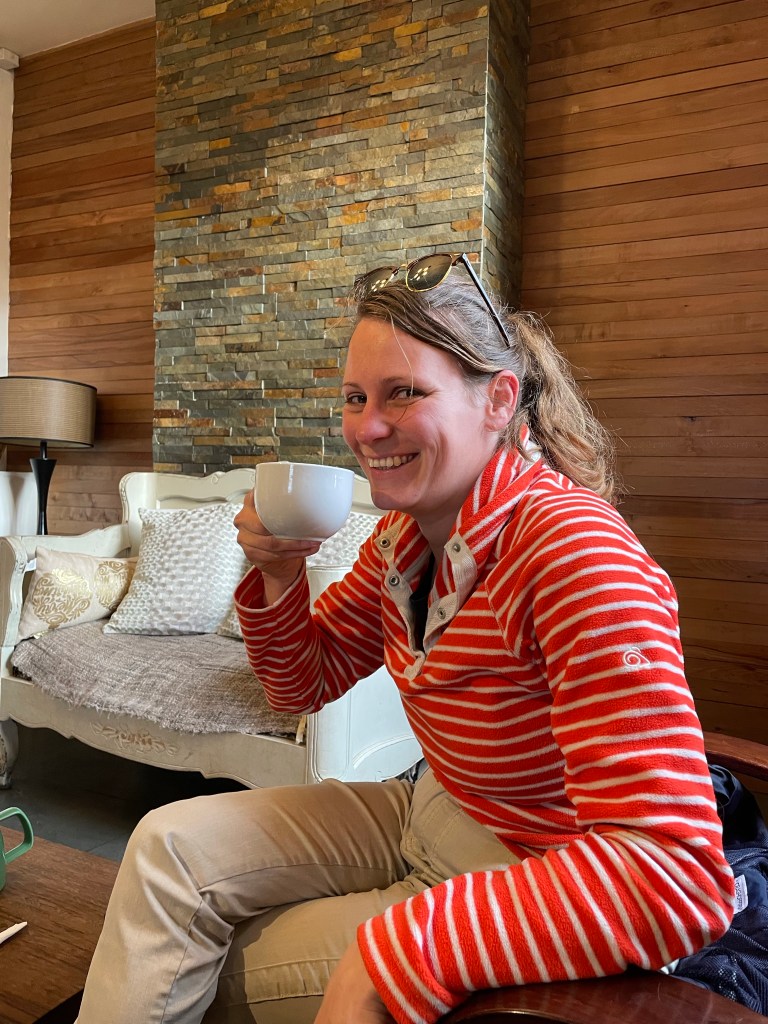
A return ferry later and Dalcahue set us right with some tea and cake. Very good tea if you ask Sarah.
Isla Lemuy
A second day on Chiloe and we thought we’d try another island. This time Lemuy, famous for its long ferry queues and not much else.
As it turns out not too many people are heading to Lemuy on a Sunday in late March, so we were waved straight onto the boat.
The drive across the island to the southern tip is like a drive around Cornwall without the crowds. Rolling green hills with coastal vistas punctuated occasionally by plunging steeply into quiet little fishing villages.
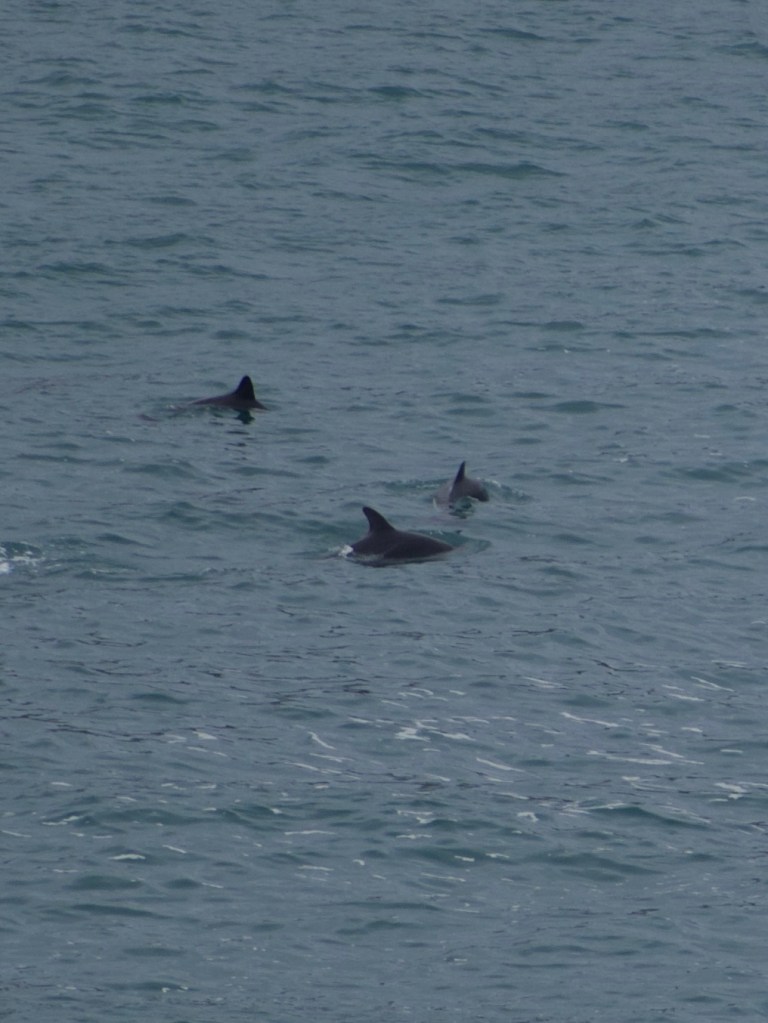
There’s bugger all at Detif, save for the standard wooden church, some chickens and a long pebble beach. The tiny village lies at the end of the island of Lemuy, across a narrow isthmus crowned by a writhing tarmac snake. The climb back out of the village was so steep it almost defeated our condor campervan. Once back out on the clifftops we enjoyed a view of dolphins in the bay below.
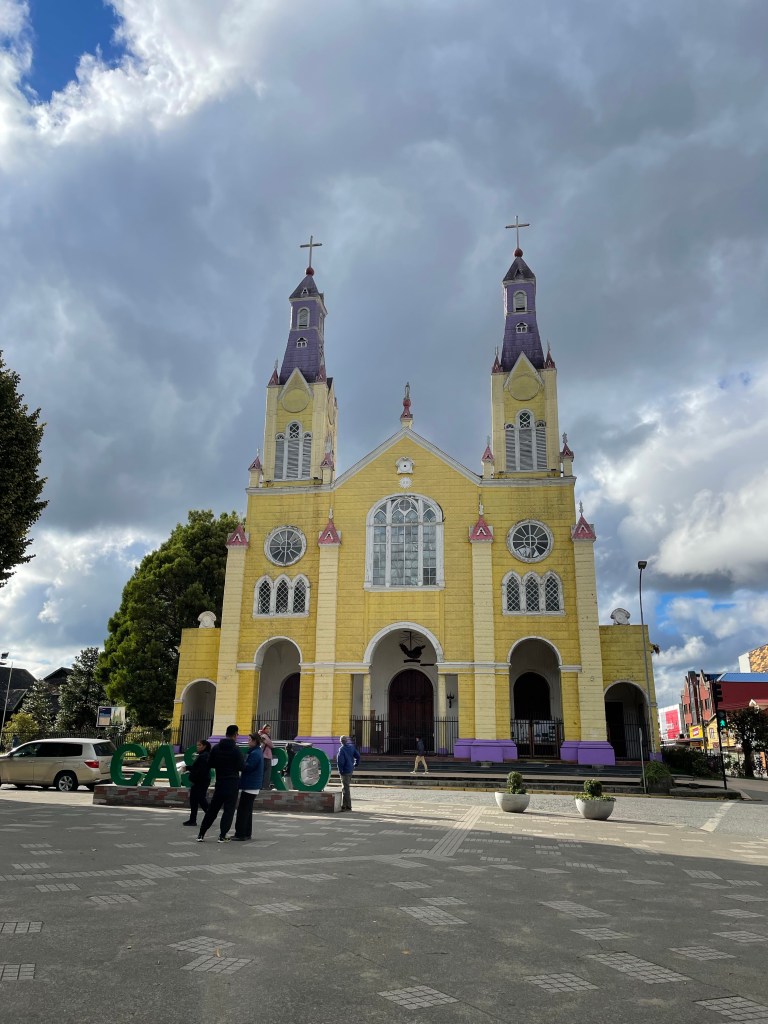
Castro is the main town on the grand island of Chiloé. It’s not all that, but its wooden church is yellow and has not one, but two towers. Oooooooh.
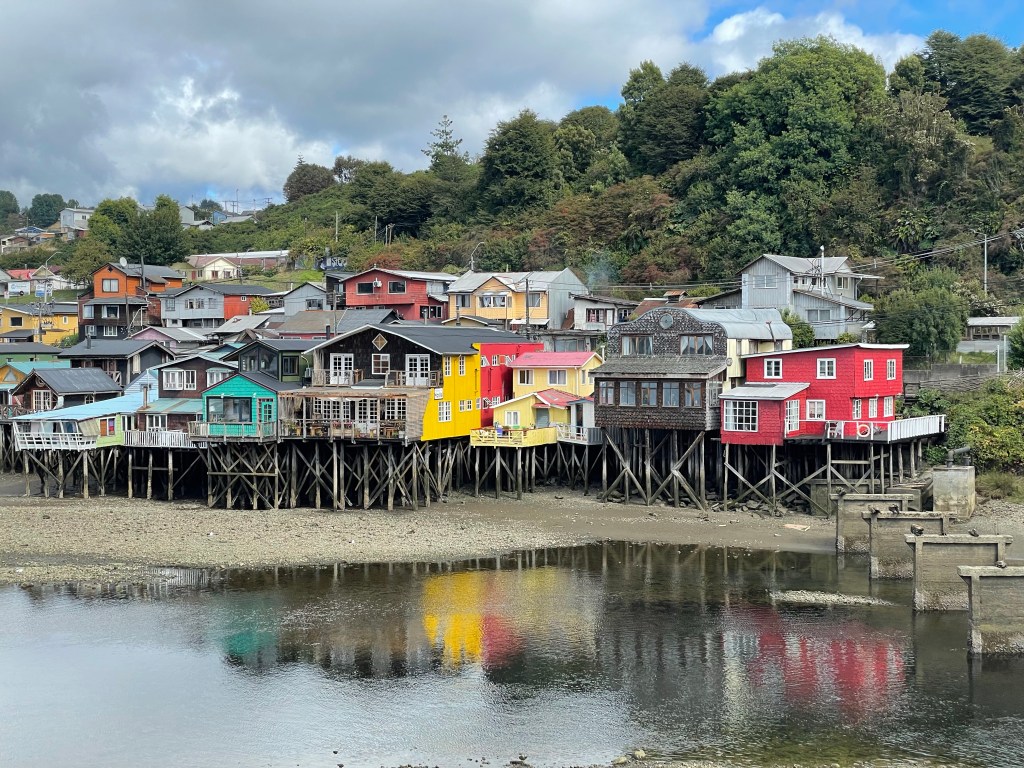
The palafitos (houses on stilts over the tidal inlet) are somewhat touristically lauded as iconic symbols of Chiloé. Whilst pretty in their own right, we saw no other palafitos anywhere other than in Castro, and haven’t found any photos to prove otherwise. So we’ll chalk these up as a touristy Castro thing, and worth a stop because they’re on the main road out of town.
We reached Puñihuil in a downpour at dusk. The road was slick mud as we slid down yet another precipitous slope. With a slim chance of getting back out that way tomorrow, we’d made our bed and hoped the campsite was open.
It wasn’t.
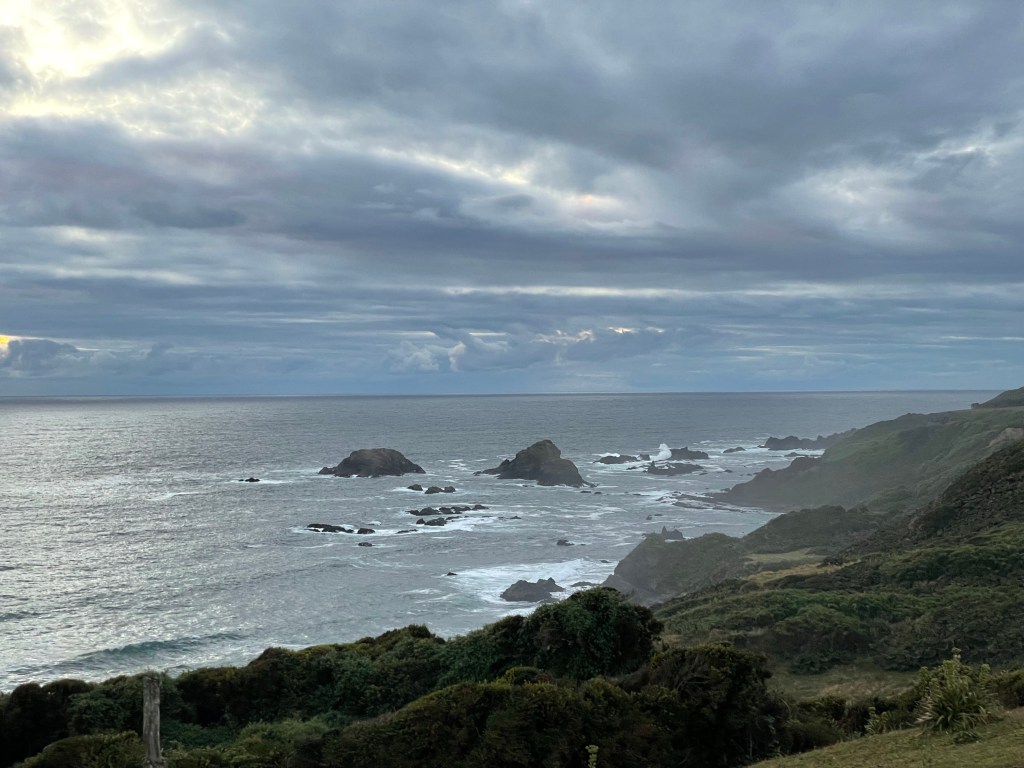
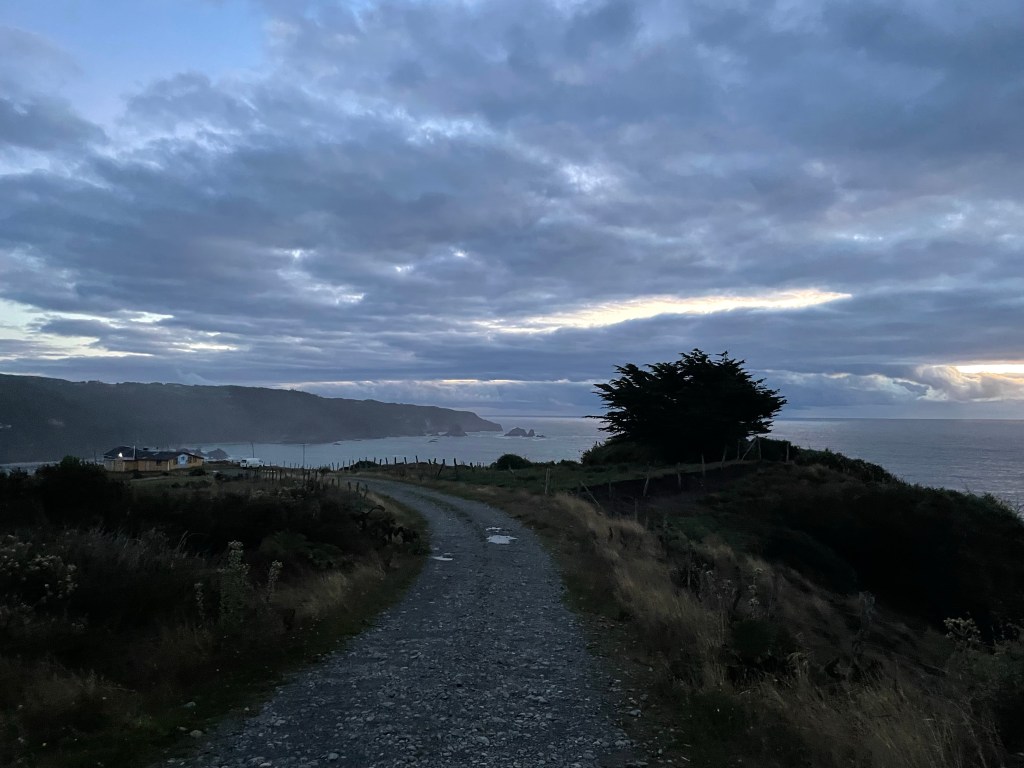
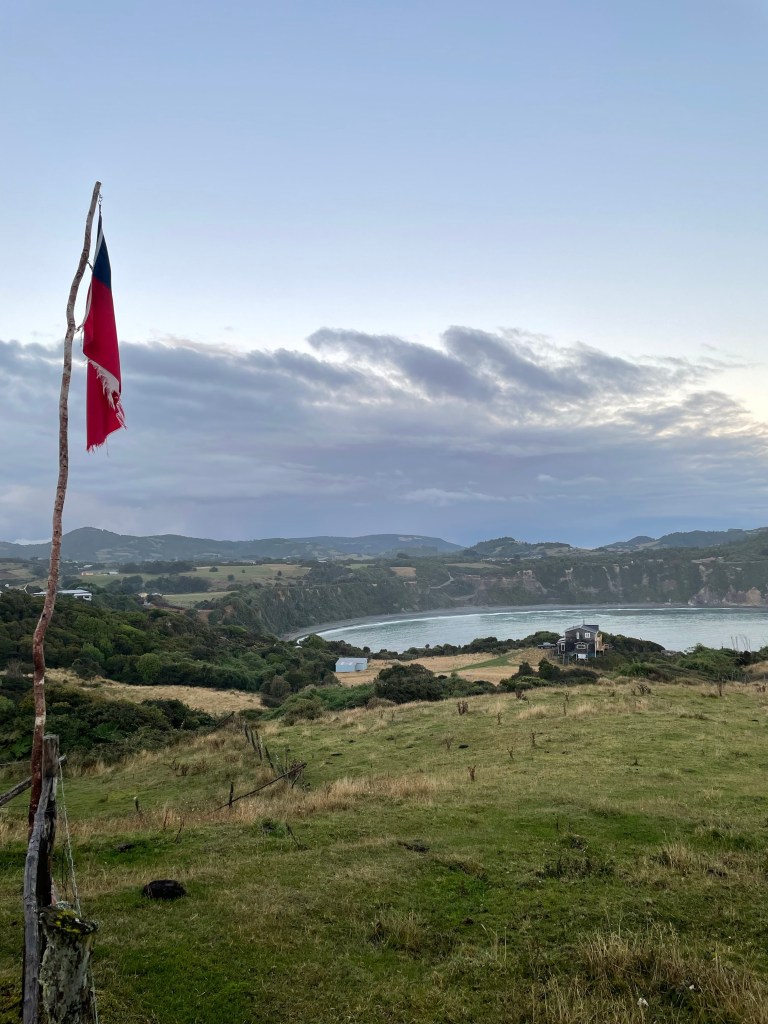
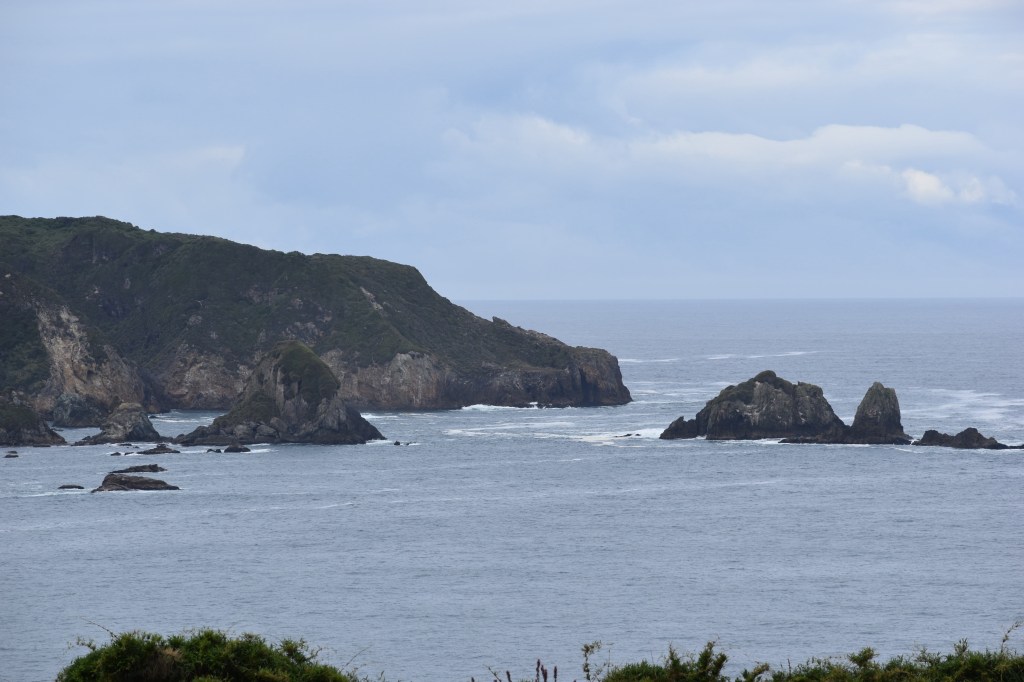
So we spent the night in the car park, alone, overlooking the picture postcard Pembrokeshire bay on the Pacific Ocean.
Punihuil sin pingüino
On top of the cliffs overlooking the Pacific Ocean was an incredible place to wake up. The sea was calm and the ground sodden with the overnight rain, but we were all alone.
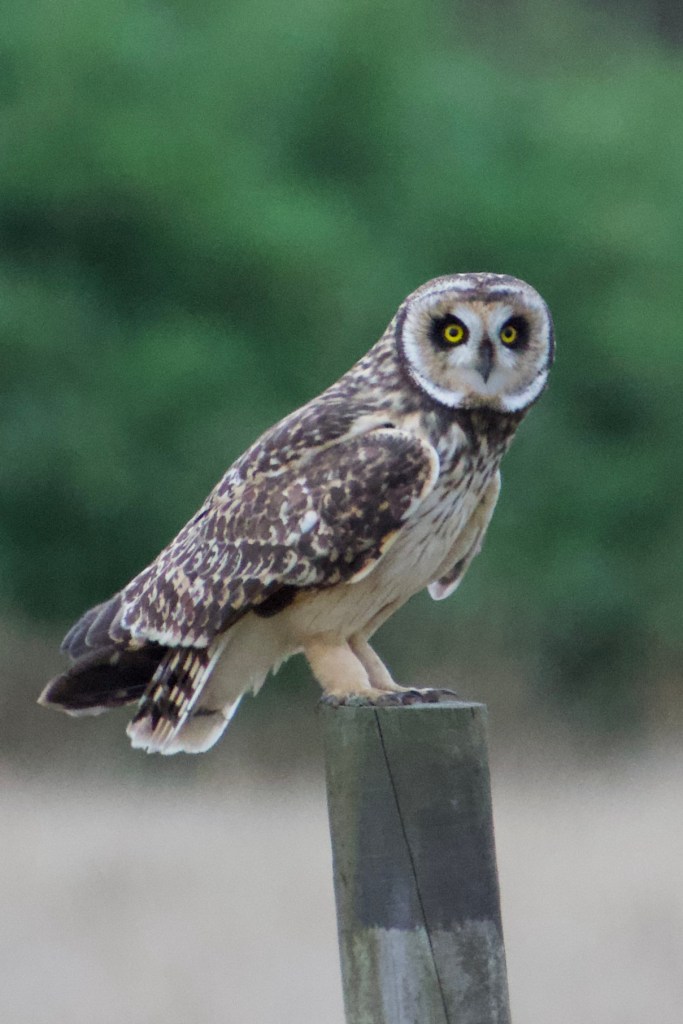
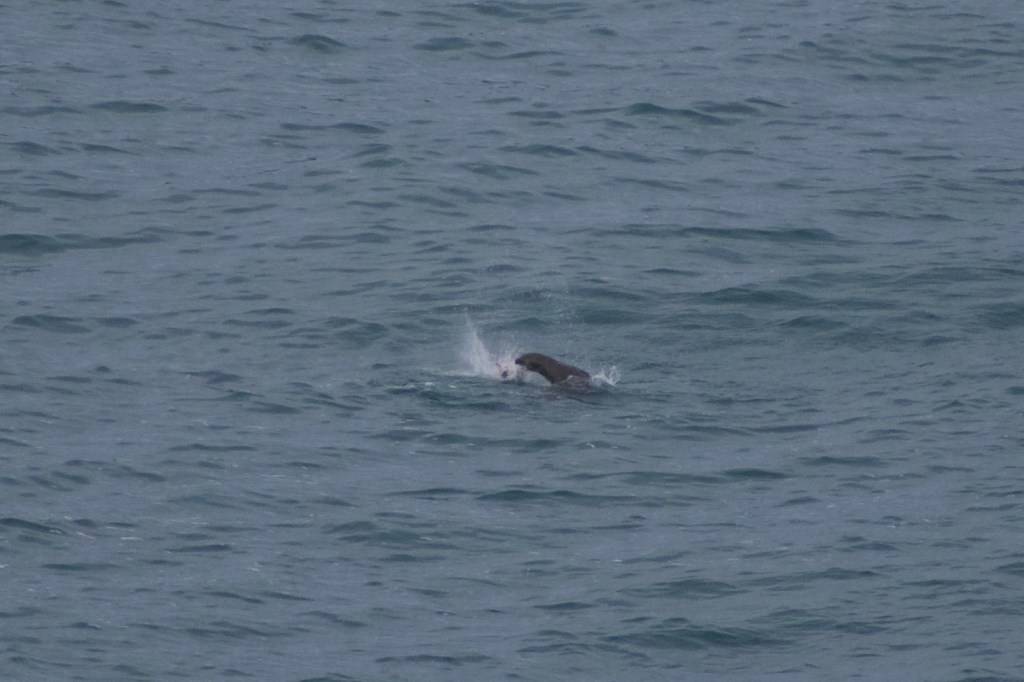
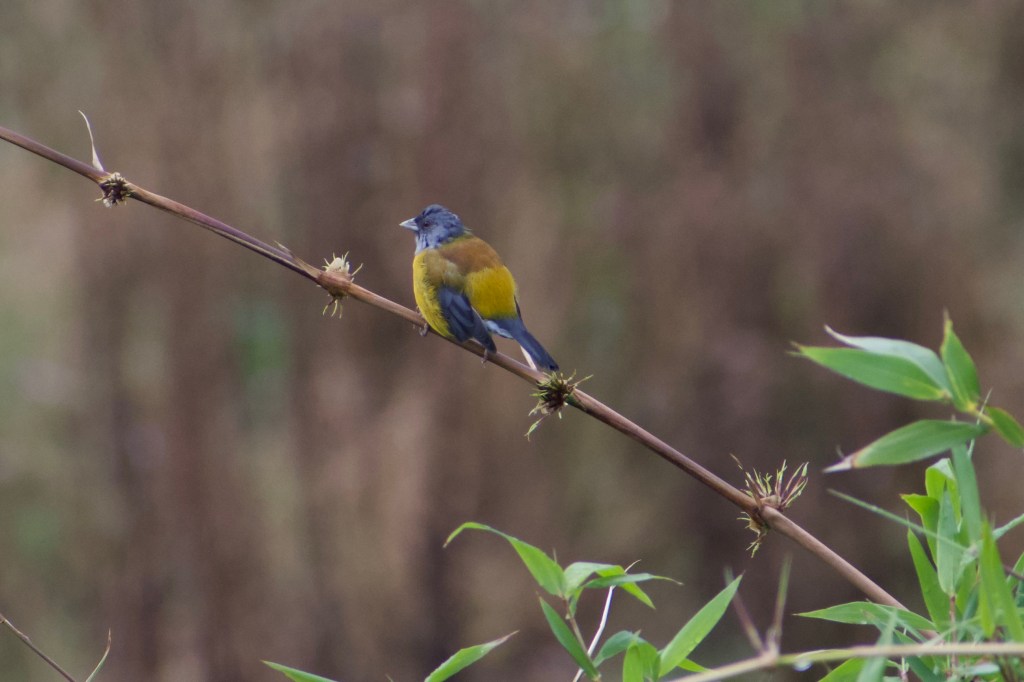
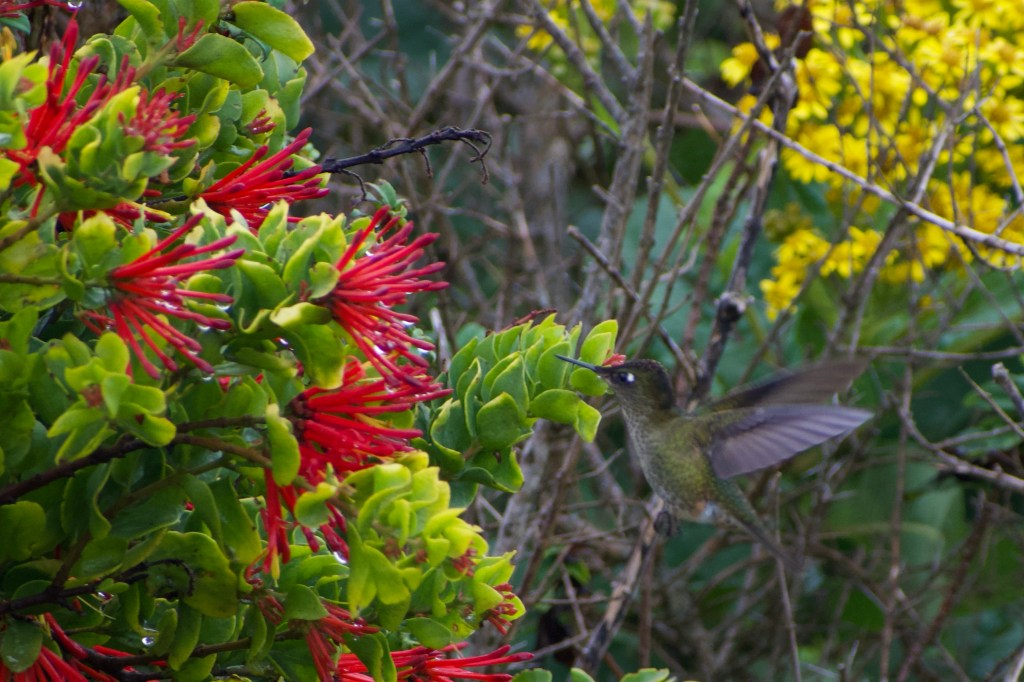
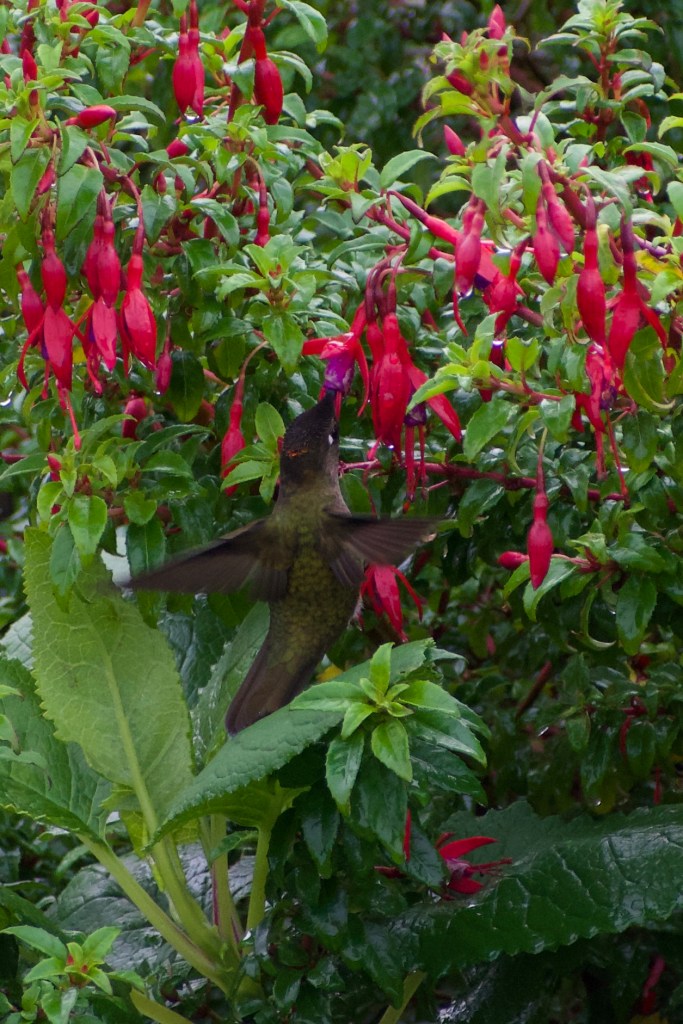
We cooked up some egg rolls for breakfast and watched out hopefully to try to spot some whales. We succeeded in spotting hummingbirds amongst the flowers on the cliff edge, not exactly what we had in mind but special nonetheless. We watched a seal thrashing around in the water eating something, which attracted the attention of all the seabirds and a pod of dolphins. But no whale.
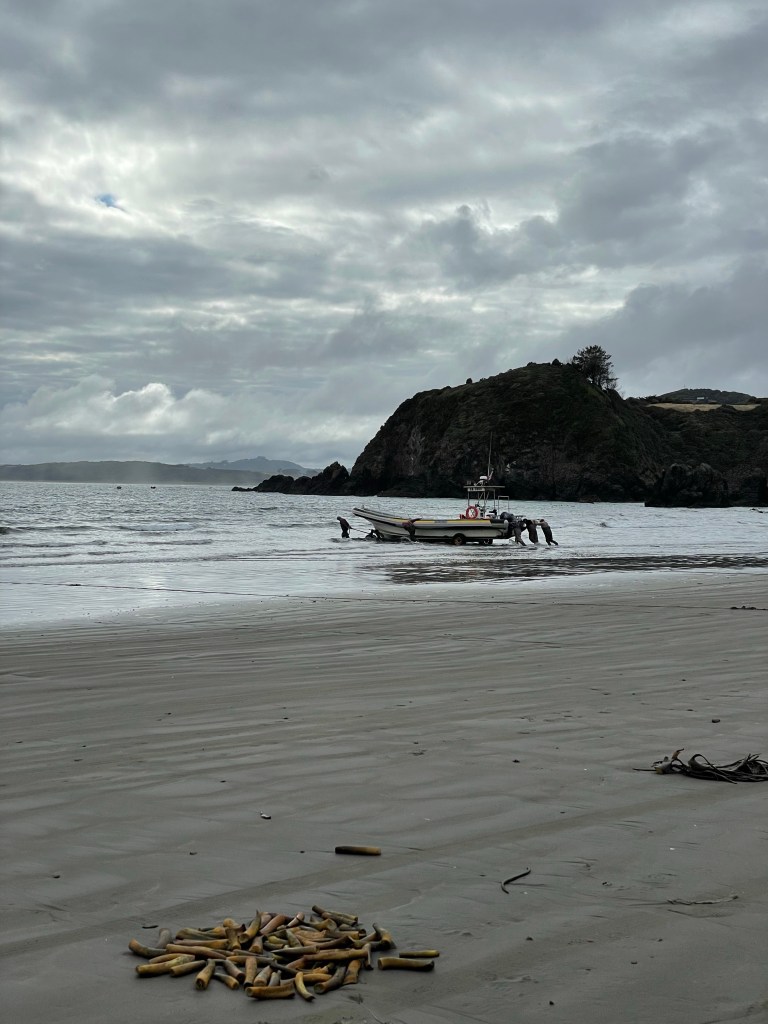
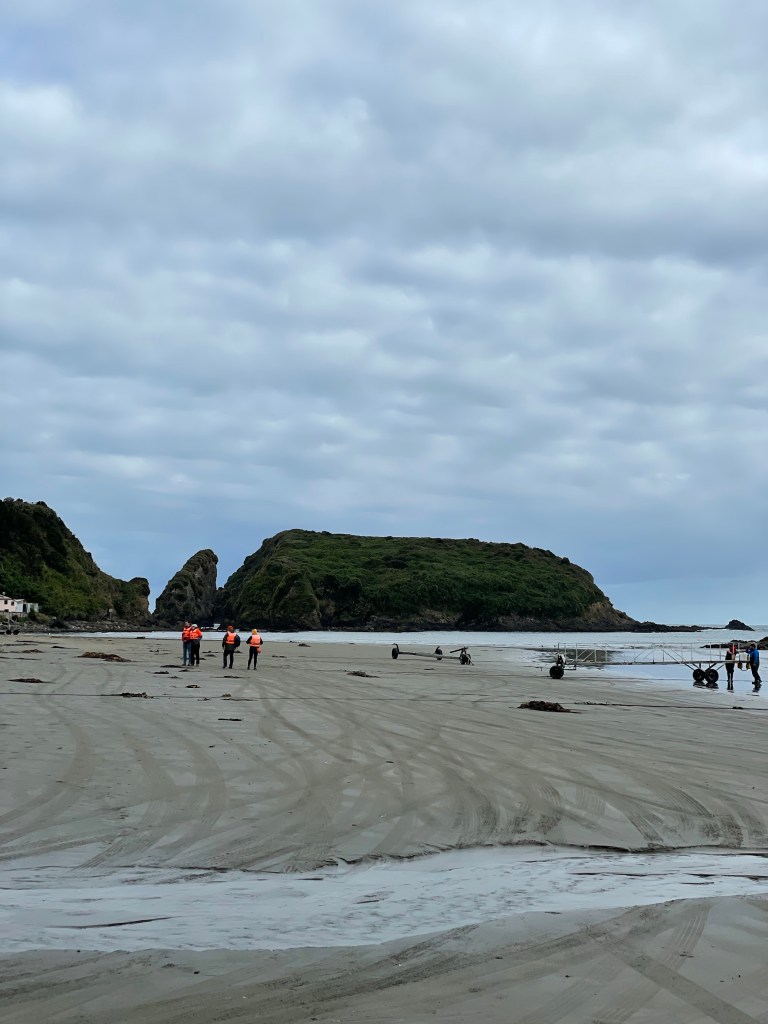
The man at the Punihuil car park excitedly greeted us, saying we were right on time for the 11:30 boat tour to see the penguins. However we’ve seen plenty by now and are penguined out. We politely asked the way back to Ancud, which surprisingly involved driving a kilometre stretch of the beach, Mike was thrilled.
From the ferry back across to the mainland we actually spotted a lone penguin swimming near the jetty. So we didn’t miss out after all.
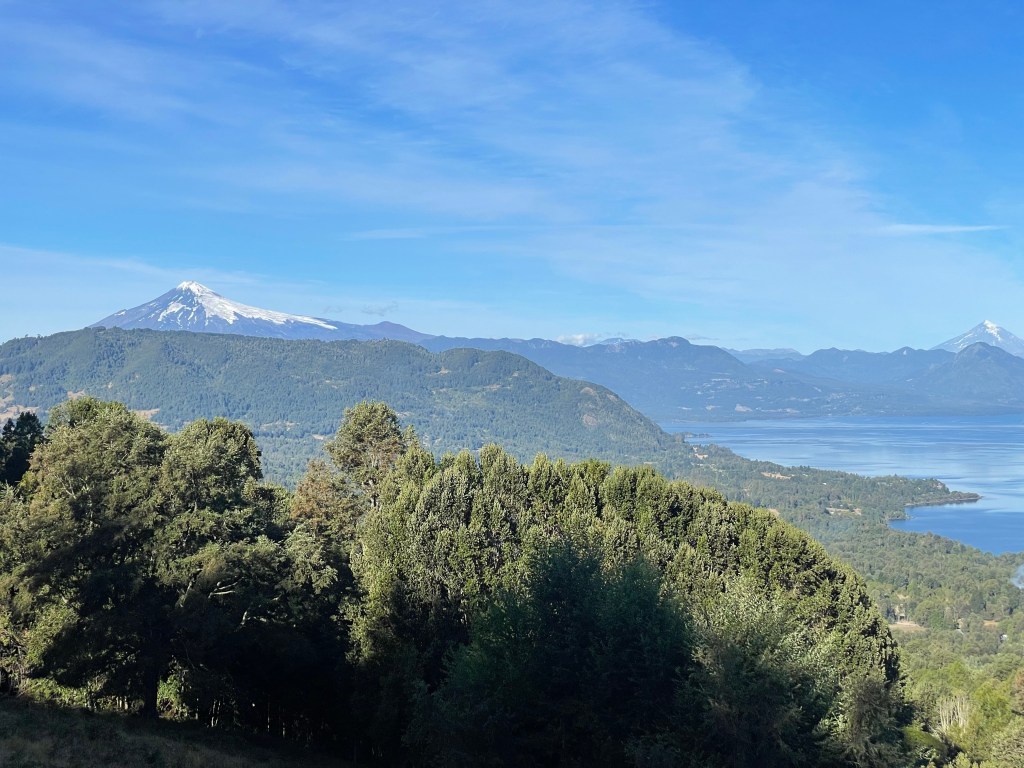
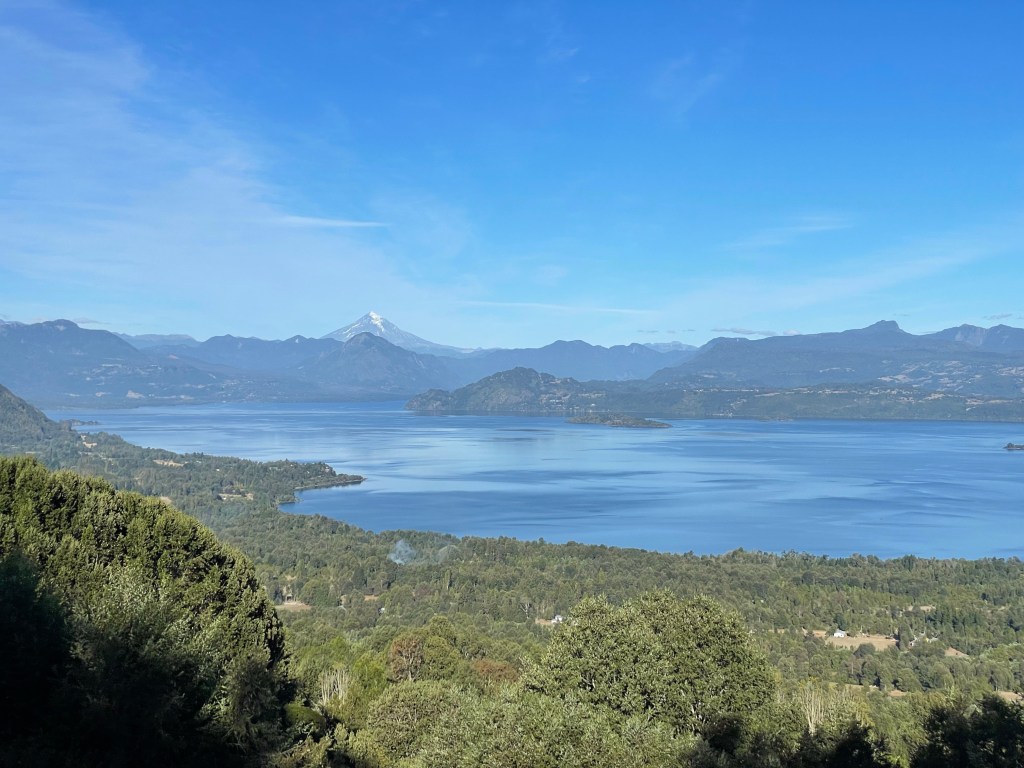
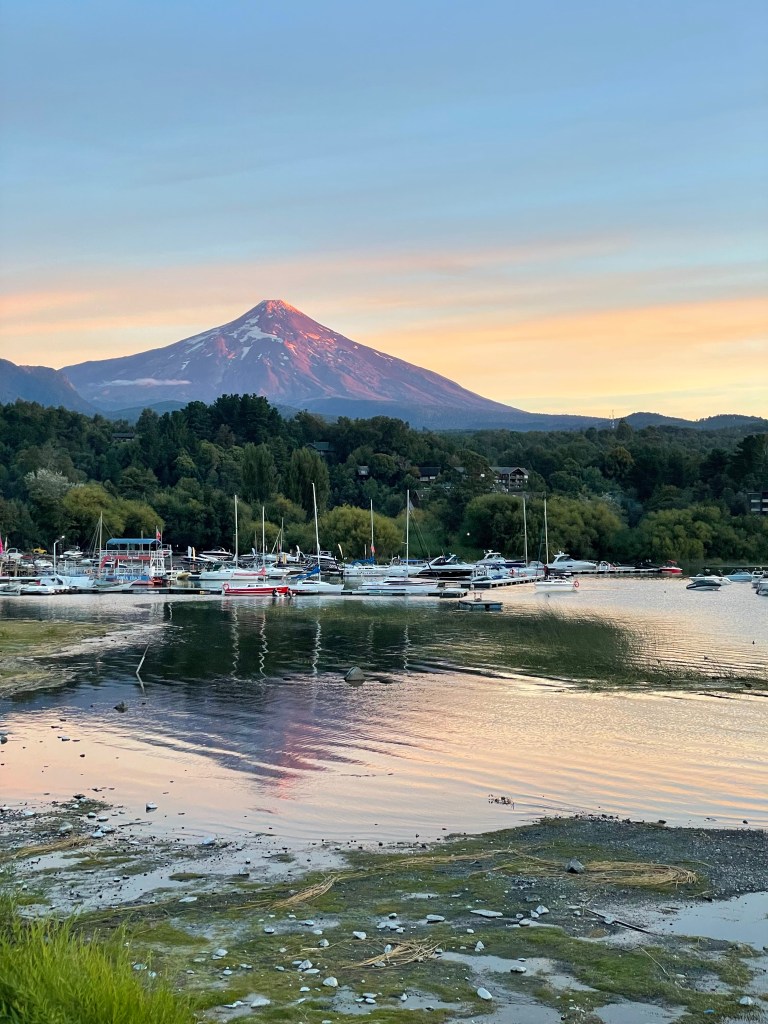
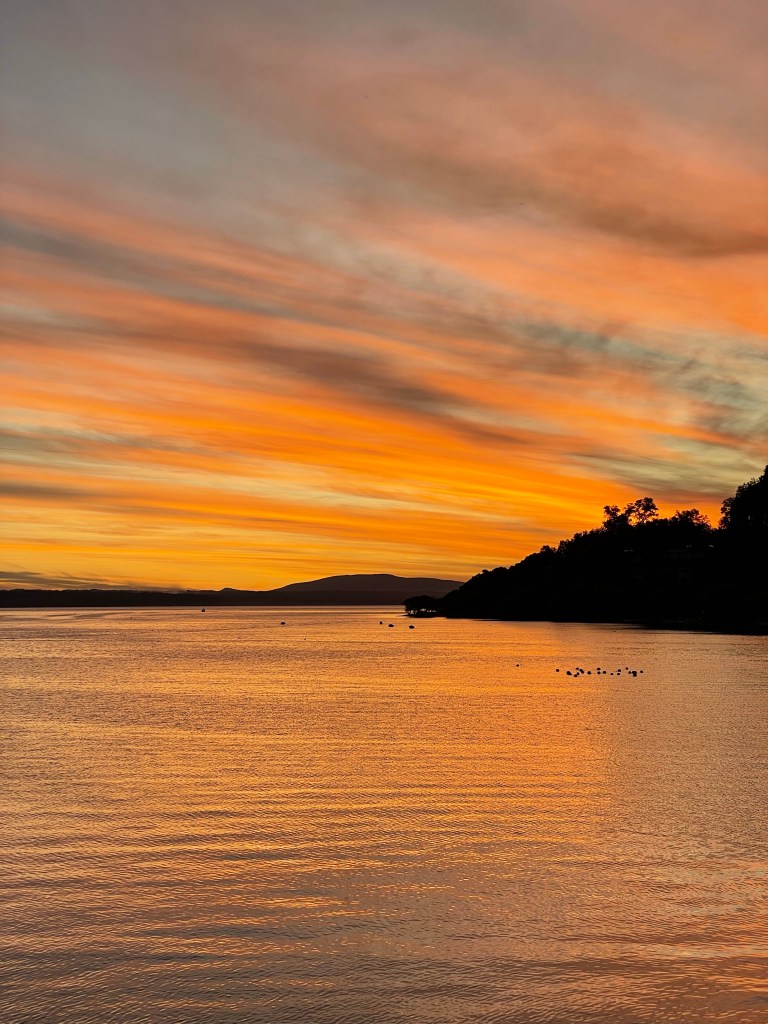
The weather cleared as we neared Pucon, and we were treated to some spectacular views of Volcán Villarica, and an extra special sunset overlooking the lake. Pucon is a touristy little town, but at the end of season the place was half empty, so the vibe was a little off. Today would have been a stunning day to climb the volcano or go on a short hike in the national park, but sadly the Chiloe rains are catching us up overnight, and will continue to chase us northwards. So it looks like tomorrow will be a day on the road.
Impressions of Chiloé
Probably not worth flying half way round the world and spending half your annual leave budget on, it’s no wonder Chiloé is infrequently visited by Brits.
But it’s certainly left a big impression on us. We really enjoyed our three days there and would thoroughly recommend it to anyone privileged enough to have enough time to get there.
Nothing about the islands is a particular draw. The churches are unique but fairly uninteresting to look at. The food is also unique, but mostly centres around copious amounts of seafood. The towns are shabby, the weather is bad, the people talk too fast, and at low tide it smells of seaweed.
Yet Chiloé remains an enchanting destination. Somehow we can see why it’s many peoples’ favourite place in Chile. We certainly loved it and can wholeheartedly recommend it. Even if we aren’t sure why…
 Small Holiday Big Dream
Leave a comment