Argentina and Chile have a curios relationship. If they could they’d fight about who’s listed first in my blog post. When you imagine visiting Patagonia, you probably have one of two images in your mind’s eye. Either the towering peaks of the Torres del Paine, or the extraordinary Mount FitzRoy. After crossing the border back into Argentina, our mission was to definitively identify which has the best Patagonia: Chile, or Argentina?

Perito Moreno Glacier
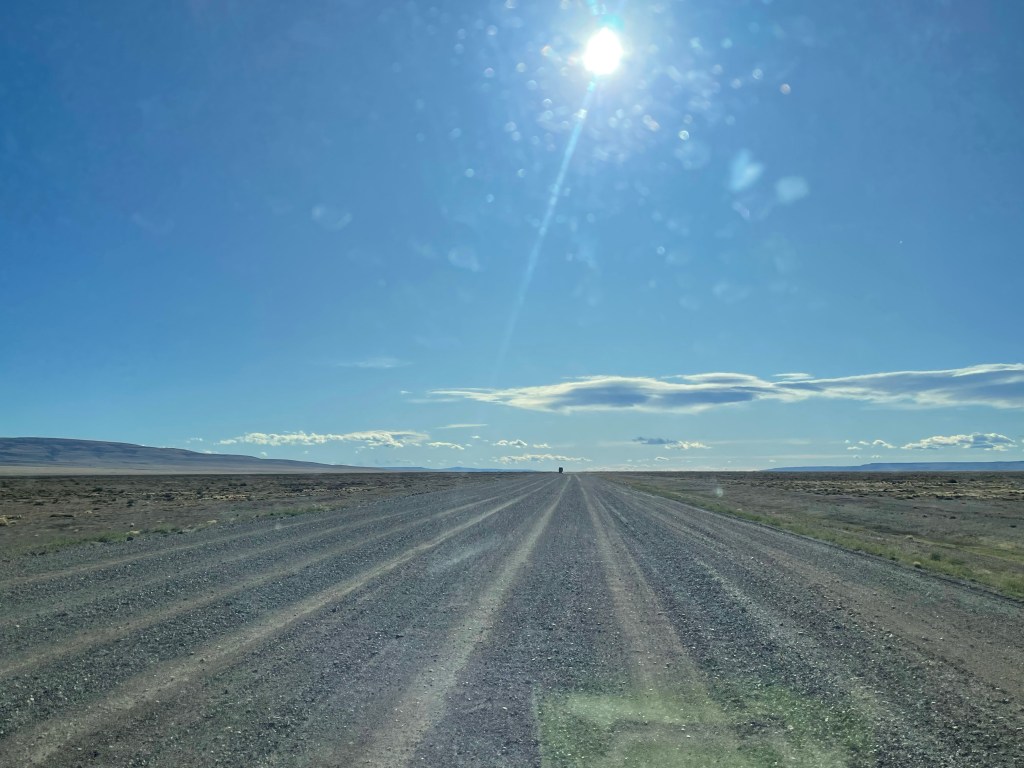
Between the Argentine border at Cerro Castllo and the first major attraction in the area is a couple of hundred kilometres of empty windy Patagonian steppe. We were also late, so it was dark, and to top it off there was a loose connection somewhere in the headlights that periodically plunged the road ahead into complete darkness. We limped into El Calafate late, and stayed with the truckers behind the YPF fuel station on the edge of town.
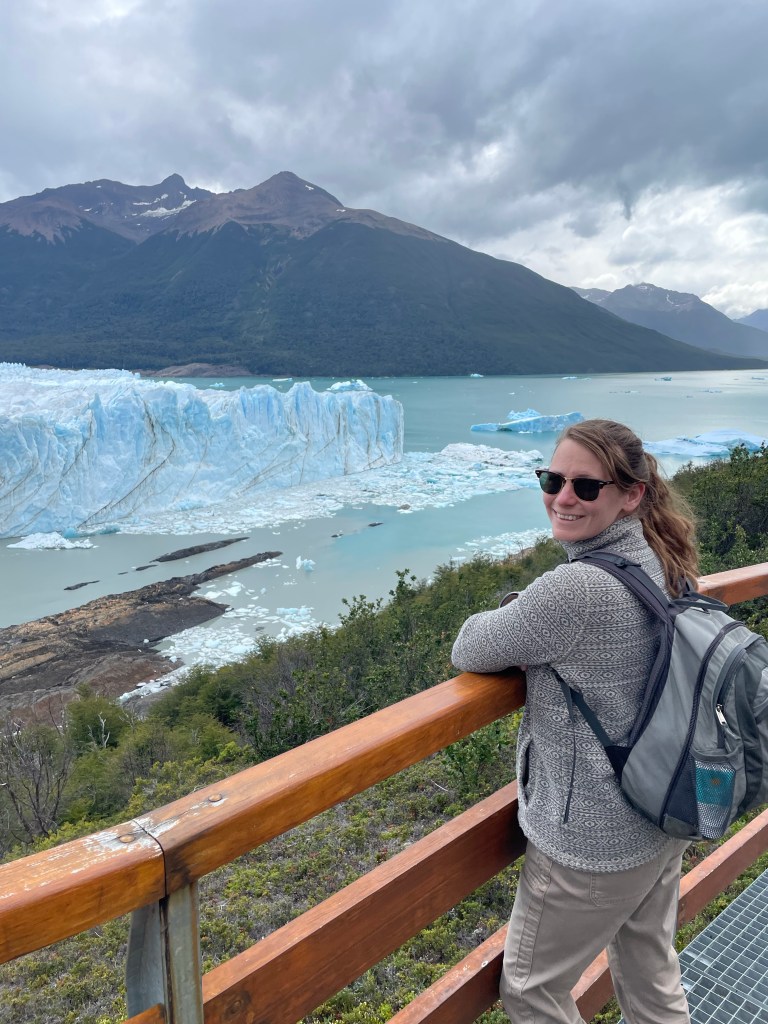
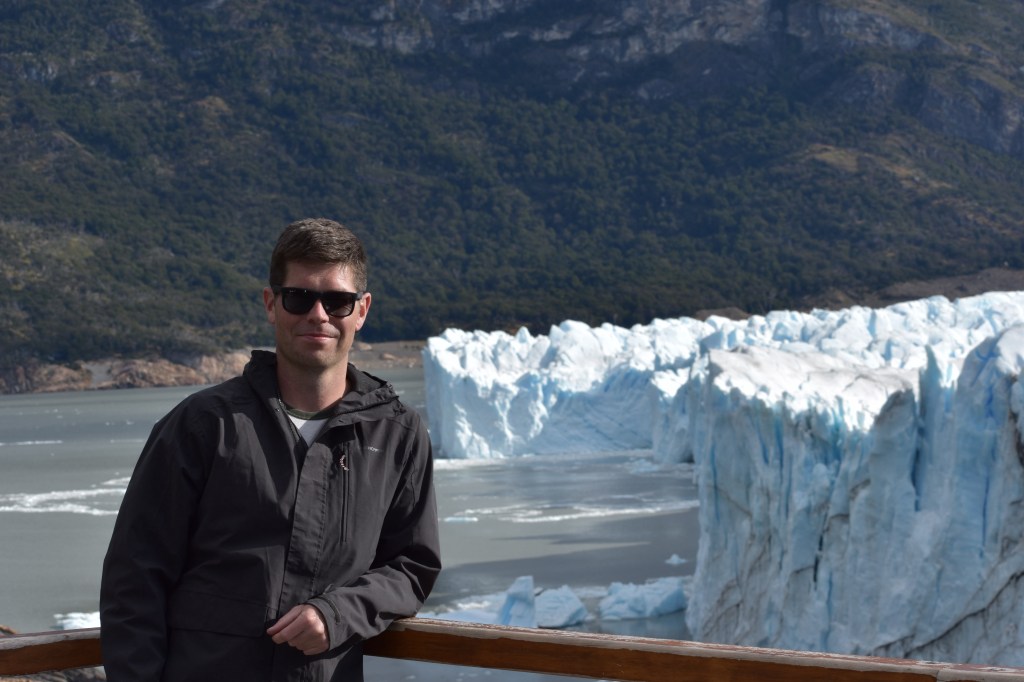
Still another 80km west of El Calafate the Perito Moreno glacier is the ‘must visit’ attraction in the area. A slow morning sourcing Argentinian pesos and then some ridiculous sweet pancakes for breakfast at noon, meant we arrived at the national park in the late afternoon.
A free bus took us from the parking area to the start of the walkways, and well built metal staircases guided us around the area. Such organisation was unprecedented for Argentina. But then there’s the glacier.
There’s a bunch of places we’ve visited where a photo can’t begin to do it justice, and this place might just be top of that list.
Watching icebergs calve off the glacier was special. The entire time the whole place echoes with the cracks and groans and the ice splits.
Every so often there’s a tremendous crash and splash, but sometimes it’s impossible to see where it came from.
It’s one of those places you see on a travel documentary where they wax lyrical about the experience. Often you think their awe is overstated for the telly, but having seen it for myself, I can see where they’re coming from.
Back in Calafate; Chopen was a a great little pub serving huge amounts of lamb and home brewed beer. An oasis in the tourist trap town of El Calafate.






El Chalten
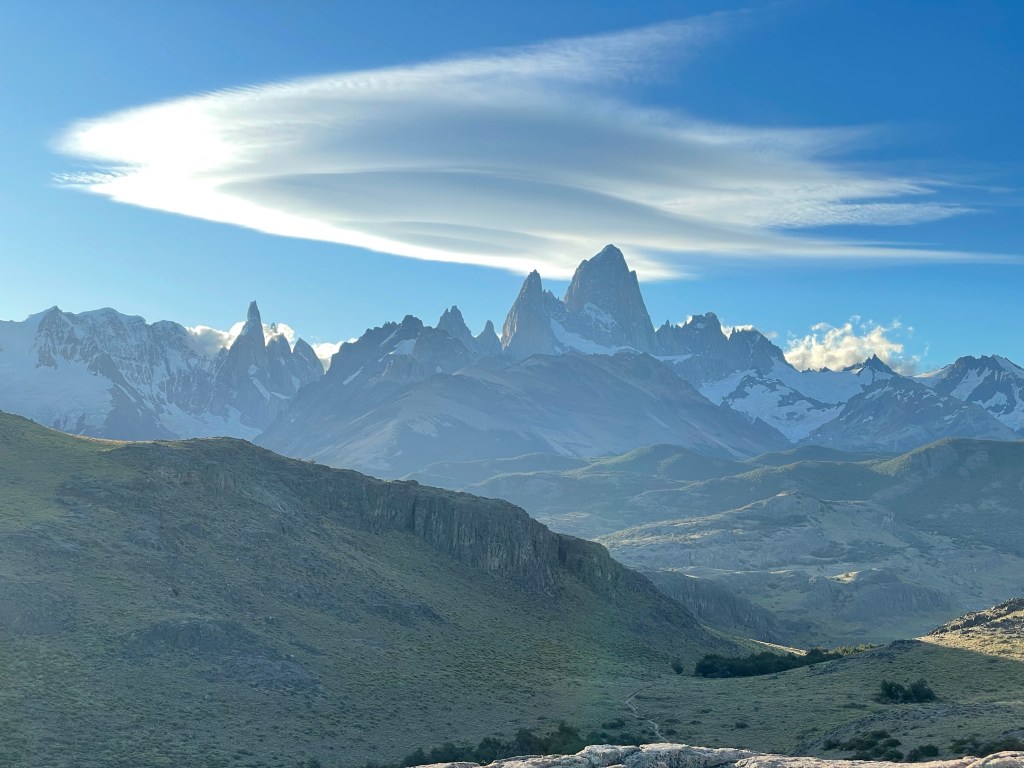
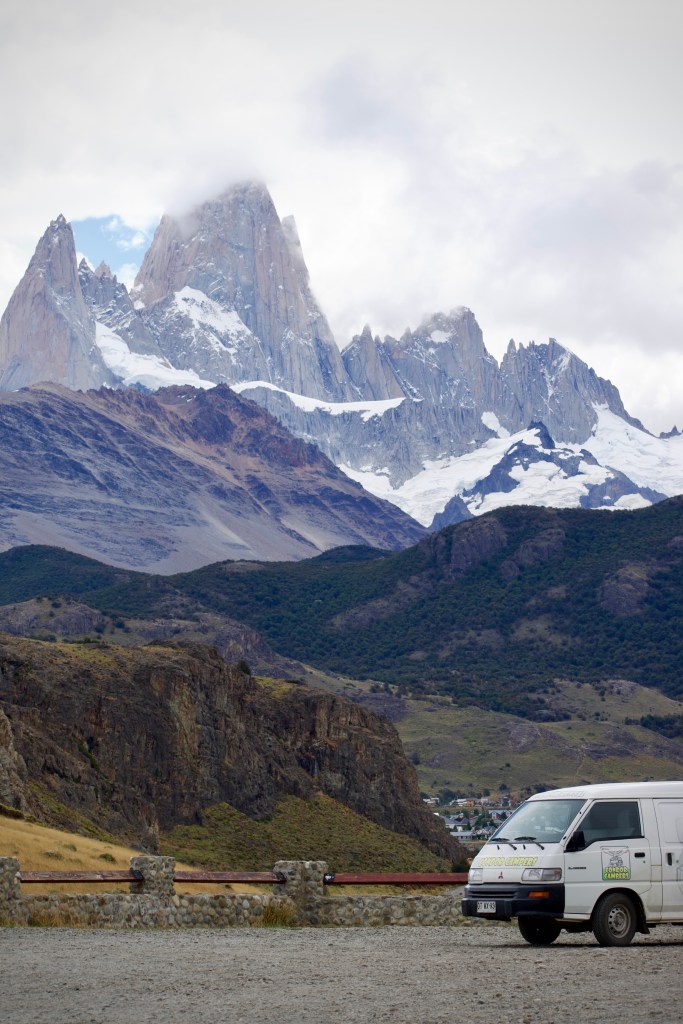
The drive into El Chalten is stunning. From what seems like 50km away the enormous Mt FitzRoy comes into view, and from then on it only gets bigger.
Just outside El Chalten a couple of condors were circling above a ridge off the side of the road. Mike spent a good 10 minutes trying to get the perfect image in front of the giant mountain.
That evening the weather was perfect. The short walk to mirador condor gave the perfect view over the whole range. The ever mysterious tine of Cerro Torre even poked out of the clouds into the glorious evening sunshine. So often shrouded in cloud, and an extraordinarily tough ascent, Cerro Torre remained unclimbed until 1974.
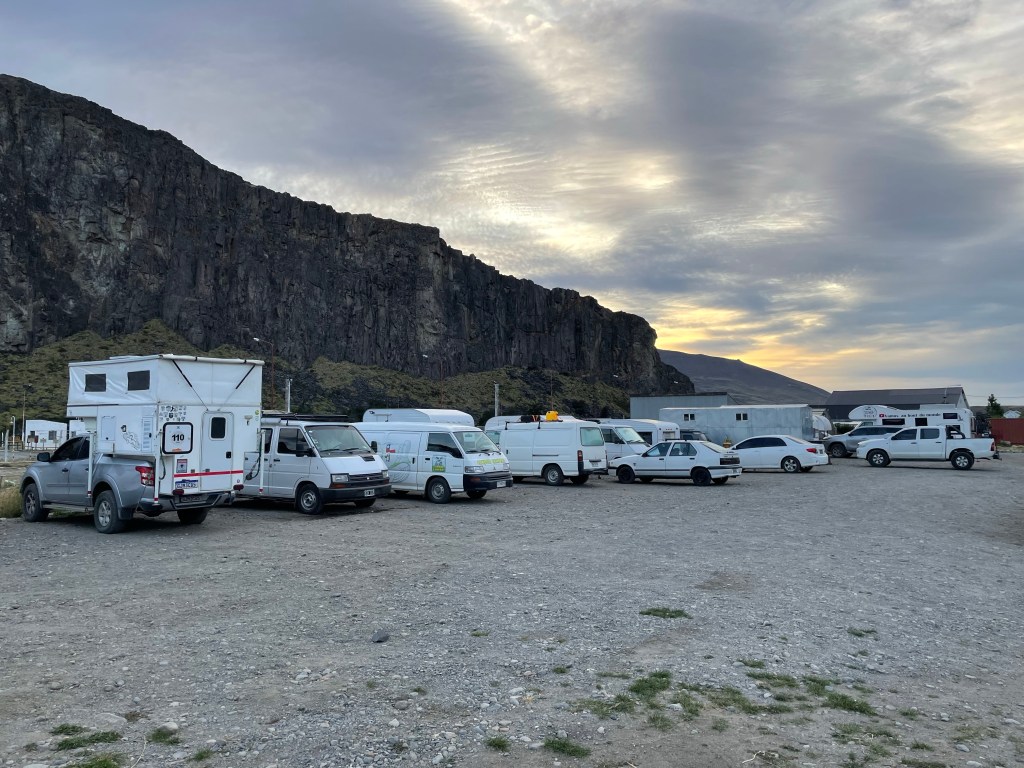
Behind the bus station was a small parking area that permitted motorhomes to stay overnight. Space for barely 10 campers but it was the only place in town, so we squeezed in.



Laguna de los Tres
A full day of decent sunshine was promised, so we had today earmarked for our first choice hike in El Chalten. The problem was that with so much choice we were uncertain as to which path we should take.
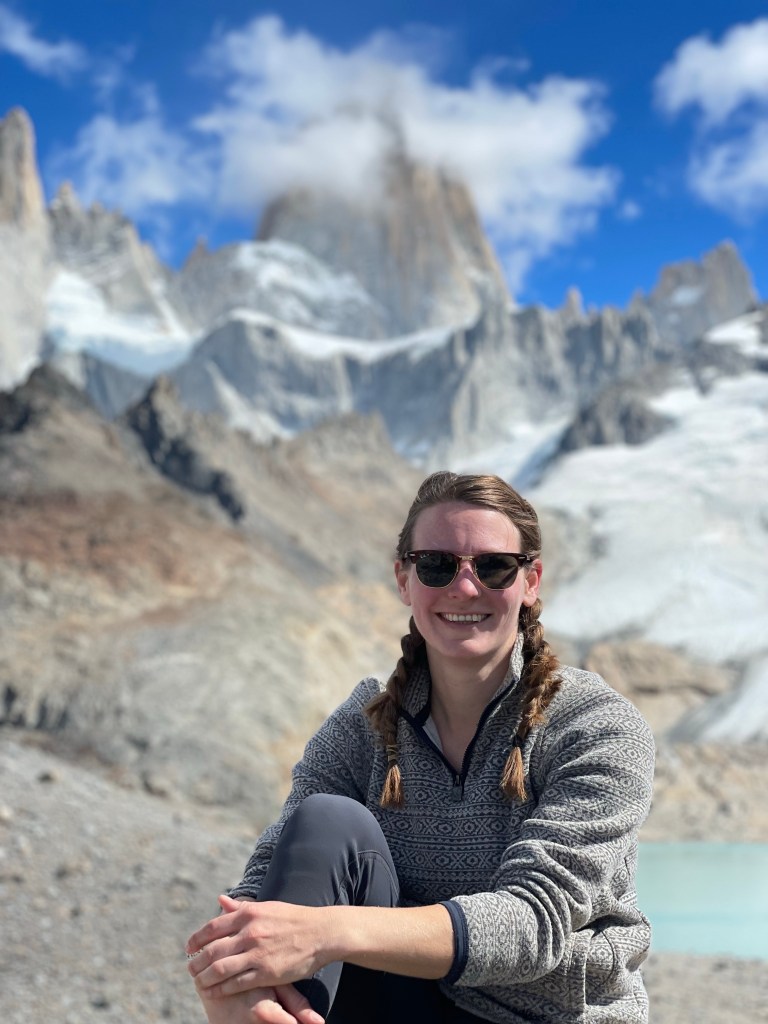
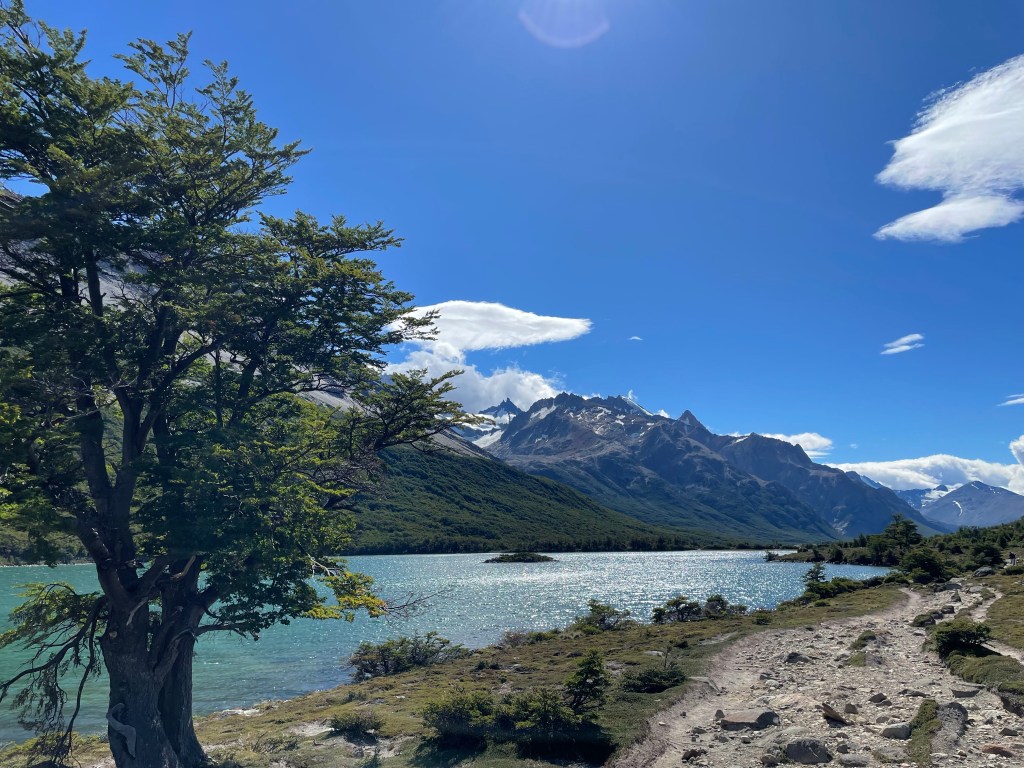
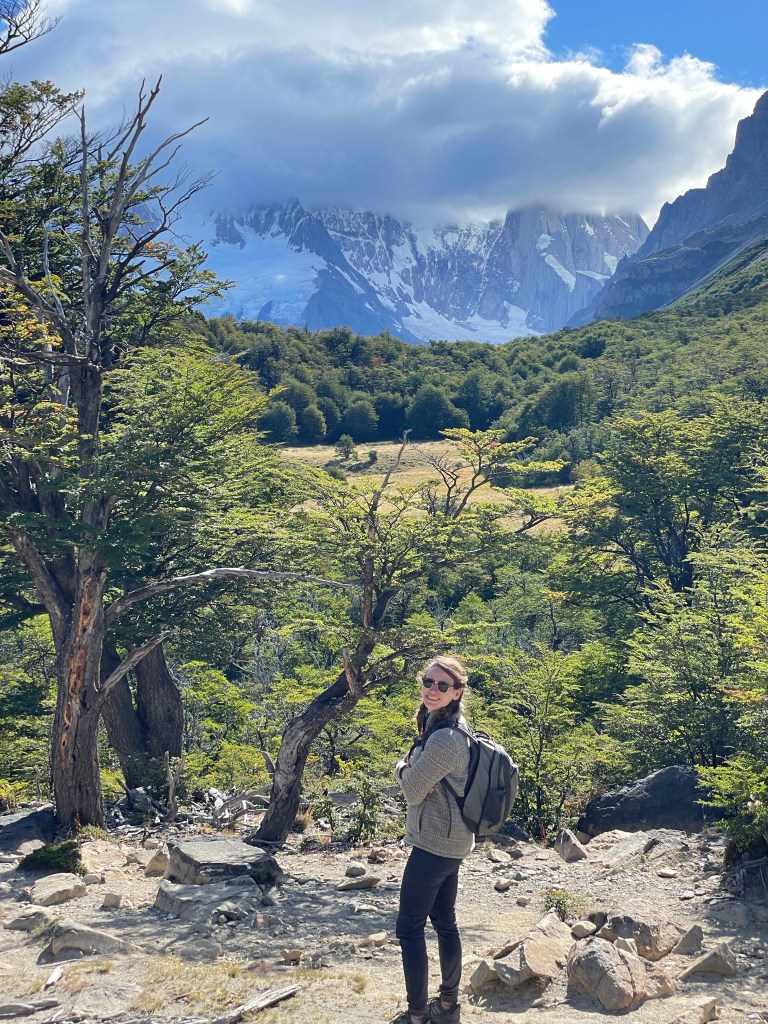
We landed on the Laguna de Los Tres, 20km out and back. In fact half way round we decided to extend with hikes along the Madre and Hija lakes and join the Laguna Torre path.
I won’t bore you with the details of the walk, those of you receiving Sarah’s emails will hear a lot more about it I’m sure…
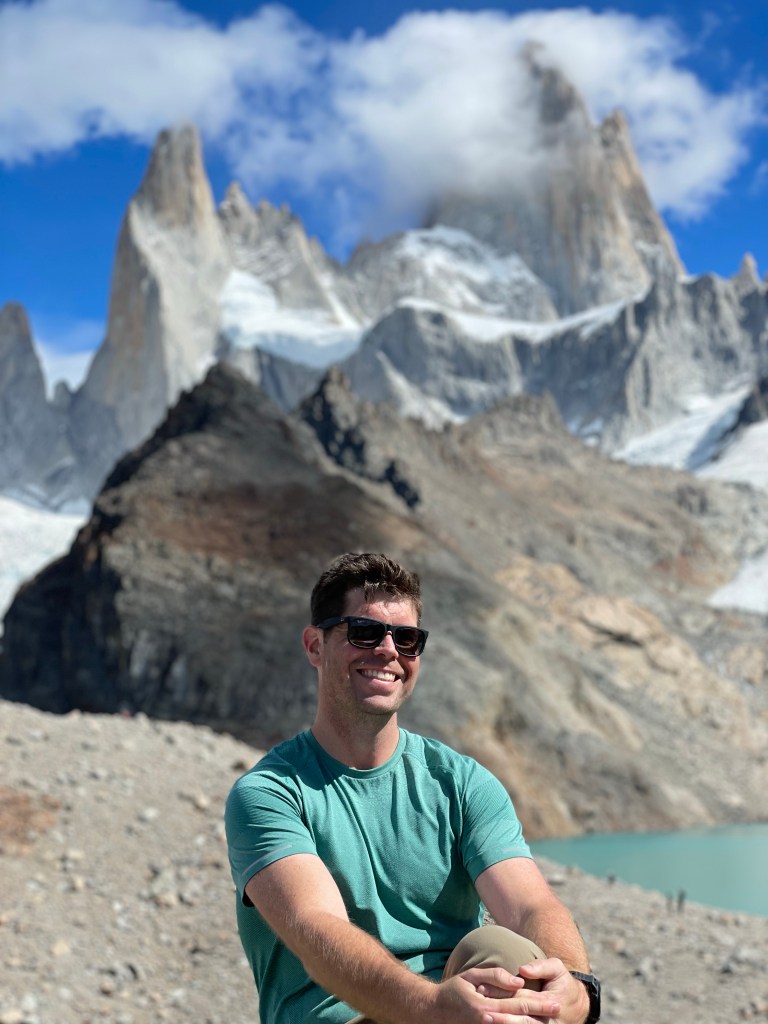
The whole entire scene is absolutely unbelievably stunning, any photograph cannot even start to convey the magnitude of the mountains. We had perfect weather to hike in, and some of the most spectacular viewpoints to ourselves.
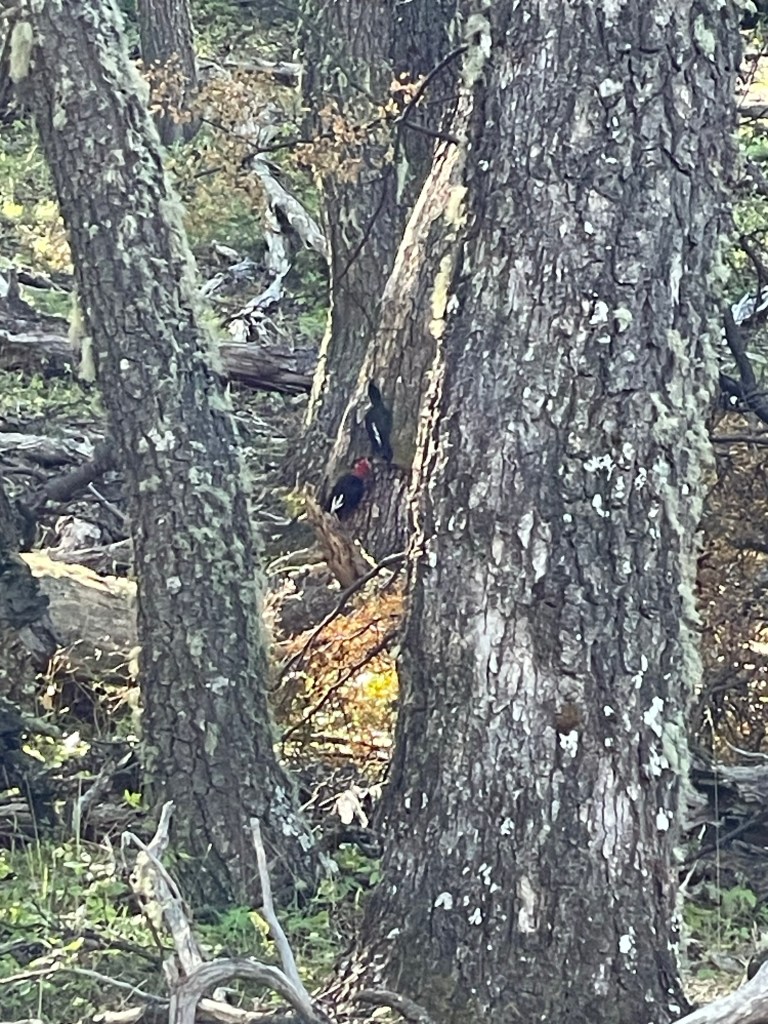
We also had some quality time with a pair of Magellanic woodpeckers on an isolated part of the trail. These birds absolutely shred the trees to pieces, and it’s easy to see how when watching them at work. Much bigger than a UK woodpecker, they act very differently. Sadly I didn’t have my camera, so iPhone footage is all I can share here.

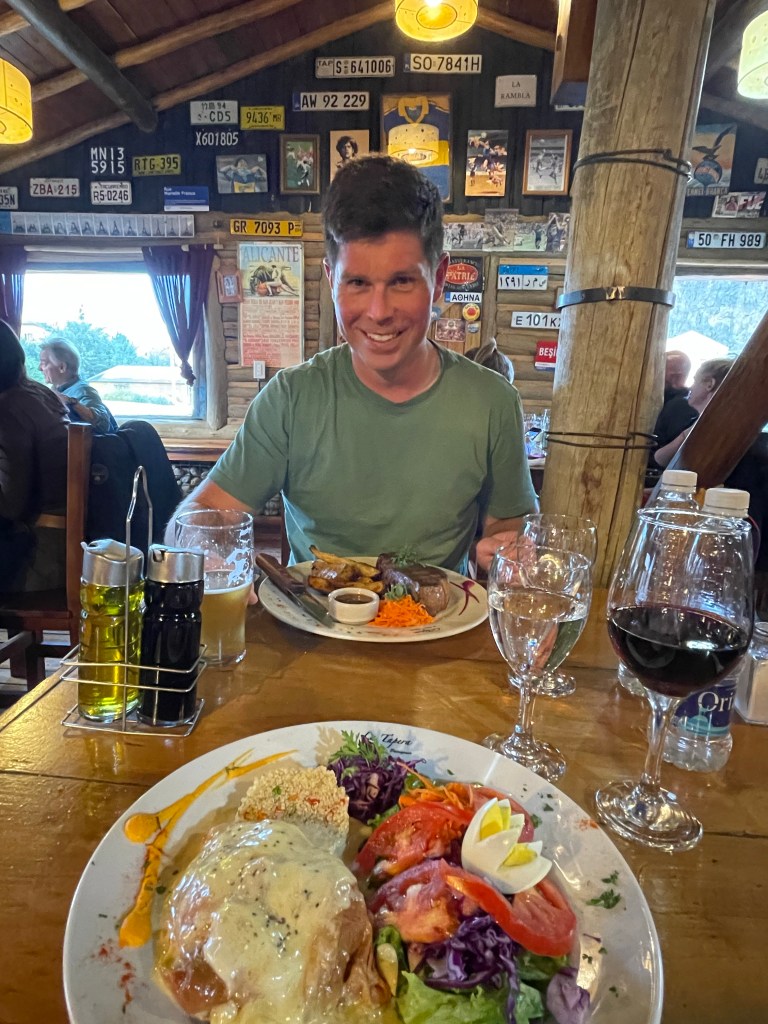
Over 30km later we were back in El Chalten, and treated ourselves to a hot shower at a hostel (3,000 peso each) and a fantastic dinner at La Tapera, an expensive but delicious treat, and an incredible steak and local craft beer.
El Chalten is possibly the most expensive place in Argentina, hostels are pushing $100 per night per person. In the town there is a shortage of cash pesos, so we had to scratch around trying to pay with dollars and keep the change. Most places were good at offering near blue rate. The whole cash situation in Argentina is a farce, and nowhere more so than El Chalten and El Calafate. One time I’ll attempt to explain it, but it probably needs 10,000 words. For now, the motorhome car park and bus station toilets would have to do.





Glacier Huemul in the rain
The weather turned today. Our beautiful vistas of perfect mountains had been replaced by grey skies. We drove the 37km north of El Chalten to visit Lago Desierto and Glacier Huemul. On bumpy gravel roads 37km is a long way, the journey took us an hour and a half or thereabouts, but the scenery was fantastic. We drove through wide windswept glacial valleys, with rocky peaks each side and an ice blue river down the middle. In sheltered areas the road was lined with some surprisingly large trees, which made the drive even more pleasant.
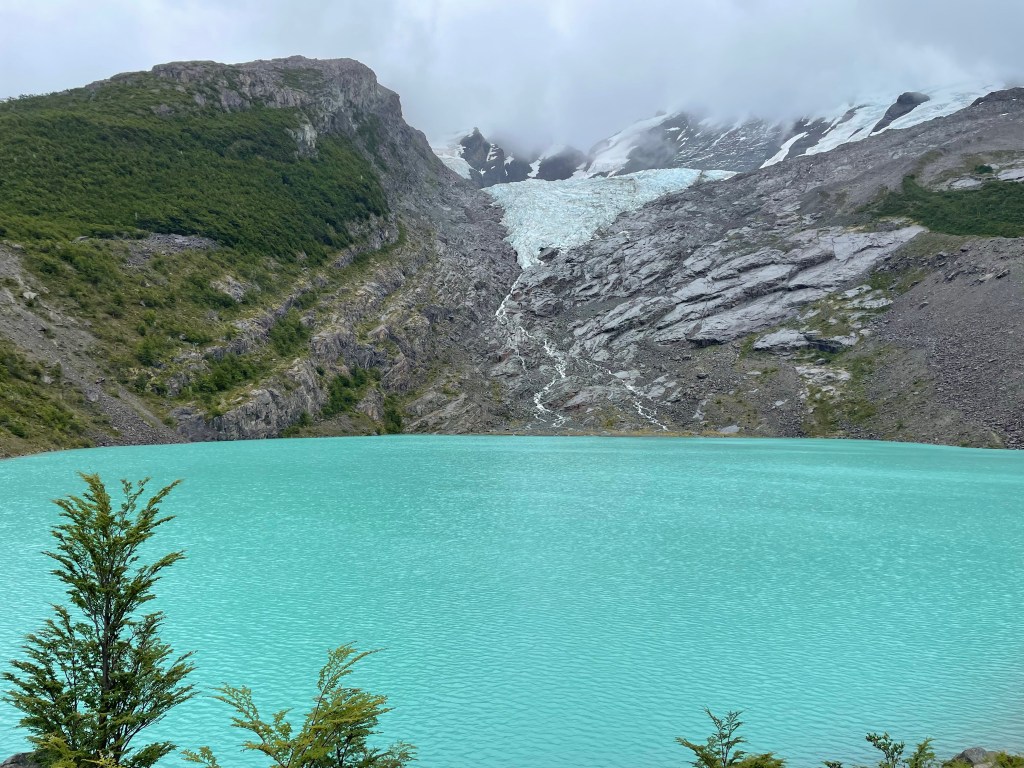
The relatively dry morning gave way to heavy lunchtime rain. Undeterred we paid the 7,000 pesos each to walk to the glacier. We beat the 50 minute target time by 15 minutes, although Sarah tells me they aren’t targets. The lake was a fantastic blue, and the glacier hung precariously above it. Impressive piles of moraine encircled the lake, making it look like a massive toilet to be honest, especially if you dropped in one of those coloured blocks which turn the water blue into the cistern.
But it rained, and so we left.
Good coffee and massive carrot cake was had back in El Chalten. However enthusiasm was dampened further by the rigmarole of schlepping back and forth through the town to try and find somewhere with some pesos to change a hundred dollars or so for our next drive. The money situation in Argentina is absurd. In El Chalten they mostly take dollars, and almost every shop will offer some kind of money exchange, that is, if they have enough pesos in the drawer. Rates offered vary, we saw 900 (pesos per dollar) for small notes 20s and lower. 1,000 was most common. The big hostel offered 1,030 and the coffee shop gave us 1,050. The few places advertising 1,100 were long out of pesos.
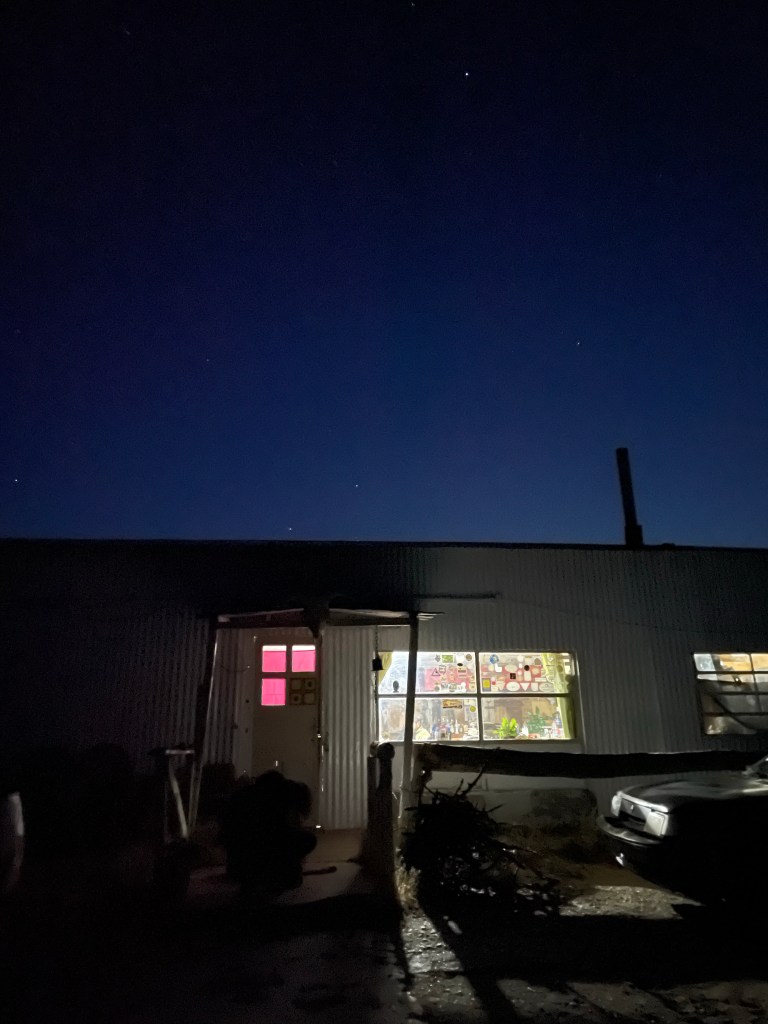
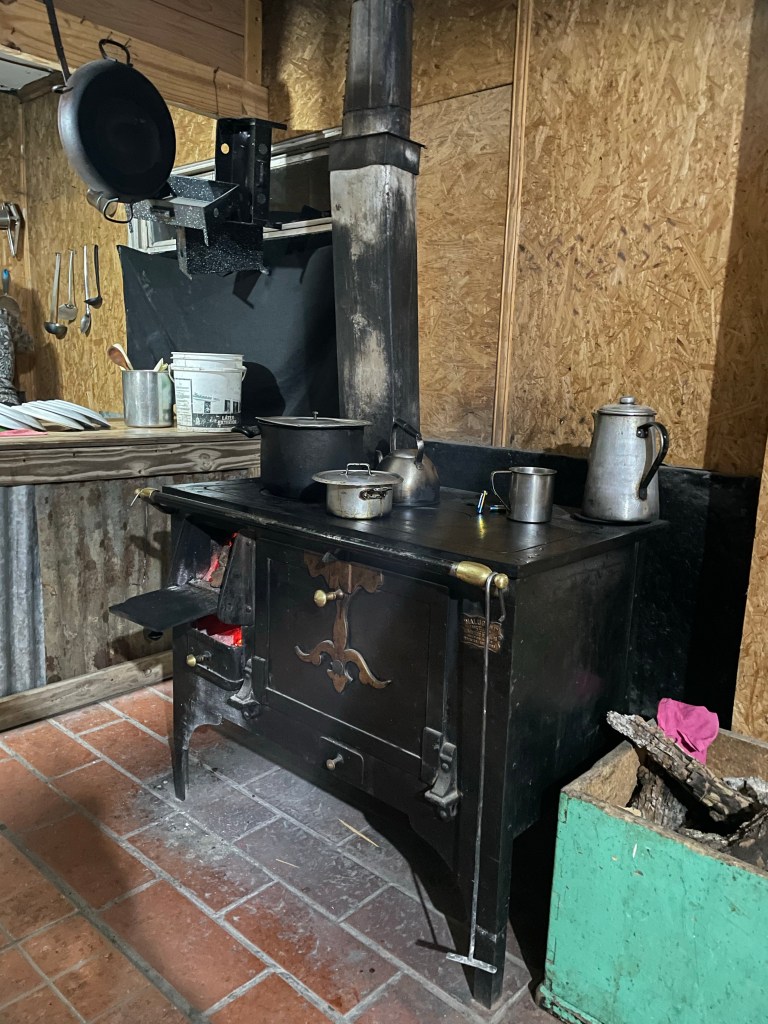
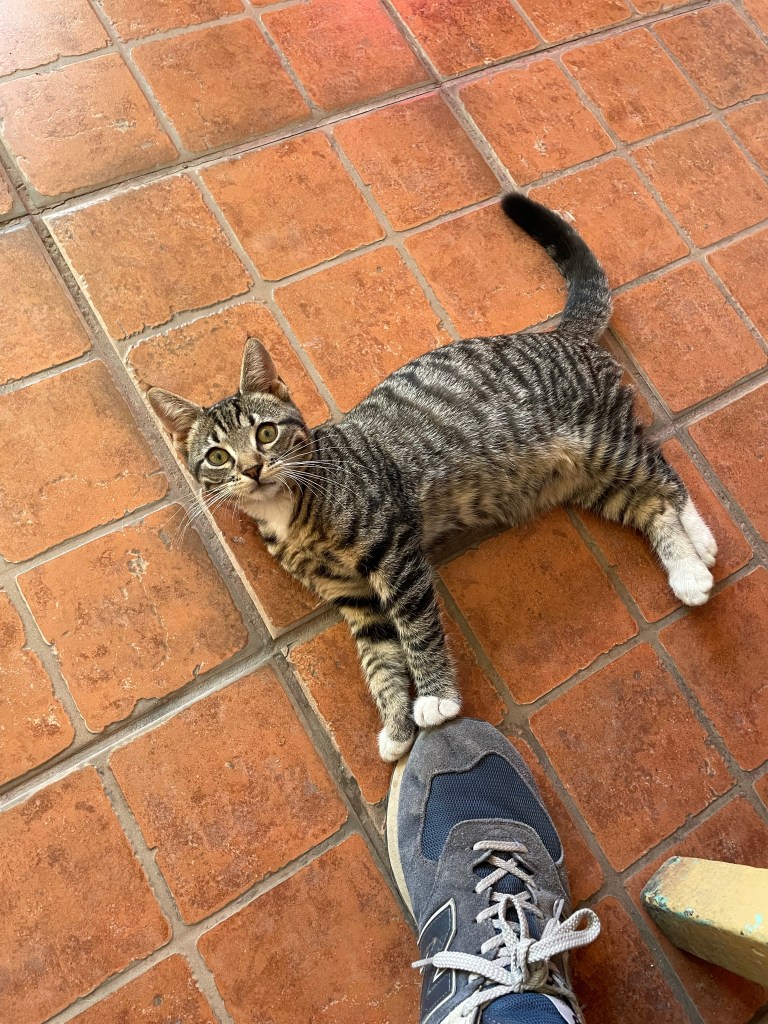
We pressed north in the evening, although darkness beat us on the section of Ruta 40 known as La Maldita. We stopped at the only formal campsite on route, Estancia La Siberia, where we were greeted by the enthusiastic dog Niño. 10k for the night, a ramshackle little house in a small notch in the steppe overlooking a lake, an isolated location in the real middle of nowhere. For 10k pesos each we had dinner and chatted to the owners Matthias and Anna in broken Spanish, they seemed authentic, which was a nice change from Calafate and Chalten. We spent the evening winding up their kitten Mia and the puppy Niño.


A long schlep north and a pony ride – Happy Birthday
Today was my birthday, so naturally we went to the supermarket, and then for a horse ride.
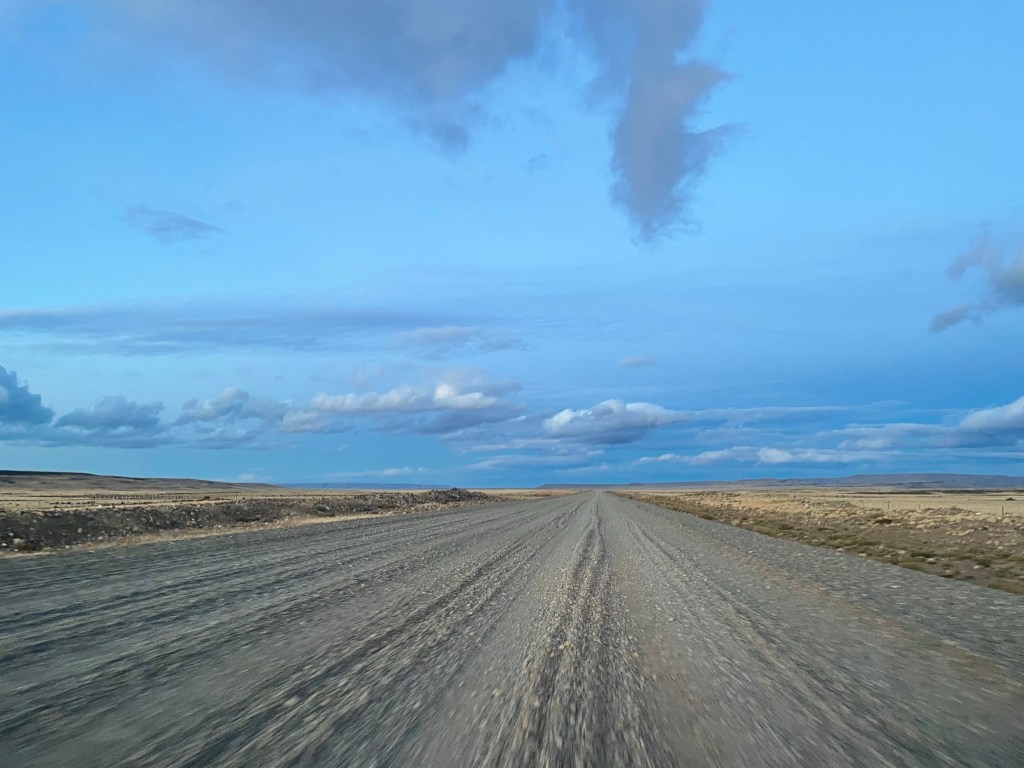
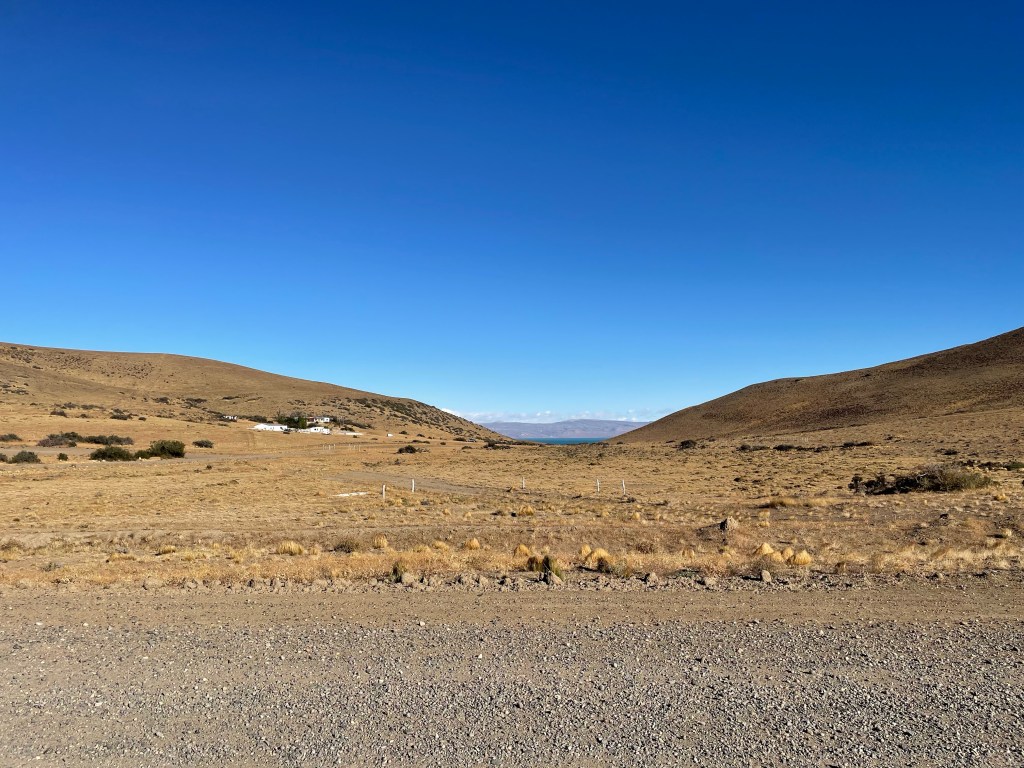
We set off from Estancia La Siberia early, it’s a cold desolate place in the middle of a terrible gravel section of Ruta 40. Mattias the owner was showing us how it got down to -30 degrees over the winter, and how they also get pumas walking around regularly. Sadly no pumas for us today, although we got a nice view down to the lake in the cold morning sunshine. We said goodbye to Niño the crazy dog and went on our way.
Gobernador Gregores is a tiny little town in the middle of nowhere, Argentina, nestled in a small valley protected from harsh winds that rip across the steppe. Most importantly, in the town there was a petrol station as we were running quite low on fuel, and a La Anonima supermarket to stock up on more food. We also found a small bakery that was open so we got Mike a small birthday cake to save for later.
Our next stop, was Estancia Santa Thelma, which is a hotel owned by a Frenchman Marc-Antoine Calonne. There’s a lot of land out here and so this run was 8000 ha and Mark Antoine owned another range across the road which was 20,000 ha. Both of the branches seem to be pretty much full of nothing. he’s been around all of Patagonia on horseback taking photos and putting them in his photo book which he sold many copies of and is pretty proud of. He only seems to spend a few months a year in Patagonia and in Argentine winter, he’s back in France, tending to his motorcycle museum near Chartres.
After a lot of persuading, Mike reluctantly got on a horse Sarah didn’t need persuading. She had a small little brown pony and was very happy. We saddled up and began the walk around the empty Patagonian steppe where there’s not a whole lot to see apart from dead Guanacos, dead sheep and dead horses. However, seeing as we had spent many many hours driving across this windswept empty landscape, it was good to get out and actually experience some of it. From the top of the rocky outcrop above Marc-Antoine’s Estancia. we had a wonderful view across the valley as the afternoon sun faded.
When did the day by driving northwards until the sunset, and then drove some more until we found a place to shelter out of the wind. This happened to be in the small village of Bajo Caracoles we parked in a wide open space made for lorries and we had a birthday drink in the shop/bar/petrolstation/hotel/social club.




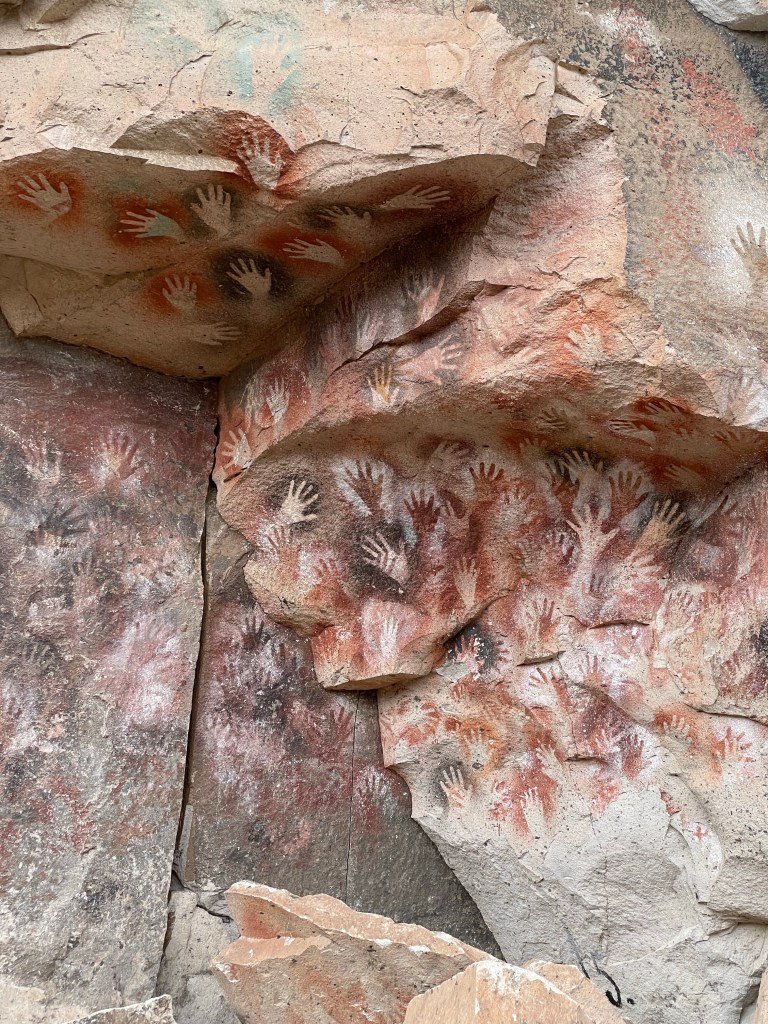
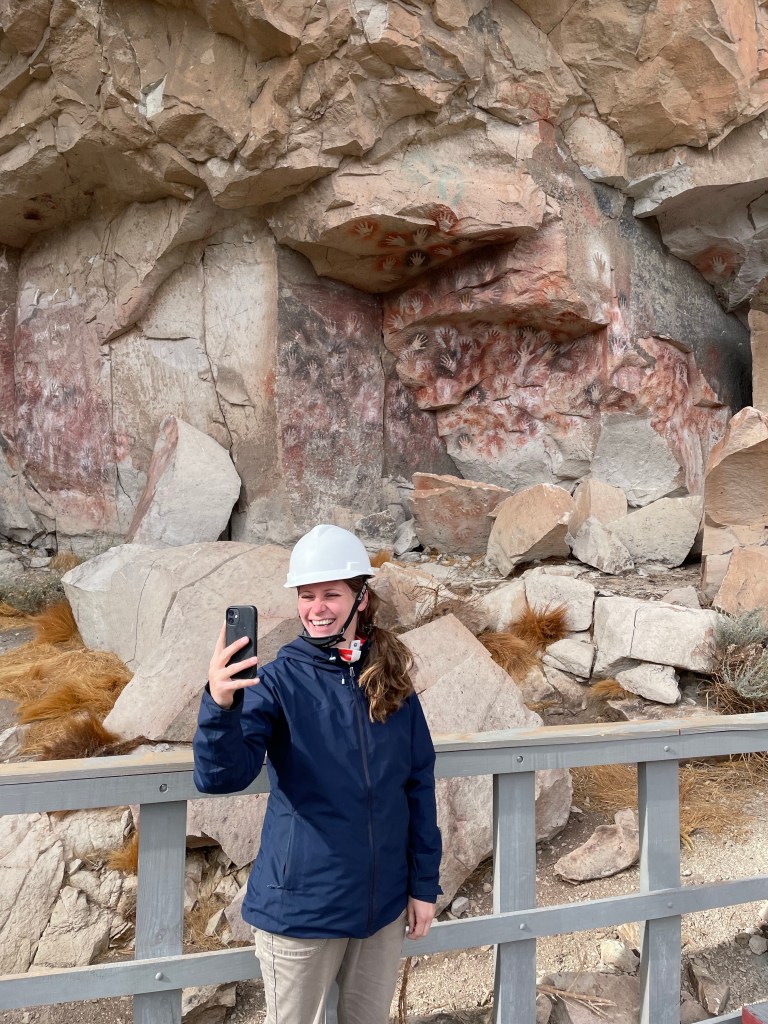
Cave of Hands – Cueva de Los Manos
Here there are 9,000 year old paintings of hands. Frequent readers of my blog (I’ve which there are zero) will already know my skepticism around the age of rock art. But here we are again, admiring some of the oldest surviving rock art in South America and taking in its cultural significance.
Cueva de Los Manos is set in a spectacular gorge in the steppe through which the Rio Pinturas flows. The site is 47 km north of Bajo Caracoles on a bumpy gravel track, and you must return out the same way.
Heading further north still, we limped into Perito Moreno (the town, not the glacier, nor the national park). We had been testing the range of our van, with a Jerry can back up of course, and had managed a further 100km from when the fuel gauge read empty. We filled up with cheap Argentinan petrol which is a third of the price of Chilean fuel (600 ARS or £0.44 per litre vs 1450 CLP or £1.20 per litre).
Crossing the border went smoothly until our car was searched for fruit and vegetables. Chile makes you sign a customs declaration on entry, and you can say “yes” we have things that you can take. We handed over our apples and onions and the SAG agents searched the van. They took exception to our Jerry can of fuel, and confiscated it. As they were writing out a ticket for us we tried to persuade then to let us at least fill up our tank and potentially keep the bottle. The manager saw sense and let us force feed the already full van. Incredibly the van took on another 15L, and when an Argentinian tried to cross the border with an automatic rifle, the police were called, and the manager more interest in that situation and waved us on our way.
In Chile Chico more birthday beer was available, Mike had a great time sampling some locally brewed stuff including GLOF made by the proprietor of the campsite. Named after glacial lake outburst flood, we happily told the brewer we were familiar with the term having visited such a flood danger area days earlier. We spoke at length about British beers, Burton on Trent, and how he tries to ‘Burtonise’ the water. He was delighted, and Mike was happy with the pint.


 Small Holiday Big Dream
Leave a comment