

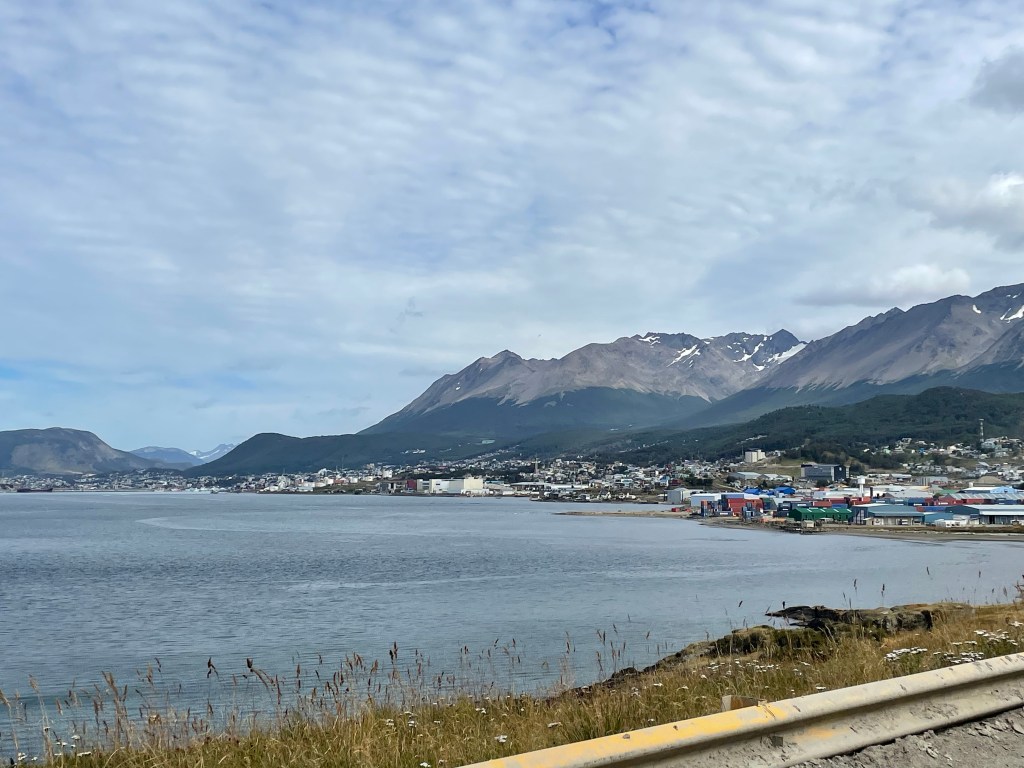
Our first port of call in the morning after leaving Ushuaia was the station for El Tren del fin del mundo. Its was a nice little tourist train – the southernmost in the world – and had a notable new(ish) steam locomotive according to Sarah’s father (Porta, the locomotive not Sarah’s dad, for anyone else interested). This wasn’t enough to persuade us to part with the £30 each needed for a ride. The souvenir shop was good though and I got a tshirt.


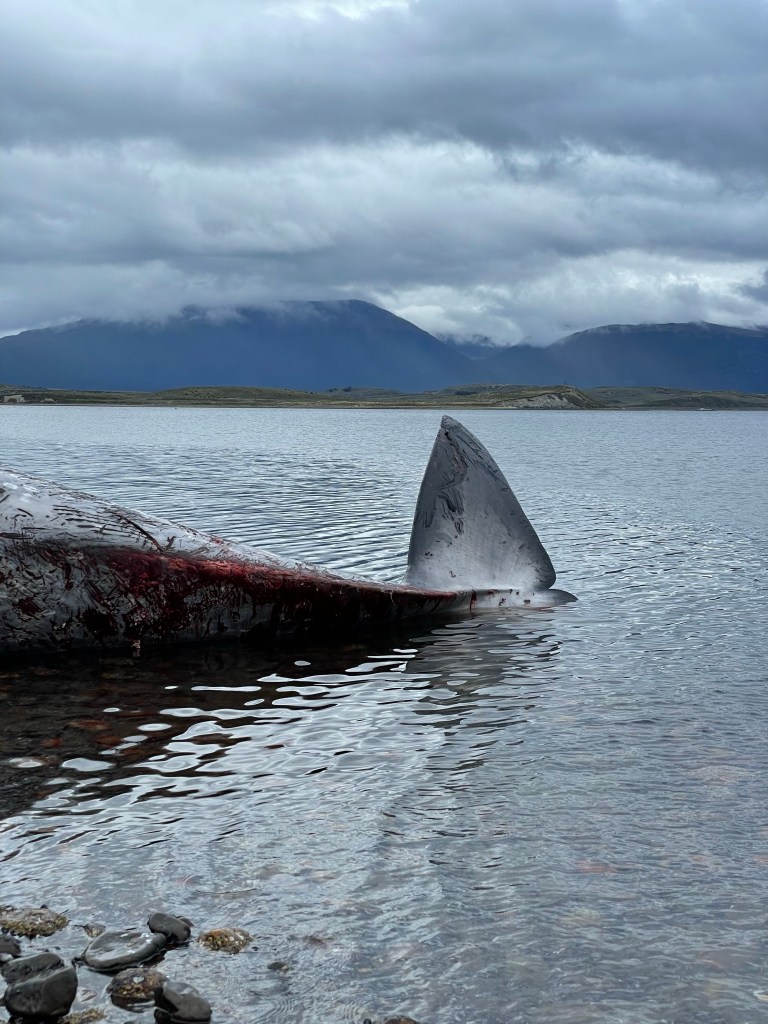
Driving to estancia Harberton took longer than we thought – almost 40km down gravel roads took some time. Along the way we saw a beached whale, but flew past in order to get to the museum at the estancia in time for the 14:15 tour. We were vaguely certain the whale would be there upon our return.
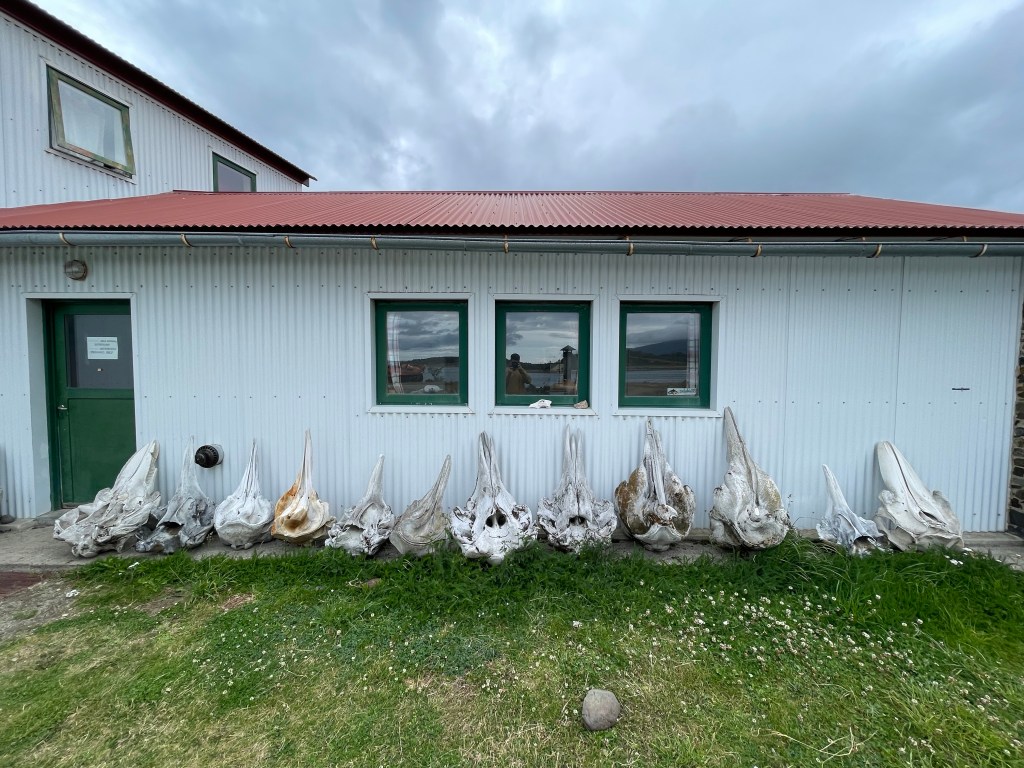
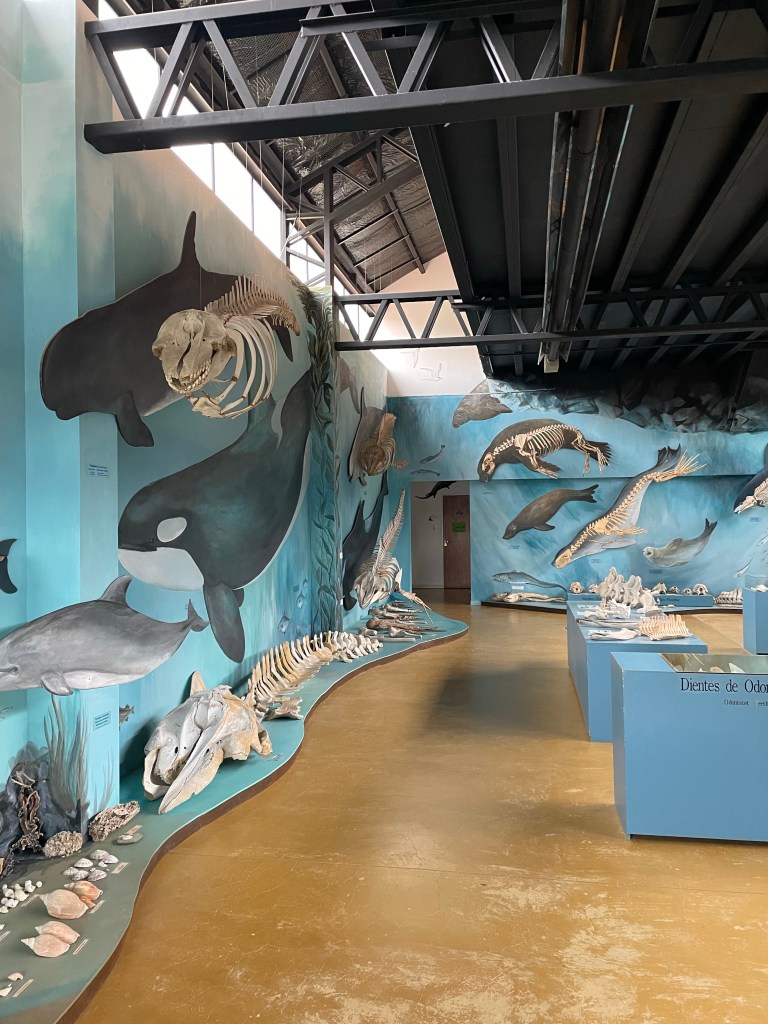
As it happened the museum was all about marine mammals (cetaceans and pinnipeds) and had many skeletons on display. Natalie Goodall, the late wife of the current resident of the estancia, was a keen collector of whales bones. Tierra del Fuego is a great place to have such a hobby, plenty of whales wash up on its vast shores, with very few people around to deal with them.
Juan was our guide, a biology student from Buenos Aires, and as the only two people on the English version of the tour we were treated to a private explanation of everything in the small museum. We learnt loads, including about the two types of baleen whales: the right whales and what I can only assume are the wrong whales. The stranded whale we saw in our way in was a sei whale belonging to the second group. He had run aground just yesterday. We also learnt about toothed whales, Juan is interested in studying sperm whales and their communications. There were hundreds of whale bones, every one of which is huge, and we got to hold and touch as many as we could. We took so much time with all our questions we had to cut the tour short to run to the next activity. Promising Juan we’d be back later we had to dash off to meet our guide for the homestead tour.




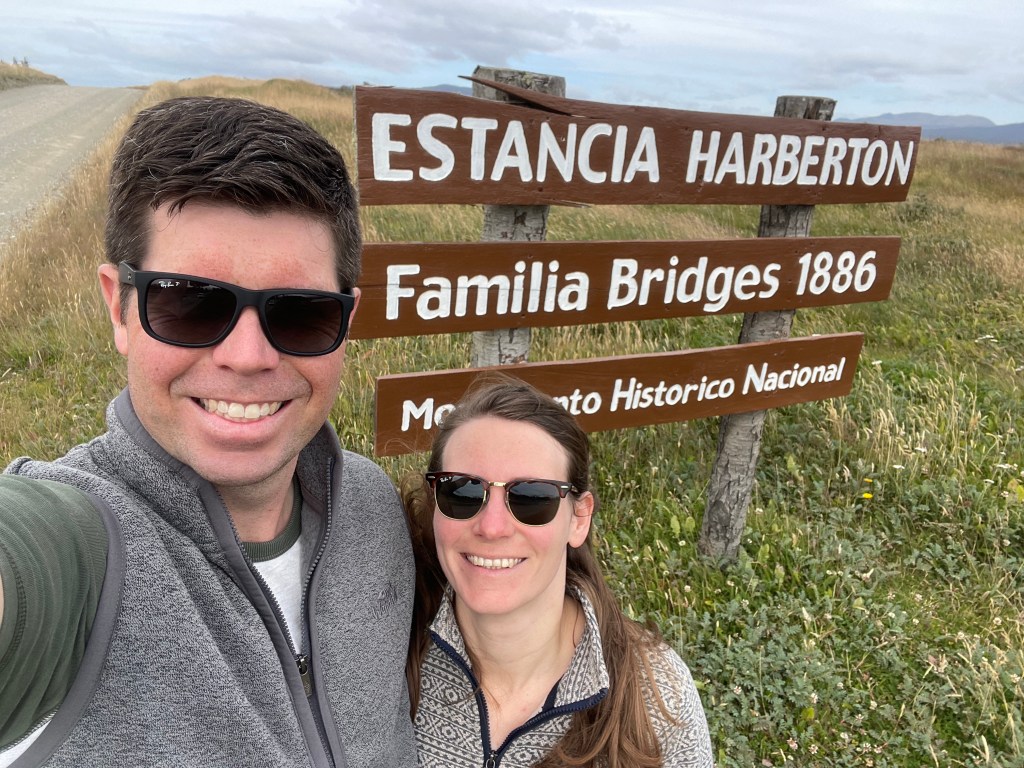
Thomas Bridges, the founder of Estancia Harberton was found wandering the streets of Victorian Bristol as a child. His name was taken from the location he was found rather than being a given name. He was taken to Tierra del Fuego as a child by his adoptive father, a missionary pastor. As a child he played with the local Yamuna children, and quickly learnt the language, a skill that would save his bacon in later life.
At some point the Yamuna started dying of European diseases, and the Europeans were driven out by the locals after overstaying their welcomes. Thomas Bridges stayed though, and thanks to his language skills he was welcomed. He petitioned the Argentine government for some land, and this was duly passed. Very few Argentinians loyal to the government were keen to live down in Tierra del Fuego, so in Bridges they had found their willing fool. In return for grazing sheep on a bunch of the islands nearby, the basis for future Argentine territorial claims, Bridges was granted a large portion of the island to call home.
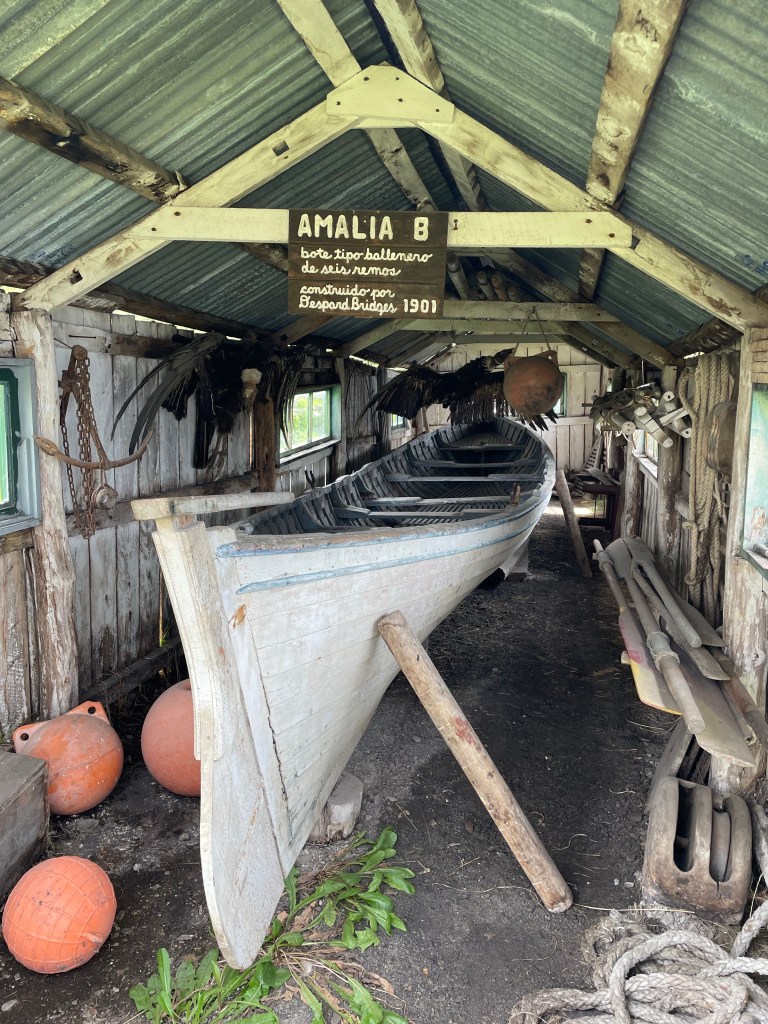
The estancia is so remote, it has become a living museum. Every building and shed is part of what the Bridges family built over the 150 or so years since they established the farm. Proudly on display are their old tractors and cars which were shipped at great expense. As are the old British made sheep shearers and wool bailers. Even the building itself is one of the first pre-fabs, having been erected in the Uk first before being shipped over in parts and rebuilt piece by piece.


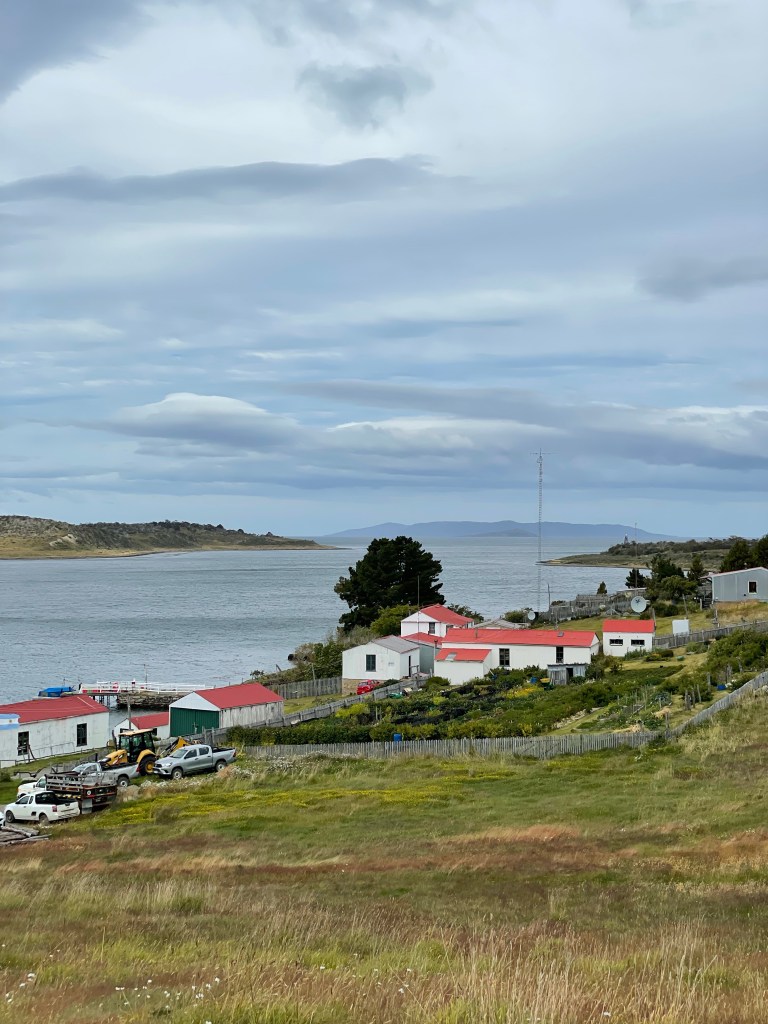
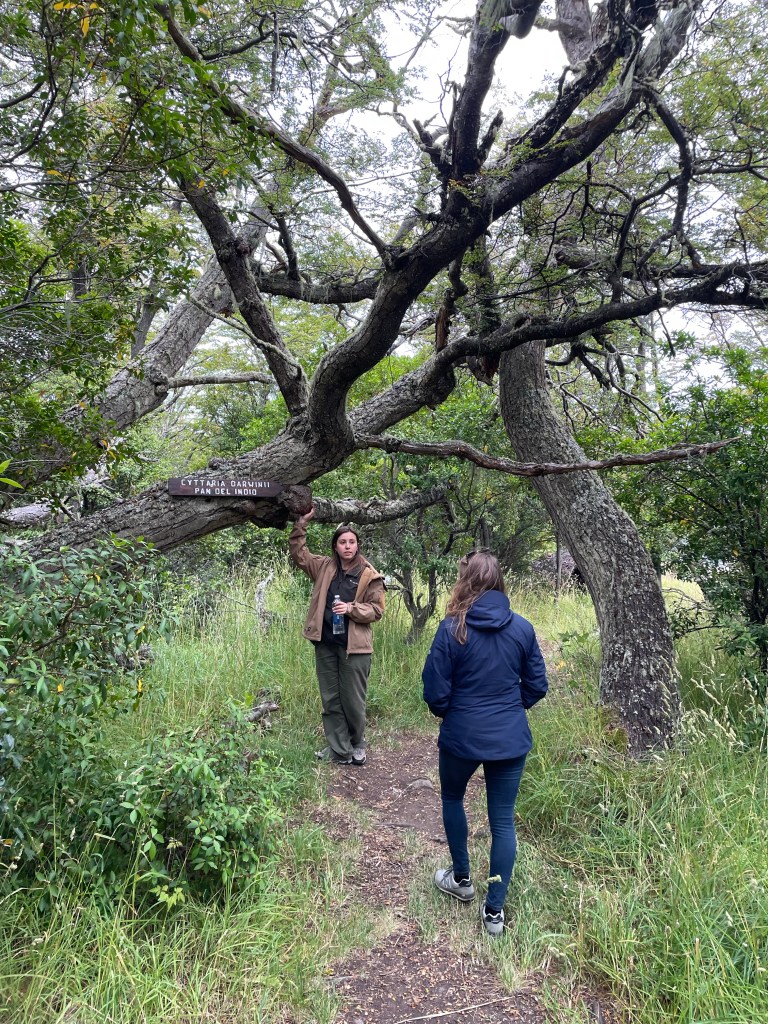



The old house has a fantastic garden and vegetable plot. Ripe rhubarb, raspberries and strawberries were available whilst we were there. We also visited a nature reserve at the top of the estate to learn about the trees and plants native to Tierra del Fuego. The Lenga trees have immaculate little leaves with intricate texture and delicate fringed edges.
Tea and cake was our next port of call, but not before returning to Juan and his bone shed. Not exactly what you need before eating, the shed was full of bodies of seals, dolphins and whales at varying stages of decomposition. I can safely say I’ve never seen so many dolphin skulls in one place before. After Sarah dropped a piece of carefully reconstructed dolphin spine we decided it was time to make our excuses and enjoy the cakes on offer in the tea house.
We throughly enjoyed our visit to Harberton and for 20k CLP per person it felt like a bargain. I would recommend it as a day trip to anyone who finds themselves in Ushuaia.
On our return to the main road we stopped off at the stranded Sei whale. The whale had beached itself for reason not yet known, it was 14m long and huge, freshly dead it didn’t smell yet and we had a good close up look at this enormous creature.



We spent the night back at Rio Grande in preparation for a long drive north to Puerto Natales the next day.
- The infamous Binga-Karoi road
- Mana Pools: A bucket list location?
- Camping Among Lions: Chitake Springs Experience
- Chirundu: The worst border in the world
- The Wild Dogs of Jeki: Sunrise in Lower Zambezi
 Small Holiday Big Dream
Leave a comment