Our 35 days in a Chilean camper has started spectacularly in the remote wilderness and dramatic landscapes of the southern tip of Chile and Argentina. If you’re going to spend your nights in a thin metal box, you may as well start properly and head to the coldest place on your route. Our gateway to the region was Punta Arenas in Chile, a three hour flight south from Santiago and one of three settlements vying for the title of “worlds southernmost city” but more on that later.
Punta Arenas
It’s a lot colder down in Patagonia. Jumpers and waterproofs were immediately put to use. Collecting our campervan was a breeze, it was left unlocked with the key inside at the airport car park. He’s getting on a bit, with 173,000km on the clock, but still running fairly well.
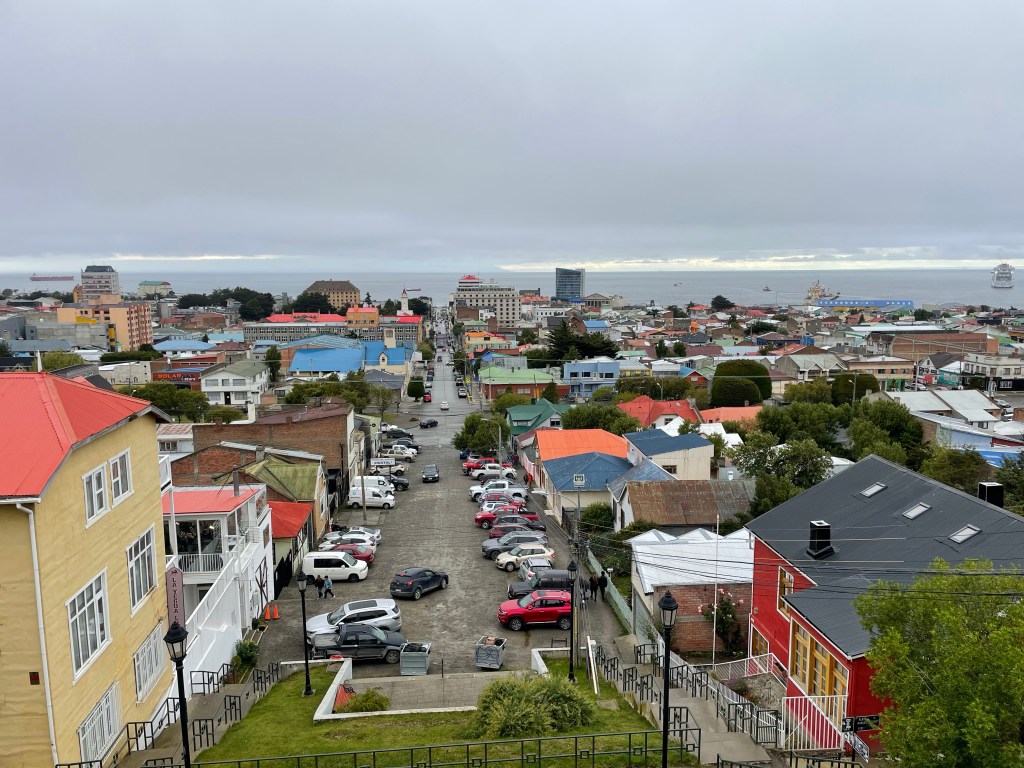
After 24 hours on the move, sleep was needed, so after a massive burger and a brief afternoon walk around town to look at the town square, the harbour, and a view point up the hill, we called it a night.
The next day, after breakfast with other hostel guests, we went for a walk down to Faro San Isidro, which is the southernmost lighthouse on the continent. The walk was a beautiful 5kms along the beach and back. The weather played ball and the view across the Magellan strait was stunning. Mt Sarmiento in the distance looked supreme.

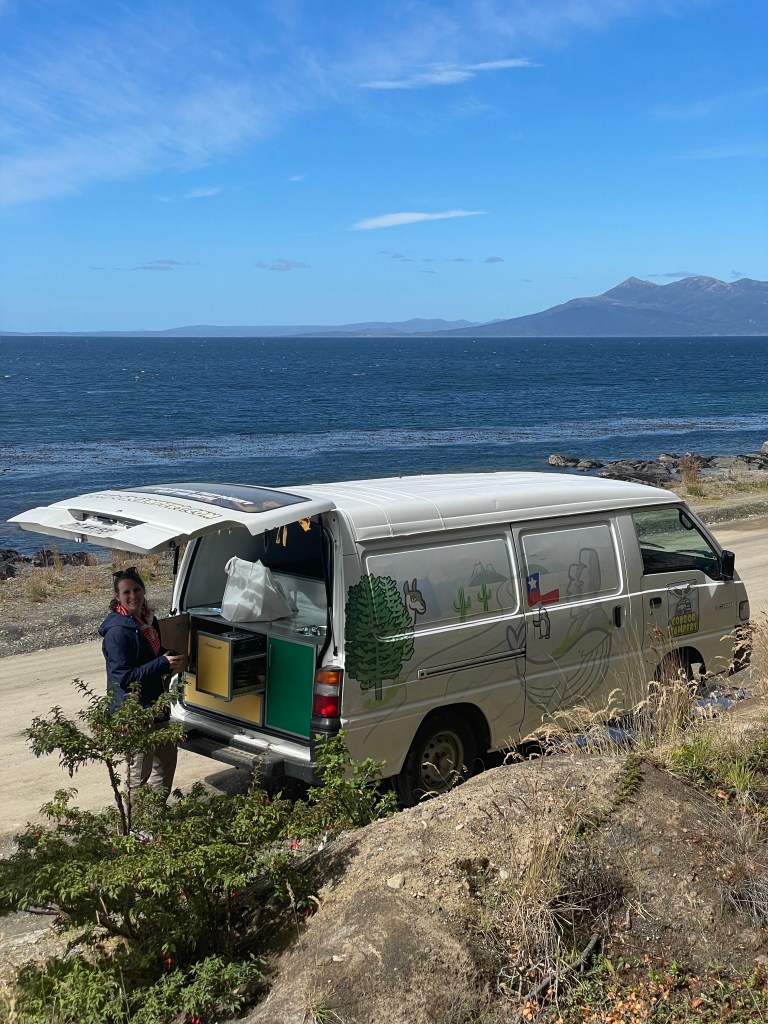


We raced back to the Lider hypermarket (Walmart) just before it closed, however on the way the red engine light came on in our campervan. With a bit of fiddling around with the battery we managed to make the problem go away, so won’t dwell on it here but suffice to say this might come back to bite us in the future. We made it to Lider just in time to stock up on essentials for our campervan. A new duvet, a couple of pillows, plus plenty of non-perishable food. I’m sure we’ve missed loads but will find out in due course. They don’t seem keen on tins here, everything is in packets; tomatoes, soups, ketchup, and mayonnaise included. After we were done, a Chinese takeaway was all that was left open for us to have for dinner.
King Penguins 🐧
King Penguins! 🐧
We first crossed to Tierra del Fuego, which is an absolutely massive island with about three trees. The scenery here is like the bit above the Elan Valley dams where it’s just moorland for miles. Think that, but 10,000 times the size.
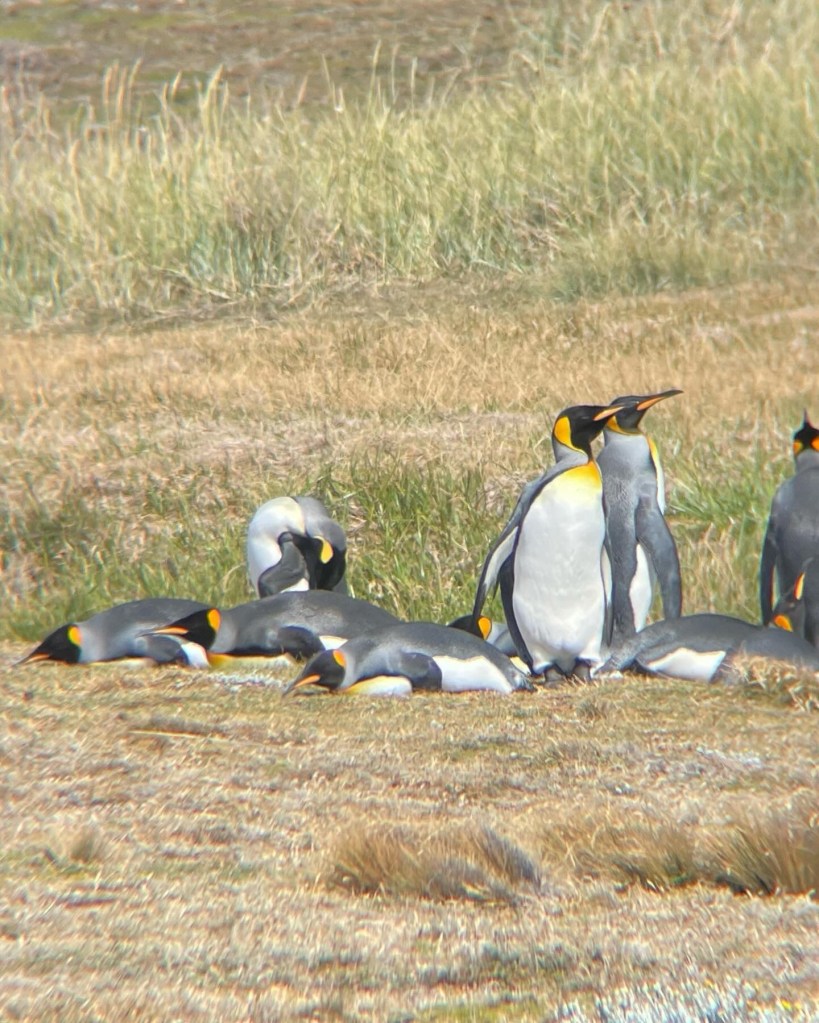
There’s a small colony of king penguins which settled here 11 years ago, and today I learnt that they don’t actually live on Antarctica at all. Just sub-antarctic islands. After a short lesson about the different types of penguins we went to the lookout to view the colony. There were few grey fluffy baby penguinos, some moulting adolescents, and the adults with the suave, sleek coats. Most were huddled, some wereswimming in the small river and others were enjoying laying on their bellies, tanning their backs. Apparently their presence is a bit contentious amoung the neighbouring farmers. We got the impression that it’s more likely to do with the land owner now making a lot of money and bringing in quite a few tourists to this otherwise remote area, which has probably pissed off the neighbours. That said, a cafe, campsite or hotel nearby would probably do pretty well.



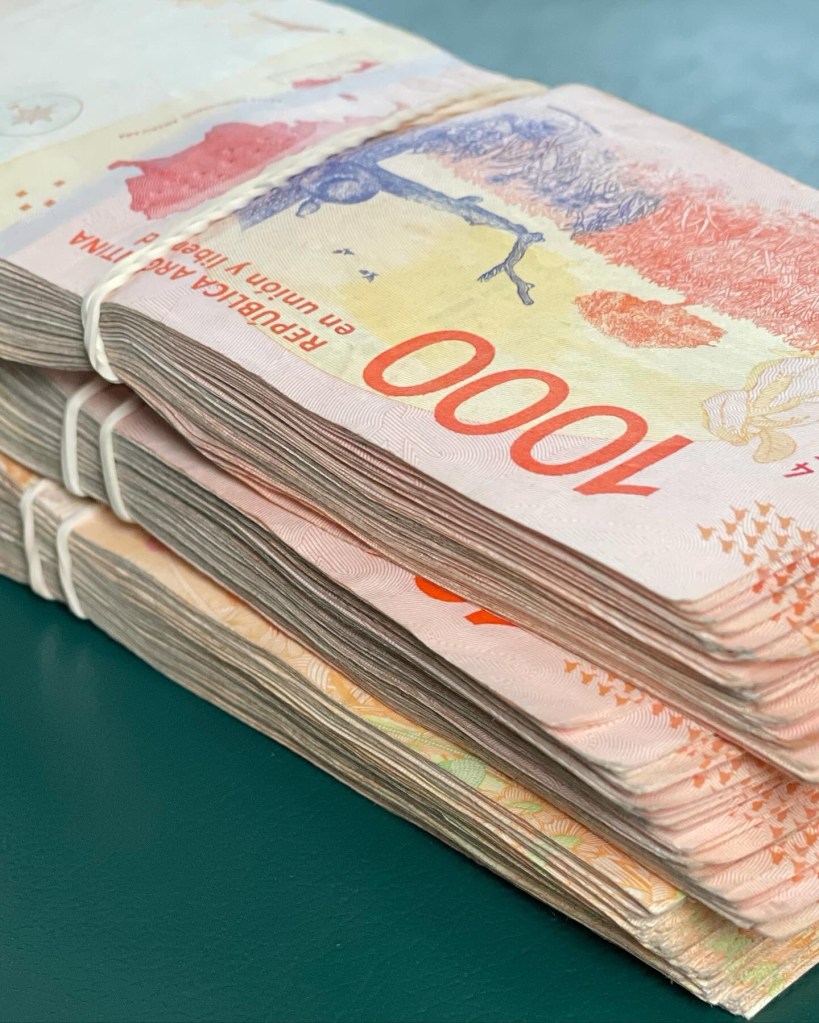
Crossing into Argentina we attempted to solve the long riddle of getting currency. £200 could get us 279,000 Argentinian Pesos (or c210,000 at the official rate). Anyway, the largest denomination note they have is 1,000… so we left Western Union feeling like bank robbers.
Rio Grande feels and smells a lot like Walvis Bay IYKYK (which you probably don’t). There’s a bit of military paraphernalia around, and signs claiming the Falklands. The signs in shops are less permanent – prices change daily to keep up with inflation. Scraps of paper taped to shelves seems to suffice.
We did not make it to Tolhuin before nightfall (it’s really far!) so your intrepid little campers are parked behind a petrol station on the outskirts of Rio Grande.
Driving to Ushuaia
It’s still a few hours drive from Rio Grande to Ushuaia. Most of the way the landscape is flat featureless steppe littered with Guanacos. The town of Tolhuin marks the change in scenery. The vast Lake Fagnano which sits on the fault between the South American plate and the Scotia plate, is one of the few locations a plate boundary can been seen on-land.
There’s a nice little bakery, Panaderia La Union, in Tolhuin. It makes a good stop for lunch and has a massive array of sweet pastries for less than 1,000 ARS each. Mike managed to accidentally spend £12 on chocolate here, which is about the same cost as a full tank of fuel.
The rest of the drive to Ushuaia is littered with lakes, mountains and glacial valleys. With plenty of viewpoints. Paso Garibaldi is the highest point on the route, and had an extreme wind whistling through whilst we were there.
Upon reaching Ushuaia we made a beeline for the pony club, which allows campers to park in their car park overnight and use the facilities. Being a Saturday afternoon, there was a rugby game ongoing in the pitch adjacent to the centre, with a large crowd gathered to watch in the howling wind.
We headed up to the Martial Glacier viewpoint and trail, for a short late afternoon walk. The weather was pleasant enough, if windy and cold, and there are great views to be had back over Ushuaia and the beagle channel. There are three small glaciers which hang over the town creating a stunning backdrop.
After a quick beer at the bar by the chairlift, we headed back to the pony club to cook dinner.




Beagle channel, and more penguins
We spent the morning quizzing the equestrian centre owner on the various types of pony expedition that they offer. By “we” I mean Sarah, in very broken Spanish. Although to be fair the ten day wilderness trekking they do down to Peninsula Mitre does look pretty wild. It’s where they filmed parts of the Revenant, which explained the posters adorning the walls of the club. Apparently they spent weeks giving the horses a make over before the filming started.
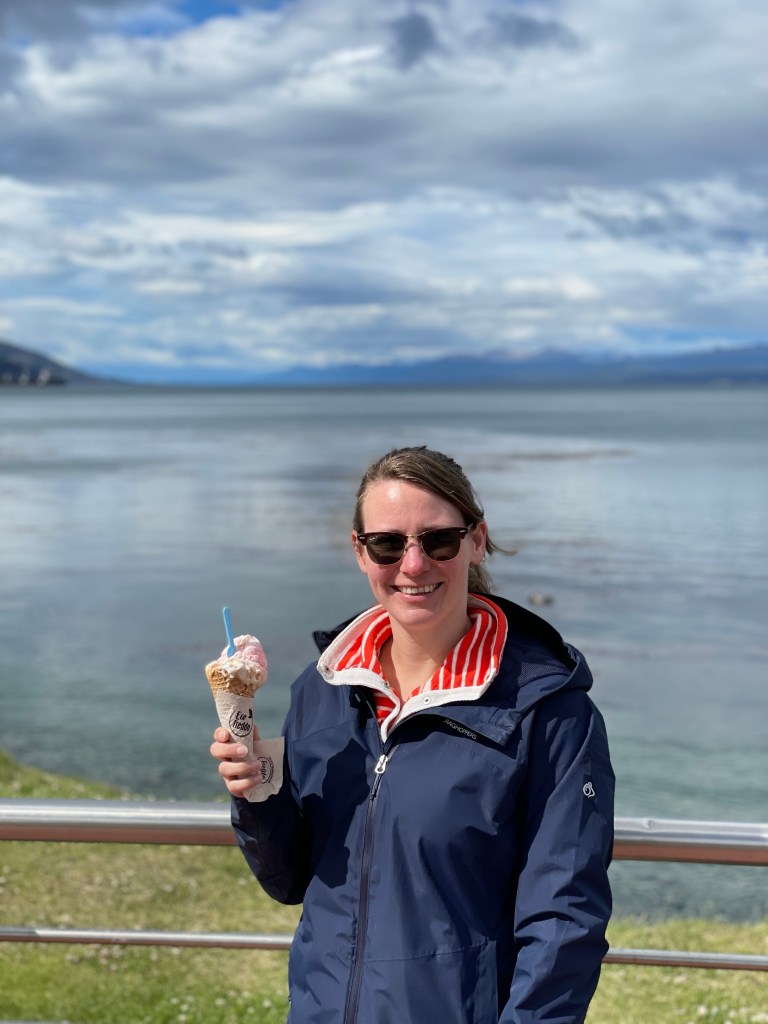
Ushuaia is the polar opposite of Rio Grande. An affluent small city, buzzing with tourists. There were many large cruise ships docked in the port, Sunday is clearly a main changeover day. We picked up a souvenir fridge magnet from the local craft market and made time for an obligatory ice cream (potentially the most southern gelato shop?!) before boarding our boat trip down the Beagle Channel to see some more penguins.
The ever threatening weather held out for us, and despite the biting winds the ride was as smooth as we could have hoped for. We opted for the longer beagle channel navigation, which took 5 hours and cost 75k ARS each. Standard tourist practice: we weren’t allowed to take food and drink and were supposed to rely on the onboard bar, where they could fleece the visitors, but at 1,000 ARS a drink it didn’t seem extortionate. South America, so far, seems to have an unwritten rule that you don’t overcharge food and drinks – except airplanes.
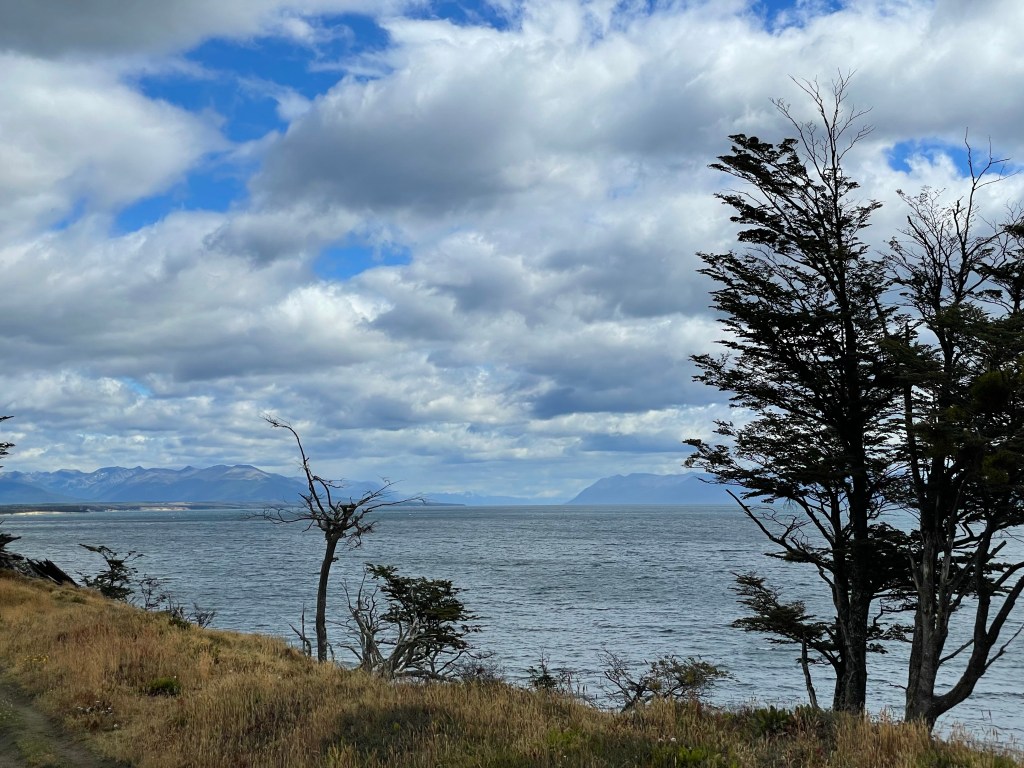
At the lighthouse, the first stop, the view back to Ushuaia was fantastic. The city glistened in the sunlight below the glacial peaks. The Beagle Channel was formed by a huge glacier, interesting evidence of this can be seen in the mountains to the sides of the channel. Any peaks below about 1,000m are smoothed over the top having been under the weight of the glacier at its peak size during the ice age. Further back from the coastline are jaggedy peaks, epitomised by Mt Olivia looking over Ushuaia. It has a distinct pyramidal shape with sharp and pointy features.
It took around 2 hours to reach the penguin island. On the route we sailed past Puerto Williams in Chile on Isla Navarino, the settlement has perhaps the truest claim to being the southernmost ‘city’ in the world, however it’s more like a village consisting of c2000 inhabitants, whereas Ushuaia, only a few km further north, is a genuine city.
The vast majority of penguins present on Isla Martillo were Magallanes Penguins, substantially the same as the ones you get in South Africa, Australia, and we think most zoos. There were a small number of Gentoo penguins too, these were further away and a bit trickier to spot. The gentoo penguins are larger than the Magallanes, and have orange beaks and feet making them look like real life Pingus. Apparently there’s a King penguin on this island too, but that feels like a myth repeated to tourists to sell more boat tickets.




Dinner at Ramos Generales was decent, the food good, and the building was full of interesting old knick knacks. The highlight (for Mike anyway) was the tasting selection of beers from the on-site microbrewery.
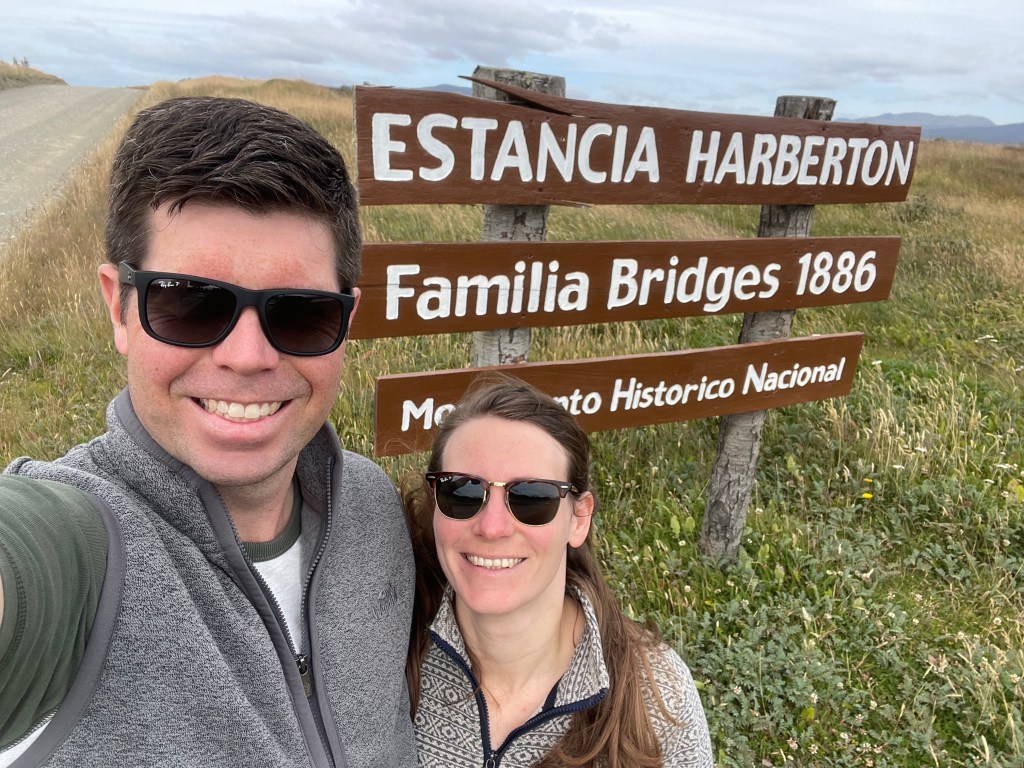
Estancia Harberton
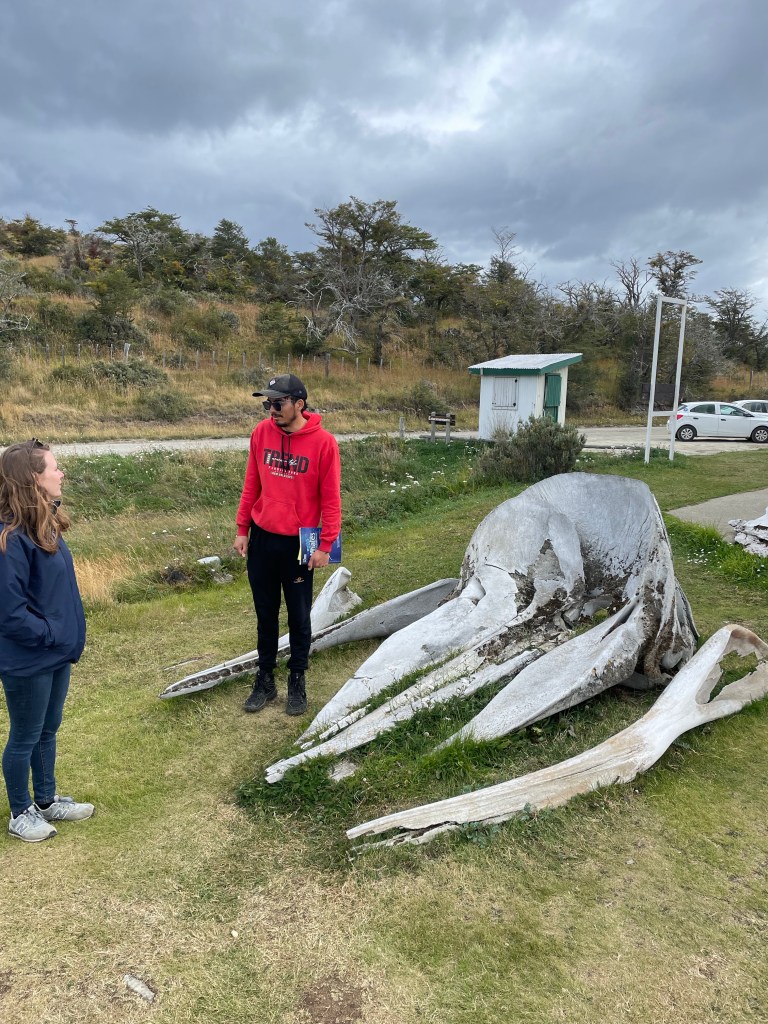
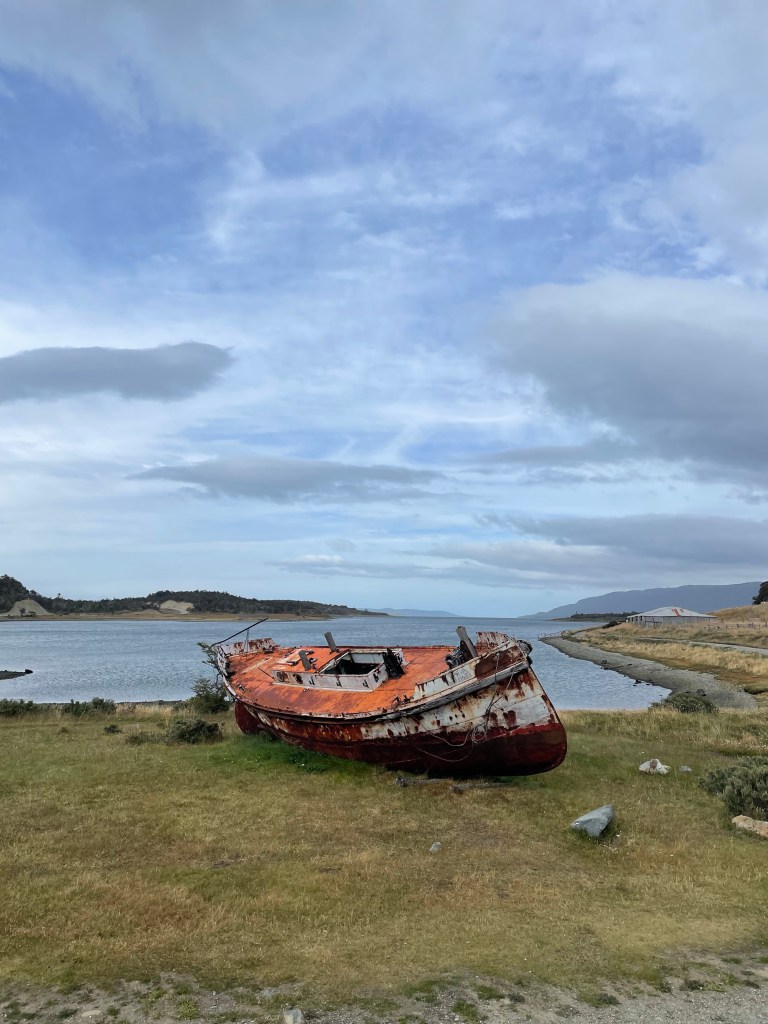
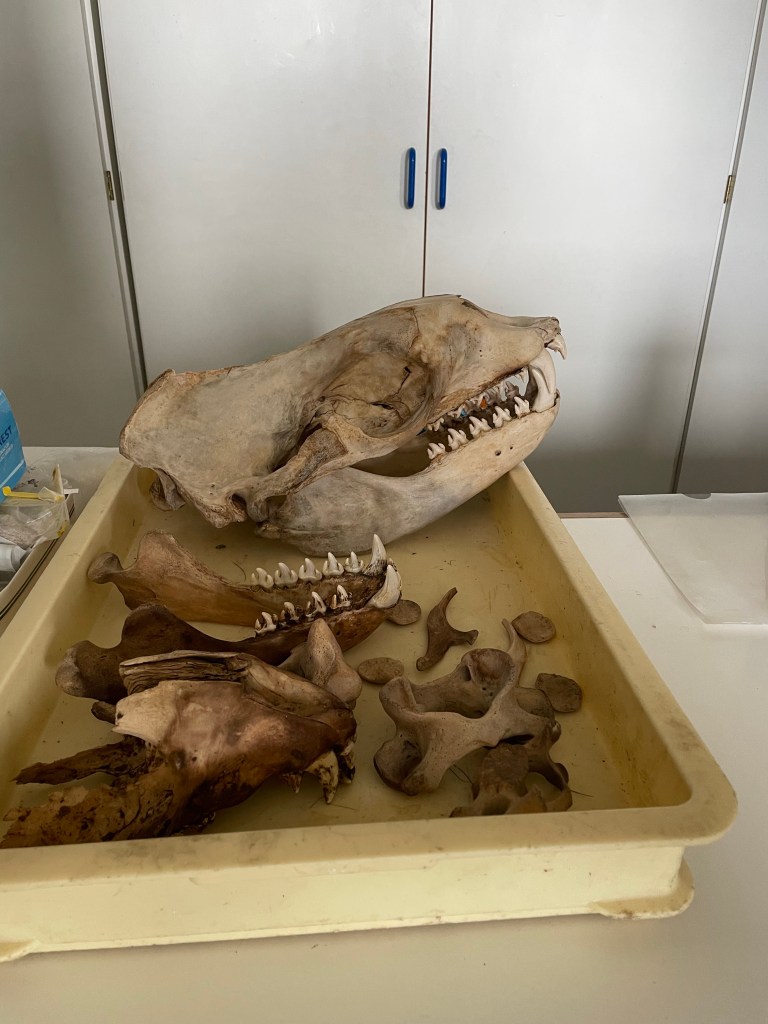
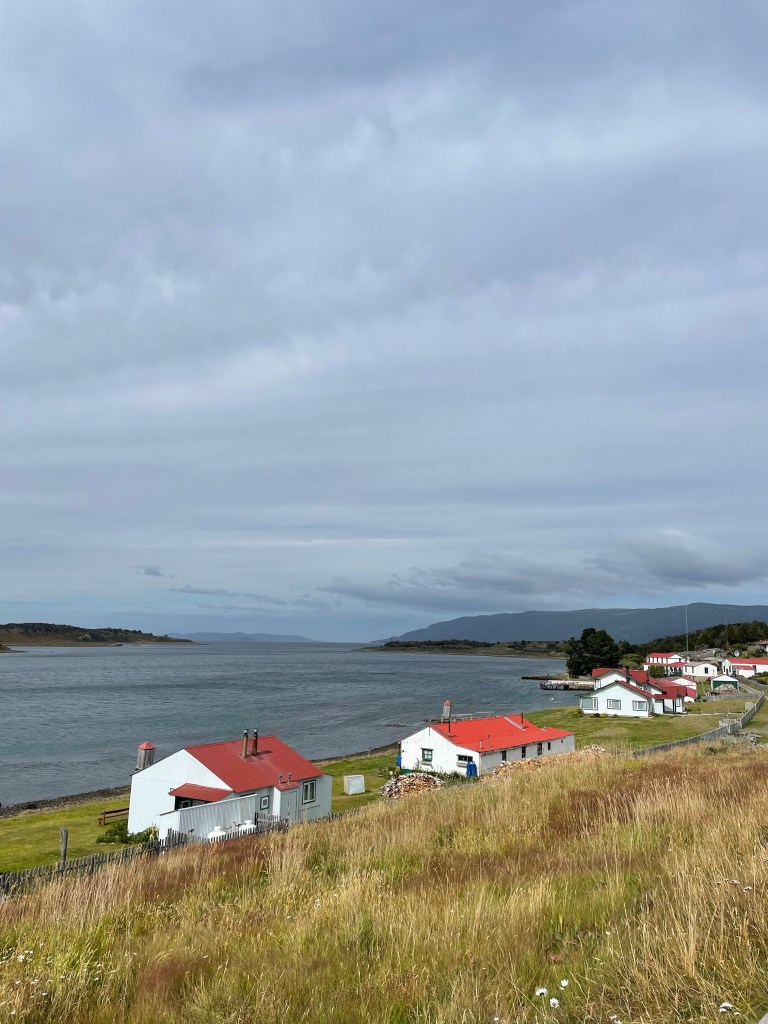
The most interesting visit of our time on Tierra del Fuego, and almost deserving of a blog post of its own. I will write up in more detail, but it’s late, so it’ll come in the next instalment. The visit consisted of a fantastic marine mammal musuem, and a visit to the homestead, the oldest and southernmost in all of TdF.
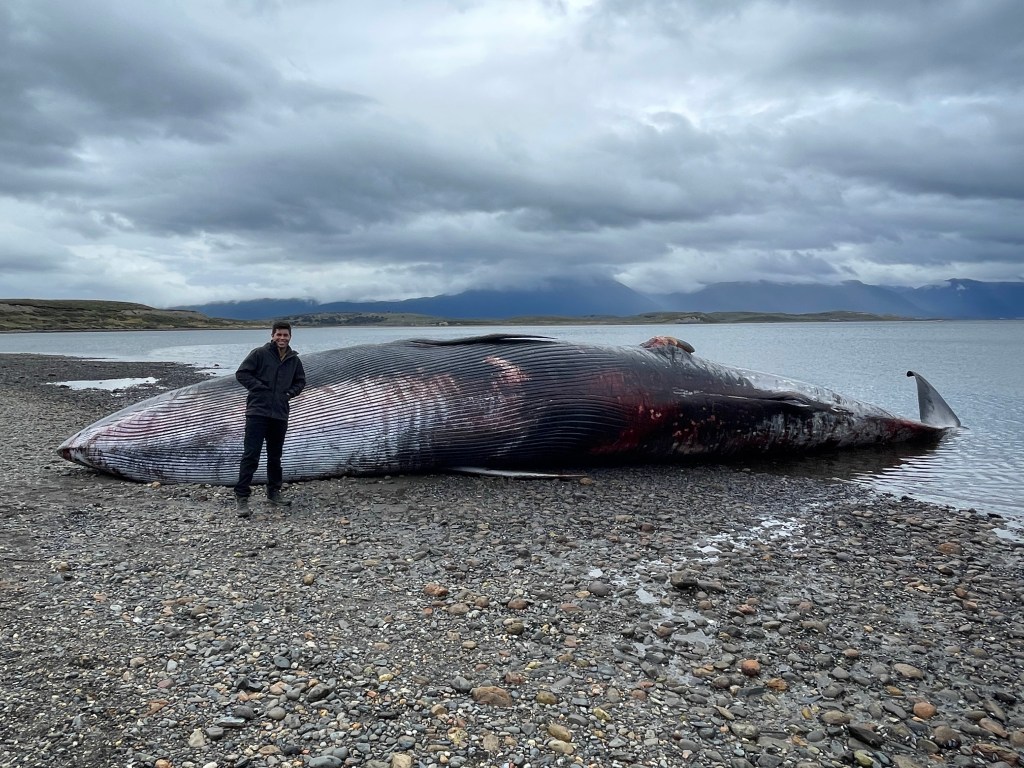
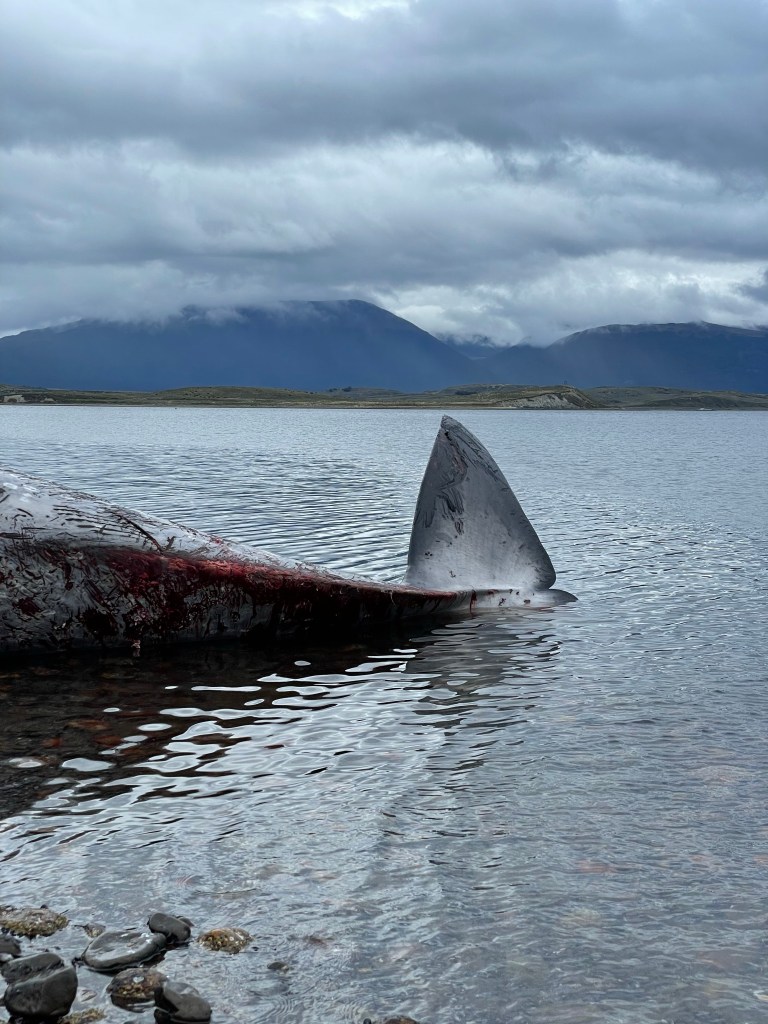
We saw a beached Sei Whale, which had only just beached itself the day before we visited. The cause of which is unknown, but perhaps caused by orcas. They will also study the body and hopefully display its bones in the museum.


Impressions of Tierra del Fuego
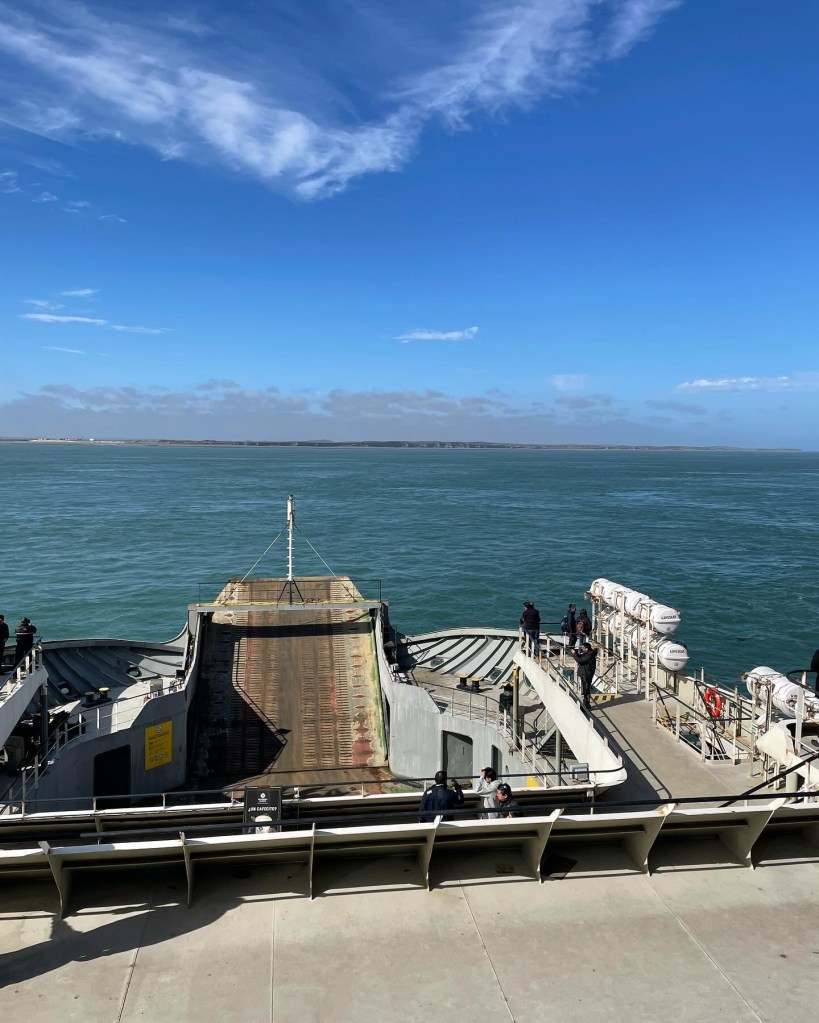
It’s the largest island in South America, tucked away at the very southern tip of the continent. We drove every paved highway on the island twice, so feel fully qualified to comment. The northern half of the island is vast steppe, littered with guanacos and sheep, but otherwise empty. The southern half is spectacular mountains and fjords but mostly inaccessible by land. The island is split in half longitudinally too, the eastern half is Argentinian and the western half Chilean. The major road access is via the ferry at Primera Angostura, it takes 30 minutes to cross from Punta Delgada in continental Chile, itself equidistant between the large cities of Punta Arenas 🇨🇱 and Rio Gallegos 🇦🇷.
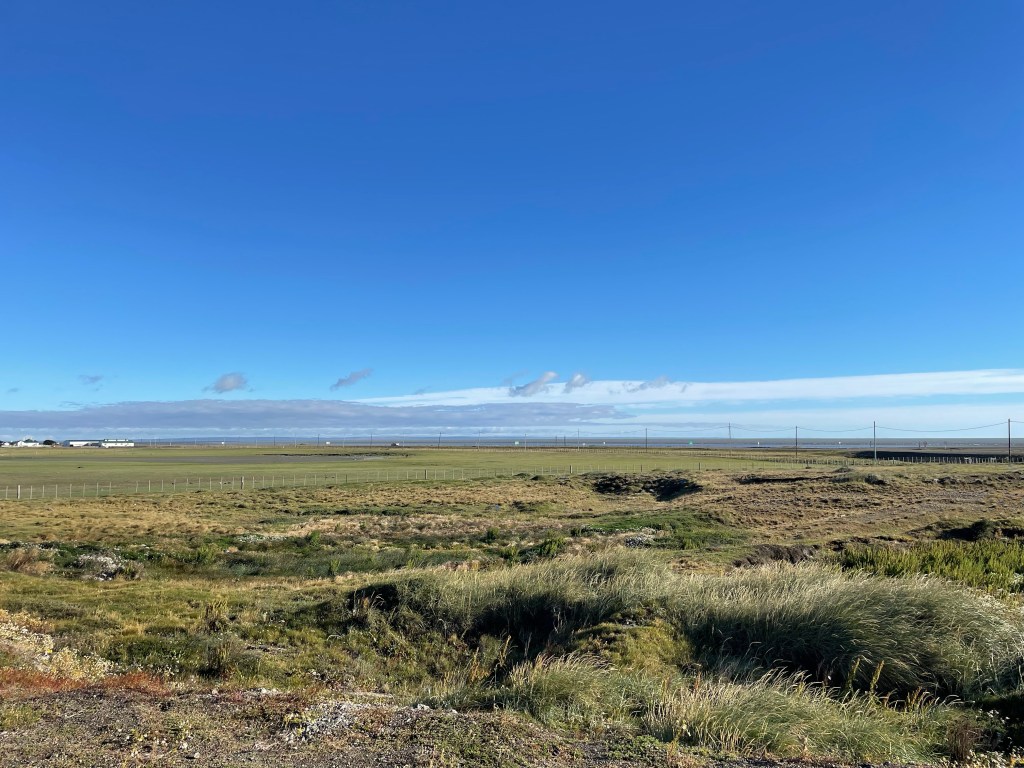


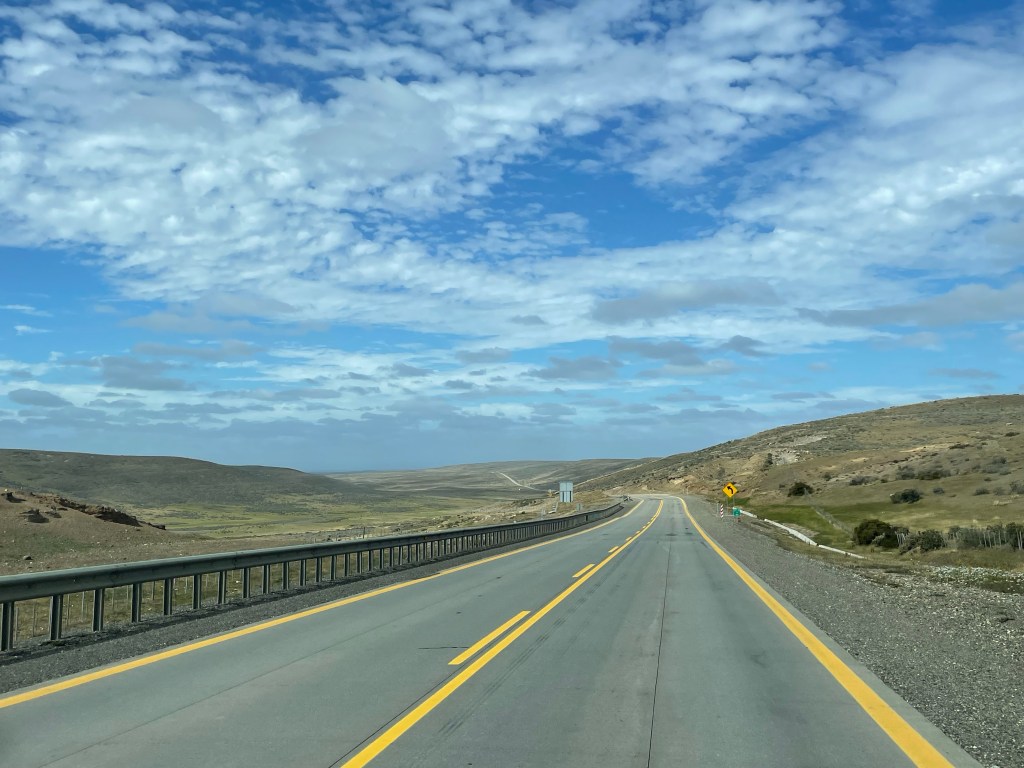

There are very few settlements of any kind, only five of note on the whole island (Rio Grande, Ushuaia, Tolhuin, Porvenir, Cerro Sombrero), the three largest being in Argentina. Ushuaia is the capital, and main tourist town with its international airport and Antarctica cruises. Rio Grande is the largest town, the industrial hub of the island has absolutely nothing to offer visitors. Both cities have grown rapidly thanks to tax incentives offered to encourage settlement from northern Argentinians. It’s amazing how much bad weather and strong wind people will put up with to pay less tax. (Note from the editor, people do live in Scotland you know).
Most visitors will only ever see the pretty mountains of Ushuaia, and never fully appreciate the vastness of the land beyond. Some cyclists however seem to traverse the country on the busy single carriageway highway, the winds are fierce and the rain is bruising. This is in peak summer, and to top it off the cycling is pretty boring for the most part, so I wouldn’t do it if you were considering it (if you do, get a lift as far as Tolhuin).
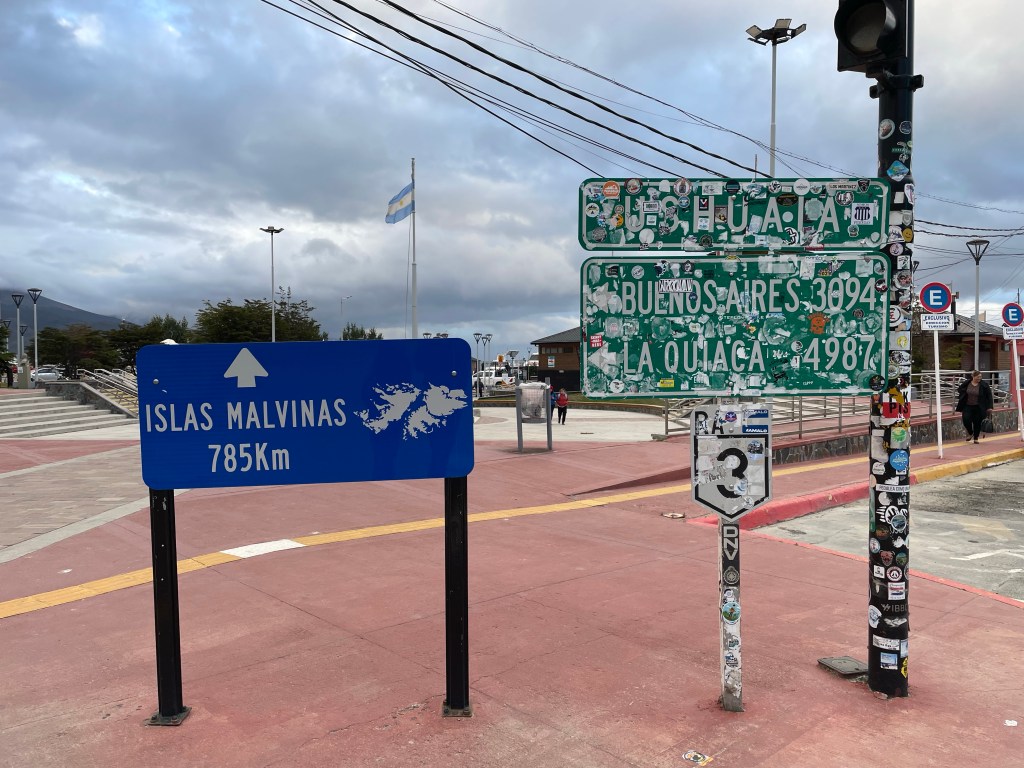
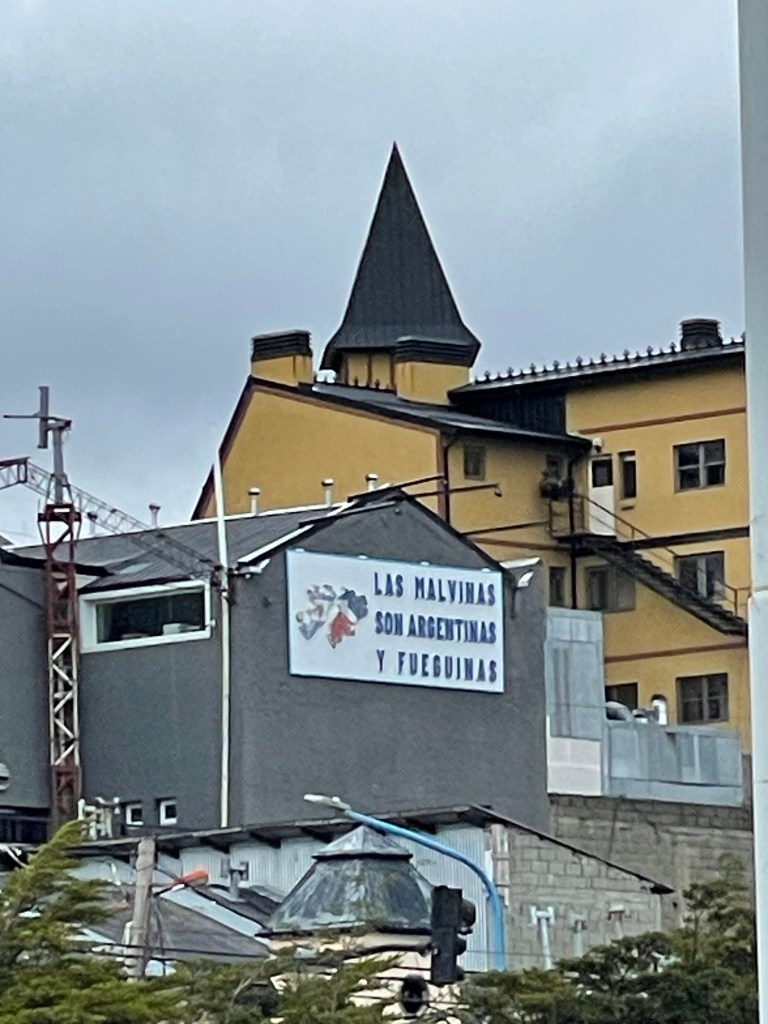
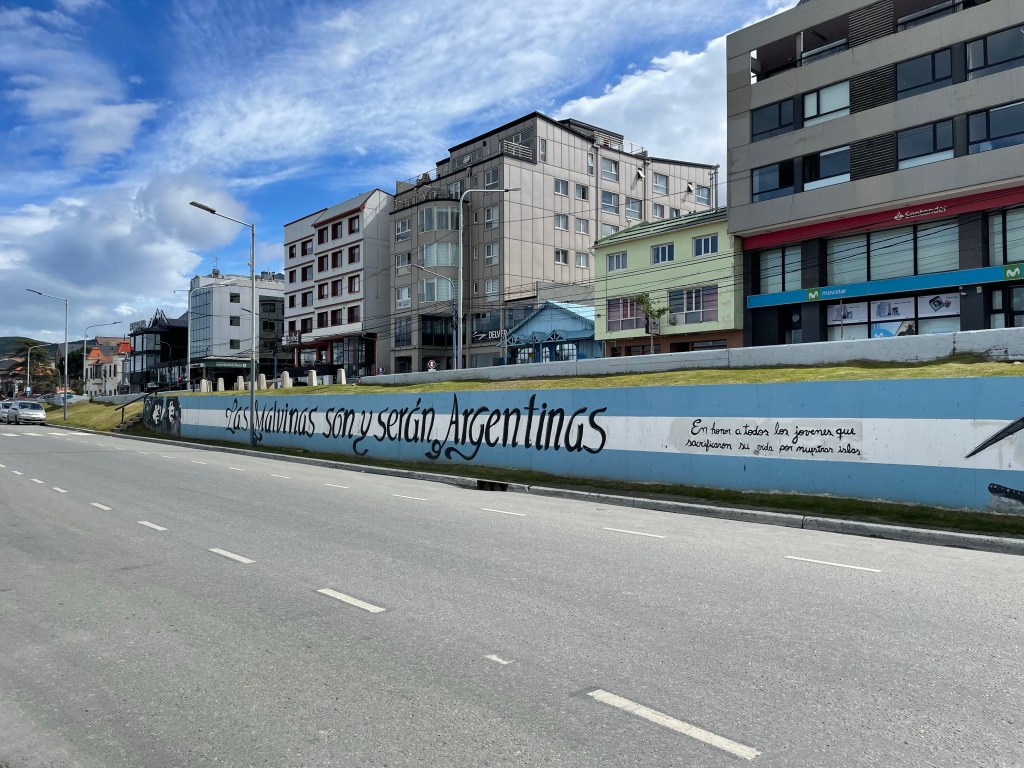
The islands known to the Argentinians as the Malvinas, seems to be a contemporary discussion topic. Murals adorn almost every spare wall in Rio Grande and Ushuaia, the latter branding itself as the capital of the islands. Did we have a discussion with the locals about it? No, our Spanish is pretty bad, but I cowardly took some photos.
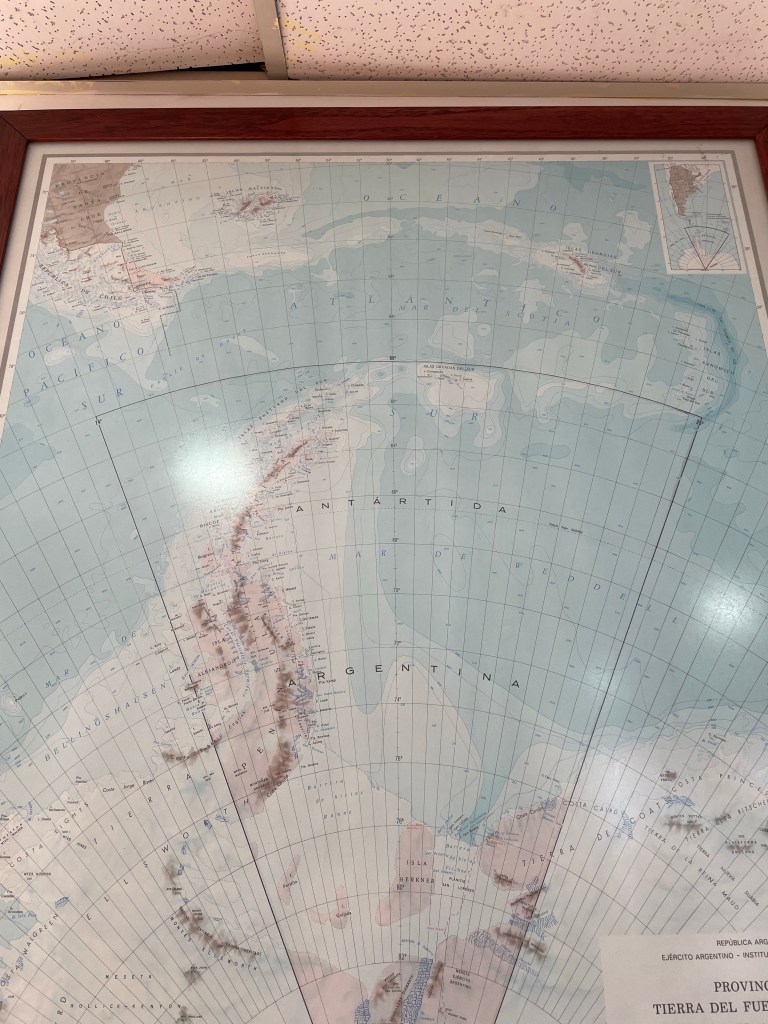
They also claim a good chunk of Antarctica on many of their maps too, which coincidentally seems to be the same bit as Chile.




 Small Holiday Big Dream
Leave a comment