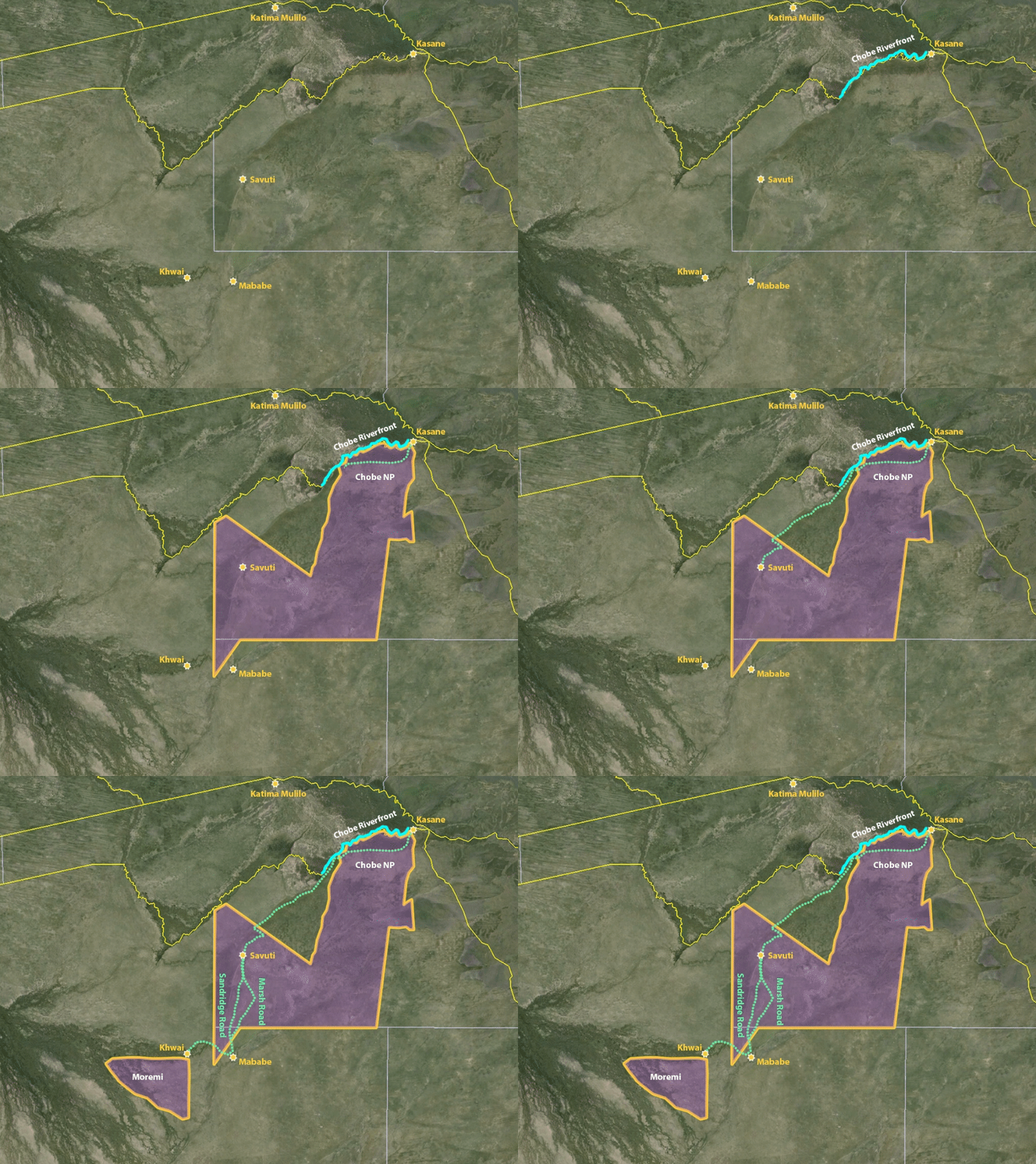
Up until now we had stayed very much on the beaten track. Over the next three days we would make our way to Maun, over 300km away, with the majority of the distance to be covered on sand roads.
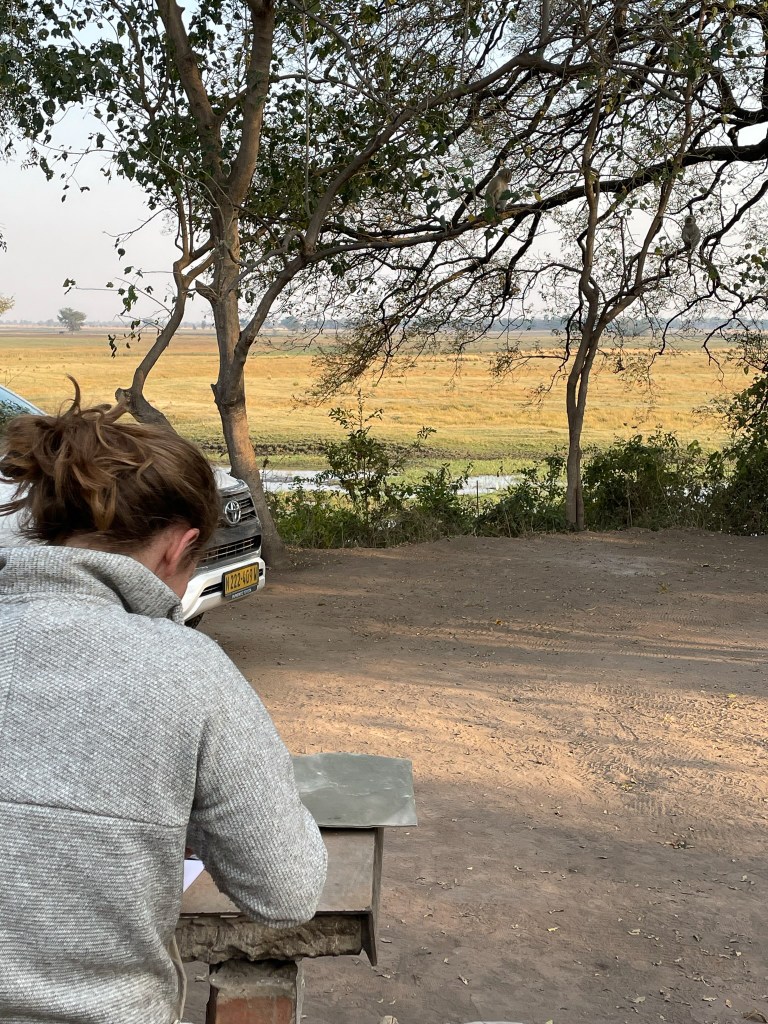
At Muchenje campsite, we sat on the deck as the sunrise behind us slowly lit the Chobe river. The marsh area directly in front of us was teeming with birdlife. Mostly egrets and bitterns of sorts. Many African Jacana tiptoes their way through the water, and a small squadron of pied kingfisher were fishing in the deepest pocket of water.


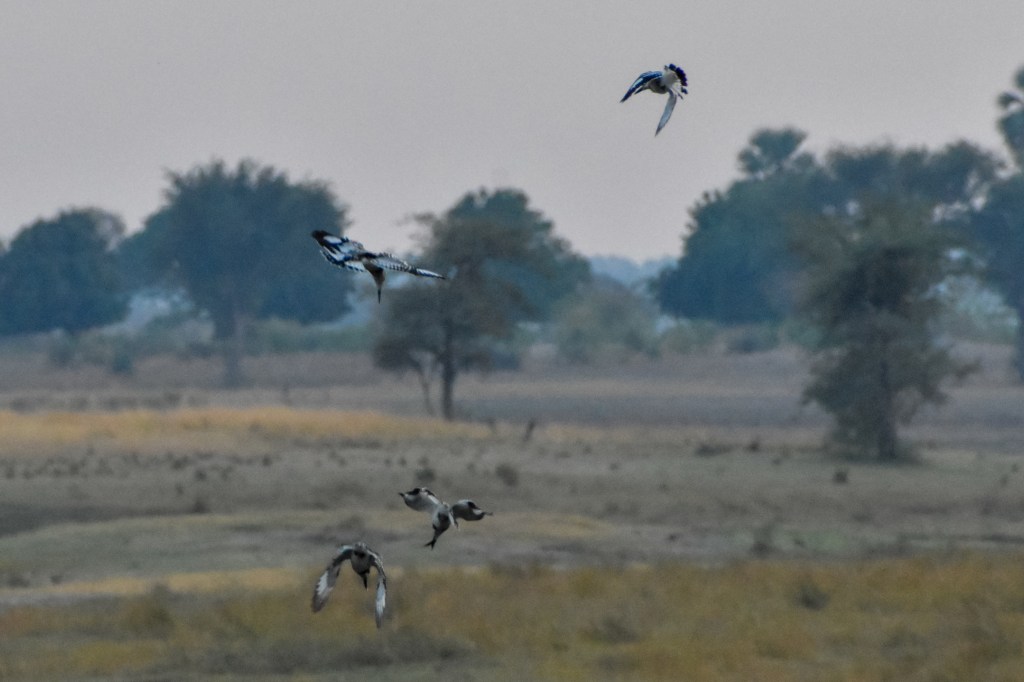
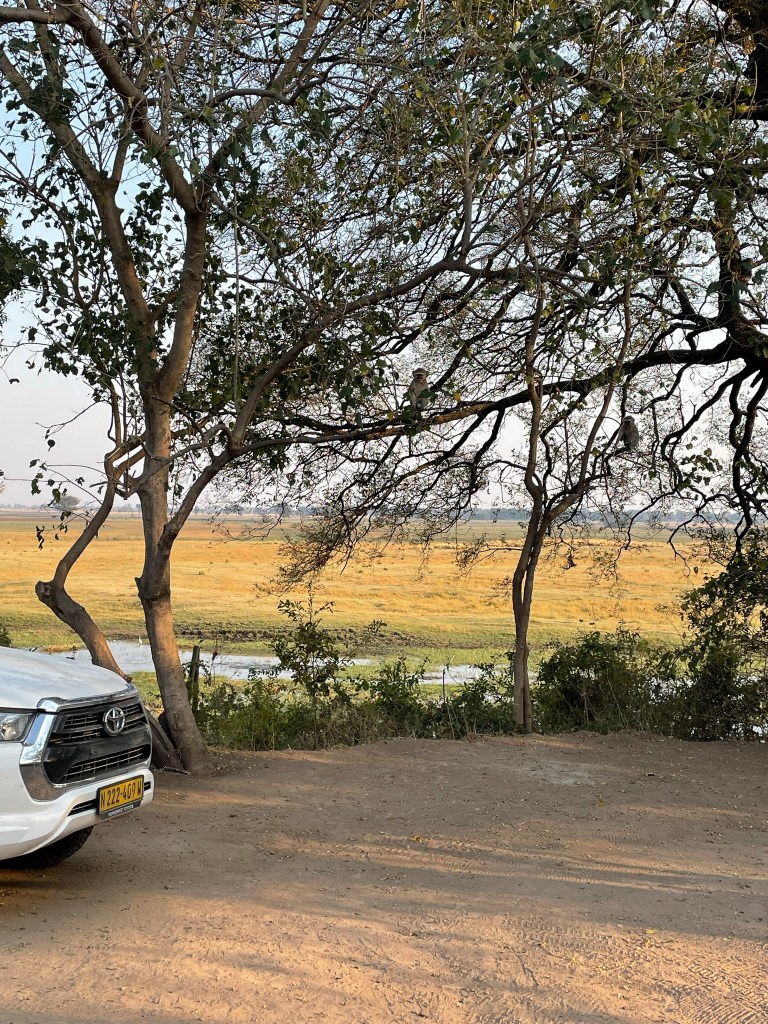
I spent some time trying to catch the perfect photo of the kingfishers, while Sarah cut up her enormous home-grown paw paw. The vervet monkeys were very interested, but were ultimately too chicken to get close enough to steal any.

Our destination for today was Savuti, an area made famous by the documentaries on fishing leopards. This evening we were looking forwards to staying at Savuti Safari Lodge – and to go on game drives with experienced guides – but first we had to get there.
We topped up our fuel tank at the conveniently located fuel station right by Muchenje camp, the next stop for fuel would be Maun itself.
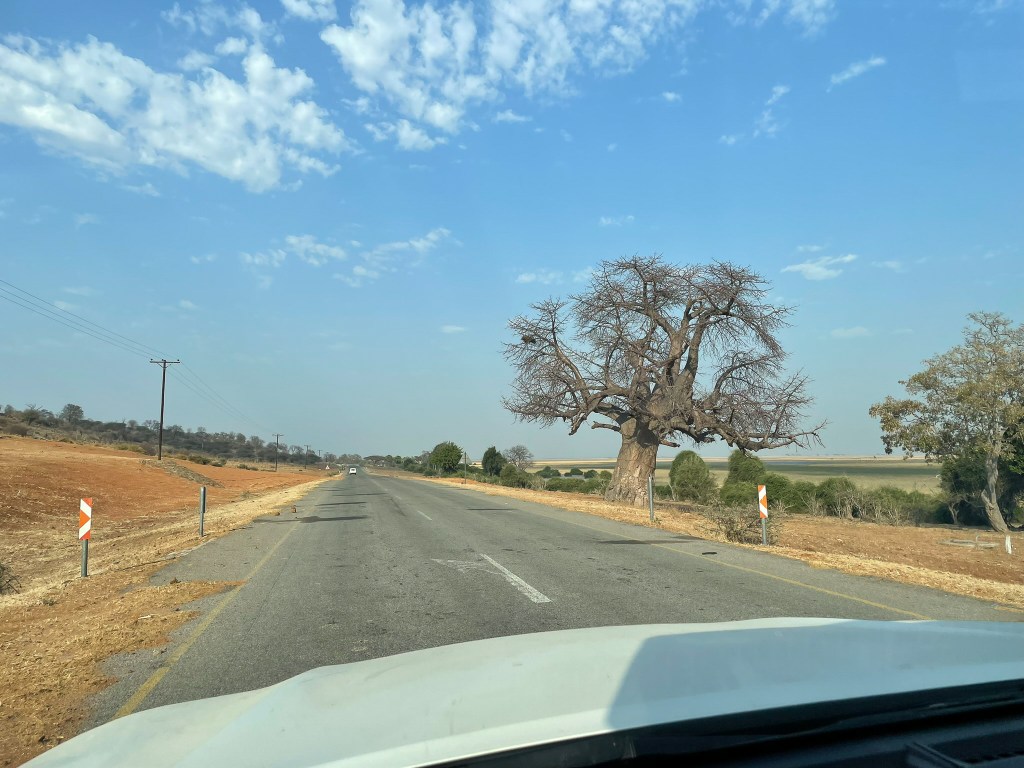


The first 30km of the day was on a wide and well kept tarmac road lined with some impressive baobabs. At Kachikau the tarmac abruptly ends and the sand road begins. From here it’s still another 40km to the Chobe National Park entrance at Ghoha Gate, however we were forewarned that the most difficult driving is before you get into the park proper.
In fact many drivers get caught out on the first uphill drag almost immediately after the tar road ends. We took no chances and let some air out of the tyres straight away.

Sarah expertly drove the sand road, I was left to navigate – and given there was only the one road it was hardly the most taxing task, and fortunately I still had the tourist map from our riverfront drive. There wasn’t much in the way of traffic, we saw only a handful of cars all day, although we did come across a convoy of three caravans, one of which had got hopelessly stuck in the sand.


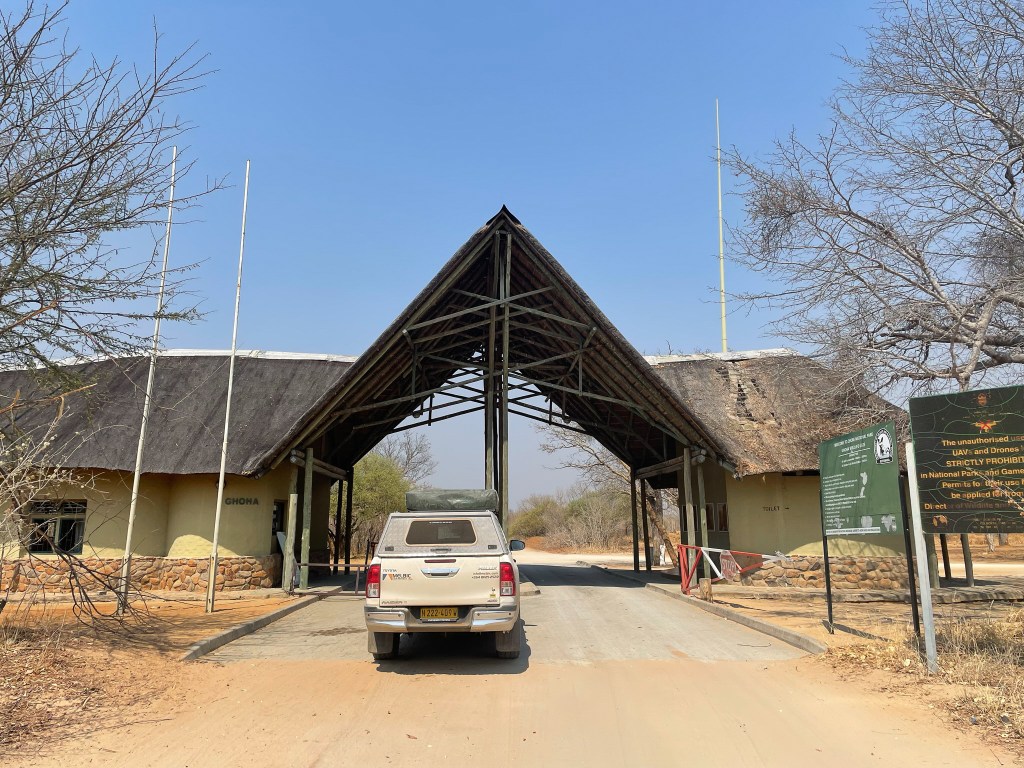

2.5 hours after setting off we reached the Ghoha Gate and entered the Chobe National Park for the second time. From the gate there are two routes to Savuti: the airfield road, and the marsh road. In the wet season the marsh road is best avoided, but since we were there in mid-September, and any semblance of water had long since vanished, the marsh road was the optimum choice.
Wildlife appeared sparse, although we were approaching the middle of the day, and as we neared Savuti the landscape became much more desert-like.
We stopped at the disaster pan stretch point for a leg stretch and a toilet stop. Nearby we started to get our first glimpses of wildlife. Three Roan antelope being a highlight.


A short game drive around the area yielded no notably wildlife, but a few hairy moments crossing the dry river channel and somehow avoiding getting stuck in the sand.
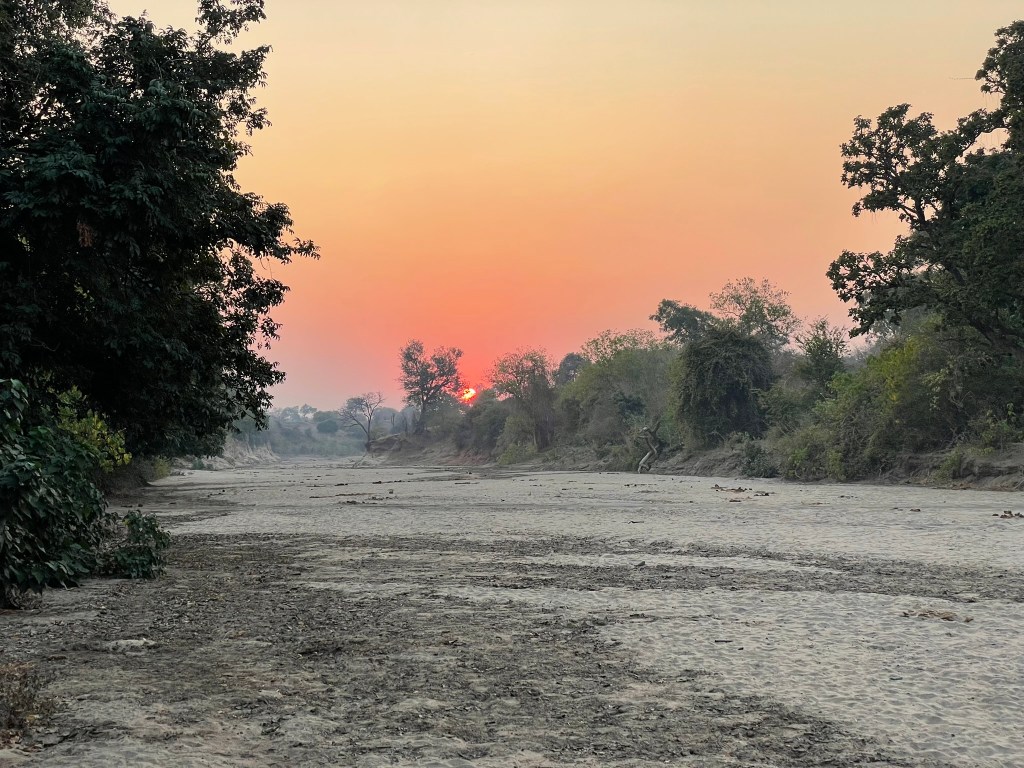
Water in Savuti is a mystery. The Savuti channel has flowed periodically since records began, in the 1800s there is record of perennial flow which abruptly stopped near the end of the century. The river bed remained dry for many decades, until water began to flow again in the 1950s before drying up once more. Following a 26 year dry period water began to flow in the Savuti channel once more in 2008, refreshing the flora and fauna of the region. This continued until 2015 when once again the channel ran dry, and has remained dry ever since.
The explanation for the unpredictable flow lies not with global warming, but with plate tectonics, where small geological movements direct water into or away from Savuti from the Okavango (Selinda channel) or Chobe rivers. Uniquely fed from two sources, any flow runs out into the Savuti marsh, which at the moment is a forest of dead tree stumps from the last time it was flooded.
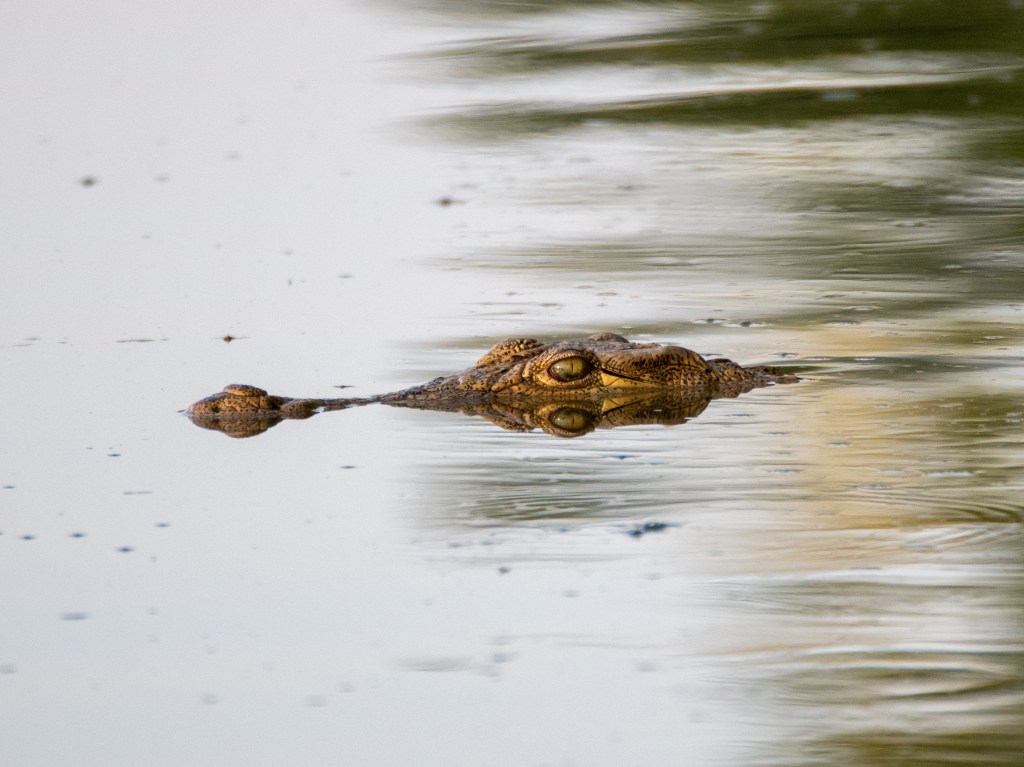
Whilst the channel was flowing hippos were resident, however the last of these dies a few years ago. As the river had began to dry up, lakes of water began to get cut off from one another, slowly becoming small puddles. Any fish left were trapped – and therefore became easy meals for any enterprising predator. This gave rise to the unique behaviour seen in the documentaries.
Lunch was served on arrival at Savuti Safari Lodge, and we had a quick opportunity to make ourselves at home in our cabin, and for a dip in the swimming pool before an afternoon game drive.
Isaak was our guide, and we set of fairly sharpish towards the North Savuti pride of lions. On the way we were furnished with all the details of local lion politics, about how recently the main pride had been split by outsiders, and there were now competing factions.
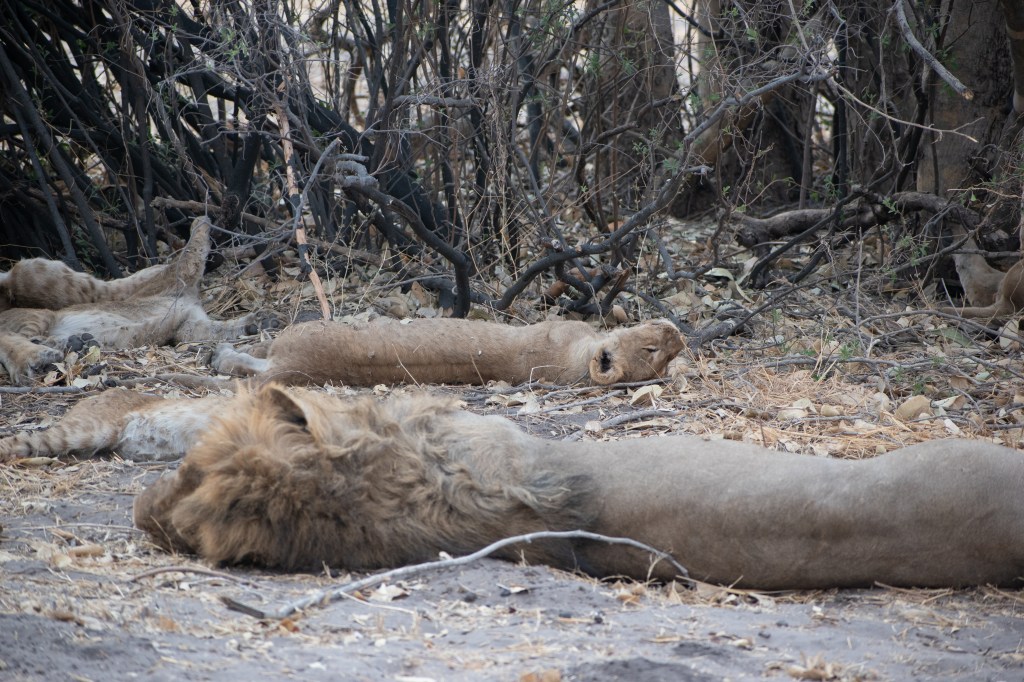
We arrived at the lions and they were sprawled lifeless under adjacent thickets. Just as lions do.
As we had approached there had been a flurry of activity on the radio, a leopard and cub had been spotted on the move near the airstrip. We eschewed the chance to spend an hour with the lifeless lions to immediately go to see if we could find the leopard.
An extremely skittish pair of bat eared foxes crossed our paths, so brief was their visit that I only took one photo as they dashed off into the bush.
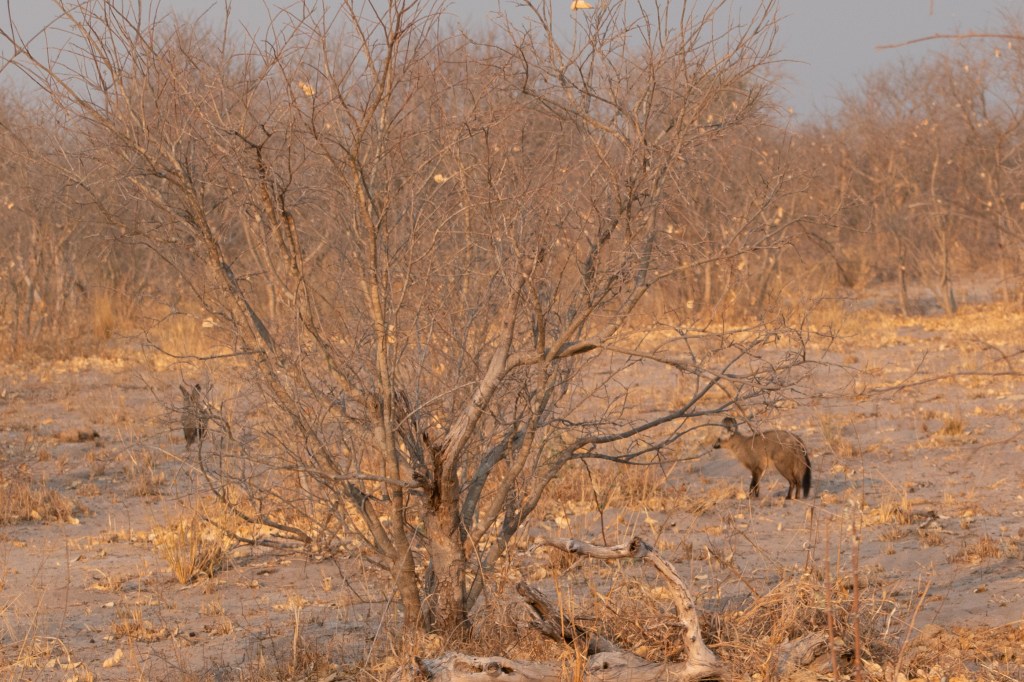
On the way Isaak thoughtfully shook off some pesky self drivers with some shrewd deception tactics. When we reached the scene the leopard had already vanished to the east. One safari vehicle attempted to follow off-road, however we tried our luck around the back of Harvey’s pan.
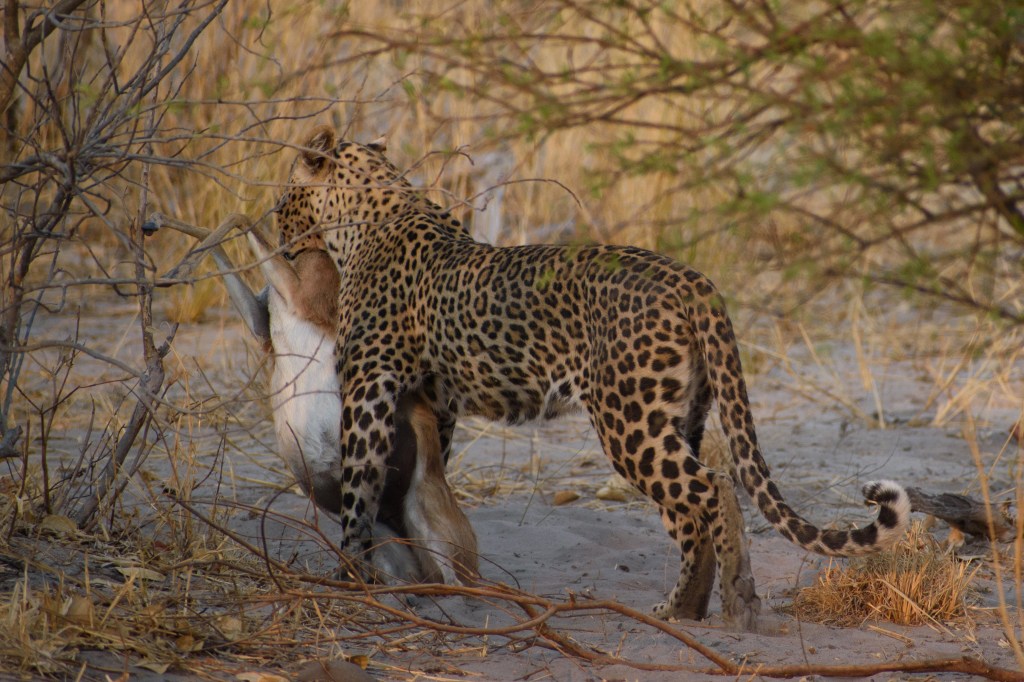
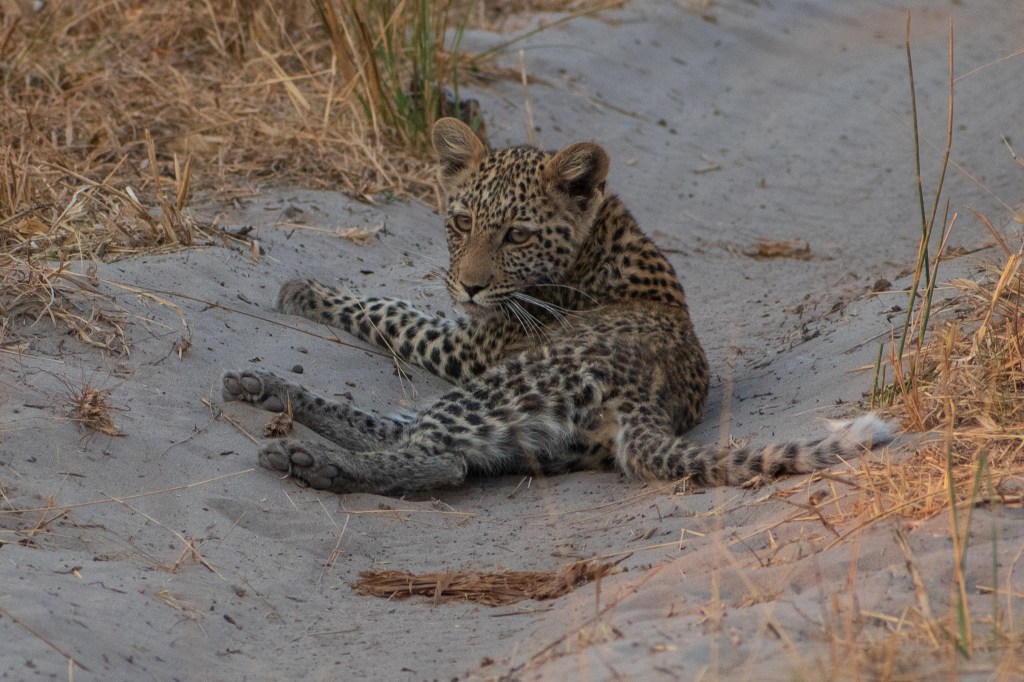
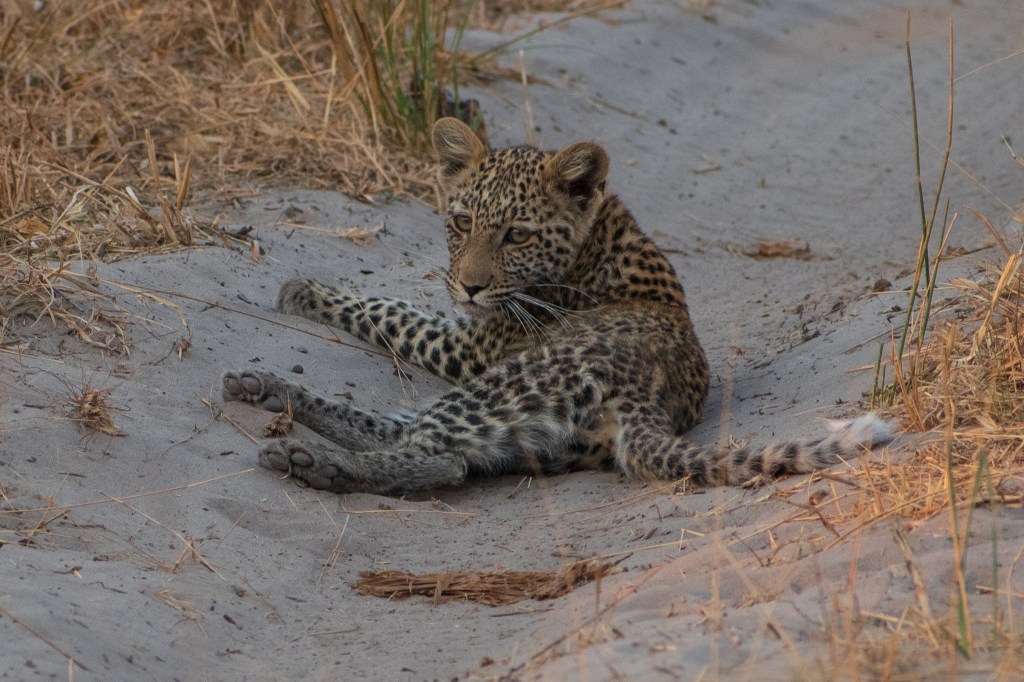
Our guide found some leopard tracks heading east and west across the road we were on, however they were not so fresh. Just as hope appeared to be fading we took another look at the tracks, and Isaak declared them to be fresher than he had previously thought. We followed the track north for a couple of hundred metres, and there under a thicket at the side of the road was the leopard and her cub, and a dead steenbok for added measure.
Our presence clearly flustered the leopard, very quickly she picked up her kill and slinked away into the longer grass with her cub in tow. At this point other safari vehicles had began to show up, compounding the leopard’s misery. Isaak told the other cars to give her some space, but some them started to get very close to the leopard, forcing her further back into the bush. With the animals becoming ever more agitated, our guide decided it was time to pull out. The cub and mother were both visibly hungry, and needed to eat, and all we were doing was putting them and their kill at risk.

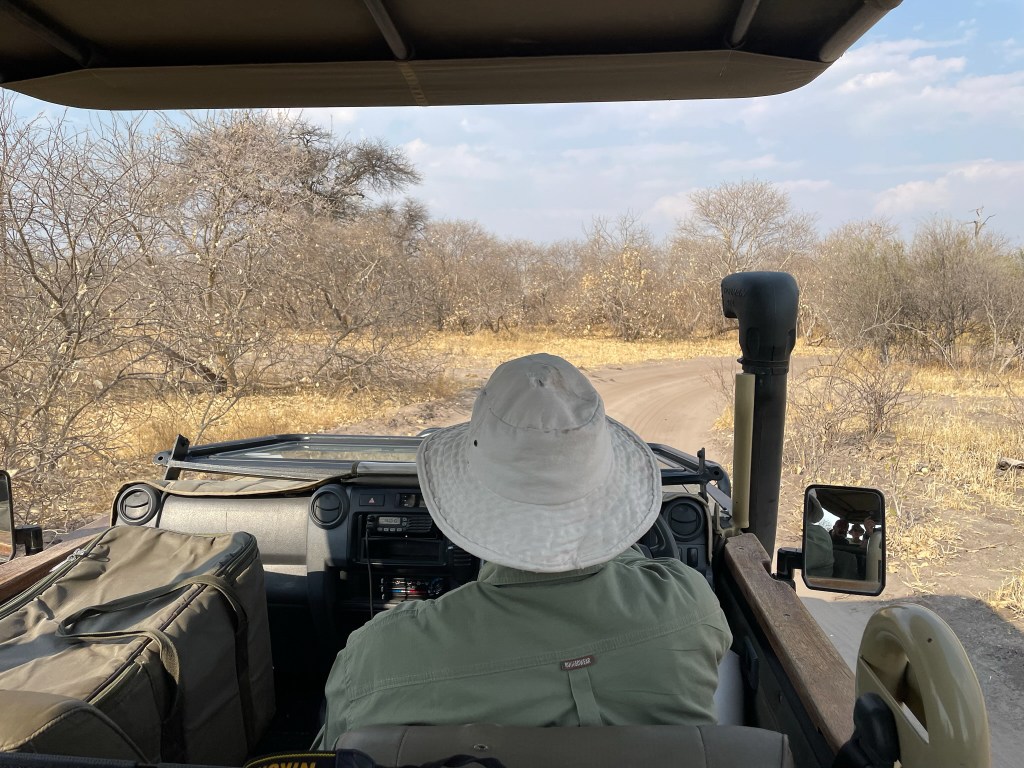

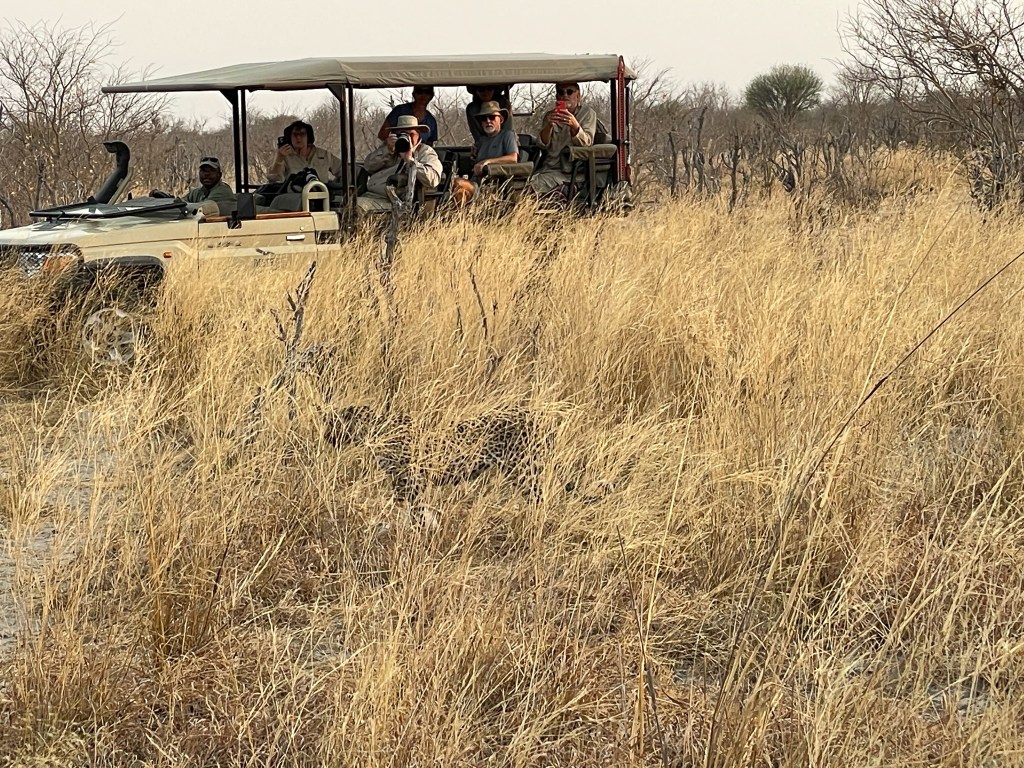
We stopped for a sundowner and a stretch on our way back to camp. Night driving wasn’t permitted in Chobe National Park – even for the professional guides. So whilst Savuti is an amazing place, we were unable to get too much on an experience of the wildlife at night.

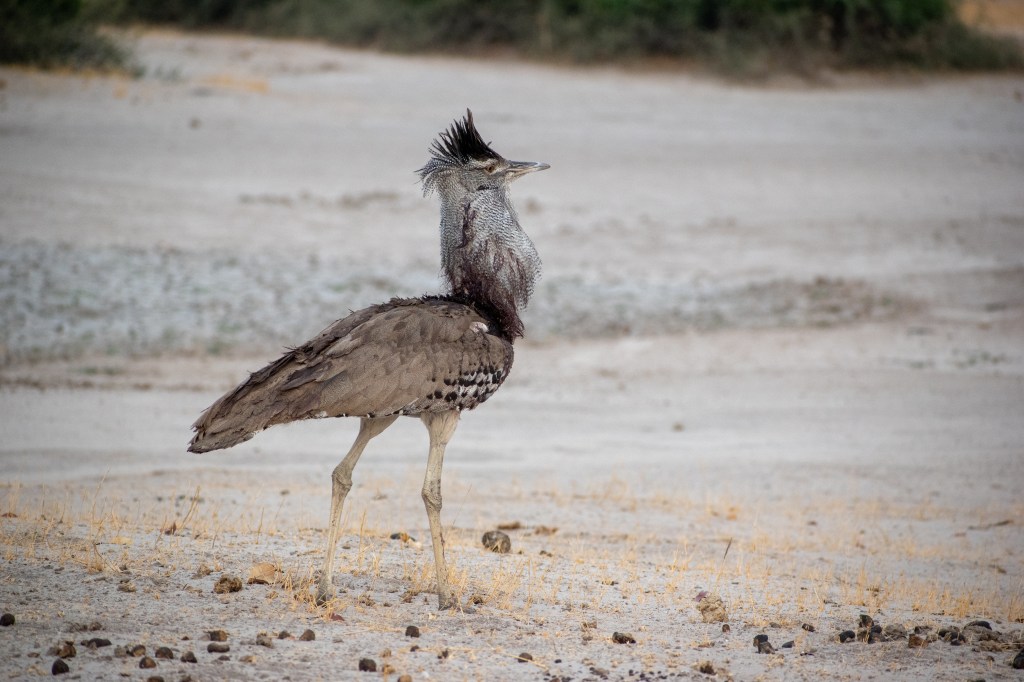
Back at camp there was a floodlit waterhole overlooked from the terrace. Although the waterhole was very much dominated by elephants all night.


Savuti Safari Lodge went fully in on the ethos of a luxury safari camp. Whilst not quite as expensive as their fancier neighbour the Belmond Elephant lodge, the prices were still eye-wateringly expensive. This is the norm for northern Botswana where westerners are charged a premium to access some of the best safari experiences in Southern Africa.
There is a much cheaper public campsite at Savuti, we found it difficult to get a contact to book through, and were told they were fully booked. I have a feeling it would be possible to get a space if we had tried harder or booked through an agent. I don’t think I’d recommend turning up out of the blue without a reservation, but it would be a tempting option.

 Small Holiday Big Dream
Leave a comment