First light at Namutoni, and we were as eager to get going as any day. Today was to be one of the longest driving days of our holiday, but first we had some game spotting to do in the first hour of light.
The night before we’d prepared our plan of attack, checking the sightings book for hotspots, and making a note of the best route for the single hour we had.
Koinachas was our first port of call, barely five minutes from the camp gates and 30 seconds off the road. No luck. A swift decision was made to continue on to Chudob, a well regarded waterhole another 10 minutes down the road. With nothing their either we felt our luck was slipping away, and we’d leave our last day in Etosha empty handed.
En-route back past Koinachas, we noticed a safari vehicle perched exactly where we were stationed just 20 minutes earlier. As we passed the turning a second oncoming safari vehicle made a beeline for them. We know the guides have radios, so there must be at least something of interest up there. We wheeled around to go and find out.
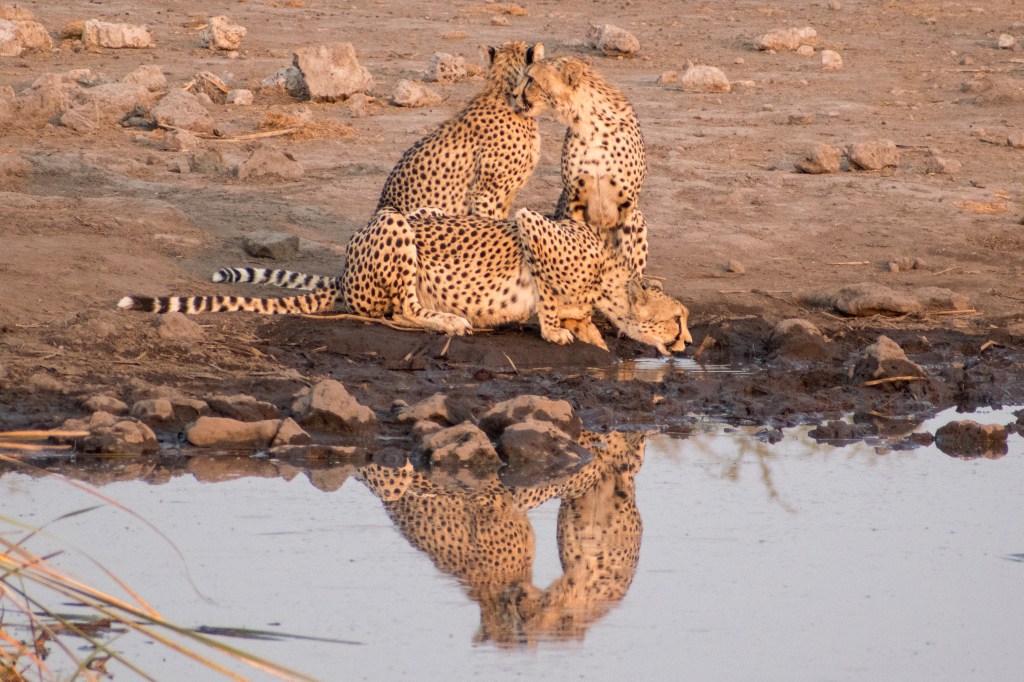
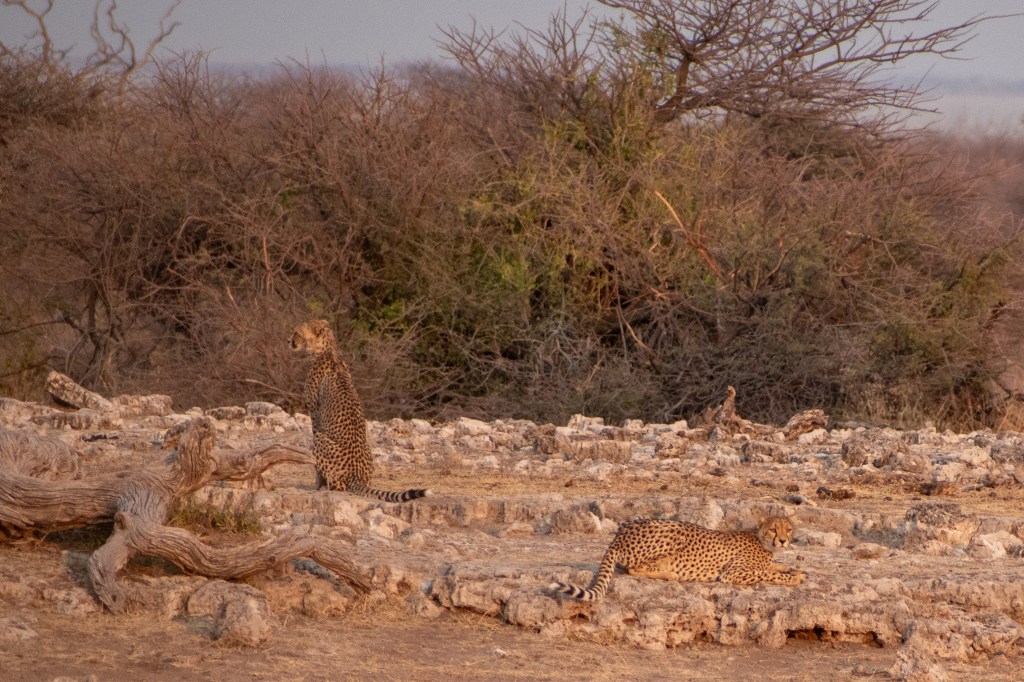
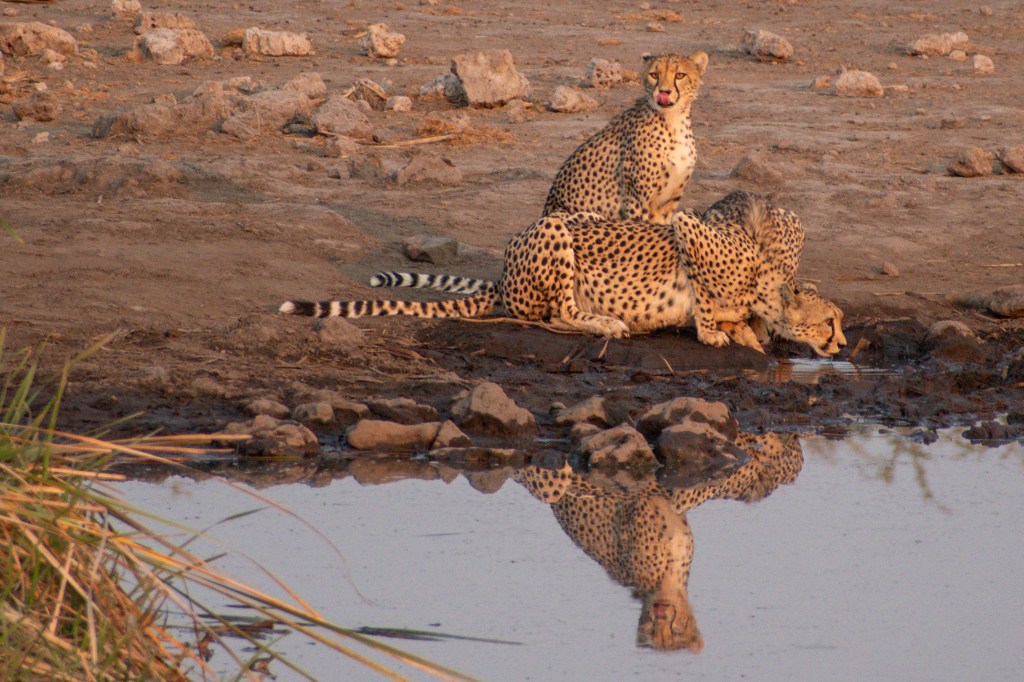
Three cheetahs quenching their thirst at the waterhole. We must have only just missed them first time around. We had to be quick to catch them though, they spent barely a few more minutes at the water’s edge. After having a bit of a play around on the open ground behind the waterhole, they slipped off into the bush.

With the cheetahs gone, we headed onwards and upwards. We took the opportunity for a quick detour towards Groot Okevi before we had to leave the park.
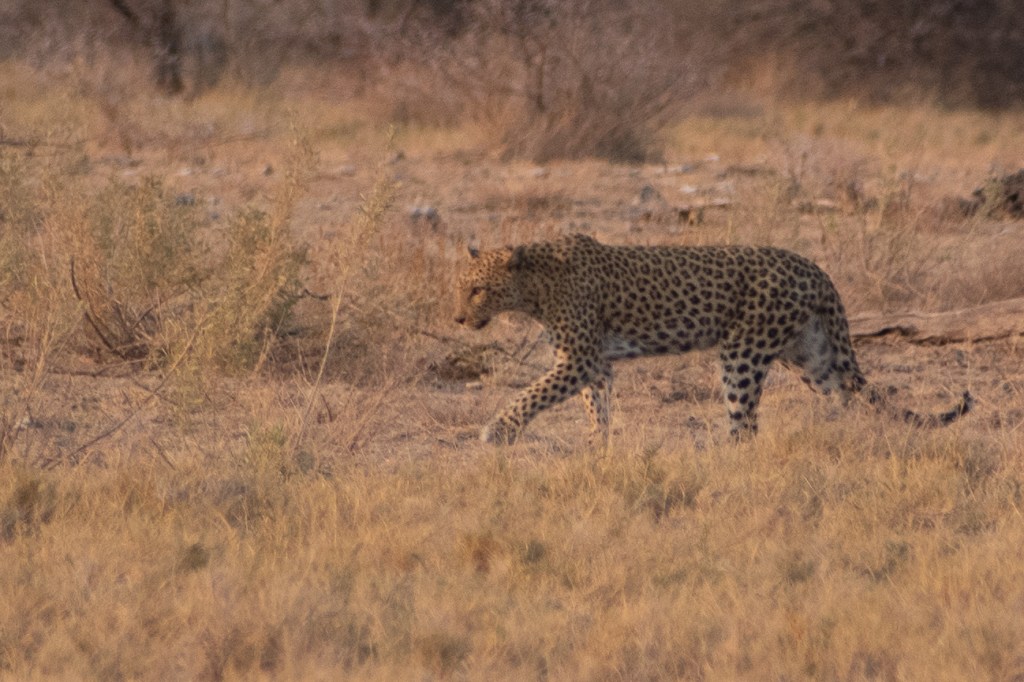
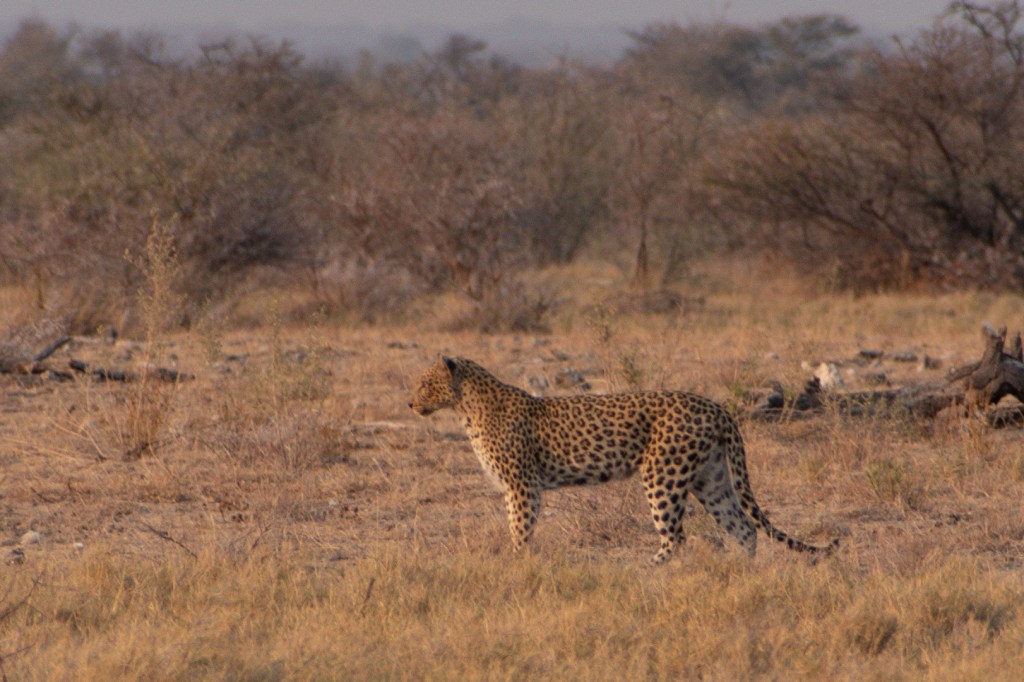
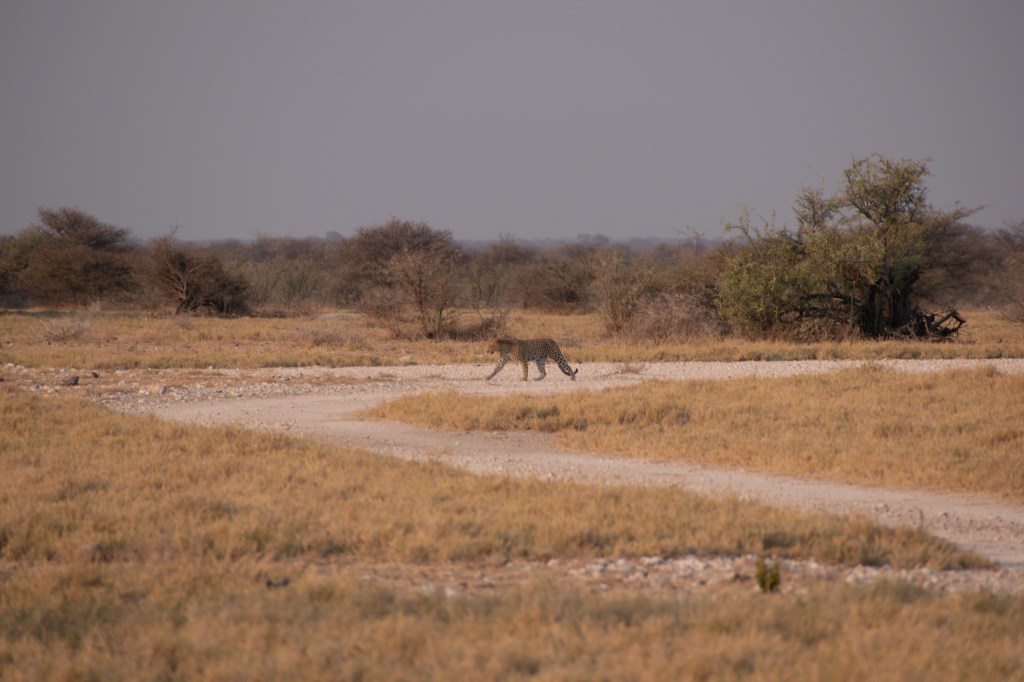
As we were cruising past the airstrip Sarah shouted something unintelligible, quickly followed by stop. Should I reverse? Yes, was the clear answer. As we backed up to a gap in the bushes, there we saw a lone leopard striding with purpose across the airstrip, and towards the Namutoni waterhole.
This leopard was stopping for nobody, barely 30 seconds later it had marched off the gravel surface and into the long grass. We tried to catch another glimpse, but there was no chance as they’re camouflaged so well against the dry grass. It was at this point two safari vehicles drove past, briefly glancing in the direction we were looking in, but they saw nothing, and must’ve thought we were mad.

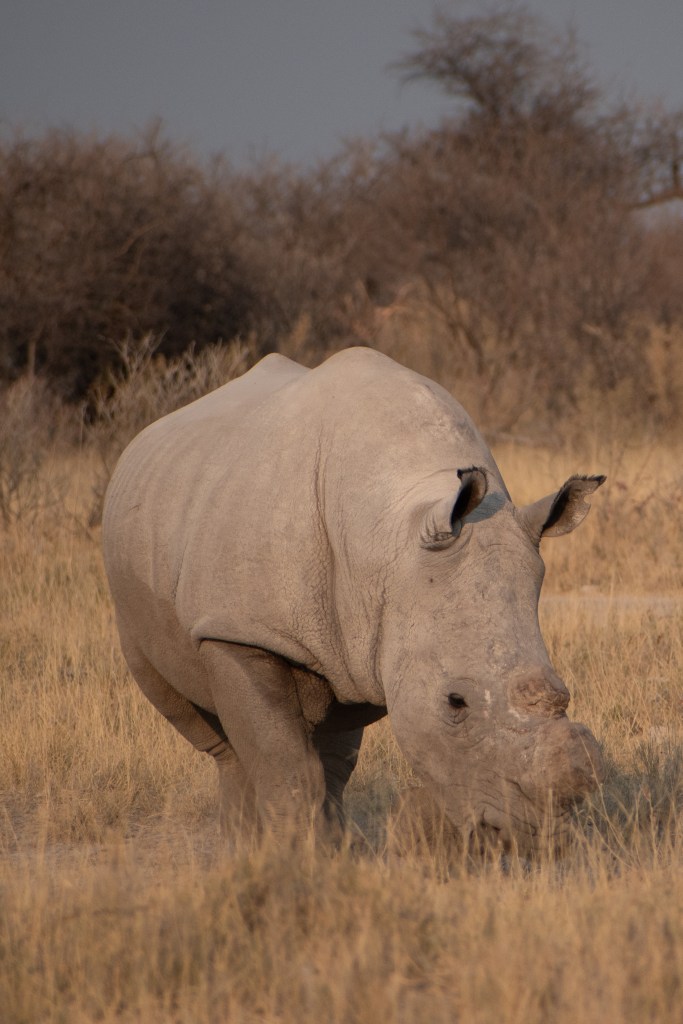
We continued north over the causeway across Fischer Pan, there we saw the two safari vehicles which had passed us moments earlier. They had stopped to look at the most enormous white rhino, grazing in the open grassland.
It’s quite amazing how relaxed the white rhino appears, especially compared to the more flighty black rhino. It just grazed slowly without a care in the world, just a few metres away from our car.
White rhino is so named because of its wide mouth made for eating grasses. They graze in the open, whereas the black rhinos browse on trees and are consequently more difficult to spot. White and black rhinos are the same colour, with white rhinos being more massive although it’s difficult to tell when they’re stood on their own. The way to differentiate is to look at their mouth, black rhinos have more of a beaked look with their prehensile upper lip which helps them strip the leaves off trees.
We left the rhino alone, and found nothing of note at Groot Okevi or Klein Okevi, save for a small herd of Kudu. It was time to leave Etosha and start our long journey north into the Caprivi strip.
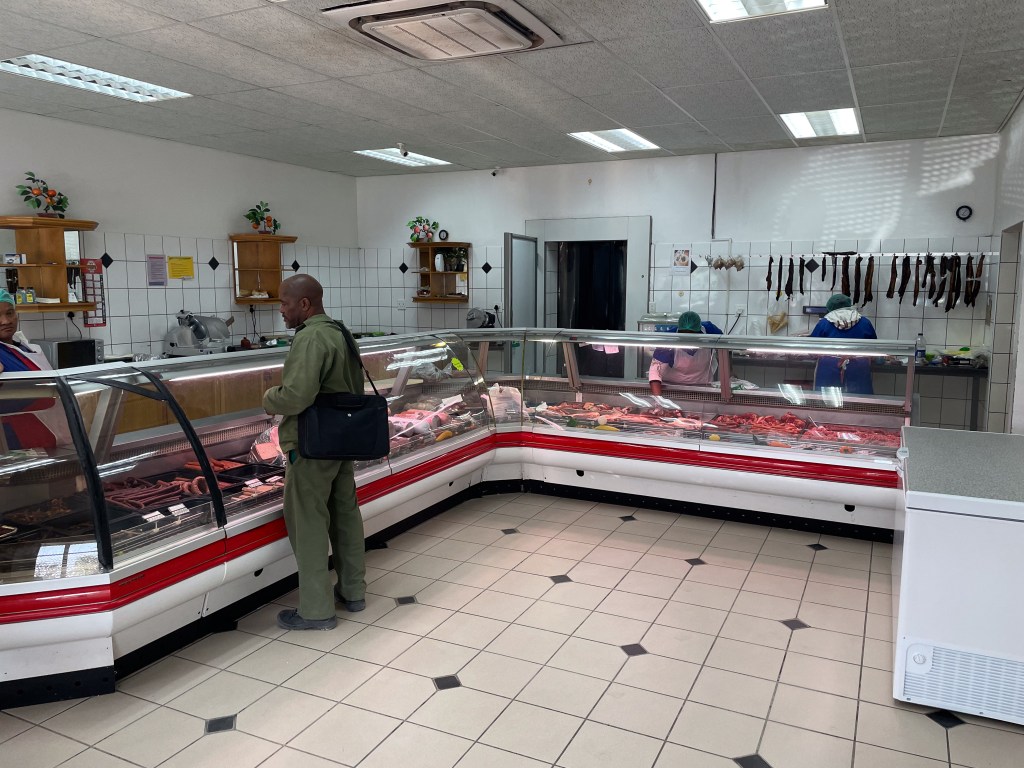
Our route was around 625km. Stopping for supplies in Grootfontein we stopped at a big new pick ‘n pay on the edge of town, as well as picking up more biltong and boerewors at a butcher’s in the middle of town.


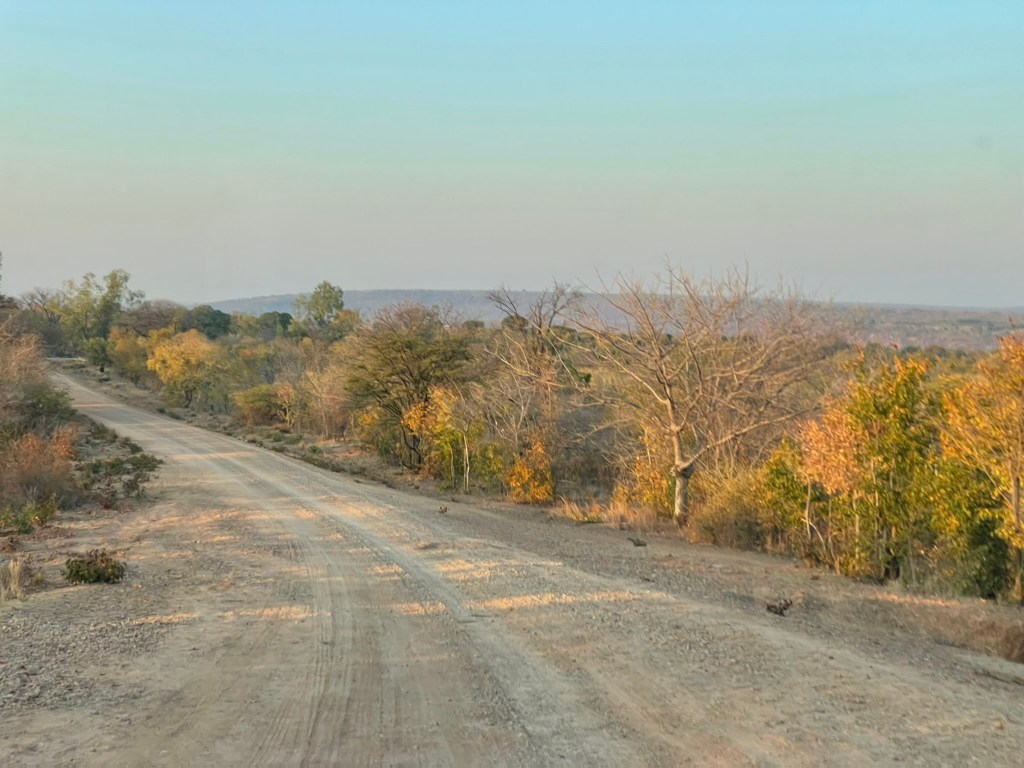
We were thankful for the end of the gravel roads which had been ubiquitous for the bulk of our journey so far. The smoother roads also meant we could cover more distance, easily reaching 120 km/h on the wide straight roads.
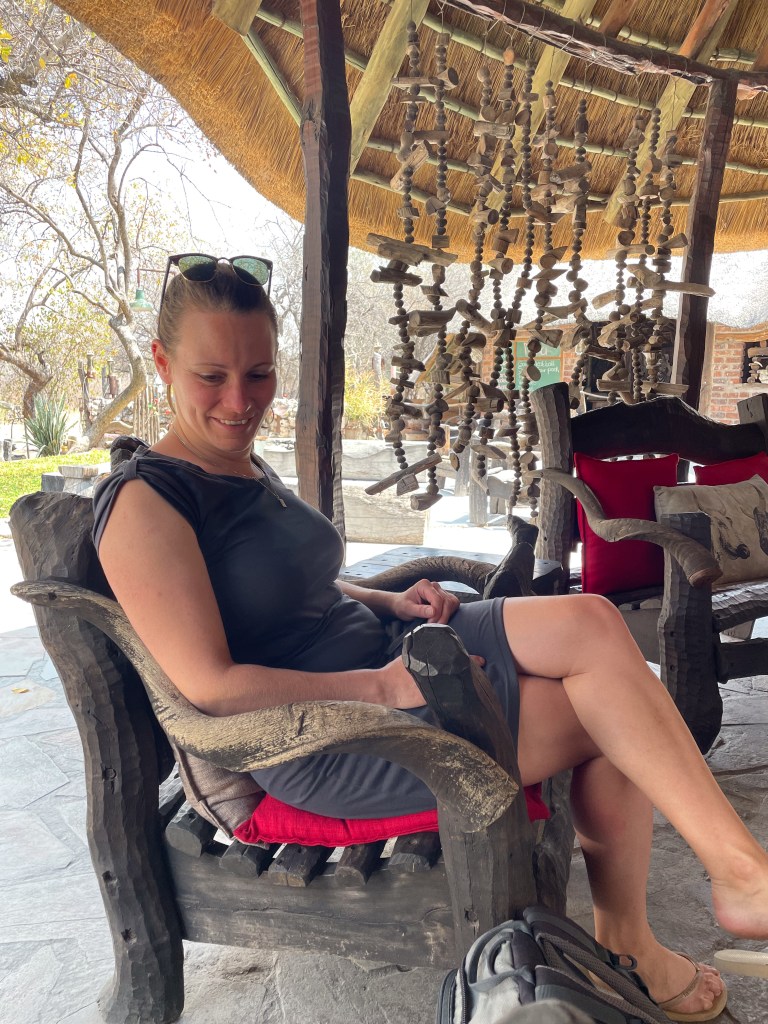
We stopped for a tea-break at the famous Roy’s rest camp we were very welcome and enjoyed reading the books whilst sitting on their collection of eclectic furniture.
Just north of Roy’s is the vet fence at Mururani, which controls the movement of animal products between the northeast and the rest of the country.

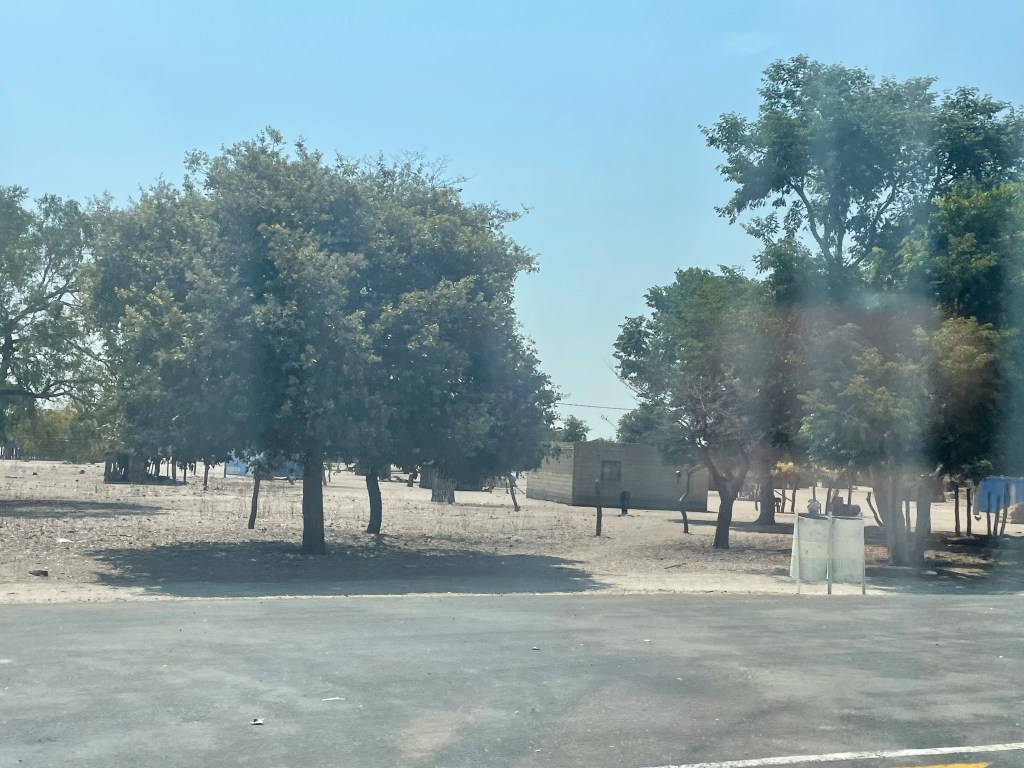
Immediately you can feel the change. There are now cattle, goats and donkeys beside the side of the road, and plenty of people walking up and down too. The villages become more frequent, and more like what you imagine African villages to be. Self-painted branding on the sides of the shops and restaurants, set well back from the side of the road with a wide gravel verge. A single villages can stretch for several kilometres along the sides of the main road.
If you’re a google maps fiend, there is another obvious characteristic of the area which stands out, particularly on satellite view. That’s the parallel lines which stretch for hundreds of kilometres over this stretch of desert
Rundu was a bustling city on the banks of the Kavango river. This was our first sight of one of the three main perennial rivers in Namibia, across the water we could see Angola. We stopped for diesel, and an ice cream, before continuing on to Divundu where we would end the day at or campsite White Sands



White sands was an immaculately kept resort on the left bank of popa falls. The waterfall itself isn’t all that spectacular, the total drop is only a couple of metres over a small geological fault, but it’s this small drop which starts the process of the river fanning out to form the Okavango delta, one of the most incredible places on earth.


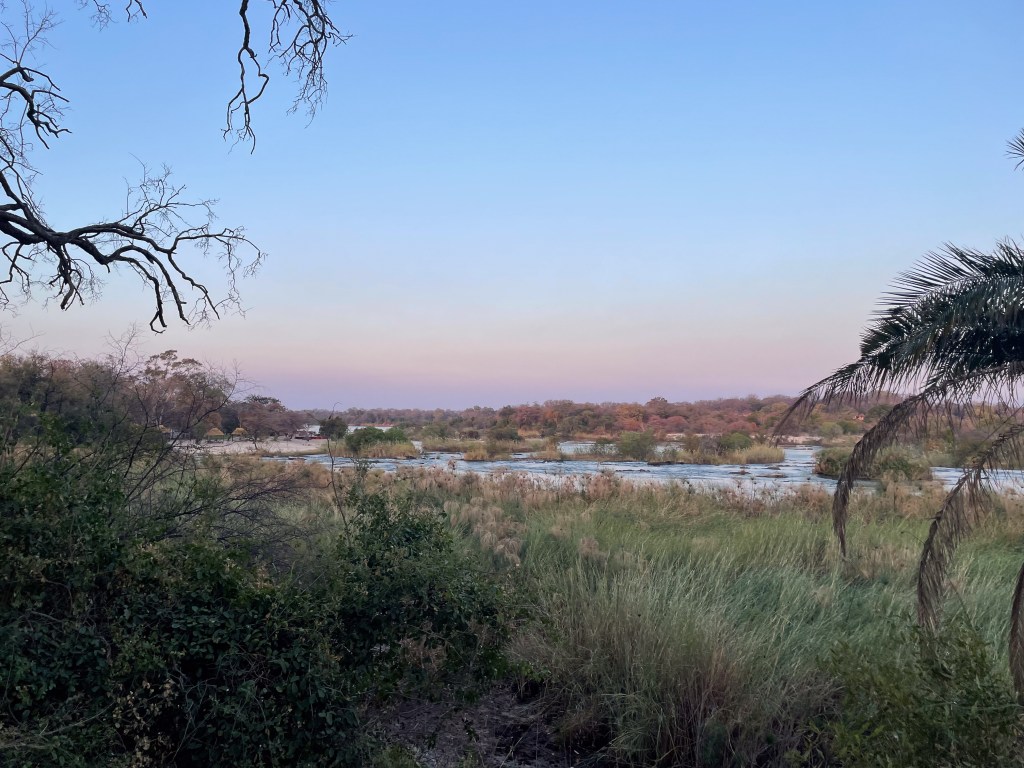
What’s more stunning is seeing so much water after travelling around such a dry country. The trees were huge and lush and teeming with birdlife. Our campsite had a private ablution block, and our own covered cooking and washing area. Such a shame we were only passing through for one night. We had dinner at the restaurant overlooking the falls, and bought too many souvenir maps and baubles from the camp shop, for it was our last night in Namibia.



 Small Holiday Big Dream
Leave a comment