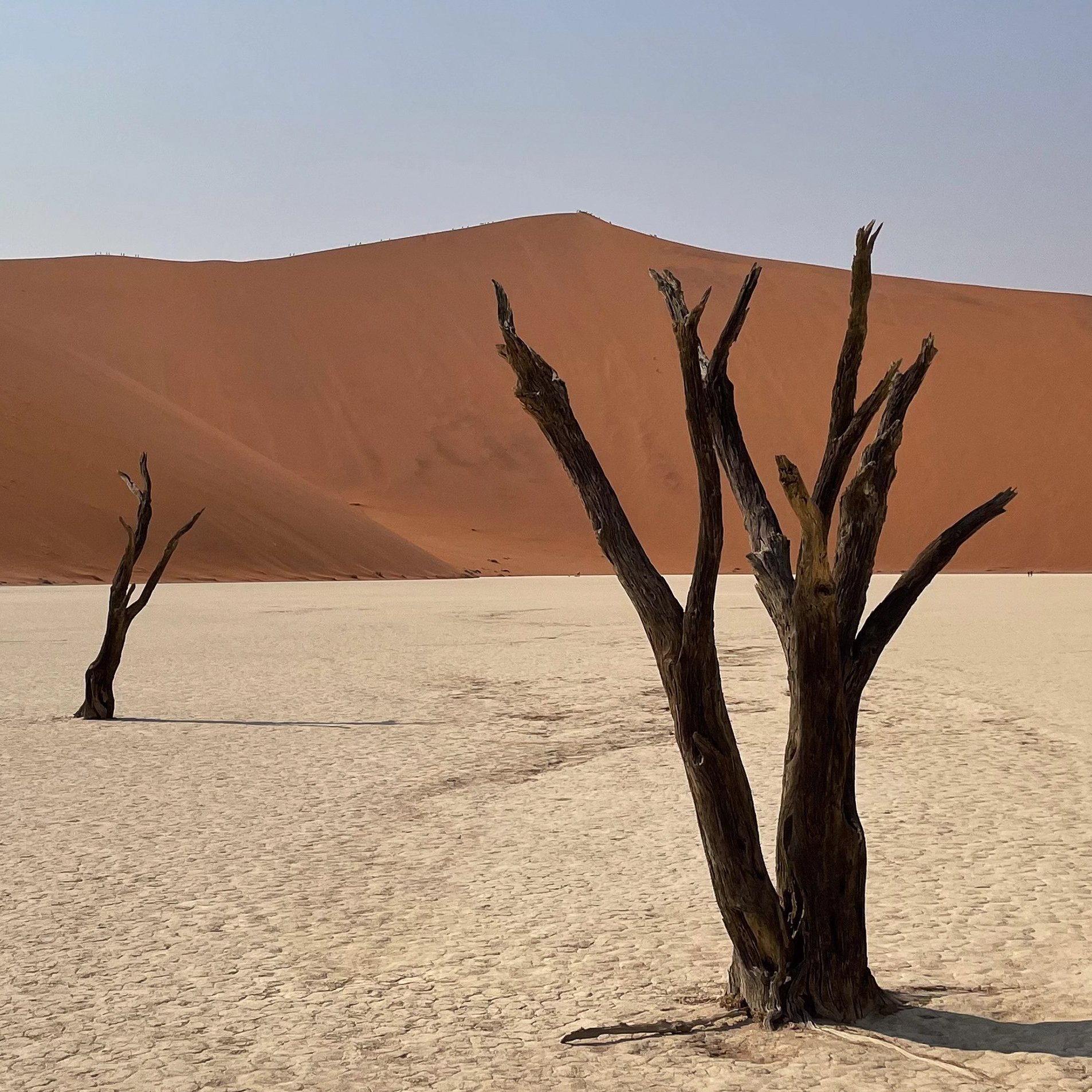
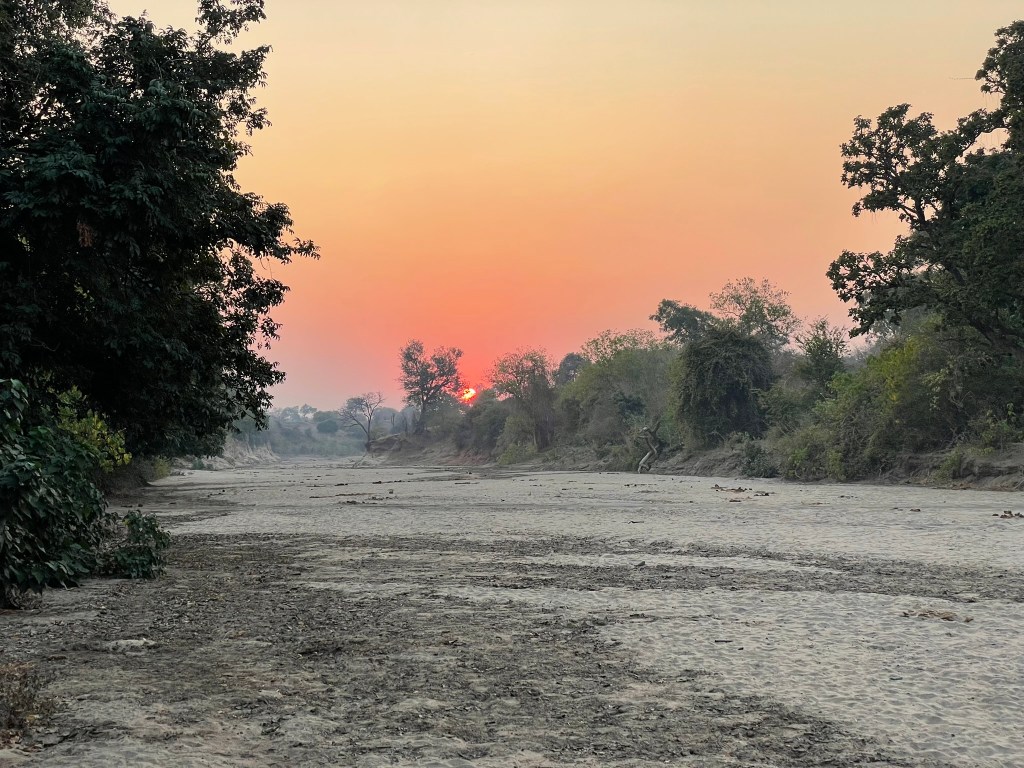
Sunrise from our chalet at Dolomite camp was stunning.


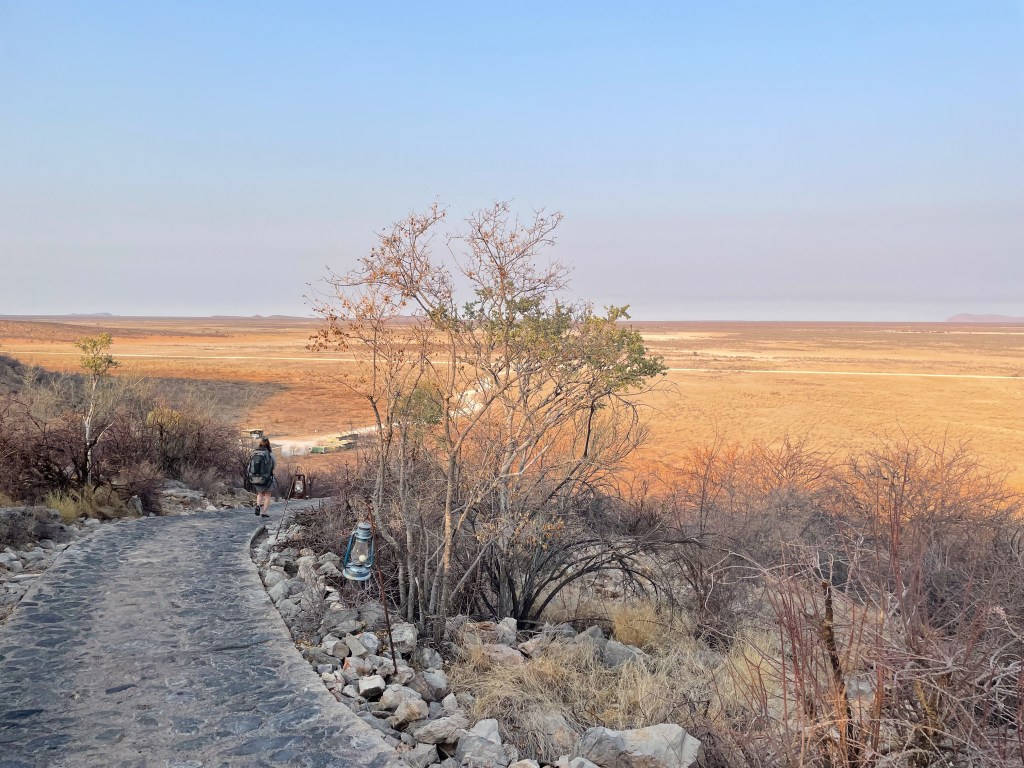

Our first full day at Etosha began with us leaving Dolomite camp shortly after sunrise, and heading directly back to Klippan to see if we could find any sign of our injured springbok from last night.
Alas there was nothing, and by nothing I mean something, nothing nothing is intriguing, as it means there could be something.
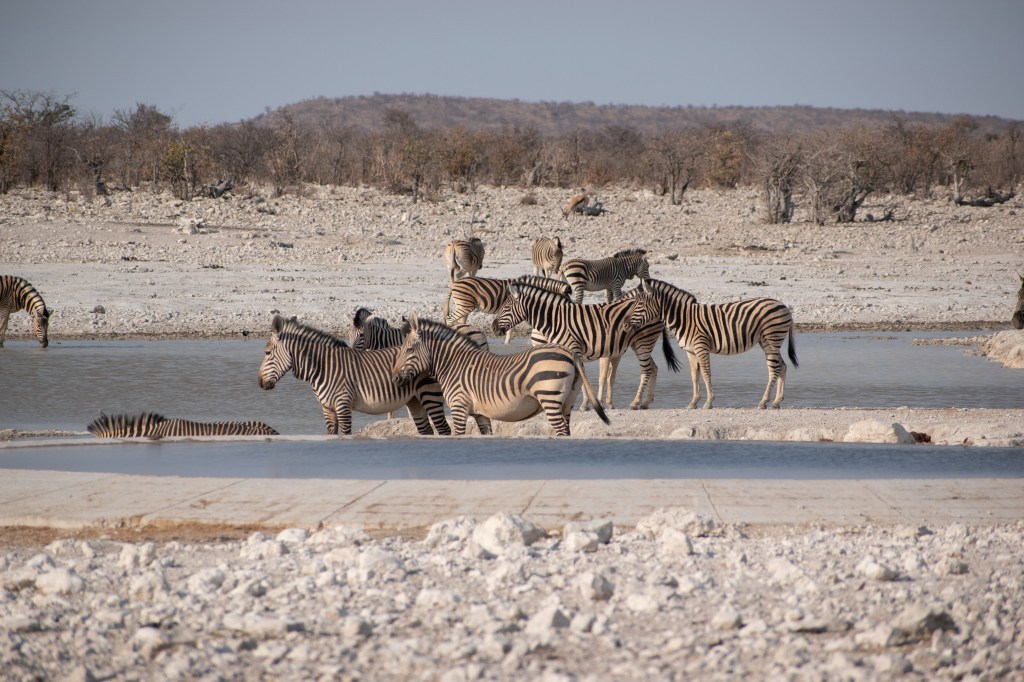
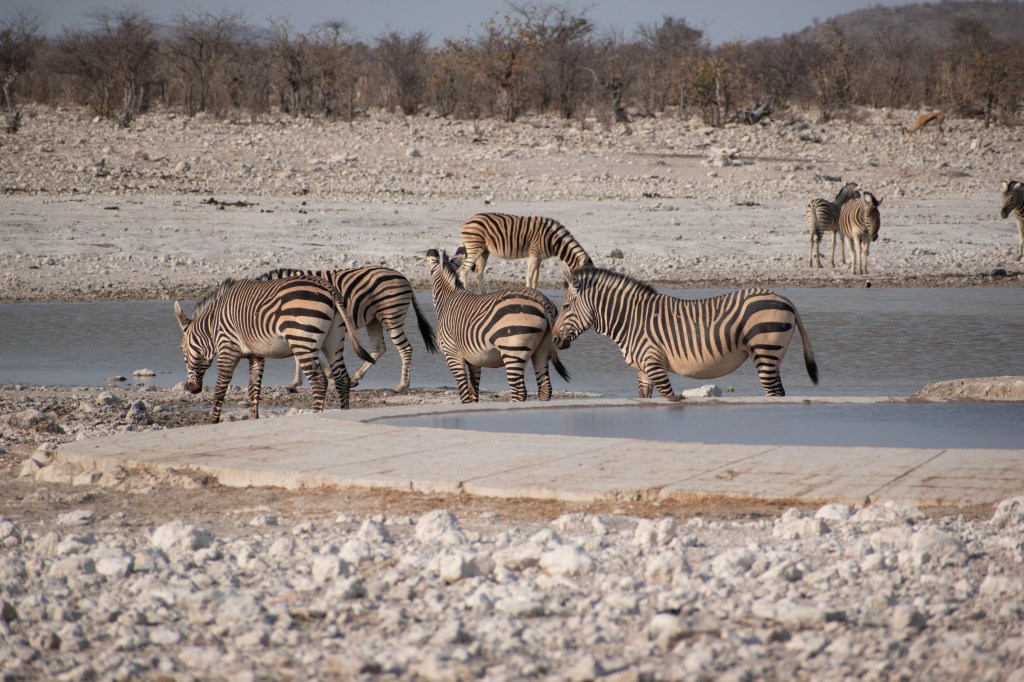
In fact we did see something interesting – a small group of Hartmann’s Mountain Zebra amongst the many regular plains Zebra. These are actually quite uncommon, so it was a treat to spot them, even if they do look a lot like basic zebras. See if you can spot the difference! (hint: it’s not the Kori Bustard)

One of the great things about Dolomite camp, besides the excellent views, beautiful clean chalets, and exceptional sunrise, was the fact they had Etosha maps in stock. Which meant we now had some idea of where to aim for. Tracks4Africa is a fantastic functional resource for route-finding when tracks get difficult to follow. But a tourist map was what we needed for context on waterholes, and the official map was just the ticket, it included checklists of animals and the best places to spot them.
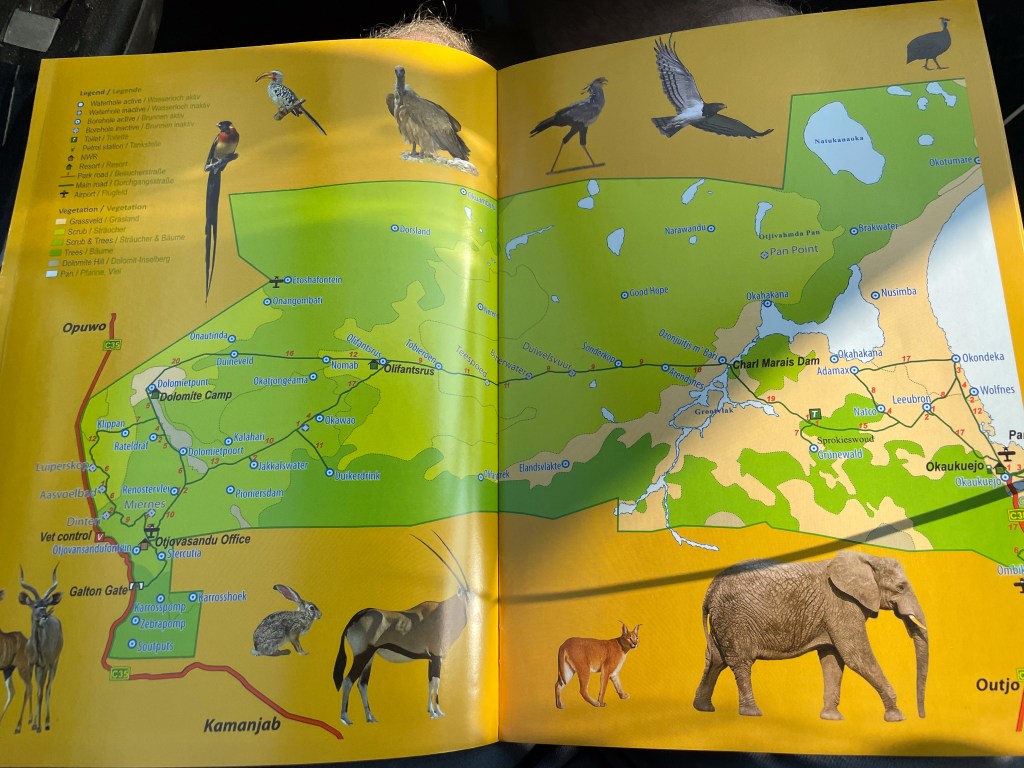
After breakfast at Klippan we began to head east. Despite being within the national park, we had 250km on gravel roads ahead of us before Halali camp which would be our overnight stop. Plus, we needed to factor in many hours of game stops along the way.
Even more pressing was the fact that we were well into our main fuel tank. With around 60 litres left, and consumption of around 11 L/100km, we had 550km in the tank. Not a big deal for today, but we would require some diesel before the end of our 3 days in the park. The next petrol station on our route outside the eastern end of the park was 450km away in Tsumeb. so we pinned our hopes on the availability of fuel at Okaukuejo.
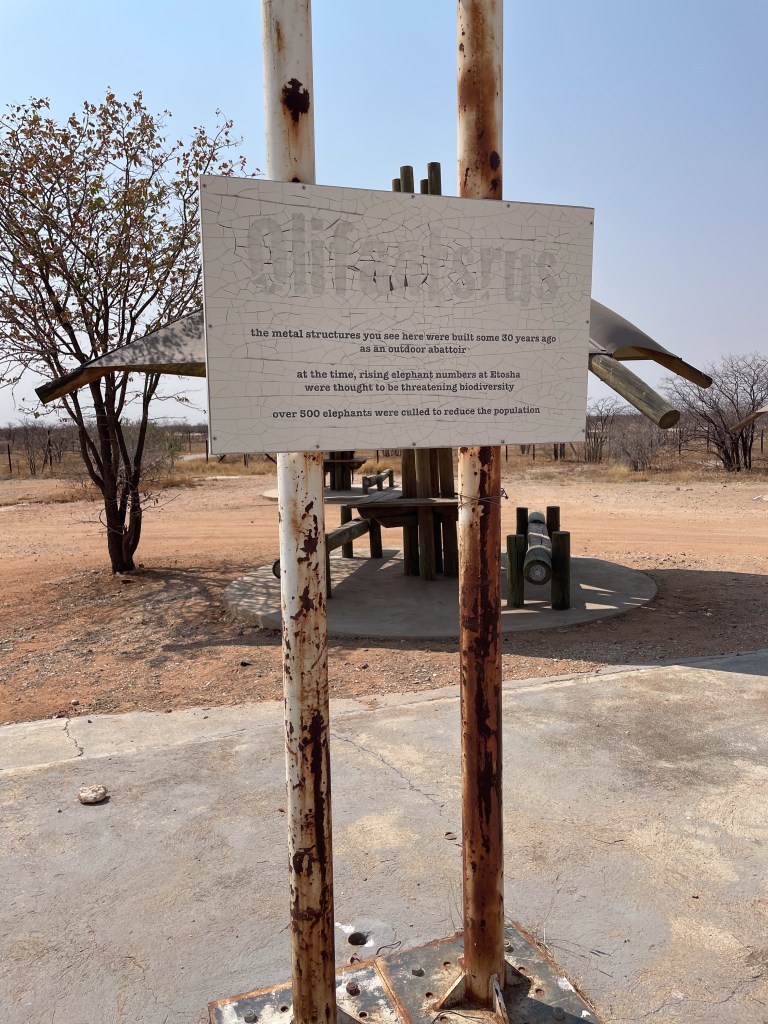
Olifantsrus (Elephant’s rest) is a small camp with a small shop and an excellent exhibit on the control of the Elephant population in Etosha. Outside the exhibition is the old platform where they used to butcher the Elephants, which is as interesting as it is disturbing. The main attraction at Olifantsrus is the spectacular modern hide. You proceed on an elevated walkway to the two-storey building outside the camps walls. On the top deck you get an open view of the surrounding shrubland, on the bottom deck you are at eye-level with the animals at the waterhole. Whilst we were there there were unfortunately no elephants, but a small number of extremely skittish wilderbeest and zebra, each taking it in turns to be more terrified at approaching the water than their neighbour.



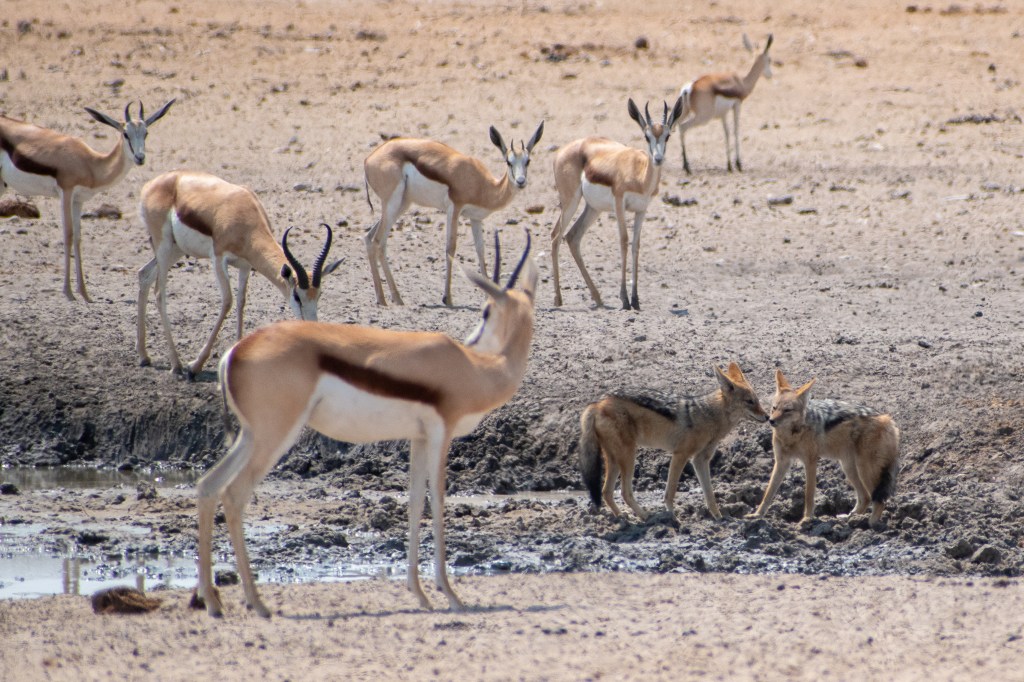
Tobieroen was great fun, hundreds of animals of all varieties heading down to the waterhole to drink. It was here that we saw our very first elephant of the holiday, along with several zebra, springbok, and red hartebeest. A couple of busy jackals came down to the water’s edge to groom each other, and an eagle appeared to be having a mudbath next to a hammerkop.



Pickings were slim on the drive eastwards towards the pan. We were excited to reach Ozunjuitjs m’ Bari, however it appeared to be more of a building site, certainly no animals around with all the human activity and dust.
Okondeka was where we caught our first glimpse of the Etosha pan. It’s 120km long and nearly 5,000 sq.km, one of the largest salt pans in the world, larger than the great salt lake in the USA, but half the size of the Makgadikgadi or Uyuni systems. That said, there isn’t a whole lot to see out on the pan apart from the endless white expanse. We’d read about the resident lions at Okondeka, but in the hot afternoon sun they were nowhere to be seen. The only sighting of note were a few Bateleur eagles wobbling above the waterhole with their stubby little tails.

Our next stop was at Okaukuejo camp, where we found out there was no diesel. A quick decision was made to head to the petrol station south of Anderson Gate, meaning a quick trip outside the park. You are not permitted to take uncooked red meat out of the national park, and we had braai supplies in our fridge for the next two nights camping. Playing dumb with the guards at the gate did not wash, and when they demanded to look in our fridge we were rumbled.
With a little bit of negotiation we managed convince the policewoman, national park guards, and veterinary staff, that we could leave our steaks and boerewors with them at the gate whilst we popped out to collect fuel and possibly some sweets. As an aside, they warned us about some sharp practice at the fuel station, however we found the Etosha Trading Post to be welcoming, safe, and well stocked.
On our return to the gate we collected our meat without hassle. Moreover the staff were delighted with a couple of small bags of sweets from the shop. although they all turned their noses up at the fizzy Colin the Caterpillars I’d brought over from M&S.
The race was now on to reach Halali camp before the gates closed at sunset. We had roughly 100km left to travel in a couple of hours, but were keen to get some game spotting in. We had selected some exciting sounding waterholes along the way, and were keen to see if we could spot anything interesting.
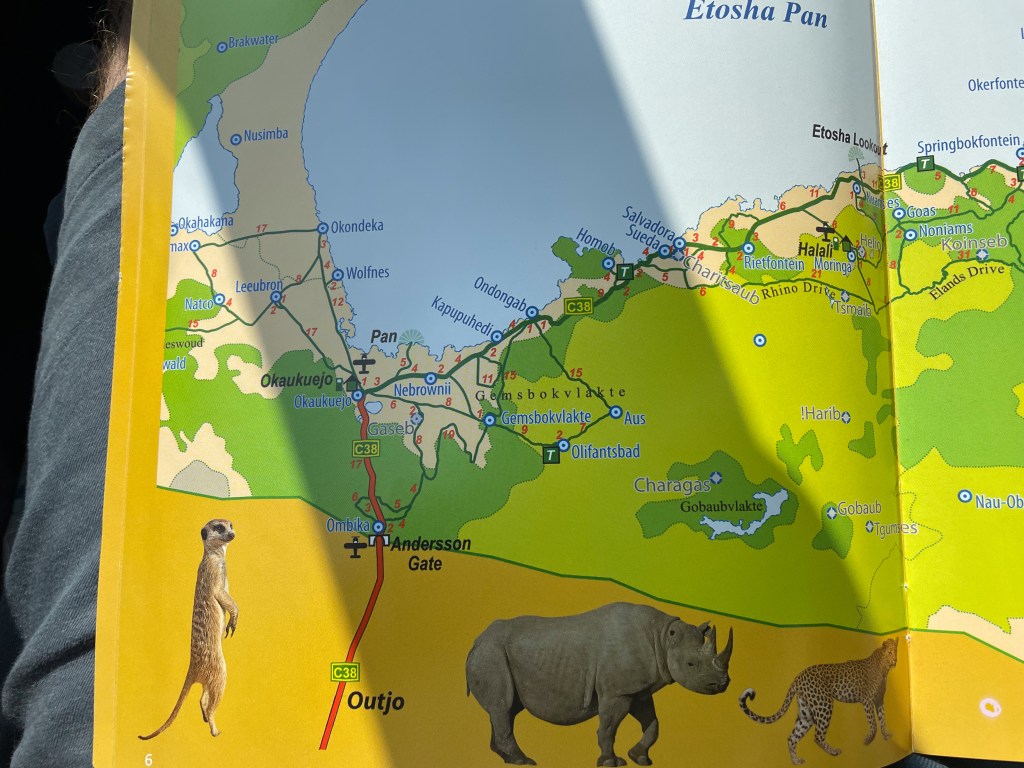
At Ombika pickings were slim in the late afternoon sunshine, no point in hanging around. Nebrownii was similarly deserted.
By the time we reached Sueda we thought our luck had run out for the day. Still, it’s a picturesque location, the parking area is in an elevated position with a view northwards over the pan as the sun begins to set away to your left. We spot a large lump moving slowly a few hundred metres away amongst the stubby trees. A Rhino! We watched as it slowly made its way away from us, too far away to positively identify it as white or black, but the way it was tucked away in the trees, and appeared to browse made us believe it was a black rhino.
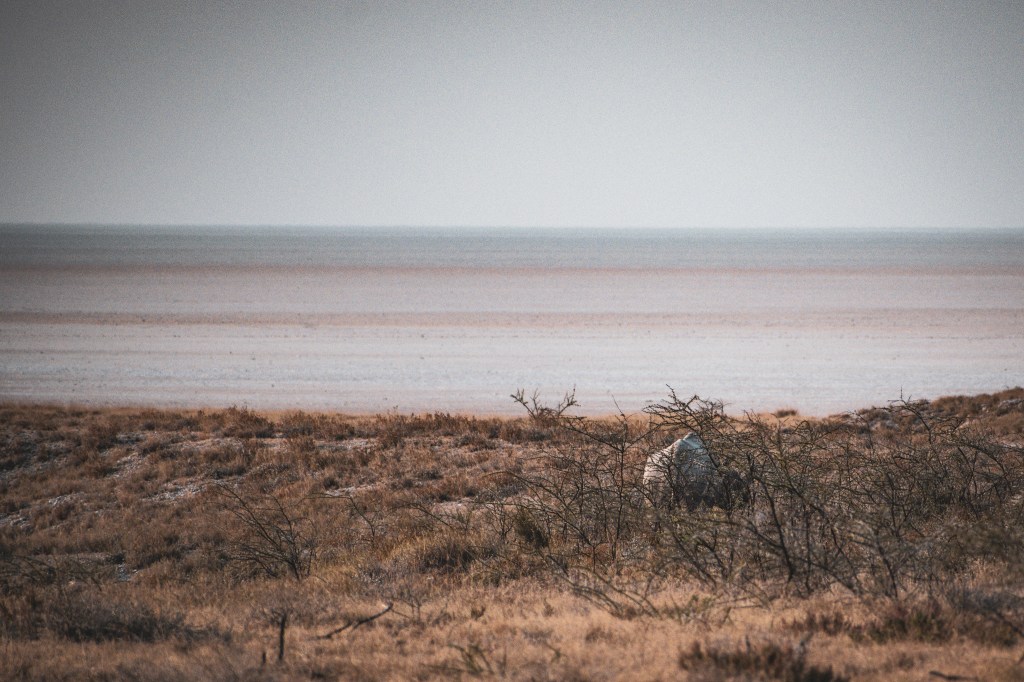
We dragged ourselves away as time was getting away from us. A brief stop at Salvadora yielded nothing of note, as we left we crossed paths with a vehicle whom we pointed in the direction of the rhino at Sueda, in return they told us there was a white rhino drinking at Rietfontein, the next waterhole over.
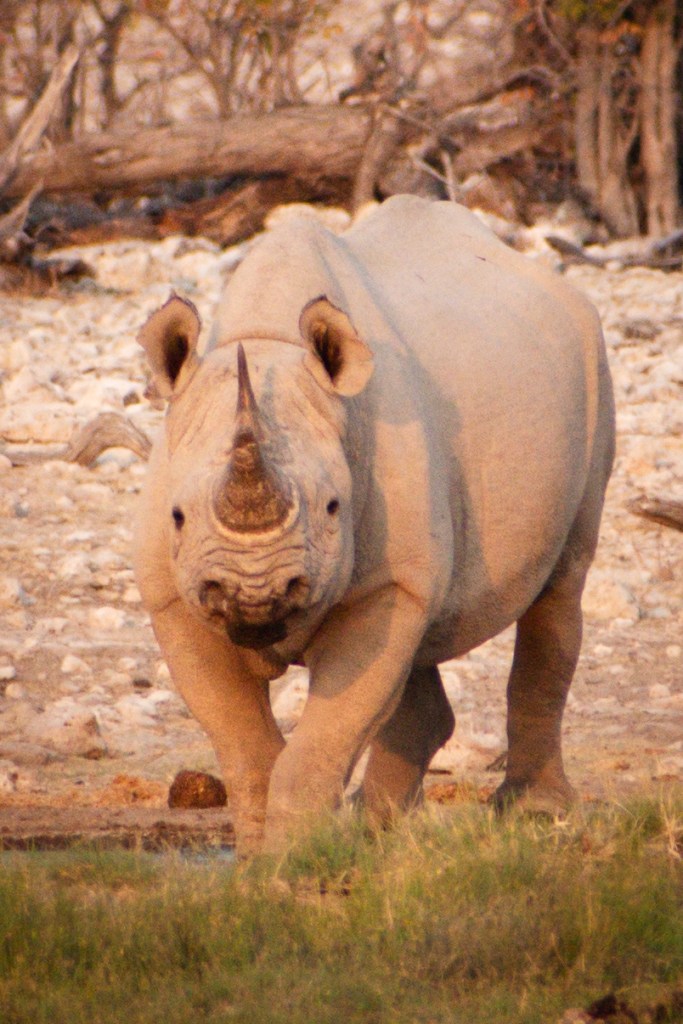
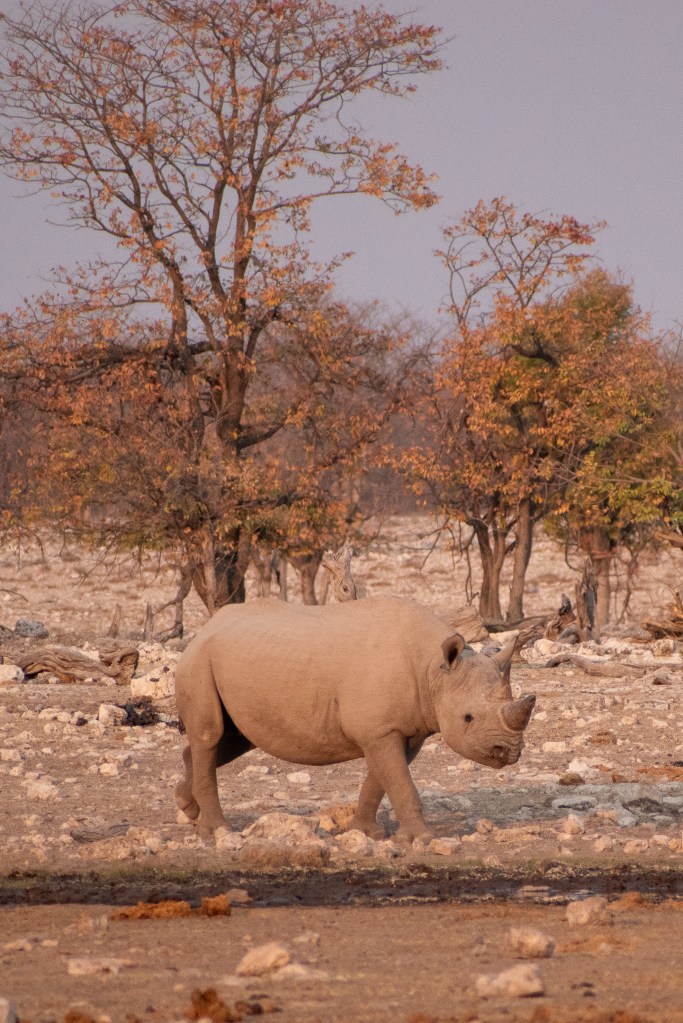
Sure enough there was a rhino, just back from the water’s edge. Although this one was clearly a black rhino. How privileged we were to have spotted two in a day. We spent as long as we could watching as he tentatively approached the water. He was so nervous, but in the end managed to get comfortable enough to take a sip.

Hot footing it back to Halali we made it on the minute of sunset. Fortunately the gates were still open, and to the day we are still unclear of the consequences of actually being late.
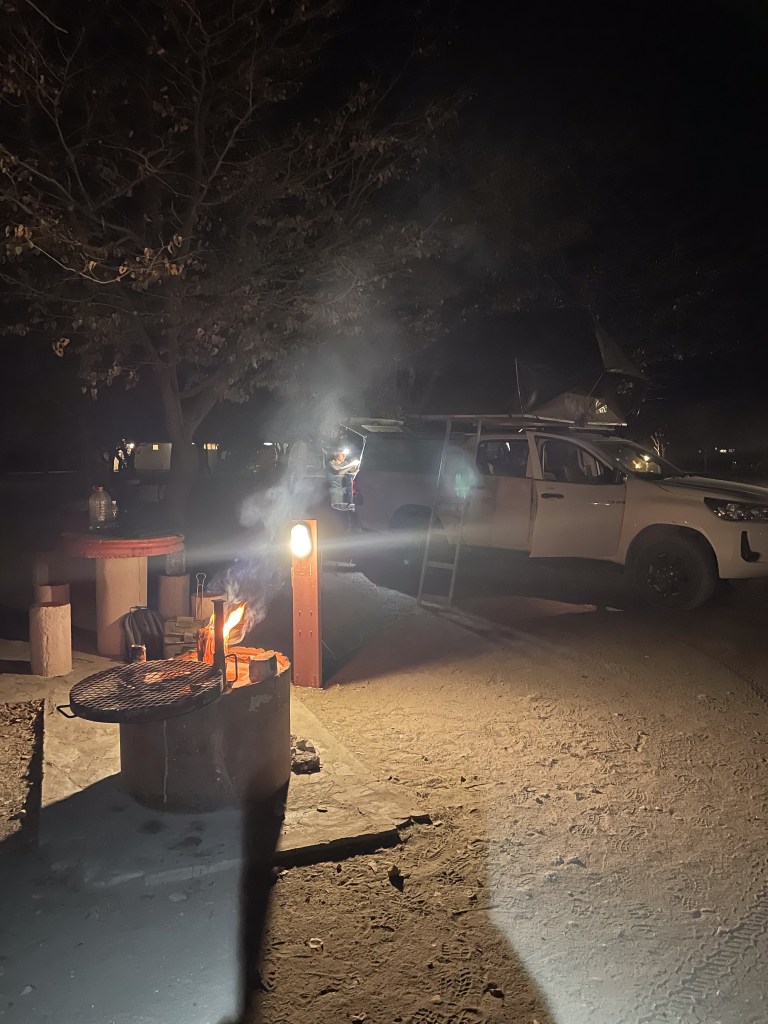
The camping area is large, and you are free to select any open pitch. All the best ones seemed taken, but we found an acceptable spot and set up our tent. Before the very last of the light faded we headed down to the Moringa waterhole. It’s a five minute walk from the camping area, and has a large viewing area above the water, and crucially inside the camp fence. A large group of noisy Francolins had made the waterhole theirs, and with the absence of any large animals we headed off to start the braai.
Our quick dinner turned out to be more elaborate than first imagined. Rescued boerewors and curry sosatie for me, whilst the vegetarian options included grilled mushrooms, vegetable kebabs, and smashed avocado.


Excited, at 10pm or so we headed back to the waterhole to see if anything else had decided to make an appearance.
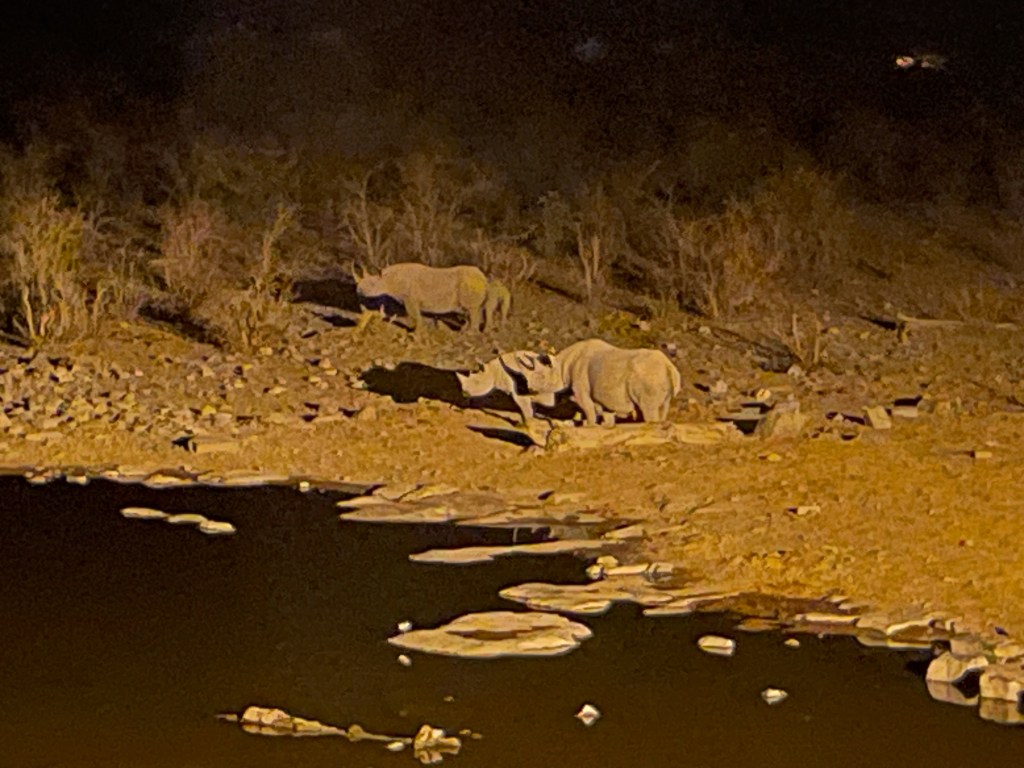
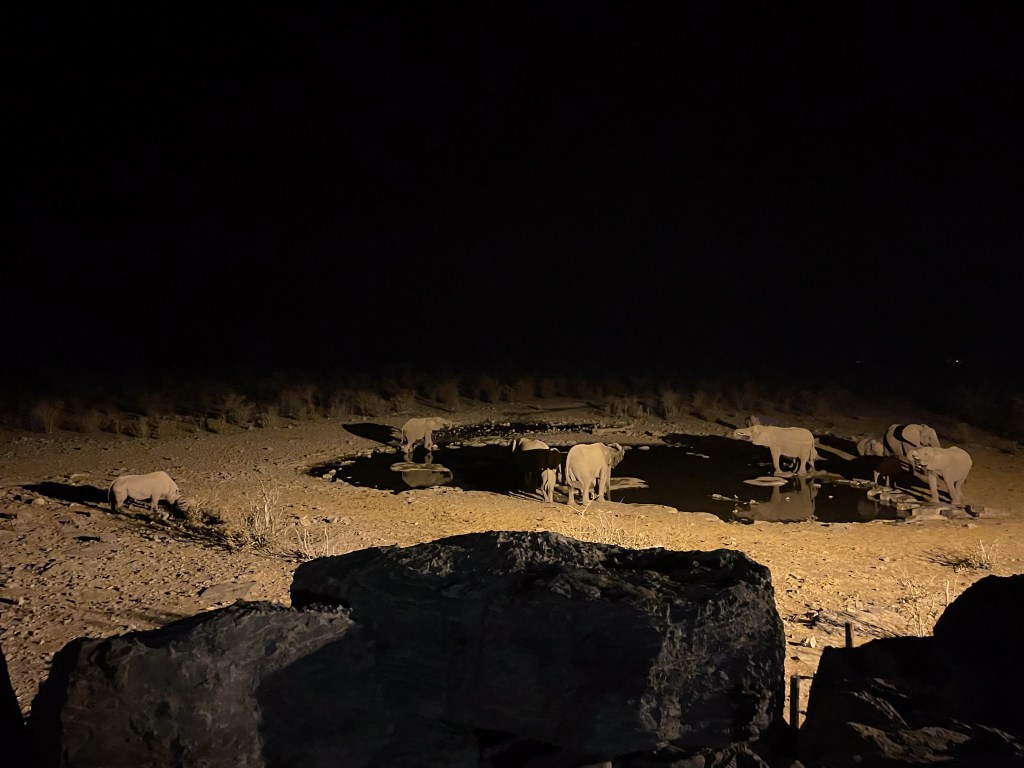
We were not disappointed. Five black rhino had commandeered the place. A large male was lying down on the left hand side of the scene, with his back to the viewing area, and on the right hand side a group of four drinking from the water. Two of the group appeared to be young, although not babies.
The contented rhinos seemed to be keeping themselves entertained, the male was sniffing around causing a nuisance, but he soon returned to his side of the water, when all of a sudden a herd of elephants turned up.
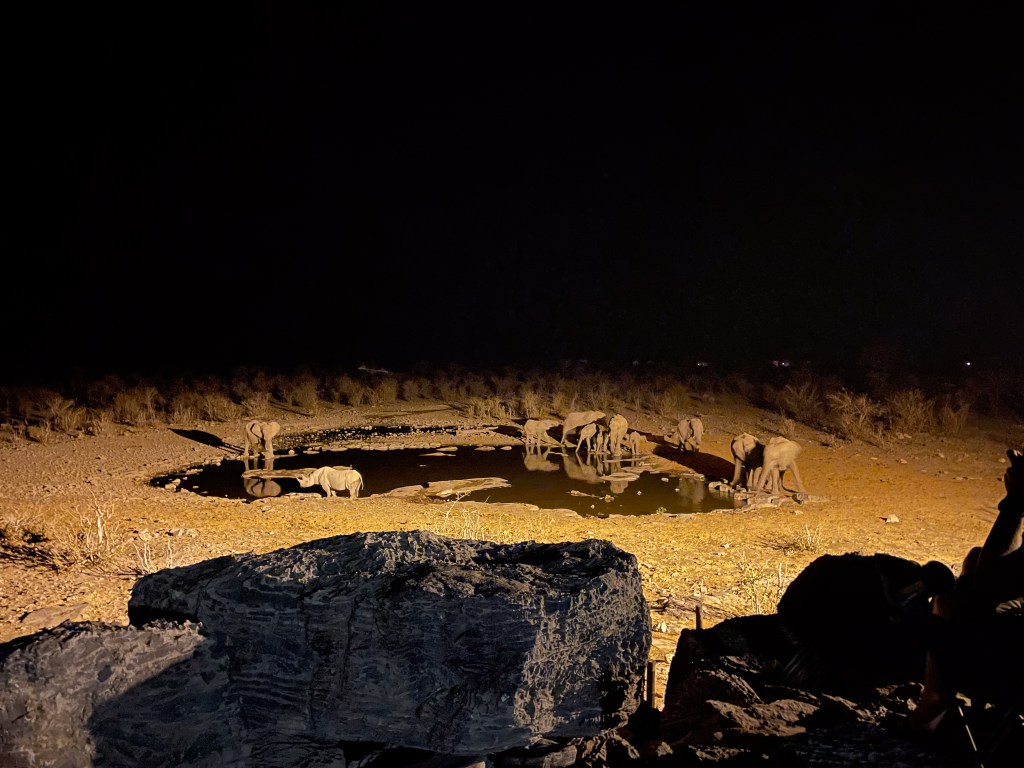
Elephants think they are in charge, and they almost always are, who wants to argue with an elephant? The group of four retreated backwards into the shrubs, not too far, but safely out of harms way. The herd of elephants, maybe 10 strong, encircled the waterhole.
One guy however was unmoved, and stood his ground on the left hand side. A young adult elephant took exception, and took it upon themselves to move the rhino on. After all, it was now elephant time at the waterhole.
The rhino was extremely unimpressed with the approaching elephant, he stayed still staring back over his shoulder, locking eyes with the elephant and daring it to come closer.
With a stomp of their feet and a flare of their ears, the elephant shooed away the rhino, who was again unmoved. A couple more steps forward came the elephant, ‘it’s time to leave’, and then a few steps more.
The rhino surged back at them waving his horn and snorting his nose. The elephant wheeled away behind the bushes with a squeal and a trumpet. Rhinos fear nothing.

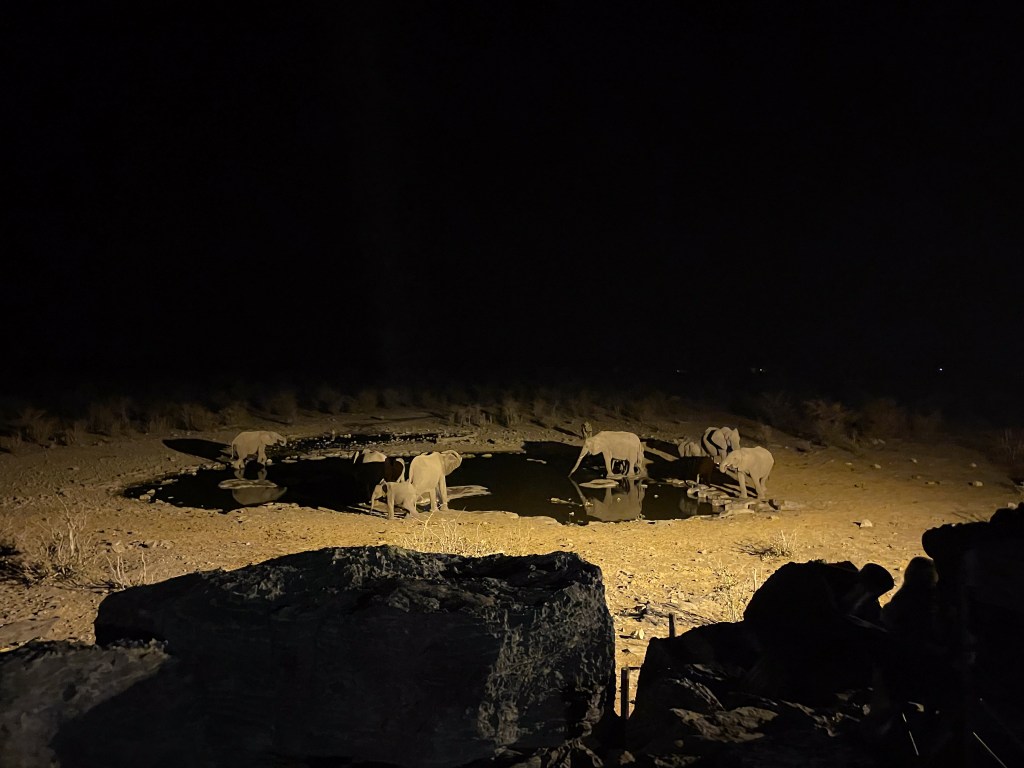

Tense were the next 20 minutes, as neither the rhino nor the elephants would yield their ground. Even a couple of hyena and jackals failed to break the ice. One such enterprising hyena even got so close as to sniff a rhinos bum.
At the time maybe we didn’t appreciate how special it was to see black rhinos together, socialising at the waterhole. Black rhino are the most extraordinarily rare creatures, critically endangered with only a few thousand left in the wild. Since 2009 their population has been on the rise again, and Etosha somehow seems to do an incredible job of preventing poachers. It was an incredible experience to see live and Halali is one of the very few places anyone can experience the rhinos in this way.



 Small Holiday Big Dream
Leave a comment