Less than an hour away from our overnight stop at Madisa camp is the UNESCO World Heritage site of Twyfelfontein. At $500 per person (£22) it’s not a cheap day out.
Included in the price was our excellent private guide Diana who showed us around the key sights in the area.
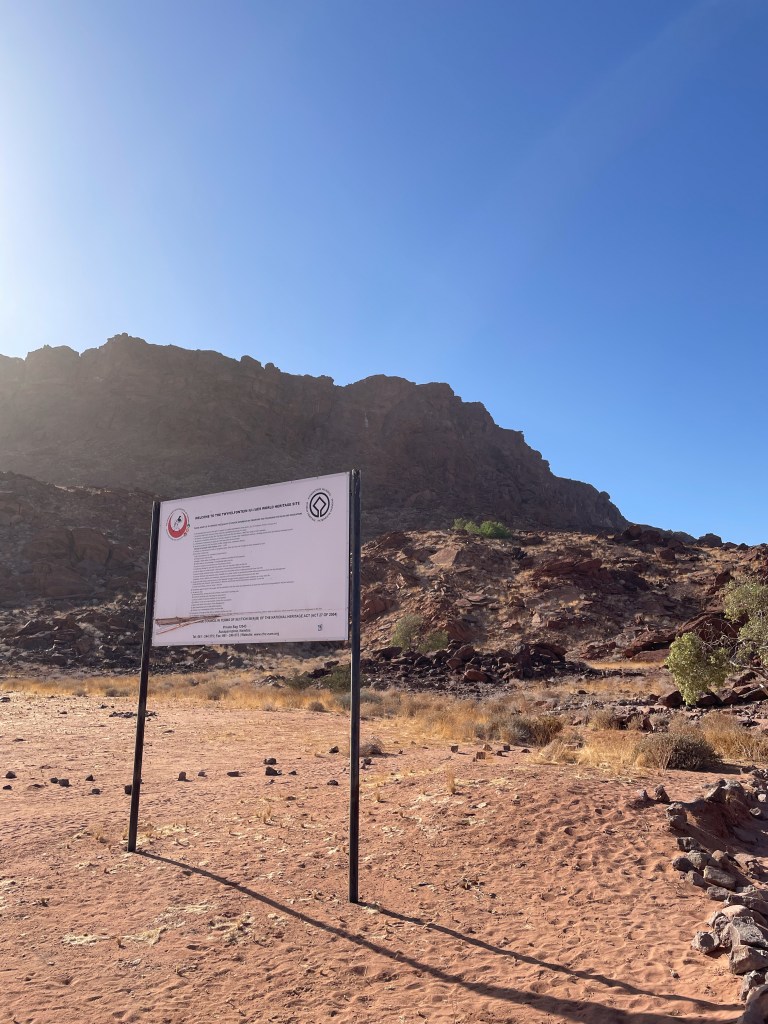


Twyfelfontein is a rocky outcrop in Damaraland which has been home to various people over thousands of years. The common Afrikaans name translates as “doubtful fountain” hinting at the lack of water in the area, and the sporadic nature of when it appears. The local name is much harder to pronounce “ǀUi-ǁAis” where the vertical bars signal a click sound which seems to be uttered at the same instance at the main syllables. It’s fun to try, but ultimately impossible for us to get it right.
The main attraction are the carved drawings (petroglyhs) of animals in the rocks. They are purported to be over 1,000 years old, in reality I’m unsure how this is verified. Our guide mentioned they know the age from the presence of human bones found nearby which are carbon-dated.

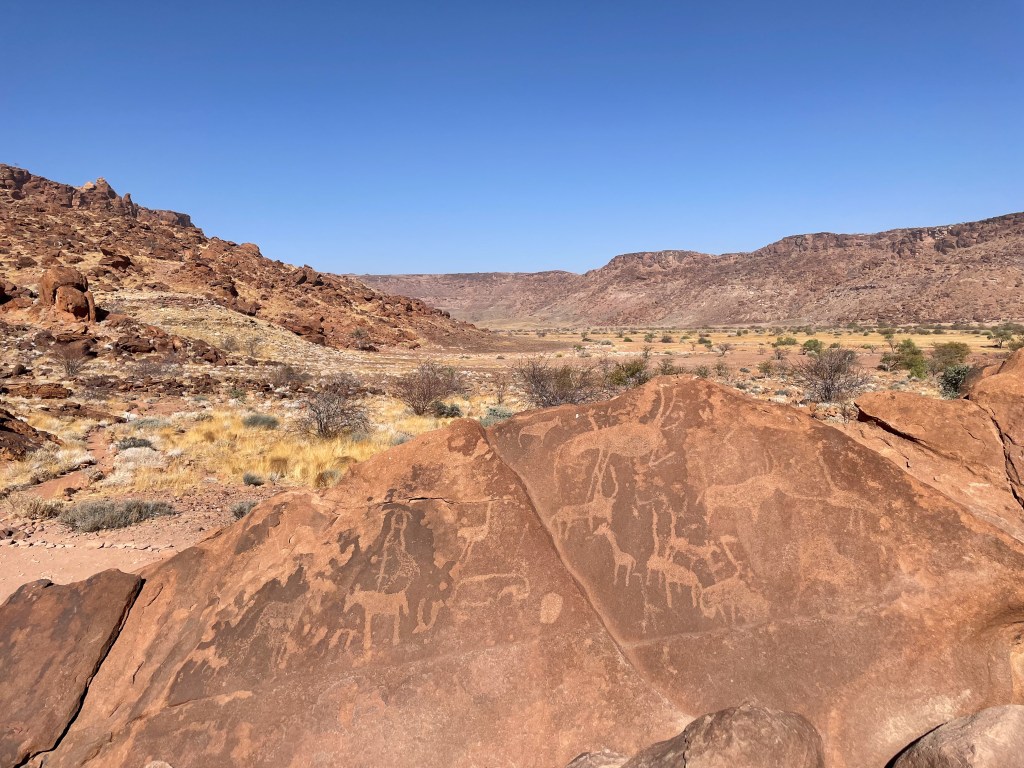
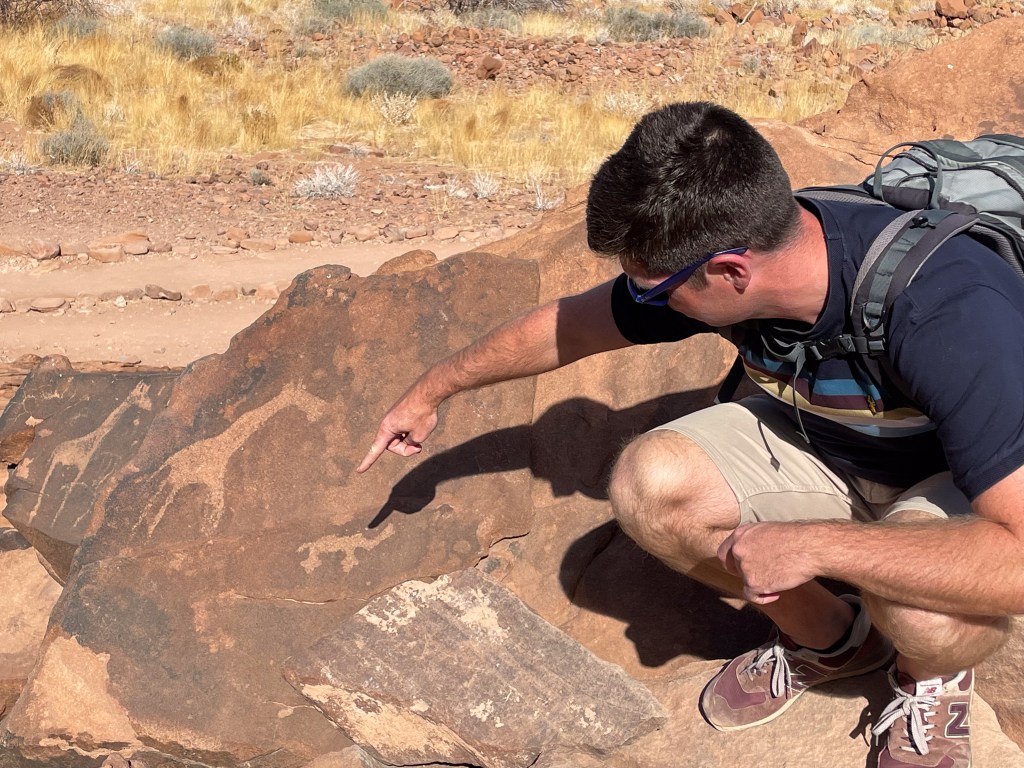
Interestingly the petroglyphs don’t seem to depict any humans anywhere, the exception being images of human footprints. Some carvings seem to be maps depicting the favoured locations of certain animals. Ultimately it would be futile to garner any meaning from the drawings without the help of our guide to help bring them to life.
There is no doubt that the petroglyphs are one of the most extensive and culturally-significant in the whole of southern Africa. Certainly worth including on a Namibian itinerary, even if it’s just to bring you to the remarkable landscape that is Damaraland.


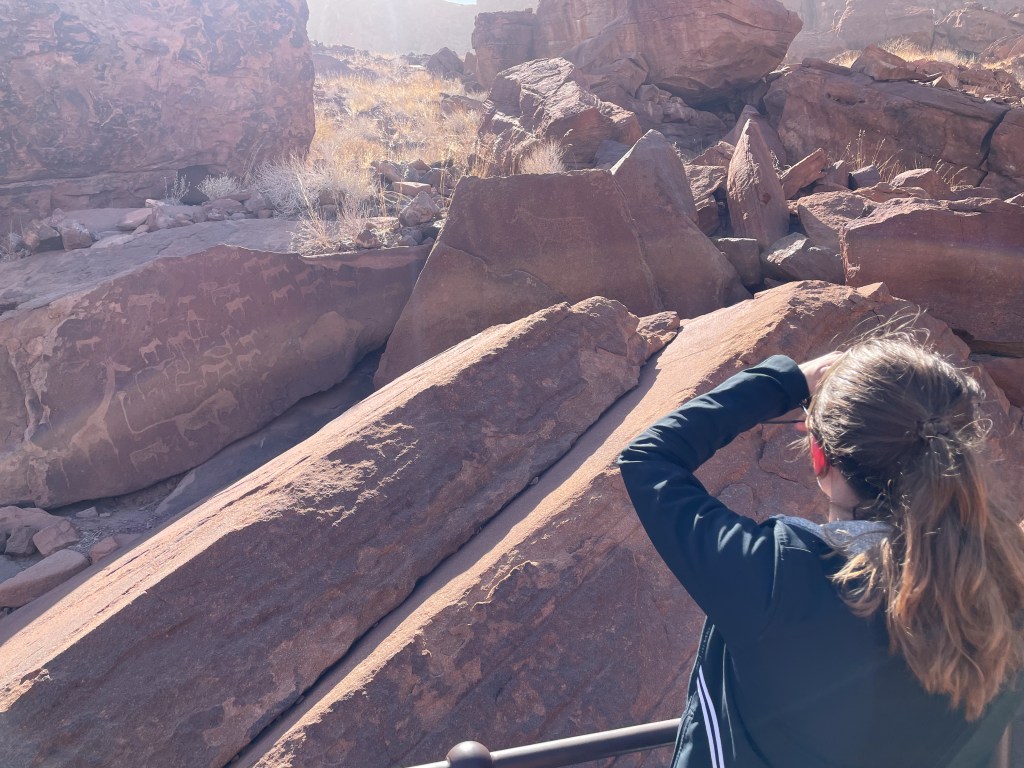
A visit to the petroglyphs involves roughly an hour of walking, there are also some longer routes available. We visited early in the morning before the heat got too much. There’s a small exhibition at the main entrance which gives plenty of detail, as well as a cafe and souvenir stop
A few kilometres down the road from the main site are the “organ pipes” and “burnt mountain” sites. These are volcanic rock formations. The organ pipes are basaltic columns, similar to Giant’s Causeway, burnt mountain is a colourful lava flow. We did not visit because the man at the car park demanded another $500 per person. It didn’t seem official, and the person demanded only cash. Speaking with a local guide who was with a tour bus seemed to confirm the charge was legitimate, and their British clients confirmed it wasn’t worth the time or money, so we opted against paying to visit.
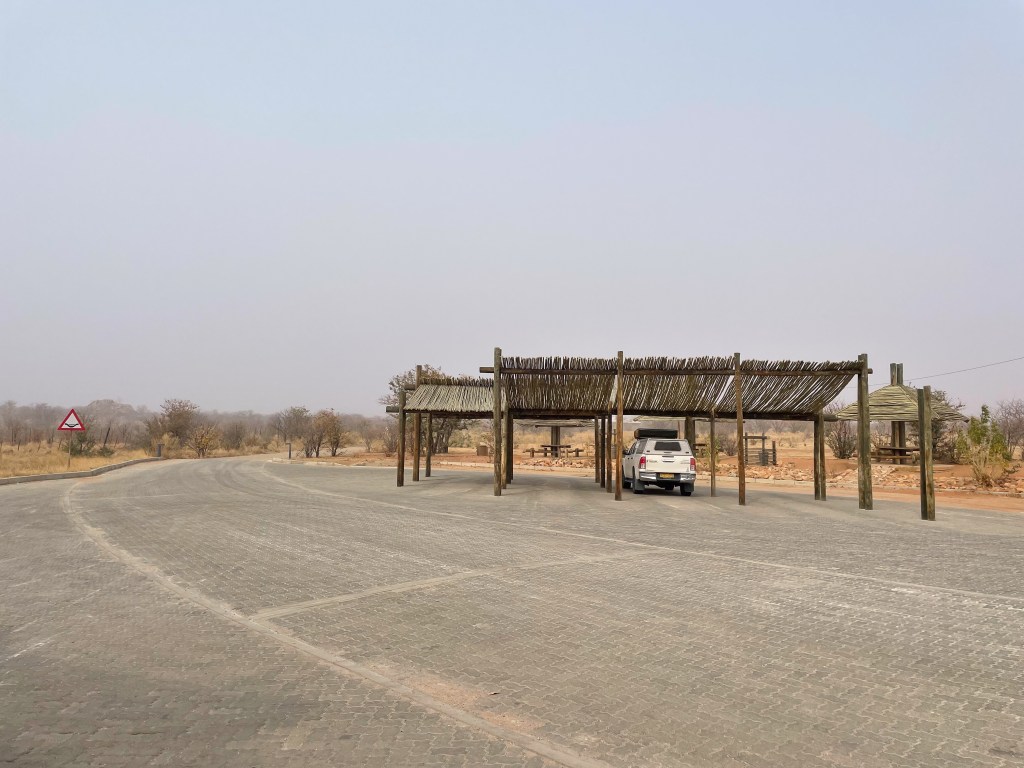
From the parking area you can see some of the organ pipes, and the burnt mountain in the distance. We don’t feel like we missed out for the sake of £50. Recent reviews of the sites also indicate how badly mispriced they are. Avoid.
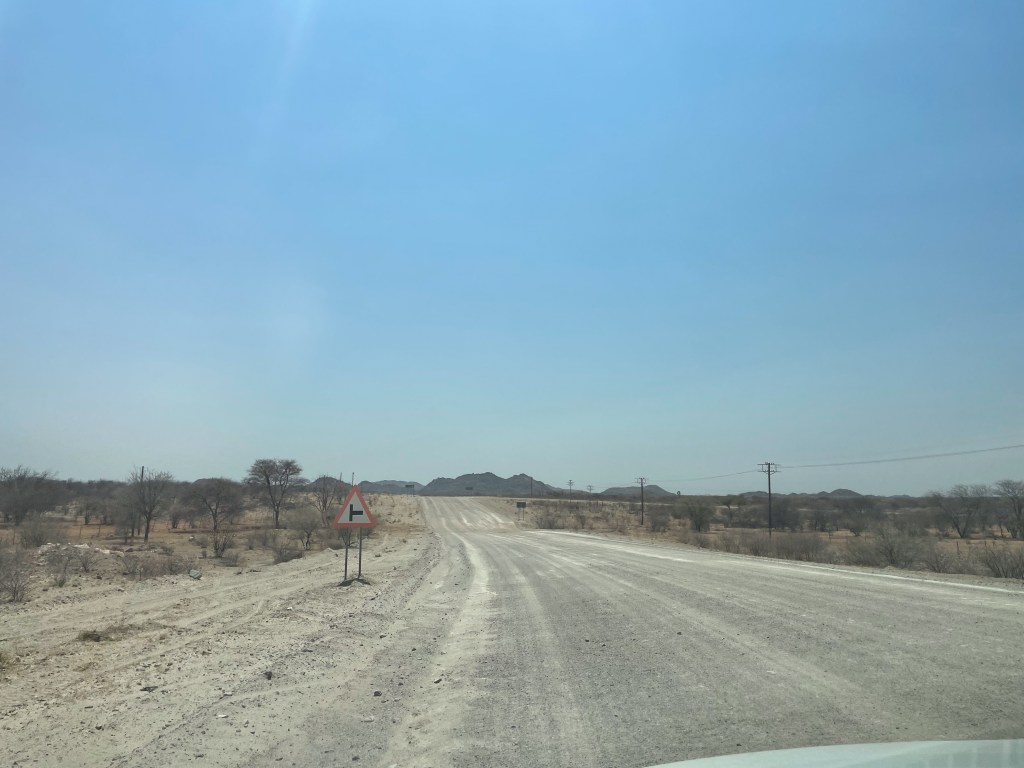
After Twyfelfontein we began the drive northward to Etosha. On the road to Khorixas we came across a ‘broken down car’ which was clearly a scam. We were warned by the rental company not to stop to assist. The car we saw was stopped on the crest of a hill with a clear view a few kilometres in each direction. As we approached, a couple of occupants scurried into the road to try to flag us down, whilst another started tinkering under the bonnet. As we went past they return to sitting at the roadside waiting for the next potential mark.


We stopped to collect some groceries at Kamanjab. In the car parks of supermarkets there’s always a few security guards, which makes us much more comfortable leaving the car. However they weren’t able to stop some of the locals approaching tourists to sell some trinkets. Luckily a tour bus turned up with a group of people who gamely engaged with the sellers. To be fair, this was the only time we were approached in this way on our entire trip. In the confusion we forgot to fill up on fuel.
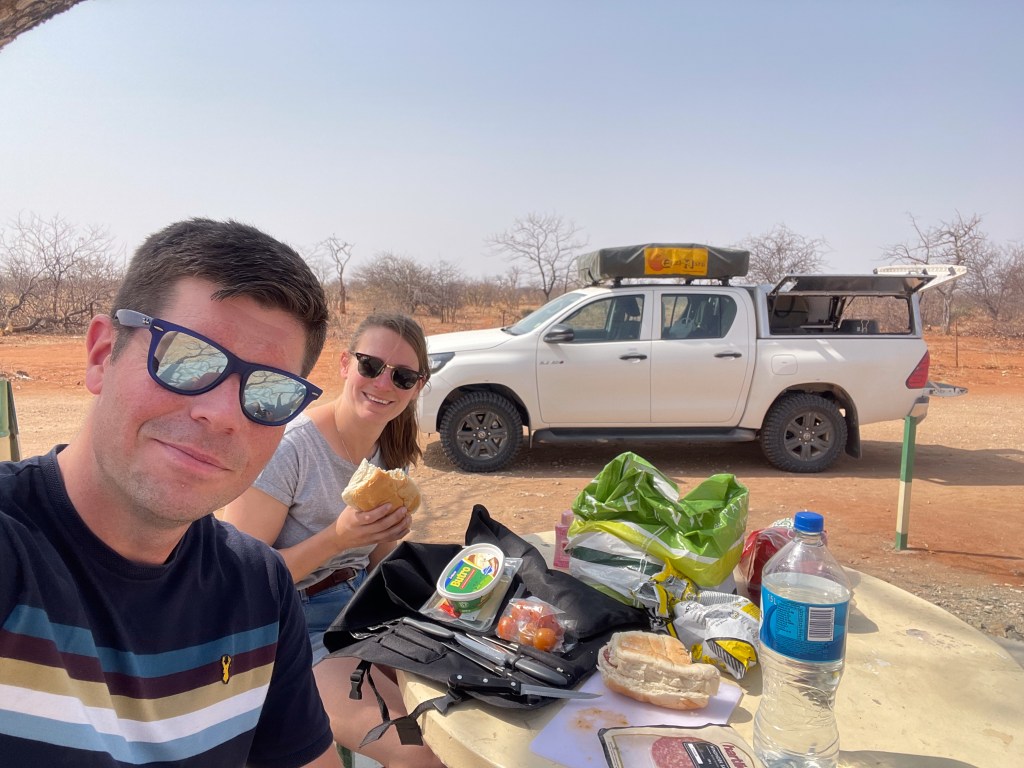
North of Kamanjab the road was tarmac, a welcome relief after two whole days and 550km of gravel. We stopped in the sun for lunch at a picnic site under a tree at the side of the road.


Approaching Etosha’s Galton Gate the weather began to get dusty. Strong winds seemed to have picked up the dust into the air, obscuring the sunshine and making the air more unpleasant to breathe.
Formalities at the gate were quick, we had to pay for three nights in the park which stripped us of a cool grand, $1,050 to be precise. The maps on sale at the gate were sold out. Fortunately we were prepared with out offline maps on various apps.

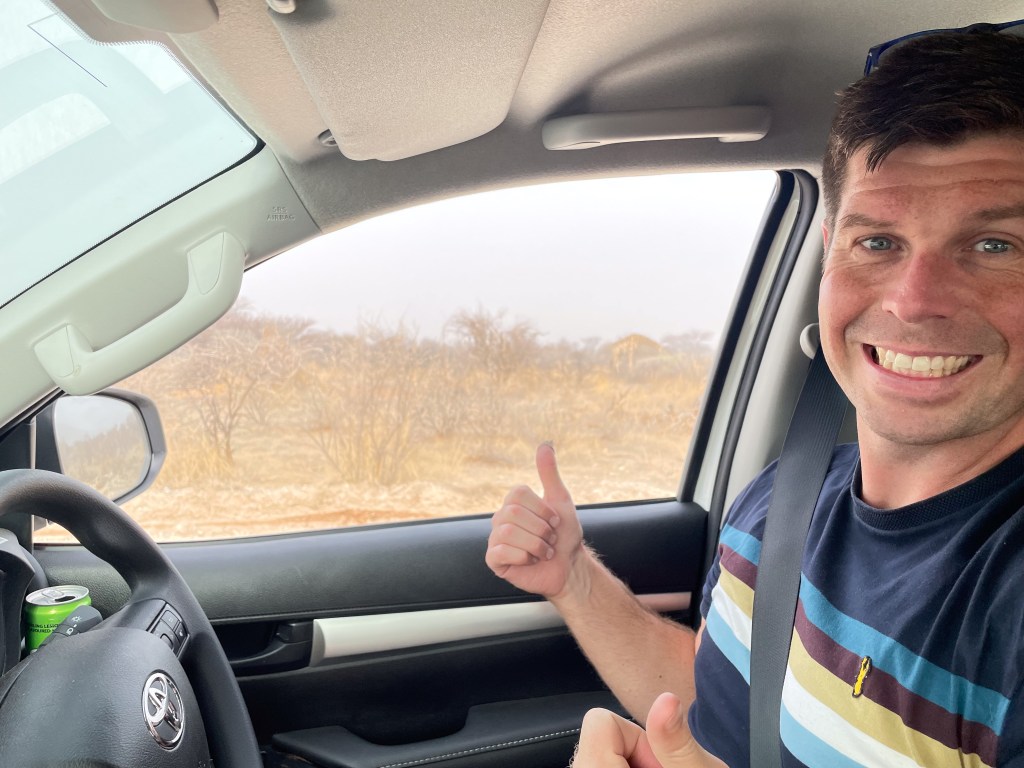
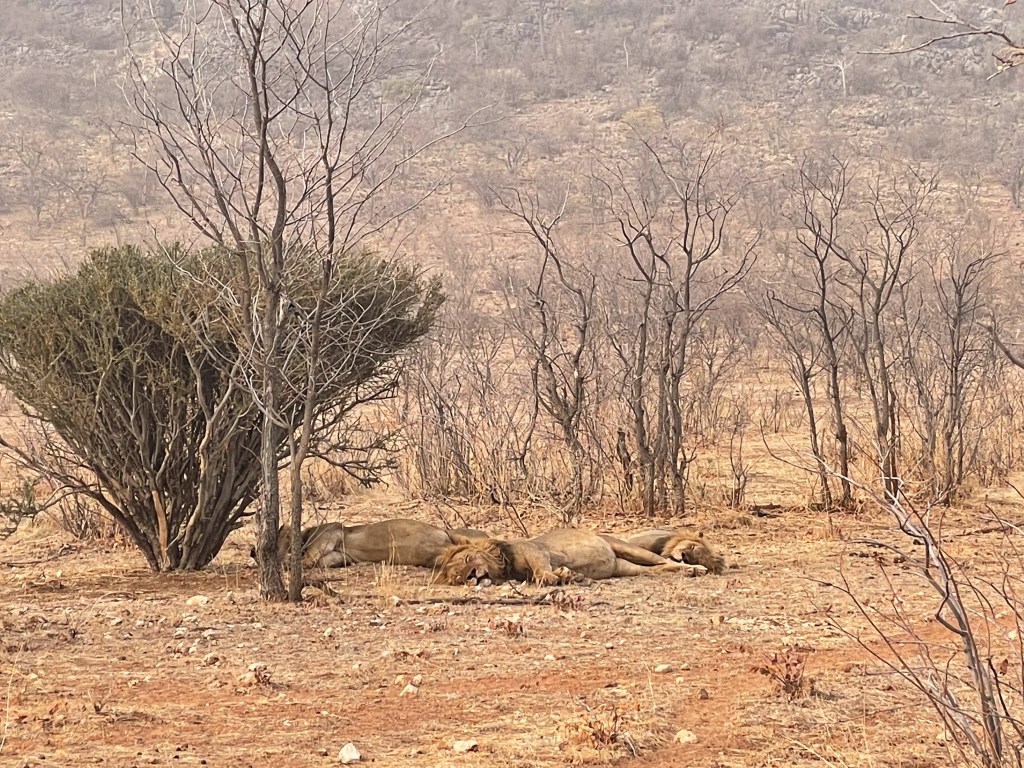
On our way towards Dolomite camp we were flagged down by a car coming the other way. 4km up the road there were three male lions sleeping under a tree. They’d been there all day, and certainly all the other motorists in the area had seen them as afterwards we were flagged down by everyone.

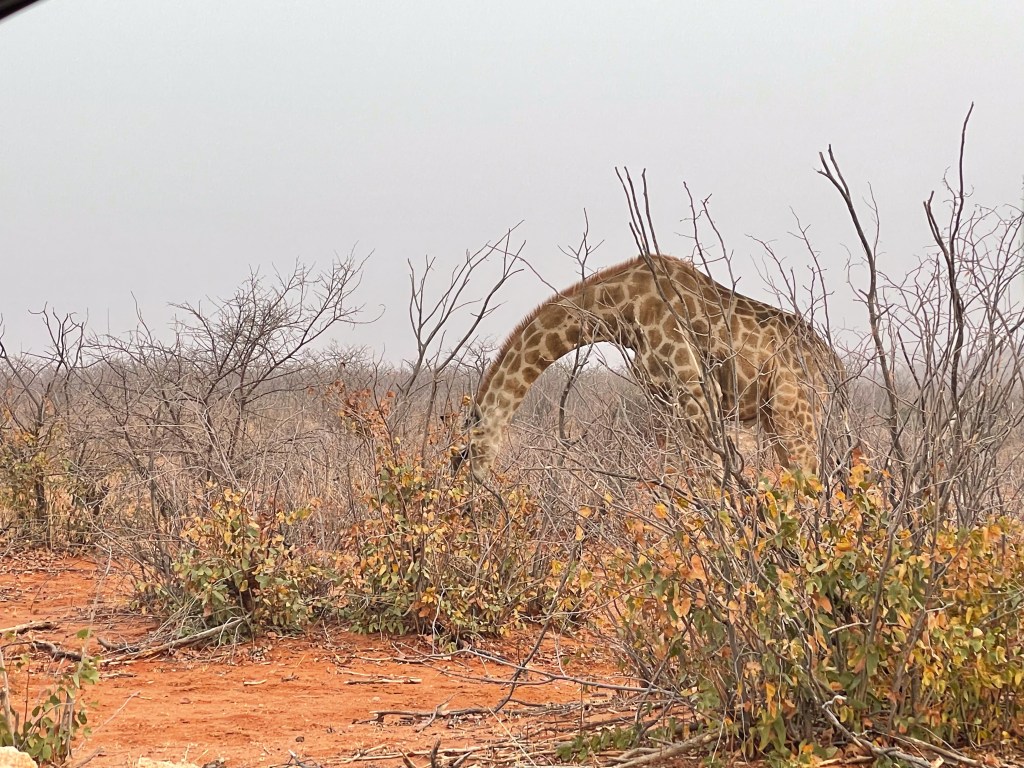
The dusty weather had clearly unsettled the animals, game spotting at waterholes was scarce, and you could sense a nervousness amongst the zebra and giraffes along the sides of the roads.
The last waterhole of the day for us was Klippan, we dashed there shortly before sunset, and as we approached we spotted a number of vultures in the trees near the pan. A black backed jackal was attacking the back leg of a springbok, the poor antelope had a broken leg with a badly open wound. Easy pickings for something in the night, but as we had to peel away to get to camp he was still going strong.
Dolomite camp was fantastic. The rooms are perched either side of a ridge which overlooks the plains below. We checked in to our room on the eastern flank, which we were confident would have an amazing view for sunrise in the morning.


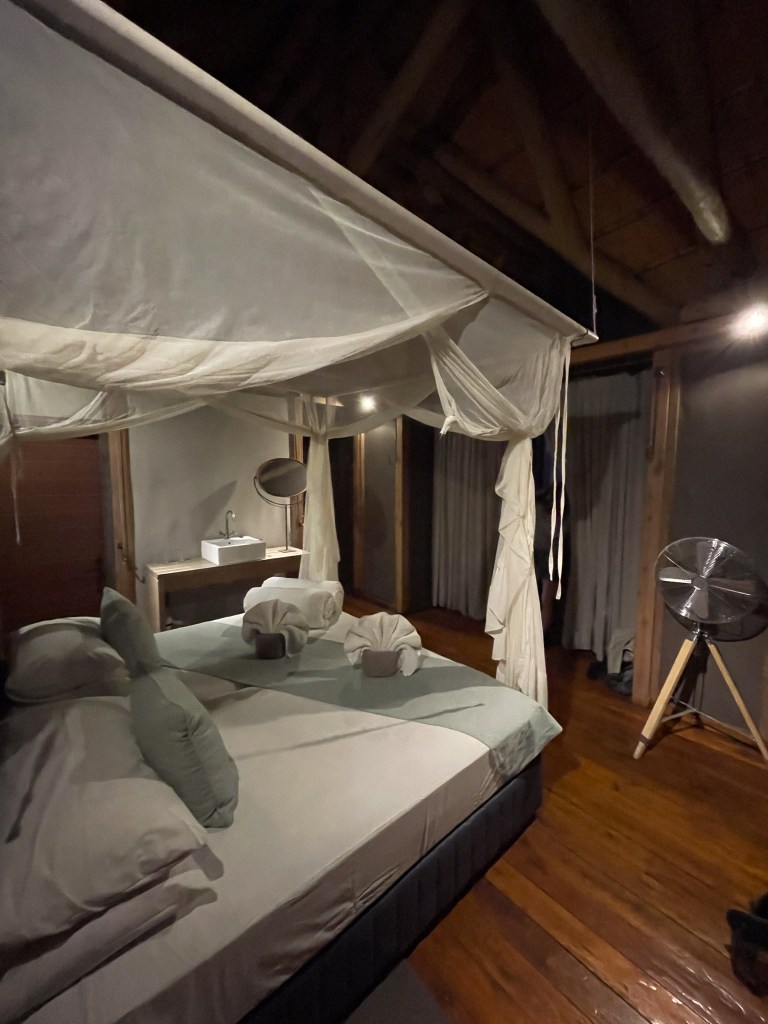
Sunsets are supposed to be fantastic from here, but we missed out because of the dust, and also frankly we arrived too late to catch it.
At arrival guests are supposed to wait for a kubota to come and collect them from the car park – but we walked, and nobody seemed to mind. At night you do need a lift to and from your room in case of wildlife, not that we encountered any. Dinner was a fixed price menu in the restaurant, and we felt well looked after for our entire, albeit short, visit here.

 Small Holiday Big Dream
Leave a comment